“Failures of kindness” George Saunders @Syracuse

In this week of blooming jacarandas, empty white folding chairs await the procession of the graduates, and an elevated podium echoes with the voice of a valedictorian at sound check, rehearsing for the big day.

On the majority of campuses an eminent personage will join the assembly, offering wit and wisdom. This week we will revisit some of the best advice delivered @commencement, beginning with George Saunders at Syracuse University in 2013.

In January of 2013,  Joel Lovell profiled the writer/professor for the New York Times Magazine, ‘George Saunders Has Written the Best Book You’ll Read This Year’.

“Tobias Wolff, who taught Saunders when he was in the graduate writing program at Syracuse in the mid-’80s, said, “He’s been one of the luminous spots of our literature for the past 20 years,” and then added what may be the most elegant compliment I’ve ever heard paid to another person: “He’s such a generous spirit, you’d be embarrassed to behave in a small way around him.”

I think the best speeches create an aspirational bridge between the experience of our undergraduate years and executing our life plan.

The memorable ones communicate with the soul and the easiest way to connect is with a common experience… like the time in grammar school when we missed an opportunity to notice, to include…

This is where Saunders’ speech begins, the ‘generous spirit’ sharing his regret.

“What I regret most in my life are failures of kindness.”

Could a narrative be more welcome amidst the lack of civility in our national conversation?

“How might we become more loving, more open, less selfish, more present, less delusional, etc., etc?

There are ways. You already know that because, in your life, there have been High Kindness periods and Low Kindness periods, and you know what inclined you toward the former and away from the latter. Education is good; immersing ourselves in a work of art: good; prayer is good; meditation’s good; a frank talk with a dear friend; establishing ourselves in some kind of spiritual tradition — recognizing that there have been countless really smart people before us who have asked these same questions and left behind answers for us.

…kindness, it turns out, is hard — it starts out all rainbows and puppy dogs, and expands to include . . . well, everything.

When young, we’re anxious — understandably — to find out if we’ve got what it takes. Can we succeed? Can we build a viable life for ourselves? Can we build a viable life for ourselves? But you — in particular you, of this generation — may have noticed a certain cyclical quality to ambition. You do well in high-school, in hopes of getting into a good college, so you can do well in the good college, in the hopes of getting a good job, so you can do well in the good job so you can . . .

And this is actually O.K. If we’re going to become kinder, that process has to include taking ourselves seriously — as doers, as accomplishers, as dreamers. We have to do that, to be our best selves.

Do all the other things, the ambitious things — travel, get rich, get famous, innovate, lead, fall in love, make and lose fortunes… but as you do, to the extent that you can, err in the direction of kindness. Do those things that incline you toward the big questions, and avoid the things that would reduce you and make you trivial. That luminous part of you that exists beyond personality — your soul, if you will — is as bright and shining as any that has ever been.”


The week@work – leadership lessons from Leicester City, #TonysSoDiverse, exit strategies & the April jobs report

This week@work we visit Leicester, England (think Wichita,KS) to uncover a story of unlikely success, celebrate the diversity of the Tony Award nominees, grasp the value of a positive employee exit process, and review the April jobs report.

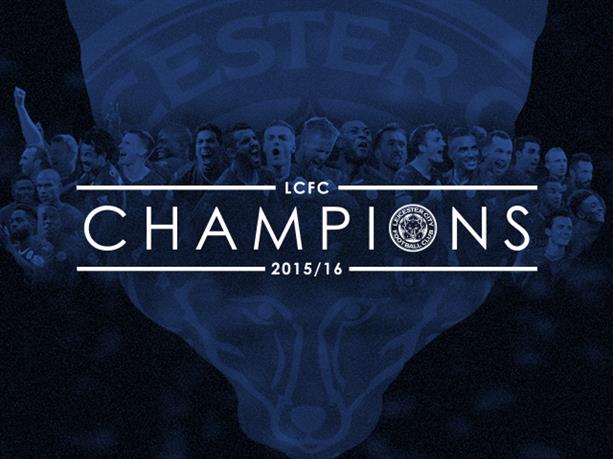
At the beginning of the English Premier League season, Ladbrokes, the world leader in gaming and betting set 5000/1 odds that Leicester City would win the title. On Monday, the team beat the odds to hoist the trophy and celebrate their marvelous win.

569698369-125280-3103660_150x113.JPG

There were hundreds of news articles published over the past week, covering the story from every possible angle. Here are a few, examining the business applications and social impact.

‘What do the foxes say?’, The Economist’s take on the champions suggests a future in business school and corporate conference engagements for club manager, Claudio Ranieri.

“In footballing terms, Claudio Ranieri, an affable Italian, has found a way to turn water into wine. Mr Ranieri manages a club in England, Leicester City, which historically has not been very good. On May 2nd his team were crowned champions of the English Premier League, a competition more watched than any other on the planet, and reliably won—including in every one of the preceding 20 years—by one of four much bigger clubs.

…Leicester’s triumph will also spark inordinate interest in the world of business, which has long looked to sport for lessons on management and leadership.

The BBC’s Robert Plummer shared six of ‘Leicester City’s business secrets’. “You don’t need to throw money at the problem. Get the right people around you. Create the right culture. Do the maths. Create the right incentives. Don’t forget your mum’s birthday!”

For a literary, fan perspective, Booker winning author, Julian Barnes wrote ‘My Stupid Leicester City Love’.

“I haven’t always been a Leicester City supporter: there was a time before I could read, or knew how to tune the Bakelite wireless to the voice of Raymond Glendenning on Sports Report. But from the moment I became sportingly sentient – say, the age of five or six – I have been (as they didn’t much say then) a Fox. So, six and a half decades and counting.

To be a lifelong supporter of Leicester is to have spent decades poised between mild hopefulness and draining disappointment. You learn to cultivate a shrugging ruefulness, to become familiar with the patronising nods of London cabbies, and to cling to an assortment of memories, of pluses and minuses, some comic, some less so. Yes, we have won promotion to the top division every so often; but the fact of promotion logically implies an earlier relegation. Yes, we did win the League Cup; but what burns the soul are the four times we reached the FA Cup final and the four times we lost.”

images-1.jpeg

ESPN’s Wright Thompson introduced readers to the diverse “salad bowl” that is Leicester, England, in ‘We’ve come to win the league’.

“This is the first city in the United Kingdom with less than 50 percent of the population identifying as “white British,” which some people see as the inevitable destiny of an island nation that tried to conquer the world, while others see it as a sign of the apocalypse. People here of different faiths and races seem to get along; Narborough Road, one of the main avenues into the city, was named the most diverse street in Britain by researchers. Shopkeepers and small business owners from 23 nations work there.

John Williams lives on a park near the local university where he teaches…He studies the sociology of football and has written many books on the subject. Whenever someone wants to understand the subtext of life on the pitches and terraces of Leicester, he’s often the first call.

“It was a very white space,” Williams said. “It had a sense of foreboding and exclusion about it. The new stadium has none of those memories. Everyone starts with a clean state at the new stadium because you have to make the history. This is a new history being written.”

Janan Ganesh shared ‘Lessons for everyone from the rise of Leicester City’.  “There is more of the Enlightenment than of romance about this story.

Foreign owners, a foreign coach, a polyglot squad, a laboratory of a training ground: far from mounting a stand against the modern world, Leicester is the modern world. Do not hold out against change, this season teaches us, absorb and master it. The lesson is not just for other clubs but also for modest cities adapting to globalisation and for individuals navigating an insecure world.”

And while we are on the topic of diversity, the Tony Awards were announced last week, recognizing the best of the American theater over the past year. Katherine Brooks sent a message to the left coast, ‘Dear Hollywood, Let Broadway Show You What Diversity Looks Like’.

13131599_1373658495994357_4299389596848712065_o.jpg

“The nominations for “Hamilton,” along with other plays and musicals like “The Color Purple,” “Eclipsed,” “On Your Feet!,” and “Shuffle Along,” reveal a picture of Broadway far more diverse than seasons before it. These shows feature actors of color in lead roles, highlight the experiences of women and minorities in the U.S. and beyond, and empower writers and directors breaking barriers in their categories. They prove, along with a litany of shows that weren’t nominated, that this year was a different kind of year for the Great White Way.

…critics across the Internet are using a different kind of hashtag ahead of the theater world’s version of the Academy Awards: #TonysSoDiverse.”

images

Heather Huhman addressed the importance of ‘last impressions’ in an article for Entrepreneur. Building and maintaining a positive reputation is key to recruiting talent. How an employer treats people throughout their ‘on the job life cycle’ is often chronicled in social media. Thinking strategically about the exit process can reap long term benefits.

“…the process for offboarding employees should be just as important as the onboarding one, and that companies neglecting the former, integral process may experience negative impacts. Here are a few things to consider, to ensure your formal offboarding program is successful: make saying goodbye positive, go beyond the exit interview, turn exiting employees into brand ambassadors and use past employees in your referral program.

Go beyond the exit interview to establish and continually improve the offboarding process to include exit surveys, strong communication throughout an organization and a plan to stay connected to departing employees.”

united-states-unemployment-rate@2x.png

Eric Morath analyzed the recent jobs report for the Wall Street Journal.

“U.S. companies slowed the pace of hiring in April while paying workers only slightly more, signaling a softening of the labor market…

…an increase in wage growth and a pickup in the number of hours worked across the economy could signal solid underlying income growth for workers that would support stronger consumer spending in coming months.

…the easing of job gains could also suggest the economy reached a level where firms will provide workers better pay increases and more hours, rather than hiring new employees.”
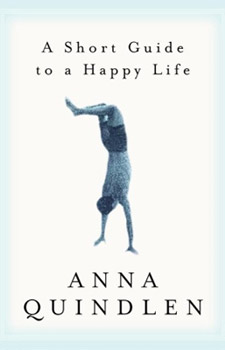
The Saturday Read ‘A Short Guide to a Happy Life’ by Anna Quindlen

Do you remember who spoke at your graduation ceremony? The Saturday Read this week is for all of you who forgot, but would welcome a bit of ‘life advice’ in this season of ‘Pomp and Circumstance’.

In 1999, author Anna Quindlen was invited to deliver the commencement address at Villanova University. And then this happened:

“Pulitzer Prize-winning columnist and author Anna Quindlen has withdrawn as the commencement speaker at Villanova University this Sunday because of what she said were objections by a “vocal minority” to her support of abortion rights.

Quindlen, who was also to have received an honorary doctorate of humane letters, said in an interview yesterday that she did not want to “ruin the day or cast a shadow” on the graduation ceremony.”

A graduate student requested a copy of the prepared text and posted it on the Internet. (This was before Facebook, Twitter et al.) The post went viral, and the resulting essay was published in 2000 as ‘A Short Guide to a Happy Life’.

Seventeen years later her words still resonate. In the opening paragraphs she signals her values, and offers a hint at why she withdrew.

“My work is human nature. Real life is really all I know…Don’t ever confuse the two, your life and your work…The second is only part of the first.”

Real life collided with an opportunity to address Villanova’s Class of 1999, the alma mater of several of her family members. Fortunately her publisher provided an avenue for Ms. Quindlen to share her personal life experience with a broader audience, to encourage ownership and balance.

“When you leave college, there are thousands of people out there with the same degree you have; when you get a job, there will be thousands of people doing what you want to do for a living.”

“But you are the only person alive who has sole custody of your life. Your particular life. Your entire life. Not just the life at your desk, or your life on the bus, or in the car, or at the computer. Not just the life of your mind, but the life of your heart. Not just your bank account, but your soul.”

“People don’t talk about the soul very much anymore. It’s so much easier to write a resume than to craft a spirit.”

Some may disagree that a resume is easy to write, especially a recent grad who has spent the past months engaged in the job search. A resume is limited to a list of accomplishments, full of key words designed to cut through the barrier of digital applicant screening. It’s the values expressed in that experience that define who you are, your spirit.

The recurring theme of ‘Short Guide’ challenges the reader to question commonly held definitions of success.

“You cannot be really first-rate at your work if your work is all you are.”

“So I suppose the best piece of advice I could give anyone is pretty simple: get a life. A real life, not a manic pursuit of the next promotion, the bigger paycheck, the larger house.”

“Get a life in which you are not alone. Find people you love, and who love you. And remember that love is not leisure, it is work.”

‘A Short Guide to a Happy Life’ is a compact book to be kept close for a periodic reread. It’s a reminder to all, at every career stage, that “Life is made up of moments, small pieces of glittering mica in a long stretch of gray cement.”

One of those moments is revealed in the recollection of a conversation with a homeless man on the boardwalk in Coney Island, New York.

“And he stared out at the ocean and said, “Look at the view, young lady. Look at the view.”

Commencement is the beginning of a life of learning, sometimes from the most unexpected of teachers. Enjoy the Saturday Read, and don’t forget to enjoy the view.


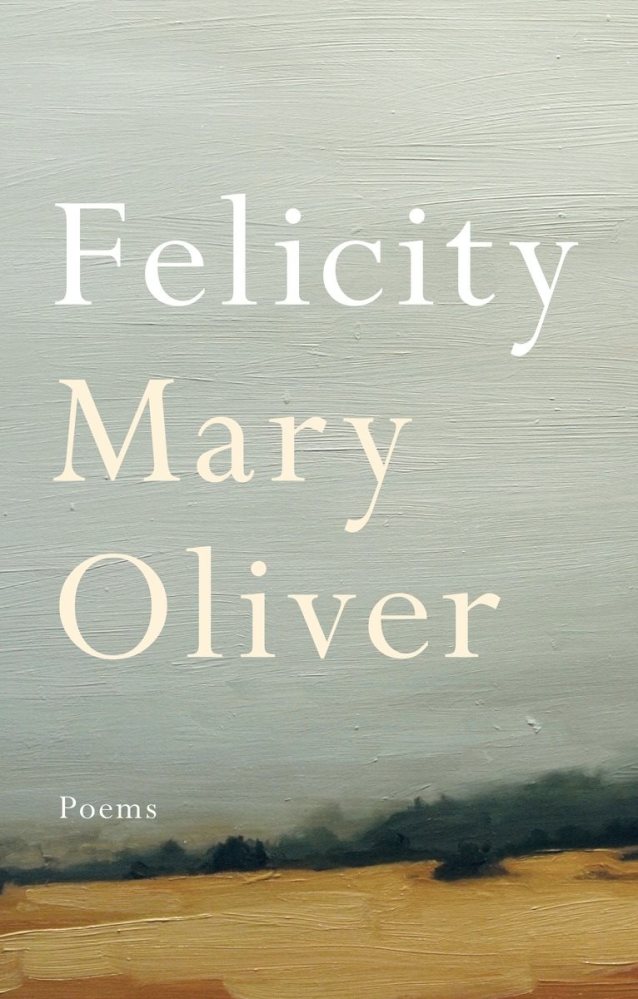
‘Moments’ a poem by Mary Oliver

If a poem could serve as a commencement speech, ‘Moments’ by Mary Oliver would be the choice.

On this Mother’s Day weekend, the Friday Poem offers wisdom that could be shared by mom at the dinner table or a renowned speaker addressing a gathering of graduates.

Moments

There are moments that cry out to be fulfilled.

Like, telling someone you love them.

Or giving your money away, all of it.


Your heart is beating, isn’t it?

You’re not in chains, are you?


There is nothing more pathetic than caution

when headlong might save a life,

even, possibly, your own.


Mary Oliver   ‘Felicity’   2016


Ping pong tables & bean bag chairs

In a volatile job market, do the sales of office furnishings signify a shift in the career aspirations of workers?

An article in this morning’s Wall Street Journal suggested that a decline in the sales of ping pong tables is a harbinger of a downturn in Silicon Valley. A New York Times article in April described advertising agencies casting aside a stodgy image with the installation of bean bag chairs and other furnishings emblematic of a start-up culture.

Recruiting and retention is about the work. Ping pong tables and bean bag chairs don’t create a culture, people do. When a competitor offers a better fit between an individual and an assignment, the bright shiny things become insignificant.

As Silicon Valley firms are selling off their inventory, New York Ad Agencies are stocking up, trying to emulate a culture that may be in decline and missing the point – the work is no longer attractive.

“People no longer have that innate desire and that instinctive desire to be in our business,” said Jay Haines, a founder of Grace Blue, a search firm that works with the advertising industry.”

That’s the story. Folks are moving on to the next new thing – meaningful work. Ping pong tables and bean bag chairs are relics of the establishment.