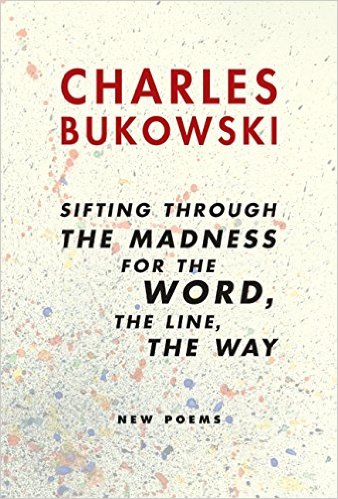
The Friday Poem ‘so you want to be a writer?’ by Charles Bukowski

The Friday Poem selection this week asks a question about career choice. Poet Charles Bukowski is advising the aspiring writer, but his message is universal. Just substitute your dream job and recognize the parallels. “…if you’re doing it for money or fame, don’t do it.”

so you want to be a writer?

if it doesn’t come bursting out of you
in spite of everything,
don’t do it.
unless it comes unasked out of your
heart and your mind and your mouth
and your gut,
don’t do it.
if you have to sit for hours
staring at your computer screen
or hunched over your
typewriter
searching for words,
don’t do it.
if you’re doing it for money or
fame,
don’t do it.
if you’re doing it because you want
women in your bed,
don’t do it.
if you have to sit there and
rewrite it again and again,
don’t do it.
if it’s hard work just thinking about doing it,
don’t do it.
if you’re trying to write like somebody
else,
forget about it.

if you have to wait for it to roar out of
you,
then wait patiently.
if it never does roar out of you,
do something else.

if you first have to read it to your wife
or your girlfriend or your boyfriend
or your parents or to anybody at all,
you’re not ready.

don’t be like so many writers,
don’t be like so many thousands of
people who call themselves writers,
don’t be dull and boring and
pretentious, don’t be consumed with self-
love.
the libraries of the world have
yawned themselves to
sleep
over your kind.
don’t add to that.
don’t do it.
unless it comes out of
your soul like a rocket,
unless being still would
drive you to madness or
suicide or murder,
don’t do it.
unless the sun inside you is
burning your gut,
don’t do it.

when it is truly time,
and if you have been chosen,
it will do it by
itself and it will keep on doing it
until you die or it dies in you.

there is no other way.

and there never was.

Charles Bukowski  published posthumously 2003

The week@work – Tonys, LinkedIn, Microsoft, ‘Brexit’, Orlando, and how to make a good teacher

This week@work the amazing Broadway production of Hamilton took home eleven Tony awards, Microsoft absorbed LinkedIn, young workers in Great Britain contemplated life after ‘Brexit’, journalist Anderson Cooper reported from Orlando, and we learned teaching can be taught.

Rolling Stone Magazine reporters Amy Plitt and Phoebe Reilly tallied the ’20 Best, Worst and WTF Moments at 2016 Tony Awards’.

“On a night that was marked by tragedy — and occurring mere hours after news broke of the deadly mass shooting in Orlando, Florida — the Tonys provided a much-needed bit of levity. The performers and honorees didn’t shy away from speaking about the shocking events of the day, but the overall mood was one of celebration. Part of the credit goes to the master of ceremonies James Corden, best known as the goofy host CBS’s Late Late Show, yet still a dorky theater kid at heart; his charming, cheerful persona brought an upbeat mood to the proceedings. And the Hamilton effect — and the fact that it was just a strong year for Broadway in general, with plenty of wonderful productions to celebrate — surely had something to do with it as well.”

2016 Tony Awards 16-06-112 Photo: Anita & Steve Shevett

One of the best moments was James Cordon’s resume review of Tony nominated actors and their appearances on Law and Order.

“If you’ve ever thumbed through a Playbill wondering “Where have I seen that actor before?!?,” the answer is usually: Law & Order. Corden made very rewarding use of this New York actor résumé mainstay last night when he called on Claire Danes for her memorable portrayal of … L&O’s Tracy Brandt. The joke only got better as Corden showed footage of Hamilton’s Daveed Diggs and Leslie Odom Jr. (who were in the same episode!) and poor Danny Burstein — the Fiddler on the Roof star played six different roles on the series, and each time Corden flashed the photo of another character, the audience (and Burstein) laughed harder. Apparently, there is absolutely no continuity on Law & Order.”

And now you know.

The breaking business story on Monday was news of the Microsoft/LinkedIn acquisition. The New Yorker’s Nicholas Lemann examined ‘LinkedIn’s Complicated Bet on the Future of Work’.

MS-Linkedin-2016-06-12-1-c.jpg

“LinkedIn, the business-oriented social-networking company that Microsoft acquired, this week, for $26.2 billion, was founded on two premises. The first was that, even in the winner-take-all world of Internet businesses, there would still be room for a niche company (meaning, in this case, only four hundred million registered users, and a hundred million users per month). The second was that what it means to work in a business is now profoundly different from what it was in the Organization Man era. White-collar employees are highly unlikely to spend a lifetime with a single employer, and more and more are not employees at all in the traditional sense. They self-manage their careers, in part by maintaining online personal networks, rather than have them managed by a corporate human-relations department.”

Now LinkedIn will function as part of a Fortune 50 corporate structure and employees will move from an entrepreneurial culture/ stock option pay structure to an “alternative universe, where, by tech-company standards, employees stay an unusually long time—the average tenure at Microsoft is five years, versus two years at Google, according to data from the consulting firm PayScale—and are unlikely to get rich from their stock options zooming up in value, as was the case for Microsoft employees back in the twentieth century. They are going to be their world’s equivalent of corporate lifers, with generous salaries and benefits and some measure of job security, while working to promote the continued growth of a very different kind of work arrangement elsewhere in the economy.

The technology world seems to be creating a small number of extremely successful people, a larger number of well-treated corporate employees, and an even larger number of people who wish they could be employees.”

And then there are the rest of us who now face the prospect of LinkedIn ads invading our quiet space as we commit great thoughts to Word and fill in Excel spreadsheets.

Randall Stross shared his opinion, ‘Why LinkedIn Will Make You Hate Microsoft Word’.

“My version of Word, a relatively recent one, is not that different from the original, born in software’s Pleistocene epoch. It isn’t networked to my friends, family and professional contacts, and that’s the point. Writing on Word may be the only time I spend on my computer in which I can keep the endless distractions in the networked world out of sight.

Matthew G. Kirschenbaum, an associate professor of English at the University of Maryland and author of “Track Changes: A Literary History of Word Processing,” said the move reflected a failure to understand what writers need. “Most of the most innovative writing tools now on the market position themselves precisely as distraction-free platforms,” he said.

What Mr. Nadella fails to see is how extending LinkedIn’s “social fabric” to Word will kill the magic, not speed it up.”

On Thursday, voters in Great Britain will choose to leave or remain in the European Union. Kimiko De Freitas-Tamura reported ‘Brexit’ Vote Worries European Up-and-Comers Lured to Britain’.

europe_2114838b-small_trans++qVzuuqpFlyLIwiB6NTmJwZwVSIA7rSIkPn18jgFKEo0.jpg

“For years, Britain’s relatively vibrant economy has attracted a steady flow of young people fleeing a lack of opportunity in their home countries on the Continent. London in particular is full of young Europeans, who have helped give the city its dynamic, global feel. From entrepreneurs, bankers and fashion designers to artists, waiters and students, all are free to resettle in Britain and make their futures here without so much as a visa.

No one knows for sure what would happen to them if Britain voted to leave the European Union — their immigration status would have to be worked out in the negotiations that would follow — but the debate itself has left some of the young people feeling fearful, frustrated and even angry.

Journalist Anderson Cooper covered the mass shootings in Orlando this week, demonstrating empathy for the victims and tenacity in interviews with politicians. Michael M. Grynbaum profiled the CNN anchor for The New York Times.

Unknown.jpeg

“Anderson Cooper was reading the names of victims of the Orlando massacre on CNN this week when, uncharacteristically, his voice wavered and he drew up short. For moments, viewers around the country heard only silence, and then the sounds of the anchor struggling to compose himself.

As the news industry descended on Florida this week in the aftermath of a mass shooting in a gay nightclub, Mr. Cooper’s raw, activist-style coverage has stood out. He has held a prime-time vigil of sorts, reciting a list of the dead; refused to name the gunman, saying he wanted to focus on victims; and, in a widely viewed exchange, grilled Florida’s attorney general for defending a state ban on same-sex marriage.”

It was a very tough week@work. Colleagues celebrating their day off late Saturday into Sunday morning were viciously murdered in a gay nightclub in Orlando, and on Thursday, Member of Parliament Jo Cox was murdered as she went to work to meet with her constituents in West Yorkshire.

The last story, from The Economist, ‘How to Make a Good Teacher’.

20160611_LDD001_0.jpg

“Big changes are needed in schools, too, to ensure that teachers improve throughout their careers. Instructors in the best ones hone their craft through observation and coaching. They accept critical feedback—which their unions should not resist, but welcome as only proper for people doing such an important job. The best head teachers hold novices’ hands by, say, giving them high-quality lesson plans and arranging for more experienced teachers to cover for them when they need time for further study and practice.

Money is less important than you might think. Teachers in top-of-the-class Finland, for example, earn about the OECD average. But ensuring that the best stay in the classroom will probably, in most places, mean paying more. People who thrive in front of pupils should not have to become managers to earn a pay rise. And more flexibility on salaries would make it easier to attract the best teachers to the worst schools.

Improving the quality of the average teacher would raise the profession’s prestige, setting up a virtuous cycle in which more talented graduates clamoured to join it. But the biggest gains will come from preparing new teachers better, and upgrading the ones already in classrooms.”

Here’s what I think. Improving the quality of teachers will improve the quality of content taught. It will ensure a ‘safe space’ to openly discuss the issues facing our neighborhoods, counties, countries and continents. Good teachers remove the blinders of hate and discrimination. A courageous teacher at the front of the classroom cautions the young against the errors of the past, and is the best antidote to history repeating itself.

A good teacher reminds us that we are all teachers.

paris


The Saturday Read – Revisiting ‘The Sage of Waterloo’ by Leona Francombe

Two hundred and one years ago, on June 18, 1815, Napoleon Bonaparte led his troops in battle against those of the Duke of Wellington on a farm three miles south of Waterloo in Belgium. At the end of the day, close to 50,000 soldiers were dead and French domination of the continent came to an end.

A number of books were published last spring to commemorate the 200th anniversary of the bloodshed. One, ‘The Sage of Waterloo’ by Leona Francombe, recalls events through a very different form of ‘oral history’. For this ‘Saturday Read’ we return to Hougoumont.

“Hougoumont is…dear me, where are the words? It’s a mute place, you see, but with such startling eloquence. Perhaps the fact that few visitors to the battlefield even know it exists fosters the air of an unopened message. Physically speaking, it’s a ruin: a decaying farmstead of brick and sandstone in perfect complicity with the land. The other, less tangible things are far more difficult to describe. Go there yourself and you’ll feel it: the knowing wind; the trees scarred as leviathans; and a strange sort of peace that isn’t peaceful at all but alert with memory and other, less palatable phenomena. Sometimes, when the wind comes off the eastern fields, it’s as if a worn curtain is shifting, and through a tear in the fabric you can see something unimaginable for such a sleepy backwater.”

I reviewed this exquisite story last year, and after this week of tragedy in Orlando and Birstall, West Yorkshire, ‘The Sage’ seemed to beckon from the bookshelf, inviting a return to the wisdom of Old Lavender.

“”Nature never truly recovers from human cataclysms,” Grandmother said one day, to me alone. “Never.” She was using that tone: two parts old sage, one part female warrior, scant affection and no salt… Every creature who was anywhere near Waterloo sensed what was going to happen,” she explained. “If they could get out, they got out. Those who stayed and survived passed the experience on through collective memory, right down through the generations until the present day. Collective memory… and resonance.””

Author Francombe is a pianist and composer whose lyrical interpretation of history, through a narrator at ‘ground level’, delivers a timely reminder –

“There are sometimes no explanations, William. So don’t try to find them, or pretend that they’re there. They aren’t. But there’s always a way forward.”


The Friday Poem ‘A sonnet’ by Lin-Manuel Miranda

At a moment of career recognition, ‘Hamilton’ creator, Lin Manuel-Miranda shared a sonnet for his wife and the world about family, tragedy and love. At it’s center was his response to the terrorist, hate crime in Orlando.

The New York Times Sunday Styles reporter, Katie Rosman, shared the ‘back story’ of the sonnet from creation to delivery on the Beacon Theater stage Sunday evening.

“…as the first grim reports out of Orlando, Fla., were circulating, Mr. Miranda took out his phone and began to tap out the sonnet he would read aloud that night while accepting the Tony for best score. In 14 lines he paid tribute to his wife, his son and the victims of the massacre.

Back at the Mandarin Oriental before curtain time, he realized he would need a printout of the verse he had written. He called the suite where his father was staying and asked him if he wouldn’t mind taking care of it. Luis, 61, said yes, and traveled down a flight, where his son handed him a thumb drive. Lin-Manuel had one stipulation: “He said, ‘Can you please not read it?’”

He went down the elevator, thumb drive in hand, toward the concierge desk. There, employees of the Mandarin Oriental sprang into action.

Back in the elevator, with the printout, the father did the very thing his son had asked him not to do: He read the sonnet.

“That’s like asking me not to drink water when it’s 90 degrees out,” Luis said. “I thought it was very moving and pretty and important for the moment.”

Back in the suite, Luis listened as Lin-Manuel read it aloud, practicing for the big moment.”

Yesterday Mr. Miranda announced a fundraising effort, for Equality Florida. Revenue will be generated by the sale of a T shirt with words from the sonnet. “Here’s a thing that speaks for itself. I’m very excited about it and it’s a way you can help.” 

x2837DC2CA-99AA-9001-BE24B99096BFFE8E.jpg.pagespeed.ic.v2WAbmnIPw.jpg

The sonnet has been published in a variety of outlets since the awards ceremony. After the horror of this past week, there was no other choice for The Friday Poem.

My wife’s the reason anything gets done
She nudges me towards promise by degrees
She is a perfect symphony of one
Our son is her most beautiful reprise
We chase the melodies that seem to find us until they’re finished songs and start to play
When senseless acts of tragedy remind us that nothing here is promised, not one day
The show is proof that history remembers
We live through times when hate and fear seem stronger
We rise and fall and light from dying embers
Remembrances that hope and love last longer
And love is love is love is love is love is love is love is love
Cannot be killed or swept aside
I sing Vanessa’s symphony
Eliza tells her story
Now fill the world with music, love, and pride

Lin Manuel-Miranda   June 12, 2016


We need a ‘sense of urgency’

Has a ‘moment of silence’ replaced a ‘sense of urgency’? In a time when we’ve run out of words, maybe we can find a path to action in the advice of a leadership guru.

I was in Lancaster, Pennsylvania this past weekend, at a retreat with a group of ‘millennials’ whose common bond is a college scholarship financed by an amazing philanthropic couple.

Early Sunday morning, there was news of a shooting in Orlando. With few details, numb to the continuing violence in our country, we joined our small group discussions, formulating solutions to the most challenging problems for the next president. We did not discuss gun safety.

As I drove home Sunday afternoon, through the farmland and burgeoning developments that dot the Pennsylvania landscape, I listened to the story emerging from Florida, in the unsteady voices of seasoned journalists who were reporting one more time from a scene of unimaginable violence.

Early Sunday morning another group of millennials, whose common bond was their identity as LBGT, celebrated life in a club, ‘Pulse’, in Orlando. Many did not return home through the central Florida landscape of Universal and Disney.

I have watched too many news reports over the past 48 hours. I finally turned away after watching Anderson Cooper of CNN deliver a heartbreaking narrative of those who lost their lives.

Enough.

We should be safe @school, @work, @home and @play.

I want our leaders to pause for a moment of silent remembrance, but I also want them to be leaders. I want them to represent their special interests, their constituents.

And I want millennials to assume ownership, set the agenda, and take action; before more members of the most promising generation are lost.

We need a sense of urgency. Professor of Leadership Emeritus at the Harvard Business School, John Kotter‘s 2008 advice to business leaders has equal resonance with our challenge today, “create a sense of urgency by getting people to actually see and feel the need for change. Why focus on urgency? Without it, any change effort is doomed by insidious nature of complacency in all its forms and guises.” Step One – “overcome the fear and anger that can suppress urgency.”

Ckyq860WYAQF_FO


The Friday Poem @ the intersection of Maya Angelou, Hillary Clinton and Muhammad Ali

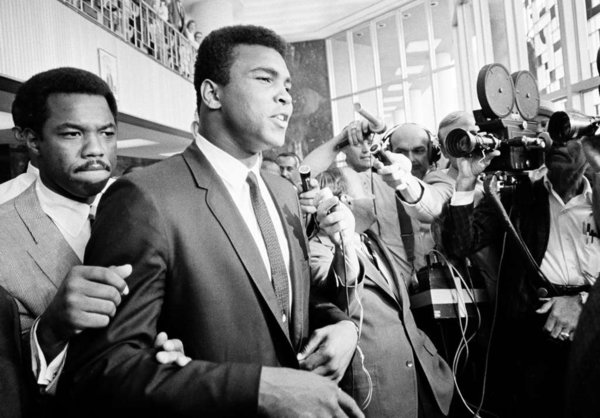
Maya, Muhammad and Hillary. Not three names you would intuitively link together, but that’s what history claimed this week, as a ‘political poet’ passed, and a deceased poet’s 2008 words echoed in the background of a rally at the Brooklyn Navy Yard.

The news of the death of Muhammad Ali literally stopped the presses at the New York Times early Saturday morning. On Wednesday, newspapers across the country led with the history making headline reporting “Hillary Clinton‘s nomination: A win 96 years in the making”.

It will not be an easy road to November for Secretary Clinton as reported by Patrick Healy and Sheryl Gay Stolberg.

“When Hillary Clinton swept onto the stage at her victory rally Tuesday night, the thunderbolt of history struck many Americans, no matter their love or loathing for her: A woman could be the next president of the United States.

But like so much about Mrs. Clinton, her speech, which lit up televisions and smartphones and social media all day Wednesday, produced conflicting emotions.

For some, it was an inspiring moment that brought home in a visceral way that Mrs. Clinton is the first woman to become the presumptive nominee of a major party. For others, there were chills and discomfort that this next step forward in our national story was unfolding with this particular woman.”

IMG_4810.jpg

The candidate might take heart from the poem Maya Angelou submitted to The Observer in 2008, with the backstory told by Vanessa Thorpe for The Guardian.

“She is supporting Clinton despite her close friendship with television personality and philanthropist Oprah Winfrey, a prominent backer of rival Democrat Barack Obama, the first black presidential hopeful with a real chance of reaching the White House.

Angelou is steadfast in her loyalty to Clinton. She said recently: ‘I made up my mind 15 years ago that if she ever ran for office I’d be on her wagon. My only difficulty with Senator Obama is that I believe in going out with who I went in with.’

Andrew Motion, the Poet Laureate, said of the poem: ‘This is a great thing for The Observer to have.’ He favourably compared it with the ‘vivid flourishes’ of Angelou’s recent work. ‘With this kind of poem Angelou has decided to interpret public writing as a verbal equivalent of making a poster, and there’s nothing wrong with this. The rhetoric is full of big gestures that make a direct appeal to our feelings, rather than getting to it by the little winding ways more personal poetry might use.'”

The poem:

State Package for Hillary Clinton

You may write me down in history

With your bitter, twisted lies,

You may tread me in the very dirt

But still, like dust, I’ll rise.

This is not the first time you have seen Hillary Clinton seemingly at her wits’ end, but she has always risen, always risen, don’t forget she has always risen, much to the dismay of her adversaries and the delight of her friends.

Hillary Clinton will not give up on you and all she asks of you is that you do not give up on her.

There is a world of difference between being a woman and being an old female. If you’re born a girl, grow up, and live long enough, you can become an old female. But to become a woman is a serious matter. A woman takes responsibility for the time she takes up and the space she occupies. Hillary Clinton is a woman. She has been there and done that and has still risen. She is in this race for the long haul. She intends to make a difference in our country. Hillary Clinton intends to help our country to be what it can become.

She declares she wants to see more smiles in the family, more courtesies between men and women, more honesty in the marketplace. She is the prayer of every woman and man who longs for fair play, healthy families, good schools, and a balanced economy.

She means to rise.

Don’t give up on Hillary. In fact, if you help her to rise, you will rise with her and help her make this country the wonderful, wonderful place where every man and every woman can live freely without sanctimonious piety and without crippling fear.

Rise, Hillary.

Rise.

Maya Angelou, 2008

20131006_dn_0mu24lap.jpg

On Thursday, Henry Louis Gates Jr. recalled ‘Muhammad Ali, the Political Poet’. In the essay he linked Angelou and Ali by their poetry, often labeled ‘doggerel’.

“Perhaps Maya Angelou, whose own poetry is sometimes labeled doggerel, said it best: “It wasn’t only what he said and it wasn’t only how he said it; it was both of those things, and maybe there was a third thing in it, the spirit of Muhammad Ali, saying his poesies — ‘Float like a butterfly, sting like a bee.’ I mean, as a poet, I like that! If he hadn’t put his name on it, I might have chosen to use that!”

“It would be a mistake to say that Ali made black oral poetry more sophisticated or complex, but he did make it more political. After learning his local draft board had declared him eligible for induction into the Army in 1966, Ali recited this poem:

Keep asking me, no matter how long,
On the war in Vietnam,
I sing this song:
I ain’t got no quarrel with no Viet Cong.

On this Friday, we pause to remember the athlete, humanitarian and role model who was Muhammad Ali, we celebrate a milestone for women, and reflect on the words of two American poets who significantly influenced our culture.


Should I accept an offer with an organization embroiled in controversy?

Imagine a scenario where you are nearing the end of the candidate selection process for your dream job, and news breaks that the organization is under federal investigation. What do you do?

A post on the Fast Company website last week, ‘How To Hire When Your Company Is Embroiled in Controversy’, summarized expert advice to organizations who continue to recruit new employees while managing a crisis.

Veteran recruiter, Dave Carvahal was quoted in the piece, offering recruitment advice – “Be honest about where you actually are, the problems that exist, and the media attention amplification,” he says. Recruiting is about human relationships, Carvajal explains, pointing out that hiring managers shouldn’t be afraid to be vulnerable. “Emotions can be powerful allies in lifting our common humanity,” says Carvajal. “They build trust.”

Reality check – organizations who are being investigated by the Feds, or who are facing bankruptcy inducing lawsuits are probably not the most forthcoming with the truth. You cannot ‘spin’ fraud.

Recruiting is about relationships, ethical relationships. Working for a company in crisis may be a platform for a ‘budding’ leader to achieve visibility, but it’s no place to embark on a new career.

Reading the story was a ‘deja vu’ moment for me, reminiscent of 2002.

In January 2002, Arthur Andersen, then one of the ‘big five’ accounting firms found itself being investigated because of irregularities in its relationship with Enron. As congress grilled company executives, corporate recruiters continued to aggressively woo potential hires to accept offers. Candidates who had been initially attracted to the values of the organization began to question their decision. For most, the recruiting season was over. They had committed to Andersen and declined alternate offers.

Three months later, in April of 2002, Arthur Andersen laid off 7,000 employees. Soon after they began to recind offers to new employees. The folks who had been actively recruiting on college campuses had been simultaneously updating their own resumes.

My advice then, and today, if you find your dream employer had transitioned into public nightmare, withdraw yourself from consideration. This is not negotiable. Whatever perception you had of a cultural ‘fit’ has been disrupted by negative publicity. Your reputation is your brand.

If there’s ever a time to let common sense be your guide, it’s when your career trajectory collides with ‘above the fold’ news. Mobilize your networking resources to assist as you recalibrate your strategy.

Once you have declined the offer, reconnect with the organizations that had previously demonstrated an interest in hiring you, and reestablish the relationship. Be candid about what has triggered your change of heart. If it’s in the news, your alternate employers will be well aware of your motivation.

Job search is about long term relationship management. From your first internship to retirement, maintaining and nurturing your professional contacts is a priority for long term success, and overcoming the challenges posed by the rare, ‘questionable’ employer.


The week@work – guaranteed basic income, college grad stats, internet trends and the world’s longest tunnel opens

This week@work the Swiss electorate rejected a ballot measure to provide a guaranteed basic income for citizens, the college graduate unemployment rate is 2.4%, with history majors matching mid-career salaries of business school grads, Mary Meeker projected her 2016 internet trends and 2,600 workers completed 17 years of work to open the world’s longest tunnel under the Alps.

On Saturday Swiss voters rejected a proposed plan to provide an unconditional monthly income of 2,500 francs by a margin of 77% to 23%.

-1x-1

Philip Oltermann surveyed the growing economic trends toward guaranteed basic income, ‘State handout for all? Europe set to pilot universal basic incomes’.

“Universal basic income has a rare appeal across the political spectrum. For those on the left, it promises to eliminate poverty and liberate people stuck in dead-end workfare jobs. Small-state libertarians believe it could slash bureaucracy and create a leaner, more self-sufficient welfare system.

In an increasingly digital economy, it would also provide a necessary injection of cash so people can afford to buy the apps and gadgets produced by the new robot workforce.

Crucially, it is also an idea that seems to resonate across the wider public. A recent poll by Dalia Research found that 68% of people across all 28 EU member states said they would definitely or probably vote for a universal basic income initiative. Finland and the Netherlands have pilot projects in the pipeline.”

The New Yorker contributor, Mark Gimein summarized recent discussions on the topic, comparing U.S. views to European counterparts.

“…when they look further into the future, Americans talk about a national minimum income in the context of a jobless future, an employment apocalypse in which workers compete for fewer and fewer good jobs. Robert Reich, the former labor secretary, sees a national guaranteed income as the most likely endgame in an economy with “more and more people getting pushed out of the middle class into the personal service sector of the economy getting lower and lower wages.” When the Swiss talk about basic income, they’re talking about a utopian vision. When Americans like Reich talk about it, it’s a last bulwark against national impoverishment.”

‘The Upshot’ analyzed the May unemployment numbers and drew a positive spin on disappointing results. “A better gauge of the underlying rate of jobs growth is to take an average over the past three months. By that measure, the labor market is creating around 116,000 jobs per month. This is a notable slowdown from jobs growth in the 150,000-250,000 range over most of the past five years. But it’s a slowdown and not a sudden stop.”

Here’s the good news for college grads. In a separate post, the folks @UpshotNYT posed this question: “What do you think the unemployment rate is for 25-to-30-year-olds who graduated from a four-year college?”  Most folks guessed high. The actual rate is 2.4%, without a four-year college degree it’s 7%.

images.jpeg

While we’re on the topic of debunking ‘value of college myths’, let’s turn to a story about the much maligned history majors. (Full disclosure, I was one)

Writing in the LA Times, James Grossman, executive director of the American Historical Association lamented the decline enrollment in undergraduate history programs and countered with new research that suggests undergrads might want to reconsider their choice of major.

“Over the long run, …graduates in history and other humanities disciplines do well financially…after 15 years, those philosophy majors have more lucrative careers than college graduates with business degrees. History majors’ mid-career salaries are on par with those holding business bachelor’s degrees. Notably these salary findings exclude those who went on to attain a law or other graduate degree.

The utility of disciplines that prepare critical thinkers escapes personnel offices, pundits and politicians (some of whom perhaps would prefer that colleges graduate more followers and fewer leaders). But it shouldn’t. Labor markets in the United States and other countries are unstable and unpredictable. In this environment — especially given the expectation of career changes — the most useful degrees are those that can open multiple doors, and those that prepare one to learn rather than do some specific thing.”

On Wednesday The New York Times announced ‘the Internet is over’. They are changing their style rule to join the rest of the world to lowercase the word ‘internet’.

The same day, venture capitalist Mary Meeker presented her 2016 internet trends report. Inc. contributor, Jessica Stillman cited five ‘take-aways’ from the deck of 200 slides.

“Internet growth is slowing dramatically. Advertisers aren’t spending enough on mobile. Privacy concerns are “a ticking time bomb.”Search is about to be revolutionized…and so are messaging apps.”

Moving from technology trends to engineering marvels, BBC News reported on the opening of the Gotthard Base Tunnel in Switzerland, culminating 17 years of work by 26,000 workers.

gettyimages-105475814_custom-293c8eedebb27759dbd26d764b46c07b23b87f9f-s1400-c85

“Swiss engineer Carl Eduard Gruner first imagined it in 1947: a massive tunnel, unprecedented in length, buried a mile and a half under Switzerland’s symbolic Gotthard mountain range.

Nearly seven decades later, after redesigns, political disagreements and the long, slow work of drilling beneath the Gotthard massif, as it’s called, Gruner’s dream is complete.

The Gotthard Base Tunnel — a record-setting 35.4 miles long, and farther below ground than any other tunnel — was inaugurated Wednesday. The occasion was marked with a celebration that promoted “Swiss values such as innovation, precision and reliability…”

Now the completed tunnel, delivered on time and within budget, will create a mainline rail connection between Rotterdam in the Netherlands and Genoa in Italy.

When full services begin in December, the journey time for travellers between Zurich and Milan will be reduced by an hour to two hours and 40 minutes.

About 260 freight trains and 65 passenger trains will pass through the tunnel each day in a journey taking as little as 17 minutes.”

The Saturday Read ‘A Whole Life’ by Robert Seethaler

Too often we seek advice and counsel from the plethora of self-help books that line the shelves of bookstores. What we miss are the life lessons divulged under the guise of fiction.

The Saturday Read this week takes us to the Austrian Alps in 1933 to observe ‘A Whole Life’, the best selling German novel by Robert Seethaler, translated by Charlotte Collins.

The story is Andreas Egger’s, an everyman’s narrative of life, work, tragedy and values. It’s short, the perfect read for a plane trip or a couple of days commute. In this case brevity doesn’t diminish the tale. The simple, beautiful language reveals a literary character that will stay with you long after the story ends.

Throughout the book, the author stores small gems of wisdom, life lessons. In one scene, Andreas approaches the general manager of a construction site to negotiate a raise. Upon reaching agreement on a salary increase, Andreas promises to work even harder. The manager replies:

“You can buy a man’s hours off him, you can steal his days from him, or you can rob him of his whole life, but no one can take away from any man so much as a single moment.”

After years in construction, and more years as a prisoner of war, Andreas returns to his village and eventually finds work as a hiking guide.

“Egger didn’t usually speak on his walks. ‘When someone opens their mouth they close their ears,’ Thomas Mattl had always said, and Egger was of the same opinion. Instead of talking, he preferred to listen to these people, whose breathless chatter revealed to him the secrets of other fates and opinions. People were evidently looking for something in the mountains that they believed they lost a long time ago. He never worked out what exactly this was, but over the years he became more and more certain that the tourists were stumbling not so much after him, but after some obscure, insatiable longing. 

In the closing pages, we observe Andreas in retirement, at the end of his ‘whole life’.

“Once a week he went down to the village to get matches and paint, or bread, onions, butter. He had realized long ago that people there speculated about him. When he set off for home…he would see them out of the corner of his eye, putting their heads together and starting to whisper behind his back. Then he would turn around and give them the blackest look of which he was capable. Yet in truth he didn’t much care about the villager’s opinions or their outrage. To them he was just an old man who lived in a dugout, talked to himself, and crouched in a mountain stream to wash every morning. As far as he was concerned, though, he had done all right, and thus had every reason to be content… In his life he too, like all people had harboured ideas and dreams. Some he had fulfilled for himself; some had been granted to him. Many things had remained out of reach, or barely had he reached them than they were torn from his hands again. But he was still here. And in the mornings after the first snowmelt, when he walked across the dew-soaked meadow outside his hut and lay down on one of the flat rocks scattered there, the cool stone on his back and the first warm rays of sun on his face, he felt that many things had not gone so badly after all.”

Reviewers have noted the book’s unique appeal as an understated novel in a publishing world sustained by hype and celebrity. Eileen Battersby concluded her analysis for the Irish Times with “No praise is too high for A Whole Life. Its daunting beauty lingers. This is a profound, wise and humane novel that no reader will forget.”

I agree.

The book, published in 2015 and shortlisted for the 2016 Man Booker International Prize will be published in the U.S. in September.


‘The Work of Happiness’ a poem by May Sarton

The Friday Poem this week is ‘The Work of Happiness’ by May Sarton a writer whose talent was expressed in fiction, autobiography and poetry.

“My first book was a book of poems, Encounter in April, followed by my first novel, The Single Hound. There was quite an interval before the second novel, The Bridge of Years. And then Shadow of a Man. Then it goes on and on for a long time with a book of poems between every novel. That was my wish, that the poems should be equal in number, that the novels should not be more important than the poems because the poems were what I cared about most. Much later, when I was forty-five or so, I began to do nonfiction—first the memoirs and finally the journals, which came as the last of the forms which I have been using. Altogether now I think it amounts to seventeen novels, I don’t know, five or six memoirs and journals, and then twelve books of poems, which are mostly in the collected poems now.”  The Paris Review interview, Fall 1983

Her poetry emerges from reflection and solitude, a choice she explored in a 1974 essay, ‘The Rewards of Living a Solitary Life’.

“The other day an acquaintance of mine, a gregarious and charming man, told me he had found himself unexpectedly alone in New York for an hour or two between appointments. He went to the Whitney and spent the “empty” time looking at things in solitary bliss. For him it proved to be a shock nearly as great as falling in love to discover that he could enjoy himself so much alone…Solitude is the salt of personhood. It brings out the authentic flavor of every experience.”

In the poem, Ms. Sarton provides an alternate view of happiness – “for what is happiness but growth in peace”.

The Work of Happiness

I thought of happiness, how it is woven
Out of the silence in the empty house each day
And how it is not sudden and it is not given
But is creation itself like the growth of a tree.
No one has seen it happen, but inside the bark
Another circle is growing in the expanding ring.
No one has heard the root go deeper in the dark,
But the tree is lifted by this inward work
And its plumes shine, and its leaves are glittering.

So happiness is woven out of the peace of hours
And strikes its roots deep in the house alone:
The old chest in the corner, cool waxed floors,
White curtains softly and continually blown
As the free air moves quietly about the room;
A shelf of books, a table, and the white-washed wall—
These are the dear familiar gods of home,
And here the work of faith can best be done,
The growing tree is green and musical.

For what is happiness but growth in peace,
The timeless sense of time when furniture
Has stood a life’s span in a single place,
And as the air moves, so the old dreams stir
The shining leaves of present happiness?
No one has heard thought or listened to a mind,
But where people have lived in inwardness
The air is charged with blessing and does bless;
Windows look out on mountains and the walls are kind.

May Sarton   ‘Collected Poems 1930 – 1993’

51rZ+x+OVKL._SX322_BO1,204,203,200_