‘The Saturday Read’ The Olympics: 3 articles and 1 ‘Saturday Listen’

The XXXI Olympiad in Rio has begun and to get you in the spirit of the games, this week’s ‘Saturday Read’ suggests three articles and one ‘Saturday Listen’.

Beginning in the 1960’s ABC Sports opened their weekly ‘Wide World of Sports’ program with the phrase ‘spanning the globe to bring you the constant variety of sports…the thrill of victory and the agony of defeat’. The idea was to tell the stories of athletic competition, honoring the victors while recognizing the efforts of all competitors.

Over the next two weeks 306 events in 28 Olympic sports will take place in 32 venues in Rio and soccer stadiums in Belo Horizonte, Brasilia, Manaus, Salvador and Sao Paulo. This ‘constant variety of sport’ will include new additions: rugby and golf.

ABC Sports also brought us ‘up close and personal’ profiles of athletes preparing for their competition, often visiting remote corners of the world, providing both travelogue and local context for each competitor.

The four ‘up close and personal’ stories selected this week begin with a multi-media ‘long read’ about one of the most famous athletes in Brazil, Lais Souza. The two-time olympic gymnast joined her country’s efforts to build a winter sports team, entering a training program in aerial skiing. In 2014 she became the first Brazilian aerialist to qualify for the Olympics. That’s when the real story begins.

The next three features introduce the US women’s beach volleyball team of Kerri Walsh Jennings and April Ross, the refugee olympians, and American swimmer Katie Ledecky.

‘A Life in Motion, Stopped Cold’ Sarah Lyall for The New York Times, May 13, 2015

“At 25, Souza was one of Brazil’s best gymnasts, a tiny two-time Olympian, and she had just heard exciting news: She had qualified for yet another Olympics. But this was the 2014 Winter Games, something completely new, and it gave her accomplishment an added resonance. In less than a week, Souza would be traveling to Sochi, Russia, to compete in aerial skiing, a sport she had never even heard of before taking it up seven months earlier.”

kravhbXX.jpg

“For an athlete from a sultry tropical country who had spent her career following the summer around the world, aerial skiing had presented Souza with an extraordinary new challenge, accordioned into an extraordinarily brief period of time. She had never skied. She had never seen anyone doing aerials. She had barely even seen snow.

Souza’s mood was buoyant as she looked down the slope that day, Jan. 28, 2014. Giddy with excitement from her Olympics news, she was reveling in a morning of freedom before the pressures ahead…It was to be the three skiers’ last run of a long and happy morning before they broke for lunch and called it a day…But something was not right.”

‘Kerri Walsh Jennings Seeks Olympic Success With a New Partner’ John Branch for The New York Times, July 7, 2016

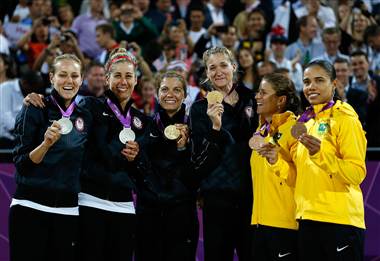
“At the beach volleyball women’s final at the 2012 London Games, Kerri Walsh Jennings and Misty May-Treanor clinched their third straight gold medal. They beat April Ross and Jennifer Kessy, who earned silver.
pb-120808-beach-volleyball-gold-jm-001.380;380;7;70;0.jpg

After the final point, the four American women congratulated one another, and Ross was a little surprised to hear Walsh Jennings’s whispered words.

“At the net, she said, ‘Let’s go win gold in Rio,’” Ross said. “We hadn’t had that conversation. I was caught off-guard, but it was a no-brainer for me. I was like, ‘Yeah, for sure.’”

‘The Refugee Olympians in Rio’ Robin Wright for The New Yorker, August 2, 2016

“The United Nations estimates that there are now more than sixty-five million people forcibly displaced from their homes. More than twenty-one million are refugees, most under the age of eighteen. More than half of these fled from one of three countries—Somalia, Afghanistan, or Syria. Ten million forcibly displaced people are stateless. The number of the displaced goes up by an average of thirty-four thousand every day.”

155665.jpg“When the Games begin in Rio de Janeiro, the opening ceremony, on Friday, will pay tribute to the world’s displaced and stateless persons. During the parade of nations, a team of ten young refugees will enter Maracanã Stadium as their own team—a first in Olympic history.

In announcing the team, Thomas Bach, the president of the I.O.C., said, “These refugees have no home, no team, no flag, no national anthem. We will offer them a home in the Olympic Village, together with all the athletes of the word. The Olympic anthem will be played in their honor, and the Olympic flag will lead them into the Olympic Stadium.” Bach continued, “These refugee athletes will show the world that despite the unimaginable tragedies that they have faced, anyone can contribute to society through their talent, skills, and strength of the human spirit.”

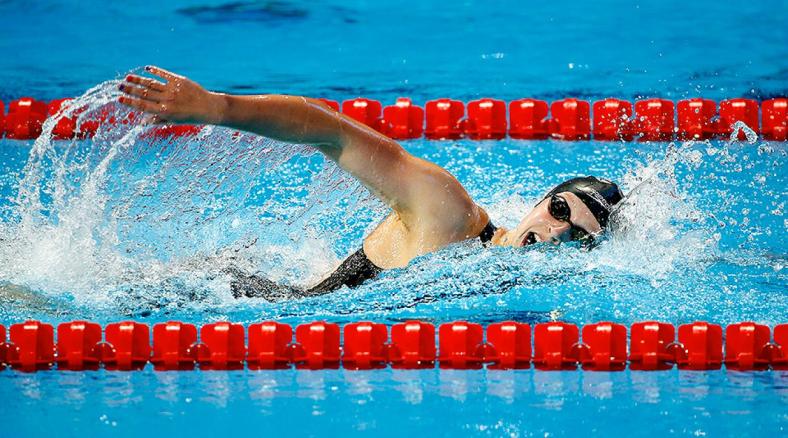
‘Olympic Swimmer Ledecky Is This Century’s Perfect 10’ Frank Deford for NPR, August 3, 2016

Frank Deford’s narrative give us a thumbnail portrait of the modern olympics when the marquee events of track and field were placed in the second week and swimming took a back seat to women’s gymnastics beginning with Olga Korbut in 1972. But gymnastics has changed their scoring system, and there are no perfect 10s, so we switch our attention back to the pool and swimmer Katie Ledecky.
katie-ledecky-road-to-rio.jpg

“In the television era, the second week of the Olympics is reserved for what is considered the marquee event: track and field.

So, the shared premier showcases of the first week are swimming and women’s gymnastics. While swimming was always a spotlight sport, I was, if you will, sort of present at the creation when gymnastics became the new star lead-off hitter.”

Watching an ‘Olympic Preview’ on TV Thursday evening, I thought I had tuned in to ’60 Minutes’ with coverage of Zika, terrorism, street protests and environmental concerns. Now the story will shift, to be written by the athletes. Let’s celebrate these athletes who represent their home countries and compete “in the true spirit of sportsmanship, for the glory of sport and the honour of our teams.”


What I did this summer…

What happened to summer? Is it me, or does time go by more quickly after July 4? Before your experiences of the past few months are lost in the excitement of fall work assignments, take some time to reflect on what you learned.

Did you travel, study, volunteer or all of the above? Did your curiosity lead you to interviews with folks outside your career field? What did you learn about yourself?

Catalog your experience including the skills you acquired or any challenges you overcame. Some of these will fall naturally into a resume, but others will provide the content for future professional conversations.

How did you grow as an individual or as a professional? Can you identify ways to link your summer experience to your current work?

Sanity and survival compel us to try to separate work from the rest of our lives. But when we return to work after vacation, maintaining the separation can be a barrier to creativity.

Refreshing the view allows us to be open to new opportunities.

Develop a narrative that tells your story of the summer – a story that incorporates all the elements of the ‘new and improved’ you. Keep it simple. Focus on experience that adds value to your ‘brand @work’.

A conversation poolside that sparked an idea for a new product. An article/book that offered an alternative approach to problem-solving. A civic engagement project that spurred ideas to motivate your team. A faculty member or classmate who provided a connection to a potential new client.

Or, did the chance to step away and just daydream provide new insight into your next career?


The week@work – a historic moment in Philadelphia, a ‘profile in courage’, the culture @Fox & @Bridgewater Associates & an adventure ends

It was a week of firsts: a solar powered aircraft completed the first circumnavigation of the globe and the Democratic National Convention nominated the first woman as a candidate of a major party for U.S. president. The corporate culture of Fox News and hedge fund, Bridgewater Associates continued to be scrutinized. And one man, took the stage in Philadelphia for seven minutes, proving we can all make a difference.

On Thursday evening Hillary Clinton, former U.S. Senator from New York and former Secretary of State, accepted the nomination of the Democratic Party as their candidate for President of the United States.

“And so, my friends, it is with humility, determination, and boundless confidence in America’s promise that I accept your nomination for president of the United States.”

images.jpeg

For 50.8% of the American people, a career milestone was achieved; ninety-six years after the ratification of the 19th amendment granting the right of suffrage to women.

University of New Hampshire professor of history and author, Ellen Fitzpatrick reflected on the moment and it’s ironies. When a woman finally checks all the ‘pay your dues’ boxes, in any career field, doubts about their motivation and abilities linger.

“One of the most powerful ironies in a political season full of perversities is a paradox that now defines Hillary Clinton’s campaign: The first female presidential candidate to overcome the obstacles that sank every single woman before her now confronts criticism for overcoming those very same difficulties.

Time and again, Americans have deemed men worthy of the White House if they could succeed on the national political stage, raise sufficient money, rally the support of party leaders, appeal to voters and point to domestic and foreign policy experience. That these assets are suddenly negatives, at the very moment that a woman finally achieved them, is curious, to say the least.”

Curious, but not surprising.

On Saturday The Los Angeles Times responded to readers who took exception to coverage of the historic moment with a front page photo of former President Bill Clinton.

“Like other newspapers, The Times illustrated its main story Wednesday on Hillary Clinton’s historic nomination for president with a photo — of her husband.

Of course, Bill Clinton is no ordinary spouse of a candidate (and neither was Hillary Clinton when her husband was president). Still, many readers detected a whiff of sexism in The Times’ decision to feature a large photo of the former president basking the adulation of the Democratic National Convention crowd when it was the former secretary of State who received her party’s nomination for president.”

Like other newspapers? Apparently imitation is the new competitive advantage.

Three reader comments were included; my favorite from Janet Kinosian of Santa Ana – “I’m sure the Suffragettes would not have been surprised, though I am.”

One of the most memorable moments of the convention in Philadelphia occurred when the parents of Capt. Humayun Khan, who was killed in Iraq four months after arriving in 2004, stepped to the podium.

Annabelle Timsit chronicled ‘Seven Minutes That Shook the Convention’ for Politico Magazine.

Khizr Khan.jpeg

“He walked onto the convention stage Thursday night with his wife beside him, the Constitution to guide him and the pride of a father who knows he has a story to tell.

“Tonight,” said Khizr M. Khan, “we are honored to stand here as the parents of Capt. Humayun Khan, and as patriotic American Muslims with undivided loyalty to our country.”

That was the beginning of a 7-minute speech that became an instant sensation—eloquent, emotional and notably original, coming as it did at the end of four days of highly processed political cliche. Khan, a 66-year-old immigration lawyer from Charlottesville, told the story of his son’s death in combat in Iraq, but he turned that elegy into a viral rebuke of Donald Trump: “You have sacrificed nothing!”

In 1957, before his presidential candidacy, President John F. Kennedy wrote the Pulitzer Prize winning book, ‘Profiles in Courage’.

“In the preface to ‘Profiles in Courage’, Senator Kennedy discusses the “problems of political courage in the face of constituent pressures, and the light shed on those problems by the lives of past statesmen.’’ He describes the three types of pressure faced by senators as pressure to be liked, pressure to be re-elected, and pressure of the constituency and interest groups…the book is about his admiration of the courage shown by elected leaders in the face of adverse factions like their electorates, popular opinion and political action committees that pull these elected men in different directions.”

Khizr M. Khan is not an elected official, but he is a citizen. And on Thursday evening his remarks filled a leadership void, demonstrating courage “in the face of adverse factions and popular opinion” – a contemporary ‘profile in courage’.

Each week The New York Times publishes the ‘Traffic Report’, a list of the most-read business articles on nytimes.com for the previous week. Three of the top four stories this week centered on corporate cultures that enabled sexual harassment of employees at Fox News and Bridgewater Associates.

Jim Rutenberg, Emily Steel and John Koblin covered the number one story, ‘At Fox News, Kisses, Innuendo, Propositions and Fears of Reprisal’.

“The investigation by Fox News’s parent company, 21st Century Fox, focused narrowly on Mr. Ailes. But in interviews with The New York Times, current and former employees described instances of harassment and intimidation that went beyond Mr. Ailes and suggested a broader problem in the workplace.

The Times spoke with about a dozen women who said they had experienced some form of sexual harassment or intimidation at Fox News or the Fox Business Network, and half a dozen more who said they had witnessed it. Two of them cited Mr. Ailes and the rest cited other supervisors. With the exception of Ms. Bakhtiar, they all spoke on the condition of anonymity, citing embarrassment and fear of retribution. Most continue to work in television and worry that speaking out could damage their careers.

They told of strikingly similar experiences at Fox News. Several said that inappropriate comments about a woman’s appearance and sex life were frequent. Managers tried to set up their employees on dates with superiors.”

And while a spokesperson for the parent company 21st Century Fox detailed the corporate sexual harassment policy and reporting procedures, Michael Grynbaum and Emily Steel noted ‘A Stony Silence at Fox News After Ailes’s Departure’.

“The Fox News skybox here turns into a hive of activity as the network’s star anchors analyze the Democratic National Convention for millions of viewers.

When the cameras blink off, however, the banter has been replaced by something rarely heard in the television news business: silence.

Megyn Kelly and her co-hosts, including Bret Baier and Brit Hume, have not been speaking during commercial breaks, according to two people with direct knowledge of the anchors’ interactions, who described the on-set atmosphere at Fox News as icy. During ads, the hosts are often absorbed with their smartphones.

…employees say there is a continuing split inside the network, with one camp of old-guard Fox News loyalists — some of whom owe their careers to Mr. Ailes — upset at his ouster. Some are resentful toward Ms. Kelly for cooperating with lawyers brought in by the network’s parent company, 21st Century Fox, to investigate Mr. Ailes’s behavior.” 

Alexandra Stevenson and Matthew Goldstein reported on the culture at the hedge fund, Bridgewater Associates – ‘At World’s Largest Hedge Fund, Sex, Fear and Video Surveillance’.

“Hedge funds tend to be a highly secretive bunch, yet even within their universe Bridgewater stands out. The allegations, as well as interviews with seven former employees or people who have done work for the firm and a filing by the National Labor Relations Board, open a window into the inner workings of a $154 billion company that, despite its mammoth size, remains obscure. The firm is governed by “Principles” — more than 200 of them — set out in a little white book of Mr. Dalio’s musings on life and business that some on Wall Street have likened to a religious text.

In his complaint, Christopher Tarui, a 34-year-old adviser to large institutional investors in Bridgewater, contends that his male supervisor sexually harassed him for about a year by propositioning him for sex and talking about sex during work trips.”

Sexual Harassment remains a significant workplace issue. The popularity of articles covering high profile incidents reflect the reality of workers looking for guidance beyond mandatory training sessions, trying to navigate the workplace to achieve success based on merit.

For the last story, a question, what is the definition of adventure? The pilots of the Solar Impulse 2 told CNBC “that having both elating moments and setbacks made the solar-powered flight the “definition of adventure.”

Samantha Masunaga reported for The Los Angeles Times on the journey’s end of Solar Impule 2. On Monday, pilots Bertrand Piccard and Andre Borschberg guided their craft into the airport where their experimental flight began.

rtw_solar_impulse_2_landing_in_abu_dhabi_finishing_the_round-the-world_journey_2016_07_26-1.jpg

“After 16 months and a 17-leg journey, a solar-powered plane finally completed its around-the-world flight attempt Monday evening when it touched down in Abu Dhabi, United Arab Emirates.

The plane, called Solar Impulse 2, landed at Al Bateen Executive Airport a few minutes after 5 p.m. Pacific time, marking the first around-the-world solar flight.

Inside the plane, pilot Bertrand Piccard shouted, “We made it.”

In a week@work of firsts, I echo the sentiment. We made it.


Photo Credit – Solar Impulse 2: Jean Revillard / REZO/Solar Impulse

‘The little blue dress’ – Christian Siriano finds success in ‘designing’ a career of inclusion

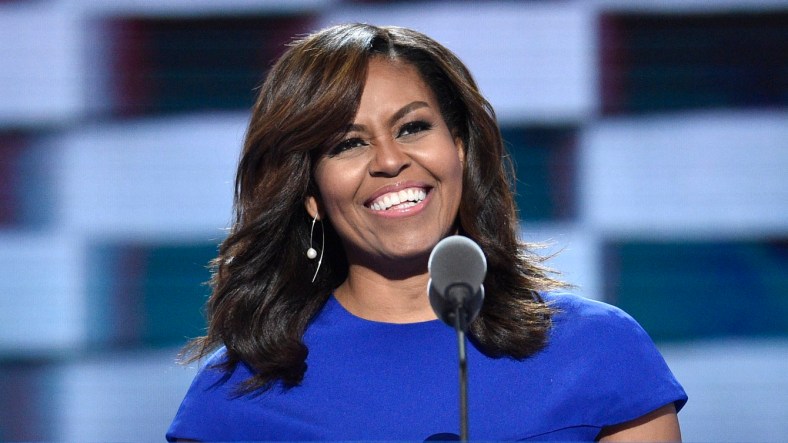
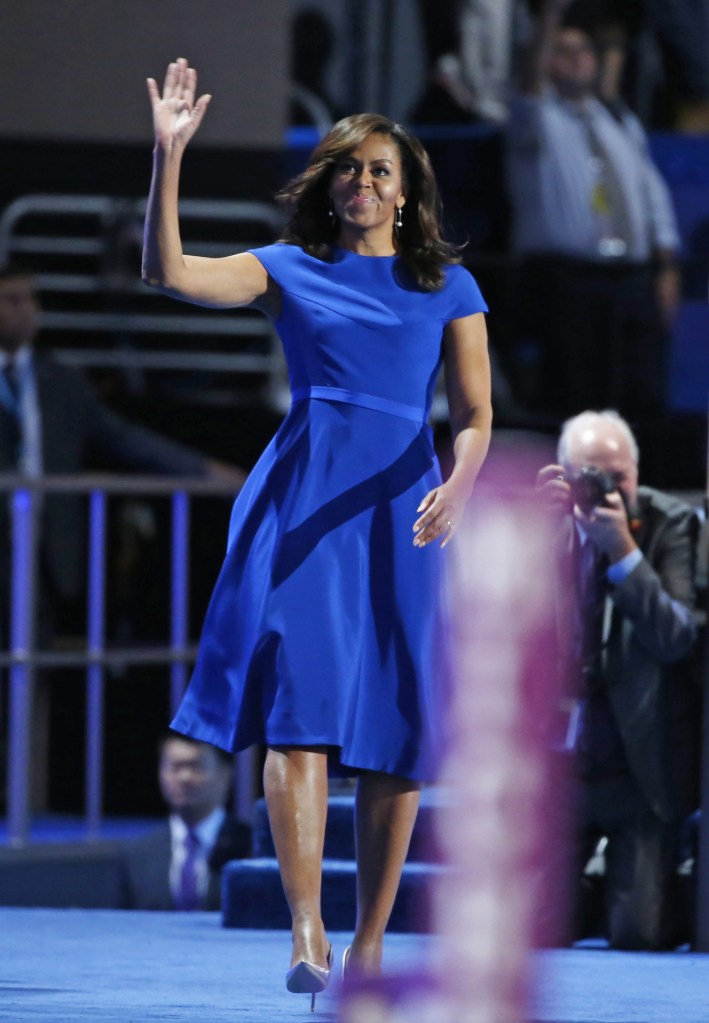
Clothes make the woman. Forget the ‘little black dress’. Last night at the Democratic National Convention, designer Christian Siriano created a new fashion statement in his dress for First Lady Michelle Obama – the ‘little blue dress’.

Mr. Siriano, winner of season four of Project Runway, has become the ‘go to’ wizard of real women’s clothing design.

On June 28  ‘Ghostbusters’ actress and Saturday Night Live cast member, Leslie Jones tweeted“It’s so funny how there are no designers wanting to help me with a premiere dress for movie. Hmmm that will change and I remember everything.”

Mr. Soriano responded within an hour “@Lesdoggg ✋🏼👋🏼”

In a follow-up tweet he expressed his long held work values.

“It shouldn’t be exceptional to work with brilliant people just because they’re not sample size. Congrats aren’t in order, a change is.”

One could guess it’s this attitude of inclusion that put him on the First Lady’s radar.

The New York Times ‘On the Runway’ columnist, Vanessa Friedman noted the link.

“Lest you think Mrs. Obama’s wardrobe choice was just happenstance, however, know that the convention appearance was only the second time she has worn Mr. Siriano; the first time was this month, at the funeral for the police officers killed in Dallas.

Throughout her time in the White House, the first lady has made something of a secondary cause out of supporting new, independent American designers, and choosing her clothes not only because she likes them but because their back story has a certain resonance that goes beyond the aesthetic. Monday night was no different. Fashion is not known for its embrace of togetherness (more for its exclusion). But Mr. Siriano is.

Think that’s just a coincidence?”

michele obama

We make an impression with how we dress. For those in the public eye, where you are one wardrobe malfunction away from a twitter storm, what you wear communicates who you are.

For the rest of us, not a size 2, figuring out what to wear to work is more than dress selection, it’s choosing the ‘costume of the day’ that will enhance our confidence and  communicate our individuality and work ethic.

You never know who may be paying attention.

I look forward to following Mr. Soriano’s career and hope others will follow his leadership to create contemporary fashion for today’s diverse workplace reality.


Photo credit: Mrs. Obama – Reuters


The week@work – heat dome, plagiarism, ‘Pokemon Go’, Yahoo, life/work coaches, and classical music

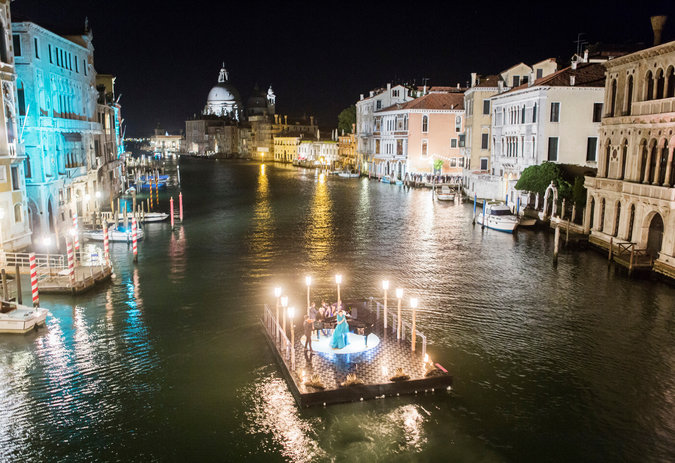
This week@work was hot, with a meteorological ‘heat dome’ encasing most of the continental United States. When I saw the photo above in The New York Times on Wednesday, I just wanted to be transported to a barge in Venice where the cast of Amazon’s ‘Mozart in the Jungle’ were filming. (Enjoy the view from Gianni Cipriano for The New York Times)

In other stories this week, the Republican Party chose their candidate for president and initiated a valuable conversation about plagiarism. The ‘Pokemon Go’ app provided a much needed diversion as thousands engaged in this new high tech sport of creature collection. Vindu Goel took a stroll down memory lane to a time when Yahoo reigned over Silicon Valley. Life/work coaches are the new workplace perk, and classical musicians are returning to the small screen.

ap_16204054986884-c933b07c211cf5f4ee5010ad00bc31a208284ae1-s1400-c85.jpg

No that is not a photo of Zeus expressing displeasure with politicians in Cleveland. It’s Port Washington, Wisconsin photographed by AP photographer Jeffrey Phelps.

Rebecca Herscher reported on the weather for NPR.

“A heat dome occurs when high pressure in the upper atmosphere acts as a lid, preventing hot air from escaping. The air is forced to sink back to the surface, warming even further on the way. This phenomenon will result in dangerously hot temperatures that will envelop the nation throughout the week.”

NASA reported on Tuesday that ‘2016 Climate Trends Continue to Break Records’.

“Each of the first six months of 2016 set a record as the warmest respective month globally in the modern temperature record, which dates to 1880, according to scientists at NASA’s Goddard Institute for Space Studies (GISS) in New York. The six-month period from January to June was also the planet’s warmest half-year on record, with an average temperature 1.3 degrees Celsius (2.4 degrees Fahrenheit) warmer than the late nineteenth century.”

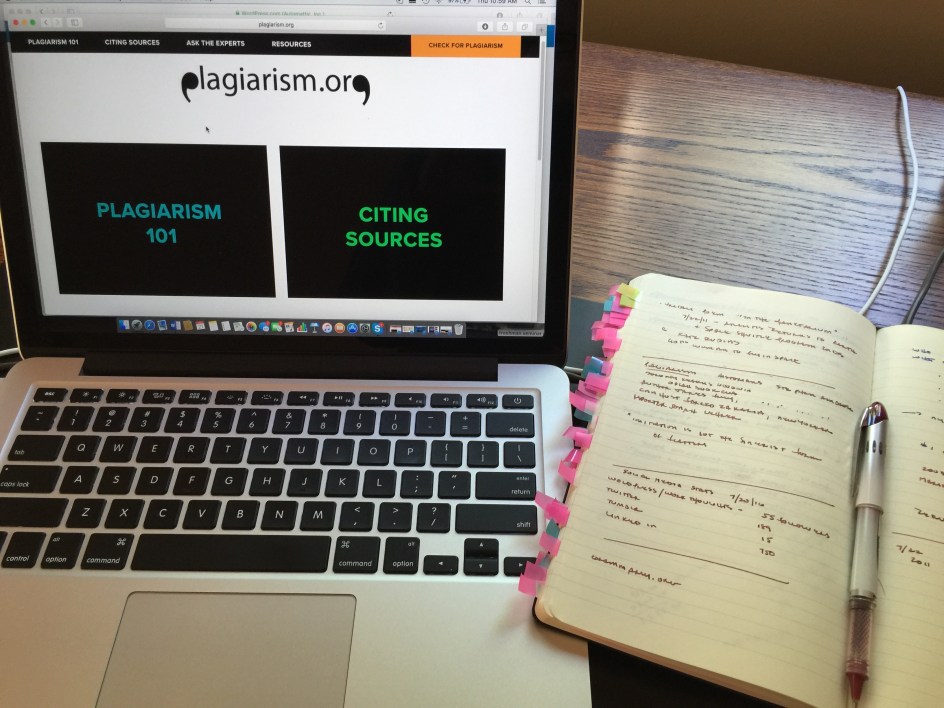
We are hot. We are busy. We live in a time of ‘short-cuts’. Workplace deadlines force creativity into ‘cut and paste’ document creation. Original thought becomes a casualty of increased workload. Sometimes we forget to give credit to other’s ideas and find ourselves on the slippery slope of plagiarism.

Last week the Republican National Convention became the unexpected catalyst for a discussion of this topic, an essential component of every college new student orientation program.

IMG_5066.jpg

Writing on huffingtonpost.com, Karen Topham offered ‘An English Teacher’s View Of The Trump Plagiarism Issue’.

“Plagiarism is any unattributed content. It’s kind of like pregnancy: you can’t plagiarize just a little because even a little is plagiarism.

I had my last case of plagiarism late last winter. A girl was under the gun and copied an essay from the internet. I explained to her (as I’d done so often before) that she was probably lucky in the long run that I had caught her. Anyone who gets away with this stuff is likely to try it again. In high school, it’s a zero and maybe a chance to do it over. But in most colleges, it’s a violation of academic honesty that can get you expelled. And this is my point: we hold college students to this very high standard.”

You have been warned.

On the lighter side, David Streitfeld gave a first person account of ‘Chasing Pokemon In Search of Reality In a Game’: downloading the app, setting out to capture a few creatures, and meeting fellow gamers along the way.

hero-970-80

“In this season of random assassinations and political uproar, who could resist the temptation to supplement a high-strung and frightening reality with some gentle make-believe?

Fifty years ago, the F.B.I., worried that the youth of America might foment revolution, would infiltrate San Francisco demonstrations. Now the tech companies are doing the monitoring, wondering if games like Pokémon represent a threat that must be neutralized or an opportunity to be exploited. That’s progress for you.”

In other Silicon Valley News, Wall Street Journal reporters Ryan Knutson and Deepa Seetharaman confirmed the Verizon acquisition of Yahoo.

Unknown.jpeg

“Verizon Communications Inc. has agreed to pay $4.8 billion to acquire Yahoo Inc., according to a person familiar with the matter, ending a drawn-out auction process for the beleaguered internet company.

The price tag, which includes Yahoo’s core internet business and some real estate, is a remarkable fall for the Silicon Valley web pioneer that once had a market capitalization of more than $125 billion at the height of the dot-com boom.

For New York-based Verizon, the deal simply adds another piece to the digital media and advertising business it is trying to build.

The deal is expected to be announced early Monday. The news was earlier reported by Recode and Bloomberg.”

In an article earlier in the week, Vindu Goel revisited a time ‘When Yahoo Ruled the Valley’.

“Back in the mid-1990s, before Google even existed, the world’s best guides to the internet sat in Silicon Valley cubicles, visiting websites and carefully categorizing them by hand.

They were called surfers, and they were a collection of mostly 20-somethings — including a yoga lover, an ex-banker, a divinity student, a recent college grad from Ohio hungry for adventure — all hired by a start-up called Yahoo to build a directory of the world’s most interesting websites.

Today, with more than one billion websites across the globe, the very notion seems mad. Even then, there was a hint of insanity about the enterprise.”

Two additional articles of interest from the week@work cover a new benefit for employees transitioning back to work after a leave and a TV series providing classical music performers with visibility not seen since the days of Ed Sullivan.

‘A New Perk For Parents: Life-Work Coaches’ by Tara Siegel Bernard

“At a time when new parents may find themselves overwhelmed — even sobbing late at night as they deal with their new at-home responsibilities while trying to hold down a full-time job — a growing number of companies are making efforts to soften the blow. They are providing employees with coaching sessions, either in person, over the phone or through small group sessions that may be broadcast over the web. The services are often available to new fathers, too.”

‘Classical Stars Seek TV’s Elusive Spotlight’ by Michael Cooper

“It was after midnight on the Grand Canal here, and Plácido Domingo was standing on a floating stage slowly motoring toward the Accademia Bridge, singing the opening lines of a duet from “Don Giovanni.”

With this operatically over-the-top spectacle last week — which drew squeals and flurries of smartphone photos as people passed on a vaporetto, or water bus — Mr. Domingo became the latest classical star to shoot a cameo for “Mozart in the Jungle,” the Amazon comedy about a fictional New York orchestra.

Paul Weitz, who was directing the episode with Mr. Domingo and is an executive producer of the show with Roman Coppola and Mr. Schwartzman, said that the possibility of reaching those viewers was especially enticing to the musicians who have appeared.

“Obviously, it’s a huge issue, and it’s something that is dealt with in the show a lot, about whether classical music is going to be passed on to a new generation,” Mr. Weitz said between shots in his director’s chair. “And all these artists, the reasons that they’re doing this show is because they feel like it’s good for that aspect of the art — that it can bring the music to different people. And anecdotally, I think that’s actually the case.”

Stay cool this week@work with a favorite piece of classical music.


‘In the Planetarium’ a poem by James Doyle

In the past couple of days we marked two events in the history of U.S. space exploration: man’s first walk on the moon and the end of the space shuttle program.

Pulitzer Prize winning journalist John Noble Wilford recalled his coverage of the moon landing for the New York Times from NASA’s Johnson Space Center.

“July 20,1969 — a date that lives in my memory as the great divide, the B.C. to A.D., in my journalism career. It was the day of the first walk on the moon by humans, Neil Armstrong and Buzz Aldrin, and I covered the event for The Times from mission control in Houston.

I began my front-page article with a sentence as simple as it was astonishing:

Men have landed and walked on the moon.

Two Americans, astronauts of Apollo 11, steered their fragile four-legged lunar module safely and smoothly to the historic landing yesterday at 4:17:40 P.M., Eastern daylight time.

Neil A. Armstrong, the 38-year-old civilian commander, radioed to earth and the mission control room here:

“Houston, Tranquility Base here. The Eagle has landed.”

On July 21, 2011 the space shuttle Atlantis landed on runway 15 at the Kennedy Space Center in Florida ending the 135th mission and 30 years of the U.S. Space Shuttle program. Today visitors can tour an exhibit at the site in Florida “displayed as only spacewalking astronauts have seen her before — rotated 43.21 degrees with payload doors open and its Canadarm (robotic arm) extended, as it has just undocked from the International Space Station.” 

Astronauts still travel into space. As I write this, the 60th woman to fly in space, Kate Rubins, orbits among the stars above us.

I wonder if this Friday’s poem was written for her by a friend who accompanied her on a school field trip to the Planetarium.

In the Planetarium

I read the palms of the other
kids on the field trip to see
which ones would grow up

to be astronauts. The lifeline
on Betty Lou’s beautiful hand
ended the day after tomorrow,

so I told her how the rest
of our lives is vastly over-rated,
even in neighboring galaxies.

When she asked me how I knew
so much, I said I watched
War of the Worlds six times

and, if she went with me to
the double-feature tomorrow,
I’d finish explaining the universe.

I smiled winningly. The Halley’s Comet
lecture by our teacher whooshed in
my one ear and out the other.

James Doyle   ‘The Long View Just Keeps Treading Water’, Accents Publishing, 2012

(Photo Scott Kelly #YearInSpace “Looking out to the Milky Way”)

“Dignify the outsider” & other lessons from Carolyn See

When we talk about mentors, we often confine ourselves within the walls of our chosen profession. Carolyn See, professor and writer, was also a ‘world class’ mentor to those who were ‘outsiders’ to the world of New York publishing, the purveyors of taste in American storytelling.

I met Carolyn after a panel at the 2003 Los Angeles Times Festival of Books, when she was signing copies of ‘Making a Literary Life: Advice for Writers and Other Dreamers’. We had a brief conversation and I followed up with an email a few days later to thank her for taking the time to chat. Her response was immediate, gracious and filled with humor.

At the time I was not a writer, but a ‘dreamer’, considering a literary life, while pursuing a passion working with college students. Carolyn encouraged me to explore the writing life, and taught me what it truly means to be a mentor.

Carolyn died last week in Santa Monica, California. Many of her students and friends have shared their memories in published obituaries and tweets. In all there is the common thread of the ‘insider’ welcoming the ‘outsider’.

“…I believe, with a patriotic sincerity that would make a Legionnaire blush, that American literature is owned by everybody in America and that world lit is owned by everyone in the world and that we all get to have a say in it, not just a comparatively few men and women in the Northeast, no matter how decent and talented they may be.”

LA Times columnist, former book critic and writer, David Ulin described his relationship with Carolyn in 2014.

“Carolyn taught me how to be a writer in California. For her, that meant a three-dimensional literary life: writing, teaching and reviewing, all of them inextricable from the whole. As a critic, I have tried to follow her model that reviews should be part of an ongoing conversation with one’s readers, and should explicate something essential — not only whether or not we like a book, but also how it connects to, or reflects, our aesthetics, our world view. Carolyn has always regarded reading as an act of engagement . . . and reviewing, too.”

What is a mentor? What can we learn from the life of a writer if we have followed a completely different career path?

A mentor teaches you to be the three-dimensional human in your workplace vision of success.

In ‘Making a Literary Life, Carolyn offers two menu items: ‘Carolyn’s 18 Minute Chili’ and ‘Carolyn’s 18 Hour Chili’.  For the writer, the two step (18 minute) is “a thousand words a day or two hours of revision” and “a charming note to a writer, editor or agent you admire – five days a week for the rest of your life”.

This is what a mentor does, unselfishly shares their recipe for success with measurable, accountable advice. And the part about ‘charming notes’? It’s universal in its application. This is not about ‘sucking up’, but genuinely expressing gratitude or professional admiration, tied to a specific circumstance.

The ’18 hour chili alternative’ includes suggestions to “take an outside excursion once a week”, “pretend- in your mind – to be…”, and “make a list of what a … like you might want”.

We need to get outside our ‘comfort zone’ to stay creative. It’s essential to visualize what you would be like in your dream job, and equally important, to hold an image of what success looks like to you.

“You can go a surprisingly long time without figuring out the kind of person you are and in what direction your life is taking you.”

It’s why I will always be grateful for my encounter with Carolyn See, and why we all, outsiders included, need a mentor who keeps us honest and on track toward success.


The week@work – “our culture is changing”, internship access, sexual harassment@Fox & the June jobs report

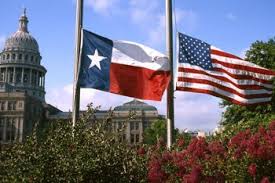
For the 67th time in his term, President Obama ordered the flag of the United States be flown at half-staff; this time in memory of the police officers in Dallas. Sixty-seven times, a record for a presidential administration.

This week@work we look at two responses to the violence, consider an opinion on internship access, examine a high profile workplace harassment lawsuit, and the implications of the June jobs report.

“As a mark of respect for the victims of the attack on police officers perpetrated on Thursday, July 7, 2016, in Dallas, Texas, by the authority vested in me as President of the United States by the Constitution and the laws of the United States of America, I hereby order that the flag of the United States shall be flown at half-staff at the White House and upon all public buildings and grounds, at all military posts and naval stations, and on all naval vessels of the Federal Government in the District of Columbia and throughout the United States and its Territories and possessions until sunset, July 12, 2016. I also direct that the flag shall be flown at half-staff for the same length of time at all United States embassies, legations, consular offices, and other facilities abroad, including all military facilities and naval vessels and stations.”

images.jpeg

On Friday morning, veteran CBS newsman, Bob Schieffer, was asked to provide context to the events of the past week, drawing on his 50 years as a journalist.

“One thing we overlook: our culture is changing…We are becoming a less patient society, we are becoming a more demanding society, for want of a better word, we are becoming a ruder society, and we see this playing out in road rage, in the way we treat one another…Nobody is satisfied with anything now…People are dissatisfied, frustrated and they act out…”

Libby Hill of the Los Angeles times reported on host of the Daily Show Trevor Noah‘s, seven-minute monologue “in the wake of the police-involved killings of Alton Sterling and Philando Castile.”

“It always feels like, in America, if you take a stand for something, you are automatically against something else…It’s either one or the other…But with police shootings it shouldn’t have to work that way.

 You can be to be pro-cop and pro-black. Which is what we should all be. It is what we should all be aiming for…The point is you shouldn’t have to choose between the police and the citizens they are sworn to protect.”

If the world is changing outside our workplace, what’s the impact on our daily work lives? Does frustration on the 405 translate into contention in the conference room? Our lives don’t fit neatly into the ‘work’ and ‘life’ box. We will need to draw on every ounce of empathy to listen, reflect, respect and respond.

Sometimes we just don’t think about how the system is ‘rigged’ and why people are angry. Skeptical? Let’s talk internships.

photo_61045_landscape_650x433

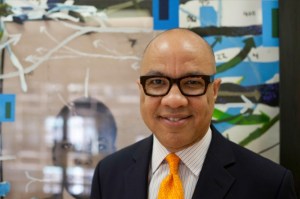
On Tuesday, Darren Walker, the president of the Ford Foundation penned an opinion for the New York Times, ‘Internships Are Not A Privilege’.

“Talent is equally distributed, but opportunity is not. And while many Americans believe fervently and faithfully in expanding opportunity, America’s internship-industrial complex does just the opposite.

And whether it’s an internship, college admission or any of the many other factors that determine a successful life, leaders who say they want to address inequality actually — and often unconsciously — reinforce the dynamics that create inequality in their own lives.

The broader implication is privilege multiplied by privilege, a compounding effect prejudiced against students who come from working-class or lower-income circumstances. By shutting out these students from entry-level experiences in certain fields, entire sectors engineer long-term deficits of much-needed talent and perspective. In other words, we’re all paying the price for unpaid internships.

For countless Americans, me among them, internships have provided a foothold on the path to the American dream. Simply by making them more accessible to all, we can narrow the inequality gap while widening the circle of opportunity, long after the summer ends.”

Another major workplace story broke on Wednesday with news that Gretchen Carlson had filed a lawsuit against Fox News chairman, Roger Ailes, exposing a culture of sexism and workplace sexual harassment.

-J3Fem6E_400x400.jpg

Gabriel Sherman covered the story for New York Magazine, reporting:

“Fox News host Gretchen Carlson may be the highest-profile woman to accuse Roger Ailes of sexual harassment, but she is not the first. In my 2014 biography of the Fox News chief, I included interviews with four women who told me Ailes had used his position of power to make either unwanted sexual advances or inappropriate sexual comments in the office.

And it appears she won’t be the last, either. In recent days, more than a dozen women have contacted Carlson’s New Jersey-based attorney, Nancy Erika Smith, and made detailed allegations of sexual harassment by Ailes over a 25-year period dating back to the 1960s when he was a producer on The Mike Douglas Show. “These are women who have never told these stories until now,” Smith told me. “Some are in lot of pain.” Taken together, these stories portray Ailes as a boss who spoke openly of expecting women to perform sexual favors in exchange for job opportunities. “He said that’s how all these men in media and politics work — everyone’s got their friend,” recalled Kellie Boyle, who says Ailes propositioned her in 1989, shortly after he helped George H.W. Bush become president, serving as his chief media strategist.”

And while we are on the topic of women@work, Andrew Das reported on the ongoing story, ‘U.S. Women’s Soccer Players Renew Their Fight for Equal Pay’.

screenshot-11.png“Beaten in federal court and rebuffed at the negotiating table, the United States women’s national soccer team is taking its fight for equal pay back to friendlier turf: the court of public opinion.

Beginning with an exhibition match this weekend in Chicago and continuing through the Olympics next month in Brazil, members of the team said on Thursday that they would embark on a campaign that they hope will increase the pressure on the United States soccer federation to pay the women compensation equal to their counterparts on the men’s national team in their next collective bargaining agreement.”

On Friday, Adam Shell of USA TODAY, analyzed the June jobs report from the U.S. Labor Department.

“After stalling briefly, the U.S. job-creation engine is again revving into high gear, rejuvenating Wall Street and sending stocks close to record highs.

The U.S. economy created 287,000 new jobs in June, which was 100,000 more than economists had forecast and the best monthly gain since October 2015.

And that is about as good a news headline as Wall Street could ask for after May’s gloomy jobs report (the initial 38,000 May jobs count was revised down to a paltry 11,000 in Friday’s report) and all the Brexit-related doom-and-gloom the past few weeks that put a scare into investors.”

cm-p12vwiaeczwd-jpg-large.jpegOn Saturday evening, for ‘one last time‘ –  “Lin-Manuel Miranda, the creator and star of the Broadway smash “Hamilton,” made a subdued final bow Saturday alongside two other departing stars — Leslie Odom Jr. and Phillipa Soo — in the show that has become a cultural phenomenon.”

Miranda’s final performance Saturday at the Richard Rodgers Theatre was also the last for Odom Jr., who won a Tony Award as Aaron Burr, and Soo, a Tony nominee who portrayed Eliza Schuyler. The three — plus an ensemble member — took their bows together but none said anything.”

Hoping for a better week@work to come.


‘Other duties as assigned’- In search of a congressional job description

Last week members of the U.S. House of Representatives staged a ‘sit in’ on the House floor – #NoBillNoBreak and then went home. In London, Members of Parliament argued the outcome of the #Brexit vote, trying to gain a foothold in a new world order. It got me thinking. With all this visibility, maybe more folks would be interested in a career as a congressman/congresswoman or MP.

Like any job seeker, I decided to look for a job description. You know, one of those outlines of responsibilities and ‘other duties as assigned’. I started my research where we all start, on Google.

For the UK, it was quite easy to come up with an ‘MP’s generic job description’ on the official UK Parliament website. Although it seems not to have been updated since 2001, it clearly sets out the scope of the job.

Job purpose

Represent, defend and promote national interests and further the needs and interests of constituents wherever possible.

Principal accountabilities

1.Help furnish and maintain Government and Opposition so that the business of parliamentary democracy may proceed.

2.Monitor, stimulate and challenge the Executive in order to influence and where possible change government action in ways which are considered desirable.

3.Initiate, seek to amend and review legislation so as to help maintain a continually relevant and appropriate body of law.

4.Establish and maintain a range of contacts throughout the constituency, and proper knowledge of its characteristics, so as to identify and understand issues affecting it and, wherever possible, further the interests of the constituency generally.

5.Provide appropriate assistance to individual constituents, through using knowledge of local and national government agencies and institutions, to progress and where possible help resolve their problems.

6.Contribute to the formulation of party policy to ensure that it reflects views and national needs which are seen to be relevant and important.

7.Promote public understanding of party policies in the constituency, media and elsewhere to facilitate the achievement of party objectives.

It’s even written in clear ‘accomplishment’ language that can easily transfer to a resume or CV.

Next, I searched House.gov, the official website of the U.S. House of Representatives. This is what I came up with.

What is a Representative?

Also referred to as a congressman or congresswoman, each representative is elected to a two-year term serving the people of a specific congressional district. Among other duties, representatives introduce bills and resolutions, offer amendments and serve on committees.

Not very accomplishment oriented.

Maybe I was using the wrong search terms. Following logic, I decided to check if there was a ‘new employee handbook’. There is – a ‘Members Congressional Handbook’ that spells out, in painful detail, staff categories, office expenses, communications, travel and House Documents. Still no job description. But clearly, you need to hire folks, budget, manage a staff, talk to colleagues, travel and submit expense reports.

And then there is the fundraising. A CBS 60 Minutes segment examined another ‘job requirement’ – telemarketing – for 30 hours a week.

“The American public has a low opinion of Congress. Only 14 percent think it’s doing a good job. But Congress has excelled in one way. Raising money. Members of Congress raised more than a billion dollars for their 2014 election. And they never stop.”

Check the box on fundraising, but 30 hours?

Here’s my question. How can we measure our representatives without a job description? We think they’re not doing a good job, but where in that short paragraph does it spell out how a member of Congress ‘serves’ the people.

In the UK, elected leaders are beginning a process to decouple from the European Union, not because they want to, but because the democratic referendum requires them to proceed. They have a job description that clearly guides their actions.

In the U.S. if you are 25, a U.S. citizen for seven years, and a resident of the district you wish to represent, you can begin the process to run for election. But what are you running for?

I think it’s time to create a few goals for our elected leaders; not political, but aspirational. For example – at the end of your two year term you will have effectively represented your constituents by visiting, listening and communicating their hopes for this country to your colleagues. You will represent the interests of your party as long as they coincide with the interests of your district. And when your personal views contradict those you represent, you will have the courage to be a servant leader.

We all operate in a workplace where half our day is spent doing things outside our job description. The point is, we are compensated for what we were hired to do. When the ‘other duties as assigned’ overwhelm our original purpose, it’s time to redefine the scope of what we do.

It’s time for a job description for Congress.


The week@work – Brexit, #Regrexit, Euro2016, Christo’s floating piers, Bill Cunningham’s photos, Goldman Sachs’ video recruiting strategy, and education for a jobless future

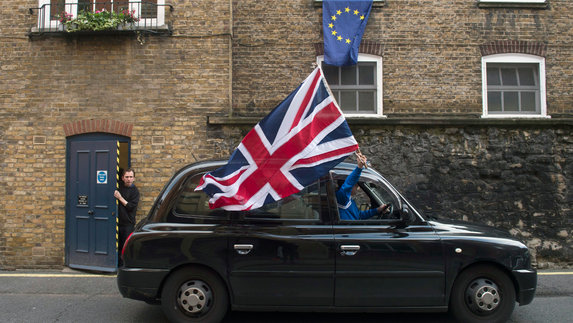
I was a history major, so the past week@work included an inordinate amount of time spent in the company of various traditional and social media portals, monitoring the results of the Brexit vote and its aftermath.

In between, there were intervals of soccer, viewing both Copa America and Euro 2016. There was also art in Christo’s installation in Lake Iseo, Italy and reflected brilliance in the photography of Bill Cunningham, who died this weekend. Goldman Sachs announced a new campus recruiting strategy (good news for history majors), and a journalist asked if education is preparing students adequately for a jobless future.

25Brexit-HP-SS-slide-9PT7-largeWidescreen573-v3.jpg

On Thursday evening I watched part of CNN International’s ‘Brexit’ election coverage, which included an animated discussion between anchor Christiane Amanpour and historian Simon Schama. As it became clear that ‘Leave’ was overtaking ‘Remain’ in the vote count, Schama cited the referendum results as one more example of “a world phenomenon of tribal nationalism”.

The historian has been actively engaged on Twitter and in an interview with NPR’s Robert Siegel described the vote as “a turning point for Great Britain”.

Here’s a sample of the conversation:

SIEGEL:” Culturally, there is a generation of educated young Europeans – and I include Brits in that – who think of themselves at some level as being European. Maybe it’s not their only identity. Do you think that goes away in Britain and does a different identity take shape, or do those people grow up and change in this country?”

SCHAMA: “No, I think they’re in distress. I mean, I’m sure you’ve said, it’s very striking that the 18 to 24s voted something like 75 percent to stay in. And I suppose it depends where you are in London. We have more immigrants than anywhere else, and we’re least bothered by it. And I think when the shock subsides a bit, the young may well fight to be at least as European as they’ve been led to believe they are. That’s my hope, actually.”

SIEGEL: “If you can imagine a historian 50 years hence writing the sentence that will sum up what happened on this day, what do you think it’ll be?”

SCHAMA:” The greatest act of unforced national self-harm yet known in modern history.”

It’s always helpful to have a historian in the house. And it’s stunning to realize the generational split in voting: “Among 18-24-year-olds, the age category that’s going to have to live with the consequences of this vote for all of their working lives, 75 percent voted to stay.”

As to #Regrexit, writer and comedian, John Oliver reminded his countrymen, “there are no f______do-overs”.

In 2004 journalist Franklin Foer wrote ‘How Soccer Explains the World: An Unlikely Theory of Globalization’. Seemed like a good read to revisit after Brexit and an opportunity for a diversion while following Copa America and Euro 2016. The book treats soccer stories as globalization case studies. And I think we could use some ‘best practices’ right about now.

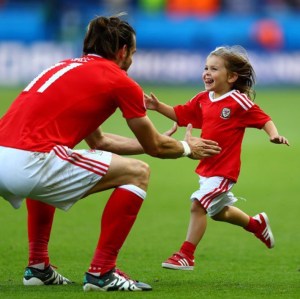
Full disclosure, I am rooting for the Welsh National Football Team as they face Belgium on Friday. My favorite work/life balance photo of the week – Wales’ Gareth Bale and daughter after the team advanced to the Euro 2016 quarter finals.

IMG_4935

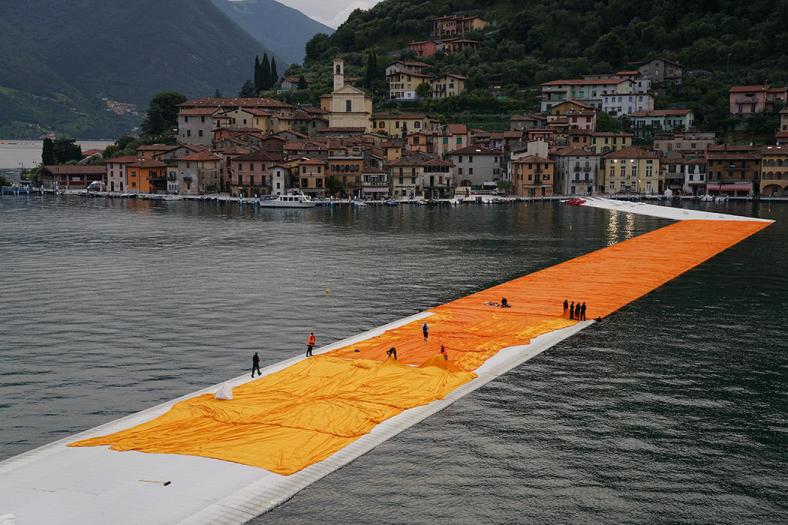
Art is another outlet for expression in chaos and ambiguity. A new Christo work debuted last week. The Guardian reported on the popularity of the ‘Floating Piers’ in Lake Iseo in northern Italy.

58af48a0cb7e83c7f1e3dbf9b4a50e7e.jpg

“A giant floating walkway made out of fabric on an Italian lake has had to be closed at night after tens of thousands of visitors began to wear it out.

The 1.9-mile (3km) walkway of 200,000 floating cubes covered in orange fabric was created by artist Christo and has proved a major attraction since it opened on Saturday on Lake Iseo.

However, 270,000 visitors have flocked to see the free installation – called “the Floating Piers” – in less than five days, far exceeding organisers’ expectations of about 500,000 over 16 days.”

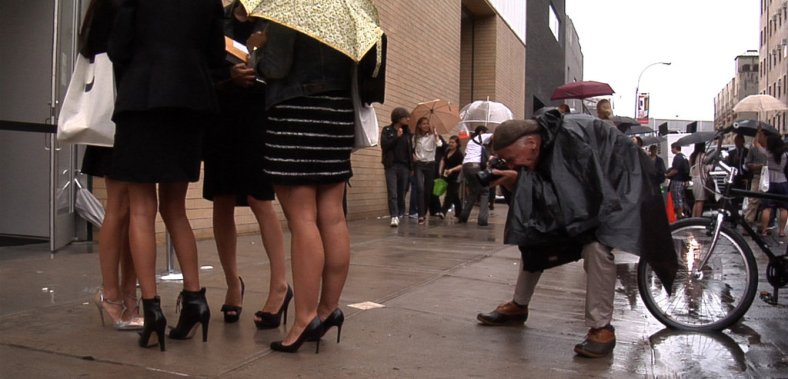
On Saturday, The New York Times chronicled the career of one of their ‘house icons’, photographer Bill Cunningham.

BILL-jumbo.jpg

“Mr. Cunningham was such a singular presence in the city that, in 2009, he was designated a living landmark. And he was an easy one to spot, riding his bicycle through Midtown, where he did most of his field work: his bony-thin frame draped in his utilitarian blue French worker’s jacket, khaki pants and black sneakers (he himself was no one’s idea of a fashion plate), with his 35-millimeter camera slung around his neck, ever at the ready for the next fashion statement to come around the corner.

Nothing escaped his notice: not the fanny packs, not the Birkin bags, not the gingham shirts, not the fluorescent biker shorts.

In his nearly 40 years working for The Times, Mr. Cunningham snapped away at changing dress habits to chart the broader shift away from formality and toward something more diffuse and individualistic.”

Two stories about the transition from school to work round out this week@work.

On Friday, bbc.com reported “Goldman Sachs is scrapping face-to-face interviews on university campuses in a bid to attract a wider range of talent.
The US investment bank will switch to video interviews with first-round undergraduate candidates from next month.

“Edith Cooper, Goldman’s global head of human capital management said: “We want to hire not just the economics or business undergraduate but there is that pure liberal arts or “history major that could be the next Lloyd Blankfein.”

Mr Blankfein, the bank’s chief executive, went to Harvard, one of America’s elite Ivy League universities, where he studied history.”

On Tuesday, Washington Post contributor, Jeffrey J. Selingo asked ‘Are colleges preparing students for the workforce?’

“While students are often encouraged to major in job-ready fields like STEM (science, technology, engineering, and math), graduates of those programs are unlikely to find employment without solid grounding in the liberal arts and experiences outside the classroom to build their soft skills.

In the future work world, it’s critical that new graduates stay one step ahead of technology and focus more on what computers can’t yet do well: show creativity, have judgment, play well with others, and navigate ambiguity.”

It was a good week to be a history major.