The week@work – Grad students win right to unionize, the changing conversation about the economy, why America’s leaders fail and the story of Luke’s Lobster

Academia was in the headlines this week@work with the Tuesday announcement from the National Labor Relations Board, voting 3-1 to overturn a 2004 ruling allowing graduate students to form collective bargaining units. A Pew Research Center survey detected a shift in election season conversation from the economy (2012) to keeping the U.S. safe from terrorism. What conversation? The system isn’t working, and it may be we don’t have leaders who view their ‘calling’ as a ‘vocation’. And finally, a career transition story – from investment banker to ‘lobsterpreneur’ for this last week of summer.
images.jpeg

‘Ruling Pushes Door to Grad-Student Unions ‘Wide Open’ Peter Schmidt for The Chronicle of Higher Education

“Many more private universities can expect to see their graduate employees move to form unions in the wake of Tuesday’s National Labor Relations Board decision on such an effort at Columbia University.

The federal labor board’s 3-to-1 ruling resoundingly overturned a 2004 decision involving Brown University. In the Brown ruling, the board asserted that graduate employees should not be allowed to form unions because their doing so would intrude into the educational process.

In Tuesday’s decision, the majority held that such a belief “is unsupported by legal authority, by empirical evidence, or by the board’s actual experience.” It not only rejected the Brown precedent, but also overturned a 1974 ruling that had declared research assistants at Stanford University ineligible to unionize based on a belief that such research is part of the educational process.

The board’s decision in the Columbia case says graduate students employed by a private university are as eligible as any other type of worker to form collective-bargaining units under the National Labor Relations Act.”

In a letter to the Columbia University community, Provost John H. Coatsworth reiterated the long-held view of university administrators.

“Columbia and many of our peer universities have challenged this position. Nearly all of the students at Columbia affected by this decision are graduate students. We believe that the daily activities and the advisor-advisee relationships involved in the scholarly training of graduate students define an experience that is different from that of the typical workplace. Being a graduate student can take many years of intense research, teaching and study. But unlike university employees, graduate students who serve as teaching or research assistants come to this institution first and foremost to acquire through that work the knowledge and expertise that are essential to their becoming future scholars and teachers.”

The world of academia is changing, and with it the profile of the teaching community. As more adjunct faculty assume the classroom role, it may be harder to differentiate the job description of part-time faculty from that of grad assistant.

To be continued…

New-York-Stock-Exchange-1.jpg

‘Since 2012, The Economy Has Changed — And So Has The Conversation’ Marilyn Geewax for NPR

“Ah, 2012. You seem so long ago.

Back then, the economy was the star of the presidential election season, with more than 9 in 10 voters ranking it as Issue No. 1.

Voters worried about scarce jobs, expensive gasoline and a huge federal deficit.

Candidates proposed detailed solutions…

This year, the political conversation is very different, with much of the focus on non-economic issues: Republican Donald Trump’s temperament and Democrat Hillary Clinton’s trustworthiness.

And a Pew Research Center survey showed that the issue voters want to hear about most in a presidential debate is “keeping the US safe from terrorism.”

Of course, economic issues remain extremely important, but they are different from 2012. This year, the hottest money topics involve income inequality, trade deals and immigrants.”

Why are we focused on temperament and trustworthiness while the ‘big problems’ that effect our daily lives are ignored? David Brooks thinks it’s about career vs. calling, and he may be right.

Washington,_D.C._-_2007_aerial_view.jpg

‘Why America’s Leadership Fails’ David Brooks for The New York Times

“Over the past few decades, thousands of good people have gone into public service, but they have found themselves enmeshed in a system that drains them of their sense of vocation.

Let’s start with a refresher on the difference between a vocation and a career. A career is something you choose; a vocation is something you are called to.

A person choosing a career asks, How can I get the best job or win the most elections? A person summoned by a vocation asks, How can my existing abilities be put in service of the greatest common good?

A career is a job you do as long as the benefits outweigh the costs; a vocation involves falling in love with something, having a conviction about it and making it part of your personal identity.

A vocation involves promises to some ideal, it reveals itself in a sense of enjoyment as you undertake its tasks and it can’t be easily quit when setbacks and humiliations occur. As others have noted, it involves a double negative — you can’t not do this thing.

I do think there’s often an arc to vocation. People start with something outside themselves. Then, in the scramble to get established, the ambition of self takes over. But then at some point people realize the essential falseness of all that and they try to reconnect with their original animating ideals.

And so I think it possible to imagine a revival of vocation.”

The last story this week@work is an ‘end of summer’ career transition feature.

417562_10150602911837473_423900675_n.jpg

‘A Restaurant’s Sales Pitch: Know Your Lobster’  Janet Morrissey for The New York Times

“It was a steamy summer day in New York in 2009 when Luke Holden, an investment banker, had a craving for a lobster roll. Not just any lobster roll, though. He longed for the “fresh off the docks” taste he enjoyed growing up in Cape Elizabeth, Me.

After an exhaustive search on New York’s streets, he came up dissatisfied and disappointed.

“Every lobster was served over a white tablecloth, extremely expensive, drowning in mayo and diluted with celery,” he said. “I wondered why all the great chefs in this city had screwed this up so badly.”

So that year, Mr. Holden decided to open an authentic Maine lobster shack in Manhattan. To replicate that fresh taste that he remembered, he would need to oversee, track and, where possible, own every step in the process.

Today, he owns 19 Luke’s Lobster restaurants, two food trucks and a lobster tail cart in the United States, and five shacks in Japan.”

If you only  read one of these this week, spend some time with David Brooks…and reconnect with your “original animating ideals” and begin a “revival of vocation”. 
Your first day @work is not that different from your first day @college

Late last month, The New York Times shared advice for incoming college freshman from 25 upperclassmen and recent grads. As I read the article, I noted a parallel in the seven topics offered for new students, and folks in their first months @work – from the first internship through every career transition.

“Freshman year is a chance to redefine yourself, to challenge assumptions, to lay the foundation for the rest of your life.”

The first day of work is also a chance to redefine yourself, challenge assumptions and begin to lay the foundation of your career.

Let’s examine the list of seven, and test their application to the workplace.

“Extend yourself”  You are the ‘newbie’ @work. You’re not expected to have all the answers on day one. Ask questions.  Explore the world beyond your cubicle. Find ‘community spaces’ where folks gather, and mingle.

“Do the work”  In college, this is basically showing up for class, @work it’s consistently engaging in projects. Don’t wait to be asked. Offer to participate in assignments that will stretch your talents.

“Understand the system and work it”  Every workplace has its unique culture, values and traditions. If you did your research before you started your new job, you should have an inkling of what to expect. Once you are on payroll, take some time to observe how folks communicate, how priorities are set, where the budget dollars are allocated, and who is making the decisions. Align yourself with the energized vs. the disgruntled.

“Be yourself”  Hopefully you selected a workplace that is a ‘fit’ with your values and talents. If the recruitment process was straightforward, being the ‘authentic’ you will contribute to your success.

You will change as part of a new work community, just as you evolved throughout your college years in an environment that fostered success, creativity, and diversity.  Check in periodically with friends outside your workplace to ensure you’re growing vs. losing your essential essence.

“Tend to yourself”, “Your grade in one class does not define you”  These tidbits of advice applied to work fall into the categories of work/life balance and recovering from failure. It’s very easy to be consumed by the work in the beginning. You’re learning new concepts, meeting new people, struggling to make deadlines, and communicating in a new workplace language. If you’re not spending time outside of work socializing, contributing to your community or maintaining a fitness routine; your work will eventually suffer.

When you do make a mistake, your career isn’t over. The upper strata of success is populated with folks who have recovered from both minor and major workplace calamity.

“Develop people skills”  Without solid communication skills, every day at work will be a challenge. Our work culture has traditionally rewarded the extrovert, but new research has shown the introvert is an equal partner in the success of any organization.

In college you may have been able to get an ‘A’ as an individual, rarely leaving your room, thinking great thoughts and rarely interacting with the campus community. @work you have to deal with people. You may be the most brilliant innovator, but at some point you have to explain your product to a client.

All of us can improve our communication skills and it’s to an organization’s advantage to support you in this effort. Find out if there are skill development programs available through your employer or professional association. Be proactive on this one.

 “Don’t get stuck” Life doesn’t always go according to plan. Entering college you may have thought you would be the next Bill Gates, when a Freshman Seminar introduced you to the wonderful world of philosophy. Tangents open up @work as well. Entering an organization for the first time, you cannot imagine the variety of opportunities that are available. You may be in a meeting with a client and realize the work his/her organization is doing is a better fit for you skills. Be open when an alternative is presented. There is no perfect career path, just one that is unique to you.

One more – always share what you learn with colleagues. Knowledge is power. Shared information can be transformative.

The one thing every Olympian should do before they leave Rio 2016

The one thing every Olympian should do before they leave Rio is update their social media identity across all platforms.

For a brief moment in time Olympic athletes capture the global stage and water cooler conversations. It’s not only those who make the podium, but those we discover in the diverse narratives of their journeys to Rio. The majority will return to their home countries as national heroes, contributing to society, away from the media spotlight. A few may return as coaches or commentators in four years. Most will miss the opportunity to capture the Olympic experience as a bridge to the next phase of their career.

In the past I have worked with returning  Olympians who hesitate to include their achievements in sport on their resume. The most competitive athletes are the most reticent to record their accomplishments.

They just don’t think it’s relevant. It is.

In the global workplace, it’s not just the resume; social media communicates talent instantaneously to potential employers. Your professional image is transmitted through your social media identity.

On Saturday, American Virginia Thrasher won the first gold medal awarded at the games in the women’s the 10-meter air rifle. Within a few hours she was taking her first TV interview on NBC, describing her hectic schedule of additional events and starting her sophomore year at West Virginia University.

In describing her life over the next couple of weeks, Thrasher gave voice to the stress that accompanies the life of every student athlete, combining sport with academics. Often lost, is time for reflection on how these experiences transform the athlete into a professional @work.

How do you build the bridge from sport to work on social media?

Take a look at your social media presence across all platforms: Facebook, Instagram, Snapchat, LinkedIn, Twitter…

Do all the pieces fit into a unifying narrative? If not, it’s time to edit. As an Olympian, expectations have been raised and your online image should reflect your aspirations vs. social missteps.

Have you created links to videos and press coverage of your accomplishments?

Do you post videos and press coverage on your Twitter account?

Have you checked with third party sites to ensure your profile information is up to date?

Do you have an account on LinkedIn? (If you’re making the transition from sport to your next career, this component of your professional online identity is critical as you build your ‘next career’ network.)

There are many athletes who hesitate to be defined by their sport, but the skills developed in pursuit of Olympic gold closely match those sought by potential employers: teamwork, goal orientation, communications, problem-solving, and resilience.

Whether you are a summer Olympian, or a star on your own professional stage, it’s time to seize the moment and refresh you social media identity.


Photo credit: US Women’s Rugby Seven – Geoff Burke for USA TODAY Sports


The week@work – heat dome, plagiarism, ‘Pokemon Go’, Yahoo, life/work coaches, and classical music

This week@work was hot, with a meteorological ‘heat dome’ encasing most of the continental United States. When I saw the photo above in The New York Times on Wednesday, I just wanted to be transported to a barge in Venice where the cast of Amazon’s ‘Mozart in the Jungle’ were filming. (Enjoy the view from Gianni Cipriano for The New York Times)

In other stories this week, the Republican Party chose their candidate for president and initiated a valuable conversation about plagiarism. The ‘Pokemon Go’ app provided a much needed diversion as thousands engaged in this new high tech sport of creature collection. Vindu Goel took a stroll down memory lane to a time when Yahoo reigned over Silicon Valley. Life/work coaches are the new workplace perk, and classical musicians are returning to the small screen.

ap_16204054986884-c933b07c211cf5f4ee5010ad00bc31a208284ae1-s1400-c85.jpg

No that is not a photo of Zeus expressing displeasure with politicians in Cleveland. It’s Port Washington, Wisconsin photographed by AP photographer Jeffrey Phelps.

Rebecca Herscher reported on the weather for NPR.

“A heat dome occurs when high pressure in the upper atmosphere acts as a lid, preventing hot air from escaping. The air is forced to sink back to the surface, warming even further on the way. This phenomenon will result in dangerously hot temperatures that will envelop the nation throughout the week.”

NASA reported on Tuesday that ‘2016 Climate Trends Continue to Break Records’.

“Each of the first six months of 2016 set a record as the warmest respective month globally in the modern temperature record, which dates to 1880, according to scientists at NASA’s Goddard Institute for Space Studies (GISS) in New York. The six-month period from January to June was also the planet’s warmest half-year on record, with an average temperature 1.3 degrees Celsius (2.4 degrees Fahrenheit) warmer than the late nineteenth century.”

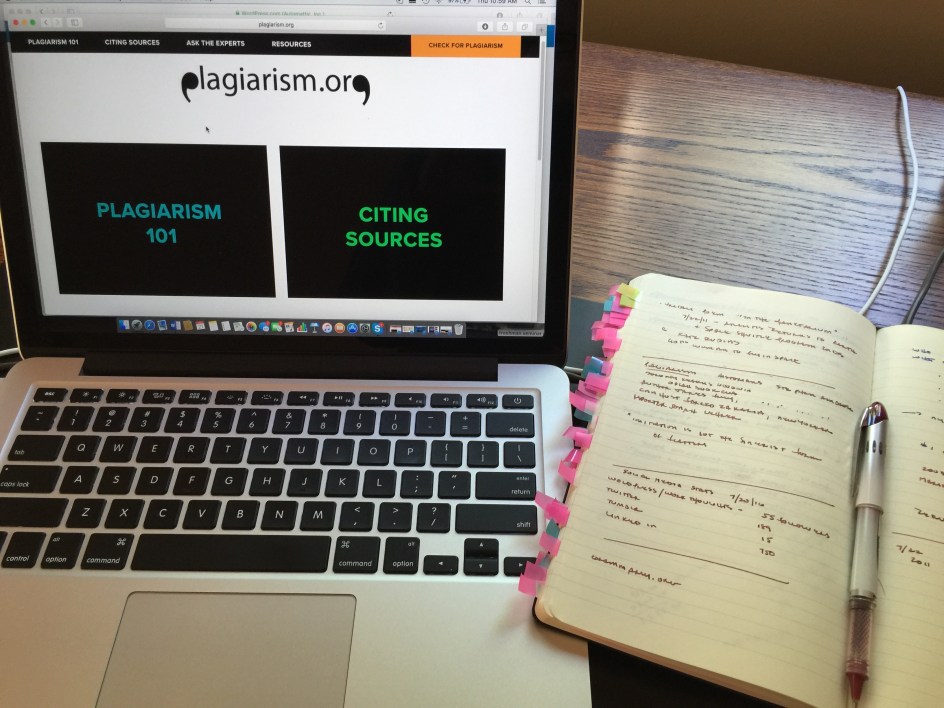
We are hot. We are busy. We live in a time of ‘short-cuts’. Workplace deadlines force creativity into ‘cut and paste’ document creation. Original thought becomes a casualty of increased workload. Sometimes we forget to give credit to other’s ideas and find ourselves on the slippery slope of plagiarism.

Last week the Republican National Convention became the unexpected catalyst for a discussion of this topic, an essential component of every college new student orientation program.

IMG_5066.jpg

Writing on huffingtonpost.com, Karen Topham offered ‘An English Teacher’s View Of The Trump Plagiarism Issue’.

“Plagiarism is any unattributed content. It’s kind of like pregnancy: you can’t plagiarize just a little because even a little is plagiarism.

I had my last case of plagiarism late last winter. A girl was under the gun and copied an essay from the internet. I explained to her (as I’d done so often before) that she was probably lucky in the long run that I had caught her. Anyone who gets away with this stuff is likely to try it again. In high school, it’s a zero and maybe a chance to do it over. But in most colleges, it’s a violation of academic honesty that can get you expelled. And this is my point: we hold college students to this very high standard.”

You have been warned.

On the lighter side, David Streitfeld gave a first person account of ‘Chasing Pokemon In Search of Reality In a Game’: downloading the app, setting out to capture a few creatures, and meeting fellow gamers along the way.

hero-970-80

“In this season of random assassinations and political uproar, who could resist the temptation to supplement a high-strung and frightening reality with some gentle make-believe?

Fifty years ago, the F.B.I., worried that the youth of America might foment revolution, would infiltrate San Francisco demonstrations. Now the tech companies are doing the monitoring, wondering if games like Pokémon represent a threat that must be neutralized or an opportunity to be exploited. That’s progress for you.”

In other Silicon Valley News, Wall Street Journal reporters Ryan Knutson and Deepa Seetharaman confirmed the Verizon acquisition of Yahoo.

Unknown.jpeg

“Verizon Communications Inc. has agreed to pay $4.8 billion to acquire Yahoo Inc., according to a person familiar with the matter, ending a drawn-out auction process for the beleaguered internet company.

The price tag, which includes Yahoo’s core internet business and some real estate, is a remarkable fall for the Silicon Valley web pioneer that once had a market capitalization of more than $125 billion at the height of the dot-com boom.

For New York-based Verizon, the deal simply adds another piece to the digital media and advertising business it is trying to build.

The deal is expected to be announced early Monday. The news was earlier reported by Recode and Bloomberg.”

In an article earlier in the week, Vindu Goel revisited a time ‘When Yahoo Ruled the Valley’.

“Back in the mid-1990s, before Google even existed, the world’s best guides to the internet sat in Silicon Valley cubicles, visiting websites and carefully categorizing them by hand.

They were called surfers, and they were a collection of mostly 20-somethings — including a yoga lover, an ex-banker, a divinity student, a recent college grad from Ohio hungry for adventure — all hired by a start-up called Yahoo to build a directory of the world’s most interesting websites.

Today, with more than one billion websites across the globe, the very notion seems mad. Even then, there was a hint of insanity about the enterprise.”

Two additional articles of interest from the week@work cover a new benefit for employees transitioning back to work after a leave and a TV series providing classical music performers with visibility not seen since the days of Ed Sullivan.

‘A New Perk For Parents: Life-Work Coaches’ by Tara Siegel Bernard

“At a time when new parents may find themselves overwhelmed — even sobbing late at night as they deal with their new at-home responsibilities while trying to hold down a full-time job — a growing number of companies are making efforts to soften the blow. They are providing employees with coaching sessions, either in person, over the phone or through small group sessions that may be broadcast over the web. The services are often available to new fathers, too.”

‘Classical Stars Seek TV’s Elusive Spotlight’ by Michael Cooper

“It was after midnight on the Grand Canal here, and Plácido Domingo was standing on a floating stage slowly motoring toward the Accademia Bridge, singing the opening lines of a duet from “Don Giovanni.”

With this operatically over-the-top spectacle last week — which drew squeals and flurries of smartphone photos as people passed on a vaporetto, or water bus — Mr. Domingo became the latest classical star to shoot a cameo for “Mozart in the Jungle,” the Amazon comedy about a fictional New York orchestra.

Paul Weitz, who was directing the episode with Mr. Domingo and is an executive producer of the show with Roman Coppola and Mr. Schwartzman, said that the possibility of reaching those viewers was especially enticing to the musicians who have appeared.

“Obviously, it’s a huge issue, and it’s something that is dealt with in the show a lot, about whether classical music is going to be passed on to a new generation,” Mr. Weitz said between shots in his director’s chair. “And all these artists, the reasons that they’re doing this show is because they feel like it’s good for that aspect of the art — that it can bring the music to different people. And anecdotally, I think that’s actually the case.”

Stay cool this week@work with a favorite piece of classical music.


The week@work – “our culture is changing”, internship access, sexual harassment@Fox & the June jobs report

For the 67th time in his term, President Obama ordered the flag of the United States be flown at half-staff; this time in memory of the police officers in Dallas. Sixty-seven times, a record for a presidential administration.

This week@work we look at two responses to the violence, consider an opinion on internship access, examine a high profile workplace harassment lawsuit, and the implications of the June jobs report.

“As a mark of respect for the victims of the attack on police officers perpetrated on Thursday, July 7, 2016, in Dallas, Texas, by the authority vested in me as President of the United States by the Constitution and the laws of the United States of America, I hereby order that the flag of the United States shall be flown at half-staff at the White House and upon all public buildings and grounds, at all military posts and naval stations, and on all naval vessels of the Federal Government in the District of Columbia and throughout the United States and its Territories and possessions until sunset, July 12, 2016. I also direct that the flag shall be flown at half-staff for the same length of time at all United States embassies, legations, consular offices, and other facilities abroad, including all military facilities and naval vessels and stations.”

images.jpeg

On Friday morning, veteran CBS newsman, Bob Schieffer, was asked to provide context to the events of the past week, drawing on his 50 years as a journalist.

“One thing we overlook: our culture is changing…We are becoming a less patient society, we are becoming a more demanding society, for want of a better word, we are becoming a ruder society, and we see this playing out in road rage, in the way we treat one another…Nobody is satisfied with anything now…People are dissatisfied, frustrated and they act out…”

Libby Hill of the Los Angeles times reported on host of the Daily Show Trevor Noah‘s, seven-minute monologue “in the wake of the police-involved killings of Alton Sterling and Philando Castile.”

“It always feels like, in America, if you take a stand for something, you are automatically against something else…It’s either one or the other…But with police shootings it shouldn’t have to work that way.

 You can be to be pro-cop and pro-black. Which is what we should all be. It is what we should all be aiming for…The point is you shouldn’t have to choose between the police and the citizens they are sworn to protect.”

If the world is changing outside our workplace, what’s the impact on our daily work lives? Does frustration on the 405 translate into contention in the conference room? Our lives don’t fit neatly into the ‘work’ and ‘life’ box. We will need to draw on every ounce of empathy to listen, reflect, respect and respond.

Sometimes we just don’t think about how the system is ‘rigged’ and why people are angry. Skeptical? Let’s talk internships.

photo_61045_landscape_650x433

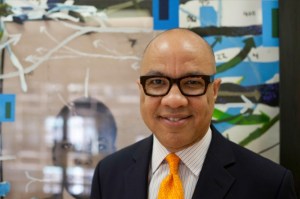
On Tuesday, Darren Walker, the president of the Ford Foundation penned an opinion for the New York Times, ‘Internships Are Not A Privilege’.

“Talent is equally distributed, but opportunity is not. And while many Americans believe fervently and faithfully in expanding opportunity, America’s internship-industrial complex does just the opposite.

And whether it’s an internship, college admission or any of the many other factors that determine a successful life, leaders who say they want to address inequality actually — and often unconsciously — reinforce the dynamics that create inequality in their own lives.

The broader implication is privilege multiplied by privilege, a compounding effect prejudiced against students who come from working-class or lower-income circumstances. By shutting out these students from entry-level experiences in certain fields, entire sectors engineer long-term deficits of much-needed talent and perspective. In other words, we’re all paying the price for unpaid internships.

For countless Americans, me among them, internships have provided a foothold on the path to the American dream. Simply by making them more accessible to all, we can narrow the inequality gap while widening the circle of opportunity, long after the summer ends.”

Another major workplace story broke on Wednesday with news that Gretchen Carlson had filed a lawsuit against Fox News chairman, Roger Ailes, exposing a culture of sexism and workplace sexual harassment.

-J3Fem6E_400x400.jpg

Gabriel Sherman covered the story for New York Magazine, reporting:

“Fox News host Gretchen Carlson may be the highest-profile woman to accuse Roger Ailes of sexual harassment, but she is not the first. In my 2014 biography of the Fox News chief, I included interviews with four women who told me Ailes had used his position of power to make either unwanted sexual advances or inappropriate sexual comments in the office.

And it appears she won’t be the last, either. In recent days, more than a dozen women have contacted Carlson’s New Jersey-based attorney, Nancy Erika Smith, and made detailed allegations of sexual harassment by Ailes over a 25-year period dating back to the 1960s when he was a producer on The Mike Douglas Show. “These are women who have never told these stories until now,” Smith told me. “Some are in lot of pain.” Taken together, these stories portray Ailes as a boss who spoke openly of expecting women to perform sexual favors in exchange for job opportunities. “He said that’s how all these men in media and politics work — everyone’s got their friend,” recalled Kellie Boyle, who says Ailes propositioned her in 1989, shortly after he helped George H.W. Bush become president, serving as his chief media strategist.”

And while we are on the topic of women@work, Andrew Das reported on the ongoing story, ‘U.S. Women’s Soccer Players Renew Their Fight for Equal Pay’.

screenshot-11.png“Beaten in federal court and rebuffed at the negotiating table, the United States women’s national soccer team is taking its fight for equal pay back to friendlier turf: the court of public opinion.

Beginning with an exhibition match this weekend in Chicago and continuing through the Olympics next month in Brazil, members of the team said on Thursday that they would embark on a campaign that they hope will increase the pressure on the United States soccer federation to pay the women compensation equal to their counterparts on the men’s national team in their next collective bargaining agreement.”

On Friday, Adam Shell of USA TODAY, analyzed the June jobs report from the U.S. Labor Department.

“After stalling briefly, the U.S. job-creation engine is again revving into high gear, rejuvenating Wall Street and sending stocks close to record highs.

The U.S. economy created 287,000 new jobs in June, which was 100,000 more than economists had forecast and the best monthly gain since October 2015.

And that is about as good a news headline as Wall Street could ask for after May’s gloomy jobs report (the initial 38,000 May jobs count was revised down to a paltry 11,000 in Friday’s report) and all the Brexit-related doom-and-gloom the past few weeks that put a scare into investors.”

cm-p12vwiaeczwd-jpg-large.jpegOn Saturday evening, for ‘one last time‘ –  “Lin-Manuel Miranda, the creator and star of the Broadway smash “Hamilton,” made a subdued final bow Saturday alongside two other departing stars — Leslie Odom Jr. and Phillipa Soo — in the show that has become a cultural phenomenon.”

Miranda’s final performance Saturday at the Richard Rodgers Theatre was also the last for Odom Jr., who won a Tony Award as Aaron Burr, and Soo, a Tony nominee who portrayed Eliza Schuyler. The three — plus an ensemble member — took their bows together but none said anything.”

Hoping for a better week@work to come.


The week@work – Brexit, #Regrexit, Euro2016, Christo’s floating piers, Bill Cunningham’s photos, Goldman Sachs’ video recruiting strategy, and education for a jobless future

I was a history major, so the past week@work included an inordinate amount of time spent in the company of various traditional and social media portals, monitoring the results of the Brexit vote and its aftermath.

In between, there were intervals of soccer, viewing both Copa America and Euro 2016. There was also art in Christo’s installation in Lake Iseo, Italy and reflected brilliance in the photography of Bill Cunningham, who died this weekend. Goldman Sachs announced a new campus recruiting strategy (good news for history majors), and a journalist asked if education is preparing students adequately for a jobless future.

25Brexit-HP-SS-slide-9PT7-largeWidescreen573-v3.jpg

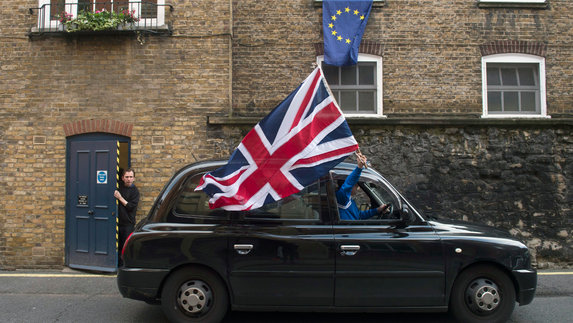
On Thursday evening I watched part of CNN International’s ‘Brexit’ election coverage, which included an animated discussion between anchor Christiane Amanpour and historian Simon Schama. As it became clear that ‘Leave’ was overtaking ‘Remain’ in the vote count, Schama cited the referendum results as one more example of “a world phenomenon of tribal nationalism”.

The historian has been actively engaged on Twitter and in an interview with NPR’s Robert Siegel described the vote as “a turning point for Great Britain”.

Here’s a sample of the conversation:

SIEGEL:” Culturally, there is a generation of educated young Europeans – and I include Brits in that – who think of themselves at some level as being European. Maybe it’s not their only identity. Do you think that goes away in Britain and does a different identity take shape, or do those people grow up and change in this country?”

SCHAMA: “No, I think they’re in distress. I mean, I’m sure you’ve said, it’s very striking that the 18 to 24s voted something like 75 percent to stay in. And I suppose it depends where you are in London. We have more immigrants than anywhere else, and we’re least bothered by it. And I think when the shock subsides a bit, the young may well fight to be at least as European as they’ve been led to believe they are. That’s my hope, actually.”

SIEGEL: “If you can imagine a historian 50 years hence writing the sentence that will sum up what happened on this day, what do you think it’ll be?”

SCHAMA:” The greatest act of unforced national self-harm yet known in modern history.”

It’s always helpful to have a historian in the house. And it’s stunning to realize the generational split in voting: “Among 18-24-year-olds, the age category that’s going to have to live with the consequences of this vote for all of their working lives, 75 percent voted to stay.”

As to #Regrexit, writer and comedian, John Oliver reminded his countrymen, “there are no f______do-overs”.

In 2004 journalist Franklin Foer wrote ‘How Soccer Explains the World: An Unlikely Theory of Globalization’. Seemed like a good read to revisit after Brexit and an opportunity for a diversion while following Copa America and Euro 2016. The book treats soccer stories as globalization case studies. And I think we could use some ‘best practices’ right about now.

Full disclosure, I am rooting for the Welsh National Football Team as they face Belgium on Friday. My favorite work/life balance photo of the week – Wales’ Gareth Bale and daughter after the team advanced to the Euro 2016 quarter finals.

IMG_4935

Art is another outlet for expression in chaos and ambiguity. A new Christo work debuted last week. The Guardian reported on the popularity of the ‘Floating Piers’ in Lake Iseo in northern Italy.

58af48a0cb7e83c7f1e3dbf9b4a50e7e.jpg

“A giant floating walkway made out of fabric on an Italian lake has had to be closed at night after tens of thousands of visitors began to wear it out.

The 1.9-mile (3km) walkway of 200,000 floating cubes covered in orange fabric was created by artist Christo and has proved a major attraction since it opened on Saturday on Lake Iseo.

However, 270,000 visitors have flocked to see the free installation – called “the Floating Piers” – in less than five days, far exceeding organisers’ expectations of about 500,000 over 16 days.”

On Saturday, The New York Times chronicled the career of one of their ‘house icons’, photographer Bill Cunningham.

BILL-jumbo.jpg

“Mr. Cunningham was such a singular presence in the city that, in 2009, he was designated a living landmark. And he was an easy one to spot, riding his bicycle through Midtown, where he did most of his field work: his bony-thin frame draped in his utilitarian blue French worker’s jacket, khaki pants and black sneakers (he himself was no one’s idea of a fashion plate), with his 35-millimeter camera slung around his neck, ever at the ready for the next fashion statement to come around the corner.

Nothing escaped his notice: not the fanny packs, not the Birkin bags, not the gingham shirts, not the fluorescent biker shorts.

In his nearly 40 years working for The Times, Mr. Cunningham snapped away at changing dress habits to chart the broader shift away from formality and toward something more diffuse and individualistic.”

Two stories about the transition from school to work round out this week@work.

On Friday, bbc.com reported “Goldman Sachs is scrapping face-to-face interviews on university campuses in a bid to attract a wider range of talent.
The US investment bank will switch to video interviews with first-round undergraduate candidates from next month.

“Edith Cooper, Goldman’s global head of human capital management said: “We want to hire not just the economics or business undergraduate but there is that pure liberal arts or “history major that could be the next Lloyd Blankfein.”

Mr Blankfein, the bank’s chief executive, went to Harvard, one of America’s elite Ivy League universities, where he studied history.”

On Tuesday, Washington Post contributor, Jeffrey J. Selingo asked ‘Are colleges preparing students for the workforce?’

“While students are often encouraged to major in job-ready fields like STEM (science, technology, engineering, and math), graduates of those programs are unlikely to find employment without solid grounding in the liberal arts and experiences outside the classroom to build their soft skills.

In the future work world, it’s critical that new graduates stay one step ahead of technology and focus more on what computers can’t yet do well: show creativity, have judgment, play well with others, and navigate ambiguity.”

It was a good week to be a history major.


Should I accept an offer with an organization embroiled in controversy?

Imagine a scenario where you are nearing the end of the candidate selection process for your dream job, and news breaks that the organization is under federal investigation. What do you do?

A post on the Fast Company website last week, ‘How To Hire When Your Company Is Embroiled in Controversy’, summarized expert advice to organizations who continue to recruit new employees while managing a crisis.

Veteran recruiter, Dave Carvahal was quoted in the piece, offering recruitment advice – “Be honest about where you actually are, the problems that exist, and the media attention amplification,” he says. Recruiting is about human relationships, Carvajal explains, pointing out that hiring managers shouldn’t be afraid to be vulnerable. “Emotions can be powerful allies in lifting our common humanity,” says Carvajal. “They build trust.”

Reality check – organizations who are being investigated by the Feds, or who are facing bankruptcy inducing lawsuits are probably not the most forthcoming with the truth. You cannot ‘spin’ fraud.

Recruiting is about relationships, ethical relationships. Working for a company in crisis may be a platform for a ‘budding’ leader to achieve visibility, but it’s no place to embark on a new career.

Reading the story was a ‘deja vu’ moment for me, reminiscent of 2002.

In January 2002, Arthur Andersen, then one of the ‘big five’ accounting firms found itself being investigated because of irregularities in its relationship with Enron. As congress grilled company executives, corporate recruiters continued to aggressively woo potential hires to accept offers. Candidates who had been initially attracted to the values of the organization began to question their decision. For most, the recruiting season was over. They had committed to Andersen and declined alternate offers.

Three months later, in April of 2002, Arthur Andersen laid off 7,000 employees. Soon after they began to recind offers to new employees. The folks who had been actively recruiting on college campuses had been simultaneously updating their own resumes.

My advice then, and today, if you find your dream employer had transitioned into public nightmare, withdraw yourself from consideration. This is not negotiable. Whatever perception you had of a cultural ‘fit’ has been disrupted by negative publicity. Your reputation is your brand.

If there’s ever a time to let common sense be your guide, it’s when your career trajectory collides with ‘above the fold’ news. Mobilize your networking resources to assist as you recalibrate your strategy.

Once you have declined the offer, reconnect with the organizations that had previously demonstrated an interest in hiring you, and reestablish the relationship. Be candid about what has triggered your change of heart. If it’s in the news, your alternate employers will be well aware of your motivation.

Job search is about long term relationship management. From your first internship to retirement, maintaining and nurturing your professional contacts is a priority for long term success, and overcoming the challenges posed by the rare, ‘questionable’ employer.


The week@work – guaranteed basic income, college grad stats, internet trends and the world’s longest tunnel opens

This week@work the Swiss electorate rejected a ballot measure to provide a guaranteed basic income for citizens, the college graduate unemployment rate is 2.4%, with history majors matching mid-career salaries of business school grads, Mary Meeker projected her 2016 internet trends and 2,600 workers completed 17 years of work to open the world’s longest tunnel under the Alps.

On Saturday Swiss voters rejected a proposed plan to provide an unconditional monthly income of 2,500 francs by a margin of 77% to 23%.

-1x-1

Philip Oltermann surveyed the growing economic trends toward guaranteed basic income, ‘State handout for all? Europe set to pilot universal basic incomes’.

“Universal basic income has a rare appeal across the political spectrum. For those on the left, it promises to eliminate poverty and liberate people stuck in dead-end workfare jobs. Small-state libertarians believe it could slash bureaucracy and create a leaner, more self-sufficient welfare system.

In an increasingly digital economy, it would also provide a necessary injection of cash so people can afford to buy the apps and gadgets produced by the new robot workforce.

Crucially, it is also an idea that seems to resonate across the wider public. A recent poll by Dalia Research found that 68% of people across all 28 EU member states said they would definitely or probably vote for a universal basic income initiative. Finland and the Netherlands have pilot projects in the pipeline.”

The New Yorker contributor, Mark Gimein summarized recent discussions on the topic, comparing U.S. views to European counterparts.

“…when they look further into the future, Americans talk about a national minimum income in the context of a jobless future, an employment apocalypse in which workers compete for fewer and fewer good jobs. Robert Reich, the former labor secretary, sees a national guaranteed income as the most likely endgame in an economy with “more and more people getting pushed out of the middle class into the personal service sector of the economy getting lower and lower wages.” When the Swiss talk about basic income, they’re talking about a utopian vision. When Americans like Reich talk about it, it’s a last bulwark against national impoverishment.”

‘The Upshot’ analyzed the May unemployment numbers and drew a positive spin on disappointing results. “A better gauge of the underlying rate of jobs growth is to take an average over the past three months. By that measure, the labor market is creating around 116,000 jobs per month. This is a notable slowdown from jobs growth in the 150,000-250,000 range over most of the past five years. But it’s a slowdown and not a sudden stop.”

Here’s the good news for college grads. In a separate post, the folks @UpshotNYT posed this question: “What do you think the unemployment rate is for 25-to-30-year-olds who graduated from a four-year college?”  Most folks guessed high. The actual rate is 2.4%, without a four-year college degree it’s 7%.

images.jpeg

While we’re on the topic of debunking ‘value of college myths’, let’s turn to a story about the much maligned history majors. (Full disclosure, I was one)

Writing in the LA Times, James Grossman, executive director of the American Historical Association lamented the decline enrollment in undergraduate history programs and countered with new research that suggests undergrads might want to reconsider their choice of major.

“Over the long run, …graduates in history and other humanities disciplines do well financially…after 15 years, those philosophy majors have more lucrative careers than college graduates with business degrees. History majors’ mid-career salaries are on par with those holding business bachelor’s degrees. Notably these salary findings exclude those who went on to attain a law or other graduate degree.

The utility of disciplines that prepare critical thinkers escapes personnel offices, pundits and politicians (some of whom perhaps would prefer that colleges graduate more followers and fewer leaders). But it shouldn’t. Labor markets in the United States and other countries are unstable and unpredictable. In this environment — especially given the expectation of career changes — the most useful degrees are those that can open multiple doors, and those that prepare one to learn rather than do some specific thing.”

On Wednesday The New York Times announced ‘the Internet is over’. They are changing their style rule to join the rest of the world to lowercase the word ‘internet’.

The same day, venture capitalist Mary Meeker presented her 2016 internet trends report. Inc. contributor, Jessica Stillman cited five ‘take-aways’ from the deck of 200 slides.

“Internet growth is slowing dramatically. Advertisers aren’t spending enough on mobile. Privacy concerns are “a ticking time bomb.”Search is about to be revolutionized…and so are messaging apps.”

Moving from technology trends to engineering marvels, BBC News reported on the opening of the Gotthard Base Tunnel in Switzerland, culminating 17 years of work by 26,000 workers.

gettyimages-105475814_custom-293c8eedebb27759dbd26d764b46c07b23b87f9f-s1400-c85

“Swiss engineer Carl Eduard Gruner first imagined it in 1947: a massive tunnel, unprecedented in length, buried a mile and a half under Switzerland’s symbolic Gotthard mountain range.

Nearly seven decades later, after redesigns, political disagreements and the long, slow work of drilling beneath the Gotthard massif, as it’s called, Gruner’s dream is complete.

The Gotthard Base Tunnel — a record-setting 35.4 miles long, and farther below ground than any other tunnel — was inaugurated Wednesday. The occasion was marked with a celebration that promoted “Swiss values such as innovation, precision and reliability…”

Now the completed tunnel, delivered on time and within budget, will create a mainline rail connection between Rotterdam in the Netherlands and Genoa in Italy.

When full services begin in December, the journey time for travellers between Zurich and Milan will be reduced by an hour to two hours and 40 minutes.

About 260 freight trains and 65 passenger trains will pass through the tunnel each day in a journey taking as little as 17 minutes.”

The week@work – new overtime rules, sharing the wealth of the ‘gig economy’ and college grads’ skills gap

This week@work President Obama announced changes in labor rules that will extend overtime benefits to 4.2 million Americans, Massachusetts Senator Elizabeth Warren advocated for the rights of ‘gig economy’ workers and a new report indicates a continuing deficiency in recent grads’ communications skills.

Christine Mai-Duc reported on the revisions to overtime regulations that will go into effect on December 1.

“The proposed changes would more than double the salary threshold for overtime eligibility to $970 a week in 2016. That means employees earning a yearly salary of $50,440 or less automatically would be eligible for overtime pay.

Currently, the threshold is $455 a week, meaning a salaried worker making more than $23,660 a year does not automatically qualify for overtime pay under federal standards.

Labor Secretary Thomas Perez told reporters that too many managers are falling behind and getting caught in the “middle-class squeeze.”

Proponents of the change say the salary threshold, designed to exempt highly paid white-collar workers, hasn’t seen meaningful change for more than 40 years. In 1975, more than 60% of salaried workers were eligible for overtime. Today, less than 8% of full-time salaried workers are covered by those regulations, according to the White House Domestic Policy Council.

“In effect, we have seen inflation repeal the regulations that went into effect decades ago,” said Harley Shaiken, a labor economist and professor at UC Berkeley.”

The man at the head of the Department of Labor, Secretary Thomas Perez, shared his approach to worker advocacy in an interview with David Gelles for The New York Times.


“It’s a day job intended to help other people with day jobs. He wants companies to take better care of their employees, even if it costs them in the short term. It’s not a message many C.E.O.s want to hear, but Mr. Perez believes it is his duty to spread the word.

Mr. Perez’s courting of chief executives also stems from a recognition that his department alone can’t fix the problems bedeviling American workers. Thorny issues like wage stagnation, stingy vacation time, shoddy manufacturing and environmental degradation are so complex, so entrenched, that no one government agency can tackle them (not to mention the diminished influence of organized labor).

He is talking about “conscious capitalism” and “inclusive capitalism.” He is singling out “high road” employers. He is promoting B Corps, companies that adhere to lofty social and environmental standards. In doing so, he hopes he can persuade less enlightened corporations to change.

The employers who do best are employers who reject these false choices,” Mr. Perez said. “It’s not a zero-sum world where you either take care of your workers or you take care of your shareholders. You can do good and do well, too.

We’re building a movement,” he said. “It’s undeniably a work in progress, but there’s a fundamental desire to see capitalism to do something different.”

On Thursday, Senator Elizabeth Warren addressed the annual conference of Washington D.C. think tank, New America. Her remarks, ‘Strengthening the Basic Bargain for Workers in the Modern Economy’, detailed the reality of the changing workplace and proposed steps to create an income safety net and ensure portability of benefits for all workers.

Warren takes part in the Washington Ideas Forum in Washington

“The problems facing gig workers are much like the problems facing millions of other workers. An outdated employee benefits model makes it all but impossible for temporary workers, contract workers, part-time workers and workers in industries like retail or construction who switch jobs frequently to build any economic security.

Just as this country did a hundred years ago, it’s time to rethink the basic bargain between workers and companies. As greater wealth is generated by new technology, how can we ensure that the workers who support this economy can share in that wealth?

I believe we start with one simple principle: all workers–no matter when they work, where they work, who they work for, whether they pick tomatoes or build rocket ships–all workers should have some basic protections and be able to build some economic security for themselves and their families. No worker should fall through the cracks.”

Lydia Dishman summarized a report released last week by compensations specialists, Payscale, citing a ‘skills gap’ between managers and employers. And, wait for it…there’s a generational twist.

IMGP1317.jpg

Some of the skills hiring managers find lacking or absent are unexpected. Critical thinking, problem solving, attention to detail, and writing proficiency top the list of skills managers find missing from job seekers’ personal tool kits. On the flip side, managers didn’t find graduates wanting for know-how in search engine optimization marketing, foreign languages, and coding.

Overall, hiring managers found soft skills such as communication, leadership, ownership, and teamwork were missing in this new crop of workers.

“Graduates need strong communication and problem-solving skills if they want to interview well and succeed in the workplace, because effective writing, speaking, and critical thinking enables you to accomplish business goals and get ahead,” Dan Schawbel, research director at Future Workplace, said in a statement. “No working day will be complete without writing an email or tackling a new challenge, so the sooner you develop these skills, the more employable you will become,” Schawbel adds.

It’s important to note here that age matters in this report. Fifty-five percent of managers who are millennials themselves believed graduates are prepared to enter the workforce versus 47% of gen Xers and 48% of boomers.”

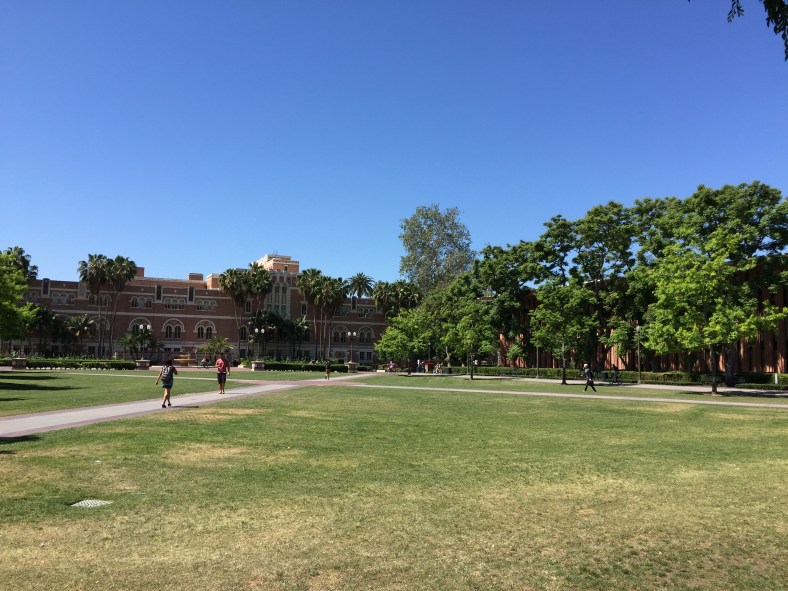
“Discover who you are – not who you are supposed to be” Larry Ellison@USC

In all the meetings I have had with folks about career choice, the number one topic, by a landslide, is how to manage the expectations of others: family members, mentors, friends and colleagues.

“My parents want me to major in ‘x’, and apply to ‘y’, but my passion is in ‘z’. How do I get them to understand my decision?”

On Friday, at the University of Southern California, Larry Ellison drew on his personal experience to address the topic. I hope the parents were listening. I guarantee members of the Class of 2016 were texting quotes.

He began where most career conversations start. Recalling his early aspirations to attend USC Medical School, he began to realize that his family’s conviction that he become a doctor was not his own. “Their dreams became my dreams.”

And it wasn’t long before he “became painfully aware that he couldn’t make himself study something that didn’t interest me.”

The power of parental/family influence on career choice can provide either a scaffolding of support or a detour of unending disappointments.

Here’s the thing, the next great innovation is yet to be discovered. The next emerging market is yet to be identified. Categories of new job titles are yet to be defined.

So we fall back on what we know, and what society values as acceptable professions.

In Ellison’s narrative, he dropped out of college and took on a “a couple of jobs I loved and one that was fun”: river guide, rock climbing instructor and computer programmer. It was in the world of technology that he found the link to the same kind of satisfaction he had found solving math problems and playing chess.

But as he incrementally travelled toward his dream job, he found he was unable to live up to the expectations of others.

At the urging of his wife, he returned to college, to pursue his degree. The only course he remembered was a sailing class at Berkeley. The beginning of his love affair with the Pacific Ocean marked the end of the one with his wife, who viewed him as irresponsible, and lacking in ambition. “She kicked me out, and then she divorced me.”

“This was a pivotal moment in my life… Once again, I was unable to live up to the expectations of others.

But this time I was not disappointed in myself for failing to be the person they thought I should be. Their dreams and my dreams were different. I would never confuse the two of them again.

I had discovered things that I loved: the Sierras, Yosemite, the Pacific Ocean. These natural wonders brought me great joy and happiness, and would for the rest of my life. I had an interesting job programming computers and more money than I needed.

For the first time I was certain I was going to survive in this world.

A huge burden of fear had been lifted. I’ll never forget that moment. It was a time for rejoicing.”

Ellison’s career path accelerated along the trajectory of Silicon Valley’s early days, as he tried to find a job he loved as much as sailing. He founded Oracle Corporation, built on his ‘crazy idea’ of constructing a commercialized relational database, and the rest is history.

I spent thirteen years on the USC campus, working with students and alumni as they wrestled with career decisions and connected the mosaic of past experience into a plan for the future. There is no better advice for folks@work or those just starting out than the shared wisdom of Mr. Ellison.

“Each of you has a chance to discover who you are and not who you are supposed to be.

Don’t be afraid to experiment, and try lots of different things. And don’t let the experts discourage you when you challenge the status quo.”