The Friday Poem @ the intersection of Maya Angelou, Hillary Clinton and Muhammad Ali

Maya, Muhammad and Hillary. Not three names you would intuitively link together, but that’s what history claimed this week, as a ‘political poet’ passed, and a deceased poet’s 2008 words echoed in the background of a rally at the Brooklyn Navy Yard.

The news of the death of Muhammad Ali literally stopped the presses at the New York Times early Saturday morning. On Wednesday, newspapers across the country led with the history making headline reporting “Hillary Clinton‘s nomination: A win 96 years in the making”.

It will not be an easy road to November for Secretary Clinton as reported by Patrick Healy and Sheryl Gay Stolberg.

“When Hillary Clinton swept onto the stage at her victory rally Tuesday night, the thunderbolt of history struck many Americans, no matter their love or loathing for her: A woman could be the next president of the United States.

But like so much about Mrs. Clinton, her speech, which lit up televisions and smartphones and social media all day Wednesday, produced conflicting emotions.

For some, it was an inspiring moment that brought home in a visceral way that Mrs. Clinton is the first woman to become the presumptive nominee of a major party. For others, there were chills and discomfort that this next step forward in our national story was unfolding with this particular woman.”

IMG_4810.jpg

The candidate might take heart from the poem Maya Angelou submitted to The Observer in 2008, with the backstory told by Vanessa Thorpe for The Guardian.

“She is supporting Clinton despite her close friendship with television personality and philanthropist Oprah Winfrey, a prominent backer of rival Democrat Barack Obama, the first black presidential hopeful with a real chance of reaching the White House.

Angelou is steadfast in her loyalty to Clinton. She said recently: ‘I made up my mind 15 years ago that if she ever ran for office I’d be on her wagon. My only difficulty with Senator Obama is that I believe in going out with who I went in with.’

Andrew Motion, the Poet Laureate, said of the poem: ‘This is a great thing for The Observer to have.’ He favourably compared it with the ‘vivid flourishes’ of Angelou’s recent work. ‘With this kind of poem Angelou has decided to interpret public writing as a verbal equivalent of making a poster, and there’s nothing wrong with this. The rhetoric is full of big gestures that make a direct appeal to our feelings, rather than getting to it by the little winding ways more personal poetry might use.'”

The poem:

State Package for Hillary Clinton

You may write me down in history

With your bitter, twisted lies,

You may tread me in the very dirt

But still, like dust, I’ll rise.

This is not the first time you have seen Hillary Clinton seemingly at her wits’ end, but she has always risen, always risen, don’t forget she has always risen, much to the dismay of her adversaries and the delight of her friends.

Hillary Clinton will not give up on you and all she asks of you is that you do not give up on her.

There is a world of difference between being a woman and being an old female. If you’re born a girl, grow up, and live long enough, you can become an old female. But to become a woman is a serious matter. A woman takes responsibility for the time she takes up and the space she occupies. Hillary Clinton is a woman. She has been there and done that and has still risen. She is in this race for the long haul. She intends to make a difference in our country. Hillary Clinton intends to help our country to be what it can become.

She declares she wants to see more smiles in the family, more courtesies between men and women, more honesty in the marketplace. She is the prayer of every woman and man who longs for fair play, healthy families, good schools, and a balanced economy.

She means to rise.

Don’t give up on Hillary. In fact, if you help her to rise, you will rise with her and help her make this country the wonderful, wonderful place where every man and every woman can live freely without sanctimonious piety and without crippling fear.

Rise, Hillary.

Rise.

Maya Angelou, 2008
20131006_dn_0mu24lap.jpg

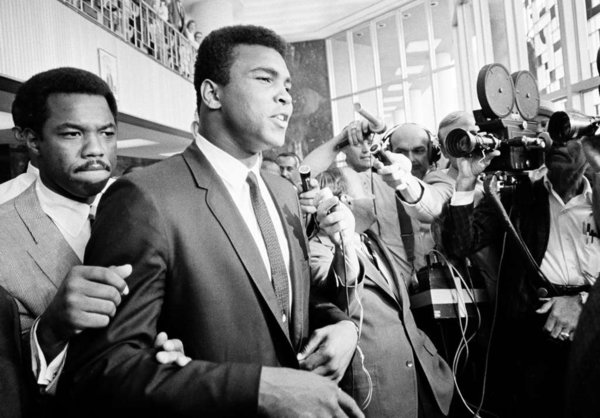
On Thursday, Henry Louis Gates Jr. recalled ‘Muhammad Ali, the Political Poet’. In the essay he linked Angelou and Ali by their poetry, often labeled ‘doggerel’.

“Perhaps Maya Angelou, whose own poetry is sometimes labeled doggerel, said it best: “It wasn’t only what he said and it wasn’t only how he said it; it was both of those things, and maybe there was a third thing in it, the spirit of Muhammad Ali, saying his poesies — ‘Float like a butterfly, sting like a bee.’ I mean, as a poet, I like that! If he hadn’t put his name on it, I might have chosen to use that!”

“It would be a mistake to say that Ali made black oral poetry more sophisticated or complex, but he did make it more political. After learning his local draft board had declared him eligible for induction into the Army in 1966, Ali recited this poem:

Keep asking me, no matter how long,
On the war in Vietnam,
I sing this song:
I ain’t got no quarrel with no Viet Cong.

On this Friday, we pause to remember the athlete, humanitarian and role model who was Muhammad Ali, we celebrate a milestone for women, and reflect on the words of two American poets who significantly influenced our culture.


The mysteries of networking #4 ‘missed opportunities’

Many of us consider networking a ‘dark art’ that requires a magical ‘insiders’ key to gain access to the influential. What we miss is the daily opportunity to connect, as we ride the bus, the train or stand in a long TSA line at the airport. Wisdom can present itself in all shapes and sizes if you open yourself to conversation.

This past week, consultant, Whitney Johnson shared a recent experience via a post on LinkedIn,  ‘An airline cancelled my flight and put me in a van. Along the way, I got lots of lessons on how *not* to network.’

After offering a fellow traveller, a member of the Class of 2016, a ride home after a diverted flight, she realized her passenger had no clue how to network.

“As I was giving him a lift home, I learned a lot about him: his name, where he grew up, where he goes to school, his major, what his parents do for a living, his own career aspirations when he graduates in a few months. We even discovered that we have an acquaintance in common. Meanwhile, I made a few mentions of my children, such as my 19 year-old son is living in Brazil, my husband teaches at a local university. Conversation starters.

I’ll confess I felt a little invisible—and exasperated. I find it easy to ask people about themselves. I genuinely enjoy doing it. It’s one of my strengths, and we’re often exasperated with people who aren’t likewise adept at the things that we do well.

But here’s the real take-away from this chance encounter: this young man is looking for a job when he graduates in a month… I could have potentially helped him, if he’d just shown a little of the moxie that would have motivated me to recommend him.”

This is not just about a ‘newbie’ to the job search process, it’s a story that recurs daily. Just walk through an airport departure area and observe the diversity of folks and contrast that with the homogeneity of technical disconnection. Each individual, existing in the ‘comfort cocoon’ of their temporary piece of real estate, happily texting colleagues and friends, totally ignorant of the ‘chance’ professional encounter in the adjoining seat.

There’s no magic in networking. The magic is in the conversation, perhaps leading to a relationship. All of us harbor ideas and dreams. What are they, if not shared?

This afternoon, seize the moment, and start a conversation with a stranger, or maybe the acquaintance you pass in the hall every day. Listen, share, and you may be on your way to mastering the ‘not so mysterious’ art of networking.

The week@work – new overtime rules, sharing the wealth of the ‘gig economy’ and college grads’ skills gap

This week@work President Obama announced changes in labor rules that will extend overtime benefits to 4.2 million Americans, Massachusetts Senator Elizabeth Warren advocated for the rights of ‘gig economy’ workers and a new report indicates a continuing deficiency in recent grads’ communications skills.

Christine Mai-Duc reported on the revisions to overtime regulations that will go into effect on December 1.

“The proposed changes would more than double the salary threshold for overtime eligibility to $970 a week in 2016. That means employees earning a yearly salary of $50,440 or less automatically would be eligible for overtime pay.

Currently, the threshold is $455 a week, meaning a salaried worker making more than $23,660 a year does not automatically qualify for overtime pay under federal standards.

Labor Secretary Thomas Perez told reporters that too many managers are falling behind and getting caught in the “middle-class squeeze.”

Proponents of the change say the salary threshold, designed to exempt highly paid white-collar workers, hasn’t seen meaningful change for more than 40 years. In 1975, more than 60% of salaried workers were eligible for overtime. Today, less than 8% of full-time salaried workers are covered by those regulations, according to the White House Domestic Policy Council.

“In effect, we have seen inflation repeal the regulations that went into effect decades ago,” said Harley Shaiken, a labor economist and professor at UC Berkeley.”

The man at the head of the Department of Labor, Secretary Thomas Perez, shared his approach to worker advocacy in an interview with David Gelles for The New York Times.


“It’s a day job intended to help other people with day jobs. He wants companies to take better care of their employees, even if it costs them in the short term. It’s not a message many C.E.O.s want to hear, but Mr. Perez believes it is his duty to spread the word.

Mr. Perez’s courting of chief executives also stems from a recognition that his department alone can’t fix the problems bedeviling American workers. Thorny issues like wage stagnation, stingy vacation time, shoddy manufacturing and environmental degradation are so complex, so entrenched, that no one government agency can tackle them (not to mention the diminished influence of organized labor).

He is talking about “conscious capitalism” and “inclusive capitalism.” He is singling out “high road” employers. He is promoting B Corps, companies that adhere to lofty social and environmental standards. In doing so, he hopes he can persuade less enlightened corporations to change.

The employers who do best are employers who reject these false choices,” Mr. Perez said. “It’s not a zero-sum world where you either take care of your workers or you take care of your shareholders. You can do good and do well, too.

We’re building a movement,” he said. “It’s undeniably a work in progress, but there’s a fundamental desire to see capitalism to do something different.”

On Thursday, Senator Elizabeth Warren addressed the annual conference of Washington D.C. think tank, New America. Her remarks, ‘Strengthening the Basic Bargain for Workers in the Modern Economy’, detailed the reality of the changing workplace and proposed steps to create an income safety net and ensure portability of benefits for all workers.

Warren takes part in the Washington Ideas Forum in Washington

“The problems facing gig workers are much like the problems facing millions of other workers. An outdated employee benefits model makes it all but impossible for temporary workers, contract workers, part-time workers and workers in industries like retail or construction who switch jobs frequently to build any economic security.

Just as this country did a hundred years ago, it’s time to rethink the basic bargain between workers and companies. As greater wealth is generated by new technology, how can we ensure that the workers who support this economy can share in that wealth?

I believe we start with one simple principle: all workers–no matter when they work, where they work, who they work for, whether they pick tomatoes or build rocket ships–all workers should have some basic protections and be able to build some economic security for themselves and their families. No worker should fall through the cracks.”

Lydia Dishman summarized a report released last week by compensations specialists, Payscale, citing a ‘skills gap’ between managers and employers. And, wait for it…there’s a generational twist.

IMGP1317.jpg

Some of the skills hiring managers find lacking or absent are unexpected. Critical thinking, problem solving, attention to detail, and writing proficiency top the list of skills managers find missing from job seekers’ personal tool kits. On the flip side, managers didn’t find graduates wanting for know-how in search engine optimization marketing, foreign languages, and coding.

Overall, hiring managers found soft skills such as communication, leadership, ownership, and teamwork were missing in this new crop of workers.

“Graduates need strong communication and problem-solving skills if they want to interview well and succeed in the workplace, because effective writing, speaking, and critical thinking enables you to accomplish business goals and get ahead,” Dan Schawbel, research director at Future Workplace, said in a statement. “No working day will be complete without writing an email or tackling a new challenge, so the sooner you develop these skills, the more employable you will become,” Schawbel adds.

It’s important to note here that age matters in this report. Fifty-five percent of managers who are millennials themselves believed graduates are prepared to enter the workforce versus 47% of gen Xers and 48% of boomers.”

The Saturday Read – Four blogs/newsletters you should be reading

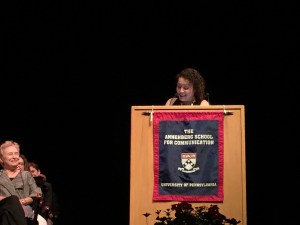
Before I started writing ‘Workthoughts’, I was reading other blogs. Maria Popova, author of my favorite, ‘Brainpickings’, was the 2016 commencement speaker at her alma mater, the University of Pennsylvania’s Annenberg School for Communication. She challenged the graduates to act as cultural change agents by continually broadening their horizons beyond a specific discipline.

“Today, the soul is in dire need of stewardship and protection from cynicism. The best defense against it is vigorous, intelligent, sincere hope — not blind optimism, because that too is a form of resignation, to believe that everything will work out just fine and we need not apply ourselves. I mean hope bolstered by critical thinking that is clear-headed in identifying what is lacking, in ourselves or the world, but then envisions ways to create it and endeavors to do that.

Whatever your specific vocation, your role as a creator of culture will be to help people discern what matters in the world and why by steering them away from the meaningless and toward the meaningful.”

annenberg_commencement-1

How do you maintain the discipline of the undergraduate learning experience and diversify your thinking?

In the past, traditional routes to post-graduate learning involved graduate and professional school. In rare cases, employers took on the role of educators, supplementing work with professional development options. Today, educational entrepreneurs are disrupting traditional education, offering countless ways to access knowledge online.

One of the most engaging options is to join folks who are exploring life’s mysteries and sharing their discoveries through blogs and newsletters.

For this week’s Saturday Read, I recommend four blogs/newsletters from contemporary ‘curators of culture’ that you should be reading to improve you critical thinking and supplement your journey of lifelong learning.

Brainpickings

Bruce Feiler, writing in The New York Times, described this blog as “the exploding online emporium of ideas”.

“She’s a celebrator,” said Anne-Marie Slaughter, a Princeton professor and former State Department official. “You feel the tremendous amount of pleasure she takes in finding these things and sharing them. It’s like walking into the Museum of Modern Art and having somebody give you a customized, guided tour.”

Since 2006, Maria Popova has been sharing her cross disciplinary expeditions with a growing audience of readers.

“Brain Pickings — which remains ad-free and supported by readers — is a cross-disciplinary LEGO treasure chest, full of pieces spanning art, science, psychology, design, philosophy, history, politics, anthropology, and more; pieces that enrich our mental pool of resources and empower combinatorial ideas that are stronger, smarter, richer, deeper and more impactful. Above all, it’s about how these different disciplines illuminate one another to glean some insight, directly or indirectly, into that grand question of how to live, and how to live well.”

The next selection comes from the mind of writer and ‘philosopher of everyday life’, Alain de Botton. If you read Brainpickings or Workthoughts, the name should be familiar. The founder of London’s School of Life, publishes a weekly newsletter, ‘The Book of Life’.


The Book of Life 

“It’s called The Book of Life because it’s about the most substantial things in your life: your relationships, your income, your career, your anxieties. There’s always been a longing to gather the important things in one place. Some of the appeal of a Bible or the collected works of a big name author is the sense that amidst all the chaos and disparate sources of knowledge, someone has taken the trouble to distill, to compress, to say what is essential. In a world overflowing with information, what we most need is curation. The Book of Life aims to be the curation of the best and most helpful ideas in the area of emotional life.”

For those of you technology and engineering gurus who feel a bit insecure when a client conversation turns literary, subscribe to the ‘Lit Hub Daily’.


Lit Hub

“Started last year, Lit Hub’s goal is to provide a “go-to daily source for all the news, ideas, and richness of contemporary literary life,” with curated and original content such as interviews, profiles and essays.”

“Literary Hub is an organizing principle in the service of literary culture, a single, trusted, daily source for all the news, ideas and richness of contemporary literary life. There is more great literary content online than ever before, but it is scattered, easily lost—with the help of its editorial partners, Lit Hub is a site readers can rely on for smart, engaged, entertaining writing about all things books.”

The latest newsletter I have added to my daily/weekly routine comes from writer Austin Kleon. His Friday newsletter is an eclectic collection of music, art, design and life. To give you a sample, this week’s edition included George Carlin’s Playboy interview, an HBO documentary on Studs Terkel and the Everything is a Remix series.

What makes Austin’s blog unique is the doodles; his visual interpretation of information.

kleon-200pxx1.jpg

Austin Kleon 

“I’m a writer who draws. I make art with words and books with pictures. Every week I send out a list of 10 things I think are worth sharing — new art, writing, and interesting links straight to your inbox.”

These four blogs/newsletters provide a customized curriculum of research and shared wisdom, delivered by a faculty of four non-traditional experts. Take a look, you may find one or more will fit with your individualized lifelong learning plan.


“Failures of kindness” George Saunders @Syracuse

In this week of blooming jacarandas, empty white folding chairs await the procession of the graduates, and an elevated podium echoes with the voice of a valedictorian at sound check, rehearsing for the big day.

On the majority of campuses an eminent personage will join the assembly, offering wit and wisdom. This week we will revisit some of the best advice delivered @commencement, beginning with George Saunders at Syracuse University in 2013.

In January of 2013,  Joel Lovell profiled the writer/professor for the New York Times Magazine, ‘George Saunders Has Written the Best Book You’ll Read This Year’.

“Tobias Wolff, who taught Saunders when he was in the graduate writing program at Syracuse in the mid-’80s, said, “He’s been one of the luminous spots of our literature for the past 20 years,” and then added what may be the most elegant compliment I’ve ever heard paid to another person: “He’s such a generous spirit, you’d be embarrassed to behave in a small way around him.”

I think the best speeches create an aspirational bridge between the experience of our undergraduate years and executing our life plan.

The memorable ones communicate with the soul and the easiest way to connect is with a common experience… like the time in grammar school when we missed an opportunity to notice, to include…

This is where Saunders’ speech begins, the ‘generous spirit’ sharing his regret.

“What I regret most in my life are failures of kindness.”

Could a narrative be more welcome amidst the lack of civility in our national conversation?

“How might we become more loving, more open, less selfish, more present, less delusional, etc., etc?

There are ways. You already know that because, in your life, there have been High Kindness periods and Low Kindness periods, and you know what inclined you toward the former and away from the latter. Education is good; immersing ourselves in a work of art: good; prayer is good; meditation’s good; a frank talk with a dear friend; establishing ourselves in some kind of spiritual tradition — recognizing that there have been countless really smart people before us who have asked these same questions and left behind answers for us.

…kindness, it turns out, is hard — it starts out all rainbows and puppy dogs, and expands to include . . . well, everything.

When young, we’re anxious — understandably — to find out if we’ve got what it takes. Can we succeed? Can we build a viable life for ourselves? Can we build a viable life for ourselves? But you — in particular you, of this generation — may have noticed a certain cyclical quality to ambition. You do well in high-school, in hopes of getting into a good college, so you can do well in the good college, in the hopes of getting a good job, so you can do well in the good job so you can . . .

And this is actually O.K. If we’re going to become kinder, that process has to include taking ourselves seriously — as doers, as accomplishers, as dreamers. We have to do that, to be our best selves.

Do all the other things, the ambitious things — travel, get rich, get famous, innovate, lead, fall in love, make and lose fortunes… but as you do, to the extent that you can, err in the direction of kindness. Do those things that incline you toward the big questions, and avoid the things that would reduce you and make you trivial. That luminous part of you that exists beyond personality — your soul, if you will — is as bright and shining as any that has ever been.”


The week@work – A ‘fumbled’ transition @ABC, a second chance for Cho, the Class of 2016 & the ‘Secret Shame of the American Middle-Class”

When is the right time to share news of a career transition with a colleague? This week@work, the communication of Michael Strahan’s move to ‘Good Morning America’ provided a lesson in what not to do. In other stories: Jerry Seinfeld stepped in to mentor fellow comedian Margaret Cho, the Class of 2016 enters the job market, and the middle class continues to live paycheck to paycheck.

‘Kelly Ripa’s Absence From ‘Live’ Points to Rancor at ABC’ was the #1 most read New York Times business article this past week. #8 on the list was ‘Michael Strahan, Switching Shows, Is Headed to ‘Good Morning America’. Leadership lesson: the reaction shouldn’t be bigger news than the announcement.

Unknown.png

Why did this story resonate with readers?  Because it’s a story about fairness @work, professional respect among colleagues, and being left out of the loop. We have all been Kelly and many of us have been Michael.

Both GMA and Live fall within the Disney brand portfolio. It might be time to send the management team to the Disney Institute for a ‘values’ refresh. Jeff James, president and general manager of the Institute, often writes for INC. Here is a sample from April, 2014.

“Walt Disney said, “You can design and create, and build the most wonderful place in the world. But it takes people to make the dream a reality.”

To achieve success, leaders should consider these three concepts to motivate and inspire their team:

  1. Vision and Values. At Disney Institute, we believe every leader is telling a story about what he or she values. These values must be aligned with the vision for an organization or team… 
  2. Behaviors over Intentions. Individuals within an organization will look to a leader as a model to develop their own behaviors and decisions… As a leader, it is essential that your behaviors reflect your values and your vision… 
  3. Purpose before Task. When assigning new projects to a team, it is important to discuss the purpose behind the task… if a team understands the common purpose behind individual responsibilities, they will be more inspired to own the tasks as well as the goal.

Tomorrow morning Kelly Ripa will return to the ‘Live’ studio to resume her hosting assignment. In anticipation, Ned Ehrbar of CBS News asks “Is 9 a.m. too early for popcorn? Because this should be good.” Stay tuned.

There was a small story last week about second chances.

“Last month, the stand-up comedian Margaret Cho had a bad set at the Stress Factory in New Jersey. It happens. O.K., it was worse than usual since a clip of Ms. Cho being booed by the crowd showed up on TMZ. But for a comic, bombing is part of the job. What’s less common is getting a second chance with the same audience.”

images.jpeg

We’ve all been there. We prepare a presentation complete with all possible tech bedazzling, and imagine kudos from a receptive audience. However, the execution doesn’t quite match the expectation and we experience an epic fail.

Recovery for the average worker is a combination of coaching, training and perhaps client feedback. It’s extremely rare for an entertainer to revisit the scene of a bad set. Enter Jerry Seinfeld.

“In an invitation sent to all the ticketbuyers from her late-night show in New Brunswick on March 26, Mr. Seinfeld wrote: “At most workplaces, if there’s a problem on the job, there’s a conversation and usually some sort of outcome. But when a stand-up show doesn’t go well, the audience and the comedian both go home unhappy, sometimes not really sure what went wrong.”

Then Mr. Seinfeld made a proposal: “So as I was talking with Margaret about this show last week during the taping in L.A., we started wondering, wouldn’t it be something if we could go back to New Jersey, back to that club with the same audience and try to make things right? Have a discussion where both sides — comedian and audience — could talk about what happened? And then both of us could do a show — a sort of redo for the audience?”

When the jacaranda trees begin to bloom in Southern California, you know it’s time for commencement, and the string of news stories on the job prospects for the Class of 2016.

la-me-jacaranda-mk-la0009868688-20130604.jpeg

Lydia Dishman reported on the Economic Policy Institute’s analysis of work prospects for this year’s grads.

“Members of the class of 2016 are about to take their first steps on career paths. While no one can predict how they will do once they become part of the workforce, the Economic Policy Institute analyzed employment, enrollment, and wage trends to determine their economic prospects.

A paper, titled “Class of 2016,” found that this cohort has better job prospects than members of last year’s graduating class. Thanks to the steady economic recovery, these young people are expected to do better than any other class since 2009.”

The Economic Policy Institute’s paper is not an optimistic read, but a well researched study on the impact of nonexistent wage growth and a volatile economic future.

“Graduating in a weak economy has long-lasting economic consequences. For the next 10 to 15 years, those in the Class of 2016 will likely earn less, and have more spells of unemployment, than if they had graduated when job opportunities were plentiful.”

Saving the best for last, Neal Gabler‘s courageous, must read article in The Atlantic Magazine, ‘The Secret Shame of Middle-Class Americans’.

“Since 2013, the federal reserve board has conducted a survey to “monitor the financial and economic status of American consumers.” Most of the data in the latest survey, frankly, are less than earth-shattering: 49 percent of part-time workers would prefer to work more hours at their current wage; 29 percent of Americans expect to earn a higher income in the coming year; 43 percent of homeowners who have owned their home for at least a year believe its value has increased. But the answer to one question was astonishing. The Fed asked respondents how they would pay for a $400 emergency. The answer: 47 percent of respondents said that either they would cover the expense by borrowing or selling something, or they would not be able to come up with the $400 at all. Four hundred dollars! Who knew?

Well, I knew. I knew because I am in that 47 percent.”

In an interview with NPR last week, Gabler spoke of “the shame of financial impotence”.

“That shame weighed on me — and I am not overstating the case — on not only a daily basis, but an hourly basis. It keeps you up at night. It is ruinous for relationships, the shame is so great. The ongoing sense of shame, that in a country where we are told anyone can be successful, and where, as Donald Trump has told us endlessly, if you don’t make it you’re a “loser.”

So, yes, did I feel like a loser? You bet I did. But what can you do with that sense of shame? You can’t share it with anybody, because to expose it is, like sexual impotence, something you just don’t want to talk about.”


The Saturday Read from the 2016 winners of the Pulitzer Prize

Four writers and journalists, whose work was featured in this blog, were among the winners of the Pulitzer Prize announced on Monday. Today, for the ‘Saturday Read’ we revisit the writings of William Finnegan, Kathryn Schulz, Emily Nussbaum and Lin-Manuel Miranda.

Three journalists call The New Yorker home. On Monday, it became the first magazine to be honored with the Pulitzer Prize. Emily Nussbaum and Kathryn Schulz earned Pulitzers in criticism and feature writing respectively, and William Finnegan received the prize for biography.

CgXH66tUEAAYowv.jpg

“Emily Nussbaum, who has won the 2016 Pulitzer Prize for Criticism, writes essays and reported pieces about television that are fearless, hilarious, and pioneering. Among the pieces submitted to the Pulitzer committee were her standout essays on Joan Rivers, P. Jay Sidney, advertising, and “Mad Men.”

Unknown.jpeg

“Kathryn Schulz, who arrived at The New Yorker less than two years ago, has won the 2016 Pulitzer Prize for Feature Writing, for “The Really Big One,” her piece on the more than a little troubling geology of the Pacific Northwest. Her evocations of the earthquake in Japan in 2011 and of the earthquake that could occur in the states of Washington and Oregon stay with us much like works of the best fiction, to say nothing of horror films.”

The Saturday Read on December 12, 2015 included excerpts from this ‘long read’.

“Just north of the San Andreas, however, lies another fault line. Known as the Cascadia subduction zone, it runs for seven hundred miles off the coast of the Pacific Northwest, beginning near Cape Mendocino, California, continuing along Oregon and Washington, and terminating around Vancouver Island, Canada. The “Cascadia” part of its name comes from the Cascade Range, a chain of volcanic mountains that follow the same course a hundred or so miles inland. The “subduction zone” part refers to a region of the planet where one tectonic plate is sliding underneath (subducting) another. Tectonic plates are those slabs of mantle and crust that, in their epochs-long drift, rearrange the earth’s continents and oceans. Most of the time, their movement is slow, harmless, and all but undetectable. Occasionally, at the borders where they meet, it is not.”

IMG_4026.jpg

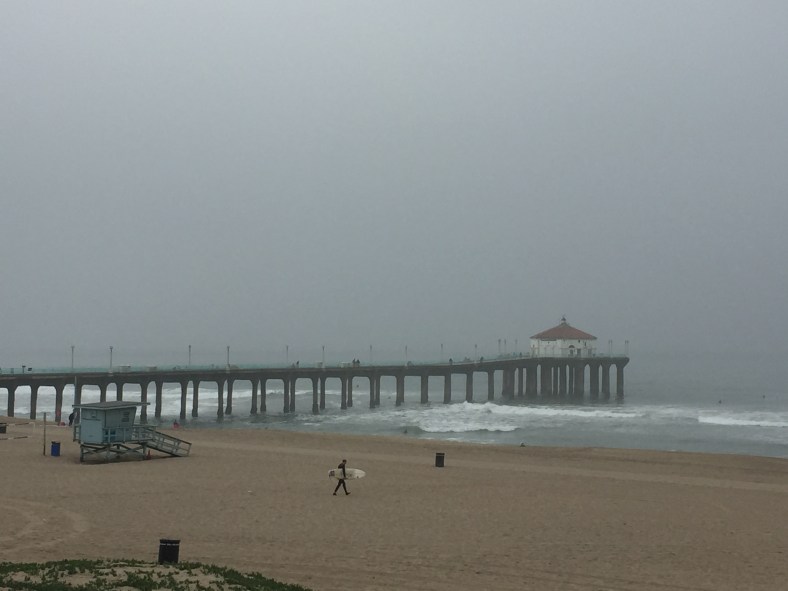
“William Finnegan, who has been a staff writer since 1987, has won the 2016 Pulitzer Prize for Biography, for his memoir about surfing, “Barbarian Days.” This project has been Finnegan’s literary obsession for a very long time. It began as a series in our pages more than two decades ago, and came to completion in June, with “Off Diamond Head,” an excerpt from the book, which was published not long after.”

The Saturday Read on August 1, 2015 recommended ‘Barbarian Days, A Surfing Life’.

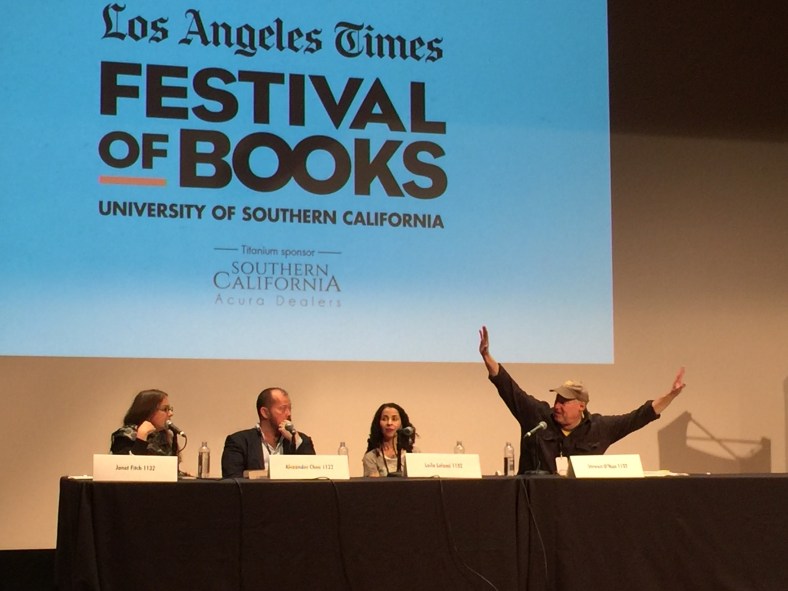
“When you do a book reading in Manhattan Beach, California you need to use a microphone so the guys with ‘surfer’s ear’ in the back can understand you. Last night New Yorker journalist and lifetime surfer William Finnegan used a mic as he read from his well reviewed new book…

The Q&A at the reading was closer to a book club discussion than a publicity event. Most of those attending had either read the book or the excerpt in the June 1 issue of the New Yorker magazine. This is not just a book about surfing. Mr. Finnegan is a well regarded journalist with a resume that includes reporting from South Africa, Somalia, the Balkans, Central America and Australia. Robert Boynton included him in his conversations with America’s best nonfiction writers in ‘The New New Journalism’.”

IMG_2517

Lin-Manuel Miranda won the Pulitzer for drama, for ‘Hamilton’. “For a distinguished play by an American author, preferably original in its source and dealing with American life.”

“A landmark American musical about the gifted and self-destructive founding father whose story becomes both contemporary and irresistible.”

David Rooney reported on the prize for Billboard. “Miranda wrote the book, music and lyrics for the show, in addition to starring in the title role. The Pulitzer now further cements Hamilton’s status as the toughest ticket in town and the clear frontrunner to take the top musical kudos at this year’s Tony Awards in June.”

I have written about Miranda and Hamilton five times in the past year. My favorite is ‘The Power of Taking a Break & the Unexpected Inspiration of Reading’ on March 4, 2015.

“If Mr. Miranda had not been on vacation, taking time away from work, we may have been deprived of his creativity and ability to connect the dots as he developed his perspective for the play: “Miranda saw Hamilton’s relentlessness, brilliance, linguistic dexterity, and self-destructive stubbornness through his own idiosyncratic lens. It was, he thought, a hip-hop story, and immigrant’s story.”

Ms. Mead’s article tells the story of the evolution of Mr. Miranda’s career, the development of ‘Hamilton’, and the connections he has made along the way with mentors and creative partnerships.

Sometimes we think creativity belongs to the artist and we struggle to find opportunities to relate to our own workplace. But creativity is about imagination and storytelling our way to solving a problem. Taking time away allows for a different view. If we are open to the unexpected we can connect the dots and reframe the narrative. And, maybe be online Sunday to buy tickets and see how it’s done.”

What do you do? Crafting an answer of identity @work

It’s the icebreaker question, ‘What do you do?’ It seems like a simple question, but it’s often difficult to explain our life’s work to strangers. Our workplace is defined by acronyms, our comfort zone is among our peers who share a common language.

It was the dilemma writer Elizabeth McCracken expressed in a 2014 tweet.

“21 years into a publishing career & I still have no idea what to say when someone says, “A writer? Have I heard of anything you’ve written?”

Maybe it’s not just the question, but the response we get when we attempt an answer. It’s the incorrect assumptions folks hold when they have a passing familiarity with a career.

Lincoln Michel used the query to imagine ‘If Strangers Talked to Everybody Like They Talk to Writers’.

“There is something unique about the way people talk to writers. Strangers seem very willing to offer career advice — “self-publishing is where the money is!” — literary advice — “People love vampires!” — or to oddly ask you to guess what work they’ve read in their life and if any of yours is among it. It got me thinking about what it would be like it people talked about other professions in this way.”

“Huh. A chef. Do people still eat food?”

“An accountant? Wow, I haven’t even looked at a number since high school.”

“Software programmer? Like, for actual computers sold in stores or just as a hobby?”

It’s not just writers. Most of us have embarked on career paths that carry with them a variety of inaccurate stereotypes.

Is it possible to craft an answer that informs, clarifies and avoids unsolicited advice?

Yes, and it’s storytelling without revealing the ending.

First, decide what you want to share about your work. Then imagine you are describing what you do to aliens. Finally, think function, product, audience and benefit.

Let’s go back to the writer, who may want to keep their work confidential, and avoid unsolicited feedback.

Authors are familiar with providing ‘soundbite’ summaries of their work to ‘sell’ a book proposal, and can employ the same technique to describe their work. For example: “I’m a writer and I recently completed a memoir that will be released in the fall. My next project is a profile for a weekly magazine which involves travel to Austin, Texas next week. Have you been to Austin? Can you suggest any good restaurants in the area?”

This sample response answers the question without divulging confidences, describes the work in familiar terms and redirects the conversation to connect on another, recognizable topic, food.

Who knew writers accumulate frequent flyer miles, get stuck in long TSA lines and patronize fashionable restaurants?

In crafting your response, consider your audience. How likely are they to be aware of your work? This is not about ‘dumbing down’ an answer, but about connecting through shared language and experience.


The week@work: terror on the way to work, a factory fire anniversary, values-based leadership@Starbucks, a millennial workplace, & a new job benefit


How do you share work thoughts when so many were killed and injured on their way to work on Tuesday morning? Apparently, we go on. I have to agree with the sentiment expressed by writer Pamela Druckerman in today’s New York Times ‘Je Suis Sick of This’.

“To Europeans, Brussels was supposed to be a dull place that you didn’t have to think much about until you had to change planes there. There’s a parlor game in which you stump people by asking them to name 10 famous Belgians. “Brussels, the anti-fanatic attacked by the fanatics,” French journalist Laurent Joffrin wrote in Wednesday’s Libération. “Brussels, a cousin whom one is content to know is there.”

Right after an attack it’s easy to say that everything feels different. People are horrified. Parents keep their kids home from school. Newspapers run headlines like “Europe at War.” There is the sad, familiar search for a slogan: This time, I prefer the Belgian frites arranged to make a rude gesture resembling a finger, and the banner reading, “Je suis sick of this” followed by an expletive.”

We don’t stop working. Maybe we are a bit more vigilant, the slogan ‘If you see something, say something’, temporarily gets more attention.

Journalist Druckerman continued, “Despite the inevitable false positives, it’s hard not to be on guard. I’m constantly making a series of mundane existential calculations: Is it worth it to risk going to a movie? Should I let my kids ride the metro to soccer practice? Daily life has a chiaroscuro quality: One minute you’re riding a bus and enjoying a view of the river; the next you’re wondering about the fellow with an unusually large backpack.”

There were other stories this week@work.

Friday was the 105th anniversary of the Triangle Shirtwaist Factory fire. It resonates with workers today because it was a story of immigrant workers, and led to changes in U.S. factory regulations and safety.

triangle fire.jpeg

Joseph Berger summarized the events in a 2011 article.

“A block east of Washington Square, not far from the neighborhood’s boutiques and chic restaurants, was the site of one of the nation’s worst industrial disasters. Many New Yorkers might be unaware of this.

Some labor advocates are trying hard to change that. They have organized an effort to build a memorial to the infamous Triangle Shirtwaist Factory fire of 1911, in which 146 workers died. Most of them were young immigrant women from Eastern Europe and Italy, and more than 50 jumped to their deaths from the factory’s ninth floor.

Two years ago, Tom Marshall posed the question, “Can disasters make life better for future generations?”  He went on to draw a parallel between the Triangle Shirtwaist factory fire and the 2013 garment factory collapse in Dhaka, Bangladesh.

“In both cases, inspectors visited and filed critical safety reports, but scores of people still died while making clothes for others. The American disaster is now hailed as a turning point that led to safer workplaces and broad support for a minimum standard of workers’ rights, while the Bangladeshi disaster’s impact is less certain.”

This week@work Starbucks chairman and CEO, Howard Schultz spoke at the annual shareholders meeting, and expanded on a conversation begun two years ago on the role and responsibility of a for-profit corporation. “What is the role and responsibility of all of us, as citizens?”

K9sMR38U-1650-1650

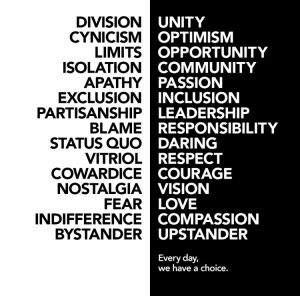
“Viewing the American Dream as a “reservoir” that is replenished with the values, work ethic and integrity of the American people, Schultz said, “Sadly, our reservoir is running dry, depleted by cynicism, despair, division, exclusion, fear and indifference.”

He suggested citizens fill the reservoir of the American Dream back up, “not with cynicism, but with optimism. Not with despair, but with possibility. Not with division, but with unity. Not with exclusion, but with inclusion. Not with fear, but with compassion. Not with indifference, but with love.”

“It’s not about the choice we make every four years,” Schultz said. “This is about the choices we make every day.”

One of the ‘most read’ articles last week, ‘What Happens When Millennials Run the Workplace?’, provided one more illustration that work issues are people issues, and it really doesn’t matter how you generationally identify.

“Joel Pavelski, 27, isn’t the first person who has lied to his boss to scam some time off work.

But inventing a friend’s funeral, when in fact he was building a treehouse — then blogging and tweeting about it to be sure everyone at the office noticed? That feels new.

Such was a recent management challenge at Mic, a five-year-old website in New York that is vying to become a leading news source created by and for millennials.”

The workplace is changing and the 80 million millennials @work will make a significant impact on work/life and the global economy. As a group, the 40 million with college degrees enter the workforce taxed with student loans that are the equivalent of a mortgage. Fidelity Investments announced a new employee benefit last week to address student loan repayment.  Tara Siegel Bernard provided the details.

“Fidelity will apply up to $2,000 annually to the principal of its employees’ student debts.

Fidelity is one of the more prominent employers to announce the student loan repayment benefit in recent months, a policy that seems likely to gain traction. The benefit helps address what some employers describe as a challenge attracting and retaining younger workers, many of whom can’t see beyond the burden of their student debt. Most employers that are offering the new perk also cap their costs at, say, $10,000 total per employee.”

At the end of a difficult week, spring wishes and Happy Easter!

IMG_4148