The week@work #PeaceForParis

On Friday evening Parisians went to work at cafes, a soccer stadium and a concert venue. An American band from Palm Desert, California prepared to take the stage @work at their dream job. And then the trajectory of hundreds of careers changed.

This week @work tells only one story, of graphic designer, Jean Jullien @work and his response to terror in the City of Light.

A year ago, Jean Jullien gave an interview to designboom, answering the typical questions about his career choice, his approach, his influences and skill. As a young artist he was preparing his December 2014 solo show at Kemistry Gallery in London.

“I’ve always loved drawing, but originally wanted to do animation and comics (which I’m ironically just sort of getting into doing now). I applied to many schools but got rejected by all and ended up in a small graphic design course in le paraclet which was actually a blessing in disguise. despite its serious and practical approach, the course was run by passionate teachers who introduced me to the work of masters such as milton glaser, saul bass, raymond savignac, and many others. it made me realize that design and illustration were basically about making the everyday exciting and creative. design for the people, design for the routine, is what really got me into what I do today. the idea that art didn’t stop at the exit of a gallery, but that it could carry on anywhere and that by intertwining with real objects and things, it enhanced them and found a use.”

In response to a question about his strengths and skill, he responded:

“I don’t think of myself as skilled. not in my drawing at least. I’ve become overly critical and empathic at the same time but I’m not sure either of these qualify as a skill, although they are my number one working tool.”

On Friday, the world discovered Jean Jullien’s skill as empathy translated into a representational image that spread across the internet.

eiffel peace

Time.com journalist Nolan Feeney spoke with the illustrator on Saturday and published the transcript of his Skype interview.

Jean Jullien had just begun his vacation when he heard on the radio about the terrorist attacks in his native France that killed more than 120 people on Friday. While others around the world struggled to put their feelings about the violence in Paris into words on social media, Jullien, a professional illustrator, picked up his brush instead.

“I express myself visually, so my first reaction was to draw a symbol of peace for Paris,” Jullien, who says his friends and family are safe and accounted for, told TIME over Skype on Saturday from a location he did not wish to disclose. “From there it seems to have gotten a bit out of my hands.”

The last question in the designboom interview was “do you have a personal motto?”

His answer: “carpe diem or something like that.”
Can the ‘talking cure’ reconnect ‘a band of tweeters’?

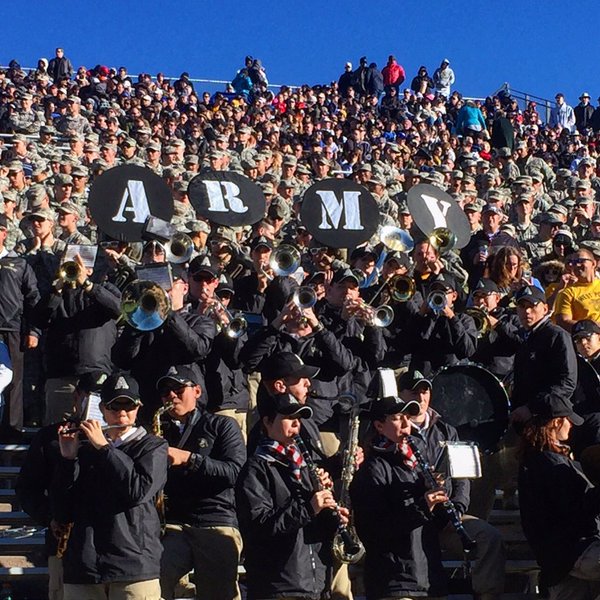
It’s one thing for us to tolerate distraction in the workplace as devices buzz and chime through meetings, but it’s a bit more unnerving to consider the scenario described by a U.S. Army major as soldiers returning from a combat mission opt out of conversation and sit “silently in front of computer screens, posting about their day on Facebook”.

John Spencer is the Army major expressing concern over how “global connectedness has altered almost every facet of a soldier’s daily life”.

“The term “band of brothers” has become almost a cliché to describe how the close personal bonds formed between soldiers translate into combat effectiveness. Yet my combat experience in Iraq suggests that the kind of unit cohesion we saw in past wars may be coming undone because of a new type of technological cohesion: social media, and too much connectivity.”

It’s one more example to support the 30 years of research conducted by MIT professor, Sherry Turkle.

“We’ve gotten used to being connected all the time, but we have found ways around conversation — at least from conversation that is open-ended and spontaneous, in which we play with ideas and allow ourselves to be fully present and vulnerable. But it is in this type of conversation — where we learn to make eye contact, to become aware of another person’s posture and tone, to comfort one another and respectfully challenge one another — that empathy and intimacy flourish. In these conversations, we learn who we are.”

Professor Turkle cites the research of Howard Gardner and Katie Davis on what they call the “app generation,” which grew up with phones in hand and apps at the ready. It tends toward impatience, expecting the world to respond like an app, quickly and efficiently. The app way of thinking starts with the idea that actions in the world will work like algorithms: Certain actions will lead to predictable results.”

Which brings us back to 2008 and Major Spencer’s observations of his ‘band of tweeters’.

“In 2008, I saw the soldiers’ individuality in battle. I saw them arguing about what decisions to make. I often observed much more transactional communications where there would have been friendly banter in the past. Groups seemed unable to learn from their daily challenges or direct any intergroup policing of individual actions. I saw these things especially in the younger soldiers.”

He goes on to emphasize the importance of motivation and social cohesion for any large organization, but identifies the need for conversation as critical in the military workplace.

“What all of the research highlights is the importance of conversation during noncombat time — the hours of nothingness, the shared boredom — where bonds of trust, friendships and group identity are built.”

Most of us go to work in a place where guns and ammo are not part of our daily existence. But the risks to our health and well-being might be in equal jeopardy when we multi-task, “always available elsewhere”.

At the end of his essay, Major Spencer suggests “developing structures to organize the social interactions and conversations that used to occur spontaneously. This would include requiring soldiers to hold post-patrol gatherings on top of their usual mission reviews. This debriefing concept is very effective within other organizations. I would also shift the trend from small two- to four-man living spaces and increase them to four to six, both in stateside bases and especially in combat.”

And leave the devices in another room. Disconnected, we can reestablish conversation.

Professor Turkle cites psychologist Yalda T. Uhls’ research with children at a ‘device free’ camp, demonstrating our capacity for resilience when we untether for a period of time.

“After five days without phones or tablets, these campers were able to read facial emotions and correctly identify the emotions of actors in videotaped scenes significantly better than a control group. What fostered these new empathic responses? They talked to one another. In conversation, things go best if you pay close attention and learn how to put yourself in someone else’s shoes. This is easier to do without your phone in hand. Conversation is the most human and humanizing thing that we do.”

“Conversation is the antidote to the algorithmic way of looking at life because it teaches you about fluidity, contingency and personality.”

Our technology alerts us to ‘recalculate’ when we choose to diverge from the programmed path. It’s another ownership issue of our humanity, to take back control of conversation in a ‘tech free’ space.

“This is our moment to acknowledge the unintended consequences of the technologies to which we are vulnerable, but also to respect the resilience that has always been ours. We have time to make corrections and remember who we are — creatures of history, of deep psychology, of complex relationships, of conversations, artless, risky and face to face.”

And for our ‘band of brothers’ (and sisters) –

“… the benefits of hyper-connectivity for individual soldiers shouldn’t outweigh the collective costs of social cohesion…”

The Saturday Read – ‘Dear Committee Members’ by Julie Schumacher

Have you ever considered a life as a university professor? For those outside the ivory tower, it seems an idyllic career: contemplating great thoughts, teaching a few classes, and travelling the world on sabbatical.

This week’s ‘Saturday Read’ is required reading for anyone planning to spend an extended period of time on a college campus. University of Minnesota professor Julie Schumacher has written a valuable and humorous addition to the canon of university life with ‘Dear Committee Members’.

If your workplace is academia, you are familiar with letters of reference. In this novel of university life, creative writing and literature professor Jason Fitger narrates a year in his life via a variety of LORs, written to advance his personal agenda and the careers of colleagues and students.

Brock Clarke’s review of the book cited the author’s choice of structure as one of its strengths.

“…Schumacher also brilliantly uses the epistolary form to show Jay’s desperation in the face of his crumbling university, career, life. In all this, her scabrous book reminds me of Sam Lipsyte’s “Home Land,” Richard Russo’s “Straight Man” and Jincy Willett’s “Winner of the National Book Award.” If you didn’t find those books funny, well, that means you’re a corpse. But you’re also, apparently, a corpse who reads, so there’s hope for you yet. You should read “Dear Committee Members”; maybe it will bring you back to life.”

The story tracks with the academic calendar and begins with our fearless professor writing a letter of recommendation for a grad student, followed by another providing an assessment of the current state of affairs to the department chair.

“…more that a third of our faculty now consists of temporary (adjunct) instructors who creep into the building under cover of darkness to teach graveyard shifts of freshman comp; they are not eligible to vote or serve…the remaining two-thirds of the faculty, bearing the scars of disenfranchisement and long-term abuse, are busy tending to personal grudges like scraps of carrion on which they gnaw in the gloom of their offices…after subtracting the names of those who are on leave or close to retirement, and those already serving in the killing fields of administration…”

Only an insider could provide this accurate summation of the state of the university today. This is not breaking news to those inside the ivy walls, but serves as a reality check to those aspiring to an academic career.

The author provides one of the most compelling arguments for the liberal arts in Jason’s letter of recommendation to fictional Bridget Maslow at Addistar Network, Inc. And gives any of you english majors out there the perfect words for your cover letter.

“Belatedly it occurs to me that some members of your HR committee, a few skeptical souls, may be clutching a double strand of worry beads and wondering aloud about the practicality or usefulness of a degree in English rather than, let’s say, computers. Be reassured: the literature students has learned to inquire, to question, to interpret, to critique, to compare, to research, to argue, to sift to analyze, to shape, to express. His intellect can be put to broad use. The computer major, by contrast is a technician – a plumber clutching a single, abeit shining, box of tools.”

‘Dear Committee Members’ is a story of one man’s career/life choices. At the end, you just may want to consider a university as your workplace. Where else can you work where one quarter of the population are newbies and you have the opportunity to start over every autumn?

“There is nothing more promising or hopeful than the start of the academic cycle: another chance for self-improvement, for putting into practice what one learned – or failed to learn – during the previous year.”

The Saturday Read – ‘Humans of New York:Stories’ by Brandon Stanton

We learn from the wisdom of others. In Brandon Stanton’s new book we learn from the wisdom of strangers. The ‘Saturday Read’ this week is ‘Humans of New York: Stories’.

“The simplest way to describe the development of HONY over the past five years is this: it’s evolved from a photography blog to a storytelling blog…after cataloging thousands of people, I stumbled upon the idea of including quotes from my subjects alongside their photographs. The quotes grew longer and longer, until eventually I was spending fifteen to twenty minutes interviewing each person I photographed. These interviews, and the stories that resulted from them, became the new purpose of Humans of New York. The blog became dedicated to telling the stories of strangers on the street.”

The first career story is the author’s own. He graduated from college, took a job in Chicago as a bond trader, lost his job, moved to New York and started taking pictures of folks on the street. His work evolved into a blog with 15.6 million followers. His first book of photography, Humans of New York, landed at the top of The New York Times Bestseller List in the fall of 2013 and the new book will debut at the top of the November 1, 2015 list.

Why the response? Because the Mr. Stanton’s stories, told in words and images are about us. The scope of his project embraces NYC folks encountered on the street, reflecting on their past and future. We don’t know names. We don’t know ages. We can only guess in connecting the photo to the quote. At times the words seem at odds with the picture.

Here is one example from a young man, perhaps in his early teens.

“I’ve sort of had an arrogant demeanor my entire life, and I’m learning that I’m going to have to change that if I want to succeed. I realized that it doesn’t matter how clever you are if nobody wants to work with you.”

Another from a young woman seated on a suitcase, in the middle of a train station.

“I wish I’d partied a little less. People always say: ‘Be true to yourself.’. But that’s misleading because there are two selves. There’s your short-term self, and there’s your long-term self. And if you’re only true to your short-term self, your long-term self slowly decays.”

And a man at mid-life in what appears to be a cold corporate lobby, sitting on a stone bench, framed by a stone wall.

“When you’re twenty-five, you feel like you’re riding a wave. You feel like opportunities are just going to keep coming at you, and you think it’s never going to end. But then it ends.”

“When does it end?”

“When you turn forty, and they start looking for someone younger.”

The reader gets a sense they are looking in the mirror, but they’re not. The photo doesn’t match the selfie, but the sentiment fits.

Heather Long, writing for CNN Money, interviewed Stanton and attended his reading at a NY Barnes and Noble. What has he learned in the process of photographing and interviewing 10,000 people? “Americans should reconsider how much they work.”

“He often asks: What is your biggest struggle? And what do you regret most in life?
“Balancing my life is an answer I hear a lot,” he said. “Balancing work and family.”
People go on to tell him how they wish they had skipped that marketing conference and attended their daughter’s 8th grade dance instead.”

One of my favorite ‘inteviews’ appears early in the book (page 5). The narrative comes from a third grader (?).

“I want to build a bridge”

“How do you build a bridge?”

“If you want to build a bridge, it’s going to take a long time and it might be hard because your employees might not be as interested in building a bridge as you are. You have to think about what type of bridge you want to make…” 

He could be talking about life and career.

HONY: Stories invites us on a road trip through the streets of New York, opting for the detours that welcome conversation. This is a book to read slowly, observing the detail in the photos and the humanity in the words. It’s a compendium of other’s lifelong learning, generously shared.

“I want to be an artist.” “What kind of art do you want to make?” “I want to make different versions of myself.”

It’s not just millennials – we all want to learn and grow @work

“How Do Employers Retain Job-Hopping Millennial Employees?” That was the question posed on Quora.com earlier this week. After reading the response from millennial entrepreneur, Elijah Medge, posted on Slate.com, I realized that what we want from work is not a generational issue, we all have similar expectations @work: to learn, grow and be challenged in an “awesome work environment”.

The American worker is tired of hearing about the ‘outrageous expectations’ of the millennial generation.

Instead, let’s step back and thank the millennials for their workplace vision that demands a voice in decision making, requires meaning @work, invites a diverse set of views and creates a bit of fun on the way to productivity.

There will always be a clash between employer and employee expectations when the process lacks honesty. Employers are scrambling to create ‘band aids’ to attract new hires. Job candidates, anxious to please a potential employer, play the game to get the offer, only to depart in a few months when promise and reality don’t match.

Media reports are full of stories of companies trying a variety of experiments to entice millennials to sign on the dotted line. There is no considered approach, just a bunch of ideas being thrown at the wall to see if any stick. The most recently publicized, ‘unlimited vacation time’.

Mr. Medge’s suggestions remind us that a fundamental tenet of management is ‘keep it simple’:

“Facilitate team bonding outside of the office.”

“Mix it up and have a little fun.”

“Take the time to coach, train, and develop successful mentalities.”

“Offer awesome incentives.”

“Encourage learning and mistakes.”

“Don’t micromanage.”

“Consistently recognize top performers.”

“Talk to your people about their goals.”

Do you see anything here that’s generation specific?

When corporate contracts with workers began to disintegrate in the late ’70s, members of the greatest generation and baby boomers were forced to rethink their relationship with the workplace. The disruption of downsizing signaled the end of ‘job stability’.

The level of workplace disruption came as a shock. Those generations were new at this and slow to respond. They had families and mortgages and the risks were too high to challenge the status quo, even thought the status quo had been shattered. The economy was changing and maintaining a standard of living required two incomes.

In contrast, today’s new workers, although saddled with debt, have few other ties. They are the ‘free agents’ of the contemporary workplace and they have watched previous generations, their parents and grandparents, and concluded there is a better way to work.

Let’s engage all workers in conversation about work culture that incorporates Mr. Medge’s common sense components.

The question of employee retention crosses all generations @work: the leaders, the mentors and the newbies. Calibrate the expectations of all members of the workplace community, align with the organization’s culture and restore credibility into the recruitment and retention process.

Acting is not interviewing

Are you so prepared for your interview that your friends and family would’t recognize you? In an effort to be the best candidate for a job it is possible that you try to ‘game’ the process and ‘act’ your way through the interview? Does your personality somehow get lost in the process?

It’s never a good idea to let the job search process change who you are. If you do, the job offer, if it comes will be based on a false set of impressions. More likely, you will not get the offer because a good recruiter will recognize that something is missing.

I recall a series of interviews I conducted with candidates for an international internship program. One of the finalists met all the criteria on the resume. However, during the interview I was never able to connect. The answers to the questions were all good, but I felt I was talking to someone who was trying to get it right – like trying to ace an exam. There was no ‘there, there’.

I wanted to say. “Let’s start over. Go out the door and come back in. But come back in as you.”

Have you ever anticipated a theater performance only to arrive and find a paper insert in your Playbill announcing ‘actor x will be played by y today’? Your immediate reaction of disappointment is the same a recruiter experiences when they are excited about meeting a potential employee and encounter the understudy.

Don’t lose yourself in the quest for work. Take the time to do your research in preparing for an interview. (If you are not a ’suit’ type you should not be interviewing with ’suit’ requiring organizations. If you don’t want to work in a cubicle, why would you send a resume to a cubicle farm?)

Review your resume prior to sitting down with a recruiter. What do you want to communicate that will connect your unique capabilities with the organization’s needs? Outline, don’t script.

Engage in the conversation. Be ready to follow a tangent at the recruiter’s lead. Listen.

Never abdicate ownership of your job search process. Don’t let anyone try to transform you into a character actor to get a part. If you don’t have to memorize your lines, you will leave room for spontaneity and give the prospective employer a chance to get to know you.

The Saturday Read – ‘The Martian’ by Andy Weir

Did you want to be an astronaut when you grew up? Maybe you thought about signing up for the one way ticket to inhabit Mars?

The ‘Saturday Read’ this week, ‘The Martian’ by Andy Weir, is another ‘suggested read before you see the movie‘. The novel was described by Joel Achenbach in the Washington Post as the book that may have saved NASA and the entire space program.

There are two career narratives here. The first is the author’s story and the path to publication. The second is the fictional story of Mark Watney, his fellow astronauts and the folks at Mission Control.

On the first page we are introduced to astronaut Watney, on Mars.

“Six days into what should be the greatest month of my life, and it’s turned into a nightmare.” 

Our narrator is a member of the third crew NASA sent to Mars.

“Ares 3. Well, that was my mission. Okay, not mine per se. Commander Lewis was in charge. I was just one of her crew. I would only be ‘in command’ of the mission if I were the only remaining person.

What do you know? I’m in command.”

Have you ever taken part in one of those team building sessions where you are lost at sea with only ten salvaged items? You have to rank order them and imagine how each will improve your chances for survival. ‘The Martian’ is a natural for a new version of imaginary survival training.

“It was a ridiculous sequence of events that led me to almost dying, and an even more ridiculous sequence that led me to surviving.” 

I should mention that these are excerpts from Watney’s log of his time on Mars. For the major portion of the book we follow him as he connects an amazing array of dots to stay alive. This is a book about problem solving and this astronaut makes MacGyver look like an amateur.

For the first 50 pages we are alone with our inventive astronaut as he creates a habitat on an uninhabitable environment.

“So that’s the situation. I’m stranded on Mars. I have no way to communicate with Hermes or Earth. Everyone thinks I’m dead…”

Not so fast…enter Mindy Park at SatCon, NASA.

“Masters degree in mechanical engineering…and I’m working in an all night photo booth.”

Mindy finds signs of life in satellite images and soon the world knows Mark Watney has survived. Here’s the problem. He has to endure 1,412 more days before any possible rescue.

This is also a book about leadership, taking risks, personal sacrifice and exhausting all possible resources to accomplish a goal. It has all the elements of a Harvard business case study, but with a sense of humor.

The ‘other’ career story, of author Andy Weir, was reported by Kelly Dickerson for Business Insider.

“His earlier attempts at writing pretty much flopped, but “The Martian” took off, partly because it captures Weir’s enthusiasm for science and space exploration.

In 2009, Weir started posting the story chapter by chapter on his personal blog where anyone could read it for free. The early version of his self-published book attracted a lot of science-minded readers, and they offered feedback.

Word of the book spread, and readers started asking for an e-reader copy. So Weir made all the individual chapters available in one file. Some had trouble downloading it though, so Weir put it on Amazon via Kindle Direct Publishing.

That’s when the floodgates opened. More people downloaded the 99-cent Amazon version than had ever downloaded the free version, Weir said, and readers started leaving positive reviews on Amazon. In just a few months it skyrocketed to the top of Amazon’s best-selling science fiction list.

So a book agent got in touch with Weir. Shortly after that, the publishing company Random House called — it wanted to publish a hardcover.

Four days later, Hollywood called for the movie rights…”

Bring-Him-Home-The-Martian

And in case you thought it was just a novel or a movie… Entrepreneur Elon Musk posted a photo on Twitter this week of his Dragon Spacecraft landing on the red planet. Enjoy the ‘Saturday Read’ – ‘The Martian’.

elonmusk dragon

What question would you ask? Interviewing for POTUS

Not all of us have the opportunity to interview candidates in our workplace, but when we do, we want to get it right. We want pose the question that elicits a response providing a hint to how this individual will perform if selected.

Tonight, in California, the  candidates seeking the Republican nomination for president will participate in a debate. In reality, they will be answering interview questions posed by journalists. What question would you ask?

If you don’t know where to begin, Adam Bryant’s weekly executive interviews column in The New York Times is a good place to start. In an interview last month, Greg Schott of software company, MuleSoft shared his hiring philosophy.

“First off, we’re looking for someone who’s a good human. That is defined by high integrity, being a great team player, and they want to win as a company first, team second, individually third. The next thing we look for is people who are whip-smart. The third thing we look for is a clear track record of achievement.

And I also work hard to understand the decisions they’ve made along the way, like why they left a certain job to take the next one. You learn all kinds of things from why they made those job transitions. I’ll also ask what they’ve done that changed things for their organization as opposed to just doing the job that they were asked to do. What did they do that nobody asked them to do?”

We definitely want someone who’s a good human to be president. I would like to know why they left their current job to take the next one. Why have some not left their current job yet? What have they done above and beyond the job description? Integrity, smarts, record of achievement all good.

Maybe I’d add a question about flexibility, dealing with ambiguity. Describe a belief you held for a long time that with some education and experience you changed? Being president requires leading the folks you don’t agree with along with those who voted for you.

Starbucks CEO Howard Schultz shared his opinion on the election process and the responsibility of those elected to represent us to act differently, and posed his questions for the candidates.

“Every one of the candidates offers grand promises about new leadership and new solutions. But where do they stand on working with their rivals? Regardless of who wins the presidency, the odds of the same party controlling a filibuster-proof Senate are slim. If we want to turn the nation around, we have to act differently. Save for the most rabid partisans, most people don’t want one-party rule. They want Democrats and Republicans to work together.

Americans who are tired of politics as usual should demand a clear answer to a simple question from every candidate: What will you do to unite all of us?”

Stewart Butterfield of communications service company Slack discussed his interview process with Adam Bryant.

“I used to always ask three short questions — one math, one geography and one history. I didn’t expect people to get the answers right, but I just want them to be curious about the world. The first is what’s three times seventeen. Then name three countries in Africa. You’d be astonished by the number of people who can’t do that. And what century was the French Revolution in, give or take 200 years.

I don’t do that anymore, but I do ask everyone what they want to be when they grow up. Good answers are usually about areas in which they want to grow, things they want to learn, things that they feel like they haven’t had a chance to accomplish yet but want to accomplish.”

This is what I want to know. What did these folks on the stage at the Reagan Library want to be when they grew up? Ok, they wanted to be president. But it’s not enough to want. What do they still wish to learn, to accomplish? What does their world look like at the end of a successful presidency? The answers will give me the information I need to make a decision.

And, I would like them to name three countries in Africa.

Fear of public speaking is #1

Tonight the cast of the musical ‘Hamilton’ will officially ‘open’ on Broadway and ten Republican candidates competing for the U.S. presidency will debate on a stage in Cleveland, Ohio. Across the globe thousands of professionals in their respective fields will stand in front of an audience and present their expertise. What do all these folks have in common? Stagefright.

Joan Acocella, the dance critic for The New Yorker magazine wrote about stagefight in this week’s issue.

“Stagefright has not been heavily studied, which is strange because, as Solovitch tells us, it is common not only among those who make their living on the stage but among the rest of us, too. In 2012, two researchers at the University of Nebraska-Omaha, Karen Dwyer and Marlina Davidson, administered a survey to eight hundred and fifteen college students, asking them to select their three greatest fears from a list that included, among other things, heights, flying, financial problems, deep water, death, and “speaking before a group.” Speaking before a group beat out all the others, even death.”

Comedian Jerry Seinfeld‘s joke about public speaking echoes the research.

“According to most studies, people’s number one fear is public speaking. Number two is death. Death is number two. Does that sound right? This means to the average person, if you go to a funeral, you’re better off in the casket than doing the eulogy.”

There are famous examples which Ms. Acocella cites in her article.

“…Barbra Streisand, singing in front of more than a hundred thousand people in Central Park, one night in 1967, repeatedly forgot her lyrics. For twenty-seven years thereafter, she refused to perform live except at charity concerts.”

“Two years ago, before undertaking a one-woman show on Broadway, Bette Midler told Patrick Healy, of the Times, that she had wanted to be a serious dramatic actress but had faltered for lack of courage. “I have that terror,” she said. “Will people like you? Will they ask you back? Did I make the cut? That’s always on my mind.” To hear the brash, funny, commanding (as far as we knew) Midler tell of worrying whether people would like her is painful. But, in every group of artists, the insiders can tell you who, among them, should have had a bigger career but, for some reason, was held back.”

For most of us, our career depends on our ability to convey our ideas credibly in a variety of public venues. It’s great to know we have something in common with Barbara Streisand and Bette Midler, but what we don’t have is an alternative to make a living.

How do you transform the fear into confidence?

Before you step up to a podium, stand in front of your local school board, or pitch an idea to a potential investor, do your research. If you know what you’re talking about, you are halfway there.

One technique that has always worked for me is to come up with three things I want people to remember when they leave the room. Structure your presentation to start with these three things, elaborate on each one and summarize the three at the end.

Avoid too many visuals. If they don’t complement your points, you create a distraction.

Rehearse, but don’t practice you personality out of your pitch. Your audience is there for you and your expertise.

Seek out opportunities to present. Public speaking is a talent that requires nurturing. Your comfort level and confidence will increase in proportion to the frequency of your speeches.

None of these suggestions eliminate the initial terror of being in the spotlight in front of strangers. Just remind yourself why you are there and what you want to accomplish before you leave the stage.

Ms. Acocella found that the fear is not always viewed as a negative.  “Sometimes, when performers speak of stagefright, one senses that they do not actually wish it gone—that, for them, it is almost a badge of honor, or, at least, proof that they’re serious about their work.”