The Friday Poem ‘Baseball’ by Gail Mazur

The Friday Poem this week is for those whose workplace is the ballpark. It’s the first week of April and the dream of a World Series Championship is possible for each of Major League Baseball’s thirty franchises and their fans.

Our ‘national pastime’ has often been used as a metaphor for life. Poet Gail Mazur shared her connection to the diamond with her poem ‘Baseball’.

“Well, of course, baseball, to the ardent fan, IS a metaphor and more. I couldn’t write that poem until I thought of denying baseball was a metaphor, then I could go all out. Everything about the game and the park seemed like metaphor. And a fan’s sense of loss—or exhilaration—no matter how intense, is more bearable than the real losses in our lives. But still, but still, one feels one lives and dies, as the saying goes, with one’s team! After the first line, I wrote it in a few minutes, one of those gifts”

Baseball
for John Limon

The game of baseball is not a metaphor
and I know it’s not really life.
The chalky green diamond, the lovely
dusty brown lanes I see from airplanes
multiplying around the cities
are only neat playing fields.
Their structure is not the frame
of history carved out of forest,
that is not what I see on my ascent.

And down in the stadium,
the veteran catcher guiding the young
pitcher through the innings, the line
of concentration between them,
that delicate filament is not
like the way you are helping me,
only it reminds me when I strain
for analogies, the way a rookie strains
for perfection, and the veteran,
in his wisdom, seems to promise it,
it glows from his upheld glove,

and the man in front of me
in the grandstand, drinking banana
daiquiris from a thermos,
continuing through a whole dinner
to the aromatic cigar even as our team
is shut out, nearly hitless, he is
not like the farmer that Auden speaks
of in Breughel’s Icarus,
or the four inevitable woman-hating
drunkards, yelling, hugging
each other and moving up and down
continuously for more beer

and the young wife trying to understand
what a full count could be
to please her husband happy in
his old dreams, or the little boy
in the Yankees cap already nodding
off to sleep against his father,
program and popcorn memories
sliding into the future,
and the old woman from Lincoln, Maine,
screaming at the Yankee slugger
with wounded knees to break his leg

this is not a microcosm,
not even a slice of life

and the terrible slumps,
when the greatest hitter mysteriously
goes hitless for weeks, or
the pitcher’s stuff is all junk
who threw like a magician all last month,
or the days when our guys look
like Sennett cops, slipping, bumping
each other, then suddenly, the play
that wasn’t humanly possible, the Kid
we know isn’t ready for the big leagues,
leaps into the air to catch a ball
that should have gone downtown,
and coming off the field is hugged
and bottom-slapped by the sudden
sorcerers, the winning team

the question of what makes a man
slump when his form, his eye,
his power aren’t to blame, this isn’t
like the bad luck that hounds us,
and his frustration in the games
not like our deep rage
for disappointing ourselves

the ball park is an artifact,
manicured, safe, “scene in an Easter egg”,
and the order of the ball game,
the firm structure with the mystery
of accidents always contained,
not the wild field we wander in,
where I’m trying to recite the rules,
to repeat the statistics of the game,
and the wind keeps carrying my words away

Gail Mazur  ‘Zeppo’s First Wife: New and Selected Poems’ 1978

41SVK0y1lOL._SX359_BO1,204,203,200_

The week@work – women@work, laziness and success, co-working space @Staples, and repeal of online protections

This week@work we learned that the sculptor Kristen Visbal’s ‘Fearless Girl’ will remain on Wall Street though the beginning of 2018. A timely, symbolic decision given the other news of the week for women@work, which could convince one that they had time traveled back to 1957: continuing sexual harassment allegations @Fox, declining numbers of female coaches in women’s college basketball, Mike Pence’s views on lunch meetings, new research indicating a possible retreat from gender equality, and the headline from the Daily Mail which covered Brexit talks between Theresa May and Nicola Sturgeon as ‘Legs-It’.

In other stories this week@work, office supply company Staples is partnering with Workbar to offer co-working spaces, author Michael Lewis’ described how laziness contributed to his success, and various experts offered suggestions to secure your digital privacy in light of internet protections repeal.

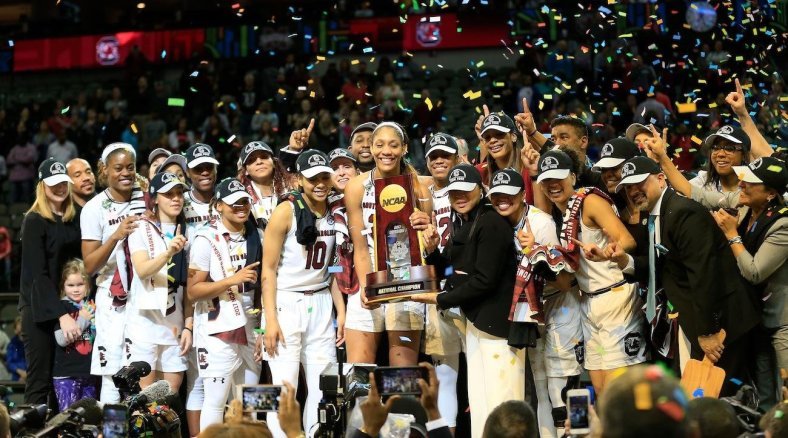
Last night, the University of South Carolina’s womens’ basketball team won the NCAA national championship.
63f6b75b3e9ad0040df48faf1eb8e4f9.jpg

Dawn Staley finally could raise an NCAA championship trophy…Staley made the Final Four three times as a player at Virginia but never won. She also led the Gamecocks to the national semifinals two years ago before losing to Notre Dame.”

Earlier this month Coach Staley was named the U.S. Olympic women’s basketball coach through 2020.  Jere Longman reported on the state of college coaching as the ‘Number of Women Coaching in College Has Plummeted in Title IX Era’.

“Tara VanDerveer has won two national championships at Stanford and coached the American women to a gold medal at the 1996 Atlanta Olympics. Dawn Staley, the recently named 2020 Olympic coach, won three gold medals as a player and has guided South Carolina to the national semifinals for the second time in three seasons.

Yet even as VanDerveer and Staley again appear on their sport’s most visible stage, the opportunity for women to coach female collegiate athletes has stagnated after a decades-long decline.

In 1972, when the gender equity law known as Title IX was enacted, women were head coaches of more than 90 percent of women’s college teams across two dozen sports. Now that number has decreased to about 40 percent.”

On Wednesday, The Guardian journalists Anushka Asthana and Rowena Mason reported on the initiation of the formal process to separate Great Britain from the European Union.

3EB93B2000000578-4358056-image-a-10_1490749000090-1.jpg

“A letter signed by the prime minister will be hand-delivered to the president of the European council at about 12.30pm – as she rises in Westminster to deliver a statement to MPs signalling the end of the UK’s most significant diplomatic association since the end of the second world war.”

Unfortunately, the momentous occasion was not compelling enough. A photo soon emerged of the prime minister and first minister of Scotland provoking a sexist headline and article from the Daily Mail, prompting “immediate criticism from politicians, commentators and members of the public after it first appeared on Twitter on Monday night. Conservative MP and former Education Minister Nicky Morgan accused the paper of “appalling sexism”.

“Seriously? Our two most senior female politicians are judged for their legs not what they said #appallingsexism,” Ms Morgan said.

Labour MP Yvette Cooper joked that the clocks had “gone forward this weekend, not 50 years back”, while former Labour Leader Ed Miliband wrote the “1950s called and asked for their headline back”.

And then there was this, ‘Do Millennial Men Want Stay-at-Home Wives?’. Stephanie Coontz shared new research on attitudes toward gender equity.

“…a set of reports released Friday by the Council on Contemporary Families reveals, fewer of the youngest millennials, those aged 18 to 25, support egalitarian family arrangements than did the same age group 20 years earlier.

Using a survey that has monitored the attitudes of high school seniors for nearly 40 years, the sociologists Joanna Pepin and David Cotter find that the proportion of young people holding egalitarian views about gender relationships rose steadily from 1977 to the mid-1990s but has fallen since. In 1994, only 42 percent of high school seniors agreed that the best family was one where the man was the main income earner and the woman took care of the home. But in 2014, 58 percent of seniors said they preferred that arrangement. In 1994, fewer than 30 percent of high school seniors thought “the husband should make all the important decisions in the family.” By 2014, nearly 40 percent subscribed to that premise.”

Rose Leadem reported on the new joint co-work space venture between Staples and Workbar.

Staples_Workbar_storefront_09_Hi-Res.jpg

“Staples isn’t just for office supplies or printing anymore. Three of the company’s Massachusetts stores now include happy hour, retro music and mod seating — that is, it’s adding coworking spaces.

Since September, more than 200 people have signed up for memberships, which cost $130 a month. The company hasn’t revealed plans for more locations, but according to Bloomberg, Goodman hopes to “dominate the $80 billion-a-year U.S. midmarket, or businesses with fewer than 200 employees.”

Minda Zetlin interviewed writer Michael Lewis and found ‘Being Lazy Is the Key to Success, According to the Best-Selling Author of ‘Moneyball’.

Embracing laziness has helped him be successful because he focuses his efforts only where it really matters, he explained. Here’s how that can create a real advantage:

Being willing to be inactive or less active means you’ll be available when something truly worthy of your best effort comes along. It also means you’ll have the time and space to go looking for those really worthwhile projects. If you’re busy being busy, you’ll miss them…

“People waste years of their lives not being willing to waste hours of their lives. If you mistake busyness for importance–which we do a lot–you’re not able to see what really is important.”

“My laziness serves as a filter,” Lewis said. “Something has to be really good before I’ll decide to work on it.”

While embracing laziness, you may want to think about securing your online privacy. With the roll back of internet privacy regulations last week, Marguerite Reardon offered background and analysis, ‘Congress just killed online privacy rules. Now what?’

People-sit-around-laptops-using-free-WiFi-at-a-cafe-in-Beijing.jpg

“The House of Representatives on Tuesday voted 215-205 to stop FCC regulations from taking effect that would have required broadband and wireless companies to ask your permission before sharing sensitive information about you, such as the websites you visit, the apps you use or even your location. The rules would have also set standards for broadband providers to protect information they collect and store. And they would have set requirements for when and how companies would inform you if your data was stolen.

Since the FCC’s rules never actually went into effect, you won’t notice much difference in how companies are protecting your privacy. But eventually, you’ll see a lot more targeted advertising and creepy ads that follow you all over the internet. Your broadband provider, whether that’s AT&T, Verizon or Comcast, will still be able to sell some information about you to advertisers, just as Google and Facebook can.

Broadband providers are already moving into the content business, and they’re likely to get more aggressive in how the information is used and who gets to use it.”

#3 on the most read, shared and discussed posts from across the New York Times was an updated article that originally appeared in November, ‘Protecting Your Digital Life in 8 Easy Steps’. Don’t forget to cover your webcam with tape…

Photo credits:  Theresa May – Downing Street/Twitter,


The Saturday Read – ‘The Undoing Project: A Friendship that Changed Our Minds

The Saturday Read this week is the latest book from Michael Lewis, ‘The Undoing Project: A Friendship that Changed Our Minds’. It’s the story of Israeli psychologists Daniel Kahneman and Amos Tversky; two men who baffled colleagues at their pairing from the early days of their academic careers until the point when the public perception “was now a Venn diagram, two circles, with Danny wholly contained by Amos”.

Reading ‘The Undoing Project’ I found myself underling and annotating as I went along, re-reading passages, flipping between chapters; engaged in an academic exercise vs. an enjoyable character-driven narrative.

It’s the first time I’ve read a Michael Lewis book where I heard the voice of a Princeton alum more clearly than those of the two main characters.

Here’s the strange thing, as painful as the first read was; I keep thinking about the practical applications of the pair’s research long after the final page.

“The way the creative process works is that you first say something, and later, sometimes years later, you understand what you said.”

Read something and sometime later you understand how it applies.

kahneman-tversky1.jpg

Both of these men had exceptional origin stories. Each was a genius in his own right. Each started out where we all do, with a certain degree of uncertainty about what to do with our lives.

For Danny, “From the moment he thought what he might be when he grew up, he simply assumed he would be an intellectual. That was his image of himself: a brain without a body… He’d always sensed that he would be some sort of professor, and the questions he had about human beings were more interesting to him than any others. “My interest in psychology was a way to do philosophy…to understand the world by understanding why people, especially me see it as they do.”

“Aptitude tests revealed Danny to be equally suited for the humanities and science, but he only wanted to do science. He also wanted to study people. Beyond that, it soon became clear, he didn’t know what he wanted to do.”

In an interview with Stephanie Demming, published in December, he further clarified his path.

“My own love affair with psychology began after I graduated from university in 2009, as soon as I started working in the real world. It took all of two minutes to figure out the working world didn’t function like the school system. If you worked hard, you weren’t always rewarded. The new currency was whether or not people liked you. It was a system governed not by grades, but by people’s minds.”

For Amos, “Entering high school, Amos like all Israeli kids, needed to decide if he would specialize in math and science or in the humanities. The new society exerted great pressure on boys to study math and science. That’s where the status was, and the future careers. Amos had a gift for math and science, perhaps more than any other boy. And yet alone among the bright boys in his class – and to the bemusement of all – he pursued the humanities.”

“Hebrew University in the late 1950s required students to pick two fields of concentration. Amos had chosen philosophy and psychology.  But Amos approached intellectual life strategically, as if it were an oil field to be drilled, and after two years of sitting through philosophy classes he announced that philosophy was a dry well…There are too many smart guys and too few problems left, and the problems have no solutions.”

Later, in his mid-forties he was asked by Harvard professor Miles Shore how he became a psychologist.

“It’s hard to know how people select a course in life…The big choices we make are practically random. The small choices probably tell us more about who we are. Which field we go into may depend on which high school teacher we happen to meet…On the other hand, the small decisions are very systematic. That I became a psychologist is probably not very revealing. What kind of psychologist I am may reflect deep traits.”

The career choices of these two individuals resulted in a collaboration that challenged conventional thinking on human judgement and decision making.

“A part of good science is to see what everyone else can see but think what no one else has ever said.”

“Given the work on human judgment that he and Amos had just finished, he found it further troubling to think that “crucial decisions are made, today as thousands of years ago, in terms of the intuitive guesses and preferences of a few men in positions of authority.” The failure of decision makers to grapple with the inner workings of their own minds, and their desire to indulge their gut feelings, made it “quite likely that the fate of entire societies may be sealed by a series of avoidable mistakes committed by their leaders.””

This was the book that Michael Lewis had to write. It was the origin story of his best seller ‘Moneyball’. A writer is often compelled to follow his curiosity and tell the stories he finds as he explores the tangents. ‘The Undoing Project’ may not be his best narrative, but it’s his best connection to the reality of the decisions ordinary folk face @work every day.

“I’ve always felt  ideas were a dime a dozen…If you had one that didn’t work out, you should not fight too hard to save it, just go find another.”

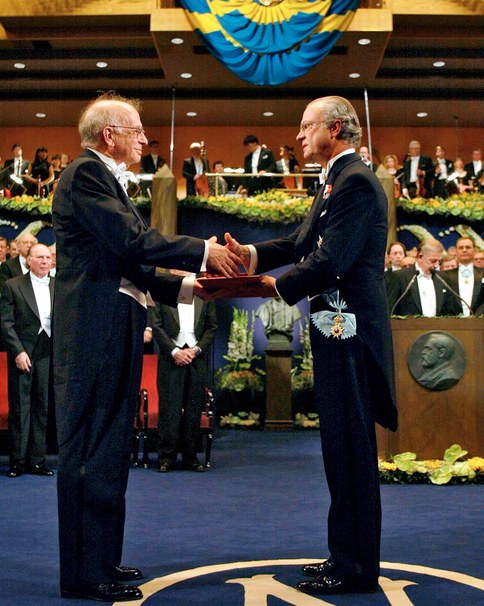
Kahneman nobel.jpg


‘To Inez Milholland’ a poem by Edna St. Vincent Millay

On this last day of March, the Friday Poem is ‘To Inez Milholland’ by Edna St. Vincent Millay; reminding us to “to take up the song; forget the epitaph”.

In 1987 Congress designated March as Women’s History Month. Thirty years later, the month has not been a good one for women, with one bright exception. On March 23 the State of Nevada ratified the Equal Rights Amendment, thirty-five years after the 1982 deadline set by Congress.

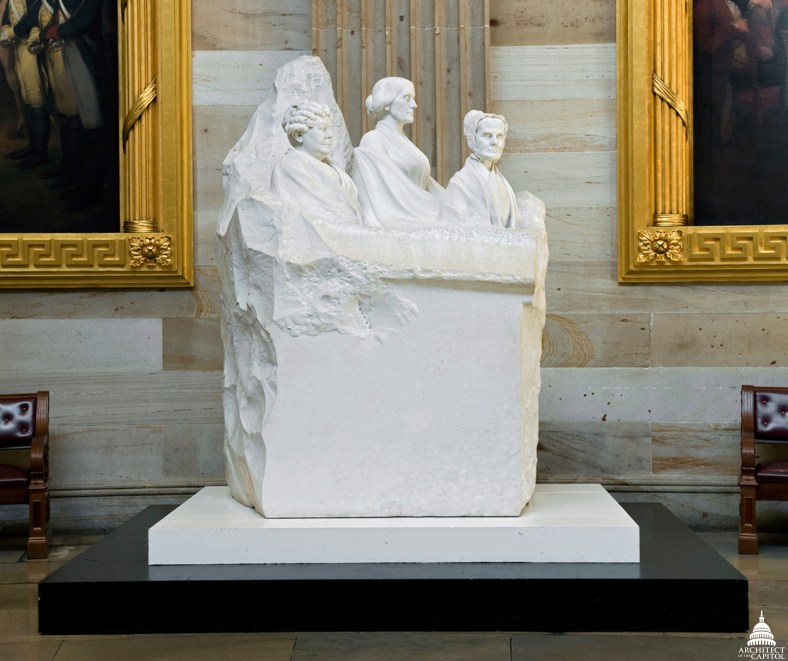
March is also the time of year that hundreds of U.S. school children visit Washington D.C. and traverse the Capitol rotunda. For many it’s their first encounter with the history of the women’s suffrage movement, as they pass the portrait monument to Lucretia Mott, Elizabeth Cady Stanton and Susan B. Anthony.

Missing from the statue is Inez Milholland Boissevain. “A rare woman, she earned a Law degree at NYU and promptly became involved with the labor strikes of the Women’s Garment Workers and the Triangle Shirtwaist factory struggle. Throughout her life, Inez worked and fought for the underrepresented and the oppressed.”

In 1916, Inez was on a cross country campaign in support of a federal suffrage amendment when she collapsed and died while delivering a speech in Los Angeles. Her last public words, “Mr. President, How Long Must Women Wait for Liberty?”

On Sunday, November 18, 1923 a ceremony was held in the Capitol to commemorate the 75th anniversary of the women’s rights movement. Poet Edna St. Vincent Millay Boissevain (yes, she married Inez’ widower) was part of the group of 200 women who participated in the event. The day before they had presented proposed new legislation, written by Alice Paul to the president – The Equal Rights Amendment.

“The “poem” that Edna read is the sonnet “The Pioneer,” which encouraged women to continue to fight for equal rights. It is unclear if Edna wrote the lines about Anthony, Stanton, and Mott (the pioneers in the marble statue) or about Inez — or about all of them. However, by 1928, Edna had retitled the sonnet “To Inez Milholland.”

To Inez Milholland

Upon this marble bust that is not I
Lay the round, formal wreath that is not fame;
But in the forum of my silenced cry
Root ye the living tree whose sap is flame.
I, that was proud and valiant, am no more; —
Save as a wind that rattles the stout door,
Troubling the ashes in the sheltered grate.
The stone will perish; I shall be twice dust.
Only my standard on a taken hill
Can cheat the mildew and the red-brown rust
And make immortal my adventurous will.
Even now the silk is tugging at the staff:
Take up the song; forget the epitaph.

Edna St. Vincent Millay 1923

Three additional links of interest @the end of Womens History Month

‘A Trove on the Women’s Suffrage Struggle, Found in an Old Box’ The New York Times, March 29, 2017

New York Historical Society Center for Women’s History

Inez Milholland ‘Forward Into the Light’

The week@work – the war for talent, following vs. leading, exhaustion, and maybe we should ask a sociologist

The last state to approve the Equal Rights Amendment to the Constitution was Indiana in 1977 – until Thursday when Nevada ratified the ERA, thirty-five years after the deadline imposed by Congress. It was a welcome antidote to the White House photo of the freedom caucus taken the same day (above). Any odds on an extension to revisit and ratify?

“Nevada has given NOW President Terry O’Neill new cause for hope. “Now it’s a two-state strategy,” she tells the Times. “It’s very exciting. Over the past five years, Illinois and Virginia have come close. I think there is clear interest in this.

In other stories this week@work, journalists and experts provided an update on the ‘war for talent’, offered an argument for balancing followers with leaders in the workplace, and expressed concern with a ‘gig economy’ advertising campaign that seemed to glorify exhaustion@work.  The last story this week@work re-examined an idea from the 60’s to establish a Council of Social Advisers to complement the Council of Economic Advisers in D.C. “It’s not just work; it’s how work offers a sense of purpose and identity.”

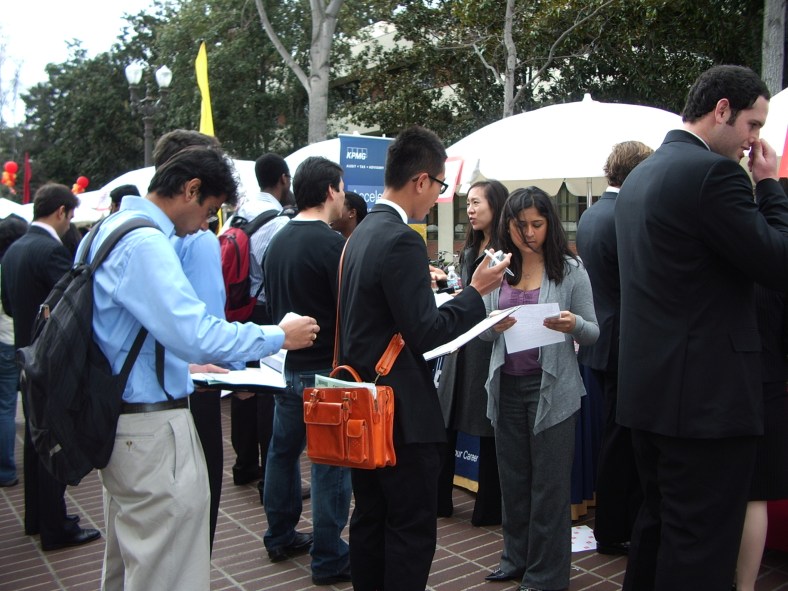
Dr. Tomas Chamorro-Premuzic and Adam Yearsley believe ‘The War for Talent Is Over, And Everyone Lost’. They cite workplace trends indicating more passive job seekers, the appeal of self-employment and the lure of entrepreneurship as competitive factors for employers to attract the best and the brightest, and offer a few best practices to turn things around.

IMGP1335.JPG

“In 1998, after a year-long study on the subject, McKinsey researchers declared that a “war for talent” was underway. In the years ahead, they said, organizations’ future success would depend on how well they could attract, develop, and retain talented employees–an ever more valuable asset in ever higher demand.

Instead of winning a war for talent, organizations appear to be waging a war on talent, repelling and alienating employees more successfully than harnessing their skills.

Today, in a world full of many more Chief People and Chief Happiness Officers, that war nevertheless appears to have been lost on all sides. Of course, many workers excel in their jobs and make pivotal contributions to their organizations. But for every one employee who does, there are many more who are underemployed, underperforming, and just plain miserable at work.”

One of the employer prescriptions for success is to “stop developing people’s leadership skills”.

get_more_instagram_followers-compressed.jpg

“…research suggests there’s a strong negative correlation between the amount of money spent on leadership development (which in the U.S. totals over $14 billion a year), and people’s confidence in their leaders. One of the reasons is that leaders are often deprived of negative feedback, even in training programs. We’ve gotten so used to coaching to people’s strengths that weaknesses get left unaddressed. The basics of human psychology magnify that issue; people are already prone to judging their own talents way too favorably, especially after experiencing a measure of success.”

Which links neatly into the next story of the week@work, Susan Cain‘s ‘Not Leadership Material? Good.The World Needs Followers.’

“Perhaps the biggest disservice done by the outsize glorification of “leadership skills” is to the practice of leadership itself — it hollows it out, it empties it of meaning. It attracts those who are motivated by the spotlight rather than by the ideas and people they serve. It teaches students to be a leader for the sake of being in charge, rather than in the name of a cause or idea they care about deeply. The difference between the two states of mind is profound. The latter belongs to transformative leaders like the Rev. Dr. Martin Luther King Jr. and Gandhi; the former to — well, we’ve all seen examples of this kind of leadership lately.”

Jia Tolentino used Fiverr’s new ad campaign to illustrate ‘The Gig Economy Celebrates Working Yourself To Death’.

Tolentino-TheGigEconomyCelebratesWorkingYourselftoDeath-1145.jpg

“It does require a fairly dystopian strain of doublethink for a company to celebrate how hard and how constantly its employees must work to make a living, given that these companies are themselves setting the terms. And yet this type of faux-inspirational tale has been appearing more lately, both in corporate advertising and in the news. Fiverr, an online freelance marketplace that promotes itself as being for “the lean entrepreneur”—as its name suggests, services advertised on Fiverr can be purchased for as low as five dollars—recently attracted ire for an ad campaign called “In Doers We Trust.” One ad, prominently displayed on some New York City subway cars, features a woman staring at the camera with a look of blank determination. “You eat a coffee for lunch,” the ad proclaims. “You follow through on your follow through. Sleep deprivation is your drug of choice. You might be a doer.”

A Fiverr press release about “In Doers We Trust” states, “The campaign positions Fiverr to seize today’s emerging zeitgeist of entrepreneurial flexibility, rapid experimentation, and doing more with less. It pushes against bureaucratic overthinking, analysis-paralysis, and excessive whiteboarding.” This is the jargon through which the essentially cannibalistic nature of the gig economy is dressed up as an aesthetic.”

Maybe we need a few less economists and a few more humanists to address our life@work

There was a lot of discussion in the media this weekend in the wake of the health care bill defeat. What are the lessons learned? We might ask the same question about the November election result, only this time maybe we should be consulting with sociologists vs. economists. Neil Irwin asked “What if Sociologists Had as Much Influence as Economists?”.

“For starters, while economists tend to view a job as a straightforward exchange of labor for money, a wide body of sociological research shows how tied up work is with a sense of purpose and identity.

“Wages are very important because of course they help people live and provide for their families,” said Herbert Gans, an emeritus professor of sociology at Columbia. “But what social values can do is say that unemployment isn’t just losing wages, it’s losing dignity and self-respect and a feeling of usefulness and all the things that make human beings happy and able to function.

…the economic nostalgia that fueled Donald J. Trump’s presidential campaign was not so much about the loss of income from vanishing manufacturing jobs. Rather, it may be that the industrial economy offered blue-collar men a sense of identity and purpose that the modern service economy doesn’t.”

At the beginning of this new week@work consider where work fits in your sense of identity and purpose. It’s not just work.


The Friday Poem: ‘Today’ by Billy Collins

Spring arrived earlier this week. Time to take a break from your week@work and venture out beyond the confines of your work space. Cited by the Guardian as one of the ten best about spring, The Friday Poem is ‘Today’ by former Poet Laureate of the United States, Billy Collins.

“There is a delightful playfulness here – a sense of being, in spring, a mini-God within the kingdom of one’s own front room.”

Today
If ever there were a spring day so perfect,
so uplifted by a warm intermittent breeze

that it made you want to throw
open all the windows in the house

and unlatch the door to the canary’s cage,
indeed, rip the little door from its jamb,

a day when the cool brick paths
and the garden bursting with peonies

seemed so etched in sunlight
that you felt like taking

a hammer to the glass paperweight
on the living room end table,

releasing the inhabitants
from their snow-covered cottage

so they could walk out,
holding hands and squinting

into this larger dome of blue and white,
well, today is just that kind of day.

Billy Collins  Poetry Magazine, April 2000

176-1.jpg

The Friday Poem ‘Drowning the Shamrock’ by Frank Delaney

“How many Nobel Laureate does Dublin have? Four!” is the question posed and answered by the late author and broadcaster Frank Delaney in his poem for St. Patrick’s Day. If you’re one of the many who have often wondered why it’s OK to employ every imaginable stereotype of the Irish each March 17; this one’s for you.

The Friday Poem was composed for NPR’s Weekend Edition in 2012.

Mr. Delaney died last month in Connecticut.

“He had wanted to be a novelist since childhood, he said in a 2014 interview timed to coincide with the Dublin Writers Festival. “I’ve always relished the power of the tale,” he said, “how it grabs us and then absorbs us, and casts a spell over us, and teaches us.”

He was a radio and television reporter in Ireland; created the “Bookshelf” and “Word of Mouth” programs on BBC Radio and “The Book Show” on Sky News; and wrote “The Celts” for the BBC, the screenplay for the 2002 adaptation of “Goodbye, Mr. Chips,” the novel “Ireland” and nearly two dozen other fiction and nonfiction books, both in Britain and after moving to the United States in 2002.”

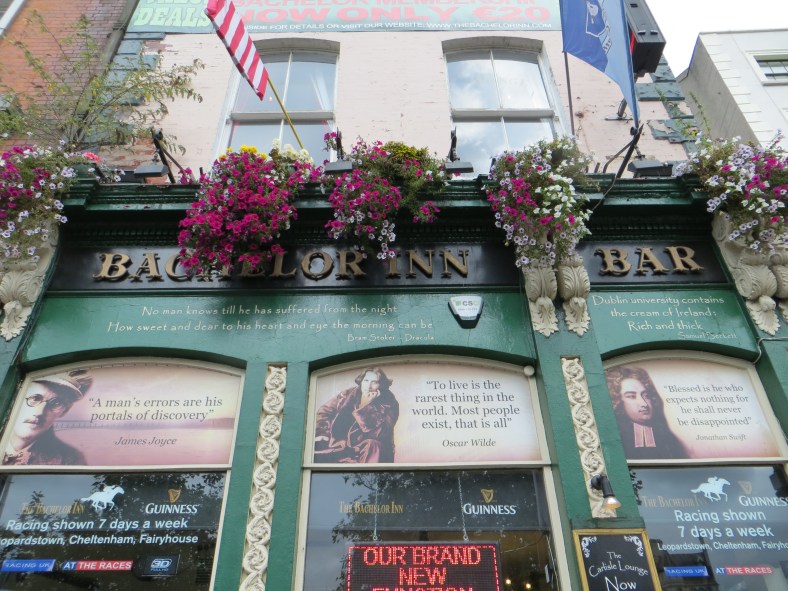
“Drowning the Shamrock” is Delaney’s irreverent “James Joyce-ian” take on St. Patrick’s Day, filled with Irish pride.”

Drowning the Shamrock

“Hail glorious Saint Patrick dear saint of our isle
On us thy poor children look down with a smile -”
But I’m not singing hymns and I’m not saying prayers
No, I’m gritting my teeth as I walk down the stairs
And into the street with these louts fiercely drinking
And screeching and lurching, and here’s what I’m thinking –
They’re using a stereotype, a narrow example,
A fraction, not even a marketing sample
To imitate Ireland, from which they don’t come!
So unless that’s just stupid, unless it’s plain dumb,
All these kids from New Jersey and the five boroughs
And hundreds of cities, all drowning their sorrows,
With bottles and glasses and heads getting broken
(Believe me, just ask the mayor of Hoboken)
All that mindlessness, shouting and getting plain stocious –
That isn’t Irish, that’s simply atrocious.
I’ve another word too for it, this one’s more stinging
I call it “racism.” See, just ’cause you’re singing
Some drunken old ballad on Saint Patrick’s Day
Does that make you Irish? Oh, no – no way.
Nor does a tee-shirt that asks you to kiss them –
If they never come back I surely won’t miss them
Or their beer cans and badges and wild maudlin bawling
And hammered and out of it, bodies all sprawling.

They’re not of Joyce or of Yeats, Wilde, or Shaw.
How many Nobel Laureates does Dublin have? Four!
Think of this as you wince through Saint Patrick’s guano –
Not every Italian is Tony Soprano.

Frank Delaney    NPR Weekend Edition – March 17, 2012


The week@work – ‘I’MPossible, steady job gains, robots, the multi-lingual advantage, and digital addiction

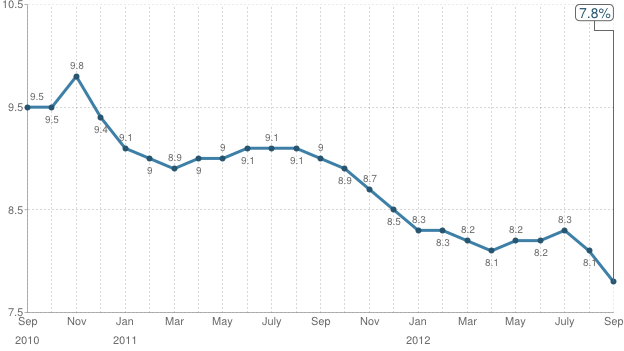
This week@work a South African big wave surfer completed his Atlantic crossing via paddleboard, the U.S. unemployment rate dropped to 4.7%, research revealed speaking multiple languages restructures our brain, and the time you are spending reading this on your smartphone just may be a symptom of addiction.

What have you been doing @work since December 6, 2016? Chris Bertish, an accomplished surfer, left Morocco on that Tuesday headed for Florida. John Clarke reported ‘Chris Bertish Becomes First to Cross Atlantic by Paddleboard’.

“Bertish left the Agadir Marina in Morocco on Dec. 6. and planned to make the 4,600-mile, open-ocean passage unsupported and unassisted on a 20-foot stand-up paddleboard to Florida in four months.

He changed course south to Antigua because of low pressure systems and volatile weather, completing the 4,050-mile crossing in 93 days, arriving at 8:32 a.m. local time. Bertish averaged 44 miles a day — mostly at night to avoid exposure to the sun — and alternated between resting and paddling every two or three hours.

He made an estimated two million paddle strokes during the journey.”

In other good news, Ana Swanson examined the detail behind the unemployment figures, ‘U.S. added 235,000 jobs in February; unemployment rate dropped to 4.7 percent’.

gr-unemployment.png

“The U.S. economy added a healthy 235,000 jobs in February, according to government data released Friday morning, surpassing economists’ expectations and likely clearing the way for the Federal Reserve to raise interest rates this month.

The unemployment rate ticked down to 4.7 percent, compared with 4.8 percent in January, and wages rose by 6 cents to $26.09 in February, after a 5-cent increase the month before.”

In a related story, Claire Cain Miller offered strategies on ‘How to Beat the Robots’.

“The problem, at least for now, is not that there isn’t enough work — there is, but it is very different from the kind of work technology is displacing. Manufacturing and warehousing jobs are shrinking, while jobs that provide services (health care, child care, elder care, education, food) are growing.”

A number of elements in combination could establish viable competition with the robots: education that encourages flexibility and life-long learning, guaranteed basic income, profit sharing, and experimenting with non-traditional approaches to work.

Author Gabrielle Hogan-Brun‘s research has found ‘People who speak multiple languages make the best employees for one big reason’.

IMG_2419

“Speaking a different language—whether it’s your grandparents’ tongue or high-school Spanish—fundamentally changes the structure of your brain. Put a bunch of these malleable minds together in a company, and you create the potential for some truly original thinking.

Observations of multi-language work teams show that mixed-language groups have a propensity to find innovative solutions for practical problems. This is because they use a range of communication strategies in flexible and dynamic ways. When speakers from different language backgrounds work together using a common language, they draw on subconscious concepts that lie below the surface of the language they happen to be conversing in.

These findings show that bilingual people may have highly valued employment attributes: analytical thinking, conceptualizing ability, working memory, and dexterity. Clearly, these skills are assets when it comes to rational planning, managing complexity, and problem solving, which are central for executive function.”

Claudia Dreifus interviewed social psychologist, Adam Alter to discover ‘Why We Can’t Look Away From Our Screens’.

digital.jpg

“Why do you claim that many of the new electronic gadgets have fueled behavioral addictions?”

“Well, look at what people are doing. In one survey, 60 percent of the adults said they keep their cellphones next to them when they sleep. In another survey, half the respondents claimed they check their emails during the night.

Moreover, these new gadgets turn out to be the perfect delivery devices for addictive media. If games and social media were once confined to our home computers, portable devices permit us to engage with them everywhere.

Today, we’re checking our social media constantly, which disrupts work and everyday life. We’ve become obsessed with how many “likes” our Instagram photos are getting instead of where we are walking and whom we are talking to.”

In closing this week@work, this morning’s tweet from Chris Bertish:

“As you head into the new week, remember the mantra that got me through 93 days on the Atlantic…Nothing is impossible, unless you believe it to be”

IMG_8360.jpg


The Friday Poem ‘Happiness’ by Raymond Carver

Imagine a week@work when the barrage of beltway news is silenced. A workday morning that arrives, not with cable news, but a cup of coffee; taking in the view from the window as the neighborhood comes to life.

This was the scene imagined by the short story writer and poet, Raymond Carver.

The Friday Poem is ‘Happiness’.

Happiness

So early it’s still almost dark out.
I’m near the window with coffee,
and the usual early morning stuff
that passes for thought.
When I see the boy and his friend
walking up the road
to deliver the newspaper.
They wear caps and sweaters,
and one boy has a bag over his shoulder.
They are so happy
they aren’t saying anything, these boys.
I think if they could, they would take
each other’s arm.
It’s early in the morning,
and they are doing this thing together.
They come on, slowly.
The sky is taking on light,
though the moon still hangs pale over the water.
Such beauty that for a minute
death and ambition, even love,
doesn’t enter into this.
Happiness. It comes on
unexpectedly. And goes beyond, really,
any early morning talk about it.

Raymond Carver  Poetry Magazine February, 1985

145-5

The week@work – “and the winner is…”, transition@the Met, stress@work, and ambition

The week@work started with ‘the mistake’ at the end of the Oscars ceremony, and continued with a visible transition at the top of the most prestigious U.S. art museum. On the job ‘burn-out’ continues to take a toll on all @work, and may explain the recent Uber executive’s meltdown. And, a leading fashion designer is launching a campaign to ’embrace ambition’.

When we make a mistake @work, we typically don’t have an audience 32.9 million folks watching. But that’s what happened Sunday evening when the wrong envelope led to an ‘epic fail’ in the announcement of Best Picture winner. The New York Times film critics shared their reactions.

“…in its own way, last night’s spectacle — so relatively smooth, until all of a sudden it was anything but — represents a Hollywood watershed or, at least, like the original “Bonnie and Clyde,” the arrival of a new generation. The envelope mix-up was painful, but it brought to the stage two directors in their 30s with five features between them and reminded the audience that Damien Chazelle and Barry Jenkins are not enemies.  A.O. Scott

“Honestly, I don’t know. But something happened that seemed to simultaneously tell us who we were, are, believe ourselves to be. This is, what, the fourth time since November that the country has gathered for an evening of live television, only to be part of a rug-yanking ceremony. After Sunday night, the presidential election, the Super Bowl and, to a different but related extent, the Grammys, I’ve officially come down with outcome-oriented post-traumatic stress disorder — Ooptsd, as in upside my head.”  Wesley Morris

And from Hollywood, where the trade publication Variety’s cover seemed to mirror the events, Claudia Eller, co-editor in chief provided context for the ‘morning after’ cover.

damien-chazelle-barry-jenkins-variety-oscar-cover

“The high stakes and cutthroat tactics enlisted during Hollywood’s annual award season have long rivaled those of hard-fought political campaigns. But this year’s race showed the entertainment community at its absolute best. This was not a case of winner-take-all, but rather — as our cover story hopefully and joyfully exemplifies — proof that contenders share similar dreams, struggles, and frailties, and in fact can show respect and a generosity of spirit toward one another, whether they win or lose.”

On Wednesday morning I received this email from Thomas P. Cambell, Director and C.E.O. of the Metropolitan Museum of Art.

“I write to share the news that I have decided to step down from my role as Director and CEO of The Metropolitan Museum of Art. It is not an easy choice to step away, especially at such a transitional moment. That said, the Museum’s current vitality is what makes it the right moment to do so. For the next stage of my career I look forward to new challenges beyond The Met, always in service of art, scholarship, and understanding.”

C5yF2RLXEAEkxJ-.jpg

What now? From Margaret Lyons on Twitter, “Please, someone: Set a prestige drama among the employees of a world-class museum.”

Maybe the Met could use a ‘Mozart in the Jungle’ treatment. Are you listening Jeff Bezos?

Holland Carter offered ‘How to Fix the Met: Connect Art to Life’

“What I can talk about is art, and how a museum can make people care about it. If historical art is now a hard sell, and it is, learn to sell it hard. That means, among other things, start telling the truth about it: about who made objects, and how they work in the world, and how they got to the museum, and what they mean, what values they advertise, good and bad. Go for truth (which, like the telling of history, is always changing), and connect art to life. Mix things up: periods, functions, cultures. (You can always unmix them.) Let audiences see that old is always new, if viewed through knowledge.

To present art this way — to pitch it, advocate it, make it snap to life — is to rethink the basic dynamic of a museum, turn it from passive to active, from archival to interactive, while letting it be all of these. This is the work of curators, and the Met has some fantastic ones. But to do their job boldly and radically, they need the attentive, encouraging permission of an alert director, probably meaning one who isn’t also saddled with being the company’s chief accountant.”

Rachel Feintzeig asked ‘Feeling Burned Out at Work? Join the Club.’

“Stress and anxiety are cited in 70% of the calls placed to phone-counseling lines at Workplace Options, a provider of employee-assistance programs; in 2014, 50% of callers complained of those feelings. Total calls to those counseling lines reached 42,500 last month, an 18% increase from 2016’s average.

Gallup’s most recent large-scale survey about burnout in the U.S., conducted in 2012, found that more than 40% of workers were so stressed at work they felt burned out. A more recent survey of German workers, conducted in 2015, found that nearly a quarter felt burned out.

Workers aren’t “assertive about their boundaries because they fear for their jobs,” said Alden Cass, a Manhattan-based clinical psychologist who treats patients with high-stress jobs. Burnout begins when a worker feels overwhelmed for a sustained period of time, then apathetic and ultimately numb, he said.”

Not sure if Travis Kalanick of Uber is suffering from burn-out, but last week’s viral video arguing with one of his employees was the culmination of a series of PR nightmares for the executive. Adrienne LaFrance reported ‘As Uber Melts down, Its CEO Says He ‘Must Fundamentally Change’.

“It took eight years and at least as many back-to-back-to-back-to-back controversies to break Travis Kalanick.

After a stunning month of scandals at Uber, Kalanick, its founder and CEO, sent an emotional and uncharacteristically apologetic memo to his employees Tuesday night. “This is the first time I’ve been willing to admit that I need leadership help,” Kalanick wrote. “And I intend to get it.”

The final story this week@work comes from the fashion pages and reporter Jacob Bernstein who asks ‘When Did ‘Ambition’ Become A Dirty Word? to introduce the story of designer Tory Burch and the most recent effort of her foundation.

02TORY4-superJumbo-1.jpg

“There is nothing particularly fiery about Tory Burch…the issue of ambition, and the way it is used to defame women, is nevertheless personal to her.

In 2009, Ms. Burch started the Tory Burch Foundation and, through a partnership with Bank of America, saw it grow to an organization that ultimately gave more than $25 million to female entrepreneurs around the world.

Many of the recipients of these grants had experienced the same kind of sexism she faced. They were called too hungry, too intent on power, too ambitious — code words used in place of the more vulgar expressions that men (and sometimes women, too) used when they were out of earshot.

“There was a harmful double standard,” she said.”

The global campaign, ‘Embrace Ambition’ launches with a PSA in conjunction with International Women’s Day.

This week@work I encourage your ambition, and wish you a speedy recovery from “Ooptsd”, NYT film critic Wesley Morris’ appropriately new acronym for our times – “outcome-oriented post-traumatic stress disorder”.