The week@work – ‘Walden, a game’, Uber’s culture, pollution & the stock market, and the ‘folly’ of abolishing the N.E.A.

This week@work the designers of a new video game would like us to take a walk in the woods, a former Uber engineer authored a blog post that opened a window on corporate culture, an economics professor demonstrated the link between air pollution and stock market fluctuations, and the director of the Metropolitan Museum of Art warned against cutting funds to the National Endowment for the Arts.

When we talk about work/life balance we typically think about disconnecting from technology, not using it as a portal for relaxation. Robin Pogrebin‘s article ‘In Walden Video Game, the Object is Stillness’ offers an example of a seemingly contrarian application.

“…the new video game, based on Thoreau’s 19th-century retreat in Massachusetts, will urge players to collect arrowheads, cast their fishing poles into a tranquil pond, buy penny candies and perhaps even jot notes in a journal — all while listening to music, nature sounds and excerpts from the author’s meditations.

While the game is all about simplicity, it has actually been in development for nearly a decade. The lead designer, Tracy J. Fullerton, the director of the Game Innovation Lab at the University of Southern California School of Cinematic Arts, came up with the idea as a way to reinforce our connection to the natural world and to challenge our hurried culture.

“Games are kinds of rehearsals,” Ms. Fullerton said in an interview. “It might give you pause in your real life: Maybe instead of sitting on my cellphone, rapidly switching between screens, I should just go for a walk.”

“Maybe we don’t all have the chance to go to the woods,” Ms. Fullerton added. “But perhaps we can go to this virtual woods and think about the pace of life when we come back to our own world. Maybe it will have an influence — to have considered the pace of Walden.”

Uber has a new logo and a new ranking as #3 on Fast Company’s Most Innovative Companies. “Uber’s most valuable asset is its data, which has been an important part of Uber’s business since it first launched.” Which is why we should not be surprised if the company is having a bit of a dysfunctional workplace moment.

th.jpg

Christina Cauterucci investigated ‘The Sexism Described In Uber Employee’s Report Is Why Women Leave Tech – Or Don’t Enter At All’.

“Uber is staging a major PR defense for the second time in recent weeks after a former employee published a detailed account of persistent sexual harassment and discrimination she allegedly faced while working as an engineer at the company. Susan Fowler, who left the company in December after about a year of employment, claims in her Feb. 19 blog post that her manager sent her sexual chat messages soon after she was hired. When she reported him to human resources, she writes, she was told that it was his “first offense” and that she should switch teams if she didn’t want a negative performance review from him. Fowler later found out that other women had reported witnessing inappropriate behavior from this same man, and each were told that it was his “first offense” and not a big enough deal to require action.

In her blog post, Fowler accuses a manager of changing her performance scores after a stellar review to keep her from getting a transfer to another team, because it reflected well on the manager to prove he could retain female engineers on his team. This is a particularly outrageous deed in an account full of outrageous deeds. Instead of enforcing a zero-tolerance sexual-harassment policy or asking female employees how management could better support them, Uber has allegedly moved to improve its substandard track record on gender by narrowing opportunities for women on staff and sweeping harassment allegations under the floor mat. Fowler writes that she made repeated, documented human resources complaints about the unfair treatment she endured, but she was gaslighted by an HR representative who told her the emails she sent never happened and that men are better suited for certain jobs than women. It took a statement on a public blog to get any action from company leadership.”

The folks who work in climate science have been under fire in recent weeks. The photo below is a reminder of what the New York City skyline looked like 44 years ago, before environmental protections were enacted.

manhattan2_0.gif

For those not yet convinced of global warming, maybe a direct financial consequence would be more persuasive. Scott Berinato found ‘Air Pollution Brings Down the Stock Market’.

“When University of Ottawa economics professor Anthony Heyes and his colleagues compared daily data from the S&P 500 index with daily air-quality data from an EPA sensor close to Wall Street, they found a connection between higher pollution and lower stock performance. Their conclusion: Air pollution brings down the stock market.

The effect was strong. Every time air quality decreased by one standard deviation, we saw a 12% reduction in stock returns. Or to put it in other terms, if you ordered 100 trading days in New York from the cleanest-air day to the dirtiest-air day, the S&P 500 performance would be 15% worse on the 75th cleanest day than it was on the 25th cleanest day. We also replicated this analysis using data from the New York Stock Exchange and Nasdaq, and saw the same effect.”

img_7827

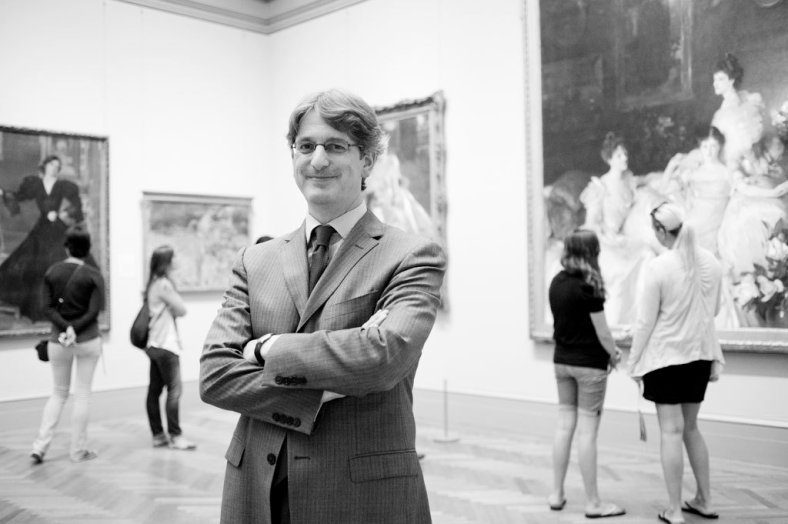
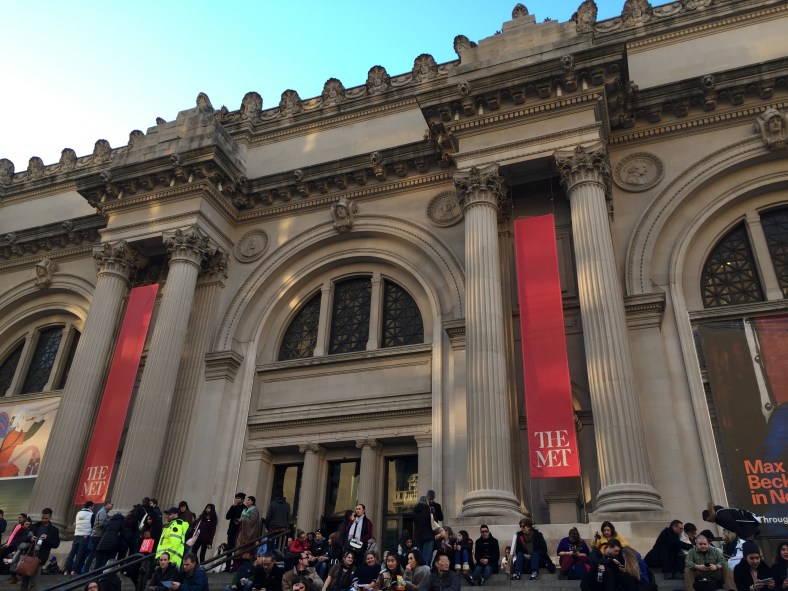
Finally, this story is not only for those who work in the arts, but for all of us whose curiosity and creativity were sparked by a play, music or a visit to a museum. The Metropolitan Museum of Art’s director, Thomas P. Campbell warns against ‘The Folly of Abolishing the N.E.A.’

“All too often, art is seen as a “soft” subject, the first thing to be cut, whether by local school boards or the federal government, when money is tight. But looked at purely in dollars, it is a false saving. The N.E.A.’s budget is comparatively minuscule — $148 million last year, or 0.004 percent of the total federal budget — while the arts sector it supports employs millions of Americans and generates billions each year in revenue and tax dollars.

The United States has no ministry of culture. In this vacuum, the N.E.A., founded in 1965, serves three critical functions: It promotes the arts; it distributes and stimulates funding; and it administers a program that minimizes the costs of insuring arts exhibitions through indemnity agreements backed by the government. This last, perhaps least-known responsibility, is crucial. This fall, the Met will host a major exhibition on Michelangelo that will bring together masterpieces from across the world. The insurance valuation is a whopping $2.4 billion — not even our museum, the largest art museum in the nation, could come close to paying the premium for such coverage without the federal indemnity the N.E.A. makes possible.

I fear that this current call to abolish the N.E.A. is the beginning of a new assault on artistic activity. Arts and cultural programming challenges, provokes and entertains; it enhances our lives. Eliminating the N.E.A. would in essence eliminate investment by the American government in the curiosity and intelligence of its citizens. As the planet becomes at once smaller and more complex, the public needs a vital arts scene, one that will inspire us to understand who we are and how we got here — and one that will help us to see other countries, like China, not as enemies in a mercenary trade war but as partners in a complicated world.”

This week@work take a break and visit your local museum. Then go home and send an email to your member of congress. Remind them of the importance of “investing in the curiosity and intelligence of its citizens”.


Photo credit: Manhattan Skyline, May 1973 – Chester Higgins NARA

The week@work: innovative companies, Mark Zuckerberg’s global community, famous writers attend a security conference, and a design idea for a friendlier office

This week@work Fast Company announced the ‘World’s 50 Most Innovative Companies’ and Mark Zuckerberg shared a template for the future of Facebook – ‘Building Global Community’. In a first, the Munich Security Conference included literary panels on their agenda. And, we found a simple ‘office design hack’ to encourage communication.

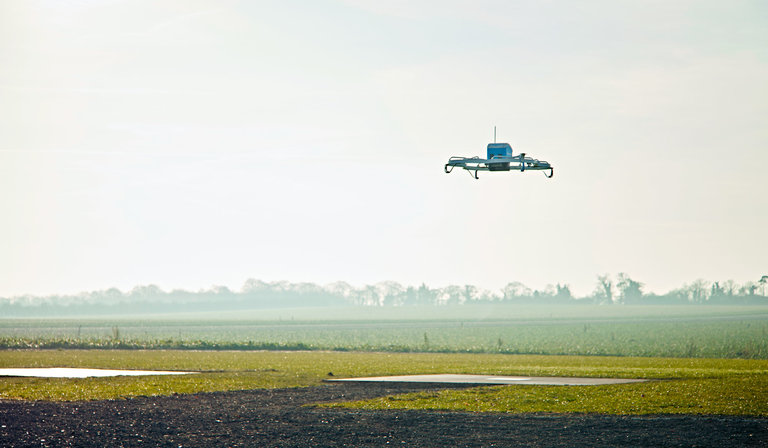
Amazon was named #1 on the 2017 Fast Company ranking of the world’s most innovative companies “for offering even more, even faster and smarter”. Noah Robischon reported on Jeff Bezos’ ever-accelerating world of ‘continuous evolution’.

15amazondrone-sub-master768.jpg

“Unlike Apple, Google, and Microsoft, Amazon is not fixated on a tightly designed ecosystem of interlocking apps and services. Bezos instead emphasizes platforms that each serves its own customers in the best and fastest possible way. “Our customers are loyal to us right up until the second somebody offers them a better service,” he says. “And I love that. It’s super-motivating for us.” That impulse has spawned an awesome stream of creative firsts…

Bezos’s strategy of continuous evolution has allowed the company to experiment in adjacent areas—and then build them into franchises. The website that once sold only books now lets anyone set up a storefront and sell just about anything. The warehouse and logistics capabilities that Amazon built to sort, pack, and ship those books are available, for a price, to any seller. Amazon Web Services, which grew out of the company’s own e-commerce infrastructure needs, has become a $13 billion business that not only powers the likes of Airbnb and Netflix, but stores your Kindle e-book library and makes it possible for Alexa to tell you whether or not you’ll need an umbrella today.”

On Thursday Facebook CEO and Co-founder Mark Zuckerberg set out his vision for his company in a 5,000 word post on Facebook.

“On our journey to connect the world, we often discuss products we’re building and updates on our business. Today I want to focus on the most important question of all: are we building the world we all want?”

16804067_10103508274631311_8401613758833731878_o.jpg

Josh Constine reported on the ‘evolution’ of Facebook’s strategy.

“Mark Zuckerberg never saw Facebook as just a business, and so never accepted his role as just a businessman. 

Five years ago, in Zuckerberg’s pre-IPO letter to Facebook investors, he wrote, “There is a huge need and a huge opportunity to get everyone in the world connected, to give everyone a voice and to help transform society for the future.”

Now with Facebook reaching 1.86 billion users and building technology to expand internet access everywhere, his constituency exceeds that of any nation. He’s made monumental strides toward steps 1 and 2.

Today, Zuckerberg offers a vision and rallying call for working toward step 3 — to “develop the social infrastructure to give people the power to build a global community that works for all of us.”

Not everyone is sipping the magic elixir. From ‘across the pond’, Carole Cadwalladr shared her opinion for The Guardian.

“But here’s another response: where does that power end? Who holds it to account? What are the limits on it? Because the answer is there are none. Facebook’s power and dominance, its knowledge of every aspect of its users’ intimate lives, its ability to manipulate their – our – world view, its limitless ability to generate cash, is already beyond the reach of any government.

Because what Zuckerberg’s letter to the world shows is that he’s making a considered, personal attempt to answer… the wrong question. He is wrestling with the question of how Facebook can change the world. Whereas the question is: do we actually want Facebook to change the world? Do we want any corporation to have so much unchecked power?”

The annual Munich Security Conference included a literature panel, ‘The Cassandra Syndrome’. Madhvi Ramani considered the significance, asking the question, “Why are famous writers attending the world’s most important security conference?”

MSC cassandra syndrome.jpg

“With the rise of illiberalism, post-truth politics, and transatlantic uncertainty, the very pillars of the West are being shaken. In times of turmoil, people often look to literature for illumination.

Like Cassandra, who warned of disaster during the Trojan War, writers often take a longer view of issues. They are uniquely placed to examine and critique society from a removed perspective—as Don DeLillo once said, “The writer is the person who stands outside society, independent of affiliation and independent of influence.” All three writers involved in the MSC talks are known for their incisive, often critical, engagement with the politics, history, and cultures of their milieus.

Literature can help untangle the complexities of people’s lives and emotions and, as studies have shown, foster empathy: books are a key ingredient in an open, pluralistic, democratic society.”

Cari Romm shared the results of recent research from designer Daniel Krivens ‘The Design Hack That Makes for Friendlier Offices’ – eliminate “elevation segregation” by resetting the seating to ‘bar level’.

“…so many workplaces are designed to be a divided plane between those sitting, standing, and walking. When someone is sitting down, they are roughly 12 inches below the eye height of someone walking by—and this elevation segregation means everything to workplace productivity and conviviality.

What it means, essentially, is the difference between intentionally seeking someone out for a chat and just happening to fall into conversation.”

Finally this week@work, @YosemiteNPS, the annual phenomenon of ‘firefall’ as sunset reflects on the national park’s Horsetail Falls.

firefall.JPG


Photo Credits: Amazon drone photo/Amazon, MSC photo of author David Grossman  MSC/Koch, Yosemite firefall/ NPS Yosemite

The Friday Poem ‘Mourning What We Thought We Were’ by Frank Bidart

I’ve been making a list of things I’ve done since the Women’s March to oppose, not resist.

I’ve discovered only two degrees of separation connect me to a Syrian refugee family newly arrived in Dallas, Texas.

I’ve found it difficult to write, to reflect, on ideas away from the breaking news of the minute.

In the gap, poet Frank Bidart has captured this moment in our history. “We were born into an amazing experiment. At least we thought we were.”

The Friday Poem this week, from three time Pulitzer poetry finalist, and Bakersfield native Bidart, was published last month in The New Yorker.

Mourning What We Thought We Were

We were born into an amazing experiment.

At least we thought we were. We knew there was no
escaping human nature: my grandmother

taught me that: my own pitiless nature
taught me that: but we exist inside an order, I

thought, of which history
is the mere shadow—

*

Every serious work of art about America has the same
theme: America

is a great Idea: the reality leaves something to be desired.

Bakersfield. Marian Anderson, the first great black classical
contralto, whom the Daughters of the American Revolution

would not allow to sing in an unsegregated

Constitution Hall, who then was asked by Eleanor
Roosevelt to sing at the Lincoln Memorial before thousands

was refused a room at the Padre Hotel, Bakersfield.

My mother’s disgust
as she told me this. It confirmed her judgment about

what she never could escape, where she lived out her life.

My grandmother’s fury when, at the age of seven or
eight, I had eaten at the home of a black friend.

The forced camps at the end of The Grapes of Wrath
were outside

Bakersfield. When I was a kid, Okie

was still a common
term of casual derision and contempt.

*

So it was up to us, born
in Bakersfield, to carve a new history

of which history is the mere shadow—

*

To further the history of the spirit is our work:

therefore thank you, Lord
Whose Bounty Proceeds by Paradox,

for showing us we have failed to change.

*

Dark night, December 1st 2016.

White supremacists, once again in
America, are acceptable, respectable. America!

Bakersfield was first swamp, then
desert. We are sons of the desert
who cultivate the top half-inch of soil.


Frank Bidart from The New Yorker, January 23, 2017

The Friday Poem ‘The New Colossus’ by Emma Lazarus

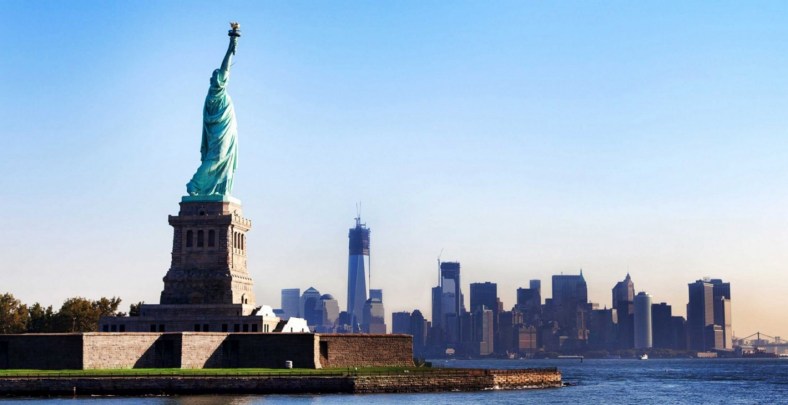
Most immigrants to the U.S. arrive by plane, bypassing the Statue of Liberty standing in New York harbor. Perhaps this detour has created a bit of amnesia regarding fundamental American values.

For the Friday poem this week, we travel back in time to 1883, when Emma Lazarus was asked to write a poem as part of fundraising effort to construct the pedestal for the statue.

Washington Post journalist Katie Mettler revisited Ms. Lazarus’ story on Wednesday, citing renewed interest in the sonnet in the aftermath of the executive order banning  U.S. entry to all Syrian refugees and citizens of seven Muslim countries

“What the poet didn’t know at the time — as a woman whose work as a “poetess” had been at times the subject of condescension — was that it would be her words, lyrical and poignant, that decades later came to define the American vision of liberty.

More than a century later, in 2017, the words are rallying people against a controversial president and his policies and attitudes toward immigrants.”

It’s time for these words to be posted at every point of entry to the U.S. to remind all of our core values.

The New Colossus 

Not like the brazen giant of Greek fame,
With conquering limbs astride from land to land;
Here at our sea-washed, sunset gates shall stand
A mighty woman with a torch, whose flame
Is the imprisoned lightning, and her name
Mother of Exiles. From her beacon-hand
Glows world-wide welcome; her mild eyes command
The air-bridged harbor that twin cities frame.
“Keep, ancient lands, your storied pomp!” cries she
With silent lips. “Give me your tired, your poor,
Your huddled masses yearning to breathe free,
The wretched refuse of your teeming shore.
Send these, the homeless, tempest-tost to me,
I lift my lamp beside the golden door!”

Emma Lazarus   ‘Emma Lazarus: Selected Poems and Other Writings’ (2002)

9781551112855-408x630.jpg


The week@work – Davos, transition, transferable skills and a ‘profundo’ life


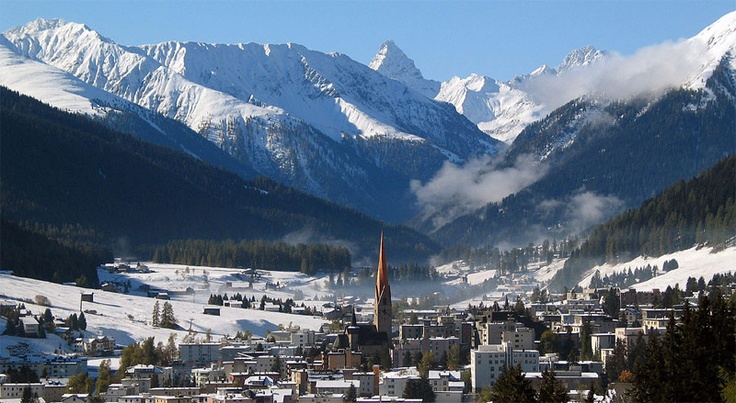
The headline of the week@work did not originate in Washington D.C., but in Davos, Switzerland: ‘Davos Elite Fret About Inequality Over Vintage Wine and Canapés’. “…globalization has reduced the bargaining power of workers, and corporations have taken advantage of it.”

In other news – January is often a month of transition, not just in government, but across all fields. Articles this week@work explored the value of being fired and finding the right ‘fit’ next time. Physicists are the new software engineers in Silicon Valley and PhDs just may be the newest entrepreneurs.

Finally, this week@work we remember Kevin Starr, who went to work every day as a historian chronicling the past of his home state, California. “I’ve always tried to write California history as American history.”

4096.jpgPeter S. Goodman covered the annual meeting of the World Economic Forum for The New York Times.

“What is striking is what generally is not discussed: bolstering the power of workers to bargain for better wages and redistributing wealth from the top to the bottom.

“That agenda is anathema to a lot of Davos men and women,” said Joseph E. Stiglitz, a Nobel laureate economist and author of numerous books on globalization and economic inequality. “More rights to bargain for workers, that’s the part where Davos man is going to get stuck. The stark reality is that globalization has reduced the bargaining power of workers, and corporations have taken advantage of it. ”

That perhaps private equity overseers should not be paid 1,000 times as much as teachers while availing themselves of tax breaks is thinking that gets little airing here.”

1e97282770fb153b749b691b25832c03.jpgFor those of us not networking with the super elite in the Swiss Alps, Julie Ma compiled a sampling of quotes from ’25 Famous Women on How Getting Fired Makes You Stronger’.

“If you don’t get fired at least once, you’re not trying hard enough. This isn’t quite true yet, but it is becoming truer. As the pace of change in business increases, the chances of having a placid career are receding. And if in this period of rapid change, you’re not making some notable mistakes along the way, you’re certainly not taking enough business and career chances.” Sallie Krawcheck, chair Ellevate

“Is it hard to say I was fired? No. I’ve said it about 20 times, and it’s not. I was in fact insistent that that be publicly clear because I was not ashamed of that. And I don’t think young women — it’s hard, I know — they should not feel stigmatized if they are fired. Especially in this economy people are fired right and left for arbitrary reasons, and there are sometimes forces beyond your control.”
Jill Abramson, author and faculty @Harvard

IMG_8148.jpgMost folks leave their life @work because of the ‘human factor’: colleagues, leadership and values. Sharon Daniels offered advice to those starting the job search.

“If you have passion and enthusiasm, you’re on your way. People want to be around people who have passion and enthusiasm, because we all gravitate toward something greater than ourselves. If you do something wholeheartedly versus halfheartedly, it’s going to have a completely different effect.”

Cade Metz reported on how transferable skills are changing the profile of some tech workers, ‘Move Over, Coders—Physicists Will Soon Rule Silicon Valley’.

“If physics and software engineering were subatomic particles, Silicon Valley has turned into the place where the fields collide…It’s not on purpose, exactly. “We didn’t go into the physics kindergarten and steal a basket of children,” says Stripe president and co-founder John Collison. “It just happened.” And it’s happening across Silicon Valley. Because structurally and technologically, the things that just about every internet company needs to do are more and more suited to the skill set of a physicist.”

Ainsley O’Connell described another experiment in skill transference, ‘Can Entrepreneurship Revive The Troubled PhD?’

“PhD students once dreamed of lifelong tenure, generous sabbaticals, and a closet full of jackets with elbow patches. Academic life, with its dusty-booked charm, ruled the day. No longer. Even in STEM fields, roughly 40% of PhDs are graduating without employment commitments. Could the solution be teaching postdocs to create their own jobs, as entrepreneurs?

In the heart of Manhattan, in a set of conference rooms on loan from Google, one radical experiment in postdoc entrepreneurship is now entering its fourth year. Called “Runway” and managed by Cornell Tech’s Jacobs Technion-Cornell Institute, the program bills itself as “part business school, part research institution, part startup incubator.” Since its founding, Runway postdocs have founded 13 companies, from an intelligent baby monitor to an urban planning analytics platform, and collectively raised $15 million in funding.”

img_8194

Finally, this week@work, we remember Kevin Starr, former California State Librarian, professor and author of an eight-volume history of his home state ‘Americans and the California Dream’.

Colleague William Deverell remembered the historian and author as ‘A Golden State Champion’.

“I knew Kevin Starr only as profundo. He was big, his voice was big, his persona was big, his books are big, his ideas are big, his influence is big. Some, and only some, of this has now been silenced by his death Saturday. Kevin’s outsize impact and his sheer significance to both our regional and our national culture, will continue long hence. Death has robbed us of the most important guide we have ever had to our state’s history and culture, our ingenious interpreter of the elusive and many meanings of the California Dream over several centuries.”


Pictures from the revolution – 1/21/17

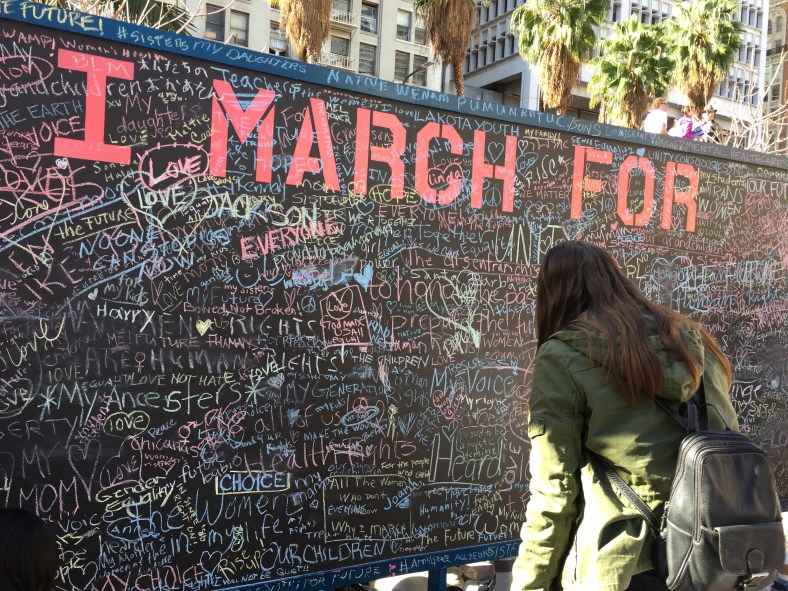
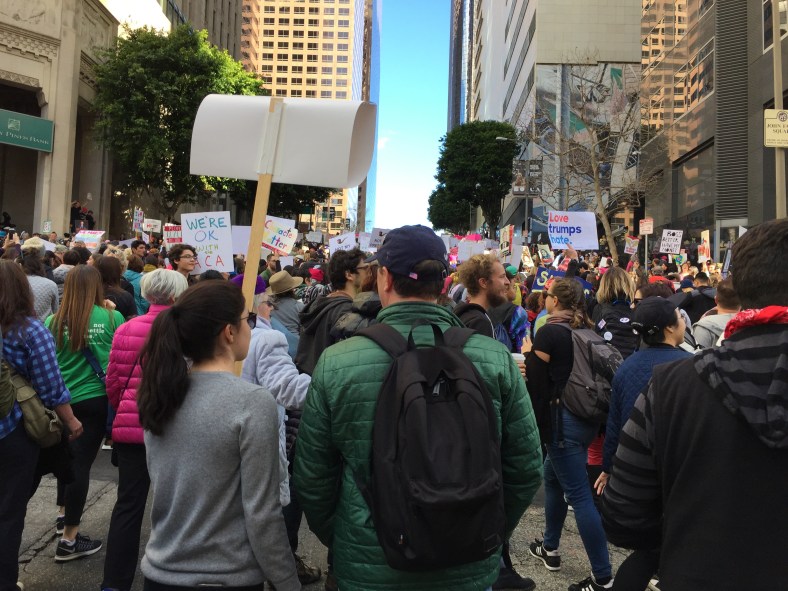
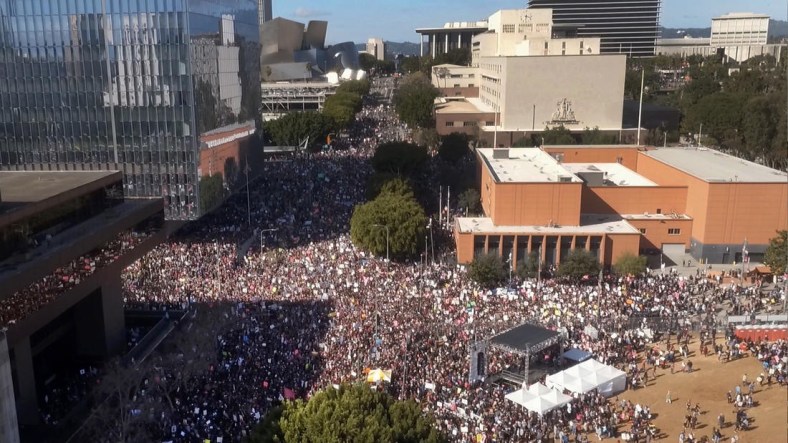
I got as far as Pershing Square in Downtown LA. There were too many people to ‘march’ to City Hall. The real estate in-between was occupied by a sea of veteran and newly-minted activists.

Eventually, we headed in the opposite direction along 6th and up Grand to the Disney Concert Hall. The thousands in the ‘tangent march’ I joined never heard the political speeches of the day, but were overjoyed in the surprise of the turnout.

We were a rainbow representation of the California we call home. We were messengers from divergent origin, chanting with one voice. “This is what democracy looks like”.

IMG_8183.jpgThis is what I want you to understand. The result of the U.S. election may have been the catalyst, but this is about families, values and redefining a new American dream. It’s not about following a 70 year old white man into the past, but creating a solid bridge to a viable global future for our children and grandchildren. It’s about legacy, not name calling.
IMG_8149.jpgIf we can harness the energy and creativity that knitted pink pussy hats, and illustrated catchy posters, we can change the world. The present day reality holds enough shock value without piling on with unproductive language that creates a diversion from authentic action.

 We are the parents who are the everyday role models for our children. It’s our lot in life to “go high, when others go low”. We are the adults in the room.

Many doubt our unity. They minimize our resolve. They write we cannot sustain the momentum initiated on 1/21/17.

img_8191How often, as women@work, have we heard those whispered doubts of our ability to get the job done – to compete? Enough.
I have great respect for those who have blazed trails so others might succeed, but it’s time to hand over the power to the next generation of dreamers – to trust their ability to employ genuine entrepreneurial skill to reimagine the future.

They were there on Saturday; on every street, in every city around the world.

IMG_8180.jpgWhere do we begin? Start local. Be a mentor, donate to organizations that support K-12 leadership initiatives. Invest in people.
Take any opportunity to start a conversation, and listen.

Read the constitution. Fill in the gaps in your knowledge of American history. Learn the words to ‘We Shall Overcome’.

Visit the library or local bookstore and read at least one book by an author from another culture.

Go to your state capitol, find your representative, and ask, what they are doing to encourage a new cohort of leaders? Offer to help.

If you have massive amounts of cash, avoid the temptation to create a private label on a building, and put your money toward those who will cement a more permanent legacy through public service.

If you can’t find an organization with a ‘mission match’ to your values, create one. It was one woman’s Facebook post that grew into the Women’s March.

IMG_8187.JPG

And so it begins…

Photo credit- Downtown LA – LA Mayor’s website 


The Friday Poem ‘To The Indifferent Women’ by Charlotte Anna Perkins Gilman

On the eve of the ‘Women’s March’, the Friday Poem reprises ‘To The Indifferent Women’ by Charlotte Anna Perkins Gilman. I originally posted the poem in July after the first woman in U.S. history accepted her party’s nomination for president.

Sometimes things don’t work out as planned.

Tomorrow, in Washington D.C. and cities around the country, women will join together in a nation that could not ratify an equal rights amendment, or elect the first woman president, and remind those elected that women’s rights are human rights.

“In the spirit of democracy and honoring the champions of human rights, dignity, and justice who have come before us, we join in diversity to show our presence in numbers too great to ignore. The Women’s March on Washington will send a bold message to our new government on their first day in office, and to the world that women’s rights are human rights. We stand together, recognizing that defending the most marginalized among us is defending all of us.”

There is something going on here, as there was in 1911 when Ms. Perkins was writing for the cause of women’s rights.

One of the more stunning stories, in advance of the D.C. march, appears in today’s NY Times and profiles an unlikely activist contingent – ‘From Wall Street to National Mall: Women Overcome Fears to Attend March’.

“They are professionals in trading, public relations, marketing, deal-making, investing and the law. They keep punishing schedules, fear losing business by offending their clients and often feel that in an industry still overwhelmingly populated by men, the less attention drawn to their sex, the better.

But the inauguration of Mr. Trump has prompted a striking number of Wall Street women to overcome their worries about demonstrating in public.”

For those who will march and be questioned why, and for those still without weekend plans – a beautiful question from 1911.

“Do you believe the sorrow of the world
Does not concern you in your little homes?”

To The Indifferent Women

A Sestina

You who are happy in a thousand homes,
Or overworked therein, to a dumb peace;
Whose souls are wholly centered in the life
Of that small group you personally love;
Who told you that you need not know or care
About the sin and sorrow of the world?

Do you believe the sorrow of the world
Does not concern you in your little homes? —
That you are licensed to avoid the care
And toil for human progress, human peace,
And the enlargement of our power of love
Until it covers every field of life?

The one first duty of all human life
Is to promote the progress of the world
In righteousness, in wisdom, truth and love;
And you ignore it, hidden in your homes,
Content to keep them in uncertain peace,
Content to leave all else without your care.

Yet you are mothers! And a mother’s care
Is the first step toward friendly human life.
Life where all nations in untroubled peace
Unite to raise the standard of the world
And make the happiness we seek in homes
Spread everywhere in strong and fruitful love.

You are content to keep that mighty love
In its first steps forever; the crude care
Of animals for mate and young and homes,
Instead of pouring it abroad in life,
Its mighty current feeding all the world
Till every human child can grow in peace.

You cannot keep your small domestic peace
Your little pool of undeveloped love,
While the neglected, starved, unmothered world
Struggles and fights for lack of mother’s care,
And its tempestuous, bitter, broken life
Beats in upon you in your selfish homes.

We all may have our homes in joy and peace
When woman’s life, in its rich power of love
Is joined with man’s to care for all the world.

Charlotte Anna Perkins Gilman ‘Suffrage Songs and Voices’ 1911

41py0cnjwl-_sx331_bo1204203200_

Photo credit: Screen shot from Women’s March LA website


The week@work – the top stories of ’16, a new year, the eternal optimist’s talking points, French workers get the right to disconnect, and leadership lessons from Michelle Obama

Happy New Year! This week@work we take a final look at the top stories of 2016, and the stories from the first week of 2017. On the work-life balance front – French workers now have the legal right to disconnect from the office. The U.S. unemployment rate is at 4.7%, with hourly salary earnings rising 2.9%. And for women@work, an article considered the future of women in this new year, as First Lady Michelle Obama delivered her final formal remarks on Friday, giving us a parting gift – a model for what a leader looks like.

The Economist’s top ten most read stories of 2016 centered on the U.S. election and Brexit. In the U.S., NPR’s top 20 did not include Brexit, but the question of how Donald Trump will govern, led the list. “The top 20 most popular stories from the past year ranged from fact checks to mosquito bites, from Aleppo to taxes, and how to raise kids who will thrive, whatever the future brings.” 

There were many stories about work and the workplace, but most became a subset of the larger stories. Susan Chira reflected on ‘What Women Lost’.

“This was supposed to be the year of triumph for American women.

A year that would cap an arc of progress: Seneca Falls, 1848. The 19th Amendment, 1920. The first female American president, 2017. An inauguration that would usher in a triumvirate of women running major Western democracies. Little girls getting to see a woman in the White House.

Instead, for those at the forefront of the women’s movement, there is despair, division and defiance. Hillary Clinton’s loss was feminism’s, too.”

2017 will be the year we ask, what are the long term implications for women@work? On January 21, in Washington, and cities around the country, women will have an opportunity to reinsert themselves into the national conversation.

Unknown.png

For additional reading @year end:

‘The Echoes of 1914’ by historian Margaret MacMillan for the BBC. She responsed to a query about which year in history most closely resembled 2016.

“I wish I could stop, but I find myself thinking of 1914. The world then had seemed so stable, so manageable. Crises – political, social, economic, military – came and went but “they”, bankers, statesmen, politicians, always managed them in the end.

Yes, there were grumblings – from the working classes or women, or those who were losing their livelihoods because of free trade or mechanisation.

And there were some strong emotions about: fears of rapid change, passionate nationalisms that meant love of one’s own country and hatred of others. Ominous in retrospect because we know what happened. But at the time there was a complacency – it would surely all work out all right.

That confidence was dangerous because it meant that people didn’t take the warning signs seriously enough.

I wish I could stop making the comparisons.

In ‘1999 Was The Last Time Everything Was Fine’ BuzzFeed Culture Writer Doree Shafrir revisited her first year@work.

“I had no job and almost no money. My parents had given me the security deposit on the apartment as a graduation present, but now I was on my own. I was entranced by the classifieds section of the New York Times, with its pages and pages of appeals for secretaries and programmers and architects and retail store managers. I didn’t really know what I wanted to do. I knew I liked to be around words, but I wasn’t sure what that meant in terms of actually making money. Maybe now was the time to try something new. Maybe I could close my eyes and point to something on the page and that would be my destiny.

That was how 1999 felt, like anything was possible.”

Artist Tucker Nichols created a rainbow rendering of an ‘Eternal Optimist Talking Points for 2017’ as OpArt for The New York Times.  A sample of musings: “Somehow not as freaked out by scary clowns anymore…Midtown traffic has always been pretty jammed up…Smog makes great sunsets…Still a chance it’s a very long dream.”

On January 1, a new law in France went into effect allowing workers to ‘disconnect’ from their workplace.

IMG_5895.jpg

The BBC reported on France’s implementation of a law to protect work-life balance.

“Companies with more than 50 workers will be obliged to draw up a charter of good conduct, setting out the hours when staff are not supposed to send or answer emails. France has a working week of 35 hours, in place since 2000.”

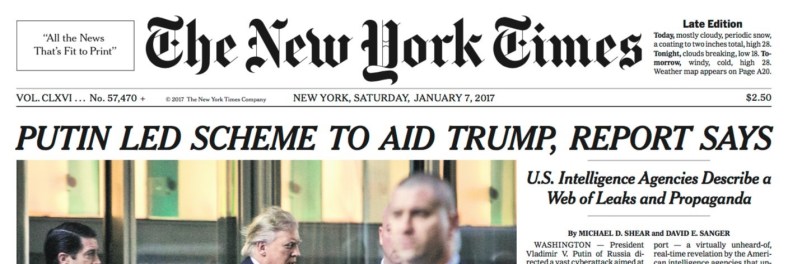
And then there was this from the professionals who go to work every day in U.S. Intelligence Services.IMG_8057.JPG

On Friday afternoon, First Lady Michelle Obama gave a memorable farewell speech at a White House event honoring the 2017 School Counselor of the Year. The text set an aspirational vision for all Americans and provides all of us with a lesson in leadership.

“…for all the young people in this room and those who are watching, know that this country belongs to you — to all of you, from every background and walk of life. If you or your parents are immigrants, know that you are part of a proud American tradition — the infusion of new cultures, talents and ideas, generation after generation, that has made us the greatest country on earth.”

C1hKGRJUcAAgab2.jpg

“If your family doesn’t have much money, I want you to remember that in this country, plenty of folks, including me and my husband — we started out with very little. But with a lot of hard work and a good education, anything is possible — even becoming President. That’s what the American Dream is all about.

But I also want to be very clear: This right isn’t just handed to you. No, this right has to be earned every single day. You cannot take your freedoms for granted. Just like generations who have come before you, you have to do your part to preserve and protect those freedoms. And that starts right now, when you’re young.

Right now, you need to be preparing yourself to add your voice to our national conversation. You need to prepare yourself to be informed and engaged as a citizen, to serve and to lead, to stand up for our proud American values and to honor them in your daily lives. And that means getting the best education possible so you can think critically, so you can express yourself clearly, so you can get a good job and support yourself and your family, so you can be a positive force in your communities.

And when you encounter obstacles — because I guarantee you, you will, and many of you already have — when you are struggling and you start thinking about giving up, I want you to remember something that my husband and I have talked about since we first started this journey nearly a decade ago, something that has carried us through every moment in this White House and every moment of our lives, and that is the power of hope — the belief that something better is always possible if you’re willing to work for it and fight for it.

It is our fundamental belief in the power of hope that has allowed us to rise above the voices of doubt and division, of anger and fear that we have faced in our own lives and in the life of this country. Our hope that if we work hard enough and believe in ourselves, then we can be whatever we dream, regardless of the limitations that others may place on us. The hope that when people see us for who we truly are, maybe, just maybe they, too, will be inspired to rise to their best possible selves.

So that’s my final message to young people as First Lady. It is simple. I want our young people to know that they matter, that they belong. So don’t be afraid — you hear me, young people? Don’t be afraid. Be focused. Be determined. Be hopeful. Be empowered. Empower yourselves with a good education, then get out there and use that education to build a country worthy of your boundless promise. Lead by example with hope, never fear. And know that I will be with you, rooting for you and working to support you for the rest of my life.”

We work in the context of global events, as responsible citizens. Our role in our workplace is to reflect the best in human and organizational values. In this new year@work, stay focused, be determined and lead by example with hope, never fear.


Photo credits: New Year’s Eve London – Ben Cawthra/LNP, Michelle Obama – BBC.com

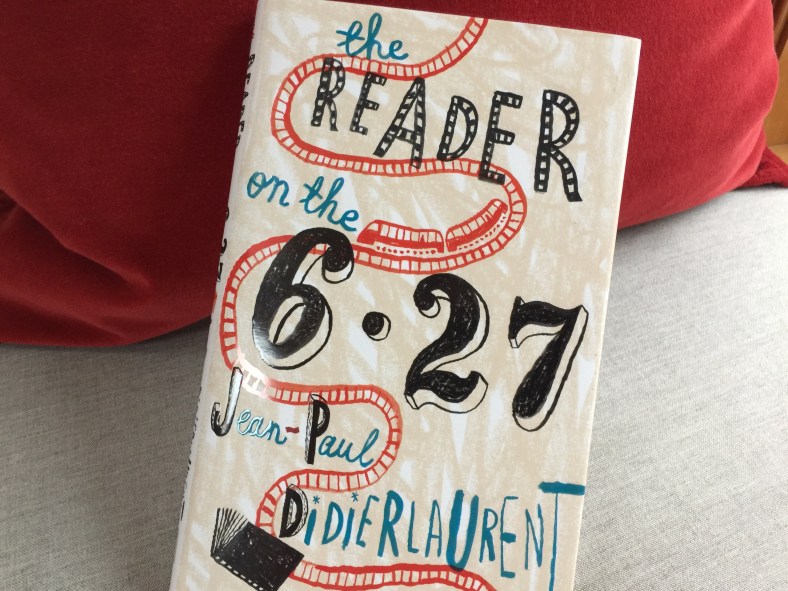
The Saturday Read ‘The Reader on the 6.27’ by Jean-Paul Didierlaurent (translated by Ros Schwartz)

Does our work define us? Many would argue it doesn’t and yet, we carry the bias of standard stereotypes throughout our work day toward those we encounter along the way.

This question of work identity and expectations forms the center of the story of ‘The Reader on the 6.27’ by French writer Jean-Paul Didierlaurent.

In this novel, I wanted to highlight the invisible, the battered lives, the ordinary people who often go unnoticed; and I wanted to show that each of them could have their own unexpected story. In a society where looks have become a religion and where we judge more on appearance, I wanted to highlight our prejudices and show that the clothes do not always make the man. But this book is also a declaration of love for words and for reading. All the characters have a close relationship with words – the words they read, the words they speak and finally the words of love. These words are the real cement of the novel.”

The novel’s hero is Guylain Vignolles whose workplace is dominated by an overbearing caricature of the worst boss ever, and ‘The Thing’.

“The Thing sat there, huge and menacing, right in the centre of the plant. In the fifteen years he had worked there, Guylain had never been able to call it by its real name, as if the simple act of naming it might be to acknowledge it, to demonstrate a sort of tacit acceptance, which he did not want at any cost. Refusing to name it was the last bastion he had managed to erect between it and himself, to avoid selling his soul for good.”

What if your job was to destroy the thing you loved most? That’s Guylain’s dilemma. ‘The Thing’ – the Zerstor 500 – is a hungry metal behemoth that turns books into sludge. (You will have a different view of recycling after reading the description.)

Guylain finds meaning in rescuing sheets of paper from the jaws of the “eleven-tonne monstrosity” and reading these disjointed narratives to his fellow commuters each morning on the 6.27.

Then, one day he finds a memory stick “through pure chance” as “it jumped out of the folding seat as he lowered it. A little plastic thing barely the size of a domino which bounced across the floor of the compartment and came to a halt between his feet..”

The contents of the USB are revealed as Guylain, the ‘reader on the 6.27’, replaces his daily narration from the remainders of ‘the thing’ with the story of a mysterious stranger.

“Once a year, at the spring equinox, I do a recount. Just to see, to make sure that nothing ever changes. At this very special time of year, when day and night share time equally, I do a recount with, lodged in the back of my mind, the ludicrous idea that perhaps, yes, perhaps one day, even something as unchanging as the number of tiles covering my domain from floor to ceiling might change.  It’s as hopeless and stupid as believing in the existence of Prince Charming, but deep down inside me is that little girl who refuses to die and who, once a year wants to believe in miracles.”

Julie’s domain is in the basement of a mall. And it’s her story that should forever challenge the reader’s preconceptions of society’s work identity assignments.

“When you’re a public lavatory attendant, wherever that may be, you’re not expected to keep a diary and sit there tapping away on the keyboard of your laptop. You’re only good for wiping from morning to evening, shining the chrome, scrubbing, polishing, rinsing, refurbishing the cubicles with toilet paper, and that’s it. A loo attendant is meant to clean, not to write…It’s as if there has been a misunderstanding, a miscasting. In the nether world, even a miserable twelve-inch laptop next to the tips saucer will always be a blot on the landscape…”

“I quickly had to come to terms with the fact that people generally expect only one thing of you: that you reflect back the image of what they want you to be.”

“Fit docilely into the mould, slip into this lavatory attendant’s costume – which is what I am paid to do – and play the part, sticking closely to the script.”

Mr. Didierlaurent has filled the gap in workplace literature with a beautifully told story of memorable characters who reside in the periphery of vision, but will long linger in the reader’s memory. Here is a novelist providing the lesson that not all workplace advice is to be found in the business section of the bookstore.

After reading the novel, and becoming acquainted with a cast of characters who bring it to life, perhaps we can reorient our expectations, and look beyond the surface for the complementing prism of talent that defines us all.

Resist “sticking closely to the script”, and follow Julie’s advice.

“I advance in small steps. Not a single day goes by without my writing. Not to do so would be as if I had restricted myself to the role of loo-poo-puke cleaner that they want me to play, a poor creature whose only raison d’être is the lowly occupation for which she is paid.”


The Friday Poem “Hope” is the thing with feathers by Emily Dickinson

What do we have if we don’t have hope?

In December, U.S. First Lady Michelle Obama was interviewed by Oprah Winfrey. One of the most stunning, yet relatable, quotes concerned ‘hope’- the promise of her husband’s presidential campaign eight years ago.

“I think that we feel the difference now. See, now we’re feeling what not having hope feels like. 

“Hope is necessary. It’s a necessary concept, and Barack didn’t just talk about hope because he thought it was just a nice slogan to get votes.”

“What else do you have, if you don’t have hope? What do you give your kids if you can’t give them hope?”

The Friday poem this week is from the nineteenth century American poet, Emily Dickinson – because we all could use a little hope “perched in our soul” in this new year.

“Hope” is the thing with feathers

“Hope” is the thing with feathers –
That perches in the soul –
And sings the tune without the words –
And never stops – at all –

And sweetest – in the Gale – is heard –
And sore must be the storm –
That could abash the little Bird
That kept so many warm –

I’ve heard it in the chillest land –
And on the strangest Sea –
Yet – never – in Extremity,
It asked a crumb – of me.

Emily Dickinson ‘The Poems of Emily Dickinson’ edited by R.W. Franklin

9780674018242.jpg