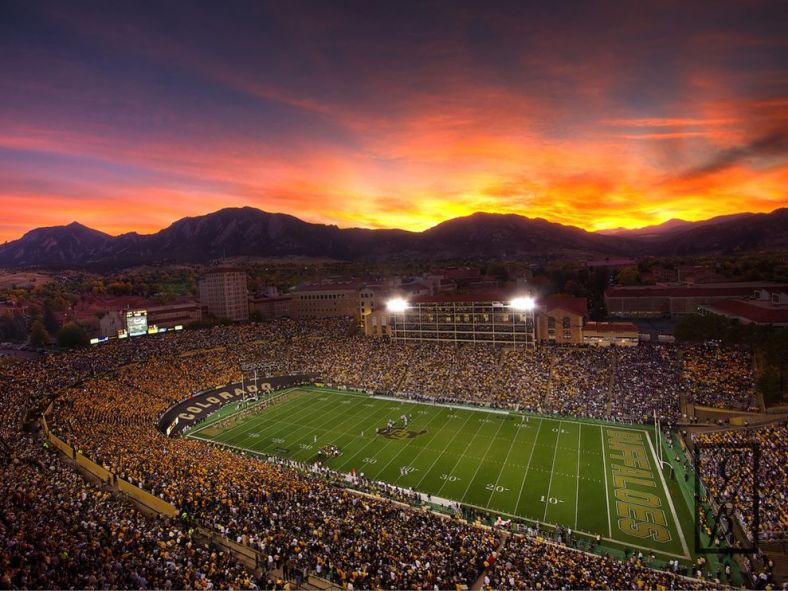
A college degree in sports? No.

An essay published in The New York Times print edition yesterday argued for the establishment of a college degree in sports as a means to bring athletics closer to the academic mission of a university. I disagree.

The way to integrate athletics into the academic mission of the university is to ensure student-athletes have every opportunity to earn the college degree of their choice, engaging in all aspects of the academic enterprise: academic advising, interaction with faculty, collaboration with fellow students, and internships.

University of Colorado professor Roger Pielke Jr. asked “Why Not a College Degree in Sports?” Drawing on previous arguments, Professor Pielke suggested an inherent bias on campus against athletics.

“Widespread prejudice and legitimate resentment against athletics remains in academia, and no wonder. The $6.9 million annual salary of Nick Saban, the head football coach at the University of Alabama, is equal to the combined average salary for nearly 100 assistant professors at the school, according to the most recent data available. And beyond such economic disparities, class distinctions of 19th-century England still shape thinking about sport: Classical music is valued by high society, while sport is for the masses.”

Many have voiced concerns about the consequences of the money being thrown at ‘big time’ athletic programs and it’s appropriate to question a football coach’s salary that far exceeds a university president’s compensation.

But what is missed, always, is the student-athlete. And this is where I disagree with Professor Pielke’s proposal.

Students choose a college or university based on a number of factors: ‘fit’, financial assistance, choice of major, access to faculty, availability of internships, and career aspirations. The student-athlete’s choice includes all of the above, plus the chance to compete in their sport at the highest level.

Suggesting student-athletes enroll in a sports degree program, administered by an athletic department, fortifies an existing boundary; discouraging student athletes from developing key relationships with university academic advisors, faculty, administrators, and non-athlete students.

The college experience serves as a bridge to workplace reality. Isolating student-athletes eliminates access to ‘real world’ campus connections critical for career success.

If a student wants to pursue a career in sport, there are a variety of options in the liberal arts, journalism, business and law.

Rather than reinforce the existing ‘athletic department silo’ with a new curriculum, we can initiate these changes today:

A student-athlete should be able to select a major and complete their degree without influence or interference from their coach.

Practices should not conflict with class schedules.

A student-athlete should have access to all career planning activities including internships, networking events, and on-campus recruiting interviews.

A student-athlete should never have to choose between an academic commitment and their sport.

Coaches should venture beyond the venues of comfort and take opportunities to network with faculty.

We don’t need an ‘academic athletic department’. We need the adults on campus to refocus the debate without prejudice to the students.


It’s Labor Day #LetsTalkAboutWork!

It’s Labor Day – the last barbecue of summer, the ‘final’ summer sale on everything, and the traditional late evening travel crush. What if we reimagined this holiday as a day of national conversation on work and workers? #LetsTalkAboutWork!

You need not look further than the USA TODAY headline: “Labor Day by the Numbers: Americans Can’t Stop, Won’t Stop Working” to realize we are spending more time @work and less time considering why. Here’s just a sampling of stats journalist Ashley May reported: 41% of workers did not take a single vacation day in 2015, 55% ended the year with unused vacation days, and 41% of employers require staff to work today, Labor Day.

Out of necessity we maintain a laser focus on our own career goals, spending most of the 365 days a year securing our future as best we can in an ever changing workplace. What if we just took one of those days to consider the workplace issues we face as part of a larger context?

The Labor Day holiday was originally conceived as “…a creation of the labor movement and is dedicated to the social and economic achievements of American workers. It constitutes a yearly national tribute to the contributions workers have made to the strength, prosperity, and well-being of our country.”

What better way to offer a tribute to the American worker than to engage in a national discussion that restores respect and considers the reality of today’s workplace?

Politicians will parade and hold forth at Labor Day gatherings, but will not solicit ideas, or listen to the voices of workers who don’t share their agenda.

Access to education and a right to work are fundamental American values. It’s how we define ourselves when asked ‘what do you do?’. Imagine the despair for those with no answer.

It’s time to reestablish the voice of the American worker and address both the barriers to workplace entry, and the challenges @work once you arrive.

Share your ideas @workthoughts.com #LetsTalkAboutWork!


The week@work – Grad students win right to unionize, the changing conversation about the economy, why America’s leaders fail and the story of Luke’s Lobster

Academia was in the headlines this week@work with the Tuesday announcement from the National Labor Relations Board, voting 3-1 to overturn a 2004 ruling allowing graduate students to form collective bargaining units. A Pew Research Center survey detected a shift in election season conversation from the economy (2012) to keeping the U.S. safe from terrorism. What conversation? The system isn’t working, and it may be we don’t have leaders who view their ‘calling’ as a ‘vocation’. And finally, a career transition story – from investment banker to ‘lobsterpreneur’ for this last week of summer.

images.jpeg

‘Ruling Pushes Door to Grad-Student Unions ‘Wide Open’ Peter Schmidt for The Chronicle of Higher Education

“Many more private universities can expect to see their graduate employees move to form unions in the wake of Tuesday’s National Labor Relations Board decision on such an effort at Columbia University.

The federal labor board’s 3-to-1 ruling resoundingly overturned a 2004 decision involving Brown University. In the Brown ruling, the board asserted that graduate employees should not be allowed to form unions because their doing so would intrude into the educational process.

In Tuesday’s decision, the majority held that such a belief “is unsupported by legal authority, by empirical evidence, or by the board’s actual experience.” It not only rejected the Brown precedent, but also overturned a 1974 ruling that had declared research assistants at Stanford University ineligible to unionize based on a belief that such research is part of the educational process.

The board’s decision in the Columbia case says graduate students employed by a private university are as eligible as any other type of worker to form collective-bargaining units under the National Labor Relations Act.”

In a letter to the Columbia University community, Provost John H. Coatsworth reiterated the long-held view of university administrators.

“Columbia and many of our peer universities have challenged this position. Nearly all of the students at Columbia affected by this decision are graduate students. We believe that the daily activities and the advisor-advisee relationships involved in the scholarly training of graduate students define an experience that is different from that of the typical workplace. Being a graduate student can take many years of intense research, teaching and study. But unlike university employees, graduate students who serve as teaching or research assistants come to this institution first and foremost to acquire through that work the knowledge and expertise that are essential to their becoming future scholars and teachers.”

The world of academia is changing, and with it the profile of the teaching community. As more adjunct faculty assume the classroom role, it may be harder to differentiate the job description of part-time faculty from that of grad assistant.

To be continued…

New-York-Stock-Exchange-1.jpg

‘Since 2012, The Economy Has Changed — And So Has The Conversation’ Marilyn Geewax for NPR

“Ah, 2012. You seem so long ago.

Back then, the economy was the star of the presidential election season, with more than 9 in 10 voters ranking it as Issue No. 1.

Voters worried about scarce jobs, expensive gasoline and a huge federal deficit.

Candidates proposed detailed solutions…

This year, the political conversation is very different, with much of the focus on non-economic issues: Republican Donald Trump’s temperament and Democrat Hillary Clinton’s trustworthiness.

And a Pew Research Center survey showed that the issue voters want to hear about most in a presidential debate is “keeping the US safe from terrorism.”

Of course, economic issues remain extremely important, but they are different from 2012. This year, the hottest money topics involve income inequality, trade deals and immigrants.”

Why are we focused on temperament and trustworthiness while the ‘big problems’ that effect our daily lives are ignored? David Brooks thinks it’s about career vs. calling, and he may be right.

Washington,_D.C._-_2007_aerial_view.jpg

‘Why America’s Leadership Fails’ David Brooks for The New York Times

“Over the past few decades, thousands of good people have gone into public service, but they have found themselves enmeshed in a system that drains them of their sense of vocation.

Let’s start with a refresher on the difference between a vocation and a career. A career is something you choose; a vocation is something you are called to.

A person choosing a career asks, How can I get the best job or win the most elections? A person summoned by a vocation asks, How can my existing abilities be put in service of the greatest common good?

A career is a job you do as long as the benefits outweigh the costs; a vocation involves falling in love with something, having a conviction about it and making it part of your personal identity.

A vocation involves promises to some ideal, it reveals itself in a sense of enjoyment as you undertake its tasks and it can’t be easily quit when setbacks and humiliations occur. As others have noted, it involves a double negative — you can’t not do this thing.

I do think there’s often an arc to vocation. People start with something outside themselves. Then, in the scramble to get established, the ambition of self takes over. But then at some point people realize the essential falseness of all that and they try to reconnect with their original animating ideals.

And so I think it possible to imagine a revival of vocation.”

The last story this week@work is an ‘end of summer’ career transition feature.

417562_10150602911837473_423900675_n.jpg

‘A Restaurant’s Sales Pitch: Know Your Lobster’  Janet Morrissey for The New York Times

“It was a steamy summer day in New York in 2009 when Luke Holden, an investment banker, had a craving for a lobster roll. Not just any lobster roll, though. He longed for the “fresh off the docks” taste he enjoyed growing up in Cape Elizabeth, Me.

After an exhaustive search on New York’s streets, he came up dissatisfied and disappointed.

“Every lobster was served over a white tablecloth, extremely expensive, drowning in mayo and diluted with celery,” he said. “I wondered why all the great chefs in this city had screwed this up so badly.”

So that year, Mr. Holden decided to open an authentic Maine lobster shack in Manhattan. To replicate that fresh taste that he remembered, he would need to oversee, track and, where possible, own every step in the process.

Today, he owns 19 Luke’s Lobster restaurants, two food trucks and a lobster tail cart in the United States, and five shacks in Japan.”

If you only  read one of these this week, spend some time with David Brooks…and reconnect with your “original animating ideals” and begin a “revival of vocation”. 

The Friday Poem: ‘The Boss’ by Deborah Garrison

One of the most important workplace relationships is the one between you and your direct supervisor. A good ‘boss’ will quickly sense your potential and connect your talents with work that challenges and enables professional growth. He/she employs personal experience to communicate the value of failure along with success. A good boss has a high EQ and a healthy dose of empathy for all.

For this week’s Friday Poem, a meditation on ‘The Boss’ through the eyes of poet Deborah Garrison.

The Boss

A firecracker, even after middle age

set in, a prince of repression

in his coat and tie, with cynical words


for everything dear to him.

Once I saw a snapshot of the house

he lives in, its fence painted


white, the flowers a wife

had planted leaning into the frame

on skinny stalks, shaking little pom-poms


of color, the dazzle all

accidental, and I felt

a hot, corrective


sting: our lives would never

intersect. At some point

he got older, trimmer, became


the formidable man around the office.

His bearing upright, what hair he has

silver and smooth, he shadows my doorway,


jostling the change in his pocket –

milder now, and mildly vexed.

The other day he asked what on earth


was wrong with me, and sat me down

on his big couch, where I cried

for twenty minutes straight,


snuffling, my eyeliner

betraying itself in the stained

tears. Impossible to say I was crying


because he had asked. He passed

tissues, at ease with the fearsome

womanly squall that made me alien


even to myself. No, it didn’t make him

squirm. Across his seventy years,

over his glasses, he eyed me kindly,


and I thought what countless scenes

of tears, of love revealed

he must have known.


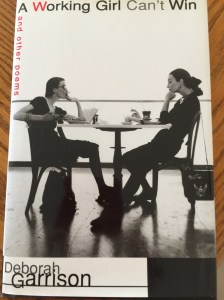
Deborah Garrison   ‘A Working Girl Can’t Win’ 1998

a working girl can't win

Click on this link to hear the author read the poem as part of a 1999 interview with Bill Moyers.

“In this episode of Sounds of Poetry, Garrison tells Bill that poetry is about “trying to find a way to understand and describe the world that lifts you a little bit out of it, instead of just being in it and being lost.”

The one thing every Olympian should do before they leave Rio 2016

The one thing every Olympian should do before they leave Rio is update their social media identity across all platforms.

For a brief moment in time Olympic athletes capture the global stage and water cooler conversations. It’s not only those who make the podium, but those we discover in the diverse narratives of their journeys to Rio. The majority will return to their home countries as national heroes, contributing to society, away from the media spotlight. A few may return as coaches or commentators in four years. Most will miss the opportunity to capture the Olympic experience as a bridge to the next phase of their career.

In the past I have worked with returning  Olympians who hesitate to include their achievements in sport on their resume. The most competitive athletes are the most reticent to record their accomplishments.

They just don’t think it’s relevant. It is.

In the global workplace, it’s not just the resume; social media communicates talent instantaneously to potential employers. Your professional image is transmitted through your social media identity.

On Saturday, American Virginia Thrasher won the first gold medal awarded at the games in the women’s the 10-meter air rifle. Within a few hours she was taking her first TV interview on NBC, describing her hectic schedule of additional events and starting her sophomore year at West Virginia University.

In describing her life over the next couple of weeks, Thrasher gave voice to the stress that accompanies the life of every student athlete, combining sport with academics. Often lost, is time for reflection on how these experiences transform the athlete into a professional @work.

How do you build the bridge from sport to work on social media?

Take a look at your social media presence across all platforms: Facebook, Instagram, Snapchat, LinkedIn, Twitter…

Do all the pieces fit into a unifying narrative? If not, it’s time to edit. As an Olympian, expectations have been raised and your online image should reflect your aspirations vs. social missteps.

Have you created links to videos and press coverage of your accomplishments?

Do you post videos and press coverage on your Twitter account?

Have you checked with third party sites to ensure your profile information is up to date?

Do you have an account on LinkedIn? (If you’re making the transition from sport to your next career, this component of your professional online identity is critical as you build your ‘next career’ network.)

There are many athletes who hesitate to be defined by their sport, but the skills developed in pursuit of Olympic gold closely match those sought by potential employers: teamwork, goal orientation, communications, problem-solving, and resilience.

Whether you are a summer Olympian, or a star on your own professional stage, it’s time to seize the moment and refresh you social media identity.


Photo credit: US Women’s Rugby Seven – Geoff Burke for USA TODAY Sports


The week@work – Olympic stories, author salaries, “what a feminist looks like” & the July jobs report

This week@work the athletes who go to work every day to pursue an Olympic dream are in Rio, Forbes announced their list of top earning authors, President Obama penned an essay on “what a feminist looks like”, and the U.S. labor market grew by 255,000 positions.

The major story of the next two weeks will take place in Brazil as the athletes of the world gather to compete in the XXXI Olympics. Journalists covered two athletes who have travelled diverse paths to reach Rio 2016.

 Kianoosh Hashemzadeh introduced us to equestrian, Lauren Kieffer, ‘An American Rider Trying to Beat the Boys in Rio’, for The New Yorker

“There are two Olympic-level athletic endeavors in which men and women square off head to head: sailing and equestrian sports. Eventing, an equestrian sport in which horse and rider compete in three phases—dressage, cross-country, and stadium jumping—has been called the most dangerous competition in the Olympics. That danger has never deterred female riders: they have competed alongside men since the field became open to them, at the 1964 Games, in Tokyo. Women do well in the sport, but they have struggled to reach its uppermost echelon: the current top-ten list of the Fédération Équestre Internationale, the sport’s governing body, is made up of eight men and two women. There are, however, six women in the following ten spots—and sitting at No. 12, eager to crash the old guard, is the top female eventing athlete in the United States, twenty-nine-year-old Lauren Kieffer.”

lauren kieffer.jpg“No woman has ever won an individual gold medal in the sport, and, while Kieffer’s focus is to bring home a team medal, an individual victory would be particularly sweet. Women are contenders in eventing, but few have made it to the very top. As Kieffer told me, “Someone has to beat the boys.”

If you’ve seen the Visa commercial that has been running during the NBC Olympic coverage, you may recognize the name Yusra Mardini, a member of the refugee team competing at the Olympics.

mardini.JPG

Charly Wilder profiled her heroic story from her training facility in Berlin for The New York Times, ‘She Swam to Escape Syria. Now She’ll Swim in Rio’.

“Yusra Mardini, an Olympic swimmer, was an hour and a half into her first training session of the day, butterfly-kicking down the length of a pool with a yellow rubber duck balanced on her head.

Last August, Mardini and her sister Sarah fled war-torn Syria and embarked on a harrowing, monthlong journey through Lebanon, Turkey and Greece, up through the Balkans and Central Europe, to Germany, narrowly dodging capture and death. When their crammed dinghy broke down between Turkey and Greece, she and her sister, also a swimmer, jumped into the water and helped guide the boat to safety.

Mardini’s story came to public attention in March when she was identified by the International Olympic Committee as a candidate to compete on a new team of refugees, made up of athletes who are stateless or would otherwise be excluded from the Games. She was thrust into the spotlight, celebrated by the news media as a fresh-faced example of Germany’s so-called welcome culture — a story of uplift at the center of the global refugee crisis.”

Robert Kitson updated the story from Rio after the first day of Olympic competition, ‘Yusra Mardini delights with butterfly heat win for Refugee Olympic Team’

“For those minded to complain about minor irritations in Rio such as humidity in the aquatics centre or a few nibbling insects, the 18-year-old’s story should serve as a timely reminder of life’s more pressing issues.

The venue may have been far from full and her heat loaded with competitors entertaining nil hope of reaching the final but Mardini was the most popular of winners in a time of 1min 9.21sec, just over a second faster than her nearest heat rival. Afterwards she could scarcely contain her joy: “Everything was amazing. It was the only thing I ever wanted was to compete in the Olympics. I had a good feeling in the water. Competing with all these great champions is exciting. I’ve only been back swimming for two years so we’re only now getting back to my levels of before.”

The next story this week@work is for all of you commuting to work, considering a career change. Forbes announced their annual ranking of the world’s highest paid authors this week and new to the top ten was commuter, former journalist and ‘near broke’ novelist, Paula Hawkins.

Natalie Robehmed reported on ‘The World’s Highest-Paid Authors 2016: James Patterson, Jeff Kinney and J.K. Rowling Top Ranking’.

“These well-heeled wordsmiths earned a combined $269 million over the last 12 months, proving that the written word isn’t dead–although television and movie adaptations often help drive sales.

Patterson topped our list for the third straight year, earning $95 million pretax, while children’s author Jeff Kinney placed a distant second, earning $19.5 million.”

hawkins.jpgThe only newcomer to the ranking: Paula Hawkins. After “The Girl with the Dragon Tattoo” and “Gone Girl,” her novel “The Girl on the Train” is the latest literary phenomenon with a calculating female character to hit the bestseller list. It sold 11 million copies worldwide; a movie version hits theaters in October.”

President Barak Obama wrote an essay linking his upbringing by strong women, his role as a father of two girls, and the nomination of Hillary Clinton, to describe “This Is What a Feminist Looks Like” for Glamour magazine.

“In my lifetime we’ve gone from a job market that basically confined women to a handful of often poorly paid positions to a moment when women not only make up roughly half the workforce but are leading in every sector, from sports to space, from Hollywood to the Supreme Court. I’ve witnessed how women have won the freedom to make your own choices about how you’ll live your lives—about your bodies, your educations, your careers, your finances. Gone are the days when you needed a husband to get a credit card. In fact, more women than ever, married or single, are financially independent.

malia-sasha-obama.jpg…the most important people in my life have always been women. I was raised by a single mom, who spent much of her career working to empower women in developing countries. I watched as my grandmother, who helped raise me, worked her way up at a bank only to hit a glass ceiling.

So I’d like to think that I’ve been pretty aware of the unique challenges women face—it’s what has shaped my own feminism. But I also have to admit that when you’re the father of two daughters, you become even more aware of how gender stereotypes pervade our society. You see the subtle and not-so-subtle social cues transmitted through culture. You feel the enormous pressure girls are under to look and behave and even think a certain way.

…we need to break through these limitations.” 

Finally, this week@work, the U.S. Labor Department released the July 2016 jobs report. Jeff Cox covered the news for CNBC.

“Job creation crushed estimates in July as the economy added 255,000 positions, according to the Labor Department.

The headline unemployment rate held steady at 4.9 percent, though a more encompassing measure that includes those not actively looking for work and those working part-time for economic reasons moved up a notch to 9.7 percent. Though still mired near generational lows, the labor force participation rate ticked up one-tenth to 62.8 percent as those counted as not in the labor force decreased 184,000 to 94.3 million.

Hourly wages also moved higher, increasing by 8 cents or an annualized pace of 2.6 percent, while the average work week edged up to 34.5 hours.”

Photo credits: Lauren Kieffer – Toni L. Sandys/The Washington Post, Yusra Mardini – Michael Sohn/AP, Paula Hawkins – The Daily Beast, President Obama – The Daily Mail


‘The Saturday Read’ The Olympics: 3 articles and 1 ‘Saturday Listen’

The XXXI Olympiad in Rio has begun and to get you in the spirit of the games, this week’s ‘Saturday Read’ suggests three articles and one ‘Saturday Listen’.

Beginning in the 1960’s ABC Sports opened their weekly ‘Wide World of Sports’ program with the phrase ‘spanning the globe to bring you the constant variety of sports…the thrill of victory and the agony of defeat’. The idea was to tell the stories of athletic competition, honoring the victors while recognizing the efforts of all competitors.

Over the next two weeks 306 events in 28 Olympic sports will take place in 32 venues in Rio and soccer stadiums in Belo Horizonte, Brasilia, Manaus, Salvador and Sao Paulo. This ‘constant variety of sport’ will include new additions: rugby and golf.

ABC Sports also brought us ‘up close and personal’ profiles of athletes preparing for their competition, often visiting remote corners of the world, providing both travelogue and local context for each competitor.

The four ‘up close and personal’ stories selected this week begin with a multi-media ‘long read’ about one of the most famous athletes in Brazil, Lais Souza. The two-time olympic gymnast joined her country’s efforts to build a winter sports team, entering a training program in aerial skiing. In 2014 she became the first Brazilian aerialist to qualify for the Olympics. That’s when the real story begins.

The next three features introduce the US women’s beach volleyball team of Kerri Walsh Jennings and April Ross, the refugee olympians, and American swimmer Katie Ledecky.

‘A Life in Motion, Stopped Cold’ Sarah Lyall for The New York Times, May 13, 2015

“At 25, Souza was one of Brazil’s best gymnasts, a tiny two-time Olympian, and she had just heard exciting news: She had qualified for yet another Olympics. But this was the 2014 Winter Games, something completely new, and it gave her accomplishment an added resonance. In less than a week, Souza would be traveling to Sochi, Russia, to compete in aerial skiing, a sport she had never even heard of before taking it up seven months earlier.”

kravhbXX.jpg

“For an athlete from a sultry tropical country who had spent her career following the summer around the world, aerial skiing had presented Souza with an extraordinary new challenge, accordioned into an extraordinarily brief period of time. She had never skied. She had never seen anyone doing aerials. She had barely even seen snow.

Souza’s mood was buoyant as she looked down the slope that day, Jan. 28, 2014. Giddy with excitement from her Olympics news, she was reveling in a morning of freedom before the pressures ahead…It was to be the three skiers’ last run of a long and happy morning before they broke for lunch and called it a day…But something was not right.”

‘Kerri Walsh Jennings Seeks Olympic Success With a New Partner’ John Branch for The New York Times, July 7, 2016

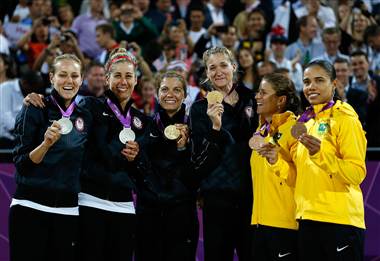
“At the beach volleyball women’s final at the 2012 London Games, Kerri Walsh Jennings and Misty May-Treanor clinched their third straight gold medal. They beat April Ross and Jennifer Kessy, who earned silver.

pb-120808-beach-volleyball-gold-jm-001.380;380;7;70;0.jpg

After the final point, the four American women congratulated one another, and Ross was a little surprised to hear Walsh Jennings’s whispered words.

“At the net, she said, ‘Let’s go win gold in Rio,’” Ross said. “We hadn’t had that conversation. I was caught off-guard, but it was a no-brainer for me. I was like, ‘Yeah, for sure.’”

‘The Refugee Olympians in Rio’ Robin Wright for The New Yorker, August 2, 2016

“The United Nations estimates that there are now more than sixty-five million people forcibly displaced from their homes. More than twenty-one million are refugees, most under the age of eighteen. More than half of these fled from one of three countries—Somalia, Afghanistan, or Syria. Ten million forcibly displaced people are stateless. The number of the displaced goes up by an average of thirty-four thousand every day.”

155665.jpg“When the Games begin in Rio de Janeiro, the opening ceremony, on Friday, will pay tribute to the world’s displaced and stateless persons. During the parade of nations, a team of ten young refugees will enter Maracanã Stadium as their own team—a first in Olympic history.
In announcing the team, Thomas Bach, the president of the I.O.C., said, “These refugees have no home, no team, no flag, no national anthem. We will offer them a home in the Olympic Village, together with all the athletes of the word. The Olympic anthem will be played in their honor, and the Olympic flag will lead them into the Olympic Stadium.” Bach continued, “These refugee athletes will show the world that despite the unimaginable tragedies that they have faced, anyone can contribute to society through their talent, skills, and strength of the human spirit.”

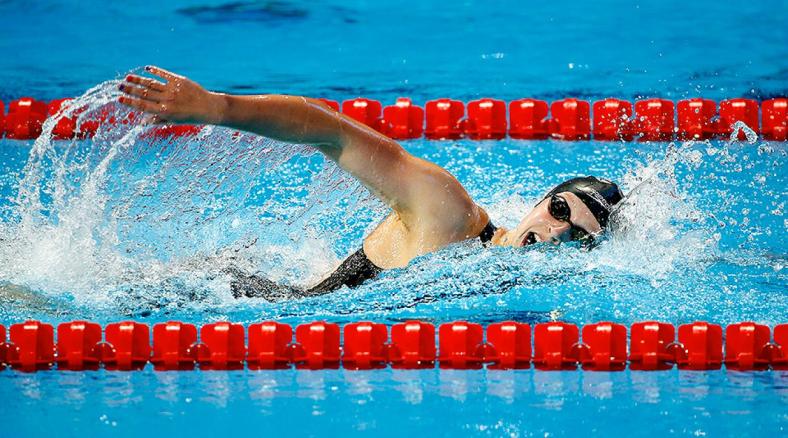
‘Olympic Swimmer Ledecky Is This Century’s Perfect 10’ Frank Deford for NPR, August 3, 2016

Frank Deford’s narrative give us a thumbnail portrait of the modern olympics when the marquee events of track and field were placed in the second week and swimming took a back seat to women’s gymnastics beginning with Olga Korbut in 1972. But gymnastics has changed their scoring system, and there are no perfect 10s, so we switch our attention back to the pool and swimmer Katie Ledecky.

katie-ledecky-road-to-rio.jpg

“In the television era, the second week of the Olympics is reserved for what is considered the marquee event: track and field.

So, the shared premier showcases of the first week are swimming and women’s gymnastics. While swimming was always a spotlight sport, I was, if you will, sort of present at the creation when gymnastics became the new star lead-off hitter.”

Watching an ‘Olympic Preview’ on TV Thursday evening, I thought I had tuned in to ’60 Minutes’ with coverage of Zika, terrorism, street protests and environmental concerns. Now the story will shift, to be written by the athletes. Let’s celebrate these athletes who represent their home countries and compete “in the true spirit of sportsmanship, for the glory of sport and the honour of our teams.”


What I did this summer…

What happened to summer? Is it me, or does time go by more quickly after July 4? Before your experiences of the past few months are lost in the excitement of fall work assignments, take some time to reflect on what you learned.

Did you travel, study, volunteer or all of the above? Did your curiosity lead you to interviews with folks outside your career field? What did you learn about yourself?

Catalog your experience including the skills you acquired or any challenges you overcame. Some of these will fall naturally into a resume, but others will provide the content for future professional conversations.

How did you grow as an individual or as a professional? Can you identify ways to link your summer experience to your current work?

Sanity and survival compel us to try to separate work from the rest of our lives. But when we return to work after vacation, maintaining the separation can be a barrier to creativity.

Refreshing the view allows us to be open to new opportunities.

Develop a narrative that tells your story of the summer – a story that incorporates all the elements of the ‘new and improved’ you. Keep it simple. Focus on experience that adds value to your ‘brand @work’.

A conversation poolside that sparked an idea for a new product. An article/book that offered an alternative approach to problem-solving. A civic engagement project that spurred ideas to motivate your team. A faculty member or classmate who provided a connection to a potential new client.

Or, did the chance to step away and just daydream provide new insight into your next career?


The Friday Poem ‘To the Indifferent Women’ by Charlotte Anna Perkins Gilman

Last night a woman accepted the nomination of a major political party for the first time in the history of the United States. The next president will preside over the commemoration of the centennial of the 19th amendment, which extended suffrage – the right to vote, to women.

To mark history, the Friday Poem this week is ‘To the Indifferent Women’ and was first published in 1911. Charlotte Anna Perkins Gilman called herself a humanist. She was a poet, author, magazine editor and feminist in a lifetime that began with the civil war and ended in the great depression.

Although the words were set to paper over a century ago, the message resonates today.

“We all may have our homes in joy and peace
When woman’s life, in its rich power of love
Is joined with man’s to care for all the world.”

To The Indifferent Women

A Sestina

You who are happy in a thousand homes,
Or overworked therein, to a dumb peace;
Whose souls are wholly centered in the life
Of that small group you personally love;
Who told you that you need not know or care
About the sin and sorrow of the world?

Do you believe the sorrow of the world
Does not concern you in your little homes? —
That you are licensed to avoid the care
And toil for human progress, human peace,
And the enlargement of our power of love
Until it covers every field of life?

The one first duty of all human life
Is to promote the progress of the world
In righteousness, in wisdom, truth and love;
And you ignore it, hidden in your homes,
Content to keep them in uncertain peace,
Content to leave all else without your care.

Yet you are mothers! And a mother’s care
Is the first step toward friendly human life.
Life where all nations in untroubled peace
Unite to raise the standard of the world
And make the happiness we seek in homes
Spread everywhere in strong and fruitful love.

You are content to keep that mighty love
In its first steps forever; the crude care
Of animals for mate and young and homes,
Instead of pouring it abroad in life,
Its mighty current feeding all the world
Till every human child can grow in peace.

You cannot keep your small domestic peace
Your little pool of undeveloped love,
While the neglected, starved, unmothered world
Struggles and fights for lack of mother’s care,
And its tempestuous, bitter, broken life
Beats in upon you in your selfish homes.

We all may have our homes in joy and peace
When woman’s life, in its rich power of love
Is joined with man’s to care for all the world.

Charlotte Anna Perkins Gilman  ‘Suffrage Songs and Voices’ 1911

41pY0+cnJWL._SX331_BO1,204,203,200_

Convention photo credit: Marcus Yam for The Los Angeles Times


‘The little blue dress’ – Christian Siriano finds success in ‘designing’ a career of inclusion

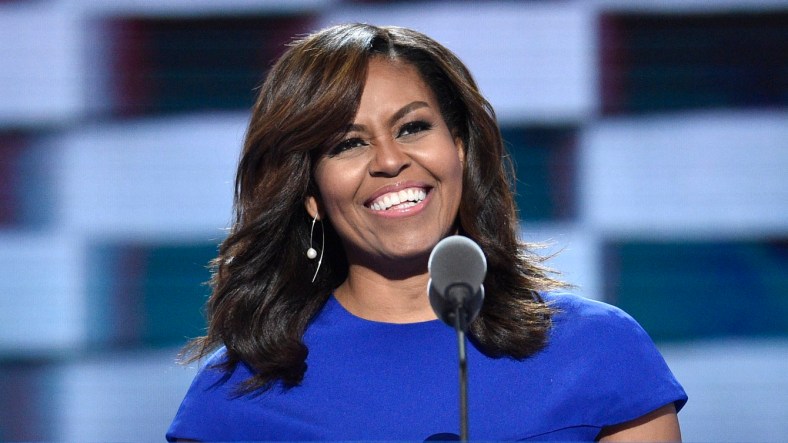
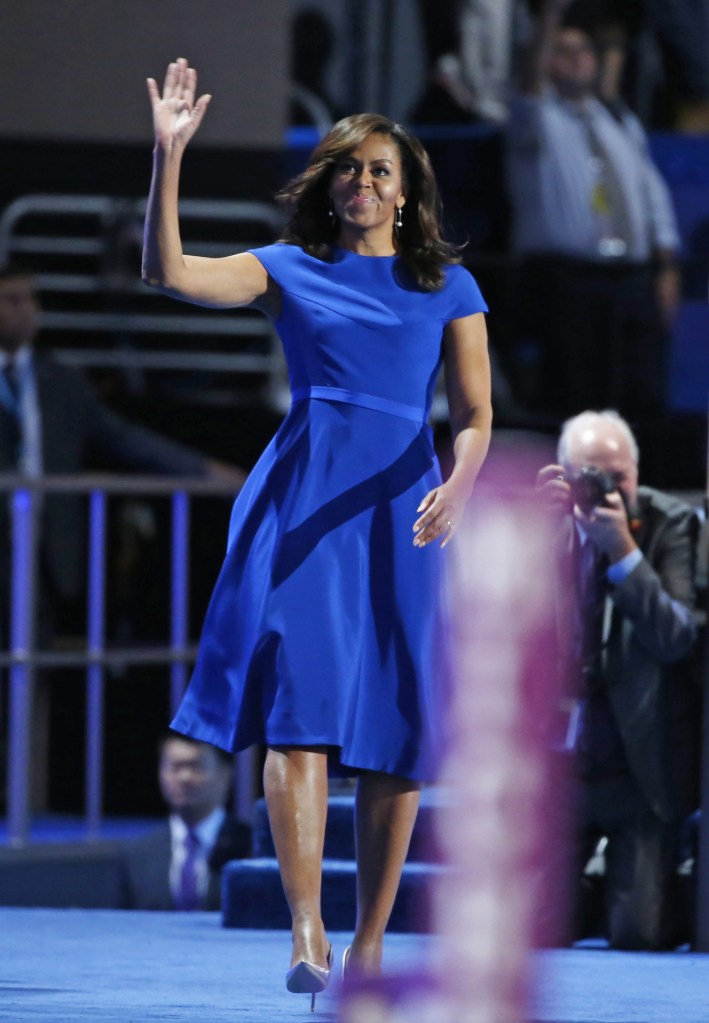
Clothes make the woman. Forget the ‘little black dress’. Last night at the Democratic National Convention, designer Christian Siriano created a new fashion statement in his dress for First Lady Michelle Obama – the ‘little blue dress’.

Mr. Siriano, winner of season four of Project Runway, has become the ‘go to’ wizard of real women’s clothing design.

On June 28  ‘Ghostbusters’ actress and Saturday Night Live cast member, Leslie Jones tweeted“It’s so funny how there are no designers wanting to help me with a premiere dress for movie. Hmmm that will change and I remember everything.”

Mr. Soriano responded within an hour “@Lesdoggg ✋🏼👋🏼”

In a follow-up tweet he expressed his long held work values.

“It shouldn’t be exceptional to work with brilliant people just because they’re not sample size. Congrats aren’t in order, a change is.”

One could guess it’s this attitude of inclusion that put him on the First Lady’s radar.

The New York Times ‘On the Runway’ columnist, Vanessa Friedman noted the link.

“Lest you think Mrs. Obama’s wardrobe choice was just happenstance, however, know that the convention appearance was only the second time she has worn Mr. Siriano; the first time was this month, at the funeral for the police officers killed in Dallas.

Throughout her time in the White House, the first lady has made something of a secondary cause out of supporting new, independent American designers, and choosing her clothes not only because she likes them but because their back story has a certain resonance that goes beyond the aesthetic. Monday night was no different. Fashion is not known for its embrace of togetherness (more for its exclusion). But Mr. Siriano is.

Think that’s just a coincidence?”

michele obama

We make an impression with how we dress. For those in the public eye, where you are one wardrobe malfunction away from a twitter storm, what you wear communicates who you are.

For the rest of us, not a size 2, figuring out what to wear to work is more than dress selection, it’s choosing the ‘costume of the day’ that will enhance our confidence and  communicate our individuality and work ethic.

You never know who may be paying attention.

I look forward to following Mr. Soriano’s career and hope others will follow his leadership to create contemporary fashion for today’s diverse workplace reality.


Photo credit: Mrs. Obama – Reuters