The week@work – Brexit, #Regrexit, Euro2016, Christo’s floating piers, Bill Cunningham’s photos, Goldman Sachs’ video recruiting strategy, and education for a jobless future

I was a history major, so the past week@work included an inordinate amount of time spent in the company of various traditional and social media portals, monitoring the results of the Brexit vote and its aftermath.

In between, there were intervals of soccer, viewing both Copa America and Euro 2016. There was also art in Christo’s installation in Lake Iseo, Italy and reflected brilliance in the photography of Bill Cunningham, who died this weekend. Goldman Sachs announced a new campus recruiting strategy (good news for history majors), and a journalist asked if education is preparing students adequately for a jobless future.

25Brexit-HP-SS-slide-9PT7-largeWidescreen573-v3.jpg

On Thursday evening I watched part of CNN International’s ‘Brexit’ election coverage, which included an animated discussion between anchor Christiane Amanpour and historian Simon Schama. As it became clear that ‘Leave’ was overtaking ‘Remain’ in the vote count, Schama cited the referendum results as one more example of “a world phenomenon of tribal nationalism”.

The historian has been actively engaged on Twitter and in an interview with NPR’s Robert Siegel described the vote as “a turning point for Great Britain”.

Here’s a sample of the conversation:

SIEGEL:” Culturally, there is a generation of educated young Europeans – and I include Brits in that – who think of themselves at some level as being European. Maybe it’s not their only identity. Do you think that goes away in Britain and does a different identity take shape, or do those people grow up and change in this country?”

SCHAMA: “No, I think they’re in distress. I mean, I’m sure you’ve said, it’s very striking that the 18 to 24s voted something like 75 percent to stay in. And I suppose it depends where you are in London. We have more immigrants than anywhere else, and we’re least bothered by it. And I think when the shock subsides a bit, the young may well fight to be at least as European as they’ve been led to believe they are. That’s my hope, actually.”

SIEGEL: “If you can imagine a historian 50 years hence writing the sentence that will sum up what happened on this day, what do you think it’ll be?”

SCHAMA:” The greatest act of unforced national self-harm yet known in modern history.”

It’s always helpful to have a historian in the house. And it’s stunning to realize the generational split in voting: “Among 18-24-year-olds, the age category that’s going to have to live with the consequences of this vote for all of their working lives, 75 percent voted to stay.”

As to #Regrexit, writer and comedian, John Oliver reminded his countrymen, “there are no f______do-overs”.

In 2004 journalist Franklin Foer wrote ‘How Soccer Explains the World: An Unlikely Theory of Globalization’. Seemed like a good read to revisit after Brexit and an opportunity for a diversion while following Copa America and Euro 2016. The book treats soccer stories as globalization case studies. And I think we could use some ‘best practices’ right about now.

Full disclosure, I am rooting for the Welsh National Football Team as they face Belgium on Friday. My favorite work/life balance photo of the week – Wales’ Gareth Bale and daughter after the team advanced to the Euro 2016 quarter finals.

IMG_4935

Art is another outlet for expression in chaos and ambiguity. A new Christo work debuted last week. The Guardian reported on the popularity of the ‘Floating Piers’ in Lake Iseo in northern Italy.

58af48a0cb7e83c7f1e3dbf9b4a50e7e.jpg

“A giant floating walkway made out of fabric on an Italian lake has had to be closed at night after tens of thousands of visitors began to wear it out.

The 1.9-mile (3km) walkway of 200,000 floating cubes covered in orange fabric was created by artist Christo and has proved a major attraction since it opened on Saturday on Lake Iseo.

However, 270,000 visitors have flocked to see the free installation – called “the Floating Piers” – in less than five days, far exceeding organisers’ expectations of about 500,000 over 16 days.”

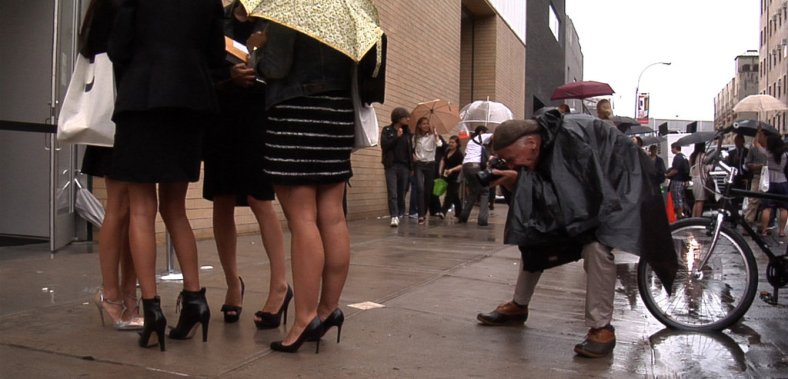
On Saturday, The New York Times chronicled the career of one of their ‘house icons’, photographer Bill Cunningham.
BILL-jumbo.jpg

“Mr. Cunningham was such a singular presence in the city that, in 2009, he was designated a living landmark. And he was an easy one to spot, riding his bicycle through Midtown, where he did most of his field work: his bony-thin frame draped in his utilitarian blue French worker’s jacket, khaki pants and black sneakers (he himself was no one’s idea of a fashion plate), with his 35-millimeter camera slung around his neck, ever at the ready for the next fashion statement to come around the corner.

Nothing escaped his notice: not the fanny packs, not the Birkin bags, not the gingham shirts, not the fluorescent biker shorts.

In his nearly 40 years working for The Times, Mr. Cunningham snapped away at changing dress habits to chart the broader shift away from formality and toward something more diffuse and individualistic.”

Two stories about the transition from school to work round out this week@work.

On Friday, bbc.com reported “Goldman Sachs is scrapping face-to-face interviews on university campuses in a bid to attract a wider range of talent.
The US investment bank will switch to video interviews with first-round undergraduate candidates from next month.

“Edith Cooper, Goldman’s global head of human capital management said: “We want to hire not just the economics or business undergraduate but there is that pure liberal arts or “history major that could be the next Lloyd Blankfein.”

Mr Blankfein, the bank’s chief executive, went to Harvard, one of America’s elite Ivy League universities, where he studied history.”

On Tuesday, Washington Post contributor, Jeffrey J. Selingo asked ‘Are colleges preparing students for the workforce?’

“While students are often encouraged to major in job-ready fields like STEM (science, technology, engineering, and math), graduates of those programs are unlikely to find employment without solid grounding in the liberal arts and experiences outside the classroom to build their soft skills.

In the future work world, it’s critical that new graduates stay one step ahead of technology and focus more on what computers can’t yet do well: show creativity, have judgment, play well with others, and navigate ambiguity.”

It was a good week to be a history major.
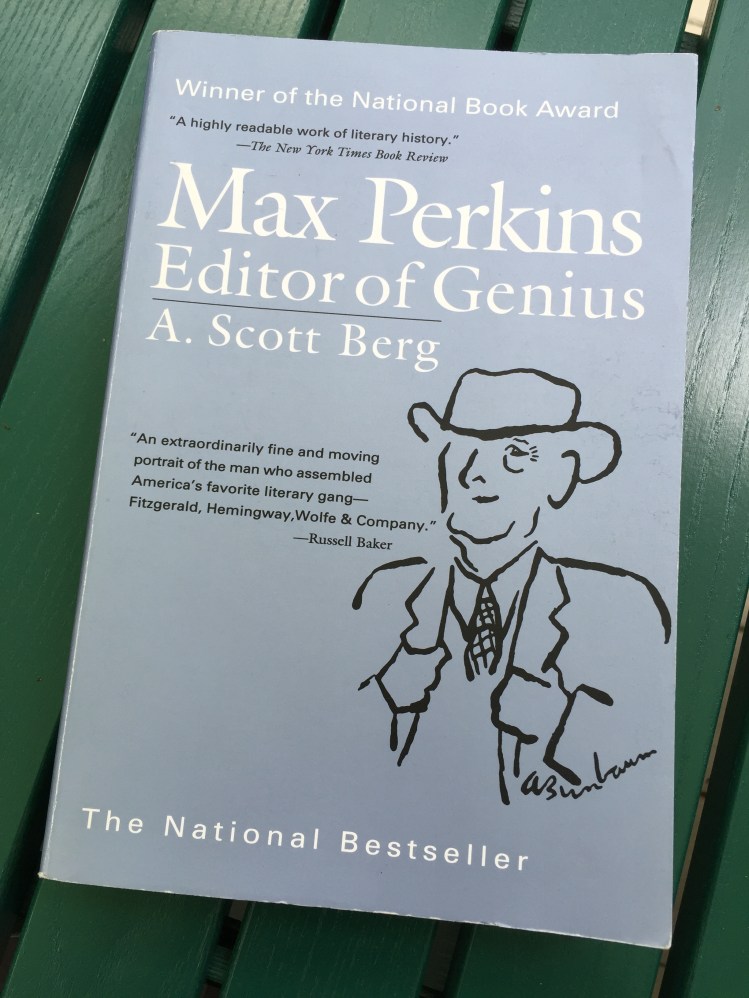


The Saturday Read ‘Max Perkins: Editor of Genius’ by A.Scott Berg

How many of you have turned your senior thesis into a career?

In 1971, recent Princeton graduate, A. Scott Berg began the seven-year process of expanding his college research into the biography of book editor Max Perkins. Earlier this month, a 38 year long journey, from the first film option of the 1978 National Book Award winning biography, ended with the opening of ‘Genius’ in theaters.

The Saturday Read this week is ‘Max Perkins:Editor of Genius’, a story that defines the role of a professional mentor as the narrative unfolds.

Allison Silver interviewed the author in 1981 for an article on the relationships between biographers and their subjects.

“Scott Berg’s biography ”Max Perkins: Editor of Genius” grew out of a fascination, bordering on fixation, for F. Scott Fitzgerald. At Princeton, Mr. Berg wrote his senior thesis on Perkins’s relations with Ernest Hemingway, Thomas Wolfe and Fitzgerald during the 1920’s. Mr. Berg realized there was a book in the life of the Scribner’s editor, and felt he was the one to write it. On graduation day, 1971, he told his roommate, ”I’ll take three months to research it, three months to write it and then another three months to get it published.” Mr. Berg remembers this philosophically. ”I was only six years off.”

Berg introduces Perkins at age sixty-one, in 1946, as he enters a storefront on Forty-third street in Manhattan, to speak to a group of students enrolled in an extension course on book publishing. “All were eager to find a foothold publishing and were attending the weekly seminars to increase their chances.”

“Maxwell Everts Perkins was unknown to the general public, but to people in the world of books he was a major figure, a kind of hero. For he was the consummate editor. As a young man he had discovered great new talents – such as F. Scott Fitzgerald, Ernest Hemingway, and Thomas Wolfe – and he had staked his career on them, defying the established tastes of the earlier generation and revolutionizing American literature. He had been associated with one firm, Charles Scribner’s Sons, for thirty-six years, and during that time, no editor at any house even approached his record for finding gifted authors and getting them into print.”

For many years this biography has been a ‘bible’ for aspiring editors. In this time of book publishing ‘disruption’, when editors have become an endangered species, it’s worth the readers’ time to travel to post WWI New York, when a different type of disruption was taking place as the novels of Fitzgerald, Hemingway and Wolfe began to appear on book shelves.

Let’s return to the 1946 extension class, as Berg continues his first chapter.

‘”The first thing you must remember,” he said, without quite facing his audience: “An editor does not add to a book. At best he serves as a handmaiden to an author. Don’t ever get to feeling important about yourself, because an editor at most releases energy. He creates nothing…A writers best work…comes entirely from himself…Because in the end an editor can get only as much out of an author as the author has in him.”‘

This advice, shared with folks pursuing a career in publishing, could be edited for any contemporary management text to define the modern day mentoring relationship.

“Beginning with Fitzgerald and continuing with each new writer he took on, he slowly altered the traditional notion of the editor’s role. He sought out authors who were not just “safe”, conventional in style and bland in content, but who spoke in a new voice about the values of the postwar world. In this way, as an editor he did more than reflect the standards of his age; he consciously influenced and changed them by the new talents he published…

The successful editor is one who is constantly finding new writers, nurturing their talents, and publishing them with critical and financial success. The thrill of developing fresh writing makes the search worthwhile, even when the waiting and working becomes months, sometimes years, of drudgery and frequent disappointment.”

The biography offers a chronological timeline of relationships with the icons of early twentieth century American literature: Fitzgerald, Hemingway, Wolfe and Ring Lardner. It also includes his nurturing of emerging women writers in the 1930s: Marcia Davenport, Marjorie Kinnan Rawlings, and Taylor Caldwell. In the final chapter, we meet two of the last authors Perkins edits in 1946 and 1947: James Jones, author of ‘From Here to Eternity’ and Alan Paton, author of ‘Cry, the Beloved Country’. Max Perkins died on June 17, 1947.

How do you turn you senior thesis into a career? In the 1981 interview with Allison Silver, Berg shared his secret.

“During his first months of research, the scope of his work broadened every day until, by the end of that summer, he says, ”I made a private pact with myself then that I would work on the book until I finished it.” Mr. Berg remembers deciding ”that I was not going to be a slave to arbitrary dates; because, in truth, I owed Max Perkins more than that. Suddenly I went into twilight-zone time.”

This attitude toward deadlines has remained with Mr. Berg. He recommends that anyone involved in a long project should ”move to Los Angeles, because the seasons don’t change and you’re not aware of the passage of time. To this day I cannot account for three months between May and September, 1974.”

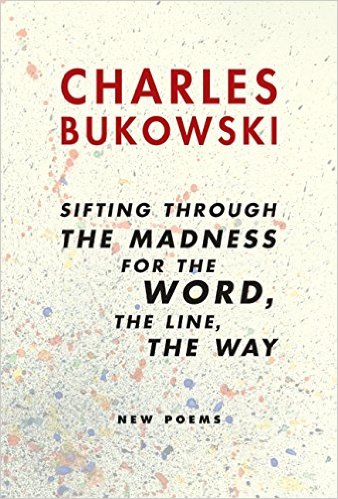
The Friday Poem ‘so you want to be a writer?’ by Charles Bukowski

The Friday Poem selection this week asks a question about career choice. Poet Charles Bukowski is advising the aspiring writer, but his message is universal. Just substitute your dream job and recognize the parallels. “…if you’re doing it for money or fame, don’t do it.”

so you want to be a writer?

if it doesn’t come bursting out of you
in spite of everything,
don’t do it.
unless it comes unasked out of your
heart and your mind and your mouth
and your gut,
don’t do it.
if you have to sit for hours
staring at your computer screen
or hunched over your
typewriter
searching for words,
don’t do it.
if you’re doing it for money or
fame,
don’t do it.
if you’re doing it because you want
women in your bed,
don’t do it.
if you have to sit there and
rewrite it again and again,
don’t do it.
if it’s hard work just thinking about doing it,
don’t do it.
if you’re trying to write like somebody
else,
forget about it.

if you have to wait for it to roar out of
you,
then wait patiently.
if it never does roar out of you,
do something else.

if you first have to read it to your wife
or your girlfriend or your boyfriend
or your parents or to anybody at all,
you’re not ready.

don’t be like so many writers,
don’t be like so many thousands of
people who call themselves writers,
don’t be dull and boring and
pretentious, don’t be consumed with self-
love.
the libraries of the world have
yawned themselves to
sleep
over your kind.
don’t add to that.
don’t do it.
unless it comes out of
your soul like a rocket,
unless being still would
drive you to madness or
suicide or murder,
don’t do it.
unless the sun inside you is
burning your gut,
don’t do it.

when it is truly time,
and if you have been chosen,
it will do it by
itself and it will keep on doing it
until you die or it dies in you.

there is no other way.

and there never was.

Charles Bukowski  published posthumously 2003

The week@work – Tonys, LinkedIn, Microsoft, ‘Brexit’, Orlando, and how to make a good teacher

This week@work the amazing Broadway production of Hamilton took home eleven Tony awards, Microsoft absorbed LinkedIn, young workers in Great Britain contemplated life after ‘Brexit’, journalist Anderson Cooper reported from Orlando, and we learned teaching can be taught.

Rolling Stone Magazine reporters Amy Plitt and Phoebe Reilly tallied the ’20 Best, Worst and WTF Moments at 2016 Tony Awards’.

“On a night that was marked by tragedy — and occurring mere hours after news broke of the deadly mass shooting in Orlando, Florida — the Tonys provided a much-needed bit of levity. The performers and honorees didn’t shy away from speaking about the shocking events of the day, but the overall mood was one of celebration. Part of the credit goes to the master of ceremonies James Corden, best known as the goofy host CBS’s Late Late Show, yet still a dorky theater kid at heart; his charming, cheerful persona brought an upbeat mood to the proceedings. And the Hamilton effect — and the fact that it was just a strong year for Broadway in general, with plenty of wonderful productions to celebrate — surely had something to do with it as well.”

2016 Tony Awards 16-06-112 Photo: Anita & Steve Shevett

One of the best moments was James Cordon’s resume review of Tony nominated actors and their appearances on Law and Order.

“If you’ve ever thumbed through a Playbill wondering “Where have I seen that actor before?!?,” the answer is usually: Law & Order. Corden made very rewarding use of this New York actor résumé mainstay last night when he called on Claire Danes for her memorable portrayal of … L&O’s Tracy Brandt. The joke only got better as Corden showed footage of Hamilton’s Daveed Diggs and Leslie Odom Jr. (who were in the same episode!) and poor Danny Burstein — the Fiddler on the Roof star played six different roles on the series, and each time Corden flashed the photo of another character, the audience (and Burstein) laughed harder. Apparently, there is absolutely no continuity on Law & Order.”

And now you know.

The breaking business story on Monday was news of the Microsoft/LinkedIn acquisition. The New Yorker’s Nicholas Lemann examined ‘LinkedIn’s Complicated Bet on the Future of Work’.

MS-Linkedin-2016-06-12-1-c.jpg

“LinkedIn, the business-oriented social-networking company that Microsoft acquired, this week, for $26.2 billion, was founded on two premises. The first was that, even in the winner-take-all world of Internet businesses, there would still be room for a niche company (meaning, in this case, only four hundred million registered users, and a hundred million users per month). The second was that what it means to work in a business is now profoundly different from what it was in the Organization Man era. White-collar employees are highly unlikely to spend a lifetime with a single employer, and more and more are not employees at all in the traditional sense. They self-manage their careers, in part by maintaining online personal networks, rather than have them managed by a corporate human-relations department.”

Now LinkedIn will function as part of a Fortune 50 corporate structure and employees will move from an entrepreneurial culture/ stock option pay structure to an “alternative universe, where, by tech-company standards, employees stay an unusually long time—the average tenure at Microsoft is five years, versus two years at Google, according to data from the consulting firm PayScale—and are unlikely to get rich from their stock options zooming up in value, as was the case for Microsoft employees back in the twentieth century. They are going to be their world’s equivalent of corporate lifers, with generous salaries and benefits and some measure of job security, while working to promote the continued growth of a very different kind of work arrangement elsewhere in the economy.

The technology world seems to be creating a small number of extremely successful people, a larger number of well-treated corporate employees, and an even larger number of people who wish they could be employees.”

And then there are the rest of us who now face the prospect of LinkedIn ads invading our quiet space as we commit great thoughts to Word and fill in Excel spreadsheets.

Randall Stross shared his opinion, ‘Why LinkedIn Will Make You Hate Microsoft Word’.

“My version of Word, a relatively recent one, is not that different from the original, born in software’s Pleistocene epoch. It isn’t networked to my friends, family and professional contacts, and that’s the point. Writing on Word may be the only time I spend on my computer in which I can keep the endless distractions in the networked world out of sight.

Matthew G. Kirschenbaum, an associate professor of English at the University of Maryland and author of “Track Changes: A Literary History of Word Processing,” said the move reflected a failure to understand what writers need. “Most of the most innovative writing tools now on the market position themselves precisely as distraction-free platforms,” he said.

What Mr. Nadella fails to see is how extending LinkedIn’s “social fabric” to Word will kill the magic, not speed it up.”

On Thursday, voters in Great Britain will choose to leave or remain in the European Union. Kimiko De Freitas-Tamura reported ‘Brexit’ Vote Worries European Up-and-Comers Lured to Britain’.

europe_2114838b-small_trans++qVzuuqpFlyLIwiB6NTmJwZwVSIA7rSIkPn18jgFKEo0.jpg

“For years, Britain’s relatively vibrant economy has attracted a steady flow of young people fleeing a lack of opportunity in their home countries on the Continent. London in particular is full of young Europeans, who have helped give the city its dynamic, global feel. From entrepreneurs, bankers and fashion designers to artists, waiters and students, all are free to resettle in Britain and make their futures here without so much as a visa.

No one knows for sure what would happen to them if Britain voted to leave the European Union — their immigration status would have to be worked out in the negotiations that would follow — but the debate itself has left some of the young people feeling fearful, frustrated and even angry.

Journalist Anderson Cooper covered the mass shootings in Orlando this week, demonstrating empathy for the victims and tenacity in interviews with politicians. Michael M. Grynbaum profiled the CNN anchor for The New York Times.

Unknown.jpeg

“Anderson Cooper was reading the names of victims of the Orlando massacre on CNN this week when, uncharacteristically, his voice wavered and he drew up short. For moments, viewers around the country heard only silence, and then the sounds of the anchor struggling to compose himself.

As the news industry descended on Florida this week in the aftermath of a mass shooting in a gay nightclub, Mr. Cooper’s raw, activist-style coverage has stood out. He has held a prime-time vigil of sorts, reciting a list of the dead; refused to name the gunman, saying he wanted to focus on victims; and, in a widely viewed exchange, grilled Florida’s attorney general for defending a state ban on same-sex marriage.”

It was a very tough week@work. Colleagues celebrating their day off late Saturday into Sunday morning were viciously murdered in a gay nightclub in Orlando, and on Thursday, Member of Parliament Jo Cox was murdered as she went to work to meet with her constituents in West Yorkshire.

The last story, from The Economist, ‘How to Make a Good Teacher’.

20160611_LDD001_0.jpg

“Big changes are needed in schools, too, to ensure that teachers improve throughout their careers. Instructors in the best ones hone their craft through observation and coaching. They accept critical feedback—which their unions should not resist, but welcome as only proper for people doing such an important job. The best head teachers hold novices’ hands by, say, giving them high-quality lesson plans and arranging for more experienced teachers to cover for them when they need time for further study and practice.

Money is less important than you might think. Teachers in top-of-the-class Finland, for example, earn about the OECD average. But ensuring that the best stay in the classroom will probably, in most places, mean paying more. People who thrive in front of pupils should not have to become managers to earn a pay rise. And more flexibility on salaries would make it easier to attract the best teachers to the worst schools.

Improving the quality of the average teacher would raise the profession’s prestige, setting up a virtuous cycle in which more talented graduates clamoured to join it. But the biggest gains will come from preparing new teachers better, and upgrading the ones already in classrooms.”

Here’s what I think. Improving the quality of teachers will improve the quality of content taught. It will ensure a ‘safe space’ to openly discuss the issues facing our neighborhoods, counties, countries and continents. Good teachers remove the blinders of hate and discrimination. A courageous teacher at the front of the classroom cautions the young against the errors of the past, and is the best antidote to history repeating itself.

A good teacher reminds us that we are all teachers.

paris


The Friday Poem ‘A sonnet’ by Lin-Manuel Miranda

At a moment of career recognition, ‘Hamilton’ creator, Lin Manuel-Miranda shared a sonnet for his wife and the world about family, tragedy and love. At it’s center was his response to the terrorist, hate crime in Orlando.

The New York Times Sunday Styles reporter, Katie Rosman, shared the ‘back story’ of the sonnet from creation to delivery on the Beacon Theater stage Sunday evening.

“…as the first grim reports out of Orlando, Fla., were circulating, Mr. Miranda took out his phone and began to tap out the sonnet he would read aloud that night while accepting the Tony for best score. In 14 lines he paid tribute to his wife, his son and the victims of the massacre.

Back at the Mandarin Oriental before curtain time, he realized he would need a printout of the verse he had written. He called the suite where his father was staying and asked him if he wouldn’t mind taking care of it. Luis, 61, said yes, and traveled down a flight, where his son handed him a thumb drive. Lin-Manuel had one stipulation: “He said, ‘Can you please not read it?’”

He went down the elevator, thumb drive in hand, toward the concierge desk. There, employees of the Mandarin Oriental sprang into action.

Back in the elevator, with the printout, the father did the very thing his son had asked him not to do: He read the sonnet.

“That’s like asking me not to drink water when it’s 90 degrees out,” Luis said. “I thought it was very moving and pretty and important for the moment.”

Back in the suite, Luis listened as Lin-Manuel read it aloud, practicing for the big moment.”

Yesterday Mr. Miranda announced a fundraising effort, for Equality Florida. Revenue will be generated by the sale of a T shirt with words from the sonnet. “Here’s a thing that speaks for itself. I’m very excited about it and it’s a way you can help.” 

x2837DC2CA-99AA-9001-BE24B99096BFFE8E.jpg.pagespeed.ic.v2WAbmnIPw.jpg

The sonnet has been published in a variety of outlets since the awards ceremony. After the horror of this past week, there was no other choice for The Friday Poem.

My wife’s the reason anything gets done
She nudges me towards promise by degrees
She is a perfect symphony of one
Our son is her most beautiful reprise
We chase the melodies that seem to find us until they’re finished songs and start to play
When senseless acts of tragedy remind us that nothing here is promised, not one day
The show is proof that history remembers
We live through times when hate and fear seem stronger
We rise and fall and light from dying embers
Remembrances that hope and love last longer
And love is love is love is love is love is love is love is love
Cannot be killed or swept aside
I sing Vanessa’s symphony
Eliza tells her story
Now fill the world with music, love, and pride

Lin Manuel-Miranda   June 12, 2016


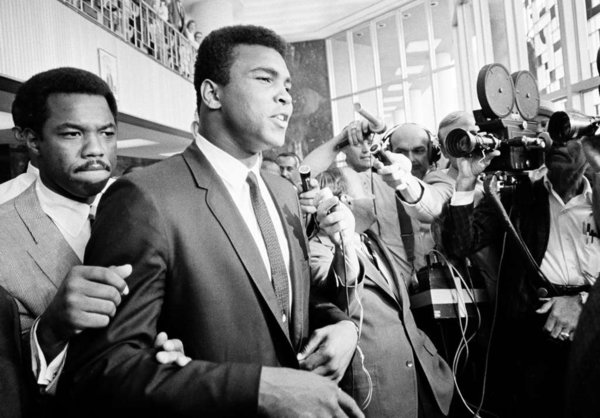
The Friday Poem @ the intersection of Maya Angelou, Hillary Clinton and Muhammad Ali

Maya, Muhammad and Hillary. Not three names you would intuitively link together, but that’s what history claimed this week, as a ‘political poet’ passed, and a deceased poet’s 2008 words echoed in the background of a rally at the Brooklyn Navy Yard.

The news of the death of Muhammad Ali literally stopped the presses at the New York Times early Saturday morning. On Wednesday, newspapers across the country led with the history making headline reporting “Hillary Clinton‘s nomination: A win 96 years in the making”.

It will not be an easy road to November for Secretary Clinton as reported by Patrick Healy and Sheryl Gay Stolberg.

“When Hillary Clinton swept onto the stage at her victory rally Tuesday night, the thunderbolt of history struck many Americans, no matter their love or loathing for her: A woman could be the next president of the United States.

But like so much about Mrs. Clinton, her speech, which lit up televisions and smartphones and social media all day Wednesday, produced conflicting emotions.

For some, it was an inspiring moment that brought home in a visceral way that Mrs. Clinton is the first woman to become the presumptive nominee of a major party. For others, there were chills and discomfort that this next step forward in our national story was unfolding with this particular woman.”

IMG_4810.jpg

The candidate might take heart from the poem Maya Angelou submitted to The Observer in 2008, with the backstory told by Vanessa Thorpe for The Guardian.

“She is supporting Clinton despite her close friendship with television personality and philanthropist Oprah Winfrey, a prominent backer of rival Democrat Barack Obama, the first black presidential hopeful with a real chance of reaching the White House.

Angelou is steadfast in her loyalty to Clinton. She said recently: ‘I made up my mind 15 years ago that if she ever ran for office I’d be on her wagon. My only difficulty with Senator Obama is that I believe in going out with who I went in with.’

Andrew Motion, the Poet Laureate, said of the poem: ‘This is a great thing for The Observer to have.’ He favourably compared it with the ‘vivid flourishes’ of Angelou’s recent work. ‘With this kind of poem Angelou has decided to interpret public writing as a verbal equivalent of making a poster, and there’s nothing wrong with this. The rhetoric is full of big gestures that make a direct appeal to our feelings, rather than getting to it by the little winding ways more personal poetry might use.'”

The poem:

State Package for Hillary Clinton

You may write me down in history

With your bitter, twisted lies,

You may tread me in the very dirt

But still, like dust, I’ll rise.

This is not the first time you have seen Hillary Clinton seemingly at her wits’ end, but she has always risen, always risen, don’t forget she has always risen, much to the dismay of her adversaries and the delight of her friends.

Hillary Clinton will not give up on you and all she asks of you is that you do not give up on her.

There is a world of difference between being a woman and being an old female. If you’re born a girl, grow up, and live long enough, you can become an old female. But to become a woman is a serious matter. A woman takes responsibility for the time she takes up and the space she occupies. Hillary Clinton is a woman. She has been there and done that and has still risen. She is in this race for the long haul. She intends to make a difference in our country. Hillary Clinton intends to help our country to be what it can become.

She declares she wants to see more smiles in the family, more courtesies between men and women, more honesty in the marketplace. She is the prayer of every woman and man who longs for fair play, healthy families, good schools, and a balanced economy.

She means to rise.

Don’t give up on Hillary. In fact, if you help her to rise, you will rise with her and help her make this country the wonderful, wonderful place where every man and every woman can live freely without sanctimonious piety and without crippling fear.

Rise, Hillary.

Rise.

Maya Angelou, 2008

20131006_dn_0mu24lap.jpg

On Thursday, Henry Louis Gates Jr. recalled ‘Muhammad Ali, the Political Poet’. In the essay he linked Angelou and Ali by their poetry, often labeled ‘doggerel’.

“Perhaps Maya Angelou, whose own poetry is sometimes labeled doggerel, said it best: “It wasn’t only what he said and it wasn’t only how he said it; it was both of those things, and maybe there was a third thing in it, the spirit of Muhammad Ali, saying his poesies — ‘Float like a butterfly, sting like a bee.’ I mean, as a poet, I like that! If he hadn’t put his name on it, I might have chosen to use that!”

“It would be a mistake to say that Ali made black oral poetry more sophisticated or complex, but he did make it more political. After learning his local draft board had declared him eligible for induction into the Army in 1966, Ali recited this poem:

Keep asking me, no matter how long,
On the war in Vietnam,
I sing this song:
I ain’t got no quarrel with no Viet Cong.

On this Friday, we pause to remember the athlete, humanitarian and role model who was Muhammad Ali, we celebrate a milestone for women, and reflect on the words of two American poets who significantly influenced our culture.


Should I accept an offer with an organization embroiled in controversy?

Imagine a scenario where you are nearing the end of the candidate selection process for your dream job, and news breaks that the organization is under federal investigation. What do you do?

A post on the Fast Company website last week, ‘How To Hire When Your Company Is Embroiled in Controversy’, summarized expert advice to organizations who continue to recruit new employees while managing a crisis.

Veteran recruiter, Dave Carvahal was quoted in the piece, offering recruitment advice – “Be honest about where you actually are, the problems that exist, and the media attention amplification,” he says. Recruiting is about human relationships, Carvajal explains, pointing out that hiring managers shouldn’t be afraid to be vulnerable. “Emotions can be powerful allies in lifting our common humanity,” says Carvajal. “They build trust.”

Reality check – organizations who are being investigated by the Feds, or who are facing bankruptcy inducing lawsuits are probably not the most forthcoming with the truth. You cannot ‘spin’ fraud.

Recruiting is about relationships, ethical relationships. Working for a company in crisis may be a platform for a ‘budding’ leader to achieve visibility, but it’s no place to embark on a new career.

Reading the story was a ‘deja vu’ moment for me, reminiscent of 2002.

In January 2002, Arthur Andersen, then one of the ‘big five’ accounting firms found itself being investigated because of irregularities in its relationship with Enron. As congress grilled company executives, corporate recruiters continued to aggressively woo potential hires to accept offers. Candidates who had been initially attracted to the values of the organization began to question their decision. For most, the recruiting season was over. They had committed to Andersen and declined alternate offers.

Three months later, in April of 2002, Arthur Andersen laid off 7,000 employees. Soon after they began to recind offers to new employees. The folks who had been actively recruiting on college campuses had been simultaneously updating their own resumes.

My advice then, and today, if you find your dream employer had transitioned into public nightmare, withdraw yourself from consideration. This is not negotiable. Whatever perception you had of a cultural ‘fit’ has been disrupted by negative publicity. Your reputation is your brand.

If there’s ever a time to let common sense be your guide, it’s when your career trajectory collides with ‘above the fold’ news. Mobilize your networking resources to assist as you recalibrate your strategy.

Once you have declined the offer, reconnect with the organizations that had previously demonstrated an interest in hiring you, and reestablish the relationship. Be candid about what has triggered your change of heart. If it’s in the news, your alternate employers will be well aware of your motivation.

Job search is about long term relationship management. From your first internship to retirement, maintaining and nurturing your professional contacts is a priority for long term success, and overcoming the challenges posed by the rare, ‘questionable’ employer.


The Saturday Read ‘A Whole Life’ by Robert Seethaler

Too often we seek advice and counsel from the plethora of self-help books that line the shelves of bookstores. What we miss are the life lessons divulged under the guise of fiction.

The Saturday Read this week takes us to the Austrian Alps in 1933 to observe ‘A Whole Life’, the best selling German novel by Robert Seethaler, translated by Charlotte Collins.

The story is Andreas Egger’s, an everyman’s narrative of life, work, tragedy and values. It’s short, the perfect read for a plane trip or a couple of days commute. In this case brevity doesn’t diminish the tale. The simple, beautiful language reveals a literary character that will stay with you long after the story ends.

Throughout the book, the author stores small gems of wisdom, life lessons. In one scene, Andreas approaches the general manager of a construction site to negotiate a raise. Upon reaching agreement on a salary increase, Andreas promises to work even harder. The manager replies:

“You can buy a man’s hours off him, you can steal his days from him, or you can rob him of his whole life, but no one can take away from any man so much as a single moment.”

After years in construction, and more years as a prisoner of war, Andreas returns to his village and eventually finds work as a hiking guide.

“Egger didn’t usually speak on his walks. ‘When someone opens their mouth they close their ears,’ Thomas Mattl had always said, and Egger was of the same opinion. Instead of talking, he preferred to listen to these people, whose breathless chatter revealed to him the secrets of other fates and opinions. People were evidently looking for something in the mountains that they believed they lost a long time ago. He never worked out what exactly this was, but over the years he became more and more certain that the tourists were stumbling not so much after him, but after some obscure, insatiable longing. 

In the closing pages, we observe Andreas in retirement, at the end of his ‘whole life’.

“Once a week he went down to the village to get matches and paint, or bread, onions, butter. He had realized long ago that people there speculated about him. When he set off for home…he would see them out of the corner of his eye, putting their heads together and starting to whisper behind his back. Then he would turn around and give them the blackest look of which he was capable. Yet in truth he didn’t much care about the villager’s opinions or their outrage. To them he was just an old man who lived in a dugout, talked to himself, and crouched in a mountain stream to wash every morning. As far as he was concerned, though, he had done all right, and thus had every reason to be content… In his life he too, like all people had harboured ideas and dreams. Some he had fulfilled for himself; some had been granted to him. Many things had remained out of reach, or barely had he reached them than they were torn from his hands again. But he was still here. And in the mornings after the first snowmelt, when he walked across the dew-soaked meadow outside his hut and lay down on one of the flat rocks scattered there, the cool stone on his back and the first warm rays of sun on his face, he felt that many things had not gone so badly after all.”

Reviewers have noted the book’s unique appeal as an understated novel in a publishing world sustained by hype and celebrity. Eileen Battersby concluded her analysis for the Irish Times with “No praise is too high for A Whole Life. Its daunting beauty lingers. This is a profound, wise and humane novel that no reader will forget.”

I agree.

The book, published in 2015 and shortlisted for the 2016 Man Booker International Prize will be published in the U.S. in September.


The mysteries of networking #4 ‘missed opportunities’

Many of us consider networking a ‘dark art’ that requires a magical ‘insiders’ key to gain access to the influential. What we miss is the daily opportunity to connect, as we ride the bus, the train or stand in a long TSA line at the airport. Wisdom can present itself in all shapes and sizes if you open yourself to conversation.

This past week, consultant, Whitney Johnson shared a recent experience via a post on LinkedIn,  ‘An airline cancelled my flight and put me in a van. Along the way, I got lots of lessons on how *not* to network.’

After offering a fellow traveller, a member of the Class of 2016, a ride home after a diverted flight, she realized her passenger had no clue how to network.

“As I was giving him a lift home, I learned a lot about him: his name, where he grew up, where he goes to school, his major, what his parents do for a living, his own career aspirations when he graduates in a few months. We even discovered that we have an acquaintance in common. Meanwhile, I made a few mentions of my children, such as my 19 year-old son is living in Brazil, my husband teaches at a local university. Conversation starters.

I’ll confess I felt a little invisible—and exasperated. I find it easy to ask people about themselves. I genuinely enjoy doing it. It’s one of my strengths, and we’re often exasperated with people who aren’t likewise adept at the things that we do well.

But here’s the real take-away from this chance encounter: this young man is looking for a job when he graduates in a month… I could have potentially helped him, if he’d just shown a little of the moxie that would have motivated me to recommend him.”

This is not just about a ‘newbie’ to the job search process, it’s a story that recurs daily. Just walk through an airport departure area and observe the diversity of folks and contrast that with the homogeneity of technical disconnection. Each individual, existing in the ‘comfort cocoon’ of their temporary piece of real estate, happily texting colleagues and friends, totally ignorant of the ‘chance’ professional encounter in the adjoining seat.

There’s no magic in networking. The magic is in the conversation, perhaps leading to a relationship. All of us harbor ideas and dreams. What are they, if not shared?

This afternoon, seize the moment, and start a conversation with a stranger, or maybe the acquaintance you pass in the hall every day. Listen, share, and you may be on your way to mastering the ‘not so mysterious’ art of networking.

‘Decoration Day’ a poem by Henry Wadsworth Longfellow

Before we head out for the holiday weekend, let’s take a minute to pause and remember those who went to work @war with ‘Decoration Day’, a poem, written in 1882 by Henry Wadsworth Longfellow.

On May 30, 1868 five thousand people gathered at Arlington National Cemetery to commemorate the first ‘Decoration Day’. An Ohio congressman, who had served as a major general in the Civil War, James A. Garfield addressed the crowd.

“I am oppressed with a sense of the impropriety of uttering words on this occasion. If silence is ever golden, it must be here beside the graves of fifteen thousand men, whose lives were more significant than speech, and whose death was a poem, the music of which can never be sung. With words we make promises, plight faith, praise virtue. Promises may not be kept; plighted faith may be broken; and vaunted virtue be only the cunning mask of vice. We do not know one promise these men made, one pledge they gave, one word they spoke; but we do know they summed up and perfected, by one supreme act, the highest virtues of men and citizens. For love of country they accepted death, and thus resolved all doubts, and made immortal their patriotism and their virtue. For the noblest man that lives, there still remains a conflict. He must still withstand the assaults of time and fortune, must still be assailed with temptations, before which lofty natures have fallen; but with these the conflict ended, the victory was won, when death stamped on them the great seal of heroic character, and closed a record which years can never blot.”

The Memorial Day we celebrate in the U.S. this weekend had its origins in the years after the Civil War. It was customary to ‘decorate’ the graves of those who had died in defense of their country, and on May 5, 1868  General John Logan designated May 30 as ‘Decoration Day’ “because it wasn’t the anniversary of any particular battle”.

David Barber introduced Longfellow’s poem for the Atlantic in 2011.

“Longfellow’s “Decoration Day” may not rank among his canonic Atlantic verse, but it imparts a burnished poignancy all its own. In the solemn, hymn-like strains that were a hallmark of the country’s foremost “Fireside Poet,” the poem pays tribute to what was then a new form of civic observance: a day set aside to commemorate those who had perished in the Civil War by placing flags and flowers on soldiers’ graves, a custom that gradually gave rise to our modern Memorial Day honoring all who give their lives in military service. Its first readers likely felt an elegaic pang all the more acutely: by the time the poem circulated in the June 1882 Atlantic, it would have been national news that Longfellow had died just a few weeks earlier at his home in Cambridge, at the age of 75.”

Decoration Day

Sleep, comrades, sleep and rest
On this Field of the Grounded Arms,
Where foes no more molest,
Nor sentry’s shot alarms!

Ye have slept on the ground before,
And started to your feet
At the cannon’s sudden roar,
Or the drum’s redoubling beat.

But in this camp of Death
No sound your slumber breaks;
Here is no fevered breath,
No wound that bleeds and aches.

All is repose and peace,
Untrampled lies the sod;
The shouts of battle cease,
It is the Truce of God!

Rest, comrades, rest and sleep!
The thoughts of men shall be
As sentinels to keep
Your rest from danger free.

Your silent tents of green
We deck with fragrant flowers
Yours has the suffering been,
The memory shall be ours.

Henry Wadsworth Longfellow