The week@work – new overtime rules, sharing the wealth of the ‘gig economy’ and college grads’ skills gap

This week@work President Obama announced changes in labor rules that will extend overtime benefits to 4.2 million Americans, Massachusetts Senator Elizabeth Warren advocated for the rights of ‘gig economy’ workers and a new report indicates a continuing deficiency in recent grads’ communications skills.

Christine Mai-Duc reported on the revisions to overtime regulations that will go into effect on December 1.

“The proposed changes would more than double the salary threshold for overtime eligibility to $970 a week in 2016. That means employees earning a yearly salary of $50,440 or less automatically would be eligible for overtime pay.

Currently, the threshold is $455 a week, meaning a salaried worker making more than $23,660 a year does not automatically qualify for overtime pay under federal standards.

Labor Secretary Thomas Perez told reporters that too many managers are falling behind and getting caught in the “middle-class squeeze.”

Proponents of the change say the salary threshold, designed to exempt highly paid white-collar workers, hasn’t seen meaningful change for more than 40 years. In 1975, more than 60% of salaried workers were eligible for overtime. Today, less than 8% of full-time salaried workers are covered by those regulations, according to the White House Domestic Policy Council.

“In effect, we have seen inflation repeal the regulations that went into effect decades ago,” said Harley Shaiken, a labor economist and professor at UC Berkeley.”

The man at the head of the Department of Labor, Secretary Thomas Perez, shared his approach to worker advocacy in an interview with David Gelles for The New York Times.


“It’s a day job intended to help other people with day jobs. He wants companies to take better care of their employees, even if it costs them in the short term. It’s not a message many C.E.O.s want to hear, but Mr. Perez believes it is his duty to spread the word.

Mr. Perez’s courting of chief executives also stems from a recognition that his department alone can’t fix the problems bedeviling American workers. Thorny issues like wage stagnation, stingy vacation time, shoddy manufacturing and environmental degradation are so complex, so entrenched, that no one government agency can tackle them (not to mention the diminished influence of organized labor).

He is talking about “conscious capitalism” and “inclusive capitalism.” He is singling out “high road” employers. He is promoting B Corps, companies that adhere to lofty social and environmental standards. In doing so, he hopes he can persuade less enlightened corporations to change.

The employers who do best are employers who reject these false choices,” Mr. Perez said. “It’s not a zero-sum world where you either take care of your workers or you take care of your shareholders. You can do good and do well, too.

We’re building a movement,” he said. “It’s undeniably a work in progress, but there’s a fundamental desire to see capitalism to do something different.”

On Thursday, Senator Elizabeth Warren addressed the annual conference of Washington D.C. think tank, New America. Her remarks, ‘Strengthening the Basic Bargain for Workers in the Modern Economy’, detailed the reality of the changing workplace and proposed steps to create an income safety net and ensure portability of benefits for all workers.
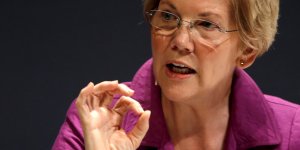
Warren takes part in the Washington Ideas Forum in Washington

“The problems facing gig workers are much like the problems facing millions of other workers. An outdated employee benefits model makes it all but impossible for temporary workers, contract workers, part-time workers and workers in industries like retail or construction who switch jobs frequently to build any economic security.

Just as this country did a hundred years ago, it’s time to rethink the basic bargain between workers and companies. As greater wealth is generated by new technology, how can we ensure that the workers who support this economy can share in that wealth?

I believe we start with one simple principle: all workers–no matter when they work, where they work, who they work for, whether they pick tomatoes or build rocket ships–all workers should have some basic protections and be able to build some economic security for themselves and their families. No worker should fall through the cracks.”

Lydia Dishman summarized a report released last week by compensations specialists, Payscale, citing a ‘skills gap’ between managers and employers. And, wait for it…there’s a generational twist.

IMGP1317.jpg

Some of the skills hiring managers find lacking or absent are unexpected. Critical thinking, problem solving, attention to detail, and writing proficiency top the list of skills managers find missing from job seekers’ personal tool kits. On the flip side, managers didn’t find graduates wanting for know-how in search engine optimization marketing, foreign languages, and coding.

Overall, hiring managers found soft skills such as communication, leadership, ownership, and teamwork were missing in this new crop of workers.

“Graduates need strong communication and problem-solving skills if they want to interview well and succeed in the workplace, because effective writing, speaking, and critical thinking enables you to accomplish business goals and get ahead,” Dan Schawbel, research director at Future Workplace, said in a statement. “No working day will be complete without writing an email or tackling a new challenge, so the sooner you develop these skills, the more employable you will become,” Schawbel adds.

It’s important to note here that age matters in this report. Fifty-five percent of managers who are millennials themselves believed graduates are prepared to enter the workforce versus 47% of gen Xers and 48% of boomers.”
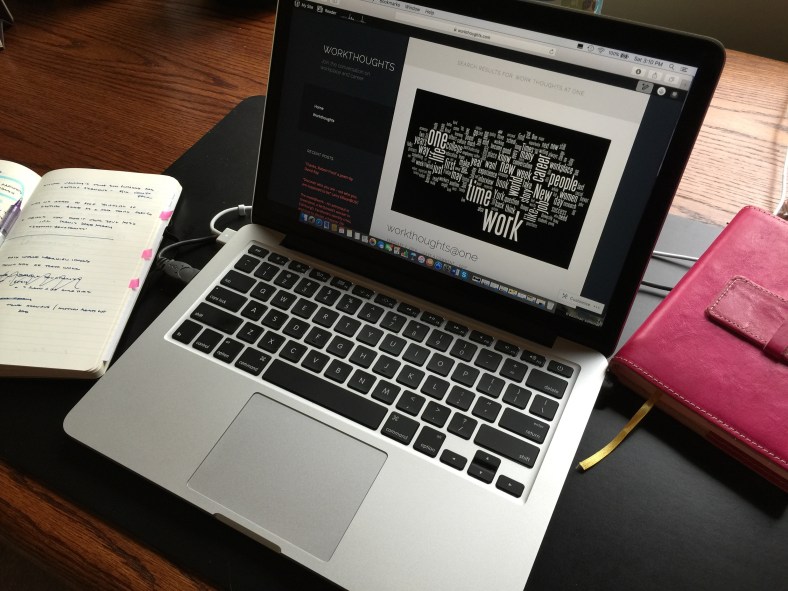
The Saturday Read – Four blogs/newsletters you should be reading

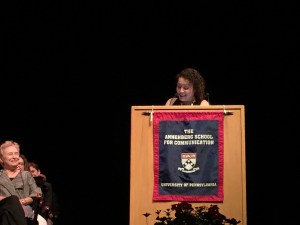
Before I started writing ‘Workthoughts’, I was reading other blogs. Maria Popova, author of my favorite, ‘Brainpickings’, was the 2016 commencement speaker at her alma mater, the University of Pennsylvania’s Annenberg School for Communication. She challenged the graduates to act as cultural change agents by continually broadening their horizons beyond a specific discipline.

“Today, the soul is in dire need of stewardship and protection from cynicism. The best defense against it is vigorous, intelligent, sincere hope — not blind optimism, because that too is a form of resignation, to believe that everything will work out just fine and we need not apply ourselves. I mean hope bolstered by critical thinking that is clear-headed in identifying what is lacking, in ourselves or the world, but then envisions ways to create it and endeavors to do that.

Whatever your specific vocation, your role as a creator of culture will be to help people discern what matters in the world and why by steering them away from the meaningless and toward the meaningful.”

annenberg_commencement-1

How do you maintain the discipline of the undergraduate learning experience and diversify your thinking?

In the past, traditional routes to post-graduate learning involved graduate and professional school. In rare cases, employers took on the role of educators, supplementing work with professional development options. Today, educational entrepreneurs are disrupting traditional education, offering countless ways to access knowledge online.

One of the most engaging options is to join folks who are exploring life’s mysteries and sharing their discoveries through blogs and newsletters.

For this week’s Saturday Read, I recommend four blogs/newsletters from contemporary ‘curators of culture’ that you should be reading to improve you critical thinking and supplement your journey of lifelong learning.

Brainpickings

Bruce Feiler, writing in The New York Times, described this blog as “the exploding online emporium of ideas”.

“She’s a celebrator,” said Anne-Marie Slaughter, a Princeton professor and former State Department official. “You feel the tremendous amount of pleasure she takes in finding these things and sharing them. It’s like walking into the Museum of Modern Art and having somebody give you a customized, guided tour.”

Since 2006, Maria Popova has been sharing her cross disciplinary expeditions with a growing audience of readers.

“Brain Pickings — which remains ad-free and supported by readers — is a cross-disciplinary LEGO treasure chest, full of pieces spanning art, science, psychology, design, philosophy, history, politics, anthropology, and more; pieces that enrich our mental pool of resources and empower combinatorial ideas that are stronger, smarter, richer, deeper and more impactful. Above all, it’s about how these different disciplines illuminate one another to glean some insight, directly or indirectly, into that grand question of how to live, and how to live well.”

The next selection comes from the mind of writer and ‘philosopher of everyday life’, Alain de Botton. If you read Brainpickings or Workthoughts, the name should be familiar. The founder of London’s School of Life, publishes a weekly newsletter, ‘The Book of Life’.


The Book of Life 

“It’s called The Book of Life because it’s about the most substantial things in your life: your relationships, your income, your career, your anxieties. There’s always been a longing to gather the important things in one place. Some of the appeal of a Bible or the collected works of a big name author is the sense that amidst all the chaos and disparate sources of knowledge, someone has taken the trouble to distill, to compress, to say what is essential. In a world overflowing with information, what we most need is curation. The Book of Life aims to be the curation of the best and most helpful ideas in the area of emotional life.”

For those of you technology and engineering gurus who feel a bit insecure when a client conversation turns literary, subscribe to the ‘Lit Hub Daily’.


Lit Hub

“Started last year, Lit Hub’s goal is to provide a “go-to daily source for all the news, ideas, and richness of contemporary literary life,” with curated and original content such as interviews, profiles and essays.”

“Literary Hub is an organizing principle in the service of literary culture, a single, trusted, daily source for all the news, ideas and richness of contemporary literary life. There is more great literary content online than ever before, but it is scattered, easily lost—with the help of its editorial partners, Lit Hub is a site readers can rely on for smart, engaged, entertaining writing about all things books.”

The latest newsletter I have added to my daily/weekly routine comes from writer Austin Kleon. His Friday newsletter is an eclectic collection of music, art, design and life. To give you a sample, this week’s edition included George Carlin’s Playboy interview, an HBO documentary on Studs Terkel and the Everything is a Remix series.

What makes Austin’s blog unique is the doodles; his visual interpretation of information.

kleon-200pxx1.jpg

Austin Kleon 

“I’m a writer who draws. I make art with words and books with pictures. Every week I send out a list of 10 things I think are worth sharing — new art, writing, and interesting links straight to your inbox.”

These four blogs/newsletters provide a customized curriculum of research and shared wisdom, delivered by a faculty of four non-traditional experts. Take a look, you may find one or more will fit with your individualized lifelong learning plan.


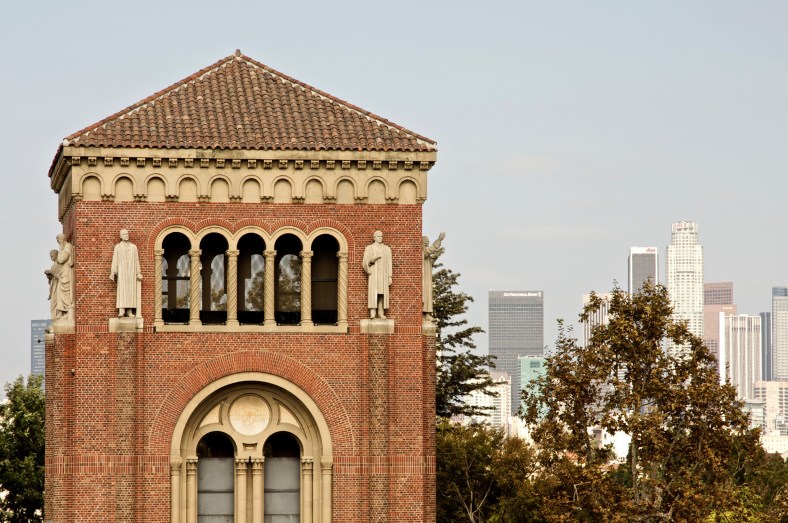
“Discover who you are – not who you are supposed to be” Larry Ellison@USC

In all the meetings I have had with folks about career choice, the number one topic, by a landslide, is how to manage the expectations of others: family members, mentors, friends and colleagues.

“My parents want me to major in ‘x’, and apply to ‘y’, but my passion is in ‘z’. How do I get them to understand my decision?”

On Friday, at the University of Southern California, Larry Ellison drew on his personal experience to address the topic. I hope the parents were listening. I guarantee members of the Class of 2016 were texting quotes.

He began where most career conversations start. Recalling his early aspirations to attend USC Medical School, he began to realize that his family’s conviction that he become a doctor was not his own. “Their dreams became my dreams.”

And it wasn’t long before he “became painfully aware that he couldn’t make himself study something that didn’t interest me.”

The power of parental/family influence on career choice can provide either a scaffolding of support or a detour of unending disappointments.

Here’s the thing, the next great innovation is yet to be discovered. The next emerging market is yet to be identified. Categories of new job titles are yet to be defined.

So we fall back on what we know, and what society values as acceptable professions.

In Ellison’s narrative, he dropped out of college and took on a “a couple of jobs I loved and one that was fun”: river guide, rock climbing instructor and computer programmer. It was in the world of technology that he found the link to the same kind of satisfaction he had found solving math problems and playing chess.

But as he incrementally travelled toward his dream job, he found he was unable to live up to the expectations of others.

At the urging of his wife, he returned to college, to pursue his degree. The only course he remembered was a sailing class at Berkeley. The beginning of his love affair with the Pacific Ocean marked the end of the one with his wife, who viewed him as irresponsible, and lacking in ambition. “She kicked me out, and then she divorced me.”

“This was a pivotal moment in my life… Once again, I was unable to live up to the expectations of others.

But this time I was not disappointed in myself for failing to be the person they thought I should be. Their dreams and my dreams were different. I would never confuse the two of them again.

I had discovered things that I loved: the Sierras, Yosemite, the Pacific Ocean. These natural wonders brought me great joy and happiness, and would for the rest of my life. I had an interesting job programming computers and more money than I needed.

For the first time I was certain I was going to survive in this world.

A huge burden of fear had been lifted. I’ll never forget that moment. It was a time for rejoicing.”

Ellison’s career path accelerated along the trajectory of Silicon Valley’s early days, as he tried to find a job he loved as much as sailing. He founded Oracle Corporation, built on his ‘crazy idea’ of constructing a commercialized relational database, and the rest is history.

I spent thirteen years on the USC campus, working with students and alumni as they wrestled with career decisions and connected the mosaic of past experience into a plan for the future. There is no better advice for folks@work or those just starting out than the shared wisdom of Mr. Ellison.

“Each of you has a chance to discover who you are and not who you are supposed to be.

Don’t be afraid to experiment, and try lots of different things. And don’t let the experts discourage you when you challenge the status quo.”

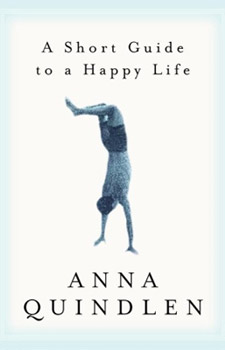
The Saturday Read ‘A Short Guide to a Happy Life’ by Anna Quindlen

Do you remember who spoke at your graduation ceremony? The Saturday Read this week is for all of you who forgot, but would welcome a bit of ‘life advice’ in this season of ‘Pomp and Circumstance’.

In 1999, author Anna Quindlen was invited to deliver the commencement address at Villanova University. And then this happened:

“Pulitzer Prize-winning columnist and author Anna Quindlen has withdrawn as the commencement speaker at Villanova University this Sunday because of what she said were objections by a “vocal minority” to her support of abortion rights.

Quindlen, who was also to have received an honorary doctorate of humane letters, said in an interview yesterday that she did not want to “ruin the day or cast a shadow” on the graduation ceremony.”

A graduate student requested a copy of the prepared text and posted it on the Internet. (This was before Facebook, Twitter et al.) The post went viral, and the resulting essay was published in 2000 as ‘A Short Guide to a Happy Life’.

Seventeen years later her words still resonate. In the opening paragraphs she signals her values, and offers a hint at why she withdrew.

“My work is human nature. Real life is really all I know…Don’t ever confuse the two, your life and your work…The second is only part of the first.”

Real life collided with an opportunity to address Villanova’s Class of 1999, the alma mater of several of her family members. Fortunately her publisher provided an avenue for Ms. Quindlen to share her personal life experience with a broader audience, to encourage ownership and balance.

“When you leave college, there are thousands of people out there with the same degree you have; when you get a job, there will be thousands of people doing what you want to do for a living.”

“But you are the only person alive who has sole custody of your life. Your particular life. Your entire life. Not just the life at your desk, or your life on the bus, or in the car, or at the computer. Not just the life of your mind, but the life of your heart. Not just your bank account, but your soul.”

“People don’t talk about the soul very much anymore. It’s so much easier to write a resume than to craft a spirit.”

Some may disagree that a resume is easy to write, especially a recent grad who has spent the past months engaged in the job search. A resume is limited to a list of accomplishments, full of key words designed to cut through the barrier of digital applicant screening. It’s the values expressed in that experience that define who you are, your spirit.

The recurring theme of ‘Short Guide’ challenges the reader to question commonly held definitions of success.

“You cannot be really first-rate at your work if your work is all you are.”

“So I suppose the best piece of advice I could give anyone is pretty simple: get a life. A real life, not a manic pursuit of the next promotion, the bigger paycheck, the larger house.”

“Get a life in which you are not alone. Find people you love, and who love you. And remember that love is not leisure, it is work.”

‘A Short Guide to a Happy Life’ is a compact book to be kept close for a periodic reread. It’s a reminder to all, at every career stage, that “Life is made up of moments, small pieces of glittering mica in a long stretch of gray cement.”

One of those moments is revealed in the recollection of a conversation with a homeless man on the boardwalk in Coney Island, New York.

“And he stared out at the ocean and said, “Look at the view, young lady. Look at the view.”

Commencement is the beginning of a life of learning, sometimes from the most unexpected of teachers. Enjoy the Saturday Read, and don’t forget to enjoy the view.


On the road again…

I will be crossing the U.S. by car from west to east this week. Follow on Twitter @EileenKohan or @workthoughts. In the interim, some thoughts from Tim Kreider, ‘The Busy Trap’.

“If you live in America in the 21st century you’ve probably had to listen to a lot of people tell you how busy they are…They’re busy because of their own ambition or drive or anxiety, because they’re addicted to busyness and dread what they might have to face in its absence…

But I would suggest that an ideal human life lies somewhere between my own defiant indolence and the rest of the world’s frenetic hustle. My role is just to be a bad influence, the kid standing outside the classroom window making faces at you at your desk, urging you to just this once make some excuse and get out of there, come outside and play… I did make a conscious decision, a long time ago, to choose time over money, since I’ve always understood that the best investment of my limited time on earth was to spend it with people I love… Life is too short to be busy.”

The Saturday Read from the 2016 winners of the Pulitzer Prize

Four writers and journalists, whose work was featured in this blog, were among the winners of the Pulitzer Prize announced on Monday. Today, for the ‘Saturday Read’ we revisit the writings of William Finnegan, Kathryn Schulz, Emily Nussbaum and Lin-Manuel Miranda.

Three journalists call The New Yorker home. On Monday, it became the first magazine to be honored with the Pulitzer Prize. Emily Nussbaum and Kathryn Schulz earned Pulitzers in criticism and feature writing respectively, and William Finnegan received the prize for biography.

CgXH66tUEAAYowv.jpg

“Emily Nussbaum, who has won the 2016 Pulitzer Prize for Criticism, writes essays and reported pieces about television that are fearless, hilarious, and pioneering. Among the pieces submitted to the Pulitzer committee were her standout essays on Joan Rivers, P. Jay Sidney, advertising, and “Mad Men.”

Unknown.jpeg

“Kathryn Schulz, who arrived at The New Yorker less than two years ago, has won the 2016 Pulitzer Prize for Feature Writing, for “The Really Big One,” her piece on the more than a little troubling geology of the Pacific Northwest. Her evocations of the earthquake in Japan in 2011 and of the earthquake that could occur in the states of Washington and Oregon stay with us much like works of the best fiction, to say nothing of horror films.”

The Saturday Read on December 12, 2015 included excerpts from this ‘long read’.

“Just north of the San Andreas, however, lies another fault line. Known as the Cascadia subduction zone, it runs for seven hundred miles off the coast of the Pacific Northwest, beginning near Cape Mendocino, California, continuing along Oregon and Washington, and terminating around Vancouver Island, Canada. The “Cascadia” part of its name comes from the Cascade Range, a chain of volcanic mountains that follow the same course a hundred or so miles inland. The “subduction zone” part refers to a region of the planet where one tectonic plate is sliding underneath (subducting) another. Tectonic plates are those slabs of mantle and crust that, in their epochs-long drift, rearrange the earth’s continents and oceans. Most of the time, their movement is slow, harmless, and all but undetectable. Occasionally, at the borders where they meet, it is not.”

IMG_4026.jpg

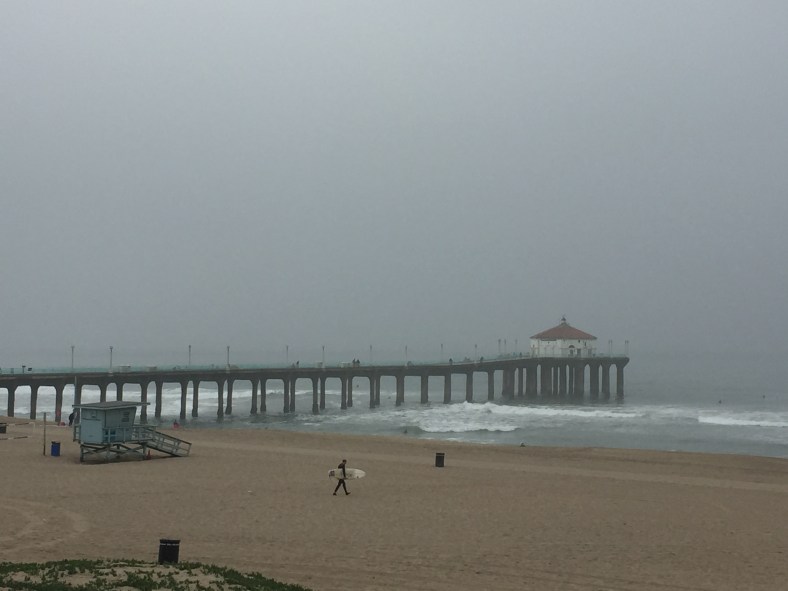
“William Finnegan, who has been a staff writer since 1987, has won the 2016 Pulitzer Prize for Biography, for his memoir about surfing, “Barbarian Days.” This project has been Finnegan’s literary obsession for a very long time. It began as a series in our pages more than two decades ago, and came to completion in June, with “Off Diamond Head,” an excerpt from the book, which was published not long after.”

The Saturday Read on August 1, 2015 recommended ‘Barbarian Days, A Surfing Life’.

“When you do a book reading in Manhattan Beach, California you need to use a microphone so the guys with ‘surfer’s ear’ in the back can understand you. Last night New Yorker journalist and lifetime surfer William Finnegan used a mic as he read from his well reviewed new book…

The Q&A at the reading was closer to a book club discussion than a publicity event. Most of those attending had either read the book or the excerpt in the June 1 issue of the New Yorker magazine. This is not just a book about surfing. Mr. Finnegan is a well regarded journalist with a resume that includes reporting from South Africa, Somalia, the Balkans, Central America and Australia. Robert Boynton included him in his conversations with America’s best nonfiction writers in ‘The New New Journalism’.”

IMG_2517

Lin-Manuel Miranda won the Pulitzer for drama, for ‘Hamilton’. “For a distinguished play by an American author, preferably original in its source and dealing with American life.”

“A landmark American musical about the gifted and self-destructive founding father whose story becomes both contemporary and irresistible.”

David Rooney reported on the prize for Billboard. “Miranda wrote the book, music and lyrics for the show, in addition to starring in the title role. The Pulitzer now further cements Hamilton’s status as the toughest ticket in town and the clear frontrunner to take the top musical kudos at this year’s Tony Awards in June.”

I have written about Miranda and Hamilton five times in the past year. My favorite is ‘The Power of Taking a Break & the Unexpected Inspiration of Reading’ on March 4, 2015.

“If Mr. Miranda had not been on vacation, taking time away from work, we may have been deprived of his creativity and ability to connect the dots as he developed his perspective for the play: “Miranda saw Hamilton’s relentlessness, brilliance, linguistic dexterity, and self-destructive stubbornness through his own idiosyncratic lens. It was, he thought, a hip-hop story, and immigrant’s story.”

Ms. Mead’s article tells the story of the evolution of Mr. Miranda’s career, the development of ‘Hamilton’, and the connections he has made along the way with mentors and creative partnerships.

Sometimes we think creativity belongs to the artist and we struggle to find opportunities to relate to our own workplace. But creativity is about imagination and storytelling our way to solving a problem. Taking time away allows for a different view. If we are open to the unexpected we can connect the dots and reframe the narrative. And, maybe be online Sunday to buy tickets and see how it’s done.”

The Saturday Read ‘Hamilton The Revolution’ by Lin-Manuel Miranda and Jeremy McCarter

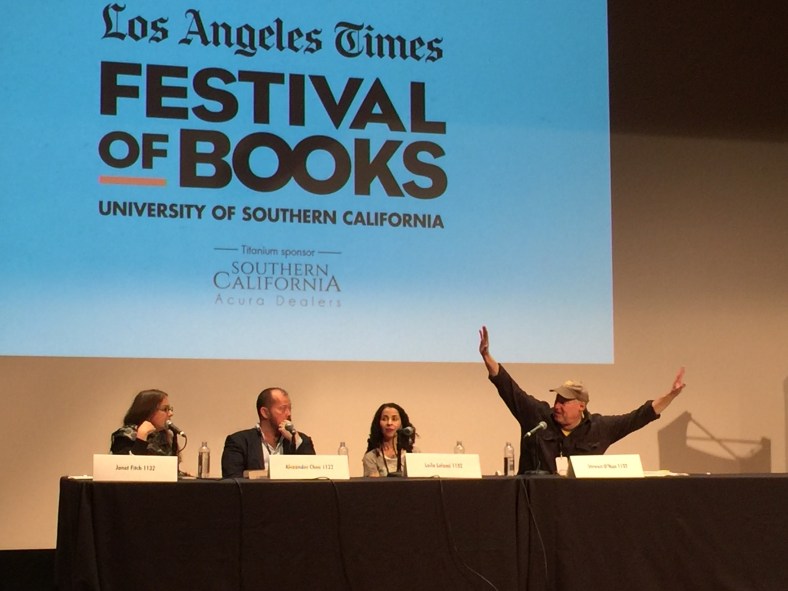
I saw the hat first, ‘A.HAM’ emblazoned on its crown. In the midst of the crowds converging on the campus of the University of Southern California last weekend for the LA Times Festival of Books, a student and her parents were headed to an open house hosted by the School of Dramatic Arts. The black and gold logo was a reminder that the phenomena that is ‘Hamilton’ continues to spark the dreams of the aspiring actor, striving historian, and would-be composer.

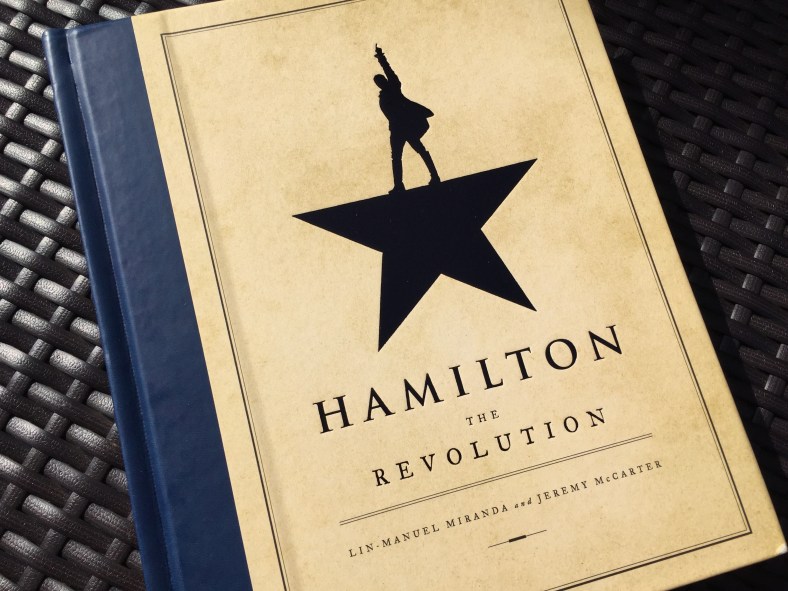
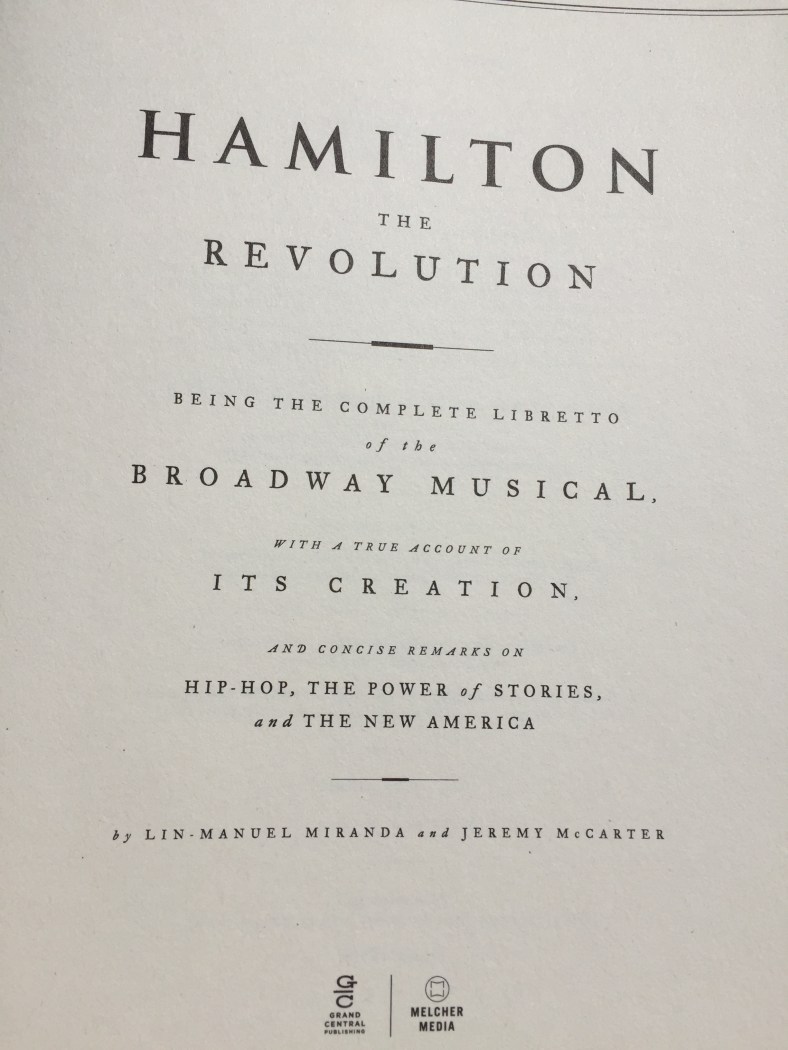
First there was Ron Chernow‘s 2004 book, ‘Alexander Hamilton’. Last summer, ‘Hamilton’, the musical debuted on Broadway. In February, the original cast recording won a Grammy for Best Musical Theater Album. This week the ‘Hamiltome’ arrived in bookstores and immediately sold out on Amazon. The Saturday Read is ‘Hamilton The Revolution’ by Lin-Manuel Miranda and Jeremy McCarter.

title page.jpg

In 2007 Jeremy McCarter, then drama critic for New York Magazine, reviewed a new play, ‘In The Heights’ and posed the question “Could musicals actually be adapting to a new century’s audience?”

“The most obvious of the show’s many virtues is that it doesn’t sound like the half-assed pseudo-pop that clutters up Broadway. Miranda’s score is rich and kaleidoscopic, as it needs to be.”

In the Introduction to ‘HTR’, Mr. McCarter reflects on his time at New York Magazine and his frustration with lack of interest in the possibilities of hip-hop.

“After many disappointments and false alarms, Heights had made me sit up in my aisle seat: Here’s the guy. Lin’s show about immigration in Upper Manhattan fused salsa, hip-hop, and traditional Broadway ballads to make something old and new, familiar and surprising. Best of all, he made the leap that virtually nobody else had made, using hip-hop to tell a story that had nothing to do with hip-hop – using it as form, not content.”

The writer, director and producer McCarter, who studied history at Harvard connected with the composer, lyricist, actor and Wesleyan alum, Miranda and began a collaboration that resulted in ‘Hamilton The Revolution’.

“It tells the story of two revolutions. There’s the American Revolution of the 18th century, which flares to life in Lin’s libretto, the complete text of which is published here, with his annotations. There’s also the revolution of the show itself: a musical that changes the way that Broadway sounds, and alters who gets to tell the story of our founding, that let’s us glimpse the new, more diverse America rushing our way.”

IMG_4314.jpgThe book is a ‘behind the scenes’ look at the development of a musical. It’s a narrative of the creative process and a roadmap for future generations who will replicate the production on high school and summer stages.

In an interview with CBS This Morning, Mr. McCarter stressed the importance of cataloging the moments from the first rap performance at the White House through the six years to opening night.

We wanted to “tell the story which is not about this historical fact or that historical fact, it’s about the emotional reality that these people were living through…This is not just what happened, but this is how it felt at the time. This is the experience that we all went through…So that ten years from now when kids are doing it they can pick up this book and say ‘Oh, that’s how they did it’, now I understand.”

Where do we find inspiration? It’s the curiosity thing. Mr.Miranda is the master of the inquisitive. And he seems to drawn on every life experience and relationship to connect the dots to his project. Here’s one example from the annotations to ‘You’ll Be Back’.

“I was having a drink with Hugh Laurie, with whom I’d worked on his series ‘House’, and I told him I wanted to write a breakup letter from King George to the colonies. Without blinking, he improv’d at me, “Awwww, you’ll be back,” wagging his finger. I laughed and filed it away. Thanks, Hugh Laurie.”

IMG_4308.jpgWe learn from the wisdom of others. ‘Hamilton The Revolution’ introduces us to a serious set of theater luminaries and traces each of their stories as the words and music evolve.

@work we casually use the buzz words creativity and innovation interchangeably. We imagine we are all curious, exemplars of transformational thinking. But most of us can’t reimagine our way out of our comfort zone. Creativity is hard work.

‘HTR’ is the story of a musical. Its value, for those who work outside the theater, is to show us where curiosity can lead and what creativity looks like.

IMG_4309.jpg

“The last song in the show captures the bitter historical truth that every one of Hamilton’s enemies outlived him, and they did all they could to efface his memory. By ending with Hamilton’s afterlife, not his death, the show asks us to think about what we leave behind when we’re gone: It invites us to think about legacies.”

When Ben Brantley reviewed the musical for the New York Times, he wrote “Hamilton” is, among other things, about who owns history, who gets to be in charge of the narrative.”

Lin-Manuel Miranda and Jeremy McCarter own ‘HTR’, their story, and leave no doubt about who is in charge of the narrative.

“Who tells your story?”


What do you do? Crafting an answer of identity @work

It’s the icebreaker question, ‘What do you do?’ It seems like a simple question, but it’s often difficult to explain our life’s work to strangers. Our workplace is defined by acronyms, our comfort zone is among our peers who share a common language.

It was the dilemma writer Elizabeth McCracken expressed in a 2014 tweet.

“21 years into a publishing career & I still have no idea what to say when someone says, “A writer? Have I heard of anything you’ve written?”

Maybe it’s not just the question, but the response we get when we attempt an answer. It’s the incorrect assumptions folks hold when they have a passing familiarity with a career.

Lincoln Michel used the query to imagine ‘If Strangers Talked to Everybody Like They Talk to Writers’.

“There is something unique about the way people talk to writers. Strangers seem very willing to offer career advice — “self-publishing is where the money is!” — literary advice — “People love vampires!” — or to oddly ask you to guess what work they’ve read in their life and if any of yours is among it. It got me thinking about what it would be like it people talked about other professions in this way.”

“Huh. A chef. Do people still eat food?”

“An accountant? Wow, I haven’t even looked at a number since high school.”

“Software programmer? Like, for actual computers sold in stores or just as a hobby?”

It’s not just writers. Most of us have embarked on career paths that carry with them a variety of inaccurate stereotypes.

Is it possible to craft an answer that informs, clarifies and avoids unsolicited advice?

Yes, and it’s storytelling without revealing the ending.

First, decide what you want to share about your work. Then imagine you are describing what you do to aliens. Finally, think function, product, audience and benefit.

Let’s go back to the writer, who may want to keep their work confidential, and avoid unsolicited feedback.

Authors are familiar with providing ‘soundbite’ summaries of their work to ‘sell’ a book proposal, and can employ the same technique to describe their work. For example: “I’m a writer and I recently completed a memoir that will be released in the fall. My next project is a profile for a weekly magazine which involves travel to Austin, Texas next week. Have you been to Austin? Can you suggest any good restaurants in the area?”

This sample response answers the question without divulging confidences, describes the work in familiar terms and redirects the conversation to connect on another, recognizable topic, food.

Who knew writers accumulate frequent flyer miles, get stuck in long TSA lines and patronize fashionable restaurants?

In crafting your response, consider your audience. How likely are they to be aware of your work? This is not about ‘dumbing down’ an answer, but about connecting through shared language and experience.


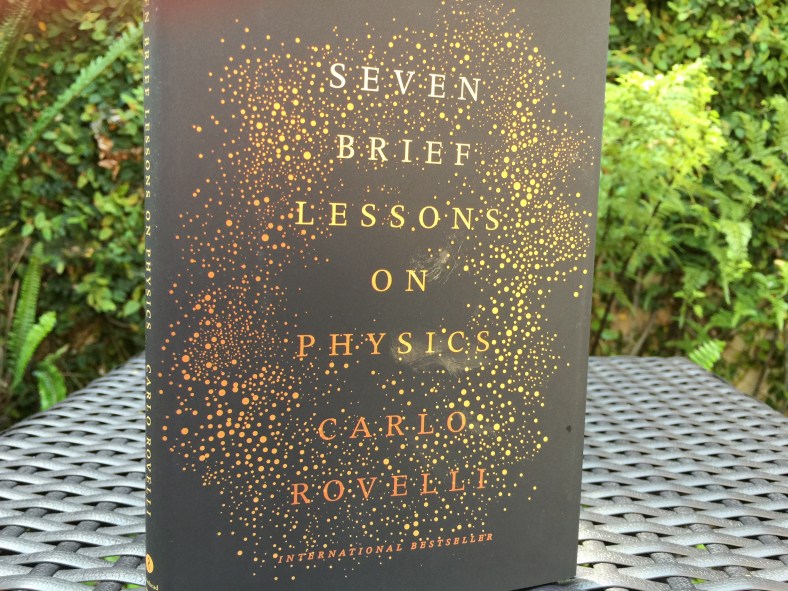
The Saturday Read ‘Seven Brief Lessons On Physics’ by Carlo Rovelli

It was the ‘chirp’ heard around the world. In February scientists announced the discovery of gravitational waves formed by two black holes colliding, confirming the century old predictions of Albert Einstein.

If you’re not a physicist or a physics major, you may have only a passing familiarity with the terms used in the previous sentence. And yet, we just experienced, in a ‘galaxy far far away’, what the New York Times science reporter Dennis Overbye described as a moment “destined to take its place among the great sound bites of science, ranking with Alexander Graham Bell’s “Mr. Watson — come here” and Sputnik’s first beeps from orbit.” 

The Saturday Read this week is ‘Seven Brief Lessons on Physics’ by physicist Carlo Rovelli of Aix-Marseille University and the Intitut Universitaire de France. Spend some time with this exquisite book and become a bit more fluent in the language of physics.

“These lessons were written for those who know little or nothing about modern science. Together they provide a rapid overview of the most fascinating aspects of the great revolution that has occurred in physics in the twentieth and twenty-first centuries, and of the questions and mysteries that this revolution has opened up. Because science shows us how to better understand the world, but it also reveals to us just how vast is the extent of what is still not known.”

Beginning with Einstein’s ‘beautiful theory’ of relativity, Rovelli follows the science beyond gravity to quantum mechanics and quantum gravity.

Is your hair is hurting? Hang in there.

“Physics opens windows through which we see far into the distance. What we see does not cease to astonish us. We realize that we are full of prejudices and that our intuitive image of the world is partial, parochial, inadequate. Earth is not flat; it is not stationary. The world continues to change before our eyes as we gradually see it more extensively and more clearly.”

Are we still talking about science? The magic of Rovelli’s prose is its simplicity in conveying painfully complex theories.

We learn the value of ‘wasting’ time.

“In his youth Albert Einstein spent a year loafing aimlessly. You don’t get anywhere by not ‘wasting’ time – something, unfortunately, that the parents of teenagers tend frequently to forget.”

And that we live in “A world of happenings, not of things.”

Rovelli describes concepts visually.

“…before experiments, measurements, mathematics, and rigorous deductions, science is about all about visions. Science begins with a vision. Scientific thought is fed by the capacity to ‘see’ things differently than they have been previously seen.”

And reminds us that “Genius hesitates.”

The essays originally appeared as a series for the culture section of  Il Sole 24 Ore, the Italian newspaper. Released last month in the U.S., the book is ranked third on the New York Times combined print & e-book nonfiction list.

Why read ‘Seven Brief Lessons on Physics’? Because it will take you on an adventure beyond your comfort zone in the time it takes you to commute to work.

“We are made of the same stardust of which all things are made, and when we are immersed in suffering or when we are experiencing intense joy, we are nothing other than what we can’t help but be: a part of our world.”