The Saturday Read ‘Patience and Fortitude’ by Scott Sherman

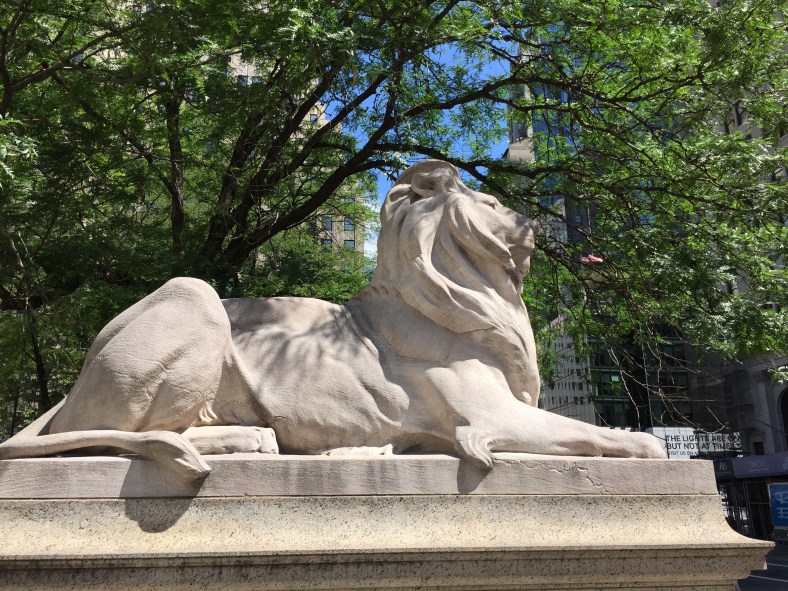
In times of financial crisis, you start looking around the house for things you might sell off until you realize all you have left is the real estate under your roof. For the New York Public Library in the early years of the 21st century, the fine art had been sold at auction, the staff had been ‘right sized’ and all that was left to remain solvent were the private donors and the coveted real estate footprint of branch locations.

This week’s ‘Saturday Read’ is ‘Patience and Fortitude: Power, Real Estate, And The Fight To Save A Public Library’ by Scott Sherman.

“This is a book about a world-class library that lost its way in the digital age.”

patience and fortitude

A public library is a community sanctuary that has historically offered immigrants a way to the middle class. In the Preface, author Sherman retells the story of former New York Senator, Daniel Patrick Moynihan who was working as a boot-black in 1940s Times Square, visiting the main library at 42nd Street.  “It was the first time I was taught that I was welcome in a place of education and learning. I would go into that great marble palace, and I would check my shoeshine box. A gentleman in a brown cotton jacket would take it as if I’d passed over an umbrella and bowler hat.”

This is a New York story, but one that illustrates the fate of the non-profit organization in an economic downturn. In the case of the NYPL, originally founded by bankers and corporate titans, the seismic shifts in the economy forced the influential board, of modern day financiers, to engage big name consultants in an attempt to apply “free-market solutions to complex institutional problems.”

The central narrative of the book was first reported by author Sherman in the December 2011 issue of ‘The Nation’. ‘Upheaval at the New York Public Library’ made public a four year old ‘Central Library Plan’, conceived and ratified by the NYPL’s trustees.

“The core trustees – led by the developer Marshall Rose – did what came naturally to them: they sold the NYPL’s land and took steps to shrink an institution they may have viewed as bureaucratic and inefficient…Personal enrichment was certainly not the trustees’ intention; they were sincere in their desire to assist the Library. It was hubris that drove them forward, and which ultimately led them astray: they believed that corporate logic could be effortlessly applied to a sprawling, decrepit library system.”

Consider this the first shot across the bow, as the Sherman chronicles the response from writers, researchers, NYPL employees, politicians and library patrons.

A 2012 Op-Ed piece written by Theodore Roosevelt biographer, Edmund Morris for The New York Times offers a sample of the opposition.

“I read newspaper reports about the determination of Anthony W. Marx, the president of the library, to spend $300 million to transform the main building, long devoted to reference, into what sounds like a palace of presentism. He wants to close the library system’s biggest circulating branch, the Mid-Manhattan (located just across the street) and the Science, Industry and Business Library (also in Midtown) and somehow wedge their contents into the already overstocked central research library.

For that he will need all the spatial ingenuity of his trendy architect-designate, Norman Foster. But something’s going to have to give, and you can be sure that what is new and hard and digital will prevail over what is old and papery and transportable elsewhere.”

On May 7, 2014 Robin Pogrebin reported that the NYPL has abandoned its renovation plan.

Last month, Tom Mashberg of The New York Times reported on the new plan to create a high-tech space under Bryant Park to house 2.5 million research works from the original stacks.

“This was not, of course, Plan A. That plan entailed a makeover of the flagship Fifth Avenue library that would have sent the research books to Princeton, N.J. But it set off a virtual Fahrenheit 451 of outrage among scholars and others for whom the library’s role as a research mecca seemed endangered. Critics, who hoped the old steel stacks could stay in use, remain apprehensive about the new stocking and retrieval system, which they say is impressive but has not been tested.”

To be continued…

And while you wait, catch up on the history and the cast of characters who bring ‘Patience and Fortitude’ to life.



Does your resume reflect your values?

Yesterday was #GivingTuesday, a day to give back after the frenzy of Black Friday and Cyber Monday. Let’s start a new tradition, #ValuesWednesday and do a quick audit of our community involvement activities over the past year, and update our resumes to reflect our values.

It’s not just our individual contributions to our local area, but the activities aligned with the places we work. As a new employee at Salesforce you spend your first day outside the office working for a community non-profit organization. It’s a clear message that ‘giving back’ is part of the corporate DNA.

“Salesforce operates on what it calls a “1-1-1” philanthropy approach, in which it supports local nonprofits by giving 1 percent of its products, 1 percent of its equity and 1 percent of its employees’ time.

As an added incentive, employees get six paid days off a year to volunteer. If they complete that, they receive a $1,000 grant to donate to a nonprofit of their choice.”

Most folks forget to include a community involvement section on their resume and omit a key component of their work narrative.

Your resume should communicate what’s important to you. It’s a living document that reflects your commitment @work and in your community.

Conducting a ‘values audit’ is not only an exercise to build your resume, it’s a way to evaluate how you set your priorities over the past year. If you notice your perception is out of balance with reality, you may want to consider the work/family pressures that redirected your plans. If work and values are coming unglued, expand your audit to take in the bigger picture of career/life decisions.

Po Bronson wrote an article for Fast Company magazine 13 years ago. It’s a piece that continues to resonate over time as it applies to our life @work.

“Every industry has a culture. And every culture is driven by a value system.

One of the most common mistakes is not recognizing how these value systems will shape you. People think that they can insulate themselves, that they’re different. They’re not. The relevant question in looking at a job is not What will I do? but Who will I become? What belief system will you adopt, and what will take on heightened importance in your life? Because once you’re rooted in a particular system — whether it’s medicine, New York City, Microsoft, or a startup — it’s often agonizingly difficult to unravel yourself from its values, practices, and rewards. Your money is good anywhere, but respect and status are only a local currency. They get heavily discounted when taken elsewhere. If you’re successful at the wrong thing, the mix of praise and opportunity can lock you in forever.”

On this #ValuesWednesday, ask yourself, Who’s driving the values bus? Are you morphing into a corporate clone or maintaining the integrity of your personal value system? We’re not talking mutually exclusive terms here, just taking an annual values audit.

The Saturday Read – Gift a book this holiday season

One of the best presents one can give or receive is a book. #ShopSmall today and visit your local bookseller to find the perfect gift for everyone on your holiday list.

Let’s start with a client or your boss, two challenging categories for gift giving. You could go with a bottle of wine, chocolates, fruit basket or Starbucks card. But that’s what they’ll get from your competitors and colleagues. If you want to stand out and demonstrate, in a very tangible way, that you’ve been listening when they talk about their interests outside of work, a book just may be the way to make a connection. And I’m not talking about the latest business best seller.

Former Seattle librarian and current NPR commentator, Nancy Pearl has written a series of ‘Book Lust’ books recommending current and back list titles for “every mood, moment or reason and travelers, vagabonds and dreamers”. Her suggestions sample the catalog of titles published since 1960, so you will no doubt rediscover some gems to twinkle under the tree.

Create a list of folks @work. Then make a few notes about each and their interests. Visit an independent bookseller today, #SmallBusinessSaturday, and ask for suggestions. Often the best books of the year will never make The New York Times bestseller list, so you will need a little help from someone whose life is about books.

Barnes and Noble, Amazon and Costco don’t count. For the important task of matching books with colleagues and clients, you need the expertise of someone invested in presenting a diversity of titles.

“Independent bookstores never had to answer to the dictates of public markets. Many of their proprietors understood, intuitively and from conversations with customers, that a well-curated selection—an inventory of old and new books—was their primary and maybe only competitive advantage. In the words of Oren Teicher, CEO of the American Booksellers Association, “The indie bookselling amalgam of knowledge, innovation, passion, and business sophistication has created a unique shopping experience.”

Some may think a book is a risky gifting proposition. The risk lies only in not  paying attention and failing to seek out help from experts. Take some time today to shop on Main Street and pick up a few books for the holidays.

“Books make great gifts because they have whole worlds inside them, and it’s much cheaper to buy somebody a book than it is to buy them the whole world.” Neil Gaiman


#TheGreatListen 2015

What if you could capture a generation of American lives and experiences in one holiday weekend? That’s the vision of StoryCorps founder, Dave Isay, and he plans to fulfill his mission this Thanksgiving weekend through a combination of an app and an educators toolkit to enable DIY interviews to gather the wisdom of others. It’s the #GreatThanksgivingListen and you are invited to attend.

StoryCorps recently celebrated twelve years of conducting and recording oral history interviews, beginning with a booth in New York’s Grand Central Station and later taking the booth on the road to all 50 states creating the largest single collection of human voices ever gathered. The next step is to grow the archive of 100,000 to tens of thousands.

Dave Isay and his organization are the recipients of the 2015 TED Prize, and it was in his presentation to the annual conference in April that he outlined his proposal for a “national homework assignment”.

Here’s the plan. Download the app, select ‘helpful hints’ for a short tutorial. Select ‘browse’ to view previous StoryCorps recordings. Go to ‘my interviews’ to outline and record your interview. You can choose  from a list of sample questions by categories. Next step –  record!

“Who are they? What did they learn in life? How would they like to be remembered?”

And here’s the magical part. You can keep your recording for yourself or opt to upload it to the StoryCorps archive at the American Folklife Center at the Library of Congress. Imagine the story of your family intertwined with other American voices building upon a historical record of their time.

In his April TED talk, Isay described the power of “…everyday people talking about lives lived with kindness, courage, decency and dignity…it sometimes feels like you are walking on holy ground…”

If you believe that you learn from the wisdom of others, this holiday offers an opportunity to join “…a global movement to record and preserve meaningful conversations with one another that results in an ever growing digital archive of the collective wisdom of humanity.”


The Saturday Read ‘Every Time I Find the Meaning of Life, They Change It’ by Daniel Klein

A U.S. Senator, a philosophy student and a welder walk into a bar…maybe not. In a debate last week U.S. Senator Marco Rubio questioned the value of a philosophy major in a world that needs more welders.

“I don’t know why we have stigmatized vocational education, welders make more money than philosophers. We need more welders and less philosophers.”

I can understand those who seek to define college as an extended vocational school experience, given the cost and potential for significant debt, but to limit the aspirations of 18 year olds diminishes the value of higher education. I think we go to college to figure things out. Part of that is the career decision, but the larger experience incorporates learning how to think, question, listen, reflect and argue in a quest to live our best life.

In defense of philosophy majors, and the politicians and welders who might benefit from their wisdom, The Saturday Read this week is ‘Every Time I Find the Meaning of Life, They Change It: Wisdom of the Great Philosophers on How to Live’ by Daniel Klein.

Like many college students, Klein didn’t have a clue as to what I wanted to do after college; basically all I knew was that I didn’t want to be a doctor, lawyer, or businessman, eliminations that put me in a distinct minority of my classmates. I figured studying philosophy would be just the ticket to give me direction.”

His father, like Senator Rubio, let him know that “studying philosophy was simply a wast of time.”

Fortunately for the reader, Klein continued his studies, recording selected ‘Pithies’ in a notebook hoping “to find some guidance from the great philosophers on how best to live my life.” These quotes and current reflections form the structure of the book.

“I now realized that those how-to-live questions were still very much alive in my mind. Sure, time had crept on and my life, with its ups and downs, had simply happened, as lives tend to do, by my appetite for philosophical ideas about life had not diminished in the least. In fact, as I look at life from the vantage point of my eighth decade, my hankering for such ideas has only increased. Late in the game as it may be, I still want to live my final years the best way I can. But more compellingly, I find myself at that stage of life when I want to give my personal history one last look-through, and I am curious to see how it measures up to fully considered ideas of a good life.”

Why this book? Because legislating, welding and philosophy should not be mutually exclusive terms. As the Thanksgiving inter-generational conversation turns to the big ‘vocational’ questions of choice and what you are doing with your life, it’s the central question of philosophy being posed, how to live the best possible life.

‘Every Time I Find the Meaning of Life, They Change It’ is an accessible, often humorous, tutorial, presenting a pageant of philosophy’s luminaries and author commentaries.

One quote in particular, resonated with me in light of the domestic and international scene this week, from British philosopher, Bertrand Russell.

“The man who has no tincture of philosophy goes through life imprisoned in the prejudices derived from common sense, from the habitual beliefs of his age or his nation, and from convictions which have grown up in his mind without the co-operation or consent of deliberate reason. To such a man the world tends to become definite, finite, obvious; common objects rouse no questions, and unfamiliar possibilities are contemptuously rejected…(But Philosophy) keeps alive ours sense of wonder by showing familiar things in an unfamiliar aspect.”

The week@work #PeaceForParis

On Friday evening Parisians went to work at cafes, a soccer stadium and a concert venue. An American band from Palm Desert, California prepared to take the stage @work at their dream job. And then the trajectory of hundreds of careers changed.

This week @work tells only one story, of graphic designer, Jean Jullien @work and his response to terror in the City of Light.

A year ago, Jean Jullien gave an interview to designboom, answering the typical questions about his career choice, his approach, his influences and skill. As a young artist he was preparing his December 2014 solo show at Kemistry Gallery in London.

“I’ve always loved drawing, but originally wanted to do animation and comics (which I’m ironically just sort of getting into doing now). I applied to many schools but got rejected by all and ended up in a small graphic design course in le paraclet which was actually a blessing in disguise. despite its serious and practical approach, the course was run by passionate teachers who introduced me to the work of masters such as milton glaser, saul bass, raymond savignac, and many others. it made me realize that design and illustration were basically about making the everyday exciting and creative. design for the people, design for the routine, is what really got me into what I do today. the idea that art didn’t stop at the exit of a gallery, but that it could carry on anywhere and that by intertwining with real objects and things, it enhanced them and found a use.”

In response to a question about his strengths and skill, he responded:

“I don’t think of myself as skilled. not in my drawing at least. I’ve become overly critical and empathic at the same time but I’m not sure either of these qualify as a skill, although they are my number one working tool.”

On Friday, the world discovered Jean Jullien’s skill as empathy translated into a representational image that spread across the internet.

eiffel peace

Time.com journalist Nolan Feeney spoke with the illustrator on Saturday and published the transcript of his Skype interview.

Jean Jullien had just begun his vacation when he heard on the radio about the terrorist attacks in his native France that killed more than 120 people on Friday. While others around the world struggled to put their feelings about the violence in Paris into words on social media, Jullien, a professional illustrator, picked up his brush instead.

“I express myself visually, so my first reaction was to draw a symbol of peace for Paris,” Jullien, who says his friends and family are safe and accounted for, told TIME over Skype on Saturday from a location he did not wish to disclose. “From there it seems to have gotten a bit out of my hands.”

The last question in the designboom interview was “do you have a personal motto?”

His answer: “carpe diem or something like that.”

The Saturday Read ‘Pacific’ by Simon Winchester

While the events of the past 24 hours have turned our thoughts to Paris, another headline scrolled across screens last night, warning of a possible tsunami off the coast of Japan.

News stories of the Pacific Ocean and her terrestrial neighbors continue to occupy a significant amount of news coverage: growing concern of El Nino and the bell weather ‘surprise’ of hurricane Patricia, mapping of marine debris that continues to traverse the ocean four years after the Japanese earthquake, and most recently, the expansion of reefs into Chinese military facilities, establishing claims in contested territorial waters.

In advance of President Obama’s trip to Kuala Lumpur next week to attend the Asia summits, the ‘Saturday Read’ this week is  ‘Pacific: Silicon Chips and Surfboards, Coral Reefs and Atom Bombs, Brutal Dictators, Fading Empires, and the Coming Collision of the World’s Superpowers’ by Simon Winchester.

“For all its apparent placidity, the Pacific seems today to be positioned at the leading edge of any number of potential challenges and crises – whether they relate to politics or economics, to geology, to weather, to the supply of food, or to the most basic questions about the number of people that this planet can support.”

What do we know about this vast expanse of water? Stories from veterans of WWll, the Korean War or the Vietnam war? Shared experiences of vacation trips to Hawaii, the South Pacific, Australia or New Zealand? Or, impressions from the novels of  James Michener; ‘Tales of the South Pacific’ and ‘Hawaii’?

Consider the impact of a port strike in LA; container ships lined along the coast filled with a wide range of holiday gifts that may never reach shore in time for Christmas. The Pacific is a vital artery connecting us to the consumer goods of our daily lives.

Winchester begins his narrative aboard United Airlines flight 156 which leaves Honolulu three times a week on the way to Guam, traversing almost six thousand miles, with five stops along the way.

“The ocean beneath is almost unimaginably vast, and illimitably various. It is the oldest of the world’s seas, the relic of the once all-encompassing Panthalassic Ocean that opened up seven hundred fifty million years ago. It is by far the world’s largest body of water – all of the continents could be contained within its borders, and there would be ample room to spare. It is the most biologically diverse, the most seismically active; it sports the planet’s greatest mountains and deepest trenches; its chemistry influences the world; and the planetary weather systems are born within its boundaries.”

The author has structured his story to fit the timeline of the sixty-five years since 1950. He sifted through the lists he prepared to focus on “truly pivotal moments the story of this vast acreage of ocean’ and poses timely questions to emphasize the Pacific’s significance.

“It is the most turbulent ocean in the world, and an expanse of sea that should be central to all our thoughts. Is the ocean to be the place of coming war? Is it to be our eventual savior, a places so beautiful and fragile that its sheer vastness will one day demand that we pause in our careless and foolish behavior in the rest of the world? Or will it be something in between: a pillar of hope and example and good sense poised between East and West, on which, for good or ill, we construct humanity’s future?”

The reader will tour “the great thermonuclear sea” and stamp their virtual passports in Japan, Hong Kong, the Great Barrier Reef, Korea, the Philippines and California. Each chapter reads as a short story, which allows the reader to time travel in small bites. The strength of the book is the geological and meteorological insights. ‘Pacific’ is required reading and Simon Winchester provides a persuasive argument.

“The future, in short, is what the Pacific Ocean is now coming to symbolize. For if one accepts that the Mediterranean was once the inland sea of the Ancient World: and further, that the Atlantic Ocean was, and to some people still remains, the inland sea of the Modern World: then surely it can be argued that the Pacific Ocean is the inland sea of Tomorrow’s World. What transpires across these sixty-four million square miles of ultramarine ocean matters, and to all of us.”

Can the ‘talking cure’ reconnect ‘a band of tweeters’?

It’s one thing for us to tolerate distraction in the workplace as devices buzz and chime through meetings, but it’s a bit more unnerving to consider the scenario described by a U.S. Army major as soldiers returning from a combat mission opt out of conversation and sit “silently in front of computer screens, posting about their day on Facebook”.

John Spencer is the Army major expressing concern over how “global connectedness has altered almost every facet of a soldier’s daily life”.

“The term “band of brothers” has become almost a cliché to describe how the close personal bonds formed between soldiers translate into combat effectiveness. Yet my combat experience in Iraq suggests that the kind of unit cohesion we saw in past wars may be coming undone because of a new type of technological cohesion: social media, and too much connectivity.”

It’s one more example to support the 30 years of research conducted by MIT professor, Sherry Turkle.

“We’ve gotten used to being connected all the time, but we have found ways around conversation — at least from conversation that is open-ended and spontaneous, in which we play with ideas and allow ourselves to be fully present and vulnerable. But it is in this type of conversation — where we learn to make eye contact, to become aware of another person’s posture and tone, to comfort one another and respectfully challenge one another — that empathy and intimacy flourish. In these conversations, we learn who we are.”

Professor Turkle cites the research of Howard Gardner and Katie Davis on what they call the “app generation,” which grew up with phones in hand and apps at the ready. It tends toward impatience, expecting the world to respond like an app, quickly and efficiently. The app way of thinking starts with the idea that actions in the world will work like algorithms: Certain actions will lead to predictable results.”

Which brings us back to 2008 and Major Spencer’s observations of his ‘band of tweeters’.

“In 2008, I saw the soldiers’ individuality in battle. I saw them arguing about what decisions to make. I often observed much more transactional communications where there would have been friendly banter in the past. Groups seemed unable to learn from their daily challenges or direct any intergroup policing of individual actions. I saw these things especially in the younger soldiers.”

He goes on to emphasize the importance of motivation and social cohesion for any large organization, but identifies the need for conversation as critical in the military workplace.

“What all of the research highlights is the importance of conversation during noncombat time — the hours of nothingness, the shared boredom — where bonds of trust, friendships and group identity are built.”

Most of us go to work in a place where guns and ammo are not part of our daily existence. But the risks to our health and well-being might be in equal jeopardy when we multi-task, “always available elsewhere”.

At the end of his essay, Major Spencer suggests “developing structures to organize the social interactions and conversations that used to occur spontaneously. This would include requiring soldiers to hold post-patrol gatherings on top of their usual mission reviews. This debriefing concept is very effective within other organizations. I would also shift the trend from small two- to four-man living spaces and increase them to four to six, both in stateside bases and especially in combat.”

And leave the devices in another room. Disconnected, we can reestablish conversation.

Professor Turkle cites psychologist Yalda T. Uhls’ research with children at a ‘device free’ camp, demonstrating our capacity for resilience when we untether for a period of time.

“After five days without phones or tablets, these campers were able to read facial emotions and correctly identify the emotions of actors in videotaped scenes significantly better than a control group. What fostered these new empathic responses? They talked to one another. In conversation, things go best if you pay close attention and learn how to put yourself in someone else’s shoes. This is easier to do without your phone in hand. Conversation is the most human and humanizing thing that we do.”

“Conversation is the antidote to the algorithmic way of looking at life because it teaches you about fluidity, contingency and personality.”

Our technology alerts us to ‘recalculate’ when we choose to diverge from the programmed path. It’s another ownership issue of our humanity, to take back control of conversation in a ‘tech free’ space.

“This is our moment to acknowledge the unintended consequences of the technologies to which we are vulnerable, but also to respect the resilience that has always been ours. We have time to make corrections and remember who we are — creatures of history, of deep psychology, of complex relationships, of conversations, artless, risky and face to face.”

And for our ‘band of brothers’ (and sisters) –

“… the benefits of hyper-connectivity for individual soldiers shouldn’t outweigh the collective costs of social cohesion…”

Restarting the global conversation about women

Sixty-two million girls across the globe are not attending school today. Sixty-two million dreams will never be realized. Those who advocate for access to schooling do so at a significant risk to themselves and their families. It’s not just about education, but values, attitudes and beliefs.

Last weekend the movie ‘Suffragette’ was released in theaters in the U.S. It’s a fictionalized story of the fight for women’s right to vote in Great Britain in the years between 1911 and 1913.

In a ‘CBS This Morning’ interview, actress Carey Mulligan discussed her role and how little she knew of the historical facts, prior to filming, with co-anchor Nora O’Donnell.

“I knew a sort of really basic school version which is a little paragraph in our history book saying, you know, ‘Women got the vote eventually,”‘ Mulligan said, laughing. “Somehow. It was a couple of lines and, you know, lots of images of women with flowers looking very peaceful.”

“I left school and I voted because my parents voted. But I didn’t really understand the weight of what I had with my vote,” she said.

This past Tuesday was election day and I was tempted to opt out, thinking there were no major initiatives on the ballot. But then I remembered the Carey Mulligan interview and the history of women who sacrificed so much so that I could have the opportunity to vote.

Along with suffrage, women have a right to education. The absence of one or both, excludes women from the global conversation.

On Wednesday First Lady Michele Obama addressed the World Innovation Summit for Education in Doha, Qatar and introduced her initiative, ‘Let Girls Learn’.

“If we truly want to get girls into our classrooms, then we need to have an honest conversation about how we view and treat women in our societies,” she told an international education conference. “And this conversation needs to happen in every country on this planet, including my own.”

“I don’t think it’s an accident” that girls who want to attend secondary school are threatened. When girls are young, she said, “they are often seen simply as children. But when they hit adolescence and they start to develop into women and are suddenly subject to all of their society’s biases around gender, that is precisely when they start to fall behind in their education.”

“It’s about whether parents think their daughters are as worthy of an education as their sons. It’s about whether our societies cling to outdated laws and traditions that oppress and exclude women, or whether their views of women are as full citizens entitled to equal rights.”

I live in a country that failed to pass an equal rights amendment for women in the seventies. The amendment was written in 1923 by Alice Paul, a suffragist leader, after U.S. women won the right to vote in 1920.

“The ERA was introduced into every Congress between 1923 and 1972, when it was passed and sent to the states for ratification. The original seven-year time limit in the ERA’s proposing clause was extended by Congress to June 30, 1982, but at that deadline, the ERA had been ratified by 35 states, three states short of the 38 required to put it into the Constitution.”

It’s time to restart the global conversation about women. Let’s begin at home and honor the suffragettes of the early 20th century, and the global heroines of the 21st.

The week@work – A school for watchmakers, innovations in teaching, #OptOutside and other leadership stories

The theme of the past week@work was innovation: creating a school for those who work with their hands, teaching history through theater on Broadway, using video games to modernize MBA education and opting out to #OptOutside.

CBS News produced a segment on luxury brand watchmaker, Patek Philippe and the creation of a school for watchmakers in New York to meet a growing customer demand for craftsmanship in a digital age. “…the 175-year-old company decided to open its own watch school at its New York City offices.

Around 300 people applied; six were chosen. for their temperament as much as for their technical aptitude. So what personal characteristics does Patek Philippe look for in order to select students?

“We need people who are committed, so commitment is a big quality,” replied master watchmaker Laurent Junod, who heads the school. Plus, “Patience, of course.”

“We do a training program here that is two years long. But the learning is not finished. You have to learn all your life.”

Unknown-1

The program provides an alternative career for those who seek to work with their hands. “The school is free. Students are paid a small stipend to cover expenses.

Gaman Kwok had been tutoring elementary school kids. “If somebody told me that I will be training to be a watchmaker a year ago, I would, look at them like, ‘What? Really?'”

Juan Alonzo was working at a men’s clothing store. “I want to be as good as Laurent!” he said of his ambition.

At the end of the course — if they pass their exams — Patek Philippe will hire them. They’ll move on to a lifetime of silence, and precision, and learning.”

Do you think they get an employee discount?

IMG_2516

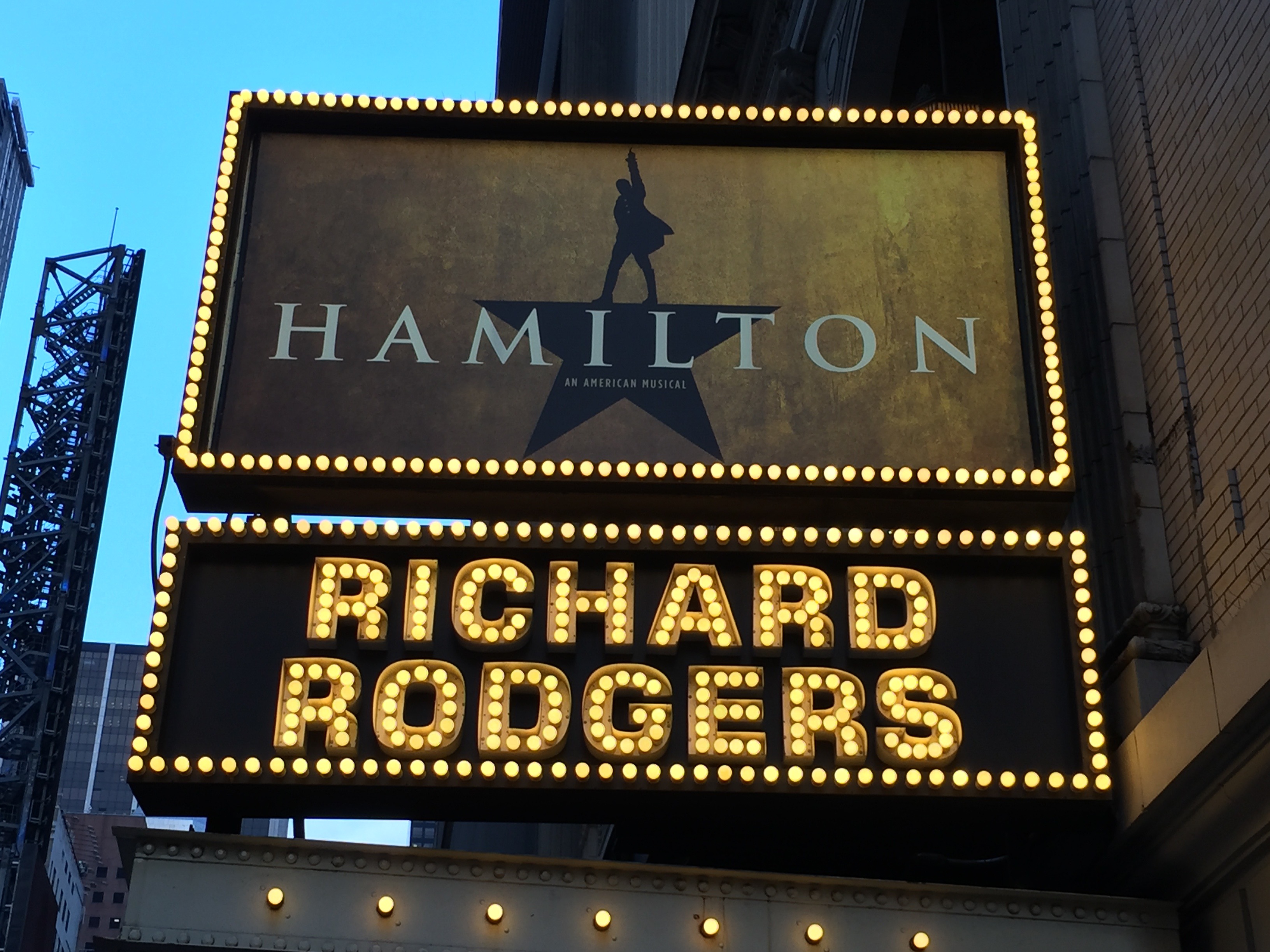
There is a play on Broadway about our founding fathers, one in particular, Alexander Hamilton. ‘Hamilton’ is a hip hop musical retelling of the story of an immigrant who rose to become a force in the building of a new nation. It is based on Ron Chernow’s 818 page biography published in 2004. How many eleventh graders do you think would read an 818 page biography? How many teachers could find the time to read the same?

Sounds like an opportunity to innovate. This week the producers and the Rockefeller Foundation announced a partnership to provide 20,000 New York City eleventh graders with a chance to attend a performance and continue the learning.“The curriculum will be put together by the nonprofit Gilder Lehrman Institute of American History, which plans to create a website with copies of the primary documents that undergird the book and lyrics, and teaching materials about Hamilton and the founding fathers. Students will be invited to create and share their own artistic responses to Hamilton’s life.”

Think about this – 20,000 students who probably have never had access to the lights of Broadway will now be sitting in orchestra seats for one of the most important and creative plays staged in recent memory. And, it’s about history.

“Lin-Manuel Miranda, the creator and star of “Hamilton,” said that he was frequently asked at the stage door how the show, which is both costly to attend and often sold out, could be made more accessible to young people, and he said finding a way to do that has been a priority for him. Mr. Miranda, 35, is a graduate of the Hunter College elementary and high schools for gifted students in New York City.

“If we can excite curiosity in students, there’s no telling what can happen next,” he said. “Not to say we’re going to make 1,300 history majors or 1,300 musical theater writers every time we do the show, but hopefully they will take away how much Hamilton did with his life in the time that he had.”

No telling what can happen next..

Shane Ferro, business journalist for the Huffington Post reported on a new video game, ‘One Day’, being developed for MBA students at the Hult International Business School.

“While it is now fairly common for video games to teach elementary concepts — spelling, basic math, typing — higher education has more or less resisted encroaching technology up to this point. Until recently, higher-level concepts have been harder to program because there may be more than one right answer. “One Day,” which its creators say is the first game of its kind, poses some fairly new questions about learning in the digital age and the role of the professor in a modern classroom.

“I’ve been a business school professor for 30 years,” said John Beck, whose educational consulting company, North Star Leadership Group, developed “One Day.” He lamented that most MBA programs rely on teaching methods honed decades before the personal computing revolution. “For 30 years I’ve been thinking the system is so broken. The case studies model dates from the 1920s, and the lecture model from the 1850s.”

Unknown

The day after Thanksgiving, previously known as ‘Black Friday’, now carries a new hashtag courtesy of the leadership team at retailer REI. #OptOutside is a campaign to encourage folks to leave the shopping behind, enjoy the outdoors and share their experience on social media.

“REI is hoping to convince consumers to start a new Black Friday tradition, one that doesn’t involve buying anything. It has built a dedicated #OptOutside website with resources on local hiking trails. REI’s campaign was built with its employees and customers in mind — the company operates as a co-op, with roughly 5.5 million members who pay a one-time fee for a share of the business. Members contribute to at least 80% of REI’s sales.

The decision to close on Black Friday is bold in an industry that has practically made the day a mandatory part of business, not only because customers demand it, but because the bottom line often does, too. The holiday shopping season is the biggest, and most competitive, time of year for retailers, with Black Friday at the center of the hoopla.”

And while we are on the subject of leadership, here are two articles you might find interesting:

‘Giving More Corporate Chiefs the Steve Jobs Treatment’ Nitin Nohira “I worry that we’re too quick to forget the accomplishments of great business leaders, and that if the people leading companies felt some solace that their long-term legacies might warrant a more careful evaluation, as is now occurring around Steve Jobs, they might make very different decisions.”

‘How Not to Flunk at Failure’ John Danner & Mark Coopersmith “Failure is a strategic resource. Like the people you employ, the money you spend or the facilities and technologies you use, it has unique intrinsic value if you’re open and wise enough to manage it as such. Treat it like unrefined ore that needs to be processed and examined to reveal its riches. Failure is reality’s way of showing you what you don’t yet know, but need to learn. It contains the seeds of precisely the insight you’ve been looking for, if you have the honesty and humility to explore those secrets.”