Can the ‘talking cure’ reconnect ‘a band of tweeters’?

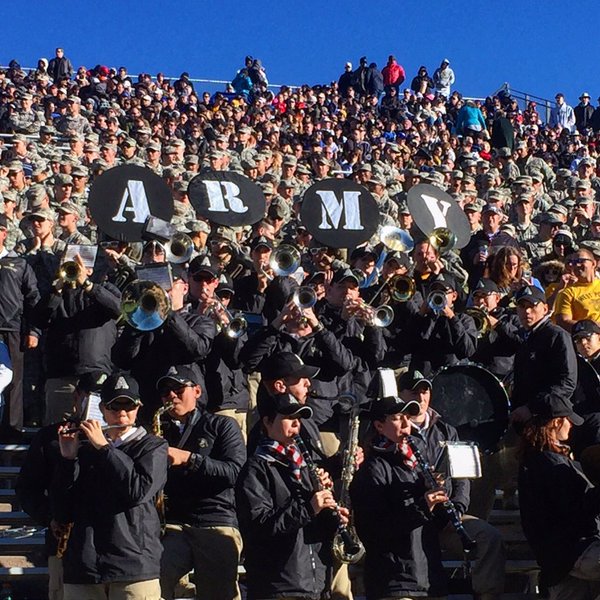
It’s one thing for us to tolerate distraction in the workplace as devices buzz and chime through meetings, but it’s a bit more unnerving to consider the scenario described by a U.S. Army major as soldiers returning from a combat mission opt out of conversation and sit “silently in front of computer screens, posting about their day on Facebook”.

John Spencer is the Army major expressing concern over how “global connectedness has altered almost every facet of a soldier’s daily life”.

“The term “band of brothers” has become almost a cliché to describe how the close personal bonds formed between soldiers translate into combat effectiveness. Yet my combat experience in Iraq suggests that the kind of unit cohesion we saw in past wars may be coming undone because of a new type of technological cohesion: social media, and too much connectivity.”

It’s one more example to support the 30 years of research conducted by MIT professor, Sherry Turkle.

“We’ve gotten used to being connected all the time, but we have found ways around conversation — at least from conversation that is open-ended and spontaneous, in which we play with ideas and allow ourselves to be fully present and vulnerable. But it is in this type of conversation — where we learn to make eye contact, to become aware of another person’s posture and tone, to comfort one another and respectfully challenge one another — that empathy and intimacy flourish. In these conversations, we learn who we are.”

Professor Turkle cites the research of Howard Gardner and Katie Davis on what they call the “app generation,” which grew up with phones in hand and apps at the ready. It tends toward impatience, expecting the world to respond like an app, quickly and efficiently. The app way of thinking starts with the idea that actions in the world will work like algorithms: Certain actions will lead to predictable results.”

Which brings us back to 2008 and Major Spencer’s observations of his ‘band of tweeters’.

“In 2008, I saw the soldiers’ individuality in battle. I saw them arguing about what decisions to make. I often observed much more transactional communications where there would have been friendly banter in the past. Groups seemed unable to learn from their daily challenges or direct any intergroup policing of individual actions. I saw these things especially in the younger soldiers.”

He goes on to emphasize the importance of motivation and social cohesion for any large organization, but identifies the need for conversation as critical in the military workplace.

“What all of the research highlights is the importance of conversation during noncombat time — the hours of nothingness, the shared boredom — where bonds of trust, friendships and group identity are built.”

Most of us go to work in a place where guns and ammo are not part of our daily existence. But the risks to our health and well-being might be in equal jeopardy when we multi-task, “always available elsewhere”.

At the end of his essay, Major Spencer suggests “developing structures to organize the social interactions and conversations that used to occur spontaneously. This would include requiring soldiers to hold post-patrol gatherings on top of their usual mission reviews. This debriefing concept is very effective within other organizations. I would also shift the trend from small two- to four-man living spaces and increase them to four to six, both in stateside bases and especially in combat.”

And leave the devices in another room. Disconnected, we can reestablish conversation.

Professor Turkle cites psychologist Yalda T. Uhls’ research with children at a ‘device free’ camp, demonstrating our capacity for resilience when we untether for a period of time.

“After five days without phones or tablets, these campers were able to read facial emotions and correctly identify the emotions of actors in videotaped scenes significantly better than a control group. What fostered these new empathic responses? They talked to one another. In conversation, things go best if you pay close attention and learn how to put yourself in someone else’s shoes. This is easier to do without your phone in hand. Conversation is the most human and humanizing thing that we do.”

“Conversation is the antidote to the algorithmic way of looking at life because it teaches you about fluidity, contingency and personality.”

Our technology alerts us to ‘recalculate’ when we choose to diverge from the programmed path. It’s another ownership issue of our humanity, to take back control of conversation in a ‘tech free’ space.

“This is our moment to acknowledge the unintended consequences of the technologies to which we are vulnerable, but also to respect the resilience that has always been ours. We have time to make corrections and remember who we are — creatures of history, of deep psychology, of complex relationships, of conversations, artless, risky and face to face.”

And for our ‘band of brothers’ (and sisters) –

“… the benefits of hyper-connectivity for individual soldiers shouldn’t outweigh the collective costs of social cohesion…”

The week@work – work/life balance in Sweden & @Amazon, the truth about being an entrepreneur, & the value of an arts education

While the most powerful folks in the world were ranked in the annual Forbes list, the rest of the working class spent the week@work managing the challenges of work/life balance. Journalists covered a variety of topics influencing our lives @work ranging from the reality of being an entrepreneur to the value of arts education in translating tech to human practice. And there was good news from the U.S. Labor Department.

As U.S. organizations continue to experiment with innovative work/life balance policies to attract talent, Swedish companies have been implementing trials over the past 20 years.

Maddy Savage examined a six hour workday model being tested in Falun, Sweden.

“Jimmy Nilsson, who co-owns digital production company Background AB, launched the initiative in September as part of efforts to create a more productive workforce.

“It’s difficult to concentrate at work for eight hours, but with six hours you can be more focused and get things done more quickly,” he says.

His staff are at their desks between 8.30am and 11.30am, take a full hour off for lunch and then put in another three hours before heading back to their homes in the Swedish mountains.

They’re asked to stay away from social media in the office and leave any personal calls or emails until the end of the day. Salaries have not changed since the initiative started in September.

“We’re going to try it for nine months and see if it’s economical first of all, and secondly if it works for our customers and our staff,” Mr Nilsson says.”

In Sweden only 1% of employees work more than 50 hours a week. All are eligible for a minimum of 25 vacation days annually with 480 days of paid parental leave to split between a working couple. Contrast that to the new leave policy announced this week by Amazon.

Bloomberg Business reported “Amazon.com Inc. will give new fathers paid parental leave and extend paid maternity leave for mothers, as the online retailer seeks to enhance its benefits as a way to attract and retain talent.

Women who have a child can now take as much as 20 weeks of paid leave, up from eight weeks. New parents can take six weeks of paid parental leave. The Seattle-based company previously didn’t offer paternity leave. The new benefits apply to all births or adoptions on or after Oct. 1, according to a memo distributed to employees Monday.”

As the conversation on work/life balance continues in the U.S., with ‘band aid’ approaches to a significant cultural issue, our European counterparts are experiencing results in health and profitability. The next challenge: managing the stress of what to do with time away from work.

Entrepreneur and founder of IWearYourShirt.com, Jason Zook revealed ‘The Truth About Entrepreneurship’ for Inc.

“The problem with the majority of entrepreneurship is that it sucks and no one wants to just read about the struggles, the constant ups and downs, the risks that don’t pay off, the tiny lessons learned and the small victories that keep entrepreneurs going. Unfortunately, people don’t realize that’s what happens when you work for yourself or start your own company. They’re only thinking about becoming “the next Instagram” or what their incredibly lucrative exit strategy is going look like.”

He continues to share five ‘truths’, including “The truth about being an entrepreneur is that it’s downright hard and lots of people are going to doubt you along the way.”

It’s not just entrepreneurs. Anything that is worth pursuing is downright hard and people will doubt you along the way.

Wired Magazine published an interview with the new president of the Rhode Island School of Design, Rosanne Somerson. At a time when we are mesmerized by advances in technology, it’s the artists who translate innovation into human applications.

“One way our artists and designers help make sense of the tech world is by putting human beings first. They can design new things while really thinking about the user experience and the cultural impact that technology is instigating. A lot of initial research in tech is done by engineers and programmers who may not be as connected to how we perceive and experience things. Artists have a window into that that is highly developed.

Engineers are very gifted at what they do, but they don’t have this piece. I think in the future there will be these collaborations of the best IT and software engineers, along with people who can translate that into a meaningful human experience that is central to the concept as a whole, instead of an add-on. Those days are behind us. It’s really much more seminal than that.” 

The U.S. Labor Department released the latest jobs report on Friday. Journalist Don Lee analyzed the significance of the numbers for the Los Angeles Times.

“Hiring and wages surged last month as the unemployment rate dropped to 5%, a symbolic threshold with potential significance both for the economy and the 2016 election.

The latest jobless figure is the lowest since April 2008 and exactly half the rate from its peak in 2009 during the Great Recession. Moreover, the labor force expanded last month, unlike some previous months when the unemployment rate dropped because large numbers of people had stopped looking for work.

The combination of solid job growth, lower unemployment and higher wages comes at a crucial time politically as the country moves toward an election year. If historical patterns hold, economic conditions in the next nine months will be among the strongest factors in determining which party wins next November’s election.”

In other news this week@work, Forbes Magazine published its annual list of the ‘Most Powerful People’, Fast Company shared ‘What the Gender Pay Gap Looks Like by Industry’ and The New York Times reported on the latest study from the Pew Research Center in ‘Stressed, Tired, Rushed: Portrait of the Modern Family’.

The Saturday Read – ‘Dear Committee Members’ by Julie Schumacher

Have you ever considered a life as a university professor? For those outside the ivory tower, it seems an idyllic career: contemplating great thoughts, teaching a few classes, and travelling the world on sabbatical.

This week’s ‘Saturday Read’ is required reading for anyone planning to spend an extended period of time on a college campus. University of Minnesota professor Julie Schumacher has written a valuable and humorous addition to the canon of university life with ‘Dear Committee Members’.

If your workplace is academia, you are familiar with letters of reference. In this novel of university life, creative writing and literature professor Jason Fitger narrates a year in his life via a variety of LORs, written to advance his personal agenda and the careers of colleagues and students.

Brock Clarke’s review of the book cited the author’s choice of structure as one of its strengths.

“…Schumacher also brilliantly uses the epistolary form to show Jay’s desperation in the face of his crumbling university, career, life. In all this, her scabrous book reminds me of Sam Lipsyte’s “Home Land,” Richard Russo’s “Straight Man” and Jincy Willett’s “Winner of the National Book Award.” If you didn’t find those books funny, well, that means you’re a corpse. But you’re also, apparently, a corpse who reads, so there’s hope for you yet. You should read “Dear Committee Members”; maybe it will bring you back to life.”

The story tracks with the academic calendar and begins with our fearless professor writing a letter of recommendation for a grad student, followed by another providing an assessment of the current state of affairs to the department chair.

“…more that a third of our faculty now consists of temporary (adjunct) instructors who creep into the building under cover of darkness to teach graveyard shifts of freshman comp; they are not eligible to vote or serve…the remaining two-thirds of the faculty, bearing the scars of disenfranchisement and long-term abuse, are busy tending to personal grudges like scraps of carrion on which they gnaw in the gloom of their offices…after subtracting the names of those who are on leave or close to retirement, and those already serving in the killing fields of administration…”

Only an insider could provide this accurate summation of the state of the university today. This is not breaking news to those inside the ivy walls, but serves as a reality check to those aspiring to an academic career.

The author provides one of the most compelling arguments for the liberal arts in Jason’s letter of recommendation to fictional Bridget Maslow at Addistar Network, Inc. And gives any of you english majors out there the perfect words for your cover letter.

“Belatedly it occurs to me that some members of your HR committee, a few skeptical souls, may be clutching a double strand of worry beads and wondering aloud about the practicality or usefulness of a degree in English rather than, let’s say, computers. Be reassured: the literature students has learned to inquire, to question, to interpret, to critique, to compare, to research, to argue, to sift to analyze, to shape, to express. His intellect can be put to broad use. The computer major, by contrast is a technician – a plumber clutching a single, abeit shining, box of tools.”

‘Dear Committee Members’ is a story of one man’s career/life choices. At the end, you just may want to consider a university as your workplace. Where else can you work where one quarter of the population are newbies and you have the opportunity to start over every autumn?

“There is nothing more promising or hopeful than the start of the academic cycle: another chance for self-improvement, for putting into practice what one learned – or failed to learn – during the previous year.”

The ‘costumes’ of our workplace – “Every Day is Class Picture Day”

What will you wear to work? It’s that time of year when we choose an alternate identity to celebrate Halloween. It reminds us that when we choose a career, we also choose a daily ‘costume’, identifying us as a working member of an organization.

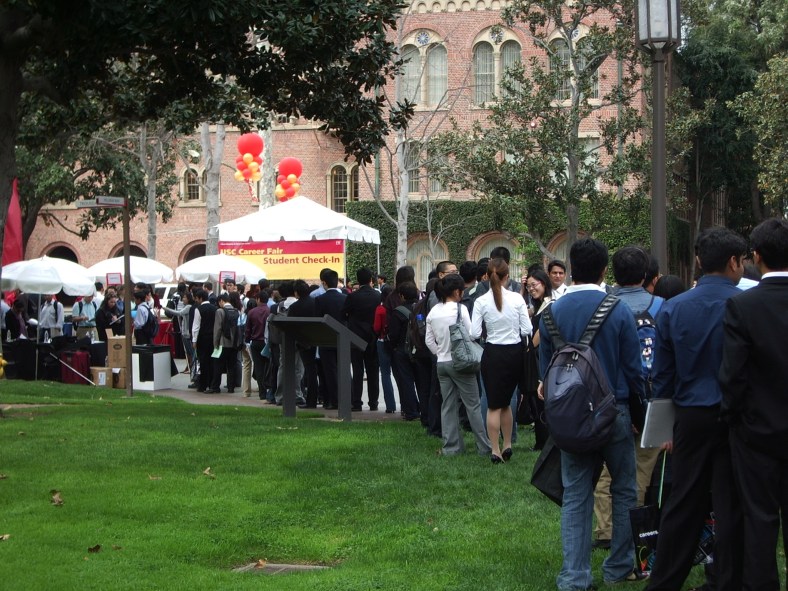
Dress is a visible signal of career transition. Walk through a college campus and you can easily identify the seniors heading to an interview, riding bikes and skateboards clad in black suits with backpacks.

Dress is an outward symbol of an organization’s culture. As you begin the job search process, think about what your everyday wardrobe will look like. Does the ‘dress code’ fit with your personality and image?

Appearance matters and social media is influencing perception of our ‘personal brand’. Author Jennifer Weiner wrote an OpEd for The New York Times in May, ‘The Pressure to Look Good’. She described how social media has transformed the ‘image’ of writers, and women.

“The visual footprint of a writer was until recently limited to a postage-stamp-size author photo. Yes, you’d get dressed up for your book tour, if your publisher was generous enough to fund one, and for television appearances if you were lucky enough to have them. But in terms of your day-to-day work life, your looks didn’t matter. That made the job extra-appealing for those of us who realized early on that the path of the supermodel would not be ours to walk.

Then along came cellphones with built-in cameras. And blogs and Facebook and Twitter. Suddenly, you weren’t just that one tiny picture, you were every picture anyone might happen to want to snap, and to post and pin and share, images that would be tweeted and retweeted, scrutinized and commented upon and invoked to dismiss you as jealous, overweight, bitter, sexually frustrated and, maybe, illogically, also a sexually promiscuous hag. For some critics, a woman’s looks remain the first place they’ll go when they disagree with her opinions.

It used to be that, generally speaking, we all knew the occasions that required us to look good.

Now? Every day is Class Picture Day.”

OK, appearance matters but does what we wear effect how we work? Joe Pinsker writing in The Atlantic found research to support ‘Wearing a Suit Makes People Think Differently’.

“Clothes, it appears, make the man perceive the world differently.”

“A new study looks specifically at how formal attire changes people’s thought processes. “Putting on formal clothes makes us feel powerful, and that changes the basic way we see the world,” says Abraham Rutchick, an author of the study and a professor of psychology at California State University, Northridge. Rutchick and his co-authors found that wearing clothing that’s more formal than usual makes people think more broadly and holistically, rather than narrowly and about fine-grained details. In psychological parlance, wearing a suit encourages people to use abstract processing more readily than concrete processing.”

We have come a long way since John T. Molloy provided career wardrobe advice in his 1977 book, ‘Dress for Success’. A social media footprint has become a public relations tool in developing a professional reputation.

Do the research. Use any opportunity to observe workers in your field. Take your cues from both entry level employees and senior executives. There are some who believe you should dress for your next level. The main thing is to enhance your image, not cause a distraction. You want your managers and colleagues to value your opinions and ideas, not be distracted by your ‘costume’.

If you are uncomfortable in the ‘costume’ of your employer, other things may not be fitting as well. It may be an early signal that it’s time to change more than your threads.

‘Theme in Yellow’ a poem by Carl Sandburg (for Halloween)

Tomorrow we celebrate Halloween, a holiday with origins dating back to the ancient Celts. Today it’s the second biggest consumer spending holiday in America. In all the frenzy of make-believe horror, there is one constant…

Consider the pumpkin. Long before Charles M. Schultz imagined Linus waiting all night in a field for the arrival of the ‘Great Pumpkin’, American poet, Carl Sandburg wrote his ‘ode’ to a simpler time and celebration.

Theme in Yellow

I spot the hills
With yellow balls in autumn.
I light the prairie cornfields
Orange and tawny gold clusters
And I am called pumpkins.
On the last of October
When dusk is fallen
Children join hands
And circle round me
Singing ghost songs
And love to the harvest moon;
I am a jack-o’-lantern
With terrible teeth
And the children know
I am fooling.

Carl Sandburg ‘Chicago Poems’ 1916

The Saturday Read – ‘Humans of New York:Stories’ by Brandon Stanton

We learn from the wisdom of others. In Brandon Stanton’s new book we learn from the wisdom of strangers. The ‘Saturday Read’ this week is ‘Humans of New York: Stories’.

“The simplest way to describe the development of HONY over the past five years is this: it’s evolved from a photography blog to a storytelling blog…after cataloging thousands of people, I stumbled upon the idea of including quotes from my subjects alongside their photographs. The quotes grew longer and longer, until eventually I was spending fifteen to twenty minutes interviewing each person I photographed. These interviews, and the stories that resulted from them, became the new purpose of Humans of New York. The blog became dedicated to telling the stories of strangers on the street.”

The first career story is the author’s own. He graduated from college, took a job in Chicago as a bond trader, lost his job, moved to New York and started taking pictures of folks on the street. His work evolved into a blog with 15.6 million followers. His first book of photography, Humans of New York, landed at the top of The New York Times Bestseller List in the fall of 2013 and the new book will debut at the top of the November 1, 2015 list.

Why the response? Because the Mr. Stanton’s stories, told in words and images are about us. The scope of his project embraces NYC folks encountered on the street, reflecting on their past and future. We don’t know names. We don’t know ages. We can only guess in connecting the photo to the quote. At times the words seem at odds with the picture.

Here is one example from a young man, perhaps in his early teens.

“I’ve sort of had an arrogant demeanor my entire life, and I’m learning that I’m going to have to change that if I want to succeed. I realized that it doesn’t matter how clever you are if nobody wants to work with you.”

Another from a young woman seated on a suitcase, in the middle of a train station.

“I wish I’d partied a little less. People always say: ‘Be true to yourself.’. But that’s misleading because there are two selves. There’s your short-term self, and there’s your long-term self. And if you’re only true to your short-term self, your long-term self slowly decays.”

And a man at mid-life in what appears to be a cold corporate lobby, sitting on a stone bench, framed by a stone wall.

“When you’re twenty-five, you feel like you’re riding a wave. You feel like opportunities are just going to keep coming at you, and you think it’s never going to end. But then it ends.”

“When does it end?”

“When you turn forty, and they start looking for someone younger.”

The reader gets a sense they are looking in the mirror, but they’re not. The photo doesn’t match the selfie, but the sentiment fits.

Heather Long, writing for CNN Money, interviewed Stanton and attended his reading at a NY Barnes and Noble. What has he learned in the process of photographing and interviewing 10,000 people? “Americans should reconsider how much they work.”

“He often asks: What is your biggest struggle? And what do you regret most in life?
“Balancing my life is an answer I hear a lot,” he said. “Balancing work and family.”
People go on to tell him how they wish they had skipped that marketing conference and attended their daughter’s 8th grade dance instead.”

One of my favorite ‘inteviews’ appears early in the book (page 5). The narrative comes from a third grader (?).

“I want to build a bridge”

“How do you build a bridge?”

“If you want to build a bridge, it’s going to take a long time and it might be hard because your employees might not be as interested in building a bridge as you are. You have to think about what type of bridge you want to make…” 

He could be talking about life and career.

HONY: Stories invites us on a road trip through the streets of New York, opting for the detours that welcome conversation. This is a book to read slowly, observing the detail in the photos and the humanity in the words. It’s a compendium of other’s lifelong learning, generously shared.

“I want to be an artist.” “What kind of art do you want to make?” “I want to make different versions of myself.”

The week@work – unlimited vacation, secrets of the most productive and baseball #LGM

This week@work continues the discussion of perks to attract talent, shares secrets of the most productive people and celebrates the talents of those who go to work in baseball.

On Monday evening the NBC Nightly News broadcast a story reported by Tom Costello on the new ‘discretionary time off’ policy being introduced to the 8,700 employees at LinkedIn. With no vacation limits, employees arrange time off with their managers. (What could go wrong?) For the company, with no designated vacation days, there is no need to compensate for unused vacation. With the average American worker taking only half of their allocated time away, it’s a low risk, and financially beneficial proposition for employers.

Joe Lazauskas echoed a similar theme in his Fast Company article, ‘Why More Tech Companies are Rethinking Their Perks’. He writes about a number of experiments with equity, time off and a new way to work.

“Over the past few years, some startups have begun to rethink some of the perks with which they’ve customarily attracted top talent. In their place, a new class of web 3.0 startups are beginning to embrace truly first-rate benefits, which might be giving them a leg up in a viciously competitive tech arena.

Equity that’s truly equitable… in 2013, Kik changed its policy so employees could hold onto their stock options even after they leave. In doing so, it started a small trend: Pinterest followed suit the next year to much fanfare, giving employees seven years to exercise their options. “If other companies follow suit,” wrote Business Insider, “this could change the entire landscape for startups, making it easier for them to attract and retain employees.”

One of the most compelling arguments for a new way of working came from Facebook and Asana cofounder Dustin Moskovitz, in the form of a recent Medium post. Ever since the days of Henry Ford, he noted, profit-maximizing research has backed up the notion that you get more out of employees when they’re better rested and happy.

“The research is clear: beyond 40–50 hours per week, the marginal returns from additional work decrease rapidly and quickly become negative,” Moskovitz wrote.”

Which brings us to ‘Secrets from 11 of the Most Productive People from Oprah to Aziz Ansari’. Comedian Ansari busts the productivity myth:

“While we were writing [Master of None], we would work until 6 or 7 p.m., and then we’d be done. There are other writers’ rooms where people spend nights in the office. I can’t imagine you’re doing your best work then. You’ve got to be a person and do other stuff, or you’re not going to be inspired to write.”

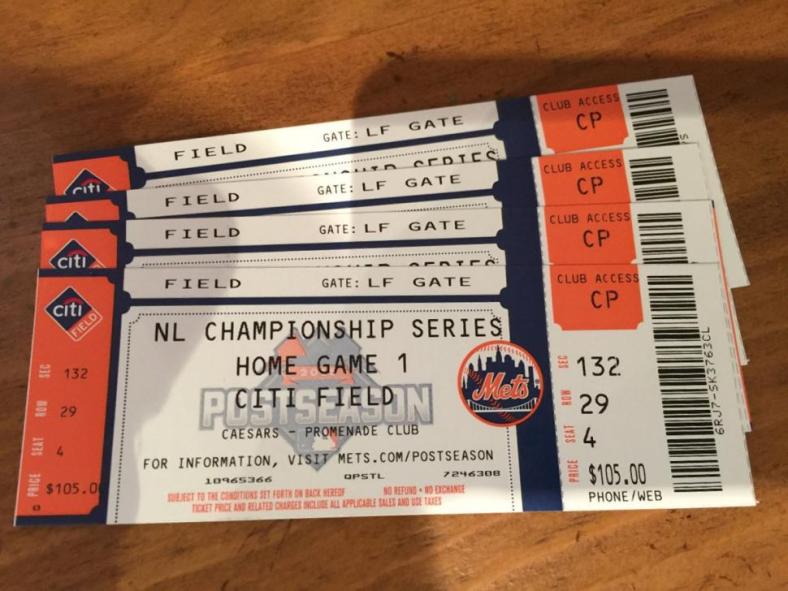
The big story this week@work was about the folks who play baseball. With post-season play underway, we are down to four teams competing to play in the world series. It’s an exciting time to be a NY Mets fan. And there is no better writer to convey the story of baseball than The New Yorker’s Roger Angell.

“Well, yes! Well, whew. The Mets’ breathless, division-grabbing, 3–2 win over the Dodgers last night never felt certain, and provided little fun for old at-homies like me until the last two or three outs. But check that: there was that sudden snicker in the top of the fourth inning, a little embarrassment for the moneyed, resident Dodgers, when Mets second baseman Dan Murphy, aboard again after another hit, moved along to second on a walk to Lucas Duda and, finding no Dodgers anywhere near that corner, took third as well. Oop. Then he scored on a sac fly by Travis d’Arnaud, tying the game at 2–2. The gratis extra base felt like a social error, spilled claret on the tablecloth, but in retrospect turned out to to be the pivot, the turning point of this strange, strained game.”

If you have aspirations to be a sportswriter, read everything Mr. Angell has written. And, read William Powell’s amazing profile of a sportswriter in St. Louis Magazine, ‘The Big Comeback of Benjamin Hochman.

It’s a career/life story of an eight year old St. Louis Cardinals fan who followed his dream to be a sportswriter and after stints in New Orleans and Denver, returns to his hometown to write for the Post-Dispatch.

“Benjamin pens his first column for the Post-Dispatch on September 3. We meet the next morning. The first thing I want to know is, why? He was living in Denver, one of America’s fastest-growing cities. There were four major sports teams and mountains and Peyton Manning. He gave it up to come to St. Louis, with three major sports teams, possibly soon to be two. We have a shrinking population and a landfill fire that’s burning toward a pile of radioactive waste and #Ferguson.

His response, about the Cardinals’ being perennial contenders and the stadium drama’s being interesting and so on, doesn’t answer the question. But when I walk into his living room, I instantly understand. We unpack box after box of his Cardinals memorabilia, and that’s just the tip of the iceberg. There are posters of Post-Dispatch front pages from the Cardinals’ run in 2011, with Yadier Molina going crazy in every photo. He has balls signed by Jim Edmonds and Yogi Berra, a whole heap of replica rings. We find a copy of the Celebration! album he listened to as a kid and copy after copy of old issues of the newspaper, which Benjamin collects.

That leads me to my next question: Given his childhood, can he be an objective journalist, or will he be a fan in the press box? He even knows the Kroenkes, having managed the Mizzou basketball team when Josh was a member. This time, Benjamin has an answer ready. “I can’t be a fanboy. I have to be the guy who keeps the team accountable,” he says. “I will use my knowledge and my passion for St. Louis to enhance my writing.”

And for those of you who just don’t get baseball –

“This past summer, he created the Nine Innings project, writing nine love letters to baseball. For one, he found kids playing in the streets, just like in the good old days. For another, he tried to track down a specific stadium seat that had been hit by a famous minor league home run. For the final installment, he wrote about the bond that baseball creates in families. He wrote about his dad listening to the World Series in science class, and about a soldier serving overseas who stayed in touch with his parents by following the Rockies. It’s sure to win awards.”

‘The Managers’ a poem by W.H. Auden

The ‘Friday Poem’ this week is ‘The Managers’ by British poet W.H. Auden. The poem was written almost 70 years ago, in the post World War II period when a new class of worker was emerging, the professional corporate manager. The new corporate bureaucracies mirrored the military structures that had effectively managed the war effort.

In the military you were assigned a number, and as these new organization structures emerged, employees lost their identities and became numbers as well. Auden used his poetry to remind those in charge that workers have faces..

‘The mere making of a work of art is itself a political act’ because it reminds ‘the Management … that the managed are people with faces, not anonymous numbers.’

‘The hero of modern poetry is ‘the man or woman in any walk of life who … manages to acquire and preserve a face of his own’.”

The poem is a snapshot in time of one artist’s reaction to the “Men, working too hard in rooms that are too big”.

The Managers

In the bad old days it was not so bad:

The top of the ladder

Was an amusing place to sit; success

Meant quite a lot – leisure

And huge meals, more palaces filled with more

Objects, books, girls, horses

Than one would ever get round to, and to be

Carried uphill while seeing

Others walk. To rule was a pleasure when

One wrote a death sentence

On the back of the Ace of Spades and played on

With a new deck. Honours

Are not so physical or jolly now,

For the species of Powers

We are used to are not like that. Could one of them

Be said to resemble

The Tragic Hero, The Platonic Saint,

Or would any painter

Portray one rising triumph from a lake

On a dolphin, naked,

Protected by an umbrella of cherubs? Can

They so much as manage

To behave like genuine Caesars when alone

Or drinking with cronies,

To let their hair down and be frank about

The world? It is doubtful.

The last word on how we may live or die

Rests today with such quiet

Men, working too hard in rooms that are too big,

Reducing to figures

What is the matter, what is to be done.

A neat little luncheon

Of sandwiches is brought to each on a tray,

Nourishment they are able

To take with one hand without looking up

From papers a couple

Of secretaries are needed to file,

From problems no smiling

Can dismiss. The typewriters never stop

But whirr like grasshoppers

In the silent siesta heat as, frivolous

Across their discussions

From woods unaltered by our wars and our vows

There drift the scents of flowers

And the songs of birds who will never vote

Or bother to notice

Those distinguishing marks a lover sees

By instinct and policemen

Can be trained to observe. Far into the night

Their windows burn brightly

And, behind their backs bent over some report,

On every quarter,

For ever like a god or a disease

There on earth the reason

In all its aspects why they are tired, and weak,

The inattentive, seeing

Someone to blame. If, to recuperate

They go a-playing, their greatness

Encounters the bow of the chef or the glance

Of the ballet-dancer

Who cannot be ruined by any master’s fall.

To rule must be a calling,

It seems, like surgery or sculpture; the fun

Neither love nor money

But taking necessary risks, the test

Of one’s skill, the question,

If difficult, their own reward. But then

Perhaps one should mention

Also what must be a comfort as they guess

In times like the present

When guesses can prove so fatally wrong,

The fact of belonging

To the very select indeed, to those

For whom, just supposing

They do, there will be places on the last

Plane out of disaster.

No; no one is really sorry for their

Heavy gait and careworn

Look, nor would they thank you if you said you were.

W.H. Auden 1948, ‘The Oxford Book of Work’ 1999

It’s not just millennials – we all want to learn and grow @work

“How Do Employers Retain Job-Hopping Millennial Employees?” That was the question posed on Quora.com earlier this week. After reading the response from millennial entrepreneur, Elijah Medge, posted on Slate.com, I realized that what we want from work is not a generational issue, we all have similar expectations @work: to learn, grow and be challenged in an “awesome work environment”.

The American worker is tired of hearing about the ‘outrageous expectations’ of the millennial generation.

Instead, let’s step back and thank the millennials for their workplace vision that demands a voice in decision making, requires meaning @work, invites a diverse set of views and creates a bit of fun on the way to productivity.

There will always be a clash between employer and employee expectations when the process lacks honesty. Employers are scrambling to create ‘band aids’ to attract new hires. Job candidates, anxious to please a potential employer, play the game to get the offer, only to depart in a few months when promise and reality don’t match.

Media reports are full of stories of companies trying a variety of experiments to entice millennials to sign on the dotted line. There is no considered approach, just a bunch of ideas being thrown at the wall to see if any stick. The most recently publicized, ‘unlimited vacation time’.

Mr. Medge’s suggestions remind us that a fundamental tenet of management is ‘keep it simple’:

“Facilitate team bonding outside of the office.”

“Mix it up and have a little fun.”

“Take the time to coach, train, and develop successful mentalities.”

“Offer awesome incentives.”

“Encourage learning and mistakes.”

“Don’t micromanage.”

“Consistently recognize top performers.”

“Talk to your people about their goals.”

Do you see anything here that’s generation specific?

When corporate contracts with workers began to disintegrate in the late ’70s, members of the greatest generation and baby boomers were forced to rethink their relationship with the workplace. The disruption of downsizing signaled the end of ‘job stability’.

The level of workplace disruption came as a shock. Those generations were new at this and slow to respond. They had families and mortgages and the risks were too high to challenge the status quo, even thought the status quo had been shattered. The economy was changing and maintaining a standard of living required two incomes.

In contrast, today’s new workers, although saddled with debt, have few other ties. They are the ‘free agents’ of the contemporary workplace and they have watched previous generations, their parents and grandparents, and concluded there is a better way to work.

Let’s engage all workers in conversation about work culture that incorporates Mr. Medge’s common sense components.

The question of employee retention crosses all generations @work: the leaders, the mentors and the newbies. Calibrate the expectations of all members of the workplace community, align with the organization’s culture and restore credibility into the recruitment and retention process.

The week@work – Jobs report, valuing low-skilled workers, succession in fashion and another college scorecard

This week@work ended with the release of a disappointing September jobs report. On Thursday, an English instructor and restaurant server in Las Vegas shared her views on the value of unskilled labor. In the world of fashion the transition in leadership at Ralph Lauren was the most publicized succession news, but a number of fashion houses are facing business continuation challenges. And, potential college students have one more metric to use to select a college, the Obama administration’s ‘College Scorecard’.

Patricia Cohen provided a detailed analysis of the September jobs report from the Labor Department.

“The Labor Department found that the jobless rate held steady at 5.1 percent in September, but wage gains stalled, the labor force shrank and employers created many fewer positions than they had been averaging in recent months. While the latest report is only a snapshot of the economy and the weakness may ultimately prove fleeting, it made clear that ordinary workers are still failing to take home the kind of monetary rewards normally expected from a recovery that has being going on for more than six years.”

The low skill areas of the economy continue to be the hardest hit. It’s this group that was the topic of an opinion piece by Brittany Bronson, an English instructor with a perfect view to comment from her other job as a restaurant server. She posed the question, do we value low-skilled work?

“We’re raised, in the culture of American capitalism, to believe certain things, without question, namely that the value of work is defined by the complexity of the task and not the execution of it, that certain types of work are not worthy of devoting a lifetime to.

The labels “low-skilled” or “unskilled” workers — the largest demographic being adult women and minorities — often inaccurately describe an individual’s abilities, but play a powerful role in determining their opportunity. The consequences are not only severe, but incredibly disempowering: poverty-level wages, erratic schedules, the absence of retirement planning, health benefits, paid sick or family leave and the constant threat of being replaced.

…When you witness a great restaurant server or see a particularly effective janitor at work, you aren’t observing a freak talent, but someone who took the time to learn his or her job and improve on it. Now imagine if more “low-skilled” workers were given the compensation, job security and encouragement to do the same.”

The conversation about valuing the work of low skilled labor has recently centered around raising the minimum wage. While important, it plays into the narrative that value is validated by the size of a paycheck. Ms. Bronson addresses the bigger issue.

“But the more difficult challenge is to redefine the language and perceptions that trap large segments of reliable workers in poverty. All work can be executed with skill, but denying that fact is useful to those who justify the poor treatment of, and unfair compensation for, millions of workers.

Convincing those workers that their treatment is temporary, that if they just keep working harder, learn to do their tasks more quickly, more efficiently, more fluidly, they will eventually surpass it — this is a myth we can’t keep telling.”

On the other end of the economic spectrum, Nikki Baird examined the implications of the transition at the Ralph Lauren company as its namesake and leader leaves his chief executive officer position.

“Ralph Lauren, the company, will undergo a critical transition as its namesake founder steps down, to be replaced by the former president of Old Navy , Stefan Larsson. The transition comes at an interesting time for high-end fashion brands, and for the Ralph Lauren brand in particular.

It’s always tricky when a personality-driven brand’s primary personality steps down, though granted in this case, Mr. Lauren will remain the company’s chief creative officer. New blood means new opportunities, and even brands with very established values and specific lifestyle appeal can lose relevancy during a leadership transition.”

“But Ralph Lauren is making this transition in the midst of a much larger change happening within specialty retail, a change driven by the rise of the internet and consumers’ cross-channel shopping behaviors, and exacerbated by consolidation in the department store landscape.”

The challenge of leadership continuation is not restricted to the fashion industry. Many of the changes that have occurred in other business sectors can trace a direct line to disruption from players outside traditional marketing and delivery channels. Now the spotlight shifts to the world of fashion as a generation of designers departs and executive recruiters seek leaders who will be both relevant in imagination and design, and grow revenue in an increasingly competitive global, digital market.

“The question of succession is a pressing one for many major brands, not just labels with leaders d’un certain âge (Karl Lagerfeld, of Chanel and Fendi, is in his 80s; Giorgio Armani, 81). Even among young designers, turnover is a regular occurrence.”

“The responsibilities of branding in a rapidly changing digital age — not necessarily the skills honed in fashion colleges 20 or 30 years ago — have put a new premium on youth and comfort in the digital space.”

“If a brand is not meaningful through the screen, there is very little hope that you can really build a success,” Ms. de Saint Pierre said. “I think we are at a time when the majority of the consumers are coming from non-Western countries. Their education to luxury, their education to brands has not been generational. It has been through a screen. This is a major shift of paradigm for the 21st century, and this is not going to change.”

The last story of this week@work comes from James Stewart, ‘College Rankings Fail to Measure the Influence of the Institution’.

“The bottom line is that no ranking system or formula can really answer the question of what college a student should attend. Getting into a highly selective, top-ranked college may confer bragging rights, status and connections, but it doesn’t necessarily contribute to a good education or lifelong success, financial or otherwise.”