The Friday Poem ‘To The Indifferent Women’ by Charlotte Anna Perkins Gilman

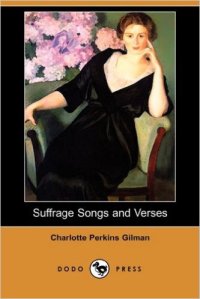
On the eve of the ‘Women’s March’, the Friday Poem reprises ‘To The Indifferent Women’ by Charlotte Anna Perkins Gilman. I originally posted the poem in July after the first woman in U.S. history accepted her party’s nomination for president.

Sometimes things don’t work out as planned.

Tomorrow, in Washington D.C. and cities around the country, women will join together in a nation that could not ratify an equal rights amendment, or elect the first woman president, and remind those elected that women’s rights are human rights.

“In the spirit of democracy and honoring the champions of human rights, dignity, and justice who have come before us, we join in diversity to show our presence in numbers too great to ignore. The Women’s March on Washington will send a bold message to our new government on their first day in office, and to the world that women’s rights are human rights. We stand together, recognizing that defending the most marginalized among us is defending all of us.”

There is something going on here, as there was in 1911 when Ms. Perkins was writing for the cause of women’s rights.

One of the more stunning stories, in advance of the D.C. march, appears in today’s NY Times and profiles an unlikely activist contingent – ‘From Wall Street to National Mall: Women Overcome Fears to Attend March’.

“They are professionals in trading, public relations, marketing, deal-making, investing and the law. They keep punishing schedules, fear losing business by offending their clients and often feel that in an industry still overwhelmingly populated by men, the less attention drawn to their sex, the better.

But the inauguration of Mr. Trump has prompted a striking number of Wall Street women to overcome their worries about demonstrating in public.”

For those who will march and be questioned why, and for those still without weekend plans – a beautiful question from 1911.

“Do you believe the sorrow of the world
Does not concern you in your little homes?”

To The Indifferent Women

A Sestina

You who are happy in a thousand homes,
Or overworked therein, to a dumb peace;
Whose souls are wholly centered in the life
Of that small group you personally love;
Who told you that you need not know or care
About the sin and sorrow of the world?

Do you believe the sorrow of the world
Does not concern you in your little homes? —
That you are licensed to avoid the care
And toil for human progress, human peace,
And the enlargement of our power of love
Until it covers every field of life?

The one first duty of all human life
Is to promote the progress of the world
In righteousness, in wisdom, truth and love;
And you ignore it, hidden in your homes,
Content to keep them in uncertain peace,
Content to leave all else without your care.

Yet you are mothers! And a mother’s care
Is the first step toward friendly human life.
Life where all nations in untroubled peace
Unite to raise the standard of the world
And make the happiness we seek in homes
Spread everywhere in strong and fruitful love.

You are content to keep that mighty love
In its first steps forever; the crude care
Of animals for mate and young and homes,
Instead of pouring it abroad in life,
Its mighty current feeding all the world
Till every human child can grow in peace.

You cannot keep your small domestic peace
Your little pool of undeveloped love,
While the neglected, starved, unmothered world
Struggles and fights for lack of mother’s care,
And its tempestuous, bitter, broken life
Beats in upon you in your selfish homes.

We all may have our homes in joy and peace
When woman’s life, in its rich power of love
Is joined with man’s to care for all the world.

Charlotte Anna Perkins Gilman ‘Suffrage Songs and Voices’ 1911

41py0cnjwl-_sx331_bo1204203200_

Photo credit: Screen shot from Women’s March LA website


The week@work – the top stories of ’16, a new year, the eternal optimist’s talking points, French workers get the right to disconnect, and leadership lessons from Michelle Obama

Happy New Year! This week@work we take a final look at the top stories of 2016, and the stories from the first week of 2017. On the work-life balance front – French workers now have the legal right to disconnect from the office. The U.S. unemployment rate is at 4.7%, with hourly salary earnings rising 2.9%. And for women@work, an article considered the future of women in this new year, as First Lady Michelle Obama delivered her final formal remarks on Friday, giving us a parting gift – a model for what a leader looks like.

The Economist’s top ten most read stories of 2016 centered on the U.S. election and Brexit. In the U.S., NPR’s top 20 did not include Brexit, but the question of how Donald Trump will govern, led the list. “The top 20 most popular stories from the past year ranged from fact checks to mosquito bites, from Aleppo to taxes, and how to raise kids who will thrive, whatever the future brings.” 

There were many stories about work and the workplace, but most became a subset of the larger stories. Susan Chira reflected on ‘What Women Lost’.

“This was supposed to be the year of triumph for American women.

A year that would cap an arc of progress: Seneca Falls, 1848. The 19th Amendment, 1920. The first female American president, 2017. An inauguration that would usher in a triumvirate of women running major Western democracies. Little girls getting to see a woman in the White House.

Instead, for those at the forefront of the women’s movement, there is despair, division and defiance. Hillary Clinton’s loss was feminism’s, too.”

2017 will be the year we ask, what are the long term implications for women@work? On January 21, in Washington, and cities around the country, women will have an opportunity to reinsert themselves into the national conversation.

Unknown.png

For additional reading @year end:

‘The Echoes of 1914’ by historian Margaret MacMillan for the BBC. She responsed to a query about which year in history most closely resembled 2016.

“I wish I could stop, but I find myself thinking of 1914. The world then had seemed so stable, so manageable. Crises – political, social, economic, military – came and went but “they”, bankers, statesmen, politicians, always managed them in the end.

Yes, there were grumblings – from the working classes or women, or those who were losing their livelihoods because of free trade or mechanisation.

And there were some strong emotions about: fears of rapid change, passionate nationalisms that meant love of one’s own country and hatred of others. Ominous in retrospect because we know what happened. But at the time there was a complacency – it would surely all work out all right.

That confidence was dangerous because it meant that people didn’t take the warning signs seriously enough.

I wish I could stop making the comparisons.

In ‘1999 Was The Last Time Everything Was Fine’ BuzzFeed Culture Writer Doree Shafrir revisited her first year@work.

“I had no job and almost no money. My parents had given me the security deposit on the apartment as a graduation present, but now I was on my own. I was entranced by the classifieds section of the New York Times, with its pages and pages of appeals for secretaries and programmers and architects and retail store managers. I didn’t really know what I wanted to do. I knew I liked to be around words, but I wasn’t sure what that meant in terms of actually making money. Maybe now was the time to try something new. Maybe I could close my eyes and point to something on the page and that would be my destiny.

That was how 1999 felt, like anything was possible.”

Artist Tucker Nichols created a rainbow rendering of an ‘Eternal Optimist Talking Points for 2017’ as OpArt for The New York Times.  A sample of musings: “Somehow not as freaked out by scary clowns anymore…Midtown traffic has always been pretty jammed up…Smog makes great sunsets…Still a chance it’s a very long dream.”

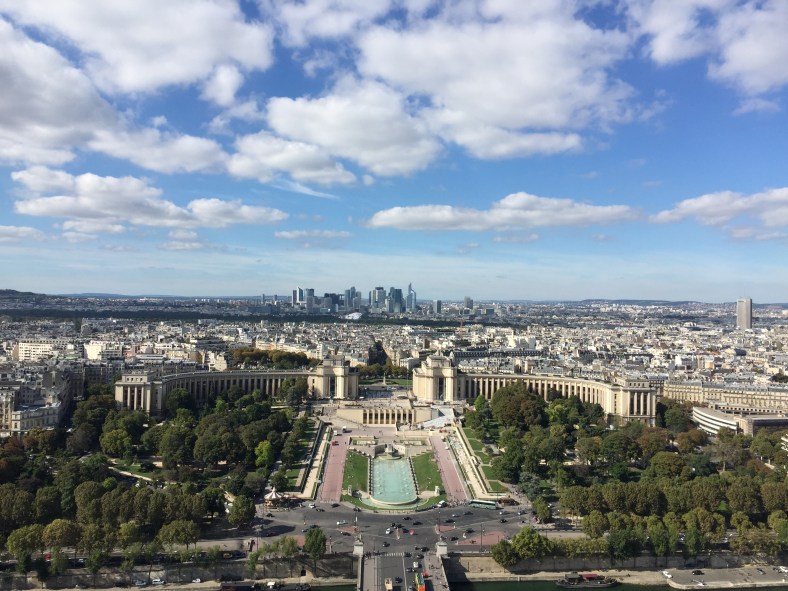
On January 1, a new law in France went into effect allowing workers to ‘disconnect’ from their workplace.
IMG_5895.jpg

The BBC reported on France’s implementation of a law to protect work-life balance.

“Companies with more than 50 workers will be obliged to draw up a charter of good conduct, setting out the hours when staff are not supposed to send or answer emails. France has a working week of 35 hours, in place since 2000.”

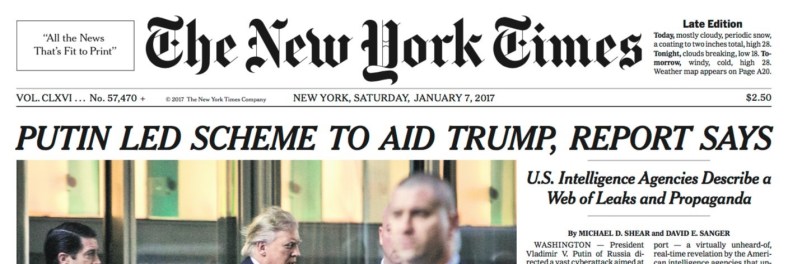
And then there was this from the professionals who go to work every day in U.S. Intelligence Services.IMG_8057.JPG
On Friday afternoon, First Lady Michelle Obama gave a memorable farewell speech at a White House event honoring the 2017 School Counselor of the Year. The text set an aspirational vision for all Americans and provides all of us with a lesson in leadership.

“…for all the young people in this room and those who are watching, know that this country belongs to you — to all of you, from every background and walk of life. If you or your parents are immigrants, know that you are part of a proud American tradition — the infusion of new cultures, talents and ideas, generation after generation, that has made us the greatest country on earth.”

C1hKGRJUcAAgab2.jpg

“If your family doesn’t have much money, I want you to remember that in this country, plenty of folks, including me and my husband — we started out with very little. But with a lot of hard work and a good education, anything is possible — even becoming President. That’s what the American Dream is all about.

But I also want to be very clear: This right isn’t just handed to you. No, this right has to be earned every single day. You cannot take your freedoms for granted. Just like generations who have come before you, you have to do your part to preserve and protect those freedoms. And that starts right now, when you’re young.

Right now, you need to be preparing yourself to add your voice to our national conversation. You need to prepare yourself to be informed and engaged as a citizen, to serve and to lead, to stand up for our proud American values and to honor them in your daily lives. And that means getting the best education possible so you can think critically, so you can express yourself clearly, so you can get a good job and support yourself and your family, so you can be a positive force in your communities.

And when you encounter obstacles — because I guarantee you, you will, and many of you already have — when you are struggling and you start thinking about giving up, I want you to remember something that my husband and I have talked about since we first started this journey nearly a decade ago, something that has carried us through every moment in this White House and every moment of our lives, and that is the power of hope — the belief that something better is always possible if you’re willing to work for it and fight for it.

It is our fundamental belief in the power of hope that has allowed us to rise above the voices of doubt and division, of anger and fear that we have faced in our own lives and in the life of this country. Our hope that if we work hard enough and believe in ourselves, then we can be whatever we dream, regardless of the limitations that others may place on us. The hope that when people see us for who we truly are, maybe, just maybe they, too, will be inspired to rise to their best possible selves.

So that’s my final message to young people as First Lady. It is simple. I want our young people to know that they matter, that they belong. So don’t be afraid — you hear me, young people? Don’t be afraid. Be focused. Be determined. Be hopeful. Be empowered. Empower yourselves with a good education, then get out there and use that education to build a country worthy of your boundless promise. Lead by example with hope, never fear. And know that I will be with you, rooting for you and working to support you for the rest of my life.”

We work in the context of global events, as responsible citizens. Our role in our workplace is to reflect the best in human and organizational values. In this new year@work, stay focused, be determined and lead by example with hope, never fear.


Photo credits: New Year’s Eve London – Ben Cawthra/LNP, Michelle Obama – BBC.com

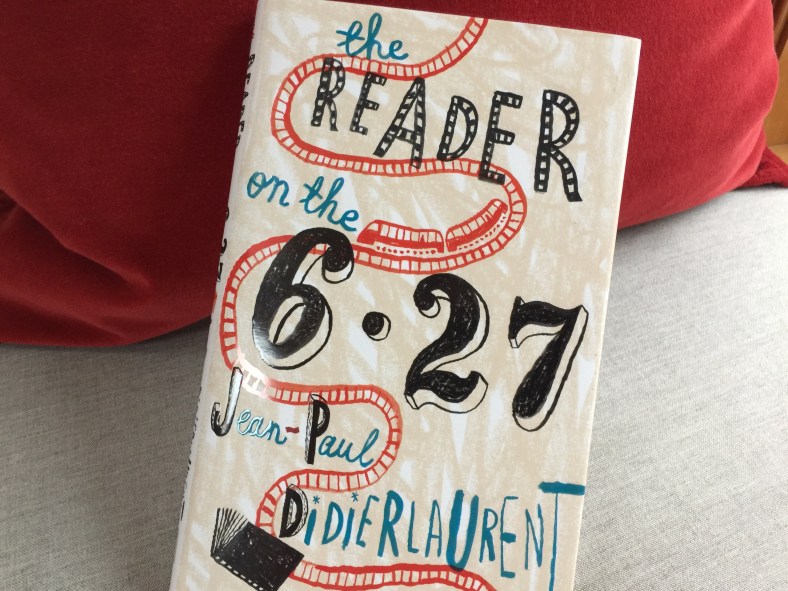
The Saturday Read ‘The Reader on the 6.27’ by Jean-Paul Didierlaurent (translated by Ros Schwartz)

Does our work define us? Many would argue it doesn’t and yet, we carry the bias of standard stereotypes throughout our work day toward those we encounter along the way.

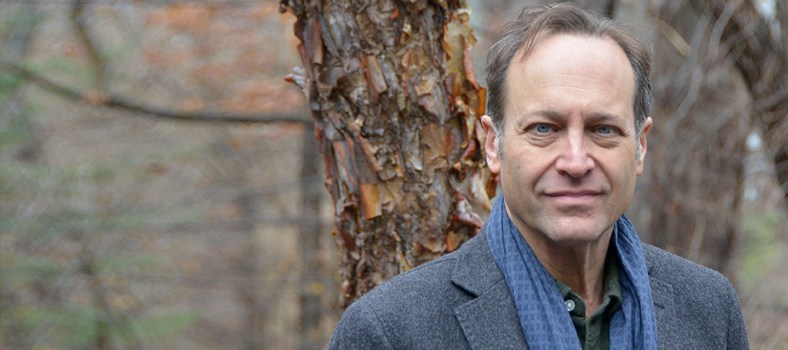
This question of work identity and expectations forms the center of the story of ‘The Reader on the 6.27’ by French writer Jean-Paul Didierlaurent.

In this novel, I wanted to highlight the invisible, the battered lives, the ordinary people who often go unnoticed; and I wanted to show that each of them could have their own unexpected story. In a society where looks have become a religion and where we judge more on appearance, I wanted to highlight our prejudices and show that the clothes do not always make the man. But this book is also a declaration of love for words and for reading. All the characters have a close relationship with words – the words they read, the words they speak and finally the words of love. These words are the real cement of the novel.”

The novel’s hero is Guylain Vignolles whose workplace is dominated by an overbearing caricature of the worst boss ever, and ‘The Thing’.

“The Thing sat there, huge and menacing, right in the centre of the plant. In the fifteen years he had worked there, Guylain had never been able to call it by its real name, as if the simple act of naming it might be to acknowledge it, to demonstrate a sort of tacit acceptance, which he did not want at any cost. Refusing to name it was the last bastion he had managed to erect between it and himself, to avoid selling his soul for good.”

What if your job was to destroy the thing you loved most? That’s Guylain’s dilemma. ‘The Thing’ – the Zerstor 500 – is a hungry metal behemoth that turns books into sludge. (You will have a different view of recycling after reading the description.)

Guylain finds meaning in rescuing sheets of paper from the jaws of the “eleven-tonne monstrosity” and reading these disjointed narratives to his fellow commuters each morning on the 6.27.

Then, one day he finds a memory stick “through pure chance” as “it jumped out of the folding seat as he lowered it. A little plastic thing barely the size of a domino which bounced across the floor of the compartment and came to a halt between his feet..”

The contents of the USB are revealed as Guylain, the ‘reader on the 6.27’, replaces his daily narration from the remainders of ‘the thing’ with the story of a mysterious stranger.

“Once a year, at the spring equinox, I do a recount. Just to see, to make sure that nothing ever changes. At this very special time of year, when day and night share time equally, I do a recount with, lodged in the back of my mind, the ludicrous idea that perhaps, yes, perhaps one day, even something as unchanging as the number of tiles covering my domain from floor to ceiling might change.  It’s as hopeless and stupid as believing in the existence of Prince Charming, but deep down inside me is that little girl who refuses to die and who, once a year wants to believe in miracles.”

Julie’s domain is in the basement of a mall. And it’s her story that should forever challenge the reader’s preconceptions of society’s work identity assignments.

“When you’re a public lavatory attendant, wherever that may be, you’re not expected to keep a diary and sit there tapping away on the keyboard of your laptop. You’re only good for wiping from morning to evening, shining the chrome, scrubbing, polishing, rinsing, refurbishing the cubicles with toilet paper, and that’s it. A loo attendant is meant to clean, not to write…It’s as if there has been a misunderstanding, a miscasting. In the nether world, even a miserable twelve-inch laptop next to the tips saucer will always be a blot on the landscape…”

“I quickly had to come to terms with the fact that people generally expect only one thing of you: that you reflect back the image of what they want you to be.”

“Fit docilely into the mould, slip into this lavatory attendant’s costume – which is what I am paid to do – and play the part, sticking closely to the script.”

Mr. Didierlaurent has filled the gap in workplace literature with a beautifully told story of memorable characters who reside in the periphery of vision, but will long linger in the reader’s memory. Here is a novelist providing the lesson that not all workplace advice is to be found in the business section of the bookstore.

After reading the novel, and becoming acquainted with a cast of characters who bring it to life, perhaps we can reorient our expectations, and look beyond the surface for the complementing prism of talent that defines us all.

Resist “sticking closely to the script”, and follow Julie’s advice.

“I advance in small steps. Not a single day goes by without my writing. Not to do so would be as if I had restricted myself to the role of loo-poo-puke cleaner that they want me to play, a poor creature whose only raison d’être is the lowly occupation for which she is paid.”


The Friday Poem “Hope” is the thing with feathers by Emily Dickinson

What do we have if we don’t have hope?

In December, U.S. First Lady Michelle Obama was interviewed by Oprah Winfrey. One of the most stunning, yet relatable, quotes concerned ‘hope’- the promise of her husband’s presidential campaign eight years ago.

“I think that we feel the difference now. See, now we’re feeling what not having hope feels like. 

“Hope is necessary. It’s a necessary concept, and Barack didn’t just talk about hope because he thought it was just a nice slogan to get votes.”

“What else do you have, if you don’t have hope? What do you give your kids if you can’t give them hope?”

The Friday poem this week is from the nineteenth century American poet, Emily Dickinson – because we all could use a little hope “perched in our soul” in this new year.

“Hope” is the thing with feathers

“Hope” is the thing with feathers –
That perches in the soul –
And sings the tune without the words –
And never stops – at all –

And sweetest – in the Gale – is heard –
And sore must be the storm –
That could abash the little Bird
That kept so many warm –

I’ve heard it in the chillest land –
And on the strangest Sea –
Yet – never – in Extremity,
It asked a crumb – of me.

Emily Dickinson ‘The Poems of Emily Dickinson’ edited by R.W. Franklin

9780674018242.jpg


The Holiday Read ‘Bobby Kennedy: The Making of a Liberal Icon’ by Larry Tye

Biographies are the stories of career transition. When we make a selection from a bookstore, library or electronic shelf we may not be seeking the secret to success. We may not even be thinking about work and career. A life story well told is one that surprises the reader with the unexpected; previously unknown challenges faced, and career crises resolved.

The ‘holiday read’ recommendation this season is the new biography of Bobby Kennedy by Larry Tye. It’s a life story well told, of someone we thought we knew.

If the current political landscape seems bleak, this trip back to 1950’s-1960’s America will frame the present within the historical context of our not too distant past. And perhaps offer a bit of hope.

Bobby Kennedy’s story is a career story that begins, as many do, following the expectations of others. At age 38 the carefully constructed career scaffolding collapsed and he faced a decision, what should I do with my life?

“He had spent the first twenty-five years with the world seeing him as Joe Kennedy’s boy, and the next dozen as John Kennedy’s brother. Now he would be his own man, one who was both more tempered and fiercer.”

The narrative reflects these two career/life phases. The first six chapters explore the less familiar territory of Bobby Kennedy, “…nurtured on the rightist orthodoxies of his dynasty-building father and started his public life as counsel to the left-baiting, table-thumping senator Joseph McCarthy. That younger RFK was a bare-knuckled political operative who masterminded his brother’s whatever-it-takes bids for senator and president.”

The remaining chapters relate the story of a man plotting a career path apart from the influence of his father and older brother.

The trauma of assassination “had loosed Bobby’s moorings, quelled his passions, and made him question even his faith…The values and qualities that would define him were present from the beginning, but they fully bloomed only after his father’s disability and his brother’s death…Now this man so shaped by others was reshaping himself, the way the existentialists said he could. He could finally ask what he wanted and needed. His public persona began to reflect the gentleness that family and friends say they had always known.”

In 1964 Bobby Kennedy was at that point we may recognize from personal experience. “The breadth of the choices he was weighing reflected the reality that for the first time, he didn’t know what he should do…He was also self-aware enough to realize the implausibility of his impasse: “It’s a hell of a thing, isn’t it? Thirty-eight years old and no place to go.””

Public service had driven his decisions in the past and on August 25, 1964 he embarked on the next stage of his career, announcing a run for senate from the State of New York.

Trailing in the polls, accused of being a ‘carpetbagger’, on October 5, he addressed “more than two thousand people at Columbia University’s Wollman Auditorium…Standing onstage alone in the glaring TV lights, a microphone in his hand, he looked younger and smaller than the student interrogators who threw him one hardball question after another for eighty-five minutes… His audience was filled with students from the most politically active generation ever in America, who four years later would help ignite the nation in protest over everything from the war in Vietnam to crumbling U.S. ghettos. For now, these fans of Bob Dylan and the Rolling Stones sensed that Bobby was as authentic as a politician got.”

On November 3, Kennedy won the election, making history. “The Kennedys were the first family ever to send three brothers to the U.S. Senate, and the second to have brothers serving simultaneously…”

His senate career represented a historical catalog of the social issues facing the country: civil rights, anti-poverty programs, and eventual opposition to the Vietnam war.

“The senator from New York’s involvement with the Republic of South Africa was different. Unlike Vietnam, it didn’t matter to the White House or to most Americans. And in South Africa, it wasn’t Bobby but millions of oppressed blacks and thousands of their white allies who were desperate to speak our but had gagged themselves for fear of the consequences. Traveling there in 1966, Bobby gave them a voice in a way that nobody else had. The trip also freed him from the politics that clouded everything he did in America and brought him back to first principles.”

Once again, it was a crowd of university students at the University of Cape Town on June 6, 1966 that provided him a platform to deliver one of his most memorable speeches, ‘The Ripple of Hope’.

“It is from numberless diverse acts of courage and belief that human history is shaped each time a man stands up for an ideal or acts to improve the lot of others or strikes out against injustice. He sends forth a tiny ripple of hope, and crossing each other from a million different centers of energy and daring, those ripples build a current that can sweep down the mightiest wall of oppression and resistance.”

Larry Tye’s biography doesn’t dwell on the familiar in Bobby Kennedy’s history. He doesn’t rehash the work of previous biographers. What he delivers to readers is a life story, illuminated by contemporary journalists’ coverage, informed by historical fact, and imbued with Kennedy’s ceaseless career passion as an advocate for those with no representation.

“Bobby was a shaker-upper dedicated to the art of the possible. That he could change so substantially and convincingly over the course of his brief public life helped restore a changing America’s faith in redemption. In the end he could become this nation’s high priest of reconciliation precisely because he had once been the keeper of our darkest seekers.”

Spend your holiday with ‘Bobby Kennedy: The Making of a Liberal Icon’ and restore your belief in “the art of the possible”.


The Friday Poem ‘Introduction to Poetry’ by Billy Collins

When I first started ‘workthoughts’ almost two years ago, I wanted to include a weekly poem or lyric. A colleague had once shared her secret of success@work, “I start my day reading a poem”.

I believe we all become a bit more creative when we discover the world through a poet’s eyes. Why don’t more of us include poetry in our work lives?

Former U.S. Poet Laureate Billy Collins shared his opinion in an interview to Ben Yakas of gothamist.com.

“…the teaching of poetry is often brutally centered on interpretation. This gives teachers power because they kind of “know the answer.” And I think there’s a streak of sadism in it as well as they watch students get the wrong answer by guessing.”

In October, Mr. Collins published his 12th book of poetry, ‘The Rain in Portugal’. The Friday Poem this week is from his first collection, ‘The Apple That Astonished Paris’, and is for all of you whose early love of poetry was extinguished by an overzealous pursuit of analysis.

Introduction to Poetry 

I ask them to take a poem
and hold it up to the light
like a color slide

or press an ear against its hive.

I say drop a mouse into a poem
and watch him probe his way out,

or walk inside the poem’s room
and feel the walls for a light switch.

I want them to waterski
across the surface of a poem
waving at the author’s name on the shore.

But all they want to do
is tie the poem to a chair with rope
and torture a confession out of it.

They begin beating it with a hose
to find out what it really means.

Billy Collins from ‘The Apple That Astonished Paris’ 1988

collins.png

The Friday Poem ‘Voice’ by Jeffrey Brown


Walking west on 40th Street, between 7th & 8th, you pass the entrance to the CCNY Graduate School of Journalism. In the space of a city block, those aspiring to pursue a career reporting the news, cross paths with the the best in the field @work in The New York Times building.

There was a time when the most trusted man in America was a television journalist. Today, journalists across the globe find themselves at risk when reporting the truth. ‘Fake news’ sites proliferate where fiction replaces fact.

Lost in the cacophony of the latest news cycle is the value professional journalists provide in our society; collecting and communicating information that empowers the rest of us to make the best decisions.

This week, The Friday Poem is for those who follow their dream to newsrooms around the corner, and around the world. ‘Voice’ was written by NPR journalist and poet, Jeffrey Brown.

Voice

for Robert MacNeil and Jim Lehrer

There are those with a voice so rich,

so bell-strong, time chiseled, and alive

they can read the phone book and

you will hear the deeds and failings

in every name, the laughter and wailing

of ghosts who inhabit each address,

the infinite possibility


in every number. There are those

with a voice that rich, he says –

the lucky ones. But that is not us.

We open our mouths and out comes a

small, high sound, cracking midsentence,

straining to tell the story we know

to be true. There are things you can do:


Learn to breathe. Stand up straight and

let the air flow through you, belly to

chest and into the mask of your face.

Take a bit of chocolate, sip on your

coffee – excite the senses. Imagine

the people in their hoes hungry for

dinner and for news of the world.


Underline phrases, emphasize what

should be emphasized, diminish

the less important. Decide what is

important. Be sure you understand

the meaning of what you are to say.

Do not yell, do not whisper, look ahead,

not down, fill your lungs, open your mouth


and speak. The Zen master says “You

find your voice when you find yourself.”

But that, too, is not for us. (Who knows

What else you’ll find there? he laughs).

Better to listen to that voice

as though from afar, as though it

is not yours. Then speak again.

Jeffrey Brown from ‘The News:Poems’ 2015

51snA65oWyL._AC_US320_QL65_.jpg


‘Why do I have an intern?’ Learning from the most junior person in the room

What did you learn from your intern this fall? That is the question. If an answer doesn’t come quickly to mind, you may want to ask ‘Why do I have an intern?’ before you hire a new one for spring.

One of the most disappointing, dispiriting experiences of my time mentoring university students employed as interns came at the end of the semester when we asked employers to submit an evaluation of the intern’s performance. Most had to be tracked down via text,  email, and voice mail before a perfunctory form was returned with a checkmark for ‘exceptional’, ‘good’ or ‘needs improvement’. It was the rare manager (1 in 50) who would actually take the time to share valuable, actionable feedback.

At the beginning of each semester, concurrent with the start of a new internship, you could illuminate a major city with the energy emanating from students about to embark on a new experience. As the weeks went by, the lights dimmed, as one by one, intern’s dreams fell short when tested in practice. In many cases it seemed that the intern was a ‘vanity’ addition to one’s entourage vs. a potential contributor to a strategic mission.

Here’s the thing. Most of these students were committing 10-15 hours of ‘unpaid’ time to their internship. In the majority of cases interns were balancing a full course load of 16-18 credits and a part-time paid position. Social life was the first casualty, but a worthy trade-off for the opportunity to gain valuable, ‘career related’ work experience.

With this level of commitment, why is there such a major disconnect in expectations between employers and interns?

In many cases the ‘unpaid’ label results in a lack of respect. Little thought goes into anticipating and planning the internship assignments.

A successful internship program/relationship is built on clearly communicated expectations and on-going follow-up/ feedback.

Why do you hire an intern? Perhaps to breathe some fresh air into the room. Maybe to keep you aligned with your values. Most important, to help you connect with your emerging customer cohort.

Victor Ho, C.E.O. of FiveStars was interviewed by Adam Bryant for his weekly ‘Corner Office’ column in The New York Times. Reflecting back on his experience, he shared

“…the strongest lesson I learned at McKinsey that I now share with every single new hire is what they call the “obligation to dissent.” It means that the youngest, most junior person in any given meeting is the most capable to disagree with the most senior person in the room.

So if I hire an intern, that intern is the most qualified person in the company to say, “Victor, I heard this was your mission, your values, and these things are off.” That’s just because the more removed you are, the less you drink the Kool-Aid. You have a fresh perspective.”

Before your fall intern departs, skip the cake, and use the the time for a face to face conversation about what you both learned over the past four months. Offer feedback that will guide your intern through to the next step in their career.

When you are interviewing your spring candidates, look for the most qualified person with “the obligation to dissent”.  Ask yourself ‘How can I structure the experience to maximize individual contribution and encourage interaction?’

Why do I hire an intern? To learn, and reconnect to the core aspirational organization values.


Thanksgiving 1944

I am a daughter of the generation who rarely talked about their earlier lives. Even in later years when their mortality became evident, there was no sharing of history. It’s only in the wake of their demise that clues appear in the back of sock drawers and attic boxes in photos and paper.

In 1944 President Franklin D. Roosevelt proclaimed Thursday the twenty-third of November a day of national thanksgiving.

On that Thanksgiving Day in the Netherlands, East Indies, members of the 989 Signal Corps at Base G, under the command of Captain John Gammon, shared a dinner of roast turkey, turkey dressing, giblet gravy, cranberry sauce, mashed potatoes, creamed peas and carrots, creamed corn and fruit salad. Parker house rolls were served with butter and jam. And for dessert there was devils food cake, pumpkin pie and coffee.

The meal was prepared under the supervision of the mess sergeant, Lloyd V Green, assistant mess sergeant Theodore J Sherian and baker Ralph L Bowman. Seven cooks prepared the meal, PP Urban, WE Hovermale, SV Schultz, JA Bozer, IA Johnson, C Branham, RC Click, M Lynn and L Downs.

My father left few clues to his time in the South Pacific.  There were a few coins, photos, but only one sheet of paper, mimeographed and folded. On one side, a hand drawn sketch of a palm tree, a roast turkey and ‘Thanksgiving 1944’. On the other, the menu and the list of those who prepared the meal.

Why that menu traveled thousands of miles back to New Jersey remains a mystery. On this Thanksgiving, I thank the families of those who served with him, and on that day in 1944 helped create a special memory in the chaos of the South Pacific Theater.

Happy Thanksgiving.

1944  menu.jpg


The week@work:’post-truth’, Facebook’s ‘news feed’, Gwen Ifill, a new leader @Lincoln Center, & Udacity’s tech job tryouts

This past week@work Oxford Dictionaries declared ‘post-truth’ the 2016 word of the year, and Facebook’s Mark Zuckerberg realized his job description included a responsibility to combat fake news. In contrast, the week marked the death of an authentic journalist, PBS NewsHour co-anchor Gwen Ifill. Lincoln Center chose a new leader from academia and MOOC provider, Udacity announced tech job tryouts.

On Wednesday, the BBC reported “Oxford Dictionaries has declared “post-truth” as its 2016 international word of the year, reflecting what it called a “highly-charged” political 12 months.

It is defined as an adjective relating to circumstances in which objective facts are less influential in shaping public opinion than emotional appeals.

post-truth_B4BED3DEF1DC47D4B21C7D697F06CC91.jpg

Oxford Dictionaries says post-truth is thought to have been first used in 1992. However, it says the frequency of its usage increased by 2,000% in 2016 compared with last year.”

The Economist explored ‘post-truth’ in ‘The Art of the Lie’.

“The term picks out the heart of what is new: that truth is not falsified, or contested, but of secondary importance…

Post-truth politics has many parents. Some are noble. The questioning of institutions and received wisdom is a democratic virtue. A sceptical lack of deference towards leaders is the first step to reform. The collapse of communism was hastened because brave people were prepared to challenge the official propaganda.

Post-truth has also been abetted by the evolution of the media… The fragmentation of news sources has created an atomised world in which lies, rumour and gossip spread with alarming speed. Lies that are widely shared online within a network, whose members trust each other more than they trust any mainstream-media source, can quickly take on the appearance of truth. Presented with evidence that contradicts a belief that is dearly held, people have a tendency to ditch the facts first. Well-intentioned journalistic practices bear blame too. The pursuit of “fairness” in reporting often creates phoney balance at the expense of truth.”

The New Yorker contributor, Nathan Heller examined one example of the phenomena in ‘The Failure of Facebook Democracy’.

fbwm_cw_07.jpg

“The unexpected election of Donald Trump is said to owe debts to both niche extremism and rampant misinformation. Facebook, the most pervasive of the social networks, has received much scrutiny and blame. During the final weeks of the campaigns, it grew apparent that the site’s “news” algorithm—a mechanism that trawls posts from one’s online friends and rank-displays those deemed of interest—was not distinguishing between real news and false information: the sort of tall tales, groundless conspiracy theories, and oppositional propaganda that, in the Cenozoic era, circulated mainly via forwarded e-mails.

Facebook is not the only network to have trafficked phony news, but its numbers have been striking. A much-cited Pew survey, released in May, suggested that forty-four per cent of the general population used Facebook as a news source, a figure unrivalled by other social networks. An analysis this week by Craig Silverman, of BuzzFeed, found that the twenty top-performing fake news stories on the network outperformed the twenty top real-news stories during the final three months before the election—and that seventeen of those fakes favored the Trump campaign.

If a majority of Americans are getting their news from Facebook, then Facebook surely has a civic obligation to insure the information it disseminates is sound.”

Which brings us to the initial response from Facebook founder/CEO Mark Zuckerberg.

“Identifying the ‘truth’ is complicated.”

12208495_10102454385528521_4749095086285673716_n.jpg

On Friday, he posted details of the projects in place to address the issue.

“A lot of you have asked what we’re doing about misinformation, so I wanted to give an update.

The bottom line is: we take misinformation seriously. Our goal is to connect people with the stories they find most meaningful, and we know people want accurate information. We’ve been working on this problem for a long time and we take this responsibility seriously. We’ve made significant progress, but there is more work to be done.”

Buried in paragraph four was this nugget that seemed to transfer ownership from the corporation to the community, ignoring a leader’s civic obligation.

“We do not want to be arbiters of truth ourselves, but instead rely on our community and trusted third parties.”

Contrast this approach to the definition of the role of a journalist, courtesy of the American Press Institute.

“The journalist places the public good above all else and uses certain methods – the foundation of which is a discipline of verification – to gather and assess what he or she finds.”

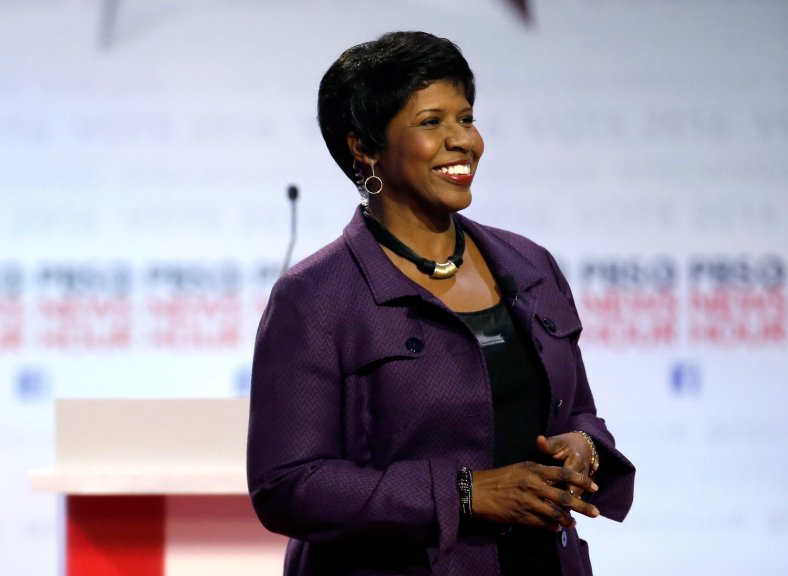
So let’s return to the days of ‘truth’ and remember the contribution of journalist Gwen Ifill through the eyes of two colleagues.

ap_193273822329_custom-095cea2744af0cdfc2393dae5431919449a19d63-s1500-c85

‘What Gwen Ifill Knew About Race in America’  by Jeffrey Goldberg “An insufficient number of people have recognized what is obvious. Gwen’s death is a punishing blow to her family, and to her wide circle of friends, to her colleagues and to her viewers. But it is also a cruel blow to her profession, which hasn’t recently covered itself in glory. And it’s an especially cruel blow to her lovely nation, which is right now in need of her bravery, her farsightedness, and her willingness to tell the truth. Hers is an incalculable loss.”

‘The Life and Example of Gwen Ifill’ by David Brooks “Gwen worked in a tough business, and being an African-American woman in that business brought its own hardships and scars, but Gwen’s smile did not hold back. Her whole personality was the opposite of reticent, and timidity was a stranger to her. When the Ifill incandescence came at you, you were getting human connection full-bore.

I suppose every profession has a few people like this, people who love the whole profession, who pay compliments when its standards are met and who are tough when they are not.

Gwen’s death merits a bit of the reaction that greeted the death of the writer Samuel Johnson centuries ago: She has left a chasm, which nobody else can fill up and which nobody has a tendency to fill.

Now that Gwen is dead, who is the next best thing? There’s nobody. There are many great people who will follow her example. But nobody quite reminds you of Gwen.”

In other news this week@work:

‘Debora L. Spar, Barnard President, to Lead Lincoln Center’Michael Cooper for The New York Times  “In appointing Ms. Spar, who is also an author and a former Harvard Business School professor, Lincoln Center’s board looked beyond arts administration circles and decided to tap someone with experience running a large nonprofit and with a track record of raising money for capital projects — skills that could prove useful as the renovation proceeds.”

Mr. Cooper reported in a related story that you may want to share with the aspiring musicians in your life, ‘It’s Official: Many Orchestras Are Now Charities’.

‘Udacity, an Online Learning Start-Up, Offers Tech Job Trials’Steve Lohr for The New York Times “The program, called Blitz, provides what is essentially a brief contract assignment, much like an internship. Employers tell Udacity the skills they need, and Udacity suggests a single candidate or a few. For the contract assignment, which usually lasts about three months, Udacity takes a fee worth 10 to 20 percent of the worker’s salary. If the person is then hired, Udacity does not collect any other fees, such as a finder’s fee.

The Blitz initiative and Udacity’s evolution point to the role that nontraditional education organizations might play in addressing the needs of workers and employers in the fast-changing labor market for technology skills.”

In closing this week of work, I am still trying to clear the fog in my brain and understand ‘post truth’. I reside in the real word, but apparently it’s changing. What does work look like when words hold no meaning?

I’ll end with classicist Mary Beard‘s reflection on the U.S. election.

“Trump and Trump’s policies are truly ghastly, but you have to face the fact that a very large number of people actually voted for him. What is more, resentment at “the elite” has morphed into a proud contempt for truth, expertise and knowledge – not unlike Michael Gove’s jibe at “experts” before the Brexit vote. And in the broader context of political rhetoric, the idea that he won’t be as bad as he claimed is more, rather than less, worrying. I thought that the conciliatory speech was the worst thing I had heard all evening. The idea that he could be thanking Clinton for her service to the country (“I mean that very sincerely”) and be speaking of “binding the wounds of division” – when only the day before he’d promised to impeach her and poured salt into the very wounds he was now promising to heal – beggars belief. It has nothing to do with being “gracious” (as the television pundits had it), and everything to do with words not meaning anything. It was precisely what ancient rhetorical and political theorists feared almost more than anything else: that speech might not be true, and the corrosive effect of that on popular power.”


Photo credits: Facebook Menlo Park HQ courtesy of Facebook Newsroom Media Gallery, Mark Zuckerberg from his Facebook page, Gwen Iffil/Morry Gash AP