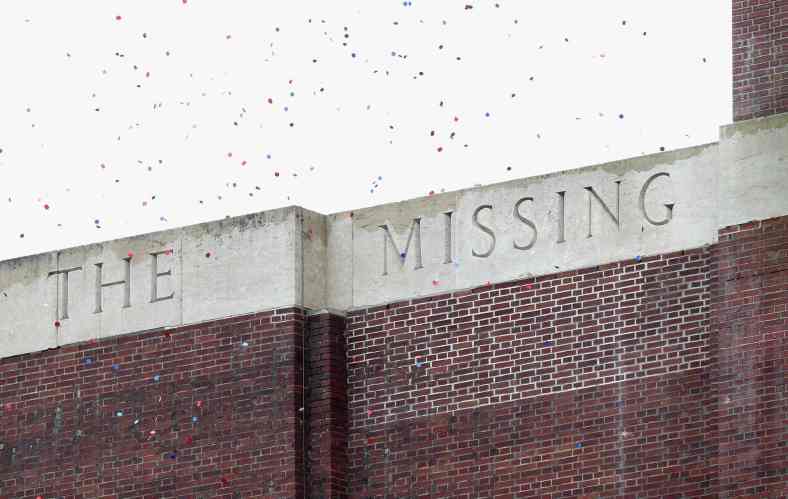
The Saturday Read ‘The Missing of the Somme’ by Geoff Dyer

Geoff Dyer has a new book out this summer, ‘White Sands: Experiences From the Outside World’ , but it’s a book originally published in 1994 that is The Saturday Read this week – ‘The Missing of The Somme’.

Dyer may defy categorization as an author, but one constant in his writing, is a theme of travel, highlighted by his publisher in a description of the current title.

“Weaving stories about places to which he has recently traveled with images and memories that have persisted since childhood, Dyer tries “to work out what a certain place—a certain way of marking the landscape—means; what it’s trying to tell us; what we go to it for.”

‘The Missing of the Somme’ begins with the images and memory of his grandfather and continues on a road trip through the great war battlefields, pristinely kept, to ensure memory.

IMG_4961.jpg

The title comes from the memorial at Thiepval, France to ‘The Missing of the Somme’. The 131 pages explore the landscape of France and Belgium in an extended essay exploring the monuments, cemeteries, and literature that materialized from a time of “fear that people would forget”. A time when ‘soldier poets’ emerged from the battlefields to create a literary narrative of events, in contrast to the propaganda of the media.

This is Dyer’s strength in storytelling. You think you have opened a ‘war book’ and you find you have signed on for an unexpected adventure. The ‘origin’ story of the book is itself a tangent. He originally moved to Paris in the early 90’s to write a novel based on Fitzgerald’s ‘Tender is the Night’, and ended up writing a book about world war one. (F. Scott does make an appearance.)

In a 2013 Paris Review interview, Dyer addressed reader’s expectations, as a function of a publisher/marketer definition.

“I think the distinction between fiction and nonfiction is less about “Did it really happen or was it made up?” than it is about form. And, more than form, it’s about the expectations that are brought to certain forms. According to how a book is presented, packaged, or identified, readers have certain expectations. Following from that they expect books within broadly identified categories to behave in certain ways. So people can find it quite disconcerting when a book isn’t doing what they think it’s meant to be doing, even if the book is completely fine on its own terms and has no desire to conform to some external set of expectations. My books are often disappointing in that regard.”

You may read Dyer for the element of surprise, but it’s in his prose that your investment in time is rewarded, as illustrated in this short excerpt.

“But history does not lie uniformly over events. Here and there it forms drifts – and these drifts are at their deepest between the years 1914 – 1918. Watching footage of the Normandy landings, we can experience D-Day as it happened. History hangs in the balance, waiting to be made. The Battle of the Somme, by contrast, is deeply buried in its own aftermath. The euphoric intoxication of the early days of the French Revolution – ‘Bliss was it in that dawn’ – remains undiminished by the terror lying in wait a few chapters on. The young men queuing up to enlist in 1914 have the look of ghosts. They are queuing up to be slaughtered: they are already dead. By (Johan) Huizinga’s terms, the great war urges us to write the opposite of history: the story of effects generating their cause.”

“Even when it was raging, the characteristic attitude of the war was to look forward to the time it would be remembered.”

When ‘The Missing of the Somme’ was published in Great Britain, there was no American interest. The first world war still competes for attention in American culture. Fortunately, we have Geoff Dyer to remind us that “the war’s true subject is remembrance”.


The Saturday Read ‘I Was Amelia Earhart’ by Jane Mendelsohn

Sometimes the stories behind what we read are as interesting as the books themselves. We now know that the musical Hamilton had its inception when creator Lin-Manuel Miranda picked up a book in an airport on the way to vacation.

Jane Mendelsohn, the author of this week’s Saturday Read, ‘I Was Amelia Earhart’ found her inspiration reading a newspaper article about the aviator while riding a train into New York .

“I didn’t know much about Amelia Earhart, but the idea of her surviving on a desert island, even if only for a little while, appealed to me, sang to me, waved furiously to me from a great distance. Perhaps this was because I felt at the time as if I were flying hopelessly around the world and searching for land, longing for one of those islands of stability some of us keep looking for in our 20s, a braceleted wrist held up to the face, hand shielding our eyes from the harsh sun of adulthood, not realizing that we will have to build that island for ourselves. Whatever the reason, I was certainly not the first person to be fascinated by Earhart’s disappearance. Nor the last.”

Where will you find inspiration this holiday weekend?

On this 79th anniversary of Earhart’s disappearance, go back in time as newspapers around the world reported the news:

ClF9pAOXIAESRPy.jpg

“Coast Guard headquarters was advised tonight that Amelia Earhart was believed to have alighted on the Pacific Ocean near Howland Island shortly after 5 P.M. Eastern daylight time today.

A message from the cutter Itasca, stationed in the vicinity of the island in the mid-Pacific, said:

“Earhart unreported at Howland at 7 P.M. [E.D.T.]. Believe down shortly after 5 P.M. Am searching probable area and will continue.”

Author Mendelsohn imagines the other side of story, as Amelia Earhart and navigator Fred Noonan transition from pioneers of the sky, to survivors on a tiny Pacific atoll.

“It went very quickly, those first few days. They got out of the plane, and together looked around and tried to make sense of their surroundings. Then all of a sudden, as if part of the choreography of a dream, they set about performing the necessary rituals of survival.

They check the radio, which picks up nothing, and the fuel tank, which is low but not empty, and they confirm their worst suspicions – that they have no idea where they are…They build a fire on the beach to attract attention. They know that a search will have already begun.”

It’s not too long before Earhart spots a plane.

“In the morning I see a speck appear on the horizon, a black spot the size of an insect.

The point of blackness, which at first appears to be nothing more than a gnat, keeps coming closer, heading directly toward the island, and I tell myself that it must be a figment of my imagination. But after two minutes, it assumes the form of a plane to such perfection that I need a moment to recognize what it is…At first I take off my scarf and gesticulate furiously, but as the plane appears to lose altitude, I begin to relax and wave it calmly, welcoming it ashore. Everything about this plane conveys purpose and assurance, as if it had been designed solely to rescue us. I find the promise of its shape more beautiful than anything I have ever seen, but strangely lost to me, although I don’t understand why until it comes closer and I am able to determine that despite my wish it is not coming toward the island at all. It looked as if it were heading directly at me, but as I watch it grow larger I see it pass overhead, high above, too far to see me as I desperately shake my scarf. It circles once – for an instant I image that it is heading toward the water and I think I can make out black pontoons for landing – and then it makes a wide turn, points back to the mysterious place from whence it has come, and flies away. It hasn’t seen me at all.”

The mystery of Earhart’s disappearance continues to arouse interest as researchers continue to search for a remnant of the missing plane. Mendelsohn’s narrative offers the reader an alternative history, employing beautiful prose to recreate a time when “Planes used to be vehicles for dreaming…As soon as you saw a plane, you started dreaming. It was a thrill just to catch a glimpse of one. “

In 2012 Jane Mendelsohn revisited the subject of her 1996 novel in an Op-Ed for The New York Times.

“We still wonder what happened to Amelia Earhart — perhaps soon we may even find out — but do we know what to do with her? Do we know how to make not just her mysterious disappearance but also her miraculous life relevant and inspiring to our global society? And could she matter across the globe, that ball around which she tried to fly that feels so much smaller today but is in fact exactly the same size it was then?

Historically, one thing America has been good at is offering inspiration. We haven’t been doing a brilliant job of it lately, but in Amelia Earhart we have something, someone, to offer the 21st century: a heroine. She was a leader, not a passive bystander. She was strong, not a victim. And she was not born into a rich family, as were many other women pilots of her day, but was lifted up by her own accomplishments. In other words, she gives us good shoes to fill.”

On this weekend, when we celebrate our nation’s independence, read ‘I Was Amelia Earhart’ and discover why her life still inspires.

“Amelia Earhart can be a beacon for our country and for women and men around the globe because everyone, each of us, needs to be “aware of the hazards” and accept “the inevitable risks.”… Earhart’s mystery endures because of who she was as a person, the pilot of her own destiny, mistakes, failures and dreams, reachable and unreachable. She still beckons.”

‘Transmission’ a poem by Rachel Richardson

On July 2nd, 1937 aviator Amelia Earhart was attempting to be the first woman to circumnavigate the globe. She and her navigator, Fred Noonan had completed 22,000 miles of a 29,000 mile journey when transmission was lost. Ten ships, 3,000 men and 100 aircraft searched for the missing plane. The disappearance remains a mystery and has generated multiple conspiracy theories and continuing efforts by private organizations to discover the wreckage.

Earhart had become an early twentieth century role model for women. Her final note to her husband acknowledged the danger as well as her feminism.

“Please know I am quite aware of the hazards of the trip. Women must try to do things as men have tried. When they fail, their failure must be but a challenge to others.”

The Friday Poem by Rachel Richardson captures an imagined ‘transmission’ from the final moments of that flight.

Transmission

There was a girl who heard it happen:
Amelia Earhart calling
on the radio, she and her navigator
alternately cursing and defining their position
by latitude, as best they could read it
in the bellowing wind, and by what
they could surmise of their rate per hour,
last land they’d seen. Stay with me, someone,
and the girl wrote each word
in her composition book, kept the channel
tuned, hunched to the receiver
when static overtook the line.
Why do I think of her?
The coast guard laughed at her father
holding out the schoolgirl scrawl
and sent him home ashamed. A lost woman
is a lost woman, he told her, and the sea
is dark and wide.

Rachel Richardson  The New York Times Magazine  January 22, 2016


The mysteries of networking #4 ‘missed opportunities’

Many of us consider networking a ‘dark art’ that requires a magical ‘insiders’ key to gain access to the influential. What we miss is the daily opportunity to connect, as we ride the bus, the train or stand in a long TSA line at the airport. Wisdom can present itself in all shapes and sizes if you open yourself to conversation.

This past week, consultant, Whitney Johnson shared a recent experience via a post on LinkedIn,  ‘An airline cancelled my flight and put me in a van. Along the way, I got lots of lessons on how *not* to network.’

After offering a fellow traveller, a member of the Class of 2016, a ride home after a diverted flight, she realized her passenger had no clue how to network.

“As I was giving him a lift home, I learned a lot about him: his name, where he grew up, where he goes to school, his major, what his parents do for a living, his own career aspirations when he graduates in a few months. We even discovered that we have an acquaintance in common. Meanwhile, I made a few mentions of my children, such as my 19 year-old son is living in Brazil, my husband teaches at a local university. Conversation starters.

I’ll confess I felt a little invisible—and exasperated. I find it easy to ask people about themselves. I genuinely enjoy doing it. It’s one of my strengths, and we’re often exasperated with people who aren’t likewise adept at the things that we do well.

But here’s the real take-away from this chance encounter: this young man is looking for a job when he graduates in a month… I could have potentially helped him, if he’d just shown a little of the moxie that would have motivated me to recommend him.”

This is not just about a ‘newbie’ to the job search process, it’s a story that recurs daily. Just walk through an airport departure area and observe the diversity of folks and contrast that with the homogeneity of technical disconnection. Each individual, existing in the ‘comfort cocoon’ of their temporary piece of real estate, happily texting colleagues and friends, totally ignorant of the ‘chance’ professional encounter in the adjoining seat.

There’s no magic in networking. The magic is in the conversation, perhaps leading to a relationship. All of us harbor ideas and dreams. What are they, if not shared?

This afternoon, seize the moment, and start a conversation with a stranger, or maybe the acquaintance you pass in the hall every day. Listen, share, and you may be on your way to mastering the ‘not so mysterious’ art of networking.

The Saturday Read – Four blogs/newsletters you should be reading

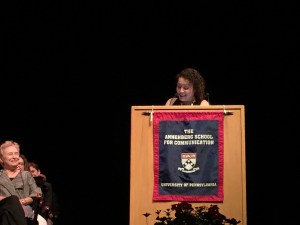
Before I started writing ‘Workthoughts’, I was reading other blogs. Maria Popova, author of my favorite, ‘Brainpickings’, was the 2016 commencement speaker at her alma mater, the University of Pennsylvania’s Annenberg School for Communication. She challenged the graduates to act as cultural change agents by continually broadening their horizons beyond a specific discipline.

“Today, the soul is in dire need of stewardship and protection from cynicism. The best defense against it is vigorous, intelligent, sincere hope — not blind optimism, because that too is a form of resignation, to believe that everything will work out just fine and we need not apply ourselves. I mean hope bolstered by critical thinking that is clear-headed in identifying what is lacking, in ourselves or the world, but then envisions ways to create it and endeavors to do that.

Whatever your specific vocation, your role as a creator of culture will be to help people discern what matters in the world and why by steering them away from the meaningless and toward the meaningful.”

annenberg_commencement-1

How do you maintain the discipline of the undergraduate learning experience and diversify your thinking?

In the past, traditional routes to post-graduate learning involved graduate and professional school. In rare cases, employers took on the role of educators, supplementing work with professional development options. Today, educational entrepreneurs are disrupting traditional education, offering countless ways to access knowledge online.

One of the most engaging options is to join folks who are exploring life’s mysteries and sharing their discoveries through blogs and newsletters.

For this week’s Saturday Read, I recommend four blogs/newsletters from contemporary ‘curators of culture’ that you should be reading to improve you critical thinking and supplement your journey of lifelong learning.

Brainpickings

Bruce Feiler, writing in The New York Times, described this blog as “the exploding online emporium of ideas”.

“She’s a celebrator,” said Anne-Marie Slaughter, a Princeton professor and former State Department official. “You feel the tremendous amount of pleasure she takes in finding these things and sharing them. It’s like walking into the Museum of Modern Art and having somebody give you a customized, guided tour.”

Since 2006, Maria Popova has been sharing her cross disciplinary expeditions with a growing audience of readers.

“Brain Pickings — which remains ad-free and supported by readers — is a cross-disciplinary LEGO treasure chest, full of pieces spanning art, science, psychology, design, philosophy, history, politics, anthropology, and more; pieces that enrich our mental pool of resources and empower combinatorial ideas that are stronger, smarter, richer, deeper and more impactful. Above all, it’s about how these different disciplines illuminate one another to glean some insight, directly or indirectly, into that grand question of how to live, and how to live well.”

The next selection comes from the mind of writer and ‘philosopher of everyday life’, Alain de Botton. If you read Brainpickings or Workthoughts, the name should be familiar. The founder of London’s School of Life, publishes a weekly newsletter, ‘The Book of Life’.


The Book of Life 

“It’s called The Book of Life because it’s about the most substantial things in your life: your relationships, your income, your career, your anxieties. There’s always been a longing to gather the important things in one place. Some of the appeal of a Bible or the collected works of a big name author is the sense that amidst all the chaos and disparate sources of knowledge, someone has taken the trouble to distill, to compress, to say what is essential. In a world overflowing with information, what we most need is curation. The Book of Life aims to be the curation of the best and most helpful ideas in the area of emotional life.”

For those of you technology and engineering gurus who feel a bit insecure when a client conversation turns literary, subscribe to the ‘Lit Hub Daily’.


Lit Hub

“Started last year, Lit Hub’s goal is to provide a “go-to daily source for all the news, ideas, and richness of contemporary literary life,” with curated and original content such as interviews, profiles and essays.”

“Literary Hub is an organizing principle in the service of literary culture, a single, trusted, daily source for all the news, ideas and richness of contemporary literary life. There is more great literary content online than ever before, but it is scattered, easily lost—with the help of its editorial partners, Lit Hub is a site readers can rely on for smart, engaged, entertaining writing about all things books.”

The latest newsletter I have added to my daily/weekly routine comes from writer Austin Kleon. His Friday newsletter is an eclectic collection of music, art, design and life. To give you a sample, this week’s edition included George Carlin’s Playboy interview, an HBO documentary on Studs Terkel and the Everything is a Remix series.

What makes Austin’s blog unique is the doodles; his visual interpretation of information.

kleon-200pxx1.jpg

Austin Kleon 

“I’m a writer who draws. I make art with words and books with pictures. Every week I send out a list of 10 things I think are worth sharing — new art, writing, and interesting links straight to your inbox.”

These four blogs/newsletters provide a customized curriculum of research and shared wisdom, delivered by a faculty of four non-traditional experts. Take a look, you may find one or more will fit with your individualized lifelong learning plan.


“Discover who you are – not who you are supposed to be” Larry Ellison@USC

In all the meetings I have had with folks about career choice, the number one topic, by a landslide, is how to manage the expectations of others: family members, mentors, friends and colleagues.

“My parents want me to major in ‘x’, and apply to ‘y’, but my passion is in ‘z’. How do I get them to understand my decision?”

On Friday, at the University of Southern California, Larry Ellison drew on his personal experience to address the topic. I hope the parents were listening. I guarantee members of the Class of 2016 were texting quotes.

He began where most career conversations start. Recalling his early aspirations to attend USC Medical School, he began to realize that his family’s conviction that he become a doctor was not his own. “Their dreams became my dreams.”

And it wasn’t long before he “became painfully aware that he couldn’t make himself study something that didn’t interest me.”

The power of parental/family influence on career choice can provide either a scaffolding of support or a detour of unending disappointments.

Here’s the thing, the next great innovation is yet to be discovered. The next emerging market is yet to be identified. Categories of new job titles are yet to be defined.

So we fall back on what we know, and what society values as acceptable professions.

In Ellison’s narrative, he dropped out of college and took on a “a couple of jobs I loved and one that was fun”: river guide, rock climbing instructor and computer programmer. It was in the world of technology that he found the link to the same kind of satisfaction he had found solving math problems and playing chess.

But as he incrementally travelled toward his dream job, he found he was unable to live up to the expectations of others.

At the urging of his wife, he returned to college, to pursue his degree. The only course he remembered was a sailing class at Berkeley. The beginning of his love affair with the Pacific Ocean marked the end of the one with his wife, who viewed him as irresponsible, and lacking in ambition. “She kicked me out, and then she divorced me.”

“This was a pivotal moment in my life… Once again, I was unable to live up to the expectations of others.

But this time I was not disappointed in myself for failing to be the person they thought I should be. Their dreams and my dreams were different. I would never confuse the two of them again.

I had discovered things that I loved: the Sierras, Yosemite, the Pacific Ocean. These natural wonders brought me great joy and happiness, and would for the rest of my life. I had an interesting job programming computers and more money than I needed.

For the first time I was certain I was going to survive in this world.

A huge burden of fear had been lifted. I’ll never forget that moment. It was a time for rejoicing.”

Ellison’s career path accelerated along the trajectory of Silicon Valley’s early days, as he tried to find a job he loved as much as sailing. He founded Oracle Corporation, built on his ‘crazy idea’ of constructing a commercialized relational database, and the rest is history.

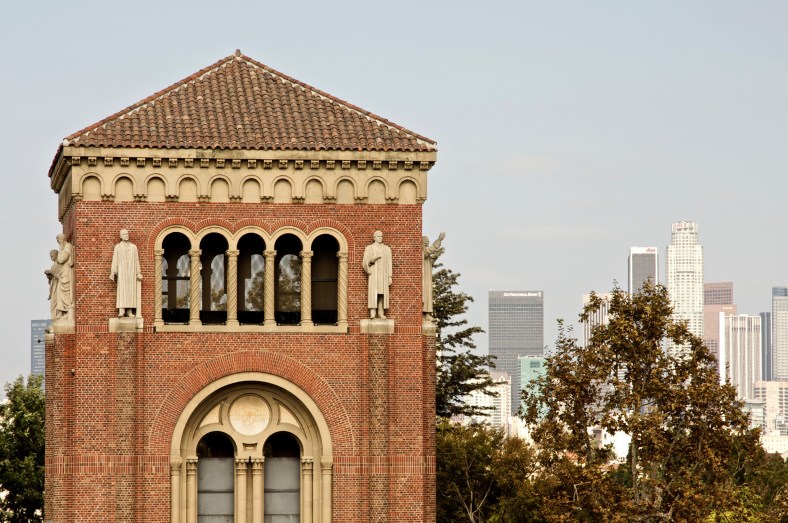
I spent thirteen years on the USC campus, working with students and alumni as they wrestled with career decisions and connected the mosaic of past experience into a plan for the future. There is no better advice for folks@work or those just starting out than the shared wisdom of Mr. Ellison.

“Each of you has a chance to discover who you are and not who you are supposed to be.

Don’t be afraid to experiment, and try lots of different things. And don’t let the experts discourage you when you challenge the status quo.”

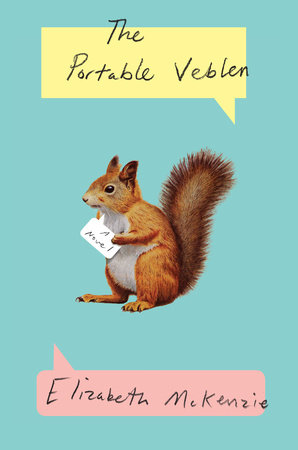
The Saturday Read ‘The Portable Veblen’ by Elizabeth McKenzie

The Saturday Read this week,‘The Portable Veblen’ by Elizabeth McKenzie is about the life choices we make, via a different kind of Silicon Valley story.

The heroine of the novel is Veblen Amundsen-Hovda, a not so typical,’gig’ economy participant, making a living by combining assignments as an office assistant in Neurology at the Stanford University School of Medicine, translating for the Norwegian Diaspora Project in Oslo, and writing about her namesake Thorstein Veblen. (Yes, that witty critic of capitalism who invented the term ‘conspicuous consumption’.)

Or as the author describes her “independent behaviorist, experienced cheerer-upper, and freelance self, who was having a delayed love affair with the world due to an isolated childhood and various interferences since.”

When we meet Veblen she has just accepted a marriage proposal from Paul Vreeland scientist, and inventor of the Pneumatic Turbo Skull Punch.

Did I mention the squirrels?  One in particular, who appears at her window just after her engagement, seeming to ask: “How well do you know yourself, and all the choices you could make?” 

In her review of the novel, NPR’s Heller McAlpin captured the theme that continues to resonate long after the reader arrives at Appendix G (in Norwegian), “this is ultimately a morality tale about the values by which we choose to live.”

If you have spent time in academia you will appreciate the absurdity of naming your child for the subject of your unfinished doctoral dissertation. You will also recognize the financial pressures of ‘technology transfer’, and ‘monetizing research’ that drive Paul’s decision to work for Big Pharma.

What if you invented something that could save lives? Wouldn’t you choose a firm that promised unlimited resources to expedite the process to market?

It’s easy to understand Paul’s choice. But in the world of bright shiny incentives he misses the point of who he will become as part of an unscrupulous conglomerate.

Fortunately for our couple and squirrel(s), good triumphs over evil in a series of memorable scenes that prove ‘what goes around, comes around’.

In ‘The Portable Veblen’, author McKenzie utilizes humor to narrate this story of choices, change, and consequences. If you’re looking for the perfect read for the recent grad, or are working through conflicting values at work, spend a few hours with Veblen, Paul and a supporting cast of frisky, philosophical squirrels.


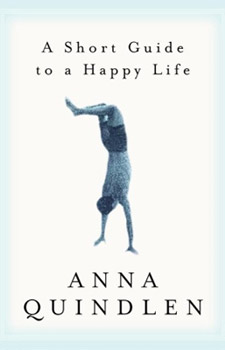
The Saturday Read ‘A Short Guide to a Happy Life’ by Anna Quindlen

Do you remember who spoke at your graduation ceremony? The Saturday Read this week is for all of you who forgot, but would welcome a bit of ‘life advice’ in this season of ‘Pomp and Circumstance’.

In 1999, author Anna Quindlen was invited to deliver the commencement address at Villanova University. And then this happened:

“Pulitzer Prize-winning columnist and author Anna Quindlen has withdrawn as the commencement speaker at Villanova University this Sunday because of what she said were objections by a “vocal minority” to her support of abortion rights.

Quindlen, who was also to have received an honorary doctorate of humane letters, said in an interview yesterday that she did not want to “ruin the day or cast a shadow” on the graduation ceremony.”

A graduate student requested a copy of the prepared text and posted it on the Internet. (This was before Facebook, Twitter et al.) The post went viral, and the resulting essay was published in 2000 as ‘A Short Guide to a Happy Life’.

Seventeen years later her words still resonate. In the opening paragraphs she signals her values, and offers a hint at why she withdrew.

“My work is human nature. Real life is really all I know…Don’t ever confuse the two, your life and your work…The second is only part of the first.”

Real life collided with an opportunity to address Villanova’s Class of 1999, the alma mater of several of her family members. Fortunately her publisher provided an avenue for Ms. Quindlen to share her personal life experience with a broader audience, to encourage ownership and balance.

“When you leave college, there are thousands of people out there with the same degree you have; when you get a job, there will be thousands of people doing what you want to do for a living.”

“But you are the only person alive who has sole custody of your life. Your particular life. Your entire life. Not just the life at your desk, or your life on the bus, or in the car, or at the computer. Not just the life of your mind, but the life of your heart. Not just your bank account, but your soul.”

“People don’t talk about the soul very much anymore. It’s so much easier to write a resume than to craft a spirit.”

Some may disagree that a resume is easy to write, especially a recent grad who has spent the past months engaged in the job search. A resume is limited to a list of accomplishments, full of key words designed to cut through the barrier of digital applicant screening. It’s the values expressed in that experience that define who you are, your spirit.

The recurring theme of ‘Short Guide’ challenges the reader to question commonly held definitions of success.

“You cannot be really first-rate at your work if your work is all you are.”

“So I suppose the best piece of advice I could give anyone is pretty simple: get a life. A real life, not a manic pursuit of the next promotion, the bigger paycheck, the larger house.”

“Get a life in which you are not alone. Find people you love, and who love you. And remember that love is not leisure, it is work.”

‘A Short Guide to a Happy Life’ is a compact book to be kept close for a periodic reread. It’s a reminder to all, at every career stage, that “Life is made up of moments, small pieces of glittering mica in a long stretch of gray cement.”

One of those moments is revealed in the recollection of a conversation with a homeless man on the boardwalk in Coney Island, New York.

“And he stared out at the ocean and said, “Look at the view, young lady. Look at the view.”

Commencement is the beginning of a life of learning, sometimes from the most unexpected of teachers. Enjoy the Saturday Read, and don’t forget to enjoy the view.


The Saturday Read – It’s Independent Bookstore Day!

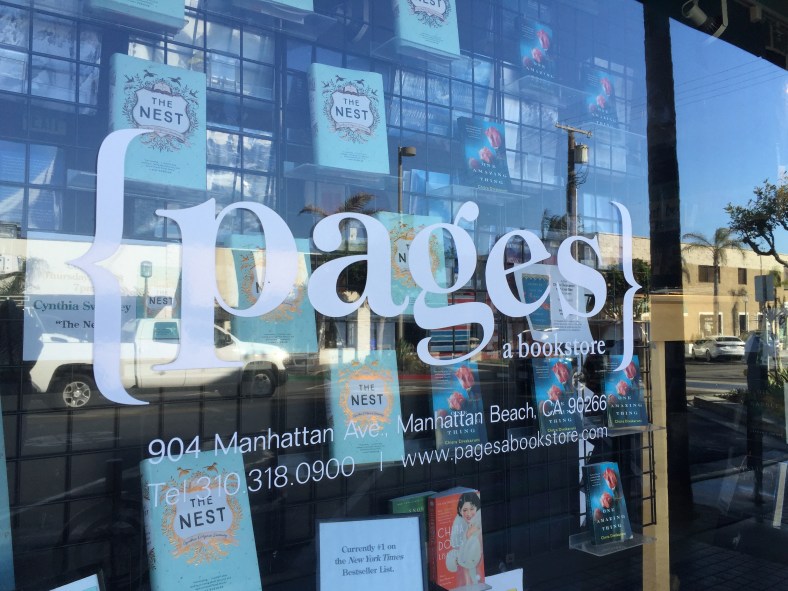
Today is Independent Bookstore Day. Instead of recommending a book this week, I recommend you find your local independent bookstore (not Barnes and Noble) and spend an hour browsing their selection.

One of my favorites – Pages in Manhattan Beach, CA.

IMG_4376.jpg

Just what does IBD celebrate?

“Independent bookstores are not just stores, they’re community centers and local anchors run by passionate readers. They are entire universes of ideas that contain the possibility of real serendipity. They are lively performance spaces and quiet places where aimless perusal is a day well spent.

Indie bookstores, whether dusty and labyrinthine or clean and well-lighted, are not just stores, they are solutions. They hold the key to your love life, your career, and your passions. Walking the aisles of a good bookstore means stumbling upon a novel from India that expands your heart. It’s encountering an art book that changes the direction of your life. It’s the joy of having a perfect stranger steer you toward the perfect book.

In a world of tweets and algorithms and pageless digital downloads, bookstores are not a dying anachronism. They are living, breathing organisms that continue to grow and expand. In fact, there are more of them this year than there were last year. And they are at your service.”

Today, day five of #OnTheRoad, I will be visiting Main Street Books in Davidson, N.C.IMG_3337.jpg

Enjoy selecting your Saturday Read!

The Saturday Read from the 2016 winners of the Pulitzer Prize

Four writers and journalists, whose work was featured in this blog, were among the winners of the Pulitzer Prize announced on Monday. Today, for the ‘Saturday Read’ we revisit the writings of William Finnegan, Kathryn Schulz, Emily Nussbaum and Lin-Manuel Miranda.

Three journalists call The New Yorker home. On Monday, it became the first magazine to be honored with the Pulitzer Prize. Emily Nussbaum and Kathryn Schulz earned Pulitzers in criticism and feature writing respectively, and William Finnegan received the prize for biography.

CgXH66tUEAAYowv.jpg

“Emily Nussbaum, who has won the 2016 Pulitzer Prize for Criticism, writes essays and reported pieces about television that are fearless, hilarious, and pioneering. Among the pieces submitted to the Pulitzer committee were her standout essays on Joan Rivers, P. Jay Sidney, advertising, and “Mad Men.”

Unknown.jpeg

“Kathryn Schulz, who arrived at The New Yorker less than two years ago, has won the 2016 Pulitzer Prize for Feature Writing, for “The Really Big One,” her piece on the more than a little troubling geology of the Pacific Northwest. Her evocations of the earthquake in Japan in 2011 and of the earthquake that could occur in the states of Washington and Oregon stay with us much like works of the best fiction, to say nothing of horror films.”

The Saturday Read on December 12, 2015 included excerpts from this ‘long read’.

“Just north of the San Andreas, however, lies another fault line. Known as the Cascadia subduction zone, it runs for seven hundred miles off the coast of the Pacific Northwest, beginning near Cape Mendocino, California, continuing along Oregon and Washington, and terminating around Vancouver Island, Canada. The “Cascadia” part of its name comes from the Cascade Range, a chain of volcanic mountains that follow the same course a hundred or so miles inland. The “subduction zone” part refers to a region of the planet where one tectonic plate is sliding underneath (subducting) another. Tectonic plates are those slabs of mantle and crust that, in their epochs-long drift, rearrange the earth’s continents and oceans. Most of the time, their movement is slow, harmless, and all but undetectable. Occasionally, at the borders where they meet, it is not.”

IMG_4026.jpg

“William Finnegan, who has been a staff writer since 1987, has won the 2016 Pulitzer Prize for Biography, for his memoir about surfing, “Barbarian Days.” This project has been Finnegan’s literary obsession for a very long time. It began as a series in our pages more than two decades ago, and came to completion in June, with “Off Diamond Head,” an excerpt from the book, which was published not long after.”

The Saturday Read on August 1, 2015 recommended ‘Barbarian Days, A Surfing Life’.

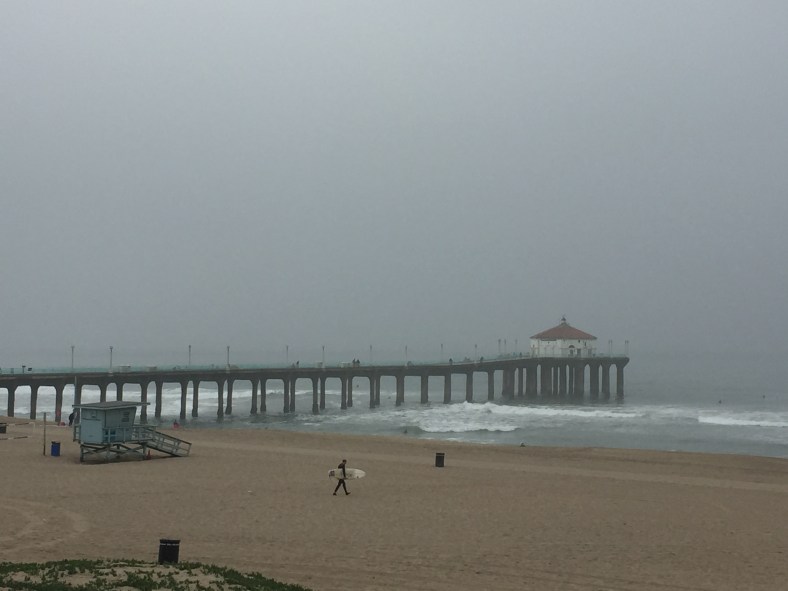
“When you do a book reading in Manhattan Beach, California you need to use a microphone so the guys with ‘surfer’s ear’ in the back can understand you. Last night New Yorker journalist and lifetime surfer William Finnegan used a mic as he read from his well reviewed new book…

The Q&A at the reading was closer to a book club discussion than a publicity event. Most of those attending had either read the book or the excerpt in the June 1 issue of the New Yorker magazine. This is not just a book about surfing. Mr. Finnegan is a well regarded journalist with a resume that includes reporting from South Africa, Somalia, the Balkans, Central America and Australia. Robert Boynton included him in his conversations with America’s best nonfiction writers in ‘The New New Journalism’.”

IMG_2517

Lin-Manuel Miranda won the Pulitzer for drama, for ‘Hamilton’. “For a distinguished play by an American author, preferably original in its source and dealing with American life.”

“A landmark American musical about the gifted and self-destructive founding father whose story becomes both contemporary and irresistible.”

David Rooney reported on the prize for Billboard. “Miranda wrote the book, music and lyrics for the show, in addition to starring in the title role. The Pulitzer now further cements Hamilton’s status as the toughest ticket in town and the clear frontrunner to take the top musical kudos at this year’s Tony Awards in June.”

I have written about Miranda and Hamilton five times in the past year. My favorite is ‘The Power of Taking a Break & the Unexpected Inspiration of Reading’ on March 4, 2015.

“If Mr. Miranda had not been on vacation, taking time away from work, we may have been deprived of his creativity and ability to connect the dots as he developed his perspective for the play: “Miranda saw Hamilton’s relentlessness, brilliance, linguistic dexterity, and self-destructive stubbornness through his own idiosyncratic lens. It was, he thought, a hip-hop story, and immigrant’s story.”

Ms. Mead’s article tells the story of the evolution of Mr. Miranda’s career, the development of ‘Hamilton’, and the connections he has made along the way with mentors and creative partnerships.

Sometimes we think creativity belongs to the artist and we struggle to find opportunities to relate to our own workplace. But creativity is about imagination and storytelling our way to solving a problem. Taking time away allows for a different view. If we are open to the unexpected we can connect the dots and reframe the narrative. And, maybe be online Sunday to buy tickets and see how it’s done.”