The week@work – The Pope on climate change and more, Disney reverses a decision and the importance of staring out the window

This week@work has been spent planning a European adventure. For the next two weeks I will be taking leave of our conversation on work and career. I will continue to share thoughts and articles on Twitter. Please follow @Eileen Kohan or @workthoughts.

Before I go, let’s take a look at the week@work. This week included the major story of Pope Francis’ encyclical, Disney ABC Television reversing a decision on layoffs and the insights we gain from staring out the window.

Elizabeth Kolbert commented on the content of the encyclical in The New Yorker “A Papal Message That Spares No One”:

“…though its focus is on man’s relationship to nature, it also has much to say about man’s relationship to his fellow man and to himself—little of it laudatory. The vision that Pope Francis offers in his encyclical is of a world spiralling toward disaster, in which people are too busy shopping and checking their cell phones to do, or even care, much about it.

“The pace of consumption, waste and environmental change has so stretched the planet’s capacity that our contemporary lifestyle, unsustainable as it is, can only precipitate catastrophes,” the Pope writes. At another point, he says, “Many people will deny doing anything wrong because distractions constantly dull our consciousness of just how limited and finite our world really is.”

According to Francis, the problems of environmental degradation and global poverty are intimately related. Both can be traced to a way of thinking that regards the world as a means, rather than an end. This way of thinking rules the marketplace—“Finance overwhelms the real economy”—and dominates our data-driven culture: “Technology tends to absorb everything into its ironclad logic.”

The Guardian noted: “He says iPhones and all our other gadgets are getting in the way of our relationship with nature.”

“Real relationships with others, with all the challenges they entail, now tend to be replaced by a type of internet communication which enables us to choose or eliminate relationships at whim, thus giving rise to a new type of contrived emotion which has more to do with devices and displays than with other people and with nature.”

And finally, the pope’s tweet: “The earth, our home, is beginning to look more and more like an immense pile of filth.” Proving you can distill 180 pages into 140 characters.

Variety reported on the decision by Disney executives to keep 35 tech employees who not only been notified that their jobs were being eliminated, but they were expected to train their replacements.

“The Disney ABC Television Group has reversed course on cutting jobs for up to 35 application developers, two weeks after informing the employees that they were being laid off.

But the Disney ABC TV Media Technology and Strategy development team subsequently decided to rescind the layoffs. First reported by Computerworld, Disney ABC spokesman Kevin Brockman confirmed the plans on Wednesday.

When the layoffs were rescinded, some of the affected employees had already started training their Cognizant Technology replacements in what’s dubbed the “knowledge transfer” process.”

For more detail on this story, check the NPR interview with Computerworld senior editor,  Patrick Thibodeau.

The last story this week is from The School of Life on ‘The importance of staring out the window’.

“The point of staring out of a window is, paradoxically, not to find out what is going on outside. It is, rather, an exercise in discovering the contents of our own minds. It’s easy to imagine we know what we think, what we feel and what’s going on in our heads. But we rarely do entirely. There’s a huge amount of what makes us who we are that circulates unexplored and unused. Its potential lies untapped. It is shy and doesn’t emerge under the pressure of direct questioning. If we do it right, staring out the window offers a way for us to listen out for the quieter suggestions and perspectives of our deeper selves.”

“…some of our greatest insights come when we stop trying to be purposeful and instead respect the creative potential of reverie. Window daydreaming is a strategic rebellion against the excessive demands of immediate (but ultimately insignificant) pressures – in favour of the diffuse, but very serious, search for the wisdom of the unexplored deep self.”

The lessons of the week@work – Looking from space we share the same ‘home’ and the responsibility to care for that common home. How? Taking time off, paying attention to nature, disconnecting from technology and reclaiming our humanity.

Why has it been so hard to shatter the glass ceiling?

Forbes Magazine’s most powerful woman, German Chancellor Angela Merkel was caught in conversation with President Obama yesterday at the G7 Summit. She was not, as the media suggested, auditioning for the lead role in the Sound of Music.

The G7 leaders are dealing with serious economic and political issues that will eventually trickle down to effect us all. But the media focus was on a photograph and a caricature that diminished the accomplishments of the German leader.

The Washington Post headlined “A remarkable photo of President Obama and Angela Merkel” and continued:

“The backdrop to the 41st G7 Summit held in Germany is breathtaking, with its green trees and towering mountains. It makes for great image of German Chancellor Angela Merkel talking and gesturing with a seated President Obama.

It’s made all the better with Merkel’s shruggie pose ¯\_(ツ)_/¯, which also just so happens to look like that one scene from “The Sound of Music.”

Really? Is this journalism? Here is a woman whose leadership skills have kept the European Union together, maintained a dialog with the Russian president in a difficult political climate and has transformed her country since her election in 2005.

And, American journalists covering the summit have likened the German Chancellor to a singing nun.

Bryce Covert, writing in The New York Times on Friday, chronicled “our problem with powerful women”. She described Hillary Clinton being “optimistic about the path of progress toward gender equality. She called the presidency the “highest, hardest glass ceiling.” But she also said that it had “about 18 million cracks in it, and the light is shining through like never before, filling us all with the hope and the sure knowledge that the path will be a little easier next time.”

In reality, Ms. Covert’s research shows, “Too few women make it into corporate leadership.”

“Progress is not inevitable, though, nor is it fixed. The country has a complicated relationship with powerful women: They have to keep proving themselves over and over again, being twice as good, and dragging one woman through the process doesn’t make it easier for those who follow.

Individual women might hope that their struggles blaze trails for everyone else. Mrs. Clinton must feel optimistic about her chances to win the presidency a second time around. But the reality is that the country hasn’t gotten used to women in charge. A crack in the glass ceiling in one place could very well just reinforce it for everyone else.”

Maybe it was Angela Merkel’s crack in the glass ceiling that has made it so hard for Mrs. Clinton. I might also suggest to the female journalists who enthusiastically broadcast ‘the sound of music photo’ on air last night, you’re not helping. You’re like the Safelight Auto Glass repair guy, making sure you seal up all those cracks and fortify glass ceiling.

Take another look at the photo. I think Chancellor Merkel is asking President Obama, “What’s wrong with you people? What is your problem with powerful women leaders?”

The week@work – the economy improves, the downside of ‘cultural fit’ & the new Fortune 500

The ‘big’ stories in this week@work included the release of the May 2015 US employment report and the 61st version of the Fortune 500. The small stories with potential ‘big’ impact told of the growing concern of the majority of Americans about income inequality and research showing discrimination at work is increasing as hiring managers rely more on ‘cultural fit’ to select employees.

On Friday the U.S. Department of Labor, Bureau of Labor Statistics released the May 2015 employment report.

“Worries about the American economy’s momentum were blunted on Friday by the government’s announcement that employers added a hefty 280,000 jobs in May, well above the monthly average logged over the last year.

The official unemployment rate ticked up slightly to 5.5 percent as more Americans jumped back into the labor pool and began the job hunt. Hourly wages, which have grown fitfully, rose 0.3 percent last month, possibly helping to lure back some discouraged workers who had been staying on the sidelines.” (The New York Times)

Fortune magazine announced it’s annual listing of the largest U.S. companies by revenue.

“This year’s Fortune 500 marks the 61st running of the list. In total, the Fortune 500 companies account for $12.5 trillion in revenues, $945 billion in profits, $17 trillion in market value and employ 26.8 million people worldwide.”

The top ten companies are Walmart, Exxon Mobil, Chevron, Berkshire Hathaway, Apple, GM, Phillips 66, GE, Ford Motor Company and CVS Health. Compare that to the  top ten in Forbes Magazines’ list of ‘World’s Most Innovative Companies’ or Fast Company’s ‘Most Innovative Companies 2015’, and there is only one company that appears on two lists, Apple (Fortune and Fast Company). Forbes’ #1 company, Salesforce, the biggest tech company in San Francisco, appeared on the Fortune list for the first time in its’ 16 year history at #483.

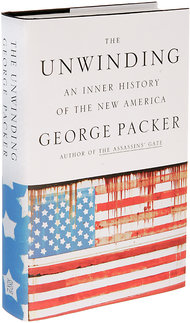
Fortune’s number one, Walmart, is the company George Packer described in his book, ‘The Unwinding’, as the model that continues to influence our economy on a much broader scale:

“Over the years, America had become more like Walmart. It had gotten cheap. Prices were lower, and wages were lower. There were fewer union factory jobs, and more part-time jobs as store greeters…The hollowing out of the heartland was good for the company’s bottom line.”

A CBS/New York Times poll released on Wednesday found that the majority of Americans are concerned about the widening income gap that separates the Walmart shoppers from those on Rodeo Drive.

“The poll found that a strong majority say that wealth should be more evenly divided and that it is a problem that should be addressed urgently. Nearly six in 10 Americans said government should do more to reduce the gap between the rich and the poor, but they split sharply along partisan lines. Only one-third of Republicans supported a more active government role, versus eight in 10 of Democrats.

Far from a strictly partisan issue, inequality looms large in the minds of almost half of Republicans and two-thirds of independents, suggesting that it will outlive the presidential primary contests and become a central theme in next year’s general election campaign.”

The last story of the week concerned the downside of ‘cultural fit’. Lauren A. Rivera, a professor at Northwestern University’s Kellogg School of Management, shared her research on candidate selection in ‘Guess Who Doesn’t Fit In At Work’.

“When done carefully, selecting new workers this way can make organizations more productive and profitable. But cultural fit has morphed into a far more nebulous and potentially dangerous concept. It has shifted from systematic analysis of who will thrive in a given workplace to snap judgments by managers about who they’d rather hang out with. In the process, fit has become a catchall used to justify hiring people who are similar to decision makers and rejecting people who are not.”

At the end of the week@work we know the economy is improving and folks are becoming increasingly aware of income disparity.

But is anyone concerned that the largest revenue generating companies have no relationship to the most innovative companies in the world? If you are starting out your career or considering a move, do you choose a revenue generating behemoth or a venture capitalized innovative organization?

And for all of us @work – we want to ‘fit in’ to the organization culture, but with our talents, not personal similarities.

Should I stay or should I go? The impact of a 24×7 work culture

Late spring is a time of major career transition as interns arrive for summer assignments, college students begin their careers and the rest of the workforce assesses their place at work and considers next steps. Do I stay or should I go?

Three articles in the past three days develop an argument that we are long overdue for an accounting of the way work is structured, expectations set, and effort rewarded.

In the first article, psychologist Art Markham was asked the question, ‘Is it hurting my career to skip happy hour with co-workers?’ Here is a question that gets right to the issue of work/life balance. What activities in the workplace are optional?

He responded:

“Your question…brings two aspects of workplace happiness into conflict. On the one hand, research suggest that people who feel like they have good friends at work are happier than those who don’t. On the other hand, research also suggests that your long-term happiness at work requires that you feel like you can express your authentic self at work. If you don’t like to go out for drinks with a crowd, then forcing yourself to go is not an authentic expression of who you are.

The main principle here is that the social time with your colleagues is an important way to feel included in the community. You don’t have to become a party animal to make that happen, but you might have to put in some effort to create these social opportunities. Developing your relationships with your colleagues will help you feel closer to the group and will improve your overall satisfaction with your job.”

Nice idea, but here is the reality. You are on deadline to complete a project and at the same time you are watching the clock and trying to calculate how much time you have, building in a possible SIG alert, to get to the day care center before they turn the lights out and leave your children on the steps.

Which bring me to the second article, ‘The 24/7 Work Culture’s Toll on Families and Gender Equality’. It surveys a group of studies, the most recent being released by Harvard Business School as part of a gender initiative led by Professor Robin Ely.

Professor Ely and her colleagues studied “a global consulting firm, which was not named. The firm, where 90 percent of the partners were men, asked the professors what it could do to decrease the number of women who quit and increase the number who were promoted. In exchange, the academics could collect data for their research. The firm was typical in that employees averaged 60 to 65 hours of work a week.”

After conducting “.. in-depth interviews with 107 employees, men were at least as likely as women to say the long hours interfered with their family lives, and they quit at the same rate. One told the researchers: “Last year was hard with my 105 flights. I was feeling pretty fried. I’ve missed too much of my kids’ lives.”

The researchers said that when they told the consulting firm they had diagnosed a bigger problem than a lack of family-friendly policies for women — that long hours were taking a toll on both men and women — the firm rejected that conclusion. The firm’s representatives said the goal was to focus only on policies for women, and that men were largely immune to these issues.”

Which transitions to the final article, ‘Reflections on Stress and Long Hours on Wall Street’. In a previous life, I often advised students who were considering internships or full time positions with investment banks. The high paying starting salaries were difficult to ignore. For some, financial services was the perfect cultural fit, but for those whose only incentive was money, it was a quick calculation to determine the breakdown of the princely starting offer to the actual hourly wage.

In The New York Times article, Andrew Ross Sorkin reports on the stress on Wall Street and reflects on recent deaths that may be attributed to long hours and an out of balance work load.

“Studies have suggested that financial service employees are at higher risk than those in many other industries. According to the National Occupational Mortality Surveillance, individuals who work in financial services are 1.5 times more likely to commit suicide than the national average. The highest suicide rates in the United States are among doctors, dentists and veterinarians.”

Changes in policies have not worked, with those excused from Saturday work, showing up on Sunday and working late into the night.

“Some banks, like Goldman, are also taking new steps, like introducing more efficient software and technology to help young analysts do their work more quickly. And investment banks say they are hiring more analysts to help balance the workload.

That may help. But as long as young analysts are expected to work 80 to 100 hours a week, invariably some run the risk of finding themselves in a situation they cannot handle. With new classes of such analysts arriving each year, it is incumbent on the industry to make sure it is doing everything possible to make sure that no one is too overwhelmed.”

And this is where your value radar clicks on. Every career decision is a result of a series of tradeoffs. However, no client, no deal is worth sacrificing family, health and well-being. And if you are in a place that truly believes those are fair tradeoffs, it’s a no brainer… you should go.

The Saturday Read – George Packer ‘The Unwinding’

If you need additional convincing that the income gap between the wealthy and the ‘middle class’ is widening, set aside some time to read George Packer‘s ‘The Unwinding: An Inner History Of The New America‘. Originally published in 2013, the book takes us on a pilgrimage with a lead cast of three ‘American dreamers’: Dean Price, Jeff Connaughton and Tammy Thomas.

We meet Dean and Jeff in 1978 and Tammy in 1984. As each of their stories unfold, the author adds a ‘supporting cast’ of politicians, journalists, Silicon Valley entrepreneurs and ‘institution men’. It’s this supporting cast that influence decisions that effect the lives of Dean, Jeff and Tammy, but they are fuzzy background noise to the reality of trying to make a living in today’s United States.

“No one can say when the unwinding began – when the bolts that held Americans together in its secure and sometimes stifling grip first gave way. Like any great change, the unwinding began at countless times, in countless ways – and at some moment the country, always the same country, crossed a line of history and became irretrievably different…When the norms that made the old institutions useful began to unwind, and the leaders abandoned their posts, the Roosevelt Republic that had reigned for almost half a century came undone. The void was filled by the default force in American life, organized money.”

We encounter our ‘ordinary’ Americans at the beginning of their respective careers.

Dean Price earned a degree in political science and is hired as a pharmaceutical rep for Johnson and Johnson.  “It didn’t take him long to realize that he hated his job…He had bought into a lie: go to college, get a good education, get a job with a Fortune 500 company, and you’d be happy. He had done all that and he was miserable…He decided to start over and do things his own way. He would become an entrepreneur.”

Jeff Connaughton first met Joe Biden in 1979 at a meeting of the National Student Congress in Philadelphia. “Biden was youthful, he was witty, he knew how to talk to college students. Connaughton never forgot the moment.” 

After earning an MBA from The University of Chicago Business school he moved to New York to work for Smith Barney in their public finance department. His next job was at E.F. Hutton where he survived the company’s wire and mail fraud scandal. “He was a twenty-seven-year-od assistant vice president making more than a hundred grand, and yet he went home in the evenings thinking that this was not what he wanted to do with his life.”

“Biden was like a cult figure to me,” Connaughton said much later. “He was the guy I was going to follow because he was my horse.  I was going to ride that horse into the White House. That was going to be my next stop in life. I had done Wall Street, and I was going to do the White House next.”

Tammy Thomas grew up in Youngstown, Ohio as the city began to decline. “Tammy vowed to herself that she would not go on welfare and live in the projects. She didn’t want to have just enough to barely get by but not enough to actually be able to do anything. She didn’t want to get stuck.”

“She finished high school on time, in 1984, and became the first person in her family to get a diploma…She got an associate’s degree at a technical college and worked for two years as a supermarket cashier in the hope that she’d get a management job, but none opened up…But up in Warren, the Packard Electric plants were still operating, with eight thousand workers making wiring harnesses and electrical components for General Motors cars. It was lighter, cleaner work than steelmaking, and two-thirds of the employees were women, a lot of them single mothers like Tammy. She went in to the interview and was hired for the assembly line at $7.30 an hour. So in 1988 she got off welfare and became a factory worker.”

This is a book that will reconnect you with reality. In his review of the book for The New York Times, Dwight Garner concluded:

“At one point in “The Unwinding” we meet a talented reporter in Florida who is writing about the foreclosure mess. This reporter, we read, “believed that there were two kinds of journalists — the ones who told stories, and the ones who uncovered wrongdoing.”

Mr. Packer is both, and he’s written something close to a nonfiction masterpiece.”

Entrepreneur’s Notebook – The Cambridge Satchel Company

Why do folks decide to start their own business? Entrepreneur magazine offers a laundry list of possible motivations that include financial independence, tax benefits, ‘a story to tell’ and reinvention. For Cambridge Satchel Company founder, Julie Deane, her motivation was to fund a private education for her daughter and remove her from a school where she was bullied. Her ‘story to tell’ is one of reinventing the traditional school satchel.

A Daily Mail article summarized her journey from kitchen table to fashionista:

“When Julie Deane discovered her daughter was being bullied, she vowed to move her to the £12,000-a-year school down the road.

But unable to afford the fees, the housewife sat down at her kitchen table and wrote a list of ten ways to raise money.

Halfway down the list she wrote ‘selling traditional leather satchels’. It was a business venture which, just four years later, would generate an annual turnover of more than £12million.”

And this is why you should listen to your family (and your potential customer) :

“Emily and her younger brother Max, now 11, were reading Harry Potter at the time and had asked their mother for leather satchels similar to those worn by the book’s characters. Starting small, she found a leather supplier in Hull and asked him to make her eight chestnut brown satchels.

She said: ‘I chose satchels because I had always loved mine as a child. It lasted me all the way through school, whereas my children’s rucksacks became tatty and dirty within a few months.’

The Cambridge University graduate had been enjoying life as a full-time mother while her husband, a partner at an engineering consultancy firm, was the breadwinner. But she immersed herself in books on how to run a business and quickly found herself working all hours of the day from the kitchen of the family home near Cambridge to keep up with demand.”

The bags caught on as a fashion accessory worn by celebrities. Her satchels are sold in the U.S. at Bloomingdales and Saks Fifth Avenue.

Growing her business from a website, she obtained $21m in investments earlier this year, from U.S. backers, Index Ventures. Her plan, after an international trade visit with the Prime Minister, is to break into China and “train up the next generation” of British craftsmen. All the bags are handcrafted in the UK.

Why do some ventures succeed while others do not? Ms. Deane knew her product, had strong motivation for success and worked hard to translate her vision into a reality. The result? She has created jobs, preserved a vocation for leather craftsman and offered a quality product.

In an interview with the Huff Post Third Metric she was asked:

“Did you ever dream – a few years ago, that you would own such a successful company?”

“I didn’t think about it, I have always worked hard at following up every opportunity and building the brand. Trying to exceed expectations of customers (individuals and trade) and not compromising ethics or quality.”

Asked what advice she would share with aspiring entrepreneurs:

“Give it a go, it’s never been a better time to reach a global market. Don’t risk what you can’t afford to lose, that way you will remain optimistic, creative and happy.”

That’s my red satchel in the photo. I bought it online four years ago after returning from a trip to the UK. I had seen the competition in a variety of retail outlets, but her story and the quality of the product closed the sale.

If you have an idea and are committed to hard work, then ‘give it a go!’

The week@work – Nail salon workers, Sally Mann, sacrifices of the successful and Dan Abromowitz shares his potential job list

The dominant story of work this week was told in a two part series for The New York Times, ‘Unvarnished‘, by reporter, Sarah Maslin Nir, “examining the working conditions and potential health risks endured by nail salon workers”.

“Once an indulgence reserved for special occasions, manicures have become a grooming staple for women across the economic spectrum. There are now more than 17,000 nail salons in the United States, according to census data. The number of salons in New York City alone has more than tripled over a decade and a half to nearly 2,000 in 2012.

But largely overlooked is the rampant exploitation of those who toil in the industry. The New York Times interviewed more than 150 nail salon workers and owners, in four languages, and found that a vast majority of workers are paid below minimum wage; sometimes they are not even paid. Workers endure all manner of humiliation, including having their tips docked as punishment for minor transgressions, constant video monitoring by owners, even physical abuse. Employers are rarely punished for labor and other violations.”

The series received an immediate response from the New York governor.

“Gov. Andrew M. Cuomo ordered emergency measures on Sunday to combat the wage theft and health hazards faced by the thousands of people who work in New York State’s nail salon industry.

Effective immediately, he said in a statement, a new, multiagency task force will conduct salon-by-salon investigations, institute new rules that salons must follow to protect manicurists from the potentially dangerous chemicals found in nail products, and begin a six-language education campaign to inform them of their rights.”

In a follow-up report for The New Yorker, James Surowiecki examined ‘The Economics of New York’s Low Nail-Salon Prices’.

“…one of the most surprising, and economically telling, facts in the piece is also among the most mundane: namely, that the price of a manicure hasn’t budged much, if at all, in the past two decades.”

“What the nail-salon owners have done…is to pay their workers much less than a market wage. Maslin Nir’s nuanced account of who nail-salon workers are and how they live helps explain just how the nail salons are doing this: they hire workers who have fewer choices for employment because of language barriers, immigration status, and so on. These workers also have less bargaining power, and many are presumably leery of using the legal system to gain redress, which gives nail-salon owners the freedom to violate minimum-pay and overtime laws with little fear of being punished. The result is that these salons can stay profitable and still keep offering their customers the same low prices for decades. From this perspective, the cheap manicures New Yorkers have been getting have come, quite literally, at the expense of nail-salon workers.”

These articles, letters to the editor, media follow-up combined with good old fashioned customer guilt, will hopefully continue a conversation to improve the working conditions of these folks whose day is spent making others feel beautiful.

In other news this week@work:

Charlie Rose interviewed photographer Sally Mann. In an exchange taped for the CBS Morning News they shared their mutual concept of work: “In the end it’s love and work. Work to find your place so you can stand and leave your mark.”

Lifehack, a productivity and lifestyle blog reported on the ‘8 Things Successful People Sacrifice for Their Success’: “time, stability, personal life, sleep, health, quiet times, sanity and immediate desires.” 

Writer and comedian Dan Abromowitz shared a list of ‘Jobs I’d Be Well Suited For’ in The New Yorker, “As part of my current job hunt, I conducted a thorough inventory of my unique skills. From that, I’ve generated a list of professions at which I believe I’d excel. Please contact me if you are recruiting for any of these positions.” 

A sampling: “History Channel alien expert, Lobbyist, if that meant what it sounds like it means, Night watchman at Sleepy’s & Night watchman at the Museum of Natural History, provided that “Night at the Museum” is true, but lower-key than that.”

We are now in the ‘high season’ of university commencements. NPR has collected ‘The Best Commencement Speeches Ever’ from their archive. “We’ve hand-picked over 300 addresses going back to 1774. Search by name, school, date or theme, and see our blog n.pr/ed for more.”