The week@work: team spirit, setting boundaries@work, getting fired, & the first day of spring

This week@work we review articles on the effectiveness of teams, the risk of not setting boundaries @work, why getting fired isn’t always a bad thing, and a sign of spring.

Organizations are employing cross functional teams to solve a variety of business problems. The Economist explored new research on the effectiveness of teams.

20160319_wbd000

“Leigh Thompson of Kellogg School of Management in Illinois warns that, “Teams are not always the answer—teams may provide insight, creativity and knowledge in a way that a person working independently cannot; but teamwork may also lead to confusion, delay and poor decision-making.”

Profound changes in the workforce are making teams trickier to manage. Teams work best if their members have a strong common culture.

…the most successful teams have leaders who set an overall direction and clamp down on dithering and waffle. They need to keep teams small and focused: giving in to pressure to be more “inclusive” is a guarantee of dysfunction. Jeff Bezos, Amazon’s boss, says that “If I see more than two pizzas for lunch, the team is too big.”

…organisations need to learn something bigger than how to manage teams better: they need to be in the habit of asking themselves whether teams are the best tools for the job…Even in the age of open-plan offices and social networks some work is best left to the individual.”

Travis Bradberry lists ‘6 Things You Don’t Owe Your Boss’. Research at Northern Illinois University found that ‘telepressure’, the stress resulting from constant connection to work, negatively impacts health and cognitive performance.


“We need to establish boundaries between our personal and professional lives. When we don’t, our work, our health, and our personal lives suffer.

You need to make the critical distinction between what belongs to your employer and what belongs to you and you only. The items that follow are yours (health, family, sanity, identity, contacts & integrity). If you don’t set boundaries around them and learn to say no to your boss, you’re giving away something with immeasurable value.”

What if we replaced ‘getting fired’ with ‘moving on’ to describe separating from work? That’s just one of the strategies surveyed by Vivian Giang in ‘Why We Need To Stop Thinking Of Getting Fired As A Bad Thing’.

Unknown.jpeg

“…if we want to change the way we think about someone leaving a company, we need to change the way we think about work. In the book, The Alliance: Managing Talent in the Networked Age, LinkedIn cofounder Reid Hoffman, along with coauthors Chris Yeh and Ben Casnocha, say relationships between employers and employees should be viewed as an alliance where employers are upfront and honest with new hires about their “tour of duty,” and how long each mission will take. That way, it takes away the unrealistic expectation that either, or both, parties can have about the relationship being lifelong, where nothing ever changes.

…the alliance says there are two independent parties that are coming together around certain mutual goals,” says Yeh. “They are going to be very specific about how they work together, really spelling this out and managing expectations, so they’re able to be more honest with each other and build a greater sense of trust.”

That way, employers and employees have a clear sense of what they’re trying to get out of the other party from the beginning. Employees know their mission, and how it will benefit the company and their own career. Employers are able to admit—and be okay with—the knowledge that their employees won’t be there forever.”

The world of work is changing. We talk about the ‘gig economy’ as something new, when the idea of contract employment has been the norm in many industries. Consider a theater or film project. Each professional brings a specific expertise to create magic. Each individual an entrepreneur, each worker an owner; managing the totality of their career, with a mosaic of assignments.

It’s the first day of spring. If you are traveling to Washington D.C. this week, you will arrive in time for the peak bloom of the cherry blossoms. Cherry-Blossoms-Washington-DC-March-18-2016-07-678x453.jpg

“Each year, the National Cherry Blossom Festival commemorates the 1912 gift of 3,000 cherry trees from Mayor Yukio Ozaki of Tokyo to the city of Washington, DC. The gift and annual celebration honor the lasting friendship between the United States and Japan and the continued close relationship between the two countries.”

How to use ‘bracketology’ to add a little ‘March Madness’ to your job search

This is the time of year when everyone, including the President is selecting who they believe will advance to the final four in the NCAA men’s and women’s basketball championships. With a little imagination, you can use the bracket concept as a decision matrix to manage career choice, job search or your network.

In 2007, sportswriters Richard Sandomir and Mark Reiter published ‘The Enlightened Bracketologist: The Final Four of Everything’, applying the methodology of March Madness to everyday decisions.

51rzCgAXA1L._SY498_BO1,204,203,200_

“Bracketology—the practice of parsing people, places, and things into discrete one-on-one matchups to determine which of the two is superior or preferable—works because it is simple. It is a system that helps us make clearer and cleaner decisions about what is good, better, best in our world. What could be simpler than breaking down a choice into either/or, black or white, this one or that one?”

How can we apply the scaffolding of March Madness to job search? Let’s say you are totally undecided (confused, terrified, ambivalent) about your next career move. All you know is you’re not happy with your current work situation. Where do you begin?

Try categorizing your interests using the bracket system. Instead of four regions, fill in four career fields that might interest you. Next, identify sixteen possible employers in each field. Once you have your potential employer roster identified, begin your research.

This may be a good time to develop a parallel list of contacts: a bracket representing your network. Use the same four career categories and identify folks who have broad expertise  in the profession. In this ‘exploration’ phase you are aggregating data about industry trends, market leaders, and potential for growth.

As you progress with your data gathering, you will begin to eliminate some organizations in favor of others. Once you get to your ‘elite eight’ employers, schedule your in-depth information interviews.

As you talk to people you will begin to establish a realistic assessment of ‘organization fit’, and evaluate your chances for success.

The ‘elite eight’ forms your target list. By the time you have narrowed your selection to eight, you should feel comfortable that each employer presents a realistic starting point in the next phase your career.

As with any selection process, you don’t have total control. The employer extends the offer and you have the choice to accept or continue to pursue other options.

The NCAA tournament lasts three weeks. If you start filling in your career brackets now, you will advance through the exploration process at a pace to be ready for interviews by ‘tip-off’ in the championship game.

Its time to add a little ‘March Madness’ to your job search, and some fun to a typically stressful routine.


The week@work: ‘idea debt’, interview questions & women@work: #pledgeforparity & the downside of being a trailblazer

‘Idea debt’, emotional intelligence, International Women’s Day, and lessons from the ‘girl next door who loved sports’, headline our survey of stories this week@work .

Are you a ‘wantrapreneur’? Journalist Oliver Burkeman debunks the belief that thinking about doing something is doing it.

1156.jpg

“I hadn’t seen the problem clearly until the other day, when I encountered the illustrator Kazu Kibuishi’s term for it: “idea debt”. You run up an idea debt, Kibuishi’s fellow artist Jessica Abel explained, when you spend “too much time picturing what a project is going to be like, too much time thinking about how awesome it will be… and too little time actually making the thing”.

Just as the accruing interest on a credit card makes it harder and harder to get back on your feet financially, idea debt impedes action. The more glorious and detailed the pictures in your mind, the more daunting it feels to start making them real.

As Gregg Krech writes in his book The Art Of Taking Action, external reality remains exactly the same after your decision to ask someone out, to write a book, or leave your job. What matters is “creating ripples”, as he puts it – actions, however tiny, that alter things in the world outside your head.”

What are the questions employers ask to determine if a job candidate possesses a solid set of ‘people skills’?  With her article, ‘7 Interview Questions That Determine Emotional Intelligence’, Carolyn Sun not only provides tips for interviewers, but explains the rationale behind the questions for potential hires.

images.jpeg

Here’s one example:

“Can you teach me something, as if I’ve never heard of it before? (It can be anything: A skill, a lesson or a puzzle.)
A job candidate’s answer to this question can reveal several qualities:

Whether the person is willing to take the time to think before speaking.

If the candidate has the technical ability to explain something to a person who is less knowledgeable in the subject.

Whether the candidate asks empathetic questions to the person being taught, such as, “Is this making sense?”

On March 8, International Women’s Day, the Economist “created a glass-ceiling index”, to show where women have the best chances of equal treatment at work. It combines data on higher education, labour-force participation, pay, child-care costs, maternity rights, business-school applications and representation in senior jobs. Each country’s score is a weighted average of its performance on nine indicators.

purple-woman.jpgTo no one’s surprise, Nordic countries come out well on educational attainment and labour-force participation. Women are also relatively well represented in their parliaments; Finland and Sweden were among the first countries to allow women to vote and stand for election. Yet even there women are paid less than men for similar work. In Finland and Sweden the gap is close to the OECD average of 15%, though in Norway it has fallen to 8%.

At the bottom of our index are Japan and South Korea. Too few women there have jobs, few senior managers or board members are women and pay gaps are large—in South Korea, at 37%, the largest in the OECD. If, in the UN’s words, “equality for women is progress for all”, both countries have a long way to go.”

If you are interested additional reporting on #pledgeforparity and IWD,  Washington Post journalist Danielle Paquette wrote two stories this week for Wonkblog:

‘It’s 2016, and women still make less for doing the same work as men’

‘Pay doesn’t look the same for men and women at top newspapers’

The next story falls into the category of ‘you should be safe when you pursue your dream job.’

When sports journalist Erin Andrews graduated from the University of Florida in 2000, she began a career that eventually brought her to sidelines of college football at both ESPN and Fox Sports, and the dance floor; first as a finalist and now as the co-host of ‘Dancing With The Stars’.

Sarah Kaplan, reporting for The Washington Post summarized what happened next.

“In 2008, Michael David Barrett, who served 2 1/2 years in federal prison after pleading guilty to interstate stalking — said he chose to target her because she was popular and trending on Yahoo.”

“Erin Andrews wanted to be “the girl next door who loved sports,” she said.

“And now I’m the girl with a hotel scandal,” the Fox sportscaster tearfully told a Tennessee courtroom Monday.”

The trial and jury verdict in her favor last week is just one story of ‘The Dangers of Being a Female Sportscaster’ described by Richard Sandomir and John Branch for The New York Times.

Unknown.jpeg

“Female sportscasters have unparalleled reach in an age of round-the-clock sports broadcasting and the widespread dissemination of their work across social media. There are more of them now than ever, across multiple channels and websites.

The stories Sandomir and Branch recount serve as a guide for all women@work, not just those with a high profile in social media.

“I’ll try to avoid ever being in the hall of a hotel by myself,” said Kim Jones, a reporter for NFL Network. “And I’ll allow whoever is behind me to pass me before I put my card or key in the door. You have to be so aware because unfortunately that one time out of 10,000, something can happen.”

Alyssa Roenigk, a reporter for ESPN the Magazine who also appears on the air, primarily covering action sports like the X Games, said she had rarely given her security much thought. For years, she usually walked from venues to her hotel, even late at night. But as she began to do more television and was recognized more often, she was told by her bosses to start taking the courtesy car provided by the network.

“At first I thought I was getting special treatment, and I don’t want special treatment,” Ms. Roenigk said. “It’s not special treatment. It’s being safe.”

Stay safe this week@work, create some ripples and start reducing that ‘idea debt’.


The week@work – leadership, lawyers, student loans & the economy

What makes a great leader or a great lawyer? What’s the best strategy to retire student debt? This week@work surveys articles that provide some answers, and as the economy continues to strengthen, offers some practical advice on career advancement.

Joshua Rothman wrote ‘Shut Up and Sit Down: Why the leadership industry rules’ for The New Yorker. He gives us a quick tutorial on the history of leadership, why we value the concept, but are so often disappointed in the people. He alludes to the current presidential contest, and then focuses on change in both our expectations of leaders, and the roles they play in contemporary organizations.Print

“In recent years, technological and economic changes like social media and globalization have made leaders less powerful.

Leaders used to be titanic and individual; now they’re faceless guiders of processes. Once, only the people in charge could lead; now anyone can lead “emergently.” The focus has shifted from the small number of people who have been designated as leaders to the background systems that produce and select leaders in the first place.

Leaders, moreover, used to command; now they suggest. Conceptually, at least, leadership and power have been decoupled.

To some extent, leaders are storytellers; really, though, they are characters in stories. They play leading roles, but in dramas they can’t predict and don’t always understand. Because the serialized drama of history is bigger than any one character’s arc, leaders can’t guarantee our ultimate narrative satisfaction. Because events, on the whole, are more protean than people, leaders grow less satisfying with time, as the stories they’re ready to tell diverge from the stories we want to hear. And, because our desire for a coherent vision of the world is bottomless, our hunger for leadership is insatiable, too. Leaders make the world more sensible, but never sensible enough.”

The New York Times profiled two women who chose law as their profession and took divergent, pioneering paths to achieve success. What makes a good lawyer? Meet Kimberley Chongyong Motley and Damaris Hernandez.

David Jolly profiled Ms. Motley, who has been practicing her profession in Afghanistan for close to eight years and was recently the subject of an award winning documentary, ‘Motley’s Law’.

image.adapt.990.high.kimberley_motley_05feb2016_portrait.1454770287607“Ms. Motley, 40, a Marquette University Law School graduate, had never before traveled overseas when she enrolled in a Justice Department program to train Afghan lawyers and flew to one of the world’s more dangerous places.

After her nine-month assignment, she did not return home to Milwaukee, instead hanging out her own shingle in Kabul. She studied Shariah, the Islamic code that lies beneath the fragile new Afghan Constitution, and she established herself as the only foreign litigator in one of the world’s most conservative and male-dominated cultures.

Ms. Motley says she makes a point of closely studying the cultures of both Afghanistan and the courtroom. “I’m a sort of legal archaeologist,” she said. “I try to uncover laws that have not been used, and then use them for the benefit of my clients.”

Damaris Hernandez was recently promoted to partner at the firm Cravath, Swaine & Moore, becoming the first Latina to reach that position. Elizabeth Olson tells her story as a first generation college student, who advanced in her career with the support of a unique scholarship at NYU.

Hernandez web.jpg

That achievement is an acknowledgment of her talent and hard work. But the story of her route to the top also reveals how much more complex the journey is for minorities and women than for the white men who overwhelmingly dominate the firms. Skill is only one of the keys. Being able to navigate unspoken rules is at least as important.

“When I was the only one of color or the only woman in the room, I had the confidence to believe in my ability,” said Ms. Hernández, 36, describing the advantages of the program to her. “When you are the first, you need someone to have your back.”

Over the last decade and a half, she and 100 others who attended the New York University School of Law received that support from a scholarship program that paid their full tuition and also gave them access to a network of luminaries including federal judges, law firm partners and even Supreme Court justices.”

If you are seeking ways to reduce your student loan obligation, NPR’s Yuki Noguchi offers ‘Strategies For When You’re Starting Out Saddled With Student Debt’. It’s not just about individual liability, but also the long term impact on career choice and economic growth.

“Experts say studies show rising student debt is limiting peoples’ career options. They decide against graduate school. Or feel they can’t afford lower-paying public service jobs or the risk of starting a new business. That’s a problem, because new companies create new jobs.”

University Park campus of the University of Southern California

This past week the University of  Southern California announced a tuition increase that will bring the annual bill to over $51,000. Financing college involves loans as part of the  package. Having a repayment strategy is critical to long term career success.

“Chris Costello, CEO of Blooom, a personal finance advice firm targeting lower-net-worth people, advises his firm’s clients to tackle student debt with this strategy.

First, if your employer matches contributions to a retirement plan, such as a 401(k) or 403(b), max out on the matching contributions.

After maxing out on the matching contributions, pay off the debt with the lowest balance.

Check to see if you can qualify for loan forgiveness, refinancing or debt consolidation.

Do not incur new debts: in other words, live below your means.”

Chico Harlan of The Washington Post reported on the latest figures released by the U.S. Labor Department on Friday.

“U.S. employers continued their rapid hiring in February, new government data showed Friday, a sign of the nation’s economic durability during a tumultuous global slowdown.

The U.S. added 242,000 jobs as the unemployment rate held at 4.9 percent, the lowest mark during the seven-year recovery from the Great Recession.

That pace, consistent with gains over the last year, indicates Americans are returning rapidly to the labor force, helped by steady consumer spending that is bolstering demand and prompting employers to expand their workforces. In data released Friday by the Department of Labor, sluggish wages provided the only disappointing note — a signal that labor market still has room to improve.”

Two other articles of interest this week:

’15 things successful 20-somethings do in their spare time’ by Jacquelyn Smith and Rachel Gillett for Business Insider

‘How to Advance In Your Career Without Becoming A Workaholic’ by Lisa Evans for Fast Company


The Saturday Read ‘Worklife: Rethinking the office for an always-on economy’

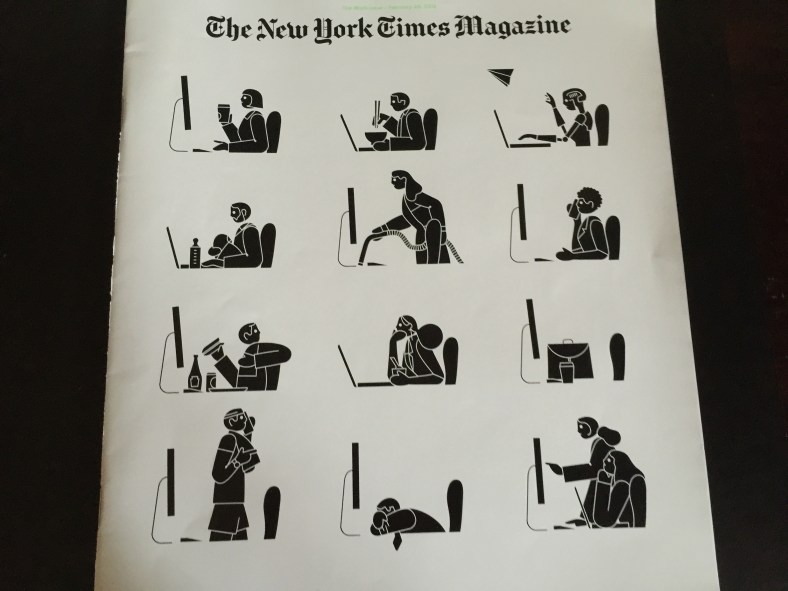
The Saturday Read this week is a compilation of articles that appeared in the February 28, 2016 ‘work issue’ of The New York Times Magazine.

A group of journalists and writers contributed coverage on a variety of work/life topics, adding new perspectives from groundbreaking research, demonstrating that, regardless of profession, it’s all about the culture. And the culture is in need of change.

Organization culture determines who succeeds, fails, and communicates ‘hints’ through recruiting practices, and the daily process of getting things done; meetings, teamwork and office space.

“We do often work at home. But we also work at work, before going home to work more. The office has persisted, becoming even bigger, weirder, stranger: a symbol of its outsize presence in our lives.”

The ‘work issue’ is an interesting survey of some of the most pressing issues @work today. The sampling of the content below is meant to serve as an introduction, with a recommendation to take the time to read the edition in its entirety.

NYT staff writer, Susan Dominus challenges us to think about balance beyond policies by ‘Rethinking the Work-Life Equation’, reporting on the research of Phyllis Moen of the University of Minnesota and Erin Kelly of M.I.T.

“Workers in the experimental group were told they could work wherever, and whenever, they chose so long as projects were completed on time and goals were met; the new emphasis would be on results rather than on the number of hours spent in the office. Managers were trained to be supportive of their employees’ personal issues and were formally encouraged to open up about their own priorities outside work — an ill parent, or a child wanting her mom to watch her soccer games. Managers were given iPods that buzzed twice a day to remind them to think about the various ways they could support their employees as they managed their jobs and home lives.

The research found that employees in the experimental group met their goals as reliably as those in the control group, and they were, in short, much happier: They were sleeping better, were healthier and experienced less stress. Other studies examining the same workplace found that the effects even cascaded down to employees’ children, who reported less volatility around their own daily stresses; adolescents saw the quality of their sleep improve. A year out, and then three years out, employees in the experimental group reported less interest in leaving the organization than those in the control group.

…sometimes there is little more than tradition holding organizations back from making meaningful changes that bring tremendous peace of mind to their employees.”

Five years ago, Google decided to determine what makes a ‘perfect team’. Pulitzer prize winning New York Times reporter Charles Duhigg reports on the results in an excerpt from his new book, ‘Smarter Faster Better: The Secrets of Being Productive in Life and Business’.

“For Project Aristotle, research on psychological safety pointed to particular norms that are vital to success. There were other behaviors that seemed important as well — like making sure teams had clear goals and creating a culture of dependability. But Google’s data indicated that psychological safety, more than anything else, was critical to making a team work.

However, establishing psychological safety is, by its very nature, somewhat messy and difficult to implement. You can tell people to take turns during a conversation and to listen to one another more. You can instruct employees to be sensitive to how their colleagues feel and to notice when someone seems upset. But the kinds of people who work at Google are often the ones who became software engineers because they wanted to avoid talking about feelings in the first place.

What Project Aristotle has taught people within Google is that no one wants to put on a ‘‘work face’’ when they get to the office. No one wants to leave part of their personality and inner life at home. But to be fully present at work, to feel ‘‘psychologically safe,’’ we must know that we can be free enough, sometimes, to share the things that scare us without fear of recriminations. We must be able to talk about what is messy or sad, to have hard conversations with colleagues who are driving us crazy. We can’t be focused just on efficiency. Rather, when we start the morning by collaborating with a team of engineers and then send emails to our marketing colleagues and then jump on a conference call, we want to know that those people really hear us. We want to know that work is more than just labor.”

Nikil Saval, who wrote about the evolution of the office in ‘Cubed: The Secret History of the Workplace’, writes about new experiments with office space, ‘Labor/atories’

“The sudden efflorescence of the tech industry in the late ’90s took us from the desert of cubicles to the milk-and-honey offices of today. Many of the dot-commers had graduated from (or, very often, dropped out of) cozy university campuses to toil in big corporations. Starting their own companies, they recreated the effortless drift between work and play that characterized their college lives. The cubicle walls came down, and in the wide, open warehouse and loft spaces they occupied, exceptionally long workdays would be punctuated by frenzied Mario Kart races or fierce Ping-Pong battles. Creating a playful office became one of the standard ways of attracting skilled employees in a competitive environment: The hope was that a talented engineer wouldn’t leave a tech behemoth for the dinky start-up next door that didn’t have a gym and a resistance pool. Thus has the ‘‘fun office’’ spread throughout the world.”

Each of the articles provides a ‘take away’ to apply @work. If you’re a leader, you’ll rethink your approach as you begin to understand what your competitors are doing to recruit and retain employees. As a manager, you’ll learn ways to improve the daily routine of meetings, but more important, reinforce behavior that will encourage employees to be productive. For the rest of us, a window has been opened to view alternative approaches to work and workplace. What will you do on Monday to turn policy into practice?


The week@work – It’s in the stars: Hollywood stories, #YearInSpace & 18,300 applications

The stories behind the headlines this week@work originate in Hollywood, Geneva, Washington D.C., and on the International Space Station.

The careers of a U.S. deputy trade ambassador and an executive editor for the Washington Post converge in Hollywood, astronaut Scott Kelly captures the final week of his #YearInSpace in photos, and 18,300 applicants aspire to take his place.

Unknown

Would you get up at 4:30 AM every day to pursue your dream? Alexandra Alter reported on a ‘behind the scenes’ Hollywood story about working beyond your ‘day job’.

One of the most successful global trade negotiators added a few hours to his work day 17 years ago to write a novel about fur trader Hugh Glass. His book, ‘The Revenant’ was published in 2002 and sold 15,000 copies. Last year publisher Picador reissued the novel, selling over half a million copies.

images

Michael Punke, the deputy United States Trade Representative and the United States ambassador to the World Trade Organization and author, has become a rock star among colleagues in global trade.

“We all think it’s quite cool,” said Keith Rockwell, a spokesman for the W.T.O., who added that colleagues occasionally tease Mr. Punke by asking him how his buddy Leo is doing. “The W.T.O. isn’t normally known for having a Hollywood connection.”

Some of his colleagues marvel that he has such a successful side career, while steering the country’s international trade policy from his post in Geneva.

“The guy is so talented, you read his bio, and it’s like he has two lives,” said Christopher Wenk, the executive director for international policy at the U.S. Chamber of Commerce.”

Joining Ambassador Punke at the Dolby Theater on Oscar night is current Washington Post executive editor and former Boston Globe editor Martin Baron.

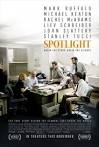
In November, Esquire Magazine ran a career profile asking ‘Is Martin Baron the Best News Editor of All Time?’. In the Oscar nominated film, ‘Spotlight’, actor Liev Schreiber’s performance channels the editor who led the Pulitzer Prize winning team investigating the child abuse scandal in the Catholic Church.

Unknown-1.jpeg

This week, Mr. Baron used his time in the Oscar ‘spotlight’ to reflect on the long term rewards of the film and journalism today, ‘I’m in ‘Spotlight’, but it’s not really about me. It’s about the power of journalism.’

“Aside from the acclaim of critics, “Spotlight” already has delivered one gratifying result. In emails, tweets and Facebook posts, journalists have declared themselves inspired, buoyed and affirmed. That is no small matter in this badly bruised profession. We have felt the traumatizing financial effect of the Internet and been berated by just about everyone, especially politicians in a campaign season that has seen us cynically labeled “scum.”

One journalist wrote me that “the story that inspired the movie serves as a wonderful, wonderful reminder why so many of us got into this business in the first place and why so many stayed despite all the gloom and doom and all the left hooks that landed squarely on our chins along the way.”

The article is required reading for all who earn a living pursuing a journalism career. It should be framed on the walls of journalism schools and be the first google search result on the world ‘journalism’.

Two additional stories about work in Hollywood this week addressed the ongoing conversation on inclusion:

‘From C-Suite to Characters on Screen: How inclusive is the entertainment industry?’ USC Annenberg professor Stacy L. Smith authored the MDSC Initiative’s first report on diversity in the entertainment industry.

Melena Ryzik profiled 27 industry professionals in ‘What It’s Really Like to Work in Hollywood*  (*If you’re not a straight white man.)’

Before leaving the week@work, let’s travel to the International Space Station where astronaut Scott Kelly is completing his 240 day mission in space.

CTeSzSOWIAApQID

“10,944 sunrises and sunsets

“The International Space Station zips around Earth at more than 17,000 miles per hour, or once every 90 minutes. That means over the course of Mr. Kelly’s stay, the space station will have made 5,440 orbits, and the sun will have gone up and down 10,944 times from the perspective of the astronauts aboard. Of course, Mr. Kelly did not see all of them. He is not continuously looking out the window, and he sleeps, too.”

(Scott Kelly tweeted the photo above of sunrise on February 27 and ice earlier today)CcT9mfcW4AAZFvx.jpg

NASA announced this week that it had received 18,300 applications for 14 open spots in the new astronaut class. The recruiting effort which began in the fall demonstrates a rekindled interest in exploration and discovery.

“Now that NASA’s Feb. 18 deadline for applicants has passed, the agency’s 18-month winnowing process has begun.

NASA staff will look at 400 to 600 applicants who survive the initial purge and identify those who pass reference and background checks. Then 120 will be invited to the Johnson Space Center for interviews.

The final 14 will be announced in July 2017 and begin two years of extensive training on spacecraft systems, spacewalking skills, team building and Russian language. Those who complete the program will be assigned to NASA’s Orion deep space exploration ship, the International Space Station or one of two commercial vehicles in development.”

As @StationCDRKelley vacates his spot on the ISS, it’s good to know there are thousands who hope to fill his seat.

This week@work – it’s in the stars, and the dreams of those who aspire to be actors, film makers, journalists, writers, astronauts, and international trade negotiators.


The week@work – A vacancy on the Supreme Court, the power of creative cross training, deciding to ‘jump ship’ and targeting teachers

The headline story of the week@work came with the late Saturday evening announcement of the death of U.S. Supreme Court Justice Antonin Scalia. The theme of transition was echoed in other stories this week, on creative cross-training and deciding when to make your next career move. If you are a teacher, you may be considering both, as educational reform efforts seem to be targeting those leading the classroom vs. students.

A few hours before the Republican candidates were to take the stage in their on-going interview process for the job of U.S. president, news broke that conservative Supreme Court Justice Antonin Scalia had died. Within seconds, it seemed, politicians were redefining the rules on the naming of a successor. In terms of job openings, it’s one of the most coveted appointments in government. The vacancy in the judicial branch will be added to the open position of President and 469 seats in Congress on November 8. It’s enough to overwhelm your average Human Resources manager. Oh, wait, we are the human resources manager here. Time to start paying attention to resumes and experience.

Most of us hope to find meaning in our work, and make some impact on our community with our efforts. For Justice Scalia, his impact was described by Jeffrey Toobin for The New Yorker.

“The loss of Justice Antonin Scalia is immensely significant on two levels. First, Scalia himself ranks among the most influential Justices in American history, alongside such figures as John Marshall, Oliver Wendell Holmes, Jr., and William Brennan. Second, Scalia was the linchpin of the Supreme Court’s five-justice conservative majority. His departure gives President Obama—or a Democratic successor—the opportunity to reshape the ideological balance among the Justices.

When Scalia joined the court, in 1986, the leading school of constitutional interpretation was the “living Constitution”—the claim that the meaning of the document evolves with changes in American society. Scalia brought with him the concept of “originalism”—that the Constitution should be interpreted as its eighteenth-century framers understood it. In practical terms, originalism gives constitutional sanction to conservative politics.

In interpreting laws, he was the leading spokesperson for “textualism,” the idea that, when interpreting laws, courts should look not to legislative history, or congressional “intent,” but rather only to the words of the law itself. While originalism remains controversial within the legal community, textualism won support from nearly all his colleagues (all except Stephen Breyer). This means that the Justices will limit the reach of laws to their precise terms, expanding the court’s power over Congress.”

Srinivas Rao writes about ‘The Power of Creative Cross Training: How Experimentation Creates Possibility’.

Although he is describing the careers of creative professionals, his suggestions to immerse  yourself in tangential activities to broaden your thinking and portfolio, has broad application across career disciplines.

“For most creative professionals, we have a tendency to live within the limitations of our labels: copywriter, web designer, filmmaker, illustrator, and author. Those are the things we do and we get paid for.

The point of creative cross training is to immerse yourself for a short period of time in an art form that is not your primary one. For a writer that could mean designing or drawing something. For a visual artist, that could mean learning to write code.”

An entrepreneur doesn’t have the luxury of labels, and must continually cross train to develop a suite of skills in marketing, finance, customer relations and communication. If you have the mindset of an entrepreneur, creative cross training will become your mandatory daily ritual to stay competitive irrespective of profession.

Creative cross training allows you to take ownership of your career and be prepared for changes @work. Paul Sullivan explored the risks for folks who have ‘jumped ship’, leaving  a stable career to pursue a passion.

“…a Gallup Poll in October found that when American workers make a career change, they almost always do so by leaving their employer instead of taking a new job within the company. Some 93 percent said they took a new role elsewhere. The survey found this was true whether the job change occurred 30 years ago or within the last year.

…consider the tale of DeJuan Stroud, a former Wall Street broker and compliance officer…he gave up his well-paid job and put their modest savings at risk to turn a hobby — floral design, which he had learned from his grandmother growing up in Alabama — into a business.

Now, two decades later, Mr. Stroud is one of the most sought-after floral and event designers in New York City.

His is a success story. But there are big risks in following a similar path — giving up a regular salary and losing your savings for one; throwing away the security of a career is another. For those who go forward, the payoff may be more psychic than monetary, and they need to feel comfortable that the chance of a more modest lifestyle is worth it.”

For some reason, its become ok in our society to devalue the folks who inspire, encourage and transfer knowledge to each generation. Well, it’s not ok and David Denby urges us to ‘Stop Humiliating Teachers’.

“A necessary commonplace: Almost everyone we know has been turned around, or at least seriously shaken, by a teacher—in college, maybe, but often in high school, often by a man or a woman who drove home a point or two about physics, literature, or ethics, and looked at us sternly and said, in effect, You could be more than what you are. At their best, teachers are everyday gods, standing at the entryway to the world. If they are fair and good, they are possibly the most morally impressive adults that their students will ever know. For a while, they are the law, they are knowledge, they are justice.

Our view of American public education in general has been warped by our knowledge of these failing kids in inner-city and rural schools. In particular, the system as a whole has been described by “reformers” as approaching breakdown. But this is nonsense. There are actually many good schools in the United States—in cities, in suburbs, in rural areas. Pathologizing the system as a whole, reformers insist on drastic reorganization, on drastic methods of teacher accountability. In the past dozen or so years, we’ve seen the efforts, often led by billionaires and hedge-fund managers and supported by elected officials, to infuse K-12 education with models and methods derived from the business world—for instance, the drive to privatize education as much as possible with charter schools, which receive public money but are independently run and often financed by entrepreneurs. This drive is accompanied by a stream of venom aimed at unions, as if they were the problem in American education. (Most charter schools hire non-union teachers.) In the real world, however, highly unionized areas of the country, such as the Northeast, produce students with scores higher than the national average in standardized tests; the Deep South, where union teachers are more scarce, produces scores that are lower. So unions alone can hardly be the problem.”

Many recent college graduates, and career changers consider teaching as a career. In reality, our society values the profession at 70% of what peers in other professions earn.  Teachers may not be motivated by money, but that doesn’t allow the rest of us to abdicate our responsibility. It’s time to place a higher premium on those who significantly influence our future.

Two additional articles of interest to consider this week@work:

‘Women in Company Leadership Tied to Stronger Profits, Study Says’ by Daniel Victor “Having women in the highest corporate offices is correlated with increased profitability, according to a new study of nearly 22,000 publicly traded companies in 91 countries.”

‘Why do my co-workers keep confusing me with other people? Because I’m Asian.’ by Iris Kuo   “All my life I’ve been mistaken for other people of my race. It’s a degrading and thoughtless error that boils away my identity and simplifies me as one thing: “that Asian.”


Holiday Homework: Write your story

It’s the holiday season and you have one assignment to complete before the New Year begins – write your story.

During the Thanksgiving holiday I encouraged readers to participate in the Story Corps ‘Great Thanksgiving Listen’, conducting interviews  with relatives to capture the oral history narrative of America.

This week’s challenge is about you; to think about your life as it has evolved to this point, highs and lows, and write a short story, your story.

Before you craft your resume, schedule a meeting with a networking contact or head to an interview, you need a story; the narrative of how you arrived at this point in your life and career.

The end goal is to collect as much information about your past before you open your laptop and begin to browse resume formats. Most folks make the mistake of finding a template and relating their story via someone else’s outline. That doesn’t mean that there aren’t acceptable resume formats. It does mean that it’s premature to begin with the resume before you have considered the narrative you wish to convey.

Storytelling has become the latest marketing approach adopted by entrepreneurs to Fortune 500 CEOs. Google ‘storytelling’ and the initial search results will reflect current business practice vs. writers working on the great American novel or the hottest new screenplay.

Here’s the thing. If the folks you hope to work with are employing storytelling to advance their business goals, it may be time for you to practice your skill.

Buried in the list of google results is a link to an Atlantic.com video, ‘George Saunders Explains How To Tell A Good Story’. It’s one of the most viewed videos of the year, which may provide another hint to why you should take seven minutes out of your life this week and watch.

Let’s pause a minute to address all of you who have gotten to this point and are stressed because all you wanted was a few words on how to write a resume in ten seconds.

Nothing of quality results from ten seconds of effort. And this is your life, eight to ten hours of every five days of seven.

Back to George Saunders.

“A story is kind of a black box, you’re going to put the reader in there, she’s going to spend some time with this thing that you have made and when she comes out, what’s going to have happened to her in there is something kind of astonishing. It feels like the curtain’s been pulled back and she’s gotten a glimpse into a deeper truth…

As a story writer, that’s not as easy as it sounds..”

It’s not easy to tell your story. There’s a lot of stuff that in the end may have no relevance to your job search. But it’s important to conduct an annual rewrite to update and adapt your original script.

Let’s borrow a term from the screenwriters and suggest you are developing a draft ‘treatment’ before you write a resume, network and interview.

Micki Grover defines and describes how this summary of a story fits into the screenwriting process.

“All we’re talking about is a short document written in prose form and in the present tense that emphasizes, with vivid description, the major elements of a screenplay. Yes, treatments are actually written in prose! The essence of the story and the characters should be evoked through exhilarating language and imagery.

Treatments have a style of their own just as screenplays do, and they too take time to master. Writers who swear by using treatments find that it’s a fun outlet to write with a voice that screenplays and synopses sometimes constrain. The ultimate goal is simply to tell your story in an engaging way, as if you were passionately telling your best friend about a new script over coffee.”

That’s your holiday assignment. Develop a ‘treatment’ that tells your story in an engaging way, connecting the dots and inviting an audience who may be interested in promoting your talent.


This one is for the Class of 2009

This past weekend Paramount Pictures released ‘The Big Short’ based on the 2010 Michael Lewis book of the same title about the build up of the housing and credit bubble in the first years of the new millennium.

There were many casualties of the worst financial crisis since the great depression.  I thought it might be worthwhile, as moviegoers line up for tickets, to revisit that time and the impact on those who graduated from college in 2009.

It took a few months for the ripples of economic crisis to reach college campuses. But in the fall of 2008 corporate recruiters began to cancel on-campus interviews and career fairs shrunk to a quarter of their previous year’s participation.

Students who had entered college in the fall of 2005 faced optimistic prospects as the economy was booming and entry level jobs were plentiful. But the global economy began to turn in the spring of junior year, with many heading off to summer internships in anticipation of transitioning to full time work at graduation.

By final exams in 2008, things were looking bleak. Here is an excerpt of a blog I wrote on December 11th.

“When the semester began in August, not even the experts could have predicted the level of change we would experience this fall. While each academic year provides opportunities to embrace challenge and celebrate success, these past four months have created historical moments with the potential to redefine our place in the world.

As you are writing your final papers and studying for exams, let’s take a minute to review what we have learned.

First, we are in an age of globalization. If you have been hiding under the covers for the past ten years, the economic downturn brought the reality of the global banking community to the forefront. In a few short months we have learned more than we may have wanted to know about real estate, mortgages, investment banking, insurance and the auto industry. And we now have a better sense of how our domestic economy depends on the health of these industries. For many of us, the impact of the downturn in the economy has hit close to home with friends and family out of work.

Change can be difficult. If you are a freshman this year, your transition from high school to college is a fresh memory. There was the excitement of a new place mixed with missing friends and family. With every new opportunity to change there is a sentimental longing for the past. For seniors, there is the anticipation of the next step: graduate school, professional school, a new job or and entrepreneurial start up. It is a time of hope mixed with uncertainty.

You are a part of a historic moment in time. Become an active participant. If opportunities in a career field are limited, look toward the new careers emerging as a result of change. All you have learned this semester in your classes, organizations and internships have provided you with a solid foundation to adjust and adapt. This is your strength.”

If the rumors are true, the Federal Reserve will raise interest rates this week, bringing an end to the economic downturn that began in the spring of 2008.

I think it’s important not to forget the lessons learned in 2008 and 2009. Check your social network and schedule a sit down with a 2009 graduate. Get a first person account of how to recalibrate a career path to eventually arrive at success.


Does your resume reflect your values?

Yesterday was #GivingTuesday, a day to give back after the frenzy of Black Friday and Cyber Monday. Let’s start a new tradition, #ValuesWednesday and do a quick audit of our community involvement activities over the past year, and update our resumes to reflect our values.

It’s not just our individual contributions to our local area, but the activities aligned with the places we work. As a new employee at Salesforce you spend your first day outside the office working for a community non-profit organization. It’s a clear message that ‘giving back’ is part of the corporate DNA.

“Salesforce operates on what it calls a “1-1-1” philanthropy approach, in which it supports local nonprofits by giving 1 percent of its products, 1 percent of its equity and 1 percent of its employees’ time.

As an added incentive, employees get six paid days off a year to volunteer. If they complete that, they receive a $1,000 grant to donate to a nonprofit of their choice.”

Most folks forget to include a community involvement section on their resume and omit a key component of their work narrative.

Your resume should communicate what’s important to you. It’s a living document that reflects your commitment @work and in your community.

Conducting a ‘values audit’ is not only an exercise to build your resume, it’s a way to evaluate how you set your priorities over the past year. If you notice your perception is out of balance with reality, you may want to consider the work/family pressures that redirected your plans. If work and values are coming unglued, expand your audit to take in the bigger picture of career/life decisions.

Po Bronson wrote an article for Fast Company magazine 13 years ago. It’s a piece that continues to resonate over time as it applies to our life @work.

“Every industry has a culture. And every culture is driven by a value system.

One of the most common mistakes is not recognizing how these value systems will shape you. People think that they can insulate themselves, that they’re different. They’re not. The relevant question in looking at a job is not What will I do? but Who will I become? What belief system will you adopt, and what will take on heightened importance in your life? Because once you’re rooted in a particular system — whether it’s medicine, New York City, Microsoft, or a startup — it’s often agonizingly difficult to unravel yourself from its values, practices, and rewards. Your money is good anywhere, but respect and status are only a local currency. They get heavily discounted when taken elsewhere. If you’re successful at the wrong thing, the mix of praise and opportunity can lock you in forever.”

On this #ValuesWednesday, ask yourself, Who’s driving the values bus? Are you morphing into a corporate clone or maintaining the integrity of your personal value system? We’re not talking mutually exclusive terms here, just taking an annual values audit.