The Friday Poem ‘Introduction to Poetry’ by Billy Collins

When I first started ‘workthoughts’ almost two years ago, I wanted to include a weekly poem or lyric. A colleague had once shared her secret of success@work, “I start my day reading a poem”.

I believe we all become a bit more creative when we discover the world through a poet’s eyes. Why don’t more of us include poetry in our work lives?

Former U.S. Poet Laureate Billy Collins shared his opinion in an interview to Ben Yakas of gothamist.com.

“…the teaching of poetry is often brutally centered on interpretation. This gives teachers power because they kind of “know the answer.” And I think there’s a streak of sadism in it as well as they watch students get the wrong answer by guessing.”

In October, Mr. Collins published his 12th book of poetry, ‘The Rain in Portugal’. The Friday Poem this week is from his first collection, ‘The Apple That Astonished Paris’, and is for all of you whose early love of poetry was extinguished by an overzealous pursuit of analysis.

Introduction to Poetry 

I ask them to take a poem
and hold it up to the light
like a color slide

or press an ear against its hive.

I say drop a mouse into a poem
and watch him probe his way out,

or walk inside the poem’s room
and feel the walls for a light switch.

I want them to waterski
across the surface of a poem
waving at the author’s name on the shore.

But all they want to do
is tie the poem to a chair with rope
and torture a confession out of it.

They begin beating it with a hose
to find out what it really means.

Billy Collins from ‘The Apple That Astonished Paris’ 1988

collins.png

The week@work – U.S. unemployment at nine year low, Rosberg and Schultz exit roles on top, and “mother nature needs her daughters”

If you weren’t paying attention, you would have thought the major story this week@work was about the 800 folks who will retain positions at Carrier, a division of United Technologies. You might have missed the news that U.S. unemployment reached a nine year low @4.6%, adding 178,000 jobs in November.

In ‘departures’, newly crowned Formula One champion, Nico Rosberg announced his retirement and Starbuck chief, Howard Schultz, will be stepping down from his position next year.  Seventy-six women scientists have embarked on an expedition to Antarctica to focus on climate change and women who work in the sciences.

Ana Swanson reported on the U.S. unemployment news for The Washington Post, Wonkblog.

“Data released on Friday showed a sharp drop in the unemployment rate from 4.9 percent the previous month, driven partly by the creation of new jobs and partly by people retiring and otherwise leaving the labor force.

A broader measure of unemployment, the U-6 rate, which includes those who have given up looking for work and part-time workers who would like to have full-time jobs, fell to 9.3 percent, the lowest reading since April 2008. The figure still remains elevated from average levels in the 2000s.”

Paul Weaver covered the announcement of F1 champion, Nico Rosberg’s decision to retire from racing five days after capturing the title for The Guardian.

551069_10152244647569874_65635453_n.png

“Nico Rosberg has stunned Formula One by announcing his retirement, just five days after the 31-year-old became the sport’s world champion…

He said he had “climbed my mountain”. Now he is going out at the peak.

Rosberg said he first started thinking about retiring when he won the Japanese Grand Prix in early October and realised the title was within his grasp. “From the moment when the destiny of the title was in my own hands, the big pressure started and I began to think about ending my racing career if I became world champion,” he wrote in a post on his Facebook page announcing his departure.”

At the other end of the career spectrum, the visionary leader of Starbucks, Howard Schultz announced he will be stepping away from his leadership position at the company he joined in 1982. Andrew Ross Sorkin reported on the change at the top for The New York Times.

“I wanted to build the company my father never got to work for,” he said.

Howard_Schultz_and_Kevin_Johnson.JPG

At an all-hands employee meeting at the company’s headquarters on Thursday, Mr. Schultz was greeted with tears and a standing ovation. “For me, perhaps there are other things that are part of my destiny,” he told them.”

Mr. Schultz said he intends for Starbucks to “maintain our moral courage.” And he defended efforts like the company’s “Race Together” campaign to spur a conversation about race relations, saying that it “was not a failure. I’d do it again.” He said such campaigns are deeply embedded in the company’s brand of “challenging the status quo about the role of a public company.” He is excited by the question, “Since we have stores in every community in America, how can we use our scale for good?”

How do folks successfully transition from one phase of their work life to the next?

Adam Bryant‘s ‘Corner Office’ interview with Nyansa chief executive, Abe Ankumah provides a hint.

“Be a lifelong student. That doesn’t mean go enroll in a bunch of classes all the time. It’s a mind-set. It means continuing to push yourself to learn rather than saying, “I’ve got this degree in this, and that’s what I’m going to do.”

The other thing is not to become too comfortable in a role. Chances are that if you’re comfortable, you’re not learning, you’re not pushing the envelope and you’re probably going to get stagnated.”

The last story this week@work is an example of pushing the envelope, for the greater good.

On Thursday I received a tweet from BBC Australia about an expedition of women scientists traveling to Antarctica. The tag line of their sponsor, ‘Homeward Bound’, is “mother nature needs her daughters”.

img_2600-1-1080x675

From the BBC  Australia story – “They call Ushuaia, a cold and windy port city in Argentina, the end of the world.

It’s from here that the largest ever all-female expedition to Antarctica will depart, with more than 70 women with backgrounds in science set to spend 20 days at sea.

The voyage is part of the Homeward Bound initiative, an Australian programme aimed at increasing the representation of women in top science jobs across the globe.

“We’re missing half the voice at the leadership table,” says Dr Jessica Melbourne-Thomas, who along with entrepreneur and management expert Fabian Dattner, came up with the idea.

The pair met during a leadership development course run by Dattner, and their frustration at the challenges faced by women in science quickly became a bold idea.

Two years later, the first of what is hoped to be several voyages is about to depart.”

We talk a lot about ‘dream jobs’ and whether ‘finding your passion’ is attainable. For those of you skeptics out there, I close with the closing paragraphs of Fabian Dattner‘s blog post, co-founder of Homeward Bound, who as I write is on her journey south.

“So, right now as I work with a group of leaders in my day job, my mind wanders effortlessly to what lies ahead – now only a few sleeps away – and I am finally lost for words, carried forward – as with all the people involved – on a deeply felt sense of rightness: right purpose, right time, right people, right outcome.

I know what ‘flow’ means now; I know what purpose, autonomy and freedom mean. I know what it means to lead and be led. And I know in my bones what is possible for humans, when leaders act on behalf of the greater good.

Stay with us on this journey. It’s for all of us.”  @HomewardBound16


Photo credits: Antarctica expedition – Homeward Bound, Kevin Johnson/Howard Schultz -Starbucks Newsroom

The Friday Poem ‘Voice’ by Jeffrey Brown


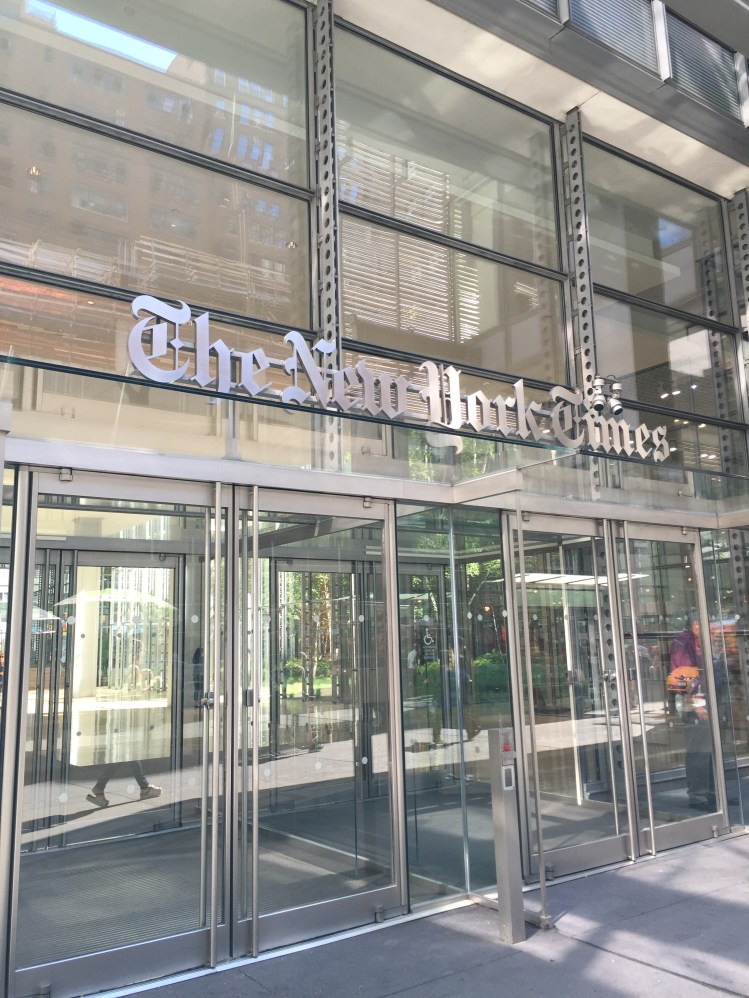
Walking west on 40th Street, between 7th & 8th, you pass the entrance to the CCNY Graduate School of Journalism. In the space of a city block, those aspiring to pursue a career reporting the news, cross paths with the the best in the field @work in The New York Times building.

There was a time when the most trusted man in America was a television journalist. Today, journalists across the globe find themselves at risk when reporting the truth. ‘Fake news’ sites proliferate where fiction replaces fact.

Lost in the cacophony of the latest news cycle is the value professional journalists provide in our society; collecting and communicating information that empowers the rest of us to make the best decisions.

This week, The Friday Poem is for those who follow their dream to newsrooms around the corner, and around the world. ‘Voice’ was written by NPR journalist and poet, Jeffrey Brown.

Voice

for Robert MacNeil and Jim Lehrer

There are those with a voice so rich,

so bell-strong, time chiseled, and alive

they can read the phone book and

you will hear the deeds and failings

in every name, the laughter and wailing

of ghosts who inhabit each address,

the infinite possibility


in every number. There are those

with a voice that rich, he says –

the lucky ones. But that is not us.

We open our mouths and out comes a

small, high sound, cracking midsentence,

straining to tell the story we know

to be true. There are things you can do:


Learn to breathe. Stand up straight and

let the air flow through you, belly to

chest and into the mask of your face.

Take a bit of chocolate, sip on your

coffee – excite the senses. Imagine

the people in their hoes hungry for

dinner and for news of the world.


Underline phrases, emphasize what

should be emphasized, diminish

the less important. Decide what is

important. Be sure you understand

the meaning of what you are to say.

Do not yell, do not whisper, look ahead,

not down, fill your lungs, open your mouth


and speak. The Zen master says “You

find your voice when you find yourself.”

But that, too, is not for us. (Who knows

What else you’ll find there? he laughs).

Better to listen to that voice

as though from afar, as though it

is not yours. Then speak again.

Jeffrey Brown from ‘The News:Poems’ 2015

51snA65oWyL._AC_US320_QL65_.jpg


‘Why do I have an intern?’ Learning from the most junior person in the room

What did you learn from your intern this fall? That is the question. If an answer doesn’t come quickly to mind, you may want to ask ‘Why do I have an intern?’ before you hire a new one for spring.

One of the most disappointing, dispiriting experiences of my time mentoring university students employed as interns came at the end of the semester when we asked employers to submit an evaluation of the intern’s performance. Most had to be tracked down via text,  email, and voice mail before a perfunctory form was returned with a checkmark for ‘exceptional’, ‘good’ or ‘needs improvement’. It was the rare manager (1 in 50) who would actually take the time to share valuable, actionable feedback.

At the beginning of each semester, concurrent with the start of a new internship, you could illuminate a major city with the energy emanating from students about to embark on a new experience. As the weeks went by, the lights dimmed, as one by one, intern’s dreams fell short when tested in practice. In many cases it seemed that the intern was a ‘vanity’ addition to one’s entourage vs. a potential contributor to a strategic mission.

Here’s the thing. Most of these students were committing 10-15 hours of ‘unpaid’ time to their internship. In the majority of cases interns were balancing a full course load of 16-18 credits and a part-time paid position. Social life was the first casualty, but a worthy trade-off for the opportunity to gain valuable, ‘career related’ work experience.

With this level of commitment, why is there such a major disconnect in expectations between employers and interns?

In many cases the ‘unpaid’ label results in a lack of respect. Little thought goes into anticipating and planning the internship assignments.

A successful internship program/relationship is built on clearly communicated expectations and on-going follow-up/ feedback.

Why do you hire an intern? Perhaps to breathe some fresh air into the room. Maybe to keep you aligned with your values. Most important, to help you connect with your emerging customer cohort.

Victor Ho, C.E.O. of FiveStars was interviewed by Adam Bryant for his weekly ‘Corner Office’ column in The New York Times. Reflecting back on his experience, he shared

“…the strongest lesson I learned at McKinsey that I now share with every single new hire is what they call the “obligation to dissent.” It means that the youngest, most junior person in any given meeting is the most capable to disagree with the most senior person in the room.

So if I hire an intern, that intern is the most qualified person in the company to say, “Victor, I heard this was your mission, your values, and these things are off.” That’s just because the more removed you are, the less you drink the Kool-Aid. You have a fresh perspective.”

Before your fall intern departs, skip the cake, and use the the time for a face to face conversation about what you both learned over the past four months. Offer feedback that will guide your intern through to the next step in their career.

When you are interviewing your spring candidates, look for the most qualified person with “the obligation to dissent”.  Ask yourself ‘How can I structure the experience to maximize individual contribution and encourage interaction?’

Why do I hire an intern? To learn, and reconnect to the core aspirational organization values.


Thanksgiving 1944

I am a daughter of the generation who rarely talked about their earlier lives. Even in later years when their mortality became evident, there was no sharing of history. It’s only in the wake of their demise that clues appear in the back of sock drawers and attic boxes in photos and paper.

In 1944 President Franklin D. Roosevelt proclaimed Thursday the twenty-third of November a day of national thanksgiving.

On that Thanksgiving Day in the Netherlands, East Indies, members of the 989 Signal Corps at Base G, under the command of Captain John Gammon, shared a dinner of roast turkey, turkey dressing, giblet gravy, cranberry sauce, mashed potatoes, creamed peas and carrots, creamed corn and fruit salad. Parker house rolls were served with butter and jam. And for dessert there was devils food cake, pumpkin pie and coffee.

The meal was prepared under the supervision of the mess sergeant, Lloyd V Green, assistant mess sergeant Theodore J Sherian and baker Ralph L Bowman. Seven cooks prepared the meal, PP Urban, WE Hovermale, SV Schultz, JA Bozer, IA Johnson, C Branham, RC Click, M Lynn and L Downs.

My father left few clues to his time in the South Pacific.  There were a few coins, photos, but only one sheet of paper, mimeographed and folded. On one side, a hand drawn sketch of a palm tree, a roast turkey and ‘Thanksgiving 1944’. On the other, the menu and the list of those who prepared the meal.

Why that menu traveled thousands of miles back to New Jersey remains a mystery. On this Thanksgiving, I thank the families of those who served with him, and on that day in 1944 helped create a special memory in the chaos of the South Pacific Theater.

Happy Thanksgiving.

1944  menu.jpg


The week@work:’post-truth’, Facebook’s ‘news feed’, Gwen Ifill, a new leader @Lincoln Center, & Udacity’s tech job tryouts

This past week@work Oxford Dictionaries declared ‘post-truth’ the 2016 word of the year, and Facebook’s Mark Zuckerberg realized his job description included a responsibility to combat fake news. In contrast, the week marked the death of an authentic journalist, PBS NewsHour co-anchor Gwen Ifill. Lincoln Center chose a new leader from academia and MOOC provider, Udacity announced tech job tryouts.

On Wednesday, the BBC reported “Oxford Dictionaries has declared “post-truth” as its 2016 international word of the year, reflecting what it called a “highly-charged” political 12 months.

It is defined as an adjective relating to circumstances in which objective facts are less influential in shaping public opinion than emotional appeals.

post-truth_B4BED3DEF1DC47D4B21C7D697F06CC91.jpg

Oxford Dictionaries says post-truth is thought to have been first used in 1992. However, it says the frequency of its usage increased by 2,000% in 2016 compared with last year.”

The Economist explored ‘post-truth’ in ‘The Art of the Lie’.

“The term picks out the heart of what is new: that truth is not falsified, or contested, but of secondary importance…

Post-truth politics has many parents. Some are noble. The questioning of institutions and received wisdom is a democratic virtue. A sceptical lack of deference towards leaders is the first step to reform. The collapse of communism was hastened because brave people were prepared to challenge the official propaganda.

Post-truth has also been abetted by the evolution of the media… The fragmentation of news sources has created an atomised world in which lies, rumour and gossip spread with alarming speed. Lies that are widely shared online within a network, whose members trust each other more than they trust any mainstream-media source, can quickly take on the appearance of truth. Presented with evidence that contradicts a belief that is dearly held, people have a tendency to ditch the facts first. Well-intentioned journalistic practices bear blame too. The pursuit of “fairness” in reporting often creates phoney balance at the expense of truth.”

The New Yorker contributor, Nathan Heller examined one example of the phenomena in ‘The Failure of Facebook Democracy’.

fbwm_cw_07.jpg

“The unexpected election of Donald Trump is said to owe debts to both niche extremism and rampant misinformation. Facebook, the most pervasive of the social networks, has received much scrutiny and blame. During the final weeks of the campaigns, it grew apparent that the site’s “news” algorithm—a mechanism that trawls posts from one’s online friends and rank-displays those deemed of interest—was not distinguishing between real news and false information: the sort of tall tales, groundless conspiracy theories, and oppositional propaganda that, in the Cenozoic era, circulated mainly via forwarded e-mails.

Facebook is not the only network to have trafficked phony news, but its numbers have been striking. A much-cited Pew survey, released in May, suggested that forty-four per cent of the general population used Facebook as a news source, a figure unrivalled by other social networks. An analysis this week by Craig Silverman, of BuzzFeed, found that the twenty top-performing fake news stories on the network outperformed the twenty top real-news stories during the final three months before the election—and that seventeen of those fakes favored the Trump campaign.

If a majority of Americans are getting their news from Facebook, then Facebook surely has a civic obligation to insure the information it disseminates is sound.”

Which brings us to the initial response from Facebook founder/CEO Mark Zuckerberg.

“Identifying the ‘truth’ is complicated.”

12208495_10102454385528521_4749095086285673716_n.jpg

On Friday, he posted details of the projects in place to address the issue.

“A lot of you have asked what we’re doing about misinformation, so I wanted to give an update.

The bottom line is: we take misinformation seriously. Our goal is to connect people with the stories they find most meaningful, and we know people want accurate information. We’ve been working on this problem for a long time and we take this responsibility seriously. We’ve made significant progress, but there is more work to be done.”

Buried in paragraph four was this nugget that seemed to transfer ownership from the corporation to the community, ignoring a leader’s civic obligation.

“We do not want to be arbiters of truth ourselves, but instead rely on our community and trusted third parties.”

Contrast this approach to the definition of the role of a journalist, courtesy of the American Press Institute.

“The journalist places the public good above all else and uses certain methods – the foundation of which is a discipline of verification – to gather and assess what he or she finds.”

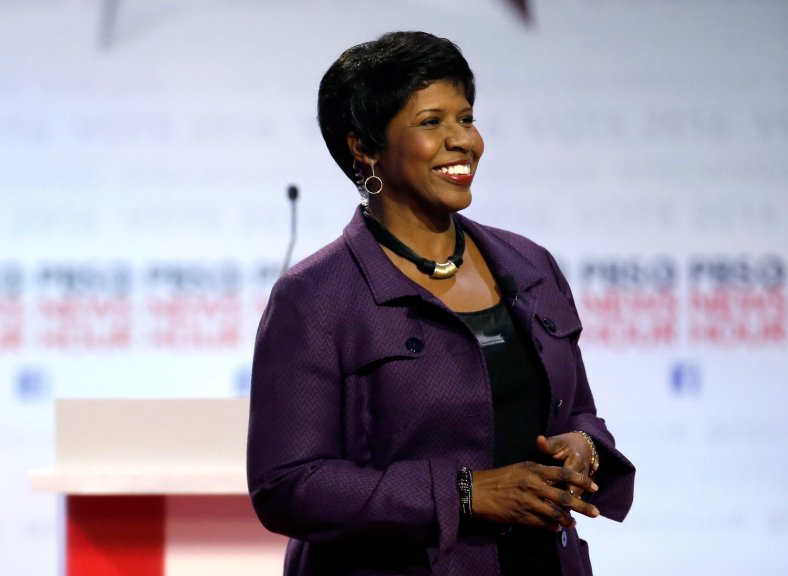
So let’s return to the days of ‘truth’ and remember the contribution of journalist Gwen Ifill through the eyes of two colleagues.

ap_193273822329_custom-095cea2744af0cdfc2393dae5431919449a19d63-s1500-c85

‘What Gwen Ifill Knew About Race in America’  by Jeffrey Goldberg “An insufficient number of people have recognized what is obvious. Gwen’s death is a punishing blow to her family, and to her wide circle of friends, to her colleagues and to her viewers. But it is also a cruel blow to her profession, which hasn’t recently covered itself in glory. And it’s an especially cruel blow to her lovely nation, which is right now in need of her bravery, her farsightedness, and her willingness to tell the truth. Hers is an incalculable loss.”

‘The Life and Example of Gwen Ifill’ by David Brooks “Gwen worked in a tough business, and being an African-American woman in that business brought its own hardships and scars, but Gwen’s smile did not hold back. Her whole personality was the opposite of reticent, and timidity was a stranger to her. When the Ifill incandescence came at you, you were getting human connection full-bore.

I suppose every profession has a few people like this, people who love the whole profession, who pay compliments when its standards are met and who are tough when they are not.

Gwen’s death merits a bit of the reaction that greeted the death of the writer Samuel Johnson centuries ago: She has left a chasm, which nobody else can fill up and which nobody has a tendency to fill.

Now that Gwen is dead, who is the next best thing? There’s nobody. There are many great people who will follow her example. But nobody quite reminds you of Gwen.”

In other news this week@work:

‘Debora L. Spar, Barnard President, to Lead Lincoln Center’Michael Cooper for The New York Times  “In appointing Ms. Spar, who is also an author and a former Harvard Business School professor, Lincoln Center’s board looked beyond arts administration circles and decided to tap someone with experience running a large nonprofit and with a track record of raising money for capital projects — skills that could prove useful as the renovation proceeds.”

Mr. Cooper reported in a related story that you may want to share with the aspiring musicians in your life, ‘It’s Official: Many Orchestras Are Now Charities’.

‘Udacity, an Online Learning Start-Up, Offers Tech Job Trials’Steve Lohr for The New York Times “The program, called Blitz, provides what is essentially a brief contract assignment, much like an internship. Employers tell Udacity the skills they need, and Udacity suggests a single candidate or a few. For the contract assignment, which usually lasts about three months, Udacity takes a fee worth 10 to 20 percent of the worker’s salary. If the person is then hired, Udacity does not collect any other fees, such as a finder’s fee.

The Blitz initiative and Udacity’s evolution point to the role that nontraditional education organizations might play in addressing the needs of workers and employers in the fast-changing labor market for technology skills.”

In closing this week of work, I am still trying to clear the fog in my brain and understand ‘post truth’. I reside in the real word, but apparently it’s changing. What does work look like when words hold no meaning?

I’ll end with classicist Mary Beard‘s reflection on the U.S. election.

“Trump and Trump’s policies are truly ghastly, but you have to face the fact that a very large number of people actually voted for him. What is more, resentment at “the elite” has morphed into a proud contempt for truth, expertise and knowledge – not unlike Michael Gove’s jibe at “experts” before the Brexit vote. And in the broader context of political rhetoric, the idea that he won’t be as bad as he claimed is more, rather than less, worrying. I thought that the conciliatory speech was the worst thing I had heard all evening. The idea that he could be thanking Clinton for her service to the country (“I mean that very sincerely”) and be speaking of “binding the wounds of division” – when only the day before he’d promised to impeach her and poured salt into the very wounds he was now promising to heal – beggars belief. It has nothing to do with being “gracious” (as the television pundits had it), and everything to do with words not meaning anything. It was precisely what ancient rhetorical and political theorists feared almost more than anything else: that speech might not be true, and the corrosive effect of that on popular power.”


Photo credits: Facebook Menlo Park HQ courtesy of Facebook Newsroom Media Gallery, Mark Zuckerberg from his Facebook page, Gwen Iffil/Morry Gash AP


The Friday Poem ‘The Familiar Has Taken Leave’

Why are we always surprised when national events veer from a predicted trajectory? Maybe we’ve been spending too much time with analytics and not enough time with the poets.

Megan Garber wrote in The Atlantic last week about the role of poetry in the aftermath of the 2016 U.S. presidential election. “Campaign in poetry; govern in prose,” the old adage goes. This moment, though, has in many ways flipped that idea: The 2016 presidential campaign was decidedly lacking in poetry. Yet in its aftermath, as Americans consider the contours of their new government, they are, often, turning to poems…”

She interviewed Don Share, the editor of Poetry magazine to discover why poetry was having a ‘moment’.

“Well, it’s always been speaking to people—and it’s always been speaking to people about the kinds of things they’re taking about now, because one of the things poetry is really good at is anticipating things that need discussion. Poets are kind of like—it’s a bad metaphor, but—canaries in a coal mine. They have a sense for things that are in the air. Partly because that’s what they do—they think about things that are going on—but partly because they take their own personal experience and see how that fits in with what they see in the world. A lot of people might think that poetry is very abstract, or that it has to do with having your head in the clouds, but poets, actually, walk on the earth. They’re grounded, feet-first, pointing forward. They’re moving around and paying attention at every moment.”

Perhaps next time, we should survey the poets, not the pollsters.

Until then, the events of the past 11 days brought me to a poem selected by Matthew Zapruder for the August 16, 2016 issue of The New York Times Magazine.

The poem, written by broadcaster, documentary filmmaker and poet, Richard O. Moore was part of a “sequence of sonnets about the consequences of losing his sight in old age”.

At its core, the poem is about change…and how we respond.

The Familiar Has Taken Leave

Responding to a world turned outside in
Requires a fresh agility of will
And a surreal mode of thought, both distant
When the world was visible and real.
The only carry-over is the sound:
The hollow clatter of the commonplace,
Ancestral voices, sepulchral complaints
From many sources now invisible.

This is the most dispassionate I can be.
The familiar has taken leave with all I know
And what is left is mostly echo fading,
Never to return. What takes shape then
Is virtual and is a world apart
Assembled half by memory, half by art.

Richard O. Moore (1920-2015) from ‘Particulars of Place’ April, 2015

ParticularsOfPlace-Cover-1.5x2.25-300dpi-CMYK-200x283.jpg


“Once you have traveled, the voyage never ends…”

“Once you have traveled, the voyage never ends, but is played out over and over again in the quietest chambers. The mind can never break off from the journey.” Pat Conroy, ‘Prince of Tides’.

What started out as a two week vacation in October, stretched to include an unexpected medical diversion, into November. It’s time to return to sharing thoughts about work: the lessons we learn from experience, and those we acquire in poetry, novels and non-fiction. It’s in the storytelling that we discover our dreams.

Once you embark on the voyage of your career, the journey never ends, but resonates in the quietest chambers of the imagination. There may be distractions along the way, but the spirit of a ‘calling’ is a constant companion in the adventure of finding your ‘true north.


The mysteries of networking #5: Try it in reverse

Folks entering the job market for the first time are often hesitant to reach out to potential networking contacts. What do I have to give in return? is a common question. The answer may be to ‘network in reverse’.

Traditional networking is a commitment of mutual support over time. The majority of established professionals hold no expectation of immediate reciprocity when advising newbies to the job market.

Turns out, their expectations need revision; there’s quite a bit of knowledge to be shared by the most recent additions to the workplace. Just don’t be surprised when you get the call from someone twice your age asking, Will you mentor me?

That’s exactly what happened when The New York Times assignment editor, Phyllis Korkki approached social editor, Talya Minsberg.

Let’s start with a quick inventory of your skill set. What is the skill that has been burning a hole on your ‘to do’ list for the last six months? You know, that one thing you are a bit afraid of, but would catapult your career if you just spent some time learning?

Who do you know who can serve as a bridge to knowledge or provide a bit of training and support?

That’s basically the story of Phyllis and Talya, a ‘reverse mentorship’ initiated around the joys of technology, specifically Snapchat.

Phyllis shared her story, ‘Schooled by a Mentor Half My Age’.

“How on earth did I become an “older worker?”

It was only a few years ago, it seems, that I set out to climb the ladder in my chosen field. That field happens to be journalism, but it shares many attributes with countless other workplaces. For instance, back when I was one of the youngest people in the room, I was helped by experienced elders who taught me the ropes.

Now, shockingly, I’m one of the elders. And I’ve watched my industry undergo significant change. That’s why I recently went searching for a young mentor — yes, a younger colleague to mentor me.”

She found that ‘reverse mentor’ in Talya who was ‘Seeing Age With a New Lens’.

 “A few months ago, Phyllis Korkki, an assignment editor at The New York Times who sits a few cubicles away, approached me with a question that gave me pause. “Will you mentor me?” she asked.

I gave her what I imagine was a blank stare, and responded, “Wait, what?”

Phyllis is a longtime Times employee, an accomplished journalist and an author. So the fact that she was approaching me for mentorship was unexpected.

She wanted to do what she was calling a reverse mentorship. She wanted to challenge herself and learn something new, something outside her comfort zone, she said. She wanted to learn how to use Snapchat.

Snapchat is a popular social mobile app that features, among other things, stories that live for just a day. And she came to me because a large part of my role has been guiding editorial strategy in the brave new world of stories that disappear in 24 hours.

So of course I was happy to meet with Phyllis one on one.

But a mentorship? I was honored, albeit a bit perplexed.”

It was at this nexus of generational knowledge transfer, that the two connected in an informal ‘reverse networking’ relationship that has benefited both, and serves as a model for an ‘older brain’/ ‘younger brain’ mind meld.

Phyllis realized the benefit of utilizing a new application @work, as well as the learning experience itself.

“It was exhilarating to see my progress — and embarrassing to witness my missteps, like putting my finger over the camera at the close of the cat cafe video. (But have you ever tried to record yourself while trying to keep a cat on your shoulder?)”

Talya, the mentor, observed Phyllis’ first venture into Snapchat’s geofilters and emoji.

“Eventually, Phyllis took to the official New York Times Snapchat account to broadcast three stories. And three times I waited with bated breath to watch those stories, feeling like a teacher in the back of a classroom waiting for a student to give a big presentation. Each time, she got better — and I was eager to tell her about it in person.

When I gave Phyllis a glowing review, she kept saying, “Really? You like it?” I think we both recognized the moment as a milestone in the reverse mentorship. We both felt success.”

And  that’s the ultimate benefit of a mentoring relationship: both participants experience success.

Your assignment, this week@work, should you choose to accept it: go find your Phyllis or Talya and engage in the career energizing process of a ‘reverse mentorship.”

The week@work – the value of cross-functional experience, empowering introverts, economic recovery, and a new leader @librarycongress

It turns out that the path to leadership is paved not just by elite MBA degrees, but also with experience across a range of business functions. Once you arrive in the ‘C Suite’ it’s to your advantage to pay attention to the introverts in the room.

In other stories this week@work, evidence shows an increase in middle class incomes, there’s a new Librarian of Congress, and can you remember Oprah’s first book club pick 20 years ago?

Generalize or specialize? That is the question Neil Irwin answers in ‘A Winding Path to the Top’ for The New York Times.

“How does a person get to be the boss? What does it take for an ambitious young person starting a career to reach upper rungs of the corporate world — the C.E.O.’s office, or other jobs that come with words like “chief” or “vice president” on the office door?

The answer has always included hard work, brains, leadership ability and luck. But in the 21st century, another, less understood attribute seems to be particularly important.

To get a job as a top executive, new evidence shows, it helps greatly to have experience in as many of a business’s functional areas as possible. A person who burrows down for years in, say, the finance department stands less of a chance of reaching a top executive job than a corporate finance specialist who has also spent time in, say, marketing. Or engineering. Or both of those, plus others.”

Many corporations, in the past, had institutionalized ‘rotational assignments’ in a variety of business functions under the aegis of ‘leadership development programs’. When ‘shareowner’ value became the primary measure for CEOs, these internal employee development initiatives were shut down. But the need for cross-functional expertise never went away.

“To be a C.E.O. or other top executive, said Guy Berger, an economist at LinkedIn, “you need to understand how the different parts of a company work and how they interact with each other and understand how other people do their job, even if it’s something you don’t know well enough to do yourself.”

Developing multiple areas of expertise provide a pragmatic workplace foundation for the aspiring entrepreneur, the Fortune 500 CEO, and the variety of public and private leadership opportunities in between.

You learn the language, make life-long career connections, and maintain contact with your customer.

grand central ny.jpg

Location seems to influence opportunities as well. Take note, all you folks who hesitate to relocate.

“Beyond the results on job functions, the data from LinkedIn shows some trends for which the explanations aren’t completely obvious. For example, former consultants who lived in New York or Los Angeles had higher odds of ending up with a top job than people in other large cities like Washington or Houston. A former management consultant with 15 years of work experience in six different functions and an M.B.A. from a top school had a 66 percent chance of becoming a top executive if he lived in New York compared with a 38 percent chance in Washington.”

Bottom line, moving out of you career comfort zone, whether that means function or city, holds long-term implications for career success.

The second story this week@work comes from the print edition of The Economist, ‘Shhhh! Companies would benefit from helping introverts to thrive’.

Most companies worry about discriminating against their employees on the basis of race, gender or sexual preference. But they give little thought to their shabby treatment of introverts.

The recent fashion for hyper-connectedness also reinforces an ancient prejudice against introverts when it comes to promotion. Many companies unconsciously identify leadership skills with extroversion—that is, a willingness to project the ego, press the flesh and prattle on in public.

What can companies do to make life better for introverts? At the very least, managers should provide private office space and quiet areas where they can recharge. Firms need to recognise that introverts bring distinctive skills to their jobs. They may talk less in meetings, but they tend to put more thought into what they say. Leaders should look at their organisations through the introverts’ eyes. Does the company hold large meetings where the loudest voices prevail? That means that it is marginalising introverts. Does it select recruits mainly on the basis of how they acquit themselves in interviews? That could be blinding it to people who dislike performing in public.”

Jim Tankersley reported for The Washington Post Wonkblog, ‘Middle class incomes had their fastest growth on record last year’.

ny-corner

“Middle-class Americans and the poor enjoyed their best year of economic improvement in decades in 2015, the Census Bureau reported Tuesday, a spike that broke a years-long streak of disappointment for American workers but did not fully repair the damage inflicted by the Great Recession.

Real median household income was $56,500 in 2015, the bureau reported, up from $53,700 in 2014. That 5.2 percent increase was the largest, in percentage terms, recorded by the bureau since it began tracking median income statistics in the 1960s.

In addition, the poverty rate fell by 1.2 percentage points, the steepest decline since 1968. There were 43.1 million Americans in poverty on the year, 3.5 million fewer than in 2014. The share of Americans who lack health insurance continued a years-long decline, falling 1.3 percentage points, to 9.1 percent.

“The highest income growth was in the bottom fifth” of workers, “which is very welcome news,” said Lawrence Mishel, president of the liberal Economic Policy Institute think tank. Furman, of the White House, credited wage-boosting policy initiatives for some of that increase: “The fact that millions of workers have gotten a raise, as states have raised minimum wages, has definitely had an effect there,” he said.

All told, the gains brought median incomes nearly back to their levels before the recession, after adjusting for inflation, though they remain below 1999 levels. Bureau officials said the 5.2 percent growth rate was not statistically distinguishable from five other previous increases in the data, most recently the 3.7 percent jump from 1997 to 1998.”

On Wednesday, Carla Hayden was sworn in as the 14th Librarian of Congress“Hayden, the first woman and the first African American to lead the national library, was nominated to the position by President Barack Obama on February 24, 2016, and her nomination was confirmed by the U.S. Senate on July 13.”4532.jpg

Baynard Woods covered the appointment for The Guardian, ‘Carla Hayden: new librarian of Congress makes history, with an eye on the future’.“Even though librarianship is one of the four what they call feminized professions – social work, education nursing, and librarianship – where 85% of the workforce is female, there haven’t been an equal amount of women in the leadership positions,” Hayden said in an interview.

Hayden is also only the third Librarian of Congress to actually have training as a librarian.

“There have been lawyers and politicians, historians, scholars, librarians, and I think at this time it’s not a detriment to have a librarian be librarian of Congress,” she said.

The librarian of Congress oversees the world’s largest library system. As the name indicates, one of the main roles of the library is to assist Congress in the research it needs in order to pass bills. It also oversees the US copyright system, names the poet laureate, and preserves historical documents and books.

Hayden first came to national prominence in 2003 when she spoke out against certain elements of the Patriot Act as the head of the American Library Association. Attorney general John Ashcroft attacked Hayden for sowing “hysteria” about the provision of the act that would allow the government to search library and bookstore records.

Hayden shot back.

“We are deeply concerned that the attorney general should be so openly contemptuous of those who seek to defend our Constitution,” she said. “Rather than ask the nation’s librarians and Americans nationwide to ‘just trust him,’ Ashcroft could allay concerns by releasing aggregate information about the number of libraries visited using the expanded powers created by the USA Patriot Act.”

At the time, there was political risk in such statements, but Hayden said she never considered that.”

In history@work this week, September 17 marked the 20th anniversary of Oprah Winfrey’s Book Club. Do you remember the first pick? Jacquelyn Mitchard‘s ‘Deep End of the Ocean’.201603-ep521-own-watn-9-949x534.jpgOprah’s Book Club quickly became a hugely influential force in the publishing world, with the popular TV host’s endorsement capable of catapulting a previously little-known book onto best-seller lists.

When Oprah’s Book Club first launched, some in the publishing world were skeptical about its chances for success. As The New York Times noted: “Winfrey’s project—recommending books, even challenging literary novels, for viewers to read in advance of discussions on her talk show—initially provoked considerable skepticism in the literary world, where many associated daytime television with lowbrow entertainments like soap operas and game shows.” However, the club proved to be a hit with Winfrey’s legions of fans, and many of her picks sold over 1 million copies. (She earned no money from book sales.) Winfrey’s ability to turn not just books but almost any product or person she recommended into a phenomenon came to be known as the “Oprah Effect.”

Celebrate this week@work with a selection from Oprah’s long list of book recommendations.


Photo credit: Carla Hayden by Pablo Martinez Monsivais/AP