The Saturday Read ‘A Whole Life’ by Robert Seethaler

Too often we seek advice and counsel from the plethora of self-help books that line the shelves of bookstores. What we miss are the life lessons divulged under the guise of fiction.

The Saturday Read this week takes us to the Austrian Alps in 1933 to observe ‘A Whole Life’, the best selling German novel by Robert Seethaler, translated by Charlotte Collins.

The story is Andreas Egger’s, an everyman’s narrative of life, work, tragedy and values. It’s short, the perfect read for a plane trip or a couple of days commute. In this case brevity doesn’t diminish the tale. The simple, beautiful language reveals a literary character that will stay with you long after the story ends.

Throughout the book, the author stores small gems of wisdom, life lessons. In one scene, Andreas approaches the general manager of a construction site to negotiate a raise. Upon reaching agreement on a salary increase, Andreas promises to work even harder. The manager replies:

“You can buy a man’s hours off him, you can steal his days from him, or you can rob him of his whole life, but no one can take away from any man so much as a single moment.”

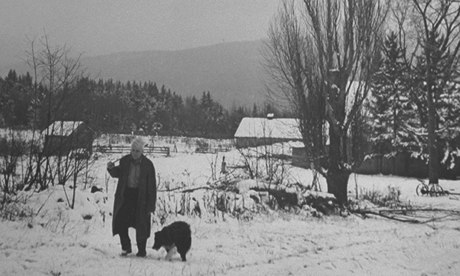
After years in construction, and more years as a prisoner of war, Andreas returns to his village and eventually finds work as a hiking guide.

“Egger didn’t usually speak on his walks. ‘When someone opens their mouth they close their ears,’ Thomas Mattl had always said, and Egger was of the same opinion. Instead of talking, he preferred to listen to these people, whose breathless chatter revealed to him the secrets of other fates and opinions. People were evidently looking for something in the mountains that they believed they lost a long time ago. He never worked out what exactly this was, but over the years he became more and more certain that the tourists were stumbling not so much after him, but after some obscure, insatiable longing. 

In the closing pages, we observe Andreas in retirement, at the end of his ‘whole life’.

“Once a week he went down to the village to get matches and paint, or bread, onions, butter. He had realized long ago that people there speculated about him. When he set off for home…he would see them out of the corner of his eye, putting their heads together and starting to whisper behind his back. Then he would turn around and give them the blackest look of which he was capable. Yet in truth he didn’t much care about the villager’s opinions or their outrage. To them he was just an old man who lived in a dugout, talked to himself, and crouched in a mountain stream to wash every morning. As far as he was concerned, though, he had done all right, and thus had every reason to be content… In his life he too, like all people had harboured ideas and dreams. Some he had fulfilled for himself; some had been granted to him. Many things had remained out of reach, or barely had he reached them than they were torn from his hands again. But he was still here. And in the mornings after the first snowmelt, when he walked across the dew-soaked meadow outside his hut and lay down on one of the flat rocks scattered there, the cool stone on his back and the first warm rays of sun on his face, he felt that many things had not gone so badly after all.”

Reviewers have noted the book’s unique appeal as an understated novel in a publishing world sustained by hype and celebrity. Eileen Battersby concluded her analysis for the Irish Times with “No praise is too high for A Whole Life. Its daunting beauty lingers. This is a profound, wise and humane novel that no reader will forget.”

I agree.

The book, published in 2015 and shortlisted for the 2016 Man Booker International Prize will be published in the U.S. in September.


‘The Work of Happiness’ a poem by May Sarton

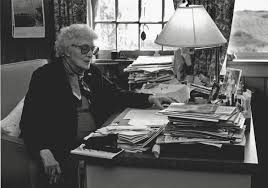
The Friday Poem this week is ‘The Work of Happiness’ by May Sarton a writer whose talent was expressed in fiction, autobiography and poetry.

“My first book was a book of poems, Encounter in April, followed by my first novel, The Single Hound. There was quite an interval before the second novel, The Bridge of Years. And then Shadow of a Man. Then it goes on and on for a long time with a book of poems between every novel. That was my wish, that the poems should be equal in number, that the novels should not be more important than the poems because the poems were what I cared about most. Much later, when I was forty-five or so, I began to do nonfiction—first the memoirs and finally the journals, which came as the last of the forms which I have been using. Altogether now I think it amounts to seventeen novels, I don’t know, five or six memoirs and journals, and then twelve books of poems, which are mostly in the collected poems now.”  The Paris Review interview, Fall 1983

Her poetry emerges from reflection and solitude, a choice she explored in a 1974 essay, ‘The Rewards of Living a Solitary Life’.

“The other day an acquaintance of mine, a gregarious and charming man, told me he had found himself unexpectedly alone in New York for an hour or two between appointments. He went to the Whitney and spent the “empty” time looking at things in solitary bliss. For him it proved to be a shock nearly as great as falling in love to discover that he could enjoy himself so much alone…Solitude is the salt of personhood. It brings out the authentic flavor of every experience.”

In the poem, Ms. Sarton provides an alternate view of happiness – “for what is happiness but growth in peace”.

The Work of Happiness

I thought of happiness, how it is woven
Out of the silence in the empty house each day
And how it is not sudden and it is not given
But is creation itself like the growth of a tree.
No one has seen it happen, but inside the bark
Another circle is growing in the expanding ring.
No one has heard the root go deeper in the dark,
But the tree is lifted by this inward work
And its plumes shine, and its leaves are glittering.

So happiness is woven out of the peace of hours
And strikes its roots deep in the house alone:
The old chest in the corner, cool waxed floors,
White curtains softly and continually blown
As the free air moves quietly about the room;
A shelf of books, a table, and the white-washed wall—
These are the dear familiar gods of home,
And here the work of faith can best be done,
The growing tree is green and musical.

For what is happiness but growth in peace,
The timeless sense of time when furniture
Has stood a life’s span in a single place,
And as the air moves, so the old dreams stir
The shining leaves of present happiness?
No one has heard thought or listened to a mind,
But where people have lived in inwardness
The air is charged with blessing and does bless;
Windows look out on mountains and the walls are kind.

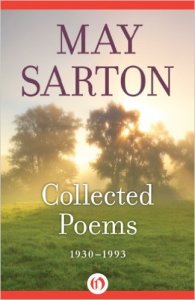
May Sarton   ‘Collected Poems 1930 – 1993’

51rZ+x+OVKL._SX322_BO1,204,203,200_


The mysteries of networking #4 ‘missed opportunities’

Many of us consider networking a ‘dark art’ that requires a magical ‘insiders’ key to gain access to the influential. What we miss is the daily opportunity to connect, as we ride the bus, the train or stand in a long TSA line at the airport. Wisdom can present itself in all shapes and sizes if you open yourself to conversation.

This past week, consultant, Whitney Johnson shared a recent experience via a post on LinkedIn,  ‘An airline cancelled my flight and put me in a van. Along the way, I got lots of lessons on how *not* to network.’

After offering a fellow traveller, a member of the Class of 2016, a ride home after a diverted flight, she realized her passenger had no clue how to network.

“As I was giving him a lift home, I learned a lot about him: his name, where he grew up, where he goes to school, his major, what his parents do for a living, his own career aspirations when he graduates in a few months. We even discovered that we have an acquaintance in common. Meanwhile, I made a few mentions of my children, such as my 19 year-old son is living in Brazil, my husband teaches at a local university. Conversation starters.

I’ll confess I felt a little invisible—and exasperated. I find it easy to ask people about themselves. I genuinely enjoy doing it. It’s one of my strengths, and we’re often exasperated with people who aren’t likewise adept at the things that we do well.

But here’s the real take-away from this chance encounter: this young man is looking for a job when he graduates in a month… I could have potentially helped him, if he’d just shown a little of the moxie that would have motivated me to recommend him.”

This is not just about a ‘newbie’ to the job search process, it’s a story that recurs daily. Just walk through an airport departure area and observe the diversity of folks and contrast that with the homogeneity of technical disconnection. Each individual, existing in the ‘comfort cocoon’ of their temporary piece of real estate, happily texting colleagues and friends, totally ignorant of the ‘chance’ professional encounter in the adjoining seat.

There’s no magic in networking. The magic is in the conversation, perhaps leading to a relationship. All of us harbor ideas and dreams. What are they, if not shared?

This afternoon, seize the moment, and start a conversation with a stranger, or maybe the acquaintance you pass in the hall every day. Listen, share, and you may be on your way to mastering the ‘not so mysterious’ art of networking.

The Saturday Read – Four blogs/newsletters you should be reading

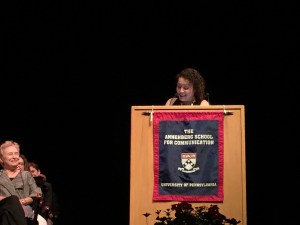
Before I started writing ‘Workthoughts’, I was reading other blogs. Maria Popova, author of my favorite, ‘Brainpickings’, was the 2016 commencement speaker at her alma mater, the University of Pennsylvania’s Annenberg School for Communication. She challenged the graduates to act as cultural change agents by continually broadening their horizons beyond a specific discipline.

“Today, the soul is in dire need of stewardship and protection from cynicism. The best defense against it is vigorous, intelligent, sincere hope — not blind optimism, because that too is a form of resignation, to believe that everything will work out just fine and we need not apply ourselves. I mean hope bolstered by critical thinking that is clear-headed in identifying what is lacking, in ourselves or the world, but then envisions ways to create it and endeavors to do that.

Whatever your specific vocation, your role as a creator of culture will be to help people discern what matters in the world and why by steering them away from the meaningless and toward the meaningful.”

annenberg_commencement-1

How do you maintain the discipline of the undergraduate learning experience and diversify your thinking?

In the past, traditional routes to post-graduate learning involved graduate and professional school. In rare cases, employers took on the role of educators, supplementing work with professional development options. Today, educational entrepreneurs are disrupting traditional education, offering countless ways to access knowledge online.

One of the most engaging options is to join folks who are exploring life’s mysteries and sharing their discoveries through blogs and newsletters.

For this week’s Saturday Read, I recommend four blogs/newsletters from contemporary ‘curators of culture’ that you should be reading to improve you critical thinking and supplement your journey of lifelong learning.

Brainpickings

Bruce Feiler, writing in The New York Times, described this blog as “the exploding online emporium of ideas”.

“She’s a celebrator,” said Anne-Marie Slaughter, a Princeton professor and former State Department official. “You feel the tremendous amount of pleasure she takes in finding these things and sharing them. It’s like walking into the Museum of Modern Art and having somebody give you a customized, guided tour.”

Since 2006, Maria Popova has been sharing her cross disciplinary expeditions with a growing audience of readers.

“Brain Pickings — which remains ad-free and supported by readers — is a cross-disciplinary LEGO treasure chest, full of pieces spanning art, science, psychology, design, philosophy, history, politics, anthropology, and more; pieces that enrich our mental pool of resources and empower combinatorial ideas that are stronger, smarter, richer, deeper and more impactful. Above all, it’s about how these different disciplines illuminate one another to glean some insight, directly or indirectly, into that grand question of how to live, and how to live well.”

The next selection comes from the mind of writer and ‘philosopher of everyday life’, Alain de Botton. If you read Brainpickings or Workthoughts, the name should be familiar. The founder of London’s School of Life, publishes a weekly newsletter, ‘The Book of Life’.


The Book of Life 

“It’s called The Book of Life because it’s about the most substantial things in your life: your relationships, your income, your career, your anxieties. There’s always been a longing to gather the important things in one place. Some of the appeal of a Bible or the collected works of a big name author is the sense that amidst all the chaos and disparate sources of knowledge, someone has taken the trouble to distill, to compress, to say what is essential. In a world overflowing with information, what we most need is curation. The Book of Life aims to be the curation of the best and most helpful ideas in the area of emotional life.”

For those of you technology and engineering gurus who feel a bit insecure when a client conversation turns literary, subscribe to the ‘Lit Hub Daily’.


Lit Hub

“Started last year, Lit Hub’s goal is to provide a “go-to daily source for all the news, ideas, and richness of contemporary literary life,” with curated and original content such as interviews, profiles and essays.”

“Literary Hub is an organizing principle in the service of literary culture, a single, trusted, daily source for all the news, ideas and richness of contemporary literary life. There is more great literary content online than ever before, but it is scattered, easily lost—with the help of its editorial partners, Lit Hub is a site readers can rely on for smart, engaged, entertaining writing about all things books.”

The latest newsletter I have added to my daily/weekly routine comes from writer Austin Kleon. His Friday newsletter is an eclectic collection of music, art, design and life. To give you a sample, this week’s edition included George Carlin’s Playboy interview, an HBO documentary on Studs Terkel and the Everything is a Remix series.

What makes Austin’s blog unique is the doodles; his visual interpretation of information.

kleon-200pxx1.jpg

Austin Kleon 

“I’m a writer who draws. I make art with words and books with pictures. Every week I send out a list of 10 things I think are worth sharing — new art, writing, and interesting links straight to your inbox.”

These four blogs/newsletters provide a customized curriculum of research and shared wisdom, delivered by a faculty of four non-traditional experts. Take a look, you may find one or more will fit with your individualized lifelong learning plan.


‘Thanks, Robert Frost’ a poem by David Ray


In the Friday Poem this week, poet David Ray poses a contemporary question to a legend of twentieth century American poetry, Robert Frost. “Do you have hope for the future?’

Frost was the writer the new U.S. President, John F. Kennedy, turned to for wisdom at his 1961 inaugural. Frost’s January, 1963 obituary described him as symbolizing “the rough-hewn individuality of the American creative spirit more than any other man.”

In this month of May when the inspirational messages of college commencement speakers  compete with the ceaseless, uncivil discourse of politicians, let’s revisit the wisdom of the previous century’s rural sage, through the gratitude of David Ray’s poem.

Thanks, Robert Frost

Do you have hope for the future?
someone asked Robert Frost, toward the end.
Yes, and even for the past, he replied,
that it will turn out to have been all right
for what it was, something we can accept,
mistakes made by the selves we had to be,
not able to be, perhaps, what we wished,
or what looking back half the time it seems
we could so easily have been, or ought…
The future, yes, and even for the past,
that it will become something we can bear.
And I too, and my children, so I hope,
will recall as not too heavy the tug
of those albatrosses I sadly placed
upon their tender necks. Hope for the past,
yes, old Frost, your words provide that courage,
and it brings strange peace that itself passes
into past, easier to bear because
you said it, rather casually, as snow
went on falling in Vermont years ago.

David Ray   ‘Music of Time: Selected and New Poems’ 2006

9780978578244_p0_v1_s192x300.jpg


“Discover who you are – not who you are supposed to be” Larry Ellison@USC

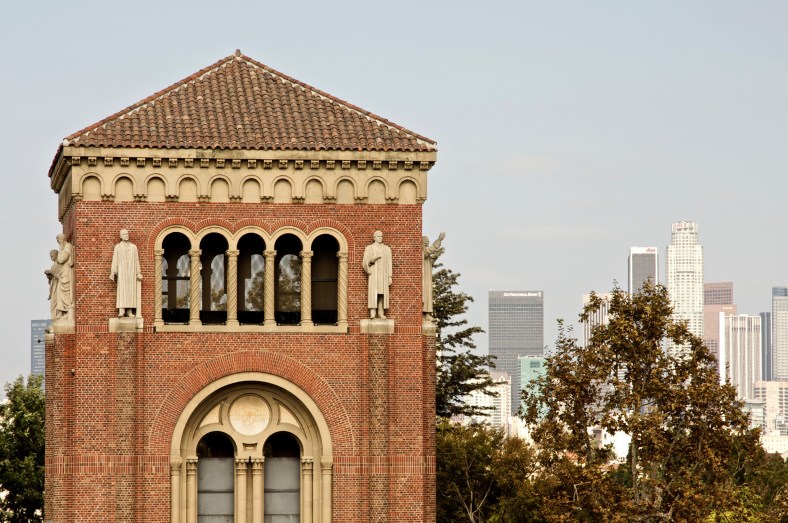
In all the meetings I have had with folks about career choice, the number one topic, by a landslide, is how to manage the expectations of others: family members, mentors, friends and colleagues.

“My parents want me to major in ‘x’, and apply to ‘y’, but my passion is in ‘z’. How do I get them to understand my decision?”

On Friday, at the University of Southern California, Larry Ellison drew on his personal experience to address the topic. I hope the parents were listening. I guarantee members of the Class of 2016 were texting quotes.

He began where most career conversations start. Recalling his early aspirations to attend USC Medical School, he began to realize that his family’s conviction that he become a doctor was not his own. “Their dreams became my dreams.”

And it wasn’t long before he “became painfully aware that he couldn’t make himself study something that didn’t interest me.”

The power of parental/family influence on career choice can provide either a scaffolding of support or a detour of unending disappointments.

Here’s the thing, the next great innovation is yet to be discovered. The next emerging market is yet to be identified. Categories of new job titles are yet to be defined.

So we fall back on what we know, and what society values as acceptable professions.

In Ellison’s narrative, he dropped out of college and took on a “a couple of jobs I loved and one that was fun”: river guide, rock climbing instructor and computer programmer. It was in the world of technology that he found the link to the same kind of satisfaction he had found solving math problems and playing chess.

But as he incrementally travelled toward his dream job, he found he was unable to live up to the expectations of others.

At the urging of his wife, he returned to college, to pursue his degree. The only course he remembered was a sailing class at Berkeley. The beginning of his love affair with the Pacific Ocean marked the end of the one with his wife, who viewed him as irresponsible, and lacking in ambition. “She kicked me out, and then she divorced me.”

“This was a pivotal moment in my life… Once again, I was unable to live up to the expectations of others.

But this time I was not disappointed in myself for failing to be the person they thought I should be. Their dreams and my dreams were different. I would never confuse the two of them again.

I had discovered things that I loved: the Sierras, Yosemite, the Pacific Ocean. These natural wonders brought me great joy and happiness, and would for the rest of my life. I had an interesting job programming computers and more money than I needed.

For the first time I was certain I was going to survive in this world.

A huge burden of fear had been lifted. I’ll never forget that moment. It was a time for rejoicing.”

Ellison’s career path accelerated along the trajectory of Silicon Valley’s early days, as he tried to find a job he loved as much as sailing. He founded Oracle Corporation, built on his ‘crazy idea’ of constructing a commercialized relational database, and the rest is history.

I spent thirteen years on the USC campus, working with students and alumni as they wrestled with career decisions and connected the mosaic of past experience into a plan for the future. There is no better advice for folks@work or those just starting out than the shared wisdom of Mr. Ellison.

“Each of you has a chance to discover who you are and not who you are supposed to be.

Don’t be afraid to experiment, and try lots of different things. And don’t let the experts discourage you when you challenge the status quo.”

The week@work – An astronaut in Greenland, a McDonald’s worker in Edinburgh, Facebook’s identity crisis, and how to design a happier life

This week@work, a former astronaut and climate scientist, and a McDonald’s employee in Edinburgh challenged expectations and stereotypes, journalists questioned Facebook’s content algorithm, and a leading happiness scholar shared his formula.

In January, Piers J. Sellers, Deputy Director of the Sciences and Exploration Directorate and Acting Director of the Earth Sciences Division at NASA/GSFC wrote an opinion for The New York Times Sunday Review, ‘Cancer and Climate Change’.

“I’m a climate scientist who has just been told I have Stage 4 pancreatic cancer.

This diagnosis puts me in an interesting position. I’ve spent much of my professional life thinking about the science of climate change, which is best viewed through a multidecadal lens. At some level I was sure that, even at my present age of 60, I would live to see the most critical part of the problem, and its possible solutions, play out in my lifetime. Now that my personal horizon has been steeply foreshortened, I was forced to decide how to spend my remaining time. Was continuing to think about climate change worth the bother?

1024px-Piers_Sellers_spacewalk.jpg

Journalist and author, Jon Gertner continued the story this week with ‘An Astronaut Finds Himself in Greenland’ for The New Yorker.

“Piers Sellers landed in Greenland on a frigid Monday morning in April, and as he stepped off the plane at Thule Air Base he regarded the surrounding snow-covered hills with delight…Sellers was visiting the country for the first time. “I didn’t even see this from space, since the farthest north the shuttle goes is fifty-one degrees latitude,” he said. “We’re at seventy-six degrees now, right? Fantastic.” Sellers’s plan was to rendezvous with NASA researchers at Thule (pronounced “TOO-lee”) and accompany them on Operation IceBridge, an annual mission to collect data on the diminishing ice in the Arctic Ocean and on the Greenland ice sheet. “These guys at IceBridge are always saying, ‘Oh, you should come along, see where the rubber meets the road,’ and I say that I’m too busy, with too much piled on my desk,” Sellers explained. “But, given my current situation, of all the things that we’re doing in the field, this one is probably the most critical right now.”

After the diagnosis, he briefly considered living his final year or so—assuming his doctors’ expectations prove correct—as a rich man might, in a tropical, hedonistic splurge. “I thought of myself sitting for weeks on a beach,” he said. “What would I do? I’d be thinking about climate.”

So Sellers went back to his desk job at Goddard, where he oversees the work of about sixteen hundred people, and considered how he could fit a few modest adventures between his office duties and chemotherapy sessions. Soon it occurred to him to go to the Arctic, which is warming faster than any other part of the world.

The second story this week comes via Mashable and writer Davina Merchant‘s coverage of the Facebook post of McDonald’s employee, Mike Waite. Bravo for debunking stereotypes!

Unknown.png

“Today I have had enough of the judgemental criticism. Let me be clear. YES I work at Mcdonalds and do it nearly 50 hours a week. Why? Not because I have no aspiration, motivation or intelligence…but for the opposite…because in a few months time like a great number of people I work with I will be going back into higher education. McDonalds has this reputation which is quite unfounded in the recent age, every person I work with has a story and every person is working their ass off in what can be a very tough job for their own reasons…be it they are in school, uni, have family, have kids, saving…etc. The one thing McDonalds is is a job which is extremely (extremely) flexible, has opportunities for growth and can allow you to do what you want to do. There are people becoming pilots, lawyers, designers, architects, and people who are at a point in their life that they will do whatever it takes to look after their family. I work with people I would aspire to be like, who have strengths in areas I wish I had, who have overcome situations I never could and who have the determination to not fade away on handouts but rather step up and work for their living unlike a huge number of people in this country. In the past I have known and worked with very rich folks in very high end jobs, and a few of them could never match the resilience and work ethic of some of the current lads/lassies. After the ending of a big part of my life McD’s is not only letting me save up for University, but setting me up with flexible work I can continue over the next years to come. Not only that but I intend on eventually progressing into the management side of things, something which ties in directly to my degree and will enhance my future job prospects.”

Beyond brilliant posts to its site, Facebook was in the news this week when Gizmodo reported that content on the platform was being ‘subjectively’ curated.

14LfacebookWeb-mediumThreeByTwo210.jpg

David Uberti reported ‘Facebook wants you to think it’s just a platform. It’s not.’ for the Columbia Journalism Review.

“As prominently argued by Emily Bell, director of Columbia’s Tow Center for Digital Journalism, Facebook is increasingly shaping the contours of the public square, and citizens and news organizations have little choice but to go along for the ride. The power shift raises the all-important question of how information travels in free societies—and what we know about it.

“This is an unregulated field. There is no transparency into the internal working of these systems,” Bell said in a University of Cambridge speech earlier this year. “We are handing the controls of important parts of our public and private lives to a very small number of people, who are unelected and unaccountable.”

News organizations once had a more central role in setting the terms of public debate, balancing money-making aspects of publishing with more civically minded accountability journalism. They also generally followed widely accepted journalistic standards. Social networks have assumed much of the same power, Bell and others have argued, though they typically use more opaque processes and have a greater focus on those profitable slices of publishing. That’s not to say this new construct is necessarily worse, but it is foreign. And Facebook has little incentive to open up about its methodology.”

Fast Company’s Elizabeth Segran introduced us to London School of Economics professor and happiness scholar, Paul Dolan in ‘How To Intentionally Design A Happier Life’.

37398b0

“After decades of studying happiness, Dolan has developed a happiness formula. He says that happy people pay attention to the everyday experiences that give them pleasure and purpose, then organize their lives so that they are doing more of those things. It sounds obvious, right? Sure, but the problem is that we spend so much of our lives on autopilot instead of consciously focusing on doing things that make us happy. “We are creatures of habit and we automate processes very quickly,” Dolan says. “We do a lot of what we do because we’ve always done it, not because it is good for us or because we enjoy it.” The good news, however, is that Dolan offers two tangible ways for us create more happy moments in our lives. The first is creating a mental habit of paying attention to what makes us happy and the second is designing our lives so it is easier to do those things.”

Two additional stories of interest this week@work:

‘It’s a Tough Job Market for the Young Without College Degrees’  by Patricia Cohen for The New York Times

“Only 10 percent of 17- to 24-year-olds have a college or advanced degree, according to a new study by the Economic Policy Institute, although many more of them will eventually graduate.

And for young high school graduates, the unemployment rate is disturbingly high: 17.8 percent. Add in those who are underemployed, either because they would like a full-time job but can only find part-time work, or they are so discouraged that they’ve given up actively searching, and the share jumps to more than 33 percent.”

‘The Miserable French Workplace’ by Pamela Druckerman opinion for The New York Times

“While many other European countries have revamped their workplace rules, France has barely budged. The new labor bill — weakened after long negotiations — wouldn’t alter the bifurcated system, in which workers either get a permanent contract called a “contrat à durée indéterminée,” known as a C.D.I., or a short-term contract that can be renewed only once or twice. Almost all new jobs have the latter.

(French workers) believe that a job is a basic right — guaranteed in the preamble to their Constitution — and that making it easier to fire people is an affront to that. Without a C.D.I., you’re considered naked before the indifferent forces of capitalism.

No matter what the government does, the workplace is becoming less secure.”

To close this week@work, let’s return to Piers Sellers’ January 2016 NYT opinion piece.

“As for me, I’ve no complaints. I’m very grateful for the experiences I’ve had on this planet. As an astronaut I spacewalked 220 miles above the Earth. Floating alongside the International Space Station, I watched hurricanes cartwheel across oceans, the Amazon snake its way to the sea through a brilliant green carpet of forest, and gigantic nighttime thunderstorms flash and flare for hundreds of miles along the Equator. From this God’s-eye-view, I saw how fragile and infinitely precious the Earth is. I’m hopeful for its future.

And so, I’m going to work tomorrow.”

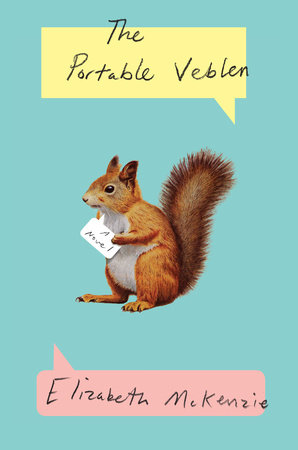
The Saturday Read ‘The Portable Veblen’ by Elizabeth McKenzie

The Saturday Read this week,‘The Portable Veblen’ by Elizabeth McKenzie is about the life choices we make, via a different kind of Silicon Valley story.

The heroine of the novel is Veblen Amundsen-Hovda, a not so typical,’gig’ economy participant, making a living by combining assignments as an office assistant in Neurology at the Stanford University School of Medicine, translating for the Norwegian Diaspora Project in Oslo, and writing about her namesake Thorstein Veblen. (Yes, that witty critic of capitalism who invented the term ‘conspicuous consumption’.)

Or as the author describes her “independent behaviorist, experienced cheerer-upper, and freelance self, who was having a delayed love affair with the world due to an isolated childhood and various interferences since.”

When we meet Veblen she has just accepted a marriage proposal from Paul Vreeland scientist, and inventor of the Pneumatic Turbo Skull Punch.

Did I mention the squirrels?  One in particular, who appears at her window just after her engagement, seeming to ask: “How well do you know yourself, and all the choices you could make?” 

In her review of the novel, NPR’s Heller McAlpin captured the theme that continues to resonate long after the reader arrives at Appendix G (in Norwegian), “this is ultimately a morality tale about the values by which we choose to live.”

If you have spent time in academia you will appreciate the absurdity of naming your child for the subject of your unfinished doctoral dissertation. You will also recognize the financial pressures of ‘technology transfer’, and ‘monetizing research’ that drive Paul’s decision to work for Big Pharma.

What if you invented something that could save lives? Wouldn’t you choose a firm that promised unlimited resources to expedite the process to market?

It’s easy to understand Paul’s choice. But in the world of bright shiny incentives he misses the point of who he will become as part of an unscrupulous conglomerate.

Fortunately for our couple and squirrel(s), good triumphs over evil in a series of memorable scenes that prove ‘what goes around, comes around’.

In ‘The Portable Veblen’, author McKenzie utilizes humor to narrate this story of choices, change, and consequences. If you’re looking for the perfect read for the recent grad, or are working through conflicting values at work, spend a few hours with Veblen, Paul and a supporting cast of frisky, philosophical squirrels.


‘It Couldn’t Be Done’ a poem by Edgar Albert Guest


How many of us have been motivated by someone telling us ‘it couldn’t be done?’

In September 2007 Randy Pausch, professor and founder of the Carnegie Mellon Entertainment Technology Center, enumerated the brick walls he climbed to achieve his childhood dreams. The message of his now famous ‘Last Lecture’ was about overcoming obstacles, reframing our perception of obstruction.

“…the brick walls are there for a reason. The brick walls are not there to keep us out. The brick walls are there to give us a chance to show how badly we want something. Because the brick walls are there to stop the people who don’t want it badly enough. They’re there to stop the other people.”

Ninety years earlier, Edgar Albert Guest published his poem ‘It Couldn’t Be Done’. Paired with Pausch’s ‘Last Lecture’, this week’s Friday Poem encourages the Class of 2016 to follow their dreams, and not be sidetracked by the doubters.


It Couldn’t Be Done
Somebody said that it couldn’t be done
But he with a chuckle replied
That “maybe it couldn’t,” but he would be one
Who wouldn’t say so till he’d tried.
So he buckled right in with the trace of a grin
On his face. If he worried he hid it.
He started to sing as he tackled the thing
That couldn’t be done, and he did it!

Somebody scoffed: “Oh, you’ll never do that;
At least no one ever has done it;”
But he took off his coat and he took off his hat
And the first thing we knew he’d begun it.
With a lift of his chin and a bit of a grin,
Without any doubting or quiddit,
He started to sing as he tackled the thing
That couldn’t be done, and he did it.

There are thousands to tell you it cannot be done,
There are thousands to prophesy failure,
There are thousands to point out to you one by one,
The dangers that wait to assail you.
But just buckle in with a bit of a grin,
Just take off your coat and go to it;
Just start in to sing as you tackle the thing
That “cannot be done,” and you’ll do it.

Edgar Albert Guest   1917

51Si0nTDrXL._SX331_BO1,204,203,200_

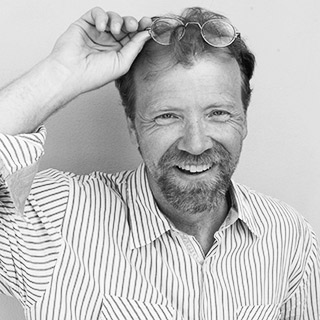
“Failures of kindness” George Saunders @Syracuse

In this week of blooming jacarandas, empty white folding chairs await the procession of the graduates, and an elevated podium echoes with the voice of a valedictorian at sound check, rehearsing for the big day.

On the majority of campuses an eminent personage will join the assembly, offering wit and wisdom. This week we will revisit some of the best advice delivered @commencement, beginning with George Saunders at Syracuse University in 2013.

In January of 2013,  Joel Lovell profiled the writer/professor for the New York Times Magazine, ‘George Saunders Has Written the Best Book You’ll Read This Year’.

“Tobias Wolff, who taught Saunders when he was in the graduate writing program at Syracuse in the mid-’80s, said, “He’s been one of the luminous spots of our literature for the past 20 years,” and then added what may be the most elegant compliment I’ve ever heard paid to another person: “He’s such a generous spirit, you’d be embarrassed to behave in a small way around him.”

I think the best speeches create an aspirational bridge between the experience of our undergraduate years and executing our life plan.

The memorable ones communicate with the soul and the easiest way to connect is with a common experience… like the time in grammar school when we missed an opportunity to notice, to include…

This is where Saunders’ speech begins, the ‘generous spirit’ sharing his regret.

“What I regret most in my life are failures of kindness.”

Could a narrative be more welcome amidst the lack of civility in our national conversation?

“How might we become more loving, more open, less selfish, more present, less delusional, etc., etc?

There are ways. You already know that because, in your life, there have been High Kindness periods and Low Kindness periods, and you know what inclined you toward the former and away from the latter. Education is good; immersing ourselves in a work of art: good; prayer is good; meditation’s good; a frank talk with a dear friend; establishing ourselves in some kind of spiritual tradition — recognizing that there have been countless really smart people before us who have asked these same questions and left behind answers for us.

…kindness, it turns out, is hard — it starts out all rainbows and puppy dogs, and expands to include . . . well, everything.

When young, we’re anxious — understandably — to find out if we’ve got what it takes. Can we succeed? Can we build a viable life for ourselves? Can we build a viable life for ourselves? But you — in particular you, of this generation — may have noticed a certain cyclical quality to ambition. You do well in high-school, in hopes of getting into a good college, so you can do well in the good college, in the hopes of getting a good job, so you can do well in the good job so you can . . .

And this is actually O.K. If we’re going to become kinder, that process has to include taking ourselves seriously — as doers, as accomplishers, as dreamers. We have to do that, to be our best selves.

Do all the other things, the ambitious things — travel, get rich, get famous, innovate, lead, fall in love, make and lose fortunes… but as you do, to the extent that you can, err in the direction of kindness. Do those things that incline you toward the big questions, and avoid the things that would reduce you and make you trivial. That luminous part of you that exists beyond personality — your soul, if you will — is as bright and shining as any that has ever been.”