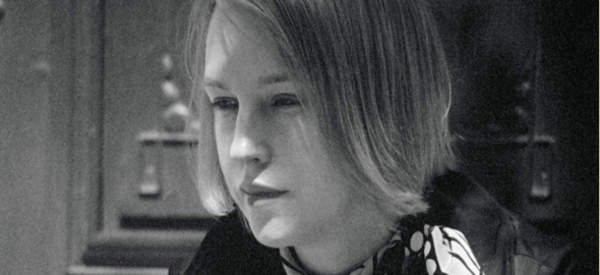
‘Summer Olympics Look’ a poem by J. Allyn Rosser

From the origin of the Olympic games in ancient Greece, to the modern games of the twentieth century, poets played a central role along with sport. Each generation added their point of view.

Author Tony Perrottet wrote of ‘Poetry’s Relationship With the Olympics’.

“In ancient Greece, literary events were an indispensable part of athletic festivals, where fully clothed writers could be as popular with the crowd as the buff athletes who strutted about in the nude, gleaming with olive oil. Spectators packing the sanctuary of Zeus sought perfection in both body and mind. Champion athletes commissioned great poets like Pindar to compose their victory odes, which were sung at lavish banquets by choruses of boys. (The refined cultural ambience could put contemporary opening ceremonies, with their parade of pop stars, to shame.) Philosophers and historians introduced cutting-edge work, while lesser-known poets set up stalls or orated from soapboxes.”

In 1912, a poem ‘Ode to Sport’ won the first gold literature medal of the modern games. But as Boston Globe reporter Amanda Katz discovered, a bit of intrigue accompanied the entry.

“Presented in full in both French and German versions, attributed to the duo of Georges Hohrod and Martin Eschbach, it was called “Ode to Sport”—a rhapsodic, nine-verse prose poem praising athletics as a model of “Joy,” “Audacity,” “Justice,” and other virtues. The judges went wild. As they wrote in their published review of the poem, “It is of the exact type that we sought for the competitions….It praises sport in a form that to the ear is very literary and very sporting.” So taken were the judges with this Olympic gold poem that they refused to award either the silver or the bronze.

Weeks later, however, according to Stanton, the judges were still trying to get a solid address where they could send Hohrod and Eschbach’s medal and certificate. Only sometime after that did the truth emerge: There was no Hohrod or Eschbach, and the perfect fit of the poem with the initial impulse behind the arts events was no accident. Worried that there wouldn’t be enough entries in his beloved arts competitions, the baron had written the poem himself.”

In London, four years ago, British poet laureate Carol Ann Duffy‘s poem ‘Eton Manor’ traced the 100 year history of the venue chosen for the Paralympics.

The Friday Poem this week is ‘Summer Olympics Look’ American poet J. Allyn Rosser‘s observation of how we view the Olympics @home.

Summer Olympics Look

Only five of us were arguing about the score
of a forward one-and-a-half triple twist
with absolutely rip entry, executed
by an unpronounceable stiff-stepping Russian,
because the sixth was busy in the kitchen.
I couldn’t help noticing how Jane had made
every surface sparkle, clutter-free, neat tray
of snacks, napkins fanned on the coffee table,
fresh daisies on the mantel and by the door.
The Russian’s entry was smooth, minimal splash,
but his come out had been a tiny bit clumsy.
So Jane’s future ex-husband said, anyway,
and when he called out that he wouldn’t mind
another beer as long as she was up,
and she called back that she’d just brought him one,
he had to say something. Because there it stood,
still frosty, darkening the coaster at his elbow.
He said now that’s the sign of a good wife,
like a good waitress, you’re hardly even aware
when she’s there. By now Jane had entered,
her arms crossed in a kind of tuck position.
Her approach was understated but forceful,
and the deftness of the look she sent him
when he finally looked up at her
was so pure and deep and swift, it left
hardly a ripple there in the room among us.

J. Allyn Rosser   The Smithsonian Magazine, July 2012


The Friday Poem ‘To the Indifferent Women’ by Charlotte Anna Perkins Gilman

Last night a woman accepted the nomination of a major political party for the first time in the history of the United States. The next president will preside over the commemoration of the centennial of the 19th amendment, which extended suffrage – the right to vote, to women.

To mark history, the Friday Poem this week is ‘To the Indifferent Women’ and was first published in 1911. Charlotte Anna Perkins Gilman called herself a humanist. She was a poet, author, magazine editor and feminist in a lifetime that began with the civil war and ended in the great depression.

Although the words were set to paper over a century ago, the message resonates today.

“We all may have our homes in joy and peace
When woman’s life, in its rich power of love
Is joined with man’s to care for all the world.”

To The Indifferent Women

A Sestina

You who are happy in a thousand homes,
Or overworked therein, to a dumb peace;
Whose souls are wholly centered in the life
Of that small group you personally love;
Who told you that you need not know or care
About the sin and sorrow of the world?

Do you believe the sorrow of the world
Does not concern you in your little homes? —
That you are licensed to avoid the care
And toil for human progress, human peace,
And the enlargement of our power of love
Until it covers every field of life?

The one first duty of all human life
Is to promote the progress of the world
In righteousness, in wisdom, truth and love;
And you ignore it, hidden in your homes,
Content to keep them in uncertain peace,
Content to leave all else without your care.

Yet you are mothers! And a mother’s care
Is the first step toward friendly human life.
Life where all nations in untroubled peace
Unite to raise the standard of the world
And make the happiness we seek in homes
Spread everywhere in strong and fruitful love.

You are content to keep that mighty love
In its first steps forever; the crude care
Of animals for mate and young and homes,
Instead of pouring it abroad in life,
Its mighty current feeding all the world
Till every human child can grow in peace.

You cannot keep your small domestic peace
Your little pool of undeveloped love,
While the neglected, starved, unmothered world
Struggles and fights for lack of mother’s care,
And its tempestuous, bitter, broken life
Beats in upon you in your selfish homes.

We all may have our homes in joy and peace
When woman’s life, in its rich power of love
Is joined with man’s to care for all the world.

Charlotte Anna Perkins Gilman  ‘Suffrage Songs and Voices’ 1911

41pY0+cnJWL._SX331_BO1,204,203,200_

Convention photo credit: Marcus Yam for The Los Angeles Times


‘In the Planetarium’ a poem by James Doyle

In the past couple of days we marked two events in the history of U.S. space exploration: man’s first walk on the moon and the end of the space shuttle program.

Pulitzer Prize winning journalist John Noble Wilford recalled his coverage of the moon landing for the New York Times from NASA’s Johnson Space Center.

“July 20,1969 — a date that lives in my memory as the great divide, the B.C. to A.D., in my journalism career. It was the day of the first walk on the moon by humans, Neil Armstrong and Buzz Aldrin, and I covered the event for The Times from mission control in Houston.

I began my front-page article with a sentence as simple as it was astonishing:

Men have landed and walked on the moon.

Two Americans, astronauts of Apollo 11, steered their fragile four-legged lunar module safely and smoothly to the historic landing yesterday at 4:17:40 P.M., Eastern daylight time.

Neil A. Armstrong, the 38-year-old civilian commander, radioed to earth and the mission control room here:

“Houston, Tranquility Base here. The Eagle has landed.”

On July 21, 2011 the space shuttle Atlantis landed on runway 15 at the Kennedy Space Center in Florida ending the 135th mission and 30 years of the U.S. Space Shuttle program. Today visitors can tour an exhibit at the site in Florida “displayed as only spacewalking astronauts have seen her before — rotated 43.21 degrees with payload doors open and its Canadarm (robotic arm) extended, as it has just undocked from the International Space Station.” 

Astronauts still travel into space. As I write this, the 60th woman to fly in space, Kate Rubins, orbits among the stars above us.

I wonder if this Friday’s poem was written for her by a friend who accompanied her on a school field trip to the Planetarium.

In the Planetarium

I read the palms of the other
kids on the field trip to see
which ones would grow up

to be astronauts. The lifeline
on Betty Lou’s beautiful hand
ended the day after tomorrow,

so I told her how the rest
of our lives is vastly over-rated,
even in neighboring galaxies.

When she asked me how I knew
so much, I said I watched
War of the Worlds six times

and, if she went with me to
the double-feature tomorrow,
I’d finish explaining the universe.

I smiled winningly. The Halley’s Comet
lecture by our teacher whooshed in
my one ear and out the other.

James Doyle   ‘The Long View Just Keeps Treading Water’, Accents Publishing, 2012

(Photo Scott Kelly #YearInSpace “Looking out to the Milky Way”)

@ the Crossroads – A Sudden American Poem by Juan Felipe Herrera

The Friday Poem this week was posted on Sunday by U.S. Poet Laureate, Juan Felipe Herrera.

“The Poet Laureate Consultant in Poetry to the Library of Congress serves as the nation’s official lightning rod for the poetic impulse of Americans. During his or her term, the Poet Laureate seeks to raise the national consciousness to a greater appreciation of the reading and writing of poetry.”

With ‘@ the Crossroads – A Sudden American Poem’, Mr. Herrera fulfills his national role in memorializing and celebrating the lives of all…as a first step.

@ the Crossroads—A Sudden American Poem

RIP Philando Castile, Alton Sterling, Dallas police
officers Lorne Ahrens, Michael Krol, Michael J. Smith,
Brent Thompson, and Patrick Zamarripa—and all their families. And to all those injured.

Let us celebrate the lives of all

As we reflect & pray & meditate on their brutal deaths

Let us celebrate those who marched at night who spoke of peace

& chanted Black Lives Matter

Let us celebrate the officers dressed in Blues ready to protect

Let us know the departed as we did not know them before—their faces,

Bodies, names—what they loved, their words, the stories they often spoke

Before we return to the usual business of our days, let us know their lives intimately

Let us take this moment & impossible as this may sound—let us find

The beauty in their lives in the midst of their sudden & never imagined vanishing
Let us consider the Dallas shooter—what made him

what happened in Afghanistan

what

flames burned inside
(Who was that man in Baton Rouge with a red shirt selling CDs in the parking lot

Who was that man in Minnesota toppled on the car seat with a perforated arm

& a continent-shaped flood of blood on his white T who was

That man prone & gone by the night pillar of El Centro College in Dallas)
This could be the first step

in the new evaluation of our society This could be

the first step of all of our lives

Juan Felipe Herrera,  July 8, 2016  (originally published on Poets.org)

The Friday Poem ‘A sonnet’ by Lin-Manuel Miranda

At a moment of career recognition, ‘Hamilton’ creator, Lin Manuel-Miranda shared a sonnet for his wife and the world about family, tragedy and love. At it’s center was his response to the terrorist, hate crime in Orlando.

The New York Times Sunday Styles reporter, Katie Rosman, shared the ‘back story’ of the sonnet from creation to delivery on the Beacon Theater stage Sunday evening.

“…as the first grim reports out of Orlando, Fla., were circulating, Mr. Miranda took out his phone and began to tap out the sonnet he would read aloud that night while accepting the Tony for best score. In 14 lines he paid tribute to his wife, his son and the victims of the massacre.

Back at the Mandarin Oriental before curtain time, he realized he would need a printout of the verse he had written. He called the suite where his father was staying and asked him if he wouldn’t mind taking care of it. Luis, 61, said yes, and traveled down a flight, where his son handed him a thumb drive. Lin-Manuel had one stipulation: “He said, ‘Can you please not read it?’”

He went down the elevator, thumb drive in hand, toward the concierge desk. There, employees of the Mandarin Oriental sprang into action.

Back in the elevator, with the printout, the father did the very thing his son had asked him not to do: He read the sonnet.

“That’s like asking me not to drink water when it’s 90 degrees out,” Luis said. “I thought it was very moving and pretty and important for the moment.”

Back in the suite, Luis listened as Lin-Manuel read it aloud, practicing for the big moment.”

Yesterday Mr. Miranda announced a fundraising effort, for Equality Florida. Revenue will be generated by the sale of a T shirt with words from the sonnet. “Here’s a thing that speaks for itself. I’m very excited about it and it’s a way you can help.” 

x2837DC2CA-99AA-9001-BE24B99096BFFE8E.jpg.pagespeed.ic.v2WAbmnIPw.jpg

The sonnet has been published in a variety of outlets since the awards ceremony. After the horror of this past week, there was no other choice for The Friday Poem.

My wife’s the reason anything gets done
She nudges me towards promise by degrees
She is a perfect symphony of one
Our son is her most beautiful reprise
We chase the melodies that seem to find us until they’re finished songs and start to play
When senseless acts of tragedy remind us that nothing here is promised, not one day
The show is proof that history remembers
We live through times when hate and fear seem stronger
We rise and fall and light from dying embers
Remembrances that hope and love last longer
And love is love is love is love is love is love is love is love
Cannot be killed or swept aside
I sing Vanessa’s symphony
Eliza tells her story
Now fill the world with music, love, and pride

Lin Manuel-Miranda   June 12, 2016


‘The Work of Happiness’ a poem by May Sarton

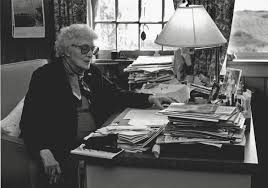
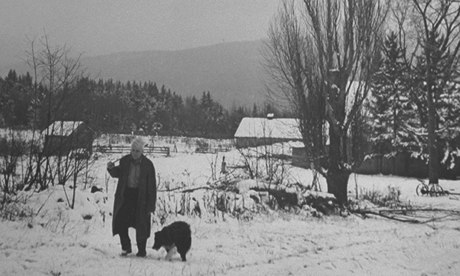
The Friday Poem this week is ‘The Work of Happiness’ by May Sarton a writer whose talent was expressed in fiction, autobiography and poetry.

“My first book was a book of poems, Encounter in April, followed by my first novel, The Single Hound. There was quite an interval before the second novel, The Bridge of Years. And then Shadow of a Man. Then it goes on and on for a long time with a book of poems between every novel. That was my wish, that the poems should be equal in number, that the novels should not be more important than the poems because the poems were what I cared about most. Much later, when I was forty-five or so, I began to do nonfiction—first the memoirs and finally the journals, which came as the last of the forms which I have been using. Altogether now I think it amounts to seventeen novels, I don’t know, five or six memoirs and journals, and then twelve books of poems, which are mostly in the collected poems now.”  The Paris Review interview, Fall 1983

Her poetry emerges from reflection and solitude, a choice she explored in a 1974 essay, ‘The Rewards of Living a Solitary Life’.

“The other day an acquaintance of mine, a gregarious and charming man, told me he had found himself unexpectedly alone in New York for an hour or two between appointments. He went to the Whitney and spent the “empty” time looking at things in solitary bliss. For him it proved to be a shock nearly as great as falling in love to discover that he could enjoy himself so much alone…Solitude is the salt of personhood. It brings out the authentic flavor of every experience.”

In the poem, Ms. Sarton provides an alternate view of happiness – “for what is happiness but growth in peace”.

The Work of Happiness

I thought of happiness, how it is woven
Out of the silence in the empty house each day
And how it is not sudden and it is not given
But is creation itself like the growth of a tree.
No one has seen it happen, but inside the bark
Another circle is growing in the expanding ring.
No one has heard the root go deeper in the dark,
But the tree is lifted by this inward work
And its plumes shine, and its leaves are glittering.

So happiness is woven out of the peace of hours
And strikes its roots deep in the house alone:
The old chest in the corner, cool waxed floors,
White curtains softly and continually blown
As the free air moves quietly about the room;
A shelf of books, a table, and the white-washed wall—
These are the dear familiar gods of home,
And here the work of faith can best be done,
The growing tree is green and musical.

For what is happiness but growth in peace,
The timeless sense of time when furniture
Has stood a life’s span in a single place,
And as the air moves, so the old dreams stir
The shining leaves of present happiness?
No one has heard thought or listened to a mind,
But where people have lived in inwardness
The air is charged with blessing and does bless;
Windows look out on mountains and the walls are kind.

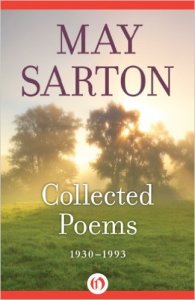
May Sarton   ‘Collected Poems 1930 – 1993’

51rZ+x+OVKL._SX322_BO1,204,203,200_


‘Thanks, Robert Frost’ a poem by David Ray


In the Friday Poem this week, poet David Ray poses a contemporary question to a legend of twentieth century American poetry, Robert Frost. “Do you have hope for the future?’

Frost was the writer the new U.S. President, John F. Kennedy, turned to for wisdom at his 1961 inaugural. Frost’s January, 1963 obituary described him as symbolizing “the rough-hewn individuality of the American creative spirit more than any other man.”

In this month of May when the inspirational messages of college commencement speakers  compete with the ceaseless, uncivil discourse of politicians, let’s revisit the wisdom of the previous century’s rural sage, through the gratitude of David Ray’s poem.

Thanks, Robert Frost

Do you have hope for the future?
someone asked Robert Frost, toward the end.
Yes, and even for the past, he replied,
that it will turn out to have been all right
for what it was, something we can accept,
mistakes made by the selves we had to be,
not able to be, perhaps, what we wished,
or what looking back half the time it seems
we could so easily have been, or ought…
The future, yes, and even for the past,
that it will become something we can bear.
And I too, and my children, so I hope,
will recall as not too heavy the tug
of those albatrosses I sadly placed
upon their tender necks. Hope for the past,
yes, old Frost, your words provide that courage,
and it brings strange peace that itself passes
into past, easier to bear because
you said it, rather casually, as snow
went on falling in Vermont years ago.

David Ray   ‘Music of Time: Selected and New Poems’ 2006

9780978578244_p0_v1_s192x300.jpg


‘I Wandered Lonely as a Cloud’ a poem by William Wordsworth

As world leaders gather in New York to sign the climate accord reached in Paris in December, let’s celebrate Earth Day with a poem by William Wordsworth.

In 1802, the world outside our window looked a bit different. On a walk with his sister Dorothy, Wordsworth observed a “long belt” of daffodils, inspiring him to pen I Wandered Lonely as a Cloud.

wordsworth daffodils.png

The poem captures the essence of Earth Day: preserving the beauty of nature, and the life affirming inspiration of a simple walk outdoors.

I Wandered Lonely as a Cloud

I wandered lonely as a cloud
That floats on high o’er vales and hills,
When all at once I saw a crowd,
A host, of golden daffodils;
Beside the lake, beneath the trees,
Fluttering and dancing in the breeze.

Continuous as the stars that shine
And twinkle on the milky way,
They stretched in never-ending line
Along the margin of a bay:
Ten thousand saw I at a glance,
Tossing their heads in sprightly dance.

The waves beside them danced; but they
Out-did the sparkling waves in glee:
A poet could not but be gay,
In such a jocund company:
I gazed—and gazed—but little thought
What wealth the show to me had brought:

For oft, when on my couch I lie
In vacant or in pensive mood,
They flash upon that inward eye
Which is the bliss of solitude;
And then my heart with pleasure fills,
And dances with the daffodils.

William Wordsworth

‘Big Dreams’ a poem by April Halprin Wayland

Time to add a bit of whimsy to the end of the week with ‘Big Dreams’.

We discover our first dreams in the magic of children’s literature: the poetry of great writers, and the illustrations of great artists. The Friday Poem this week encourages us to revisit those dreams through the words of April Halprin Wayland.

“For four and a half years I worked in the marketing department of Pacific Bell, which became AT&T. I knew that world was not for me. To keep my sanity, I took a class at UCLA Extension called Writing for Children, taught by Terry Dunnahoo. Terry’s class changed my life. It was as if I had fallen madly, deeply in love. When I walked to lunch with my corporate buddies, the men at construction sites whistled at me. They hadn’t whistled at me before I was in Terry’s class. Something huge had shifted in me; I was electric. I knew I had to take the leap. In one of my last meetings at AT&T, I pretended to take notes, but was actually writing a poem about a child who runs away to live with rabbits and slowly turns into one. I don’t know if I was writing about me, turning into a corporate bunny…or if I was writing about my desperate need to run away from the corporate life.”

Big Dreams

The scruffy house cat
aches to fly—
she dreams all day of
wings and sky!

So tonight
she climbs the ladder,
mounts a platform,
nothing matters

except to catch
a thin trapeze
then hold on tight
with grace and ease.

She swings herself
by both front paws
then somesaults
to wild applause

of kitchen mice,
who, though dizzy,
encourage Cat,
to keep her busy.

April Halprin Wayland

‘Fear of Happiness’ a poem by A.E. Stallings

Facebook Chief Operating Officer, Sheryl Sandberg posed a question to the Barnard Class of 2011. “What would you do if your weren’t afraid?” It seems like a good query to revisit this week as high school seniors consider college choice, college seniors compare job offers, and the rest of us plan our next career move.

“She described a poster on the wall at Facebook: “What would you do if you weren’t afraid?” She said that it echoed something the writer Anna Quindlen once said, which was that “she majored in unafraid” at Barnard. Sandberg went on, “Don’t let your fears overwhelm your desire. Let the barriers you face—and there will be barriers—be external, not internal. Fortune does favor the bold. I promise that you will never know what you’re capable of unless you try. You’re going to walk off this stage today and you’re going to start your adult life. Start out by aiming high. . . . Go home tonight and ask yourselves, What would I do if I weren’t afraid? And then go do it! Congratulations.”

As you consider your answer, enjoy this week’s Friday Poem from A.E. Stallings.

Fear of Happiness

Looking back, it’s something I’ve always had:
As a kid, it was a glass-floored elevator
I crouched at the bottom of, my eyes squinched tight,
Or staircase whose gaps I was afraid I’d slip through,
Though someone always said I’d be all right—
Just don’t look down or See, it’s not so bad
(The nothing rising underfoot). Then later
The high-dive at the pool, the tree-house perch,
Ferris wheels, balconies, cliffs, a penthouse view,
The merest thought of airplanes. You can call
It a fear of heights, a horror of the deep;
But it isn’t the unfathomable fall
That makes me giddy, makes my stomach lurch,
It’s that the ledge itself invents the leap.

A.E. Stallings   Poetry, 2010

195-6.jpg