The Saturday Read – It’s Independent Bookstore Day!

Today is Independent Bookstore Day. Instead of recommending a book this week, I recommend you find your local independent bookstore (not Barnes and Noble) and spend an hour browsing their selection.

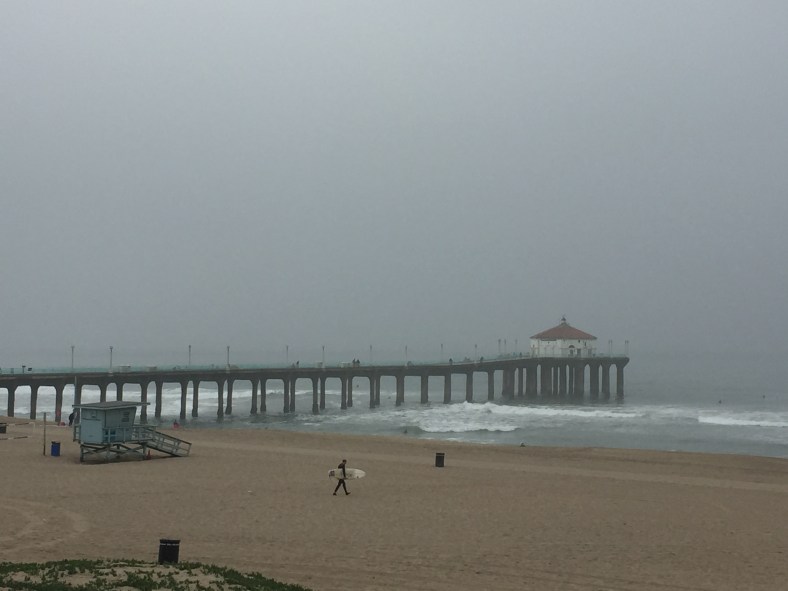
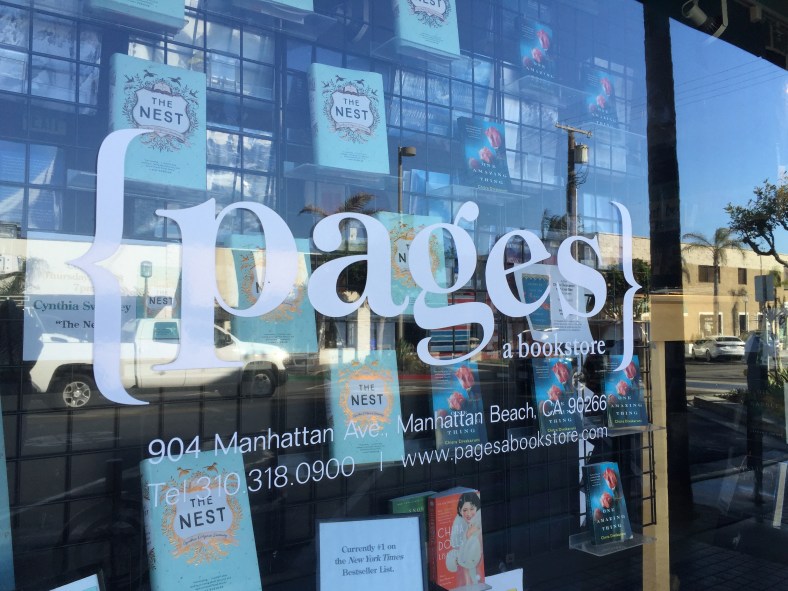
One of my favorites – Pages in Manhattan Beach, CA.

IMG_4376.jpg

Just what does IBD celebrate?

“Independent bookstores are not just stores, they’re community centers and local anchors run by passionate readers. They are entire universes of ideas that contain the possibility of real serendipity. They are lively performance spaces and quiet places where aimless perusal is a day well spent.

Indie bookstores, whether dusty and labyrinthine or clean and well-lighted, are not just stores, they are solutions. They hold the key to your love life, your career, and your passions. Walking the aisles of a good bookstore means stumbling upon a novel from India that expands your heart. It’s encountering an art book that changes the direction of your life. It’s the joy of having a perfect stranger steer you toward the perfect book.

In a world of tweets and algorithms and pageless digital downloads, bookstores are not a dying anachronism. They are living, breathing organisms that continue to grow and expand. In fact, there are more of them this year than there were last year. And they are at your service.”

Today, day five of #OnTheRoad, I will be visiting Main Street Books in Davidson, N.C.IMG_3337.jpg

Enjoy selecting your Saturday Read!

‘A Way Back To Then’ words and music by Jeff Bowen

The Friday Poem this week comes from the one act musical, [title of show], which ran on Broadway for 102 performances in 2008. ‘A Way Back To Then’ was written by Jeff Bowen.

I discovered the words and music while listening to the ‘On Broadway’ channel as we drove across country this week.

This one is for all the dreamers, as a reminder that “when you least expect, opportunity walks through the door…and there you are, right in the middle of what you love…”

‘Finding My Way Back To Then’

Dancing in the backyard
Kool-aid moustache and butterfly wings
Hearing Andrea McArdle sing
From the hi-fi in the den
I’ve been waiting my whole life
To find a way back to then

I aimed for the sky
A nine-year-old can see so far
I’ll conquer the world and be a star
I’ll do it all by the time I’m ten
I would know that confidence
If I knew a way back to then

So I bailed on my hometown
And became a college theatre dork
I was eastbound and down
Moving to New York
So I crammed my life in a U-Haul
To find my part of it all

But the mundane sets in
We play by the rules
And plough through the days
The years take us miles away
From the time we wondered when
We’d find a way back to then

And when you least expect
Opportunity walks through the door
You suddenly connect
With the thing that you forgot
That you were looking for

And there you are
Right in the middle of what you love
With the craziest of company
You’re having a kick-ass time
And being who you wanted to be in this world

You’re that little girl
With her wings unfurled
Flying again
Back in your backyard dancing
I found a way back to then.

The Saturday Read from the 2016 winners of the Pulitzer Prize

Four writers and journalists, whose work was featured in this blog, were among the winners of the Pulitzer Prize announced on Monday. Today, for the ‘Saturday Read’ we revisit the writings of William Finnegan, Kathryn Schulz, Emily Nussbaum and Lin-Manuel Miranda.

Three journalists call The New Yorker home. On Monday, it became the first magazine to be honored with the Pulitzer Prize. Emily Nussbaum and Kathryn Schulz earned Pulitzers in criticism and feature writing respectively, and William Finnegan received the prize for biography.

CgXH66tUEAAYowv.jpg

“Emily Nussbaum, who has won the 2016 Pulitzer Prize for Criticism, writes essays and reported pieces about television that are fearless, hilarious, and pioneering. Among the pieces submitted to the Pulitzer committee were her standout essays on Joan Rivers, P. Jay Sidney, advertising, and “Mad Men.”

Unknown.jpeg

“Kathryn Schulz, who arrived at The New Yorker less than two years ago, has won the 2016 Pulitzer Prize for Feature Writing, for “The Really Big One,” her piece on the more than a little troubling geology of the Pacific Northwest. Her evocations of the earthquake in Japan in 2011 and of the earthquake that could occur in the states of Washington and Oregon stay with us much like works of the best fiction, to say nothing of horror films.”

The Saturday Read on December 12, 2015 included excerpts from this ‘long read’.

“Just north of the San Andreas, however, lies another fault line. Known as the Cascadia subduction zone, it runs for seven hundred miles off the coast of the Pacific Northwest, beginning near Cape Mendocino, California, continuing along Oregon and Washington, and terminating around Vancouver Island, Canada. The “Cascadia” part of its name comes from the Cascade Range, a chain of volcanic mountains that follow the same course a hundred or so miles inland. The “subduction zone” part refers to a region of the planet where one tectonic plate is sliding underneath (subducting) another. Tectonic plates are those slabs of mantle and crust that, in their epochs-long drift, rearrange the earth’s continents and oceans. Most of the time, their movement is slow, harmless, and all but undetectable. Occasionally, at the borders where they meet, it is not.”

IMG_4026.jpg

“William Finnegan, who has been a staff writer since 1987, has won the 2016 Pulitzer Prize for Biography, for his memoir about surfing, “Barbarian Days.” This project has been Finnegan’s literary obsession for a very long time. It began as a series in our pages more than two decades ago, and came to completion in June, with “Off Diamond Head,” an excerpt from the book, which was published not long after.”

The Saturday Read on August 1, 2015 recommended ‘Barbarian Days, A Surfing Life’.

“When you do a book reading in Manhattan Beach, California you need to use a microphone so the guys with ‘surfer’s ear’ in the back can understand you. Last night New Yorker journalist and lifetime surfer William Finnegan used a mic as he read from his well reviewed new book…

The Q&A at the reading was closer to a book club discussion than a publicity event. Most of those attending had either read the book or the excerpt in the June 1 issue of the New Yorker magazine. This is not just a book about surfing. Mr. Finnegan is a well regarded journalist with a resume that includes reporting from South Africa, Somalia, the Balkans, Central America and Australia. Robert Boynton included him in his conversations with America’s best nonfiction writers in ‘The New New Journalism’.”

IMG_2517

Lin-Manuel Miranda won the Pulitzer for drama, for ‘Hamilton’. “For a distinguished play by an American author, preferably original in its source and dealing with American life.”

“A landmark American musical about the gifted and self-destructive founding father whose story becomes both contemporary and irresistible.”

David Rooney reported on the prize for Billboard. “Miranda wrote the book, music and lyrics for the show, in addition to starring in the title role. The Pulitzer now further cements Hamilton’s status as the toughest ticket in town and the clear frontrunner to take the top musical kudos at this year’s Tony Awards in June.”

I have written about Miranda and Hamilton five times in the past year. My favorite is ‘The Power of Taking a Break & the Unexpected Inspiration of Reading’ on March 4, 2015.

“If Mr. Miranda had not been on vacation, taking time away from work, we may have been deprived of his creativity and ability to connect the dots as he developed his perspective for the play: “Miranda saw Hamilton’s relentlessness, brilliance, linguistic dexterity, and self-destructive stubbornness through his own idiosyncratic lens. It was, he thought, a hip-hop story, and immigrant’s story.”

Ms. Mead’s article tells the story of the evolution of Mr. Miranda’s career, the development of ‘Hamilton’, and the connections he has made along the way with mentors and creative partnerships.

Sometimes we think creativity belongs to the artist and we struggle to find opportunities to relate to our own workplace. But creativity is about imagination and storytelling our way to solving a problem. Taking time away allows for a different view. If we are open to the unexpected we can connect the dots and reframe the narrative. And, maybe be online Sunday to buy tickets and see how it’s done.”

‘I Wandered Lonely as a Cloud’ a poem by William Wordsworth

As world leaders gather in New York to sign the climate accord reached in Paris in December, let’s celebrate Earth Day with a poem by William Wordsworth.

In 1802, the world outside our window looked a bit different. On a walk with his sister Dorothy, Wordsworth observed a “long belt” of daffodils, inspiring him to pen I Wandered Lonely as a Cloud.

wordsworth daffodils.png

The poem captures the essence of Earth Day: preserving the beauty of nature, and the life affirming inspiration of a simple walk outdoors.

I Wandered Lonely as a Cloud

I wandered lonely as a cloud
That floats on high o’er vales and hills,
When all at once I saw a crowd,
A host, of golden daffodils;
Beside the lake, beneath the trees,
Fluttering and dancing in the breeze.

Continuous as the stars that shine
And twinkle on the milky way,
They stretched in never-ending line
Along the margin of a bay:
Ten thousand saw I at a glance,
Tossing their heads in sprightly dance.

The waves beside them danced; but they
Out-did the sparkling waves in glee:
A poet could not but be gay,
In such a jocund company:
I gazed—and gazed—but little thought
What wealth the show to me had brought:

For oft, when on my couch I lie
In vacant or in pensive mood,
They flash upon that inward eye
Which is the bliss of solitude;
And then my heart with pleasure fills,
And dances with the daffodils.

William Wordsworth

The week@work – wage gaps, low expectations, false assumptions,’Confirmation’, and reflections on a 50 year career

After reviewing the stories selected for this week@work, I realized there was a common theme in all except one: women who are pursuing their dream jobs in male dominated fields. The last story, and exception to the theme, is Alberto Tomasi’s, a cabdriver for the past 50 years in Rome.

There have been many conversations recently about the wage gap between men and women@work. One of the most egregious discrepancies occurs on the global stage of world cup soccer. Earlier this month, five members of the U.S. Women’s National Team filed a wage discrimination action against the U.S. Soccer Federation. Carli Lloyd, co-captain of the team outlined her position in an essay, ‘Why I’m Fighting for Equal Pay’.

“I’ve worn a U.S. Soccer uniform for 12 years and have done so proudly. I’ve had some of the greatest moments of my life — winning two Olympic gold medals and the 2015 Women’s World Cup — wearing that uniform. So when I joined four teammates in filing a wage-discrimination complaint against U.S. Soccer late last month, it had nothing to do with how much I love to play for my country.

IMG_2458.jpg

When we talk about the wage gap in today’s workplace, experts estimate women earn 79% of a man’s salary for the same job. For U.S. women’s soccer, it’s 17% for the top players and 21% for the rest. There is no overtime pay in a career that requires a player to be on the road for 260 days a year.

In a sport where the women’s team revenue will exceed $5million vs. a $1million deficit for the men’s team, the top five women’s annual salaries are $72K vs the men’s at $406K. Members of the women’s world cup team earn $15K to the men’s $69K. When the women won the world cup last year they earned a $75K bonus. If the men were to win, they would bring home $390K.

The fact that women are being mistreated financially is, sadly, not a breaking news story. It goes on in every field. We can’t right all the world’s wrongs, but we’re totally determined to right the unfairness in our field, not just for ourselves but for the young players coming up behind us and for our soccer sisters around the world.”

In a related story, New York Magazine writer, Dayna Evans reports on the ‘expectation gap’ in salary negotiations uncovered by job marketplace, Hired – ‘Study Finds That Women in Tech Ask for Lower Salaries Than Men Do’.

womenwhocode1

“After analyzing 100,000 interview requests and job offers over the last year, tech job marketplace Hired found that, on average, tech companies offer women 3% less than men for the same roles. Among the most interesting—and troubling—pieces of data is that men receive higher salaries 69% of the time than women for the same job titles at the same companies.

Some of that disparity could be attributable to women not setting their demands high enough. Because Hired’s marketplace lets job seekers specify the salaries they’re seeking, the report provides a glimpse into both expectations and final offers. In roles that are more male dominated, women often set their salary expectations lower than their male counterparts.

Overall, Hired’s data shows that the average woman on our platform sets her expected salary at $14k less per year than the average man on our platform. When we break the expectation gap down by role — comparing women and men in the same job category — we found as the ratio of men to women in the role increases, so does the gap.”

The death of Pritzker Prize winning architect, Zaha Hadid on March 31 prompted The New York Times to send an “informal online questionnaire” asking “female architects among its readers to talk candidly about their experiences in the profession: the progress they’ve made and the obstacles they still face on construction sites and in client meetings.”

“For a woman to go out alone in architecture is still very, very hard,” the architect Zaha Hadid said. “It’s still a man’s world.” Ms. Hadid often stated that she did not want to serve as a symbol of progress for women in her profession. But, inevitably, she did. A study on diversity in the profession released this year by the American Institute of Architects found that “women strongly believe that there is not gender equity in the industry”; that women and minorities say they are less likely to be promoted to more senior positions; and that gender and race are obstacles to equal pay for comparable positions. Since Ms. Hadid won the Pritzker Prize in 2004, the percentage of female architects in the United States has barely grown, increasing to 25.7 percent from 24 percent, according the Bureau of Labor Statistics.”

The article is a series of snapshots of successful architects@work, encountering obstacles in a still white-male dominated field. One example from Yen Ha, Principal of Front Studio Architects in New York.

13archwomen-span-master675

“We absolutely face obstacles. Every single day. It’s still largely a white, male-dominated field, and seeing a woman at the job site or in a big meeting with developers is not that common. Every single day I have to remind someone that I am, in fact, an architect. And sometimes not just an architect, but the architect. I’m not white, wearing black, funky glasses, tall or male. I’m none of the preconceptions of what an architect might be, and that means that every time I introduce myself as an architect, I have to push through the initial assumptions. Every new job site means a contractor who will assume I am the assistant, decorator or intern. It usually isn’t until the third meeting that the project team looks to me for the answers to the architectural problems.”

In 1991 there was a vacancy on the U.S. Supreme Court. Then President George H.W. Bush nominated U.S. Circuit Court of Appeals Justice Clarence Thomas to fill the vacancy. This past weekend, HBO aired ‘Confirmation’, the story of former colleague Anita Hill testifying before the Senate Judiciary Committee that Thomas had sexually harassed her.

Unknown.jpeg

‘The Real Story Behind HBO’s ‘Confirmation’ From The NPR Reporter Who Broke The Story’ provides a Q & A with NPR correspondent, Nina Totenberg.

“I’d been hearing all summer long that there were women who said they were harassed by Clarence Thomas when he was at the EEOC and when he was at the Education Department,” Totenberg said. “But I could never really prove it. And then I heard about this woman, Anita Hill.”

That’s when everything changed.

You don’t recognize this now, but sexual harassment was a dirty little secret that most women had but they didn’t talk about. They were embarrassed by it; it was a hindrance and not a help in any way. Now suddenly, it gets popped into the open. … But all of those silent, female experiences materialized in the … phones exploding on Capitol Hill.”

Thomas was confirmed by a vote of 52-48. The legacy of Hill’s action was a dramatic increase in the number of sexual harassment claims filed with the EEOC.

“NPR received the prestigious George Foster Peabody Award for its gavel-to-gavel coverage — anchored by Totenberg — of both the original hearings and the inquiry into Anita Hill’s allegations, and for Totenberg’s reports and exclusive interview with Hill.”

Totenberg received individual accolades as well, but there was a downside.

“I was pilloried during this. I had one of the great stories of any reporter’s life. I had worked very hard to get it. And the cost was enormous in terms of negative publicity and people trashing me a lot and senators yelling at me. At one point I had a driver at Nightline who went around the corner [and] stopped and he said to me … “Lady, you better get a gun.”

The final story this week is ’50 Years in a Cab: A Long, Winding Trip for One Driver, and His City’, from Elisabetta Povoledo.

Rome_airal_picture.jpg

“From his front-seat perch, Alberto Tomassi, a Roman cabdriver for 50 years, has been both eavesdropper and confessor. He has played impromptu tour guide, thwarted muggings and rushed countless clients to the emergency room.

Expertly navigating Rome’s narrow, potholed streets — many conceived centuries before the internal combustion engine — he has developed the unflappable calm of a Zen monk.

“If you can get through the first 15 years without getting really angry, you can do it forever,” Mr. Tomassi said. “I just take things as they come.”

“You don’t get rich doing this job, but it’s honest work,” he said. “You can raise a family, put your kids through school.”

His only disappointment this year was in not being recognized for his service.

“…no party, no gold watch, no tribute — so he decided to place a round silver sticker emblazoned with “50 years of taxi” on the rear window of his cab.”

 

The Saturday Read ‘Hamilton The Revolution’ by Lin-Manuel Miranda and Jeremy McCarter

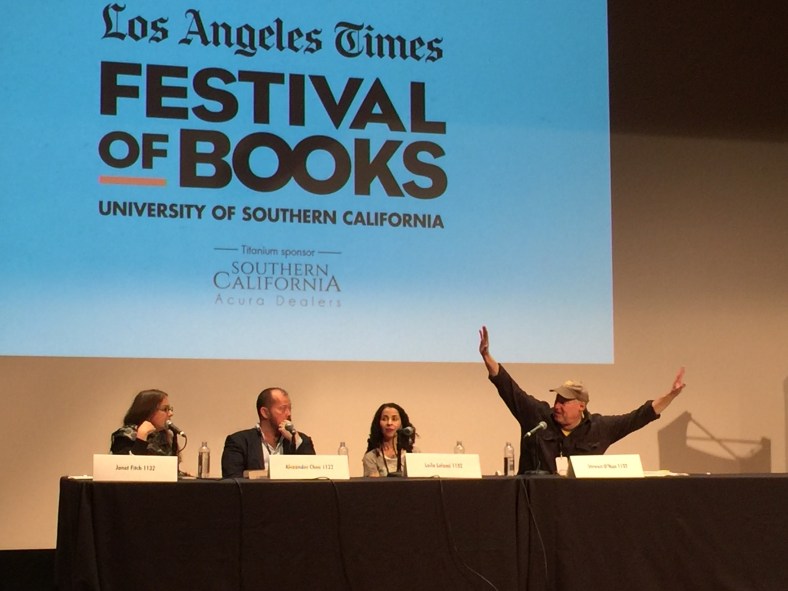
I saw the hat first, ‘A.HAM’ emblazoned on its crown. In the midst of the crowds converging on the campus of the University of Southern California last weekend for the LA Times Festival of Books, a student and her parents were headed to an open house hosted by the School of Dramatic Arts. The black and gold logo was a reminder that the phenomena that is ‘Hamilton’ continues to spark the dreams of the aspiring actor, striving historian, and would-be composer.

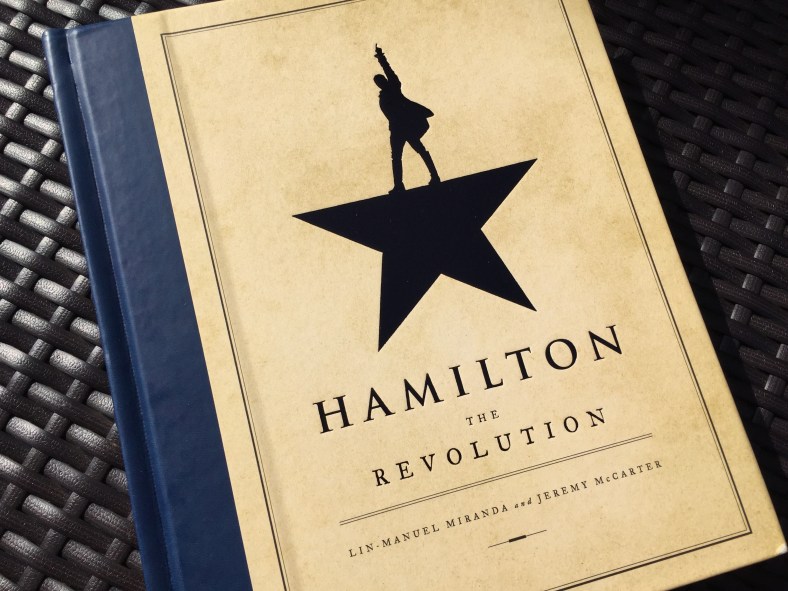
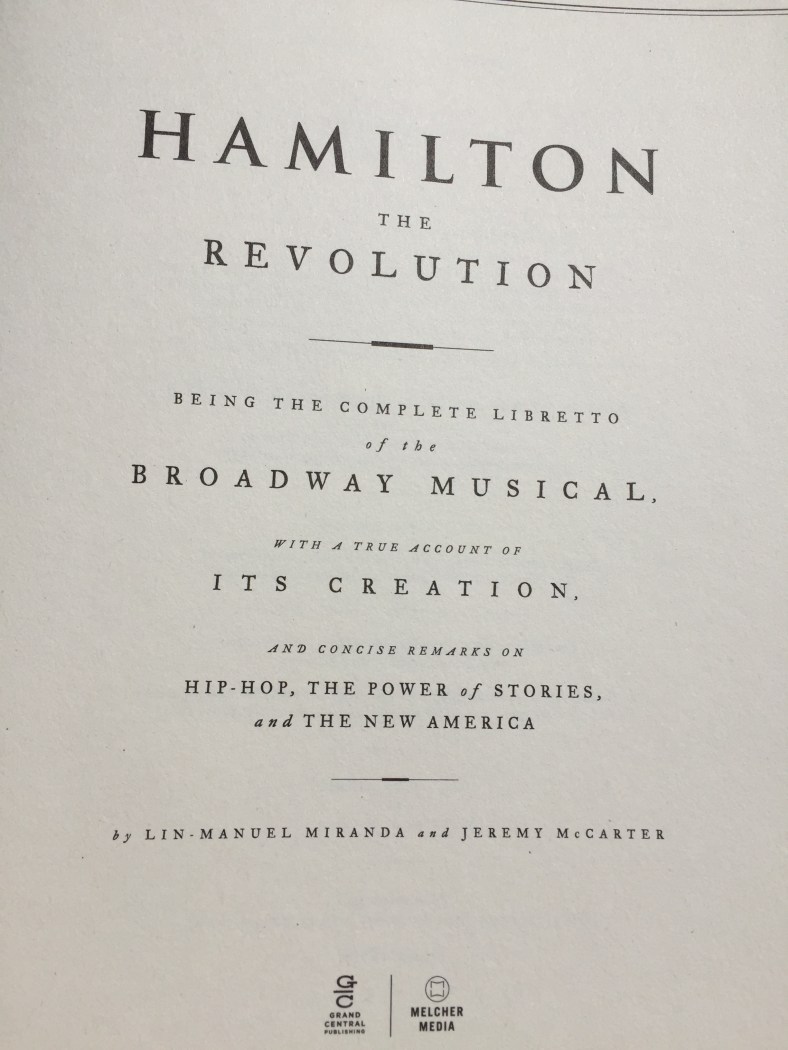
First there was Ron Chernow‘s 2004 book, ‘Alexander Hamilton’. Last summer, ‘Hamilton’, the musical debuted on Broadway. In February, the original cast recording won a Grammy for Best Musical Theater Album. This week the ‘Hamiltome’ arrived in bookstores and immediately sold out on Amazon. The Saturday Read is ‘Hamilton The Revolution’ by Lin-Manuel Miranda and Jeremy McCarter.

title page.jpg

In 2007 Jeremy McCarter, then drama critic for New York Magazine, reviewed a new play, ‘In The Heights’ and posed the question “Could musicals actually be adapting to a new century’s audience?”

“The most obvious of the show’s many virtues is that it doesn’t sound like the half-assed pseudo-pop that clutters up Broadway. Miranda’s score is rich and kaleidoscopic, as it needs to be.”

In the Introduction to ‘HTR’, Mr. McCarter reflects on his time at New York Magazine and his frustration with lack of interest in the possibilities of hip-hop.

“After many disappointments and false alarms, Heights had made me sit up in my aisle seat: Here’s the guy. Lin’s show about immigration in Upper Manhattan fused salsa, hip-hop, and traditional Broadway ballads to make something old and new, familiar and surprising. Best of all, he made the leap that virtually nobody else had made, using hip-hop to tell a story that had nothing to do with hip-hop – using it as form, not content.”

The writer, director and producer McCarter, who studied history at Harvard connected with the composer, lyricist, actor and Wesleyan alum, Miranda and began a collaboration that resulted in ‘Hamilton The Revolution’.

“It tells the story of two revolutions. There’s the American Revolution of the 18th century, which flares to life in Lin’s libretto, the complete text of which is published here, with his annotations. There’s also the revolution of the show itself: a musical that changes the way that Broadway sounds, and alters who gets to tell the story of our founding, that let’s us glimpse the new, more diverse America rushing our way.”

IMG_4314.jpgThe book is a ‘behind the scenes’ look at the development of a musical. It’s a narrative of the creative process and a roadmap for future generations who will replicate the production on high school and summer stages.

In an interview with CBS This Morning, Mr. McCarter stressed the importance of cataloging the moments from the first rap performance at the White House through the six years to opening night.

We wanted to “tell the story which is not about this historical fact or that historical fact, it’s about the emotional reality that these people were living through…This is not just what happened, but this is how it felt at the time. This is the experience that we all went through…So that ten years from now when kids are doing it they can pick up this book and say ‘Oh, that’s how they did it’, now I understand.”

Where do we find inspiration? It’s the curiosity thing. Mr.Miranda is the master of the inquisitive. And he seems to drawn on every life experience and relationship to connect the dots to his project. Here’s one example from the annotations to ‘You’ll Be Back’.

“I was having a drink with Hugh Laurie, with whom I’d worked on his series ‘House’, and I told him I wanted to write a breakup letter from King George to the colonies. Without blinking, he improv’d at me, “Awwww, you’ll be back,” wagging his finger. I laughed and filed it away. Thanks, Hugh Laurie.”

IMG_4308.jpgWe learn from the wisdom of others. ‘Hamilton The Revolution’ introduces us to a serious set of theater luminaries and traces each of their stories as the words and music evolve.

@work we casually use the buzz words creativity and innovation interchangeably. We imagine we are all curious, exemplars of transformational thinking. But most of us can’t reimagine our way out of our comfort zone. Creativity is hard work.

‘HTR’ is the story of a musical. Its value, for those who work outside the theater, is to show us where curiosity can lead and what creativity looks like.

IMG_4309.jpg

“The last song in the show captures the bitter historical truth that every one of Hamilton’s enemies outlived him, and they did all they could to efface his memory. By ending with Hamilton’s afterlife, not his death, the show asks us to think about what we leave behind when we’re gone: It invites us to think about legacies.”

When Ben Brantley reviewed the musical for the New York Times, he wrote “Hamilton” is, among other things, about who owns history, who gets to be in charge of the narrative.”

Lin-Manuel Miranda and Jeremy McCarter own ‘HTR’, their story, and leave no doubt about who is in charge of the narrative.

“Who tells your story?”


The week@work – It’s in the stars: Hollywood stories, #YearInSpace & 18,300 applications

The stories behind the headlines this week@work originate in Hollywood, Geneva, Washington D.C., and on the International Space Station.

The careers of a U.S. deputy trade ambassador and an executive editor for the Washington Post converge in Hollywood, astronaut Scott Kelly captures the final week of his #YearInSpace in photos, and 18,300 applicants aspire to take his place.

Unknown

Would you get up at 4:30 AM every day to pursue your dream? Alexandra Alter reported on a ‘behind the scenes’ Hollywood story about working beyond your ‘day job’.

One of the most successful global trade negotiators added a few hours to his work day 17 years ago to write a novel about fur trader Hugh Glass. His book, ‘The Revenant’ was published in 2002 and sold 15,000 copies. Last year publisher Picador reissued the novel, selling over half a million copies.

images

Michael Punke, the deputy United States Trade Representative and the United States ambassador to the World Trade Organization and author, has become a rock star among colleagues in global trade.

“We all think it’s quite cool,” said Keith Rockwell, a spokesman for the W.T.O., who added that colleagues occasionally tease Mr. Punke by asking him how his buddy Leo is doing. “The W.T.O. isn’t normally known for having a Hollywood connection.”

Some of his colleagues marvel that he has such a successful side career, while steering the country’s international trade policy from his post in Geneva.

“The guy is so talented, you read his bio, and it’s like he has two lives,” said Christopher Wenk, the executive director for international policy at the U.S. Chamber of Commerce.”

Joining Ambassador Punke at the Dolby Theater on Oscar night is current Washington Post executive editor and former Boston Globe editor Martin Baron.

In November, Esquire Magazine ran a career profile asking ‘Is Martin Baron the Best News Editor of All Time?’. In the Oscar nominated film, ‘Spotlight’, actor Liev Schreiber’s performance channels the editor who led the Pulitzer Prize winning team investigating the child abuse scandal in the Catholic Church.

Unknown-1.jpeg

This week, Mr. Baron used his time in the Oscar ‘spotlight’ to reflect on the long term rewards of the film and journalism today, ‘I’m in ‘Spotlight’, but it’s not really about me. It’s about the power of journalism.’

“Aside from the acclaim of critics, “Spotlight” already has delivered one gratifying result. In emails, tweets and Facebook posts, journalists have declared themselves inspired, buoyed and affirmed. That is no small matter in this badly bruised profession. We have felt the traumatizing financial effect of the Internet and been berated by just about everyone, especially politicians in a campaign season that has seen us cynically labeled “scum.”

One journalist wrote me that “the story that inspired the movie serves as a wonderful, wonderful reminder why so many of us got into this business in the first place and why so many stayed despite all the gloom and doom and all the left hooks that landed squarely on our chins along the way.”

The article is required reading for all who earn a living pursuing a journalism career. It should be framed on the walls of journalism schools and be the first google search result on the world ‘journalism’.

Two additional stories about work in Hollywood this week addressed the ongoing conversation on inclusion:

‘From C-Suite to Characters on Screen: How inclusive is the entertainment industry?’ USC Annenberg professor Stacy L. Smith authored the MDSC Initiative’s first report on diversity in the entertainment industry.

Melena Ryzik profiled 27 industry professionals in ‘What It’s Really Like to Work in Hollywood*  (*If you’re not a straight white man.)’

Before leaving the week@work, let’s travel to the International Space Station where astronaut Scott Kelly is completing his 240 day mission in space.

CTeSzSOWIAApQID

“10,944 sunrises and sunsets

“The International Space Station zips around Earth at more than 17,000 miles per hour, or once every 90 minutes. That means over the course of Mr. Kelly’s stay, the space station will have made 5,440 orbits, and the sun will have gone up and down 10,944 times from the perspective of the astronauts aboard. Of course, Mr. Kelly did not see all of them. He is not continuously looking out the window, and he sleeps, too.”

(Scott Kelly tweeted the photo above of sunrise on February 27 and ice earlier today)CcT9mfcW4AAZFvx.jpg

NASA announced this week that it had received 18,300 applications for 14 open spots in the new astronaut class. The recruiting effort which began in the fall demonstrates a rekindled interest in exploration and discovery.

“Now that NASA’s Feb. 18 deadline for applicants has passed, the agency’s 18-month winnowing process has begun.

NASA staff will look at 400 to 600 applicants who survive the initial purge and identify those who pass reference and background checks. Then 120 will be invited to the Johnson Space Center for interviews.

The final 14 will be announced in July 2017 and begin two years of extensive training on spacecraft systems, spacewalking skills, team building and Russian language. Those who complete the program will be assigned to NASA’s Orion deep space exploration ship, the International Space Station or one of two commercial vehicles in development.”

As @StationCDRKelley vacates his spot on the ISS, it’s good to know there are thousands who hope to fill his seat.

This week@work – it’s in the stars, and the dreams of those who aspire to be actors, film makers, journalists, writers, astronauts, and international trade negotiators.


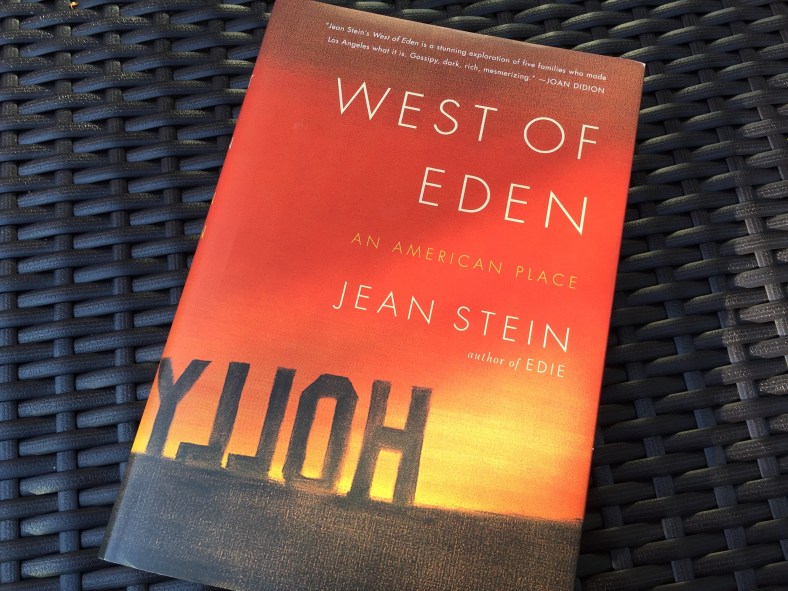
The Saturday Read ‘West of Eden: An American Place’ by Jean Stein

Were the initial seeds of relocation planted when you read a novel or work of non-fiction that transported you to that place on the globe where you could find success? In the Saturday Read this week we arrive in Hollywood, where author Jean Stein interweaves oral history and memory to tell the story, ‘West of Eden: An American Place’.

If you read the book through the lens of work, you come away with the story of the three industries that built LA: oil, real estate and the movies. As you turn the page, you listen to voices describing the culture and its effects on lives and careers.

When Po Bronson wrote his book, ‘What Should I Do With My Life?’, he had already spent time as a producer and writer in television. His observations on culture echo through Ms. Stein’s narrative.

“Every industry has a culture. And every culture is driven by a value system. In Hollywood, where praise is given too easily and thus has been devalued, the only honest metric is box-office receipts. So box-office receipts are all-important.

One of the most common mistakes is not recognizing how these value systems will shape you. People think that they can insulate themselves, that they’re different. They’re not. The relevant question in looking at a job is not What will I do? but Who will I become? What belief system will you adopt, and what will take on heightened importance in your life? Because once you’re rooted in a particular system — whether it’s medicine, New York City, Microsoft, or a startup — it’s often agonizingly difficult to unravel yourself from its values, practices, and rewards. Your money is good anywhere, but respect and status are only a local currency. They get heavily discounted when taken elsewhere. If you’re successful at the wrong thing, the mix of praise and opportunity can lock you in forever.”

‘West of Eden’ is the story of five families: the Dohenys, the Warners, Jane Garland, Jennifer Jones and the author’s own family, the Steins. As I read each section, I was reminded of Bronson’s comment. For the most part, the real life actors in the book were chasing the dream of wealth, status and celebrity; not considering the consequences, finding themselves in a world of praise and opportunity, locked in, in some cases, with tragic results.

Writer and historian, Mike Davis opens the book with his memories as a guide for Grey Line Tours, and it’s the map of celebrity homes that provides an outline for the book. We are introduced to the five stories by street address. Second stop, 1801 Angelo Drive, Beverly Hills, the Warner home. Arthur Miller captures the essence of early Hollywood.

“Jack Warner’s generation invented what turned out to be the major world culture – not just American, but a world culture. The world’s dream to escape the dreadful, ordinary, industrial, technological life. An you can understand how it happened if you think of where they came from, a place where there was absolutely no chance for anybody to do anything. They were living in a mud hole, but here the dreams were absolutely feasible. If you could think it, you could do it. It was magic. And they filled the movies with magic. George Cukor told me once, “Our object was to escape reality. We were quite conscious of all that.” It was a never-never land, a construct. These immigrants, these Jews from Eastern Europe, had developed this dream that had blond hair, blue eyes, and a straight nose. It all had to be beautiful. This was a fairy tale, because they were immigrants who saw this country as a fairy tale. It was incredible: it captured the whole country.”

These were the ‘culture builders’ whose legacy remains in the mansions, oil wells and studios, that fund the dreams of workers today. Their stories are told through neighbors, colleagues, family members and employees. David Geffen, who purchased Jack Warner’s home connects past to present:

“Jack Warner was a great character, like all of them. They were remarkable guys, but they were monsters. The movie business is a hard business, and you had to be a monster to create this industry. 

Jean Stein has called upon a lifetime network to craft and preserve the unique story of a place built on escape from the ordinary. A set of biographical notes at the end gives the reader thumbnail bios of each narrator, and it’s quite a cast of characters!

The book is required reading for the uninitiated and aspiring L.A. resident. There is drama worthy of an academy award, in every category from acting to costume design to hair and makeup and of course, visual effects.

“Another quality that all Californians who have spent any time on the edge of the Pacific are aware of is that the light is different. There’s a pressure on the eyes from the light. I’ve never felt it on the other coast.” (art curator, Walter Hopps)

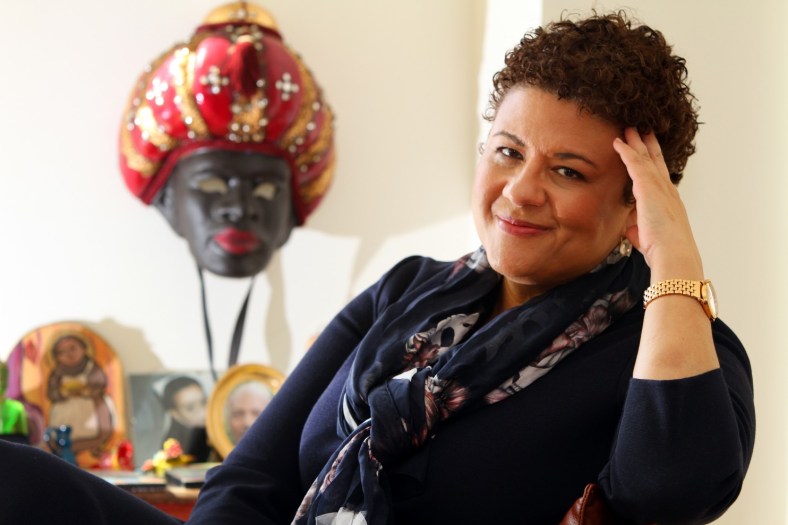
The Friday Poem ‘Early Cinema’ by Elizabeth Alexander

On Sunday evening, the Academy of Motion Picture Arts and Sciences will present awards for the best in film this past year. In the year of #OscarsSoWhite, let’s imagine an alternative, more inclusive entertainment workplace. And, hold industry leaders accountable to deliver substance; jobs and stories reflecting the lives of the audience.

The Friday Poem this week is ‘Early Cinema’ by Elizabeth Alexander and takes us back to a time when “…young ladies were misrepresenting themselves…” to gain access to the magic of the movies and “…to be whisked away…”

Early Cinema

According to Mister Hedges, the custodian
who called upon their parents
after young Otwiner and young Julia
were spotted at the matinee
of Rudolph Valentino in The Sheik
at the segregated Knickerbocker Theater
in the uncommon Washington December
of 1922, “Your young ladies
were misrepresenting themselves today,”
meaning, of course, that they were passing.
After coffee and no cake were finished
and Mister Hedges had buttoned his coat
against the strange evening chill,
choice words were had with Otwiner and Julia,
shame upon the family, shame upon the race.

How they’d longed to see Rudolph Valentino,
who was swarthy like a Negro, like the finest Negro man.
In The Sheik, they’d heard, he was turbaned,
whisked damsels away in a desert cloud.
They’d heard this from Lucille and Ella
who’d put on their fine frocks and French,
claiming to be “of foreign extraction”
to sneak into the Knickerbocker Theater
past the usher who knew their parents
but did not know them.
They’d heard this from Mignon and Doris
who’d painted carmine bindis on their foreheads
braided their black hair tight down the back,
and huffed, “We’ll have to take this up with the Embassy”
to the squinting ticket taker.
Otwiner and Julia were tired of Oscar Michaux,
tired of church, tired of responsibility,
rectitude, posture, grooming, modulation,
tired of homilies each way they turned,
tired of colored right and wrong.
They wanted to be whisked away.

The morning after Mister Hedges’ visit
the paperboy cried “Extra!” and Papas
shrugged camel’s hair topcoats over pressed pajamas,
and Mamas read aloud at the breakfast table,
“No Colored Killed When Roof Caves In”
at the Knickerbocker Theater
at the evening show
from a surfeit of snow on the roof.
One hundred others dead.

It appeared that God had spoken.
There was no school that day,
no movies for months after.

Elizabeth Alexander    ‘Antebellum Dream Book’ Graywolf Press, 2001

antebellum dream book.png