The week@work – Brexit, #Regrexit, Euro2016, Christo’s floating piers, Bill Cunningham’s photos, Goldman Sachs’ video recruiting strategy, and education for a jobless future

I was a history major, so the past week@work included an inordinate amount of time spent in the company of various traditional and social media portals, monitoring the results of the Brexit vote and its aftermath.

In between, there were intervals of soccer, viewing both Copa America and Euro 2016. There was also art in Christo’s installation in Lake Iseo, Italy and reflected brilliance in the photography of Bill Cunningham, who died this weekend. Goldman Sachs announced a new campus recruiting strategy (good news for history majors), and a journalist asked if education is preparing students adequately for a jobless future.

25Brexit-HP-SS-slide-9PT7-largeWidescreen573-v3.jpg

On Thursday evening I watched part of CNN International’s ‘Brexit’ election coverage, which included an animated discussion between anchor Christiane Amanpour and historian Simon Schama. As it became clear that ‘Leave’ was overtaking ‘Remain’ in the vote count, Schama cited the referendum results as one more example of “a world phenomenon of tribal nationalism”.

The historian has been actively engaged on Twitter and in an interview with NPR’s Robert Siegel described the vote as “a turning point for Great Britain”.

Here’s a sample of the conversation:

SIEGEL:” Culturally, there is a generation of educated young Europeans – and I include Brits in that – who think of themselves at some level as being European. Maybe it’s not their only identity. Do you think that goes away in Britain and does a different identity take shape, or do those people grow up and change in this country?”

SCHAMA: “No, I think they’re in distress. I mean, I’m sure you’ve said, it’s very striking that the 18 to 24s voted something like 75 percent to stay in. And I suppose it depends where you are in London. We have more immigrants than anywhere else, and we’re least bothered by it. And I think when the shock subsides a bit, the young may well fight to be at least as European as they’ve been led to believe they are. That’s my hope, actually.”

SIEGEL: “If you can imagine a historian 50 years hence writing the sentence that will sum up what happened on this day, what do you think it’ll be?”

SCHAMA:” The greatest act of unforced national self-harm yet known in modern history.”

It’s always helpful to have a historian in the house. And it’s stunning to realize the generational split in voting: “Among 18-24-year-olds, the age category that’s going to have to live with the consequences of this vote for all of their working lives, 75 percent voted to stay.”

As to #Regrexit, writer and comedian, John Oliver reminded his countrymen, “there are no f______do-overs”.

In 2004 journalist Franklin Foer wrote ‘How Soccer Explains the World: An Unlikely Theory of Globalization’. Seemed like a good read to revisit after Brexit and an opportunity for a diversion while following Copa America and Euro 2016. The book treats soccer stories as globalization case studies. And I think we could use some ‘best practices’ right about now.

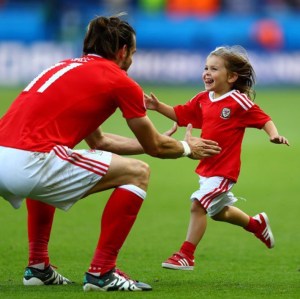
Full disclosure, I am rooting for the Welsh National Football Team as they face Belgium on Friday. My favorite work/life balance photo of the week – Wales’ Gareth Bale and daughter after the team advanced to the Euro 2016 quarter finals.
IMG_4935

Art is another outlet for expression in chaos and ambiguity. A new Christo work debuted last week. The Guardian reported on the popularity of the ‘Floating Piers’ in Lake Iseo in northern Italy.

58af48a0cb7e83c7f1e3dbf9b4a50e7e.jpg

“A giant floating walkway made out of fabric on an Italian lake has had to be closed at night after tens of thousands of visitors began to wear it out.

The 1.9-mile (3km) walkway of 200,000 floating cubes covered in orange fabric was created by artist Christo and has proved a major attraction since it opened on Saturday on Lake Iseo.

However, 270,000 visitors have flocked to see the free installation – called “the Floating Piers” – in less than five days, far exceeding organisers’ expectations of about 500,000 over 16 days.”

On Saturday, The New York Times chronicled the career of one of their ‘house icons’, photographer Bill Cunningham.

BILL-jumbo.jpg

“Mr. Cunningham was such a singular presence in the city that, in 2009, he was designated a living landmark. And he was an easy one to spot, riding his bicycle through Midtown, where he did most of his field work: his bony-thin frame draped in his utilitarian blue French worker’s jacket, khaki pants and black sneakers (he himself was no one’s idea of a fashion plate), with his 35-millimeter camera slung around his neck, ever at the ready for the next fashion statement to come around the corner.

Nothing escaped his notice: not the fanny packs, not the Birkin bags, not the gingham shirts, not the fluorescent biker shorts.

In his nearly 40 years working for The Times, Mr. Cunningham snapped away at changing dress habits to chart the broader shift away from formality and toward something more diffuse and individualistic.”

Two stories about the transition from school to work round out this week@work.

On Friday, bbc.com reported “Goldman Sachs is scrapping face-to-face interviews on university campuses in a bid to attract a wider range of talent.
The US investment bank will switch to video interviews with first-round undergraduate candidates from next month.

“Edith Cooper, Goldman’s global head of human capital management said: “We want to hire not just the economics or business undergraduate but there is that pure liberal arts or “history major that could be the next Lloyd Blankfein.”

Mr Blankfein, the bank’s chief executive, went to Harvard, one of America’s elite Ivy League universities, where he studied history.”

On Tuesday, Washington Post contributor, Jeffrey J. Selingo asked ‘Are colleges preparing students for the workforce?’

“While students are often encouraged to major in job-ready fields like STEM (science, technology, engineering, and math), graduates of those programs are unlikely to find employment without solid grounding in the liberal arts and experiences outside the classroom to build their soft skills.

In the future work world, it’s critical that new graduates stay one step ahead of technology and focus more on what computers can’t yet do well: show creativity, have judgment, play well with others, and navigate ambiguity.”

It was a good week to be a history major.
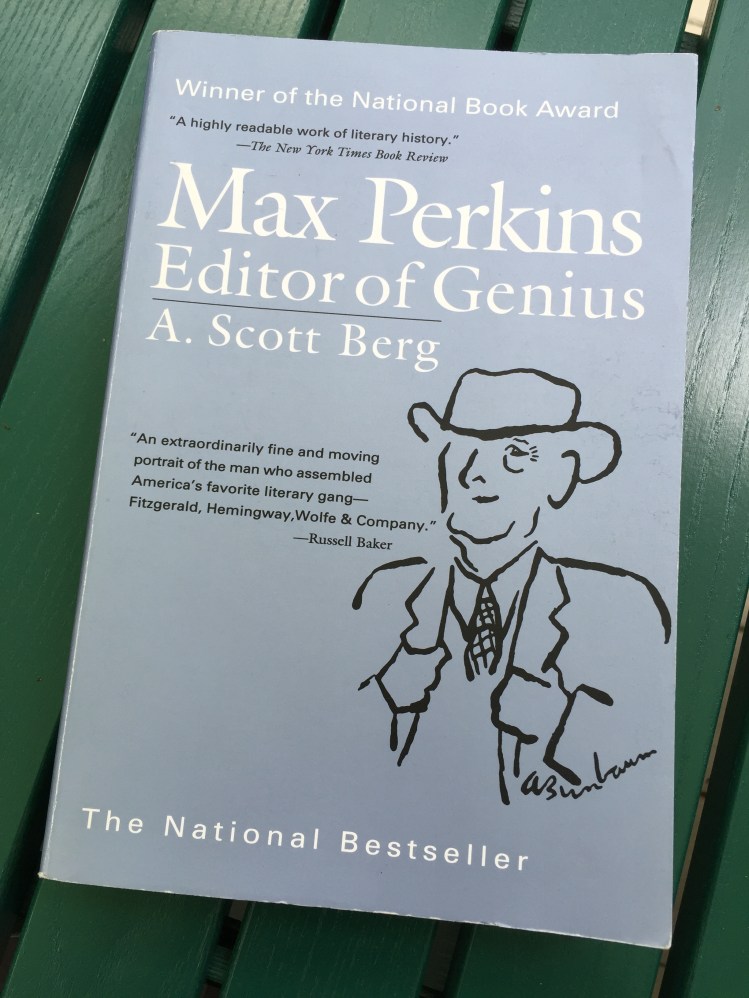


The Saturday Read ‘Max Perkins: Editor of Genius’ by A.Scott Berg

How many of you have turned your senior thesis into a career?

In 1971, recent Princeton graduate, A. Scott Berg began the seven-year process of expanding his college research into the biography of book editor Max Perkins. Earlier this month, a 38 year long journey, from the first film option of the 1978 National Book Award winning biography, ended with the opening of ‘Genius’ in theaters.

The Saturday Read this week is ‘Max Perkins:Editor of Genius’, a story that defines the role of a professional mentor as the narrative unfolds.

Allison Silver interviewed the author in 1981 for an article on the relationships between biographers and their subjects.

“Scott Berg’s biography ”Max Perkins: Editor of Genius” grew out of a fascination, bordering on fixation, for F. Scott Fitzgerald. At Princeton, Mr. Berg wrote his senior thesis on Perkins’s relations with Ernest Hemingway, Thomas Wolfe and Fitzgerald during the 1920’s. Mr. Berg realized there was a book in the life of the Scribner’s editor, and felt he was the one to write it. On graduation day, 1971, he told his roommate, ”I’ll take three months to research it, three months to write it and then another three months to get it published.” Mr. Berg remembers this philosophically. ”I was only six years off.”

Berg introduces Perkins at age sixty-one, in 1946, as he enters a storefront on Forty-third street in Manhattan, to speak to a group of students enrolled in an extension course on book publishing. “All were eager to find a foothold publishing and were attending the weekly seminars to increase their chances.”

“Maxwell Everts Perkins was unknown to the general public, but to people in the world of books he was a major figure, a kind of hero. For he was the consummate editor. As a young man he had discovered great new talents – such as F. Scott Fitzgerald, Ernest Hemingway, and Thomas Wolfe – and he had staked his career on them, defying the established tastes of the earlier generation and revolutionizing American literature. He had been associated with one firm, Charles Scribner’s Sons, for thirty-six years, and during that time, no editor at any house even approached his record for finding gifted authors and getting them into print.”

For many years this biography has been a ‘bible’ for aspiring editors. In this time of book publishing ‘disruption’, when editors have become an endangered species, it’s worth the readers’ time to travel to post WWI New York, when a different type of disruption was taking place as the novels of Fitzgerald, Hemingway and Wolfe began to appear on book shelves.

Let’s return to the 1946 extension class, as Berg continues his first chapter.

‘”The first thing you must remember,” he said, without quite facing his audience: “An editor does not add to a book. At best he serves as a handmaiden to an author. Don’t ever get to feeling important about yourself, because an editor at most releases energy. He creates nothing…A writers best work…comes entirely from himself…Because in the end an editor can get only as much out of an author as the author has in him.”‘

This advice, shared with folks pursuing a career in publishing, could be edited for any contemporary management text to define the modern day mentoring relationship.

“Beginning with Fitzgerald and continuing with each new writer he took on, he slowly altered the traditional notion of the editor’s role. He sought out authors who were not just “safe”, conventional in style and bland in content, but who spoke in a new voice about the values of the postwar world. In this way, as an editor he did more than reflect the standards of his age; he consciously influenced and changed them by the new talents he published…

The successful editor is one who is constantly finding new writers, nurturing their talents, and publishing them with critical and financial success. The thrill of developing fresh writing makes the search worthwhile, even when the waiting and working becomes months, sometimes years, of drudgery and frequent disappointment.”

The biography offers a chronological timeline of relationships with the icons of early twentieth century American literature: Fitzgerald, Hemingway, Wolfe and Ring Lardner. It also includes his nurturing of emerging women writers in the 1930s: Marcia Davenport, Marjorie Kinnan Rawlings, and Taylor Caldwell. In the final chapter, we meet two of the last authors Perkins edits in 1946 and 1947: James Jones, author of ‘From Here to Eternity’ and Alan Paton, author of ‘Cry, the Beloved Country’. Max Perkins died on June 17, 1947.

How do you turn you senior thesis into a career? In the 1981 interview with Allison Silver, Berg shared his secret.

“During his first months of research, the scope of his work broadened every day until, by the end of that summer, he says, ”I made a private pact with myself then that I would work on the book until I finished it.” Mr. Berg remembers deciding ”that I was not going to be a slave to arbitrary dates; because, in truth, I owed Max Perkins more than that. Suddenly I went into twilight-zone time.”

This attitude toward deadlines has remained with Mr. Berg. He recommends that anyone involved in a long project should ”move to Los Angeles, because the seasons don’t change and you’re not aware of the passage of time. To this day I cannot account for three months between May and September, 1974.”

The Friday Poem ‘A sonnet’ by Lin-Manuel Miranda

At a moment of career recognition, ‘Hamilton’ creator, Lin Manuel-Miranda shared a sonnet for his wife and the world about family, tragedy and love. At it’s center was his response to the terrorist, hate crime in Orlando.

The New York Times Sunday Styles reporter, Katie Rosman, shared the ‘back story’ of the sonnet from creation to delivery on the Beacon Theater stage Sunday evening.

“…as the first grim reports out of Orlando, Fla., were circulating, Mr. Miranda took out his phone and began to tap out the sonnet he would read aloud that night while accepting the Tony for best score. In 14 lines he paid tribute to his wife, his son and the victims of the massacre.

Back at the Mandarin Oriental before curtain time, he realized he would need a printout of the verse he had written. He called the suite where his father was staying and asked him if he wouldn’t mind taking care of it. Luis, 61, said yes, and traveled down a flight, where his son handed him a thumb drive. Lin-Manuel had one stipulation: “He said, ‘Can you please not read it?’”

He went down the elevator, thumb drive in hand, toward the concierge desk. There, employees of the Mandarin Oriental sprang into action.

Back in the elevator, with the printout, the father did the very thing his son had asked him not to do: He read the sonnet.

“That’s like asking me not to drink water when it’s 90 degrees out,” Luis said. “I thought it was very moving and pretty and important for the moment.”

Back in the suite, Luis listened as Lin-Manuel read it aloud, practicing for the big moment.”

Yesterday Mr. Miranda announced a fundraising effort, for Equality Florida. Revenue will be generated by the sale of a T shirt with words from the sonnet. “Here’s a thing that speaks for itself. I’m very excited about it and it’s a way you can help.” 

x2837DC2CA-99AA-9001-BE24B99096BFFE8E.jpg.pagespeed.ic.v2WAbmnIPw.jpg

The sonnet has been published in a variety of outlets since the awards ceremony. After the horror of this past week, there was no other choice for The Friday Poem.

My wife’s the reason anything gets done
She nudges me towards promise by degrees
She is a perfect symphony of one
Our son is her most beautiful reprise
We chase the melodies that seem to find us until they’re finished songs and start to play
When senseless acts of tragedy remind us that nothing here is promised, not one day
The show is proof that history remembers
We live through times when hate and fear seem stronger
We rise and fall and light from dying embers
Remembrances that hope and love last longer
And love is love is love is love is love is love is love is love
Cannot be killed or swept aside
I sing Vanessa’s symphony
Eliza tells her story
Now fill the world with music, love, and pride

Lin Manuel-Miranda   June 12, 2016


The Friday Poem @ the intersection of Maya Angelou, Hillary Clinton and Muhammad Ali

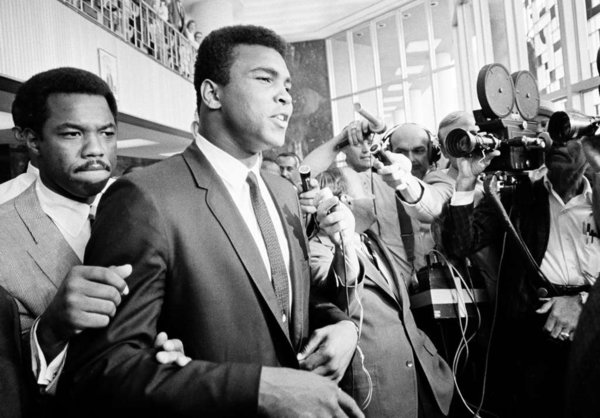
Maya, Muhammad and Hillary. Not three names you would intuitively link together, but that’s what history claimed this week, as a ‘political poet’ passed, and a deceased poet’s 2008 words echoed in the background of a rally at the Brooklyn Navy Yard.

The news of the death of Muhammad Ali literally stopped the presses at the New York Times early Saturday morning. On Wednesday, newspapers across the country led with the history making headline reporting “Hillary Clinton‘s nomination: A win 96 years in the making”.

It will not be an easy road to November for Secretary Clinton as reported by Patrick Healy and Sheryl Gay Stolberg.

“When Hillary Clinton swept onto the stage at her victory rally Tuesday night, the thunderbolt of history struck many Americans, no matter their love or loathing for her: A woman could be the next president of the United States.

But like so much about Mrs. Clinton, her speech, which lit up televisions and smartphones and social media all day Wednesday, produced conflicting emotions.

For some, it was an inspiring moment that brought home in a visceral way that Mrs. Clinton is the first woman to become the presumptive nominee of a major party. For others, there were chills and discomfort that this next step forward in our national story was unfolding with this particular woman.”

IMG_4810.jpg

The candidate might take heart from the poem Maya Angelou submitted to The Observer in 2008, with the backstory told by Vanessa Thorpe for The Guardian.

“She is supporting Clinton despite her close friendship with television personality and philanthropist Oprah Winfrey, a prominent backer of rival Democrat Barack Obama, the first black presidential hopeful with a real chance of reaching the White House.

Angelou is steadfast in her loyalty to Clinton. She said recently: ‘I made up my mind 15 years ago that if she ever ran for office I’d be on her wagon. My only difficulty with Senator Obama is that I believe in going out with who I went in with.’

Andrew Motion, the Poet Laureate, said of the poem: ‘This is a great thing for The Observer to have.’ He favourably compared it with the ‘vivid flourishes’ of Angelou’s recent work. ‘With this kind of poem Angelou has decided to interpret public writing as a verbal equivalent of making a poster, and there’s nothing wrong with this. The rhetoric is full of big gestures that make a direct appeal to our feelings, rather than getting to it by the little winding ways more personal poetry might use.'”

The poem:

State Package for Hillary Clinton

You may write me down in history

With your bitter, twisted lies,

You may tread me in the very dirt

But still, like dust, I’ll rise.

This is not the first time you have seen Hillary Clinton seemingly at her wits’ end, but she has always risen, always risen, don’t forget she has always risen, much to the dismay of her adversaries and the delight of her friends.

Hillary Clinton will not give up on you and all she asks of you is that you do not give up on her.

There is a world of difference between being a woman and being an old female. If you’re born a girl, grow up, and live long enough, you can become an old female. But to become a woman is a serious matter. A woman takes responsibility for the time she takes up and the space she occupies. Hillary Clinton is a woman. She has been there and done that and has still risen. She is in this race for the long haul. She intends to make a difference in our country. Hillary Clinton intends to help our country to be what it can become.

She declares she wants to see more smiles in the family, more courtesies between men and women, more honesty in the marketplace. She is the prayer of every woman and man who longs for fair play, healthy families, good schools, and a balanced economy.

She means to rise.

Don’t give up on Hillary. In fact, if you help her to rise, you will rise with her and help her make this country the wonderful, wonderful place where every man and every woman can live freely without sanctimonious piety and without crippling fear.

Rise, Hillary.

Rise.

Maya Angelou, 2008

20131006_dn_0mu24lap.jpg

On Thursday, Henry Louis Gates Jr. recalled ‘Muhammad Ali, the Political Poet’. In the essay he linked Angelou and Ali by their poetry, often labeled ‘doggerel’.

“Perhaps Maya Angelou, whose own poetry is sometimes labeled doggerel, said it best: “It wasn’t only what he said and it wasn’t only how he said it; it was both of those things, and maybe there was a third thing in it, the spirit of Muhammad Ali, saying his poesies — ‘Float like a butterfly, sting like a bee.’ I mean, as a poet, I like that! If he hadn’t put his name on it, I might have chosen to use that!”

“It would be a mistake to say that Ali made black oral poetry more sophisticated or complex, but he did make it more political. After learning his local draft board had declared him eligible for induction into the Army in 1966, Ali recited this poem:

Keep asking me, no matter how long,
On the war in Vietnam,
I sing this song:
I ain’t got no quarrel with no Viet Cong.

On this Friday, we pause to remember the athlete, humanitarian and role model who was Muhammad Ali, we celebrate a milestone for women, and reflect on the words of two American poets who significantly influenced our culture.


The week@work – guaranteed basic income, college grad stats, internet trends and the world’s longest tunnel opens

This week@work the Swiss electorate rejected a ballot measure to provide a guaranteed basic income for citizens, the college graduate unemployment rate is 2.4%, with history majors matching mid-career salaries of business school grads, Mary Meeker projected her 2016 internet trends and 2,600 workers completed 17 years of work to open the world’s longest tunnel under the Alps.

On Saturday Swiss voters rejected a proposed plan to provide an unconditional monthly income of 2,500 francs by a margin of 77% to 23%.

-1x-1

Philip Oltermann surveyed the growing economic trends toward guaranteed basic income, ‘State handout for all? Europe set to pilot universal basic incomes’.

“Universal basic income has a rare appeal across the political spectrum. For those on the left, it promises to eliminate poverty and liberate people stuck in dead-end workfare jobs. Small-state libertarians believe it could slash bureaucracy and create a leaner, more self-sufficient welfare system.

In an increasingly digital economy, it would also provide a necessary injection of cash so people can afford to buy the apps and gadgets produced by the new robot workforce.

Crucially, it is also an idea that seems to resonate across the wider public. A recent poll by Dalia Research found that 68% of people across all 28 EU member states said they would definitely or probably vote for a universal basic income initiative. Finland and the Netherlands have pilot projects in the pipeline.”

The New Yorker contributor, Mark Gimein summarized recent discussions on the topic, comparing U.S. views to European counterparts.

“…when they look further into the future, Americans talk about a national minimum income in the context of a jobless future, an employment apocalypse in which workers compete for fewer and fewer good jobs. Robert Reich, the former labor secretary, sees a national guaranteed income as the most likely endgame in an economy with “more and more people getting pushed out of the middle class into the personal service sector of the economy getting lower and lower wages.” When the Swiss talk about basic income, they’re talking about a utopian vision. When Americans like Reich talk about it, it’s a last bulwark against national impoverishment.”

‘The Upshot’ analyzed the May unemployment numbers and drew a positive spin on disappointing results. “A better gauge of the underlying rate of jobs growth is to take an average over the past three months. By that measure, the labor market is creating around 116,000 jobs per month. This is a notable slowdown from jobs growth in the 150,000-250,000 range over most of the past five years. But it’s a slowdown and not a sudden stop.”

Here’s the good news for college grads. In a separate post, the folks @UpshotNYT posed this question: “What do you think the unemployment rate is for 25-to-30-year-olds who graduated from a four-year college?”  Most folks guessed high. The actual rate is 2.4%, without a four-year college degree it’s 7%.

images.jpeg

While we’re on the topic of debunking ‘value of college myths’, let’s turn to a story about the much maligned history majors. (Full disclosure, I was one)

Writing in the LA Times, James Grossman, executive director of the American Historical Association lamented the decline enrollment in undergraduate history programs and countered with new research that suggests undergrads might want to reconsider their choice of major.

“Over the long run, …graduates in history and other humanities disciplines do well financially…after 15 years, those philosophy majors have more lucrative careers than college graduates with business degrees. History majors’ mid-career salaries are on par with those holding business bachelor’s degrees. Notably these salary findings exclude those who went on to attain a law or other graduate degree.

The utility of disciplines that prepare critical thinkers escapes personnel offices, pundits and politicians (some of whom perhaps would prefer that colleges graduate more followers and fewer leaders). But it shouldn’t. Labor markets in the United States and other countries are unstable and unpredictable. In this environment — especially given the expectation of career changes — the most useful degrees are those that can open multiple doors, and those that prepare one to learn rather than do some specific thing.”

On Wednesday The New York Times announced ‘the Internet is over’. They are changing their style rule to join the rest of the world to lowercase the word ‘internet’.

The same day, venture capitalist Mary Meeker presented her 2016 internet trends report. Inc. contributor, Jessica Stillman cited five ‘take-aways’ from the deck of 200 slides.

“Internet growth is slowing dramatically. Advertisers aren’t spending enough on mobile. Privacy concerns are “a ticking time bomb.”Search is about to be revolutionized…and so are messaging apps.”

Moving from technology trends to engineering marvels, BBC News reported on the opening of the Gotthard Base Tunnel in Switzerland, culminating 17 years of work by 26,000 workers.

gettyimages-105475814_custom-293c8eedebb27759dbd26d764b46c07b23b87f9f-s1400-c85

“Swiss engineer Carl Eduard Gruner first imagined it in 1947: a massive tunnel, unprecedented in length, buried a mile and a half under Switzerland’s symbolic Gotthard mountain range.

Nearly seven decades later, after redesigns, political disagreements and the long, slow work of drilling beneath the Gotthard massif, as it’s called, Gruner’s dream is complete.

The Gotthard Base Tunnel — a record-setting 35.4 miles long, and farther below ground than any other tunnel — was inaugurated Wednesday. The occasion was marked with a celebration that promoted “Swiss values such as innovation, precision and reliability…”

Now the completed tunnel, delivered on time and within budget, will create a mainline rail connection between Rotterdam in the Netherlands and Genoa in Italy.

When full services begin in December, the journey time for travellers between Zurich and Milan will be reduced by an hour to two hours and 40 minutes.

About 260 freight trains and 65 passenger trains will pass through the tunnel each day in a journey taking as little as 17 minutes.”

The Saturday Read ‘A Whole Life’ by Robert Seethaler

Too often we seek advice and counsel from the plethora of self-help books that line the shelves of bookstores. What we miss are the life lessons divulged under the guise of fiction.

The Saturday Read this week takes us to the Austrian Alps in 1933 to observe ‘A Whole Life’, the best selling German novel by Robert Seethaler, translated by Charlotte Collins.

The story is Andreas Egger’s, an everyman’s narrative of life, work, tragedy and values. It’s short, the perfect read for a plane trip or a couple of days commute. In this case brevity doesn’t diminish the tale. The simple, beautiful language reveals a literary character that will stay with you long after the story ends.

Throughout the book, the author stores small gems of wisdom, life lessons. In one scene, Andreas approaches the general manager of a construction site to negotiate a raise. Upon reaching agreement on a salary increase, Andreas promises to work even harder. The manager replies:

“You can buy a man’s hours off him, you can steal his days from him, or you can rob him of his whole life, but no one can take away from any man so much as a single moment.”

After years in construction, and more years as a prisoner of war, Andreas returns to his village and eventually finds work as a hiking guide.

“Egger didn’t usually speak on his walks. ‘When someone opens their mouth they close their ears,’ Thomas Mattl had always said, and Egger was of the same opinion. Instead of talking, he preferred to listen to these people, whose breathless chatter revealed to him the secrets of other fates and opinions. People were evidently looking for something in the mountains that they believed they lost a long time ago. He never worked out what exactly this was, but over the years he became more and more certain that the tourists were stumbling not so much after him, but after some obscure, insatiable longing. 

In the closing pages, we observe Andreas in retirement, at the end of his ‘whole life’.

“Once a week he went down to the village to get matches and paint, or bread, onions, butter. He had realized long ago that people there speculated about him. When he set off for home…he would see them out of the corner of his eye, putting their heads together and starting to whisper behind his back. Then he would turn around and give them the blackest look of which he was capable. Yet in truth he didn’t much care about the villager’s opinions or their outrage. To them he was just an old man who lived in a dugout, talked to himself, and crouched in a mountain stream to wash every morning. As far as he was concerned, though, he had done all right, and thus had every reason to be content… In his life he too, like all people had harboured ideas and dreams. Some he had fulfilled for himself; some had been granted to him. Many things had remained out of reach, or barely had he reached them than they were torn from his hands again. But he was still here. And in the mornings after the first snowmelt, when he walked across the dew-soaked meadow outside his hut and lay down on one of the flat rocks scattered there, the cool stone on his back and the first warm rays of sun on his face, he felt that many things had not gone so badly after all.”

Reviewers have noted the book’s unique appeal as an understated novel in a publishing world sustained by hype and celebrity. Eileen Battersby concluded her analysis for the Irish Times with “No praise is too high for A Whole Life. Its daunting beauty lingers. This is a profound, wise and humane novel that no reader will forget.”

I agree.

The book, published in 2015 and shortlisted for the 2016 Man Booker International Prize will be published in the U.S. in September.


‘The Work of Happiness’ a poem by May Sarton

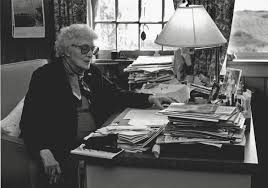
The Friday Poem this week is ‘The Work of Happiness’ by May Sarton a writer whose talent was expressed in fiction, autobiography and poetry.

“My first book was a book of poems, Encounter in April, followed by my first novel, The Single Hound. There was quite an interval before the second novel, The Bridge of Years. And then Shadow of a Man. Then it goes on and on for a long time with a book of poems between every novel. That was my wish, that the poems should be equal in number, that the novels should not be more important than the poems because the poems were what I cared about most. Much later, when I was forty-five or so, I began to do nonfiction—first the memoirs and finally the journals, which came as the last of the forms which I have been using. Altogether now I think it amounts to seventeen novels, I don’t know, five or six memoirs and journals, and then twelve books of poems, which are mostly in the collected poems now.”  The Paris Review interview, Fall 1983

Her poetry emerges from reflection and solitude, a choice she explored in a 1974 essay, ‘The Rewards of Living a Solitary Life’.

“The other day an acquaintance of mine, a gregarious and charming man, told me he had found himself unexpectedly alone in New York for an hour or two between appointments. He went to the Whitney and spent the “empty” time looking at things in solitary bliss. For him it proved to be a shock nearly as great as falling in love to discover that he could enjoy himself so much alone…Solitude is the salt of personhood. It brings out the authentic flavor of every experience.”

In the poem, Ms. Sarton provides an alternate view of happiness – “for what is happiness but growth in peace”.

The Work of Happiness

I thought of happiness, how it is woven
Out of the silence in the empty house each day
And how it is not sudden and it is not given
But is creation itself like the growth of a tree.
No one has seen it happen, but inside the bark
Another circle is growing in the expanding ring.
No one has heard the root go deeper in the dark,
But the tree is lifted by this inward work
And its plumes shine, and its leaves are glittering.

So happiness is woven out of the peace of hours
And strikes its roots deep in the house alone:
The old chest in the corner, cool waxed floors,
White curtains softly and continually blown
As the free air moves quietly about the room;
A shelf of books, a table, and the white-washed wall—
These are the dear familiar gods of home,
And here the work of faith can best be done,
The growing tree is green and musical.

For what is happiness but growth in peace,
The timeless sense of time when furniture
Has stood a life’s span in a single place,
And as the air moves, so the old dreams stir
The shining leaves of present happiness?
No one has heard thought or listened to a mind,
But where people have lived in inwardness
The air is charged with blessing and does bless;
Windows look out on mountains and the walls are kind.

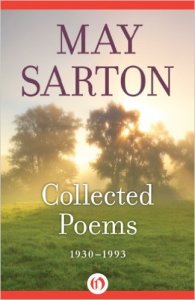
May Sarton   ‘Collected Poems 1930 – 1993’

51rZ+x+OVKL._SX322_BO1,204,203,200_


The mysteries of networking #4 ‘missed opportunities’

Many of us consider networking a ‘dark art’ that requires a magical ‘insiders’ key to gain access to the influential. What we miss is the daily opportunity to connect, as we ride the bus, the train or stand in a long TSA line at the airport. Wisdom can present itself in all shapes and sizes if you open yourself to conversation.

This past week, consultant, Whitney Johnson shared a recent experience via a post on LinkedIn,  ‘An airline cancelled my flight and put me in a van. Along the way, I got lots of lessons on how *not* to network.’

After offering a fellow traveller, a member of the Class of 2016, a ride home after a diverted flight, she realized her passenger had no clue how to network.

“As I was giving him a lift home, I learned a lot about him: his name, where he grew up, where he goes to school, his major, what his parents do for a living, his own career aspirations when he graduates in a few months. We even discovered that we have an acquaintance in common. Meanwhile, I made a few mentions of my children, such as my 19 year-old son is living in Brazil, my husband teaches at a local university. Conversation starters.

I’ll confess I felt a little invisible—and exasperated. I find it easy to ask people about themselves. I genuinely enjoy doing it. It’s one of my strengths, and we’re often exasperated with people who aren’t likewise adept at the things that we do well.

But here’s the real take-away from this chance encounter: this young man is looking for a job when he graduates in a month… I could have potentially helped him, if he’d just shown a little of the moxie that would have motivated me to recommend him.”

This is not just about a ‘newbie’ to the job search process, it’s a story that recurs daily. Just walk through an airport departure area and observe the diversity of folks and contrast that with the homogeneity of technical disconnection. Each individual, existing in the ‘comfort cocoon’ of their temporary piece of real estate, happily texting colleagues and friends, totally ignorant of the ‘chance’ professional encounter in the adjoining seat.

There’s no magic in networking. The magic is in the conversation, perhaps leading to a relationship. All of us harbor ideas and dreams. What are they, if not shared?

This afternoon, seize the moment, and start a conversation with a stranger, or maybe the acquaintance you pass in the hall every day. Listen, share, and you may be on your way to mastering the ‘not so mysterious’ art of networking.

The week@work – Millennial myths, millennials@home and relocation stagnation

Apparently, Americans are less geographically mobile today than at any point since 1948. Interesting fact to contemplate as 38 million of us return from our adventures over the holiday weekend. It probably doesn’t help that for the first time, young adults between the ages of 18 and 34 are more likely to live at home, with their parents. Experts, not just parents, are voicing concerns about how this relocation stagnation is destroying what economists refer to as ‘dynamism’ in the job market.

This week@work we take a look back at the week’s stories of millennial myths and our dwindling pioneer spirit.

In April we reached a generational tipping point, when the number of folks between the ages of 18 and 34, aka millennials, overtook Americans between 51 and 69, the baby boomers, by 75.4 million to 74.9 million. And, as every move of the post WWII generation was observed and chronicled, so have we had this new majority under the microscope. It has been quite a lucrative vocation for the thousands of corporate consultants who advise executives on recruitment and retention.

130904259.jpg

But what if they got it wrong? Farad Manjoo thinks the “collectively homogenous cliche” portrayed in the media is a far cry from reality and believes it’s time to break away from the stereotypes. Thank-you.

“If your management or marketing theories involve collapsing all millennials into a catchall anthropological category — as if you’re dealing with space aliens or some newly discovered aboriginal tribe that’s suddenly invaded modernity — you’re doing it wrong.

Kim Parker, director of social trends research at the Pew Research Center, said demographers have noted large differences in millennials: Compared to older cohorts, they tend to be more socially liberal when it comes to issues like gay marriage and marijuana use, they marry later in life, and they are less enamored of traditional religious and political institutions. Looking at these shifts over time “is a useful construct when you’re trying to analyze a whole population,” Ms. Parker said.

But these broad trends leave lots of room for individual differences that matter in the real world, and that are often papered over when we talk about millennials as a monolithic collective.

Considering that millennials are the most diverse generation — spanning many racial, ethnic and income categories — intragenerational differences are bound to play an important role when you’re talking about individual people. Though both are “millennials,” a young immigrant working three sharing-economy gigs is likely to look at the world very differently from a trust-fund baby who’s tending his Tumblr in Brooklyn. Yet only one of these stereotypes tends to make it into media accounts of millennials.”

The busy folks at Pew Research released additional millennial data this week, “For First Time in Modern Era, Living With Parents Edges Out Other Living Arrangements for 18- to 34-Year-Olds”.

gettyimages-556631959_wide-cc80d12838d4eee05e43c4d54f2386d9de9581b7-s1400-c85.jpg

“It’s worth noting that the overall share of young adults living with their parents was not at a record high in 2014. This arrangement peaked around 1940, when about 35% of the nation’s 18- to 34-year-olds lived with mom and/or dad (compared with 32% in 2014). What has changed, instead, is the relative share adopting different ways of living in early adulthood, with the decline of romantic coupling pushing living at home to the top of a much less uniform list of living arrangements.”

Gillian B. White examined ‘The False Stereotypes About Millennials Who Live at Home’ for The Atlantic.

“…the Millennials who are most likely to wind up living with their relatives are those who come from already marginalized groups that are plagued with low employment, low incomes, and low prospects for moving up the economic ladder. Millennials who live at home are also more likely to be minorities, more likely to be unemployed, and less likely to have a college degree. Living at home is particularly understandable for those who started school and took out loans, but didn’t finish their bachelor’s degree. These Millennials shoulder the burden of student-loan debt without the added benefits of increased job prospects, which can make living with a parent the most viable option.

And while there may be comedic fodder in the idea of adult children trying to share space with their parents, staying at home for many Millennials and their family isn’t all that funny. For parents who are struggling to make ends meet, an extra mouth to feed or the inability to downsize to a smaller place can be truly burdensome. For many Millennials, moving out, even if they want to, could lead them to make financial decisions that would put them in an even more precarious place, and that’s precisely the opposite of what they, or the economy, need.”

Why will we travel 2,500 miles from home to attend our ‘first choice’ college, and yet resist relocation to a new urban environment for a job? Why do we spend a semester abroad in an internship or academic program and fail to accept a job offer fifty miles from home?

Has our pioneering spirit disappeared in the noise of descending helicopter parents, or are there more serious institutional prohibitions to career adventure?

american-pioneers.jpg

American Enterprise Institute president, and conservative author, Arthur C. Brooks offered advice on how to get America moving again, painting a grim picture of our current adventure deficit.

“Through census data, we know that Americans are less geographically mobile today than at any point since 1948. Other scholarship suggests that the decline stretches back further. This might help explain why our country is having such a hard time getting out of its national funk.

Mobility is more than just a metaphor for getting ahead. In America, it has been a solution to economic and social barriers. If you descended from immigrants, I’m betting your ancestors didn’t come to this country for the fine cuisine. More likely they came in search of the opportunity to work hard and get ahead.

Even for those already here, migration has long been seen as a key to self-improvement. As Horace Greeley so famously advised in 1865: “Go west, young man, and grow up with the country.”

Patricia Cohen followed up with a more in-depth review, ‘A Dearth of Pioneers’.

“Staying put can mean that workers are not moving to jobs where they would be more productive. At the same time, many are forgoing the raises and ascents on the career ladder that often come with a job switch. Fewer openings can also have a ripple effect, shrinking the bargaining power of workers in general, making it tougher to ask for a bump up in pay.

The declining churn in the labor market may surprise those who assumed that the era of lifelong employment capped by a gold watch had given way to serial job-hopping. But the reality is more complicated, said Abigail Wozniak, an economist at the University of Notre Dame and one of the authors of a new report on the subject. While it is true that fewer people have very long tenures at a single company, she said, that trend has been swamped by a countervailing one: People are not moving as much out of what used to be entry-level and temporary jobs.

One of the more intriguing findings was the role of declining social trust and what is known as social capital — the web of family, friends and professional contacts. For example, the proportion of people who agree with the statement, “Most people can be trusted,” has been shrinking for more than three decades. Researchers found that states with larger declines in social trust also had larger declines in labor market fluidity. The lack of trust may increase the cost of job-hunting and make both employees and employers more risk-averse.

As social trust diminishes, people may feel more comfortable sticking closer to home where the faces are familiar even if job opportunities are scarcer, researchers suggested.”


‘Mind the gap’ – the advantages of ‘full disclosure’ on your resume

The twenty-first century resume doesn’t follow the format suggested by experts in the past. The CV of the ‘gig economy worker’ offers a mosaic of diverse experiences, but it also includes gaps – periods of time not working. A recent study shows the competitive advantage goes to the candidate who ‘minds the gap’ and candidly discloses these career ‘sabbaticals’.

The golden rule of job search is to present yourself as who you are: not your social media presence, not through the biased lens of family and friends, and definitely not ‘shape shifted’ to match a particular job description.

Finding a job is about finding a ‘fit’, discovering a close match between your talent, values and aspirations. If an employer is dismissive of your qualifications because of breaks, you have met ‘the canary in the coal mine’, so take the hint and move on to a place where the value of those  gaps is understood.

Patricia Cohen examined the issue as it relates to family leave. Do you explain a child care gap in your resume?

“For women hoping to return to the workplace after caring for their children, the advice is often “don’t ask, don’t tell.” Many women who described themselves as stay-at-home mothers can attest to receiving denigrating nods and hasty rebuffs. Researchers have repeatedly found ample evidence of discrimination against mothers in the hiring process and the workplace.

But women may be better off explaining their decision to stay home to a potential employer upfront, said Joni Hersch, a professor of law and economics at Vanderbilt Law School, and co-author of a new study on the subject, “Something to Talk About: Information Exchange Under Employment Law.” Employers, afraid of running afoul of anti-discrimination laws, don’t bring up the subject, she said, and female applicants, picking up on those cues, often don’t offer information, leaving hirers to guess at the reasons behind a hiatus.

But, Professor Hersch said, “women who conceal personal information dramatically lower their hiring prospects.”

What’s the ‘take-away’ here?

Reliance on your resume as a single point of introduction to an employer is not your best job search strategy – it never has been.

The best job search strategy is a lifelong management of relationships. Maintaining professional connections, through career success and career breaks establishes your professional credibility. There is no substitute for a career advocate who ‘gets you’ and sees the complete picture of your career plan, warts and all. Someone who can advise you as you develop your script, tell your story and mind the gaps.