The week@work – new overtime rules, sharing the wealth of the ‘gig economy’ and college grads’ skills gap

This week@work President Obama announced changes in labor rules that will extend overtime benefits to 4.2 million Americans, Massachusetts Senator Elizabeth Warren advocated for the rights of ‘gig economy’ workers and a new report indicates a continuing deficiency in recent grads’ communications skills.

Christine Mai-Duc reported on the revisions to overtime regulations that will go into effect on December 1.

“The proposed changes would more than double the salary threshold for overtime eligibility to $970 a week in 2016. That means employees earning a yearly salary of $50,440 or less automatically would be eligible for overtime pay.

Currently, the threshold is $455 a week, meaning a salaried worker making more than $23,660 a year does not automatically qualify for overtime pay under federal standards.

Labor Secretary Thomas Perez told reporters that too many managers are falling behind and getting caught in the “middle-class squeeze.”

Proponents of the change say the salary threshold, designed to exempt highly paid white-collar workers, hasn’t seen meaningful change for more than 40 years. In 1975, more than 60% of salaried workers were eligible for overtime. Today, less than 8% of full-time salaried workers are covered by those regulations, according to the White House Domestic Policy Council.

“In effect, we have seen inflation repeal the regulations that went into effect decades ago,” said Harley Shaiken, a labor economist and professor at UC Berkeley.”

The man at the head of the Department of Labor, Secretary Thomas Perez, shared his approach to worker advocacy in an interview with David Gelles for The New York Times.


“It’s a day job intended to help other people with day jobs. He wants companies to take better care of their employees, even if it costs them in the short term. It’s not a message many C.E.O.s want to hear, but Mr. Perez believes it is his duty to spread the word.

Mr. Perez’s courting of chief executives also stems from a recognition that his department alone can’t fix the problems bedeviling American workers. Thorny issues like wage stagnation, stingy vacation time, shoddy manufacturing and environmental degradation are so complex, so entrenched, that no one government agency can tackle them (not to mention the diminished influence of organized labor).

He is talking about “conscious capitalism” and “inclusive capitalism.” He is singling out “high road” employers. He is promoting B Corps, companies that adhere to lofty social and environmental standards. In doing so, he hopes he can persuade less enlightened corporations to change.

The employers who do best are employers who reject these false choices,” Mr. Perez said. “It’s not a zero-sum world where you either take care of your workers or you take care of your shareholders. You can do good and do well, too.

We’re building a movement,” he said. “It’s undeniably a work in progress, but there’s a fundamental desire to see capitalism to do something different.”

On Thursday, Senator Elizabeth Warren addressed the annual conference of Washington D.C. think tank, New America. Her remarks, ‘Strengthening the Basic Bargain for Workers in the Modern Economy’, detailed the reality of the changing workplace and proposed steps to create an income safety net and ensure portability of benefits for all workers.

Warren takes part in the Washington Ideas Forum in Washington

“The problems facing gig workers are much like the problems facing millions of other workers. An outdated employee benefits model makes it all but impossible for temporary workers, contract workers, part-time workers and workers in industries like retail or construction who switch jobs frequently to build any economic security.

Just as this country did a hundred years ago, it’s time to rethink the basic bargain between workers and companies. As greater wealth is generated by new technology, how can we ensure that the workers who support this economy can share in that wealth?

I believe we start with one simple principle: all workers–no matter when they work, where they work, who they work for, whether they pick tomatoes or build rocket ships–all workers should have some basic protections and be able to build some economic security for themselves and their families. No worker should fall through the cracks.”

Lydia Dishman summarized a report released last week by compensations specialists, Payscale, citing a ‘skills gap’ between managers and employers. And, wait for it…there’s a generational twist.

IMGP1317.jpg

Some of the skills hiring managers find lacking or absent are unexpected. Critical thinking, problem solving, attention to detail, and writing proficiency top the list of skills managers find missing from job seekers’ personal tool kits. On the flip side, managers didn’t find graduates wanting for know-how in search engine optimization marketing, foreign languages, and coding.

Overall, hiring managers found soft skills such as communication, leadership, ownership, and teamwork were missing in this new crop of workers.

“Graduates need strong communication and problem-solving skills if they want to interview well and succeed in the workplace, because effective writing, speaking, and critical thinking enables you to accomplish business goals and get ahead,” Dan Schawbel, research director at Future Workplace, said in a statement. “No working day will be complete without writing an email or tackling a new challenge, so the sooner you develop these skills, the more employable you will become,” Schawbel adds.

It’s important to note here that age matters in this report. Fifty-five percent of managers who are millennials themselves believed graduates are prepared to enter the workforce versus 47% of gen Xers and 48% of boomers.”
The Saturday Read – Four blogs/newsletters you should be reading

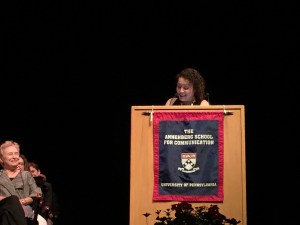
Before I started writing ‘Workthoughts’, I was reading other blogs. Maria Popova, author of my favorite, ‘Brainpickings’, was the 2016 commencement speaker at her alma mater, the University of Pennsylvania’s Annenberg School for Communication. She challenged the graduates to act as cultural change agents by continually broadening their horizons beyond a specific discipline.

“Today, the soul is in dire need of stewardship and protection from cynicism. The best defense against it is vigorous, intelligent, sincere hope — not blind optimism, because that too is a form of resignation, to believe that everything will work out just fine and we need not apply ourselves. I mean hope bolstered by critical thinking that is clear-headed in identifying what is lacking, in ourselves or the world, but then envisions ways to create it and endeavors to do that.

Whatever your specific vocation, your role as a creator of culture will be to help people discern what matters in the world and why by steering them away from the meaningless and toward the meaningful.”

annenberg_commencement-1

How do you maintain the discipline of the undergraduate learning experience and diversify your thinking?

In the past, traditional routes to post-graduate learning involved graduate and professional school. In rare cases, employers took on the role of educators, supplementing work with professional development options. Today, educational entrepreneurs are disrupting traditional education, offering countless ways to access knowledge online.

One of the most engaging options is to join folks who are exploring life’s mysteries and sharing their discoveries through blogs and newsletters.

For this week’s Saturday Read, I recommend four blogs/newsletters from contemporary ‘curators of culture’ that you should be reading to improve you critical thinking and supplement your journey of lifelong learning.

Brainpickings

Bruce Feiler, writing in The New York Times, described this blog as “the exploding online emporium of ideas”.

“She’s a celebrator,” said Anne-Marie Slaughter, a Princeton professor and former State Department official. “You feel the tremendous amount of pleasure she takes in finding these things and sharing them. It’s like walking into the Museum of Modern Art and having somebody give you a customized, guided tour.”

Since 2006, Maria Popova has been sharing her cross disciplinary expeditions with a growing audience of readers.

“Brain Pickings — which remains ad-free and supported by readers — is a cross-disciplinary LEGO treasure chest, full of pieces spanning art, science, psychology, design, philosophy, history, politics, anthropology, and more; pieces that enrich our mental pool of resources and empower combinatorial ideas that are stronger, smarter, richer, deeper and more impactful. Above all, it’s about how these different disciplines illuminate one another to glean some insight, directly or indirectly, into that grand question of how to live, and how to live well.”

The next selection comes from the mind of writer and ‘philosopher of everyday life’, Alain de Botton. If you read Brainpickings or Workthoughts, the name should be familiar. The founder of London’s School of Life, publishes a weekly newsletter, ‘The Book of Life’.


The Book of Life 

“It’s called The Book of Life because it’s about the most substantial things in your life: your relationships, your income, your career, your anxieties. There’s always been a longing to gather the important things in one place. Some of the appeal of a Bible or the collected works of a big name author is the sense that amidst all the chaos and disparate sources of knowledge, someone has taken the trouble to distill, to compress, to say what is essential. In a world overflowing with information, what we most need is curation. The Book of Life aims to be the curation of the best and most helpful ideas in the area of emotional life.”

For those of you technology and engineering gurus who feel a bit insecure when a client conversation turns literary, subscribe to the ‘Lit Hub Daily’.


Lit Hub

“Started last year, Lit Hub’s goal is to provide a “go-to daily source for all the news, ideas, and richness of contemporary literary life,” with curated and original content such as interviews, profiles and essays.”

“Literary Hub is an organizing principle in the service of literary culture, a single, trusted, daily source for all the news, ideas and richness of contemporary literary life. There is more great literary content online than ever before, but it is scattered, easily lost—with the help of its editorial partners, Lit Hub is a site readers can rely on for smart, engaged, entertaining writing about all things books.”

The latest newsletter I have added to my daily/weekly routine comes from writer Austin Kleon. His Friday newsletter is an eclectic collection of music, art, design and life. To give you a sample, this week’s edition included George Carlin’s Playboy interview, an HBO documentary on Studs Terkel and the Everything is a Remix series.

What makes Austin’s blog unique is the doodles; his visual interpretation of information.

kleon-200pxx1.jpg

Austin Kleon 

“I’m a writer who draws. I make art with words and books with pictures. Every week I send out a list of 10 things I think are worth sharing — new art, writing, and interesting links straight to your inbox.”

These four blogs/newsletters provide a customized curriculum of research and shared wisdom, delivered by a faculty of four non-traditional experts. Take a look, you may find one or more will fit with your individualized lifelong learning plan.


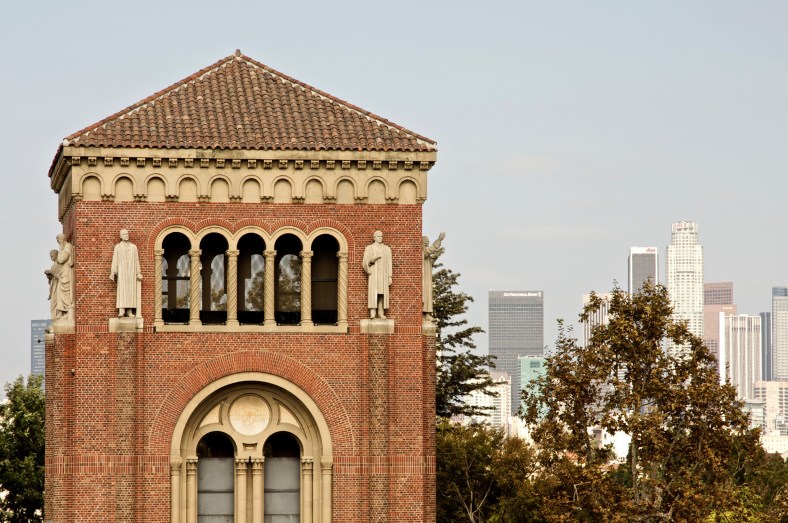
“Discover who you are – not who you are supposed to be” Larry Ellison@USC

In all the meetings I have had with folks about career choice, the number one topic, by a landslide, is how to manage the expectations of others: family members, mentors, friends and colleagues.

“My parents want me to major in ‘x’, and apply to ‘y’, but my passion is in ‘z’. How do I get them to understand my decision?”

On Friday, at the University of Southern California, Larry Ellison drew on his personal experience to address the topic. I hope the parents were listening. I guarantee members of the Class of 2016 were texting quotes.

He began where most career conversations start. Recalling his early aspirations to attend USC Medical School, he began to realize that his family’s conviction that he become a doctor was not his own. “Their dreams became my dreams.”

And it wasn’t long before he “became painfully aware that he couldn’t make himself study something that didn’t interest me.”

The power of parental/family influence on career choice can provide either a scaffolding of support or a detour of unending disappointments.

Here’s the thing, the next great innovation is yet to be discovered. The next emerging market is yet to be identified. Categories of new job titles are yet to be defined.

So we fall back on what we know, and what society values as acceptable professions.

In Ellison’s narrative, he dropped out of college and took on a “a couple of jobs I loved and one that was fun”: river guide, rock climbing instructor and computer programmer. It was in the world of technology that he found the link to the same kind of satisfaction he had found solving math problems and playing chess.

But as he incrementally travelled toward his dream job, he found he was unable to live up to the expectations of others.

At the urging of his wife, he returned to college, to pursue his degree. The only course he remembered was a sailing class at Berkeley. The beginning of his love affair with the Pacific Ocean marked the end of the one with his wife, who viewed him as irresponsible, and lacking in ambition. “She kicked me out, and then she divorced me.”

“This was a pivotal moment in my life… Once again, I was unable to live up to the expectations of others.

But this time I was not disappointed in myself for failing to be the person they thought I should be. Their dreams and my dreams were different. I would never confuse the two of them again.

I had discovered things that I loved: the Sierras, Yosemite, the Pacific Ocean. These natural wonders brought me great joy and happiness, and would for the rest of my life. I had an interesting job programming computers and more money than I needed.

For the first time I was certain I was going to survive in this world.

A huge burden of fear had been lifted. I’ll never forget that moment. It was a time for rejoicing.”

Ellison’s career path accelerated along the trajectory of Silicon Valley’s early days, as he tried to find a job he loved as much as sailing. He founded Oracle Corporation, built on his ‘crazy idea’ of constructing a commercialized relational database, and the rest is history.

I spent thirteen years on the USC campus, working with students and alumni as they wrestled with career decisions and connected the mosaic of past experience into a plan for the future. There is no better advice for folks@work or those just starting out than the shared wisdom of Mr. Ellison.

“Each of you has a chance to discover who you are and not who you are supposed to be.

Don’t be afraid to experiment, and try lots of different things. And don’t let the experts discourage you when you challenge the status quo.”

The week@work – An astronaut in Greenland, a McDonald’s worker in Edinburgh, Facebook’s identity crisis, and how to design a happier life

This week@work, a former astronaut and climate scientist, and a McDonald’s employee in Edinburgh challenged expectations and stereotypes, journalists questioned Facebook’s content algorithm, and a leading happiness scholar shared his formula.

In January, Piers J. Sellers, Deputy Director of the Sciences and Exploration Directorate and Acting Director of the Earth Sciences Division at NASA/GSFC wrote an opinion for The New York Times Sunday Review, ‘Cancer and Climate Change’.

“I’m a climate scientist who has just been told I have Stage 4 pancreatic cancer.

This diagnosis puts me in an interesting position. I’ve spent much of my professional life thinking about the science of climate change, which is best viewed through a multidecadal lens. At some level I was sure that, even at my present age of 60, I would live to see the most critical part of the problem, and its possible solutions, play out in my lifetime. Now that my personal horizon has been steeply foreshortened, I was forced to decide how to spend my remaining time. Was continuing to think about climate change worth the bother?

1024px-Piers_Sellers_spacewalk.jpg

Journalist and author, Jon Gertner continued the story this week with ‘An Astronaut Finds Himself in Greenland’ for The New Yorker.

“Piers Sellers landed in Greenland on a frigid Monday morning in April, and as he stepped off the plane at Thule Air Base he regarded the surrounding snow-covered hills with delight…Sellers was visiting the country for the first time. “I didn’t even see this from space, since the farthest north the shuttle goes is fifty-one degrees latitude,” he said. “We’re at seventy-six degrees now, right? Fantastic.” Sellers’s plan was to rendezvous with NASA researchers at Thule (pronounced “TOO-lee”) and accompany them on Operation IceBridge, an annual mission to collect data on the diminishing ice in the Arctic Ocean and on the Greenland ice sheet. “These guys at IceBridge are always saying, ‘Oh, you should come along, see where the rubber meets the road,’ and I say that I’m too busy, with too much piled on my desk,” Sellers explained. “But, given my current situation, of all the things that we’re doing in the field, this one is probably the most critical right now.”

After the diagnosis, he briefly considered living his final year or so—assuming his doctors’ expectations prove correct—as a rich man might, in a tropical, hedonistic splurge. “I thought of myself sitting for weeks on a beach,” he said. “What would I do? I’d be thinking about climate.”

So Sellers went back to his desk job at Goddard, where he oversees the work of about sixteen hundred people, and considered how he could fit a few modest adventures between his office duties and chemotherapy sessions. Soon it occurred to him to go to the Arctic, which is warming faster than any other part of the world.

The second story this week comes via Mashable and writer Davina Merchant‘s coverage of the Facebook post of McDonald’s employee, Mike Waite. Bravo for debunking stereotypes!

Unknown.png

“Today I have had enough of the judgemental criticism. Let me be clear. YES I work at Mcdonalds and do it nearly 50 hours a week. Why? Not because I have no aspiration, motivation or intelligence…but for the opposite…because in a few months time like a great number of people I work with I will be going back into higher education. McDonalds has this reputation which is quite unfounded in the recent age, every person I work with has a story and every person is working their ass off in what can be a very tough job for their own reasons…be it they are in school, uni, have family, have kids, saving…etc. The one thing McDonalds is is a job which is extremely (extremely) flexible, has opportunities for growth and can allow you to do what you want to do. There are people becoming pilots, lawyers, designers, architects, and people who are at a point in their life that they will do whatever it takes to look after their family. I work with people I would aspire to be like, who have strengths in areas I wish I had, who have overcome situations I never could and who have the determination to not fade away on handouts but rather step up and work for their living unlike a huge number of people in this country. In the past I have known and worked with very rich folks in very high end jobs, and a few of them could never match the resilience and work ethic of some of the current lads/lassies. After the ending of a big part of my life McD’s is not only letting me save up for University, but setting me up with flexible work I can continue over the next years to come. Not only that but I intend on eventually progressing into the management side of things, something which ties in directly to my degree and will enhance my future job prospects.”

Beyond brilliant posts to its site, Facebook was in the news this week when Gizmodo reported that content on the platform was being ‘subjectively’ curated.

14LfacebookWeb-mediumThreeByTwo210.jpg

David Uberti reported ‘Facebook wants you to think it’s just a platform. It’s not.’ for the Columbia Journalism Review.

“As prominently argued by Emily Bell, director of Columbia’s Tow Center for Digital Journalism, Facebook is increasingly shaping the contours of the public square, and citizens and news organizations have little choice but to go along for the ride. The power shift raises the all-important question of how information travels in free societies—and what we know about it.

“This is an unregulated field. There is no transparency into the internal working of these systems,” Bell said in a University of Cambridge speech earlier this year. “We are handing the controls of important parts of our public and private lives to a very small number of people, who are unelected and unaccountable.”

News organizations once had a more central role in setting the terms of public debate, balancing money-making aspects of publishing with more civically minded accountability journalism. They also generally followed widely accepted journalistic standards. Social networks have assumed much of the same power, Bell and others have argued, though they typically use more opaque processes and have a greater focus on those profitable slices of publishing. That’s not to say this new construct is necessarily worse, but it is foreign. And Facebook has little incentive to open up about its methodology.”

Fast Company’s Elizabeth Segran introduced us to London School of Economics professor and happiness scholar, Paul Dolan in ‘How To Intentionally Design A Happier Life’.

37398b0

“After decades of studying happiness, Dolan has developed a happiness formula. He says that happy people pay attention to the everyday experiences that give them pleasure and purpose, then organize their lives so that they are doing more of those things. It sounds obvious, right? Sure, but the problem is that we spend so much of our lives on autopilot instead of consciously focusing on doing things that make us happy. “We are creatures of habit and we automate processes very quickly,” Dolan says. “We do a lot of what we do because we’ve always done it, not because it is good for us or because we enjoy it.” The good news, however, is that Dolan offers two tangible ways for us create more happy moments in our lives. The first is creating a mental habit of paying attention to what makes us happy and the second is designing our lives so it is easier to do those things.”

Two additional stories of interest this week@work:

‘It’s a Tough Job Market for the Young Without College Degrees’  by Patricia Cohen for The New York Times

“Only 10 percent of 17- to 24-year-olds have a college or advanced degree, according to a new study by the Economic Policy Institute, although many more of them will eventually graduate.

And for young high school graduates, the unemployment rate is disturbingly high: 17.8 percent. Add in those who are underemployed, either because they would like a full-time job but can only find part-time work, or they are so discouraged that they’ve given up actively searching, and the share jumps to more than 33 percent.”

‘The Miserable French Workplace’ by Pamela Druckerman opinion for The New York Times

“While many other European countries have revamped their workplace rules, France has barely budged. The new labor bill — weakened after long negotiations — wouldn’t alter the bifurcated system, in which workers either get a permanent contract called a “contrat à durée indéterminée,” known as a C.D.I., or a short-term contract that can be renewed only once or twice. Almost all new jobs have the latter.

(French workers) believe that a job is a basic right — guaranteed in the preamble to their Constitution — and that making it easier to fire people is an affront to that. Without a C.D.I., you’re considered naked before the indifferent forces of capitalism.

No matter what the government does, the workplace is becoming less secure.”

To close this week@work, let’s return to Piers Sellers’ January 2016 NYT opinion piece.

“As for me, I’ve no complaints. I’m very grateful for the experiences I’ve had on this planet. As an astronaut I spacewalked 220 miles above the Earth. Floating alongside the International Space Station, I watched hurricanes cartwheel across oceans, the Amazon snake its way to the sea through a brilliant green carpet of forest, and gigantic nighttime thunderstorms flash and flare for hundreds of miles along the Equator. From this God’s-eye-view, I saw how fragile and infinitely precious the Earth is. I’m hopeful for its future.

And so, I’m going to work tomorrow.”

The Saturday Read ‘The Portable Veblen’ by Elizabeth McKenzie

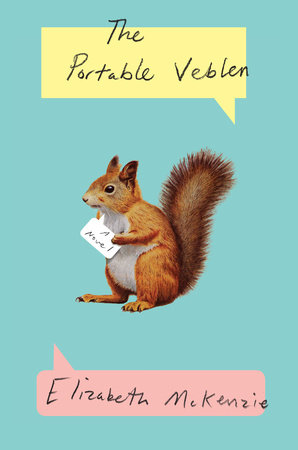
The Saturday Read this week,‘The Portable Veblen’ by Elizabeth McKenzie is about the life choices we make, via a different kind of Silicon Valley story.

The heroine of the novel is Veblen Amundsen-Hovda, a not so typical,’gig’ economy participant, making a living by combining assignments as an office assistant in Neurology at the Stanford University School of Medicine, translating for the Norwegian Diaspora Project in Oslo, and writing about her namesake Thorstein Veblen. (Yes, that witty critic of capitalism who invented the term ‘conspicuous consumption’.)

Or as the author describes her “independent behaviorist, experienced cheerer-upper, and freelance self, who was having a delayed love affair with the world due to an isolated childhood and various interferences since.”

When we meet Veblen she has just accepted a marriage proposal from Paul Vreeland scientist, and inventor of the Pneumatic Turbo Skull Punch.

Did I mention the squirrels?  One in particular, who appears at her window just after her engagement, seeming to ask: “How well do you know yourself, and all the choices you could make?” 

In her review of the novel, NPR’s Heller McAlpin captured the theme that continues to resonate long after the reader arrives at Appendix G (in Norwegian), “this is ultimately a morality tale about the values by which we choose to live.”

If you have spent time in academia you will appreciate the absurdity of naming your child for the subject of your unfinished doctoral dissertation. You will also recognize the financial pressures of ‘technology transfer’, and ‘monetizing research’ that drive Paul’s decision to work for Big Pharma.

What if you invented something that could save lives? Wouldn’t you choose a firm that promised unlimited resources to expedite the process to market?

It’s easy to understand Paul’s choice. But in the world of bright shiny incentives he misses the point of who he will become as part of an unscrupulous conglomerate.

Fortunately for our couple and squirrel(s), good triumphs over evil in a series of memorable scenes that prove ‘what goes around, comes around’.

In ‘The Portable Veblen’, author McKenzie utilizes humor to narrate this story of choices, change, and consequences. If you’re looking for the perfect read for the recent grad, or are working through conflicting values at work, spend a few hours with Veblen, Paul and a supporting cast of frisky, philosophical squirrels.


‘It Couldn’t Be Done’ a poem by Edgar Albert Guest


How many of us have been motivated by someone telling us ‘it couldn’t be done?’

In September 2007 Randy Pausch, professor and founder of the Carnegie Mellon Entertainment Technology Center, enumerated the brick walls he climbed to achieve his childhood dreams. The message of his now famous ‘Last Lecture’ was about overcoming obstacles, reframing our perception of obstruction.

“…the brick walls are there for a reason. The brick walls are not there to keep us out. The brick walls are there to give us a chance to show how badly we want something. Because the brick walls are there to stop the people who don’t want it badly enough. They’re there to stop the other people.”

Ninety years earlier, Edgar Albert Guest published his poem ‘It Couldn’t Be Done’. Paired with Pausch’s ‘Last Lecture’, this week’s Friday Poem encourages the Class of 2016 to follow their dreams, and not be sidetracked by the doubters.


It Couldn’t Be Done
Somebody said that it couldn’t be done
But he with a chuckle replied
That “maybe it couldn’t,” but he would be one
Who wouldn’t say so till he’d tried.
So he buckled right in with the trace of a grin
On his face. If he worried he hid it.
He started to sing as he tackled the thing
That couldn’t be done, and he did it!

Somebody scoffed: “Oh, you’ll never do that;
At least no one ever has done it;”
But he took off his coat and he took off his hat
And the first thing we knew he’d begun it.
With a lift of his chin and a bit of a grin,
Without any doubting or quiddit,
He started to sing as he tackled the thing
That couldn’t be done, and he did it.

There are thousands to tell you it cannot be done,
There are thousands to prophesy failure,
There are thousands to point out to you one by one,
The dangers that wait to assail you.
But just buckle in with a bit of a grin,
Just take off your coat and go to it;
Just start in to sing as you tackle the thing
That “cannot be done,” and you’ll do it.

Edgar Albert Guest   1917

51Si0nTDrXL._SX331_BO1,204,203,200_

“Failures of kindness” George Saunders @Syracuse

In this week of blooming jacarandas, empty white folding chairs await the procession of the graduates, and an elevated podium echoes with the voice of a valedictorian at sound check, rehearsing for the big day.

On the majority of campuses an eminent personage will join the assembly, offering wit and wisdom. This week we will revisit some of the best advice delivered @commencement, beginning with George Saunders at Syracuse University in 2013.

In January of 2013,  Joel Lovell profiled the writer/professor for the New York Times Magazine, ‘George Saunders Has Written the Best Book You’ll Read This Year’.

“Tobias Wolff, who taught Saunders when he was in the graduate writing program at Syracuse in the mid-’80s, said, “He’s been one of the luminous spots of our literature for the past 20 years,” and then added what may be the most elegant compliment I’ve ever heard paid to another person: “He’s such a generous spirit, you’d be embarrassed to behave in a small way around him.”

I think the best speeches create an aspirational bridge between the experience of our undergraduate years and executing our life plan.

The memorable ones communicate with the soul and the easiest way to connect is with a common experience… like the time in grammar school when we missed an opportunity to notice, to include…

This is where Saunders’ speech begins, the ‘generous spirit’ sharing his regret.

“What I regret most in my life are failures of kindness.”

Could a narrative be more welcome amidst the lack of civility in our national conversation?

“How might we become more loving, more open, less selfish, more present, less delusional, etc., etc?

There are ways. You already know that because, in your life, there have been High Kindness periods and Low Kindness periods, and you know what inclined you toward the former and away from the latter. Education is good; immersing ourselves in a work of art: good; prayer is good; meditation’s good; a frank talk with a dear friend; establishing ourselves in some kind of spiritual tradition — recognizing that there have been countless really smart people before us who have asked these same questions and left behind answers for us.

…kindness, it turns out, is hard — it starts out all rainbows and puppy dogs, and expands to include . . . well, everything.

When young, we’re anxious — understandably — to find out if we’ve got what it takes. Can we succeed? Can we build a viable life for ourselves? Can we build a viable life for ourselves? But you — in particular you, of this generation — may have noticed a certain cyclical quality to ambition. You do well in high-school, in hopes of getting into a good college, so you can do well in the good college, in the hopes of getting a good job, so you can do well in the good job so you can . . .

And this is actually O.K. If we’re going to become kinder, that process has to include taking ourselves seriously — as doers, as accomplishers, as dreamers. We have to do that, to be our best selves.

Do all the other things, the ambitious things — travel, get rich, get famous, innovate, lead, fall in love, make and lose fortunes… but as you do, to the extent that you can, err in the direction of kindness. Do those things that incline you toward the big questions, and avoid the things that would reduce you and make you trivial. That luminous part of you that exists beyond personality — your soul, if you will — is as bright and shining as any that has ever been.”


The week@work – leadership lessons from Leicester City, #TonysSoDiverse, exit strategies & the April jobs report

This week@work we visit Leicester, England (think Wichita,KS) to uncover a story of unlikely success, celebrate the diversity of the Tony Award nominees, grasp the value of a positive employee exit process, and review the April jobs report.

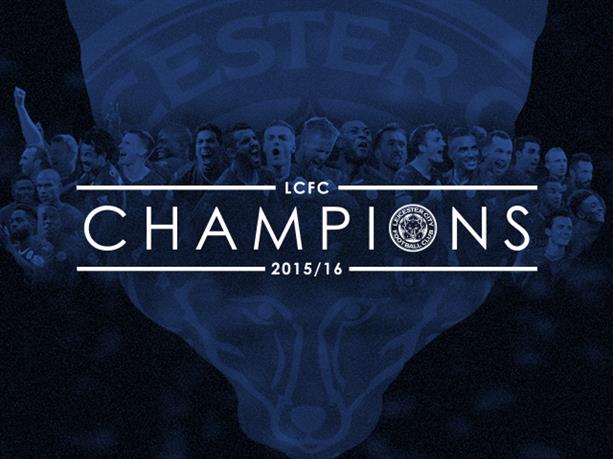
At the beginning of the English Premier League season, Ladbrokes, the world leader in gaming and betting set 5000/1 odds that Leicester City would win the title. On Monday, the team beat the odds to hoist the trophy and celebrate their marvelous win.

569698369-125280-3103660_150x113.JPG

There were hundreds of news articles published over the past week, covering the story from every possible angle. Here are a few, examining the business applications and social impact.

‘What do the foxes say?’, The Economist’s take on the champions suggests a future in business school and corporate conference engagements for club manager, Claudio Ranieri.

“In footballing terms, Claudio Ranieri, an affable Italian, has found a way to turn water into wine. Mr Ranieri manages a club in England, Leicester City, which historically has not been very good. On May 2nd his team were crowned champions of the English Premier League, a competition more watched than any other on the planet, and reliably won—including in every one of the preceding 20 years—by one of four much bigger clubs.

…Leicester’s triumph will also spark inordinate interest in the world of business, which has long looked to sport for lessons on management and leadership.

The BBC’s Robert Plummer shared six of ‘Leicester City’s business secrets’. “You don’t need to throw money at the problem. Get the right people around you. Create the right culture. Do the maths. Create the right incentives. Don’t forget your mum’s birthday!”

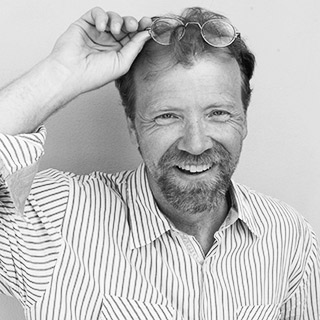
For a literary, fan perspective, Booker winning author, Julian Barnes wrote ‘My Stupid Leicester City Love’.

“I haven’t always been a Leicester City supporter: there was a time before I could read, or knew how to tune the Bakelite wireless to the voice of Raymond Glendenning on Sports Report. But from the moment I became sportingly sentient – say, the age of five or six – I have been (as they didn’t much say then) a Fox. So, six and a half decades and counting.

To be a lifelong supporter of Leicester is to have spent decades poised between mild hopefulness and draining disappointment. You learn to cultivate a shrugging ruefulness, to become familiar with the patronising nods of London cabbies, and to cling to an assortment of memories, of pluses and minuses, some comic, some less so. Yes, we have won promotion to the top division every so often; but the fact of promotion logically implies an earlier relegation. Yes, we did win the League Cup; but what burns the soul are the four times we reached the FA Cup final and the four times we lost.”

images-1.jpeg

ESPN’s Wright Thompson introduced readers to the diverse “salad bowl” that is Leicester, England, in ‘We’ve come to win the league’.

“This is the first city in the United Kingdom with less than 50 percent of the population identifying as “white British,” which some people see as the inevitable destiny of an island nation that tried to conquer the world, while others see it as a sign of the apocalypse. People here of different faiths and races seem to get along; Narborough Road, one of the main avenues into the city, was named the most diverse street in Britain by researchers. Shopkeepers and small business owners from 23 nations work there.

John Williams lives on a park near the local university where he teaches…He studies the sociology of football and has written many books on the subject. Whenever someone wants to understand the subtext of life on the pitches and terraces of Leicester, he’s often the first call.

“It was a very white space,” Williams said. “It had a sense of foreboding and exclusion about it. The new stadium has none of those memories. Everyone starts with a clean state at the new stadium because you have to make the history. This is a new history being written.”

Janan Ganesh shared ‘Lessons for everyone from the rise of Leicester City’.  “There is more of the Enlightenment than of romance about this story.

Foreign owners, a foreign coach, a polyglot squad, a laboratory of a training ground: far from mounting a stand against the modern world, Leicester is the modern world. Do not hold out against change, this season teaches us, absorb and master it. The lesson is not just for other clubs but also for modest cities adapting to globalisation and for individuals navigating an insecure world.”

And while we are on the topic of diversity, the Tony Awards were announced last week, recognizing the best of the American theater over the past year. Katherine Brooks sent a message to the left coast, ‘Dear Hollywood, Let Broadway Show You What Diversity Looks Like’.

13131599_1373658495994357_4299389596848712065_o.jpg

“The nominations for “Hamilton,” along with other plays and musicals like “The Color Purple,” “Eclipsed,” “On Your Feet!,” and “Shuffle Along,” reveal a picture of Broadway far more diverse than seasons before it. These shows feature actors of color in lead roles, highlight the experiences of women and minorities in the U.S. and beyond, and empower writers and directors breaking barriers in their categories. They prove, along with a litany of shows that weren’t nominated, that this year was a different kind of year for the Great White Way.

…critics across the Internet are using a different kind of hashtag ahead of the theater world’s version of the Academy Awards: #TonysSoDiverse.”

images

Heather Huhman addressed the importance of ‘last impressions’ in an article for Entrepreneur. Building and maintaining a positive reputation is key to recruiting talent. How an employer treats people throughout their ‘on the job life cycle’ is often chronicled in social media. Thinking strategically about the exit process can reap long term benefits.

“…the process for offboarding employees should be just as important as the onboarding one, and that companies neglecting the former, integral process may experience negative impacts. Here are a few things to consider, to ensure your formal offboarding program is successful: make saying goodbye positive, go beyond the exit interview, turn exiting employees into brand ambassadors and use past employees in your referral program.

Go beyond the exit interview to establish and continually improve the offboarding process to include exit surveys, strong communication throughout an organization and a plan to stay connected to departing employees.”

united-states-unemployment-rate@2x.png

Eric Morath analyzed the recent jobs report for the Wall Street Journal.

“U.S. companies slowed the pace of hiring in April while paying workers only slightly more, signaling a softening of the labor market…

…an increase in wage growth and a pickup in the number of hours worked across the economy could signal solid underlying income growth for workers that would support stronger consumer spending in coming months.

…the easing of job gains could also suggest the economy reached a level where firms will provide workers better pay increases and more hours, rather than hiring new employees.”

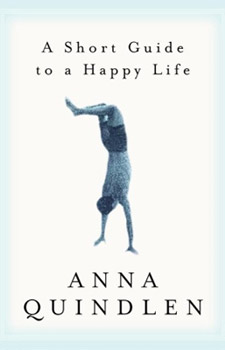
The Saturday Read ‘A Short Guide to a Happy Life’ by Anna Quindlen

Do you remember who spoke at your graduation ceremony? The Saturday Read this week is for all of you who forgot, but would welcome a bit of ‘life advice’ in this season of ‘Pomp and Circumstance’.

In 1999, author Anna Quindlen was invited to deliver the commencement address at Villanova University. And then this happened:

“Pulitzer Prize-winning columnist and author Anna Quindlen has withdrawn as the commencement speaker at Villanova University this Sunday because of what she said were objections by a “vocal minority” to her support of abortion rights.

Quindlen, who was also to have received an honorary doctorate of humane letters, said in an interview yesterday that she did not want to “ruin the day or cast a shadow” on the graduation ceremony.”

A graduate student requested a copy of the prepared text and posted it on the Internet. (This was before Facebook, Twitter et al.) The post went viral, and the resulting essay was published in 2000 as ‘A Short Guide to a Happy Life’.

Seventeen years later her words still resonate. In the opening paragraphs she signals her values, and offers a hint at why she withdrew.

“My work is human nature. Real life is really all I know…Don’t ever confuse the two, your life and your work…The second is only part of the first.”

Real life collided with an opportunity to address Villanova’s Class of 1999, the alma mater of several of her family members. Fortunately her publisher provided an avenue for Ms. Quindlen to share her personal life experience with a broader audience, to encourage ownership and balance.

“When you leave college, there are thousands of people out there with the same degree you have; when you get a job, there will be thousands of people doing what you want to do for a living.”

“But you are the only person alive who has sole custody of your life. Your particular life. Your entire life. Not just the life at your desk, or your life on the bus, or in the car, or at the computer. Not just the life of your mind, but the life of your heart. Not just your bank account, but your soul.”

“People don’t talk about the soul very much anymore. It’s so much easier to write a resume than to craft a spirit.”

Some may disagree that a resume is easy to write, especially a recent grad who has spent the past months engaged in the job search. A resume is limited to a list of accomplishments, full of key words designed to cut through the barrier of digital applicant screening. It’s the values expressed in that experience that define who you are, your spirit.

The recurring theme of ‘Short Guide’ challenges the reader to question commonly held definitions of success.

“You cannot be really first-rate at your work if your work is all you are.”

“So I suppose the best piece of advice I could give anyone is pretty simple: get a life. A real life, not a manic pursuit of the next promotion, the bigger paycheck, the larger house.”

“Get a life in which you are not alone. Find people you love, and who love you. And remember that love is not leisure, it is work.”

‘A Short Guide to a Happy Life’ is a compact book to be kept close for a periodic reread. It’s a reminder to all, at every career stage, that “Life is made up of moments, small pieces of glittering mica in a long stretch of gray cement.”

One of those moments is revealed in the recollection of a conversation with a homeless man on the boardwalk in Coney Island, New York.

“And he stared out at the ocean and said, “Look at the view, young lady. Look at the view.”

Commencement is the beginning of a life of learning, sometimes from the most unexpected of teachers. Enjoy the Saturday Read, and don’t forget to enjoy the view.


On the road again…

I will be crossing the U.S. by car from west to east this week. Follow on Twitter @EileenKohan or @workthoughts. In the interim, some thoughts from Tim Kreider, ‘The Busy Trap’.

“If you live in America in the 21st century you’ve probably had to listen to a lot of people tell you how busy they are…They’re busy because of their own ambition or drive or anxiety, because they’re addicted to busyness and dread what they might have to face in its absence…

But I would suggest that an ideal human life lies somewhere between my own defiant indolence and the rest of the world’s frenetic hustle. My role is just to be a bad influence, the kid standing outside the classroom window making faces at you at your desk, urging you to just this once make some excuse and get out of there, come outside and play… I did make a conscious decision, a long time ago, to choose time over money, since I’ve always understood that the best investment of my limited time on earth was to spend it with people I love… Life is too short to be busy.”