The Friday Poem ‘Mourning What We Thought We Were’ by Frank Bidart

I’ve been making a list of things I’ve done since the Women’s March to oppose, not resist.

I’ve discovered only two degrees of separation connect me to a Syrian refugee family newly arrived in Dallas, Texas.

I’ve found it difficult to write, to reflect, on ideas away from the breaking news of the minute.

In the gap, poet Frank Bidart has captured this moment in our history. “We were born into an amazing experiment. At least we thought we were.”

The Friday Poem this week, from three time Pulitzer poetry finalist, and Bakersfield native Bidart, was published last month in The New Yorker.

Mourning What We Thought We Were

We were born into an amazing experiment.

At least we thought we were. We knew there was no
escaping human nature: my grandmother

taught me that: my own pitiless nature
taught me that: but we exist inside an order, I

thought, of which history
is the mere shadow—

*

Every serious work of art about America has the same
theme: America

is a great Idea: the reality leaves something to be desired.

Bakersfield. Marian Anderson, the first great black classical
contralto, whom the Daughters of the American Revolution

would not allow to sing in an unsegregated

Constitution Hall, who then was asked by Eleanor
Roosevelt to sing at the Lincoln Memorial before thousands

was refused a room at the Padre Hotel, Bakersfield.

My mother’s disgust
as she told me this. It confirmed her judgment about

what she never could escape, where she lived out her life.

My grandmother’s fury when, at the age of seven or
eight, I had eaten at the home of a black friend.

The forced camps at the end of The Grapes of Wrath
were outside

Bakersfield. When I was a kid, Okie

was still a common
term of casual derision and contempt.

*

So it was up to us, born
in Bakersfield, to carve a new history

of which history is the mere shadow—

*

To further the history of the spirit is our work:

therefore thank you, Lord
Whose Bounty Proceeds by Paradox,

for showing us we have failed to change.

*

Dark night, December 1st 2016.

White supremacists, once again in
America, are acceptable, respectable. America!

Bakersfield was first swamp, then
desert. We are sons of the desert
who cultivate the top half-inch of soil.


Frank Bidart from The New Yorker, January 23, 2017

The Friday Poem ‘The New Colossus’ by Emma Lazarus

Most immigrants to the U.S. arrive by plane, bypassing the Statue of Liberty standing in New York harbor. Perhaps this detour has created a bit of amnesia regarding fundamental American values.

For the Friday poem this week, we travel back in time to 1883, when Emma Lazarus was asked to write a poem as part of fundraising effort to construct the pedestal for the statue.

Washington Post journalist Katie Mettler revisited Ms. Lazarus’ story on Wednesday, citing renewed interest in the sonnet in the aftermath of the executive order banning  U.S. entry to all Syrian refugees and citizens of seven Muslim countries

“What the poet didn’t know at the time — as a woman whose work as a “poetess” had been at times the subject of condescension — was that it would be her words, lyrical and poignant, that decades later came to define the American vision of liberty.

More than a century later, in 2017, the words are rallying people against a controversial president and his policies and attitudes toward immigrants.”

It’s time for these words to be posted at every point of entry to the U.S. to remind all of our core values.

The New Colossus 

Not like the brazen giant of Greek fame,
With conquering limbs astride from land to land;
Here at our sea-washed, sunset gates shall stand
A mighty woman with a torch, whose flame
Is the imprisoned lightning, and her name
Mother of Exiles. From her beacon-hand
Glows world-wide welcome; her mild eyes command
The air-bridged harbor that twin cities frame.
“Keep, ancient lands, your storied pomp!” cries she
With silent lips. “Give me your tired, your poor,
Your huddled masses yearning to breathe free,
The wretched refuse of your teeming shore.
Send these, the homeless, tempest-tost to me,
I lift my lamp beside the golden door!”

Emma Lazarus   ‘Emma Lazarus: Selected Poems and Other Writings’ (2002)

9781551112855-408x630.jpg


The Friday Poem ‘To The Indifferent Women’ by Charlotte Anna Perkins Gilman

On the eve of the ‘Women’s March’, the Friday Poem reprises ‘To The Indifferent Women’ by Charlotte Anna Perkins Gilman. I originally posted the poem in July after the first woman in U.S. history accepted her party’s nomination for president.

Sometimes things don’t work out as planned.

Tomorrow, in Washington D.C. and cities around the country, women will join together in a nation that could not ratify an equal rights amendment, or elect the first woman president, and remind those elected that women’s rights are human rights.

“In the spirit of democracy and honoring the champions of human rights, dignity, and justice who have come before us, we join in diversity to show our presence in numbers too great to ignore. The Women’s March on Washington will send a bold message to our new government on their first day in office, and to the world that women’s rights are human rights. We stand together, recognizing that defending the most marginalized among us is defending all of us.”

There is something going on here, as there was in 1911 when Ms. Perkins was writing for the cause of women’s rights.

One of the more stunning stories, in advance of the D.C. march, appears in today’s NY Times and profiles an unlikely activist contingent – ‘From Wall Street to National Mall: Women Overcome Fears to Attend March’.

“They are professionals in trading, public relations, marketing, deal-making, investing and the law. They keep punishing schedules, fear losing business by offending their clients and often feel that in an industry still overwhelmingly populated by men, the less attention drawn to their sex, the better.

But the inauguration of Mr. Trump has prompted a striking number of Wall Street women to overcome their worries about demonstrating in public.”

For those who will march and be questioned why, and for those still without weekend plans – a beautiful question from 1911.

“Do you believe the sorrow of the world
Does not concern you in your little homes?”

To The Indifferent Women

A Sestina

You who are happy in a thousand homes,
Or overworked therein, to a dumb peace;
Whose souls are wholly centered in the life
Of that small group you personally love;
Who told you that you need not know or care
About the sin and sorrow of the world?

Do you believe the sorrow of the world
Does not concern you in your little homes? —
That you are licensed to avoid the care
And toil for human progress, human peace,
And the enlargement of our power of love
Until it covers every field of life?

The one first duty of all human life
Is to promote the progress of the world
In righteousness, in wisdom, truth and love;
And you ignore it, hidden in your homes,
Content to keep them in uncertain peace,
Content to leave all else without your care.

Yet you are mothers! And a mother’s care
Is the first step toward friendly human life.
Life where all nations in untroubled peace
Unite to raise the standard of the world
And make the happiness we seek in homes
Spread everywhere in strong and fruitful love.

You are content to keep that mighty love
In its first steps forever; the crude care
Of animals for mate and young and homes,
Instead of pouring it abroad in life,
Its mighty current feeding all the world
Till every human child can grow in peace.

You cannot keep your small domestic peace
Your little pool of undeveloped love,
While the neglected, starved, unmothered world
Struggles and fights for lack of mother’s care,
And its tempestuous, bitter, broken life
Beats in upon you in your selfish homes.

We all may have our homes in joy and peace
When woman’s life, in its rich power of love
Is joined with man’s to care for all the world.

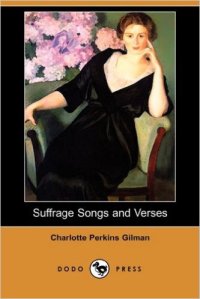
Charlotte Anna Perkins Gilman ‘Suffrage Songs and Voices’ 1911

41py0cnjwl-_sx331_bo1204203200_

Photo credit: Screen shot from Women’s March LA website


The Friday Poem “Hope” is the thing with feathers by Emily Dickinson

What do we have if we don’t have hope?

In December, U.S. First Lady Michelle Obama was interviewed by Oprah Winfrey. One of the most stunning, yet relatable, quotes concerned ‘hope’- the promise of her husband’s presidential campaign eight years ago.

“I think that we feel the difference now. See, now we’re feeling what not having hope feels like. 

“Hope is necessary. It’s a necessary concept, and Barack didn’t just talk about hope because he thought it was just a nice slogan to get votes.”

“What else do you have, if you don’t have hope? What do you give your kids if you can’t give them hope?”

The Friday poem this week is from the nineteenth century American poet, Emily Dickinson – because we all could use a little hope “perched in our soul” in this new year.

“Hope” is the thing with feathers

“Hope” is the thing with feathers –
That perches in the soul –
And sings the tune without the words –
And never stops – at all –

And sweetest – in the Gale – is heard –
And sore must be the storm –
That could abash the little Bird
That kept so many warm –

I’ve heard it in the chillest land –
And on the strangest Sea –
Yet – never – in Extremity,
It asked a crumb – of me.

Emily Dickinson ‘The Poems of Emily Dickinson’ edited by R.W. Franklin

9780674018242.jpg


The Friday Poem ‘Night Journey’ by Theodore Roethke

We will catch our breath if only we can make it to the holiday weekend. Rushing from work to catch the train, bus or plane we are singularly focused on our destination.

The Friday Poem this week comes from poet Theodore Roethke. ‘Night Journey’ from his ‘Collected Poems’ is a reminder to look out the window and take in the view.

“I stay up half the night. To see the land I love.”

“Poet and writer James Dickey once named Roethke the greatest of all American poets: “I don’t see anyone else that has the kind of deep, gut vitality that Roethke’s got. Whitman was a great poet, but he’s no competition for Roethke.”

The publication of Collected Poems in 1966 brought renewed interest in Roethke and prompted illuminating overviews of his work.”

Night Journey

Now as the train bears west,
Its rhythm rocks the earth,
And from my Pullman berth
I stare into the night
While others take their rest.
Bridges of iron lace,
A suddenness of trees,
A lap of mountain mist
All cross my line of sight,
Then a bleak wasted place,
And a lake below my knees.
Full on my neck I feel
The straining at a curve;
My muscles move with steel,
I wake in every nerve.
I watch a beacon swing
From dark to blazing bright;
We thunder through ravines
And gullies washed with light.
Beyond the mountain pass
Mist deepens on the pane;
We rush into a rain
That rattles double glass.
Wheels shake the roadbed stone,
The pistons jerk and shove,
I stay up half the night.
To see the land I love.

Theodore Roethke from ‘Theodore Roethke: Selected Poems’

411izrm4ull

The Friday Poem ‘Introduction to Poetry’ by Billy Collins

When I first started ‘workthoughts’ almost two years ago, I wanted to include a weekly poem or lyric. A colleague had once shared her secret of success@work, “I start my day reading a poem”.

I believe we all become a bit more creative when we discover the world through a poet’s eyes. Why don’t more of us include poetry in our work lives?

Former U.S. Poet Laureate Billy Collins shared his opinion in an interview to Ben Yakas of gothamist.com.

“…the teaching of poetry is often brutally centered on interpretation. This gives teachers power because they kind of “know the answer.” And I think there’s a streak of sadism in it as well as they watch students get the wrong answer by guessing.”

In October, Mr. Collins published his 12th book of poetry, ‘The Rain in Portugal’. The Friday Poem this week is from his first collection, ‘The Apple That Astonished Paris’, and is for all of you whose early love of poetry was extinguished by an overzealous pursuit of analysis.

Introduction to Poetry 

I ask them to take a poem
and hold it up to the light
like a color slide

or press an ear against its hive.

I say drop a mouse into a poem
and watch him probe his way out,

or walk inside the poem’s room
and feel the walls for a light switch.

I want them to waterski
across the surface of a poem
waving at the author’s name on the shore.

But all they want to do
is tie the poem to a chair with rope
and torture a confession out of it.

They begin beating it with a hose
to find out what it really means.

Billy Collins from ‘The Apple That Astonished Paris’ 1988

collins.png

The Friday Poem ‘Voice’ by Jeffrey Brown


Walking west on 40th Street, between 7th & 8th, you pass the entrance to the CCNY Graduate School of Journalism. In the space of a city block, those aspiring to pursue a career reporting the news, cross paths with the the best in the field @work in The New York Times building.

There was a time when the most trusted man in America was a television journalist. Today, journalists across the globe find themselves at risk when reporting the truth. ‘Fake news’ sites proliferate where fiction replaces fact.

Lost in the cacophony of the latest news cycle is the value professional journalists provide in our society; collecting and communicating information that empowers the rest of us to make the best decisions.

This week, The Friday Poem is for those who follow their dream to newsrooms around the corner, and around the world. ‘Voice’ was written by NPR journalist and poet, Jeffrey Brown.

Voice

for Robert MacNeil and Jim Lehrer

There are those with a voice so rich,

so bell-strong, time chiseled, and alive

they can read the phone book and

you will hear the deeds and failings

in every name, the laughter and wailing

of ghosts who inhabit each address,

the infinite possibility


in every number. There are those

with a voice that rich, he says –

the lucky ones. But that is not us.

We open our mouths and out comes a

small, high sound, cracking midsentence,

straining to tell the story we know

to be true. There are things you can do:


Learn to breathe. Stand up straight and

let the air flow through you, belly to

chest and into the mask of your face.

Take a bit of chocolate, sip on your

coffee – excite the senses. Imagine

the people in their hoes hungry for

dinner and for news of the world.


Underline phrases, emphasize what

should be emphasized, diminish

the less important. Decide what is

important. Be sure you understand

the meaning of what you are to say.

Do not yell, do not whisper, look ahead,

not down, fill your lungs, open your mouth


and speak. The Zen master says “You

find your voice when you find yourself.”

But that, too, is not for us. (Who knows

What else you’ll find there? he laughs).

Better to listen to that voice

as though from afar, as though it

is not yours. Then speak again.

Jeffrey Brown from ‘The News:Poems’ 2015

51snA65oWyL._AC_US320_QL65_.jpg


The ‘Black’ Friday Poem – ‘Why I Have A Crush On You, UPS Man’ by Alice N. Persons

It’s the perfect poem for ‘Black’ Friday or ‘Cyber’ Monday. Soon the big brown box trucks will be delivering all sorts of packages for the holidays. This one, from poet Alice N. Persons, is for all those who work at UPS (including the drivers of those tandem trucks on Interstate 40 who terrify me twice a year on my cross country journeys).

Why I Have A Crush On You, UPS Man

you bring me all the things I order
are never in a bad mood
always have a jaunty wave as you drive away
look good in your brown shorts
we have an ideal uncomplicated relationship
you’re like a cute boyfriend with great legs
who always brings the perfect present
(why, it’s just what I’ve always wanted!)
and then is considerate enough to go away
oh, UPS Man, let’s hop in your clean brown truck and elope !
ditch your job, I’ll ditch mine
let’s hit the road for Brownsville
and tempt each other
with all the luscious brown foods —
roast beef, dark chocolate,
brownies, Guinness, homemade pumpernickel, molasses cookies
I’ll make you my mama’s bourbon pecan pie
we’ll give all the packages to kind looking strangers
live in a cozy wood cabin
with a brown dog or two
and a black and brown tabby
I’m serious, UPS Man. Let’s do it.
Where do I sign?

Alice N. Persons  ‘Don’t Be A Stranger’, Sheltering Pines Press 2007

The week@work:’post-truth’, Facebook’s ‘news feed’, Gwen Ifill, a new leader @Lincoln Center, & Udacity’s tech job tryouts

This past week@work Oxford Dictionaries declared ‘post-truth’ the 2016 word of the year, and Facebook’s Mark Zuckerberg realized his job description included a responsibility to combat fake news. In contrast, the week marked the death of an authentic journalist, PBS NewsHour co-anchor Gwen Ifill. Lincoln Center chose a new leader from academia and MOOC provider, Udacity announced tech job tryouts.

On Wednesday, the BBC reported “Oxford Dictionaries has declared “post-truth” as its 2016 international word of the year, reflecting what it called a “highly-charged” political 12 months.

It is defined as an adjective relating to circumstances in which objective facts are less influential in shaping public opinion than emotional appeals.

post-truth_B4BED3DEF1DC47D4B21C7D697F06CC91.jpg

Oxford Dictionaries says post-truth is thought to have been first used in 1992. However, it says the frequency of its usage increased by 2,000% in 2016 compared with last year.”

The Economist explored ‘post-truth’ in ‘The Art of the Lie’.

“The term picks out the heart of what is new: that truth is not falsified, or contested, but of secondary importance…

Post-truth politics has many parents. Some are noble. The questioning of institutions and received wisdom is a democratic virtue. A sceptical lack of deference towards leaders is the first step to reform. The collapse of communism was hastened because brave people were prepared to challenge the official propaganda.

Post-truth has also been abetted by the evolution of the media… The fragmentation of news sources has created an atomised world in which lies, rumour and gossip spread with alarming speed. Lies that are widely shared online within a network, whose members trust each other more than they trust any mainstream-media source, can quickly take on the appearance of truth. Presented with evidence that contradicts a belief that is dearly held, people have a tendency to ditch the facts first. Well-intentioned journalistic practices bear blame too. The pursuit of “fairness” in reporting often creates phoney balance at the expense of truth.”

The New Yorker contributor, Nathan Heller examined one example of the phenomena in ‘The Failure of Facebook Democracy’.

fbwm_cw_07.jpg

“The unexpected election of Donald Trump is said to owe debts to both niche extremism and rampant misinformation. Facebook, the most pervasive of the social networks, has received much scrutiny and blame. During the final weeks of the campaigns, it grew apparent that the site’s “news” algorithm—a mechanism that trawls posts from one’s online friends and rank-displays those deemed of interest—was not distinguishing between real news and false information: the sort of tall tales, groundless conspiracy theories, and oppositional propaganda that, in the Cenozoic era, circulated mainly via forwarded e-mails.

Facebook is not the only network to have trafficked phony news, but its numbers have been striking. A much-cited Pew survey, released in May, suggested that forty-four per cent of the general population used Facebook as a news source, a figure unrivalled by other social networks. An analysis this week by Craig Silverman, of BuzzFeed, found that the twenty top-performing fake news stories on the network outperformed the twenty top real-news stories during the final three months before the election—and that seventeen of those fakes favored the Trump campaign.

If a majority of Americans are getting their news from Facebook, then Facebook surely has a civic obligation to insure the information it disseminates is sound.”

Which brings us to the initial response from Facebook founder/CEO Mark Zuckerberg.

“Identifying the ‘truth’ is complicated.”

12208495_10102454385528521_4749095086285673716_n.jpg

On Friday, he posted details of the projects in place to address the issue.

“A lot of you have asked what we’re doing about misinformation, so I wanted to give an update.

The bottom line is: we take misinformation seriously. Our goal is to connect people with the stories they find most meaningful, and we know people want accurate information. We’ve been working on this problem for a long time and we take this responsibility seriously. We’ve made significant progress, but there is more work to be done.”

Buried in paragraph four was this nugget that seemed to transfer ownership from the corporation to the community, ignoring a leader’s civic obligation.

“We do not want to be arbiters of truth ourselves, but instead rely on our community and trusted third parties.”

Contrast this approach to the definition of the role of a journalist, courtesy of the American Press Institute.

“The journalist places the public good above all else and uses certain methods – the foundation of which is a discipline of verification – to gather and assess what he or she finds.”

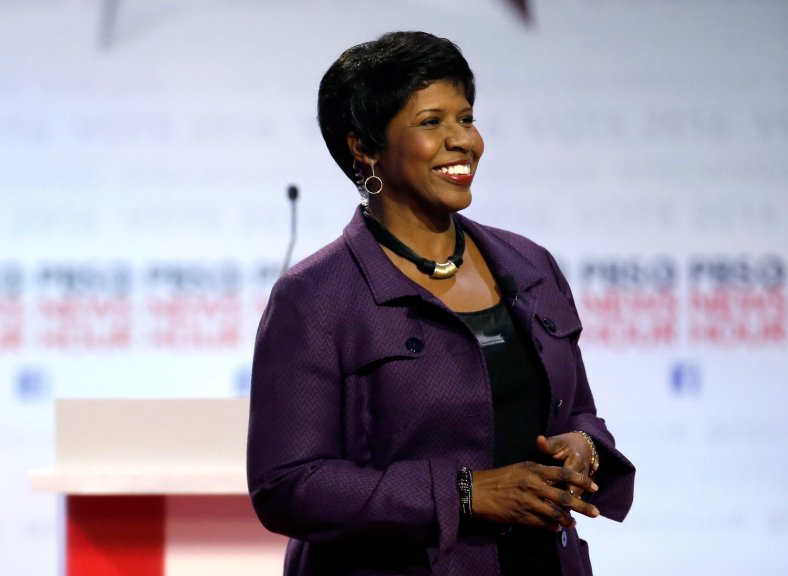
So let’s return to the days of ‘truth’ and remember the contribution of journalist Gwen Ifill through the eyes of two colleagues.
ap_193273822329_custom-095cea2744af0cdfc2393dae5431919449a19d63-s1500-c85

‘What Gwen Ifill Knew About Race in America’  by Jeffrey Goldberg “An insufficient number of people have recognized what is obvious. Gwen’s death is a punishing blow to her family, and to her wide circle of friends, to her colleagues and to her viewers. But it is also a cruel blow to her profession, which hasn’t recently covered itself in glory. And it’s an especially cruel blow to her lovely nation, which is right now in need of her bravery, her farsightedness, and her willingness to tell the truth. Hers is an incalculable loss.”

‘The Life and Example of Gwen Ifill’ by David Brooks “Gwen worked in a tough business, and being an African-American woman in that business brought its own hardships and scars, but Gwen’s smile did not hold back. Her whole personality was the opposite of reticent, and timidity was a stranger to her. When the Ifill incandescence came at you, you were getting human connection full-bore.

I suppose every profession has a few people like this, people who love the whole profession, who pay compliments when its standards are met and who are tough when they are not.

Gwen’s death merits a bit of the reaction that greeted the death of the writer Samuel Johnson centuries ago: She has left a chasm, which nobody else can fill up and which nobody has a tendency to fill.

Now that Gwen is dead, who is the next best thing? There’s nobody. There are many great people who will follow her example. But nobody quite reminds you of Gwen.”

In other news this week@work:

‘Debora L. Spar, Barnard President, to Lead Lincoln Center’Michael Cooper for The New York Times  “In appointing Ms. Spar, who is also an author and a former Harvard Business School professor, Lincoln Center’s board looked beyond arts administration circles and decided to tap someone with experience running a large nonprofit and with a track record of raising money for capital projects — skills that could prove useful as the renovation proceeds.”

Mr. Cooper reported in a related story that you may want to share with the aspiring musicians in your life, ‘It’s Official: Many Orchestras Are Now Charities’.

‘Udacity, an Online Learning Start-Up, Offers Tech Job Trials’Steve Lohr for The New York Times “The program, called Blitz, provides what is essentially a brief contract assignment, much like an internship. Employers tell Udacity the skills they need, and Udacity suggests a single candidate or a few. For the contract assignment, which usually lasts about three months, Udacity takes a fee worth 10 to 20 percent of the worker’s salary. If the person is then hired, Udacity does not collect any other fees, such as a finder’s fee.

The Blitz initiative and Udacity’s evolution point to the role that nontraditional education organizations might play in addressing the needs of workers and employers in the fast-changing labor market for technology skills.”

In closing this week of work, I am still trying to clear the fog in my brain and understand ‘post truth’. I reside in the real word, but apparently it’s changing. What does work look like when words hold no meaning?

I’ll end with classicist Mary Beard‘s reflection on the U.S. election.

“Trump and Trump’s policies are truly ghastly, but you have to face the fact that a very large number of people actually voted for him. What is more, resentment at “the elite” has morphed into a proud contempt for truth, expertise and knowledge – not unlike Michael Gove’s jibe at “experts” before the Brexit vote. And in the broader context of political rhetoric, the idea that he won’t be as bad as he claimed is more, rather than less, worrying. I thought that the conciliatory speech was the worst thing I had heard all evening. The idea that he could be thanking Clinton for her service to the country (“I mean that very sincerely”) and be speaking of “binding the wounds of division” – when only the day before he’d promised to impeach her and poured salt into the very wounds he was now promising to heal – beggars belief. It has nothing to do with being “gracious” (as the television pundits had it), and everything to do with words not meaning anything. It was precisely what ancient rhetorical and political theorists feared almost more than anything else: that speech might not be true, and the corrosive effect of that on popular power.”


Photo credits: Facebook Menlo Park HQ courtesy of Facebook Newsroom Media Gallery, Mark Zuckerberg from his Facebook page, Gwen Iffil/Morry Gash AP




The Friday Poem ‘The Familiar Has Taken Leave’

Why are we always surprised when national events veer from a predicted trajectory? Maybe we’ve been spending too much time with analytics and not enough time with the poets.

Megan Garber wrote in The Atlantic last week about the role of poetry in the aftermath of the 2016 U.S. presidential election. “Campaign in poetry; govern in prose,” the old adage goes. This moment, though, has in many ways flipped that idea: The 2016 presidential campaign was decidedly lacking in poetry. Yet in its aftermath, as Americans consider the contours of their new government, they are, often, turning to poems…”

She interviewed Don Share, the editor of Poetry magazine to discover why poetry was having a ‘moment’.

“Well, it’s always been speaking to people—and it’s always been speaking to people about the kinds of things they’re taking about now, because one of the things poetry is really good at is anticipating things that need discussion. Poets are kind of like—it’s a bad metaphor, but—canaries in a coal mine. They have a sense for things that are in the air. Partly because that’s what they do—they think about things that are going on—but partly because they take their own personal experience and see how that fits in with what they see in the world. A lot of people might think that poetry is very abstract, or that it has to do with having your head in the clouds, but poets, actually, walk on the earth. They’re grounded, feet-first, pointing forward. They’re moving around and paying attention at every moment.”

Perhaps next time, we should survey the poets, not the pollsters.

Until then, the events of the past 11 days brought me to a poem selected by Matthew Zapruder for the August 16, 2016 issue of The New York Times Magazine.

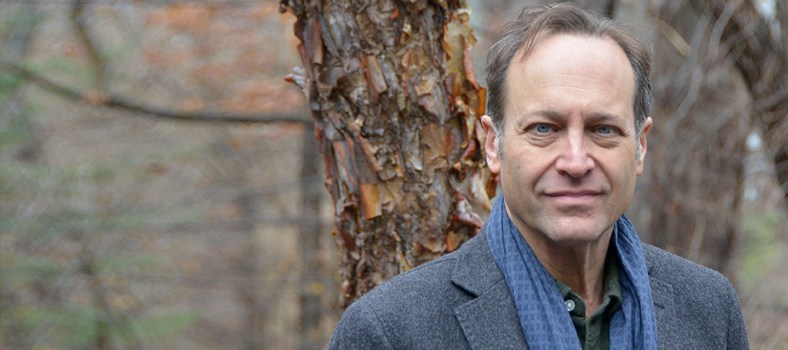
The poem, written by broadcaster, documentary filmmaker and poet, Richard O. Moore was part of a “sequence of sonnets about the consequences of losing his sight in old age”.

At its core, the poem is about change…and how we respond.

The Familiar Has Taken Leave

Responding to a world turned outside in
Requires a fresh agility of will
And a surreal mode of thought, both distant
When the world was visible and real.
The only carry-over is the sound:
The hollow clatter of the commonplace,
Ancestral voices, sepulchral complaints
From many sources now invisible.

This is the most dispassionate I can be.
The familiar has taken leave with all I know
And what is left is mostly echo fading,
Never to return. What takes shape then
Is virtual and is a world apart
Assembled half by memory, half by art.

Richard O. Moore (1920-2015) from ‘Particulars of Place’ April, 2015

ParticularsOfPlace-Cover-1.5x2.25-300dpi-CMYK-200x283.jpg