‘Into the Lincoln Tunnel’ a poem by Deborah Garrison

The Friday Poem this week is for all the commuters who leave New Jersey every day and enter Manhattan via the Lincoln Tunnel. The poet, Deborah Garrison gives voice to the thoughts we sometimes entertain as passengers on a bus, in uncertain times, inhaling the fumes, the indigenous scent of New York Hudson crossings. “…please smile upon these good people who want to enter the city and work. Because work is good…”

Into the Lincoln Tunnel

The bus rolled into the Lincoln Tunnel,
and I was whispering a prayer
that it not be today, not today, please
no shenanigans, no blasts, no terrors,
just please the rocking, slightly nauseating
gray ride, stop and start, chug-a
in the dim fellowship of smaller cars,
bumper lights flickering hello and warning.
Yes, please smile upon these good
people who want to enter the city and work.
Because work is good, actually, and life is good,
despite everything, and I don’t mean to sound
spoiled, but please don’t think I don’t know
how grateful I should be
for what I do have —

I wonder whom I’m praying to.
Maybe Honest Abe himself,
craggy and splendid in his tall chair,
better than God to a kid;
Lincoln whose birthday I shared,
in whom I took secret pride: born, thus I was,
to be truthful, and love freedom.

Now with a silent collective sigh
steaming out into the broken winter sun,
up the ramp to greet buildings, blue brick
and brown stone and steel, candy-corn pylons
and curving guardrails massively bolted and men
in hard hats leaning on resting machines
with paper cups of coffee —

a cup of coffee, a modest thing to ask
Abe for,
dark, bitter, fresh
as an ordinary morning.

Deborah Garrison   ‘The Second Child’   Random House, 2008

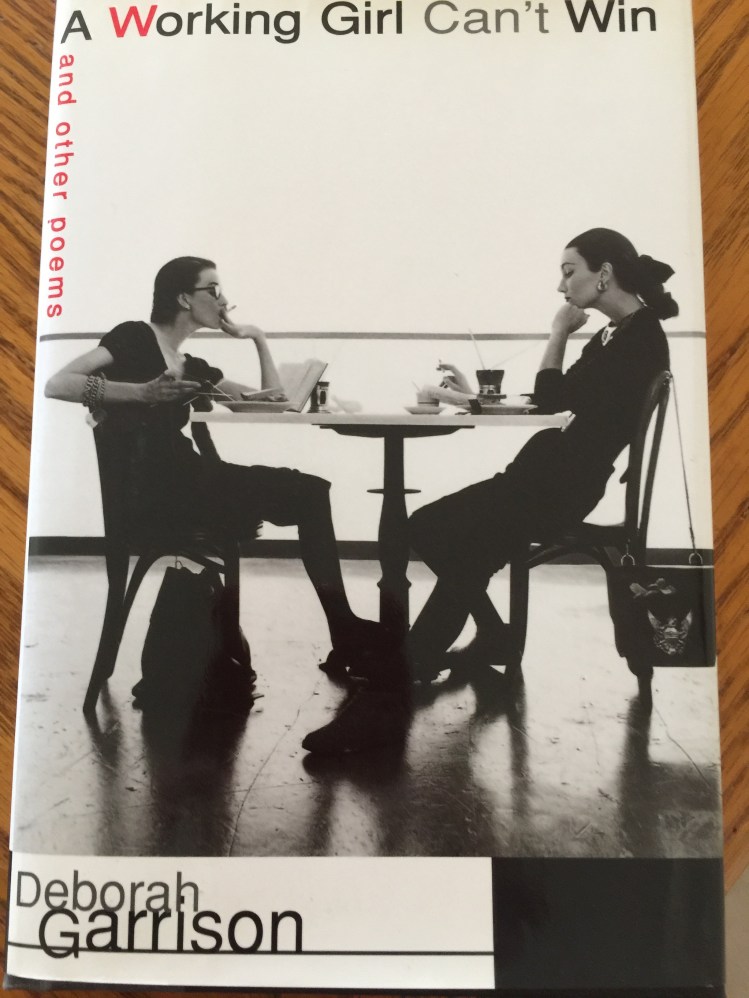
‘Worked Late on a Tuesday Night’ a poem by Deborah Garrison

Have you ever read a poem and realized that the poet has somehow snatched your body and experience, and transcribed both into a lyrical expression of your reality? There was a time, in the late 90s, working in New York, when the poetry of Deborah Garrison gave voice to those who believed you could have it all.

The Friday poem this week is ‘Worked Late on a Tuesday Night’, with Garrison’s words still relevant, even if Uber robs us of the experience of standing in the freezing rain trying to hail a cab.

Worked Late on a Tuesday Night

Again.
Midtown is blasted out and silent,
drained of the crowd and its doggy day.
I trample the scraps of deli lunches
some ate outdoors as they stared dumbly
or hooted at us career girls—the haggard
beauties, the vivid can-dos, open raincoats aflap
in the March wind as we crossed to and fro
in front of the Public Library.

Never thought you’d be one of them,
did you, little Lady?
Little Miss Phi Beta Kappa,
with your closetful of pleated
skirts, twenty-nine till death do us
part! Don’t you see?
The good schoolgirl turns thirty,
forty, singing the song of time management
all day long, lugging the briefcase

home. So at 10:00 PM
you’re standing here
with your hand in the air,
cold but too stubborn to reach
into your pocket for a glove, cursing
the freezing rain as though it were
your difficulty. It’s pathetic,
and nobody’s fault but
your own. Now

the tears,
down into the collar.
Cabs, cabs, but none for hire.
I haven’t had dinner; I’m not half
of what I meant to be.
Among other things, the mother
of three. Too tired, tonight,
to seduce the father.

Deborah Garrison   ‘A Working Girl Can’t Win: and other poems’ 1998

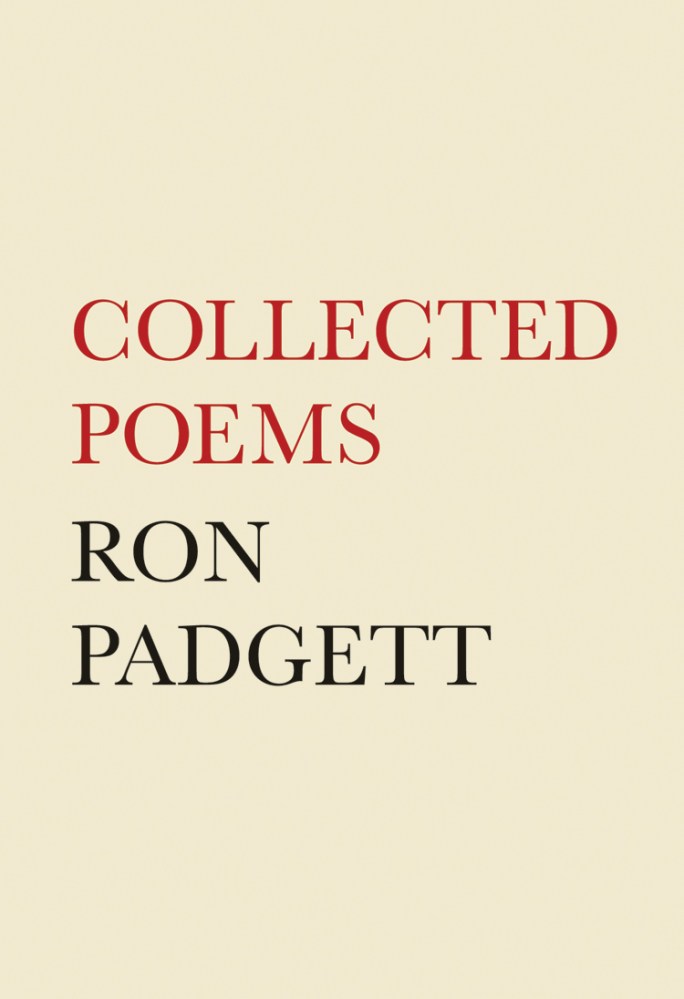
‘How to Be Perfect’ a poem by Ron Padgett

We are two weeks into the new year and once again we find it’s hard work to be perfect, as our resolutions collide with reality. So we turn to philosophers and poets to remind us that success is achieved with a measure of common sense.

In the seventeenth century a Spanish Jesuit scholar, writer, and philosopher, Baltasar Gracian, offered a collection of maxims on how to achieve personal and professional success. My favorite, “Be common in nothing”, might be the ‘perfect’ tenet to start the new year.

The Friday Poem this week reminded me of Gracian’s maxims, adding humor and common sense, from the poet, Ron Padgett, and his poem, ‘How to Be Perfect’.

How to Be Perfect

Get some sleep.

Don’t give advice.

Take care of your teeth and gums.

Don’t be afraid of anything beyond your control. Don’t be afraid, for
instance, that the building will collapse as you sleep, or that someone
you love will suddenly drop dead.

Eat an orange every morning.

Be friendly. It will help make you happy.

Raise your pulse rate to 120 beats per minute for 20 straight minutes
four or five times a week doing anything you enjoy.

Hope for everything. Expect nothing.

Take care of things close to home first. Straighten up your room
before you save the world. Then save the world.

Know that the desire to be perfect is probably the veiled expression
of another desire—to be loved, perhaps, or not to die.

Make eye contact with a tree.

Be skeptical about all opinions, but try to see some value in each of
them.

Dress in a way that pleases both you and those around you.

Do not speak quickly.

Learn something every day. (Dzien dobre!)

Be nice to people before they have a chance to behave badly.

Don’t stay angry about anything for more than a week, but don’t
forget what made you angry. Hold your anger out at arm’s length
and look at it, as if it were a glass ball. Then add it to your glass ball
collection.

Be loyal.

Wear comfortable shoes.

Design your activities so that they show a pleasing balance
and variety.

Be kind to old people, even when they are obnoxious. When you
become old, be kind to young people. Do not throw your cane at
them when they call you Grandpa. They are your grandchildren!

Live with an animal.

Do not spend too much time with large groups of people.

If you need help, ask for it.

Cultivate good posture until it becomes natural.

If someone murders your child, get a shotgun and blow his head off.

Plan your day so you never have to rush.

Show your appreciation to people who do things for you, even if you
have paid them, even if they do favors you don’t want.

Do not waste money you could be giving to those who need it.

Expect society to be defective. Then weep when you find that it is far
more defective than you imagined.

When you borrow something, return it in an even better condition.

As much as possible, use wooden objects instead of plastic or metal
ones.

Look at that bird over there.

After dinner, wash the dishes.

Calm down.

Visit foreign countries, except those whose inhabitants have
expressed a desire to kill you.

Don’t expect your children to love you, so they can, if they want to.

Meditate on the spiritual. Then go a little further, if you feel like it.
What is out (in) there?

Sing, every once in a while.

Be on time, but if you are late do not give a detailed and lengthy
excuse.

Don’t be too self-critical or too self-congratulatory.

Don’t think that progress exists. It doesn’t.

Walk upstairs.

Do not practice cannibalism.

Imagine what you would like to see happen, and then don’t do
anything to make it impossible.

Take your phone off the hook at least twice a week.

Keep your windows clean.

Extirpate all traces of personal ambitiousness.

Don’t use the word extirpate too often.

Forgive your country every once in a while. If that is not possible, go
to another one.

If you feel tired, rest.

Grow something.

Do not wander through train stations muttering, “We’re all going to
die!”

Count among your true friends people of various stations of life.

Appreciate simple pleasures, such as the pleasure of chewing, the
pleasure of warm water running down your back, the pleasure of a
cool breeze, the pleasure of falling asleep.

Do not exclaim, “Isn’t technology wonderful!”

Learn how to stretch your muscles. Stretch them every day.

Don’t be depressed about growing older. It will make you feel even
older. Which is depressing.

Do one thing at a time.

If you burn your finger, put it in cold water immediately. If you bang
your finger with a hammer, hold your hand in the air for twenty
minutes. You will be surprised by the curative powers of coldness and
gravity.

Learn how to whistle at earsplitting volume.

Be calm in a crisis. The more critical the situation, the calmer you
should be.

Enjoy sex, but don’t become obsessed with it. Except for brief periods
in your adolescence, youth, middle age, and old age.

Contemplate everything’s opposite.

If you’re struck with the fear that you’ve swum out too far in the
ocean, turn around and go back to the lifeboat.

Keep your childish self alive.

Answer letters promptly. Use attractive stamps, like the one with a
tornado on it.

Cry every once in a while, but only when alone. Then appreciate
how much better you feel. Don’t be embarrassed about feeling better.

Do not inhale smoke.

Take a deep breath.

Do not smart off to a policeman.

Do not step off the curb until you can walk all the way across the
street. From the curb you can study the pedestrians who are trapped
in the middle of the crazed and roaring traffic.

Be good.

Walk down different streets.

Backwards.

Remember beauty, which exists, and truth, which does not. Notice
that the idea of truth is just as powerful as the idea of beauty.

Stay out of jail.

In later life, become a mystic.

Use Colgate toothpaste in the new Tartar Control formula.

Visit friends and acquaintances in the hospital. When you feel it is
time to leave, do so.

Be honest with yourself, diplomatic with others.

Do not go crazy a lot. It’s a waste of time.

Read and reread great books.

Dig a hole with a shovel.

In winter, before you go to bed, humidify your bedroom.

Know that the only perfect things are a 300 game in bowling and a
27-batter, 27-out game in baseball.

Drink plenty of water. When asked what you would like to drink,
say, “Water, please.”

Ask “Where is the loo?” but not “Where can I urinate?”

Be kind to physical objects.

Beginning at age forty, get a complete “physical” every few years
from a doctor you trust and feel comfortable with.

Don’t read the newspaper more than once a year.

Learn how to say “hello,” “thank you,” and “chopsticks”
in Mandarin.

Belch and fart, but quietly.

Be especially cordial to foreigners.

See shadow puppet plays and imagine that you are one of the
characters. Or all of them.

Take out the trash.

Love life.

Use exact change.

When there’s shooting in the street, don’t go near the window.

Ron Padgett  ‘Collected Poems’ 2013

‘The World I Live In’ a poem by Mary Oliver

The Friday Poem this week is from Pulitzer Prize winning poet Mary Oliver‘s new collection, ‘Felicity’ published this fall. Merry Christmas!

The World I Live In

I have refused to live

locked in the orderly house of

reasons and proofs.

The world I live in and believe in

Is wider than that. And anyway,

what’s wrong with Maybe?


You wouldn’t believe what once or

twice I have seen. I’ll just

tell you this:

only if there are angels in your head will you

ever, possibly, see one.

Mary Oliver  ‘Felicity’  Penguin Press, 2015

‘Let American Be America Again’ a poem by Langston Hughes

We spend a lot of time considering the values of our workplace and how they mesh with our priorities; who we will become as part of a workplace community. But where we go to work is located in the broader context of a national set of values. And those values have been the topic of conversation this political season, with some questioning the basic tenets that have, until now, defined our national conscience.

It sometimes seems like we have lost our collective sense of the core values that bind us as humans, Americans and global citizens.

Take a moment today to restore our ‘moral memory’ and revisit history through the lens of American poet, Langston Hughes. The Friday Poem this week is ‘Let America Be America Again’ written in 1935 and published in Esquire Magazine in 1936.

Let America Be America Again

Let America be America again.
Let it be the dream it used to be.
Let it be the pioneer on the plain
Seeking a home where he himself is free.

(America never was America to me.)

Let America be the dream the dreamers dreamed—
Let it be that great strong land of love
Where never kings connive nor tyrants scheme
That any man be crushed by one above.

(It never was America to me.)

O, let my land be a land where Liberty
Is crowned with no false patriotic wreath,
But opportunity is real, and life is free,
Equality is in the air we breathe.

(There’s never been equality for me,
Nor freedom in this “homeland of the free.”)

Say, who are you that mumbles in the dark?
And who are you that draws your veil across the stars?

I am the poor white, fooled and pushed apart,
I am the Negro bearing slavery’s scars.
I am the red man driven from the land,
I am the immigrant clutching the hope I seek—
And finding only the same old stupid plan
Of dog eat dog, of mighty crush the weak.

I am the young man, full of strength and hope,
Tangled in that ancient endless chain
Of profit, power, gain, of grab the land!
Of grab the gold! Of grab the ways of satisfying need!
Of work the men! Of take the pay!
Of owning everything for one’s own greed!

I am the farmer, bondsman to the soil.
I am the worker sold to the machine.
I am the Negro, servant to you all.
I am the people, humble, hungry, mean—
Hungry yet today despite the dream.
Beaten yet today—O, Pioneers!
I am the man who never got ahead,
The poorest worker bartered through the years.

Yet I’m the one who dreamt our basic dream
In the Old World while still a serf of kings,
Who dreamt a dream so strong, so brave, so true,
That even yet its mighty daring sings
In every brick and stone, in every furrow turned
That’s made America the land it has become.
O, I’m the man who sailed those early seas
In search of what I meant to be my home—
For I’m the one who left dark Ireland’s shore,
And Poland’s plain, and England’s grassy lea,
And torn from Black Africa’s strand I came
To build a “homeland of the free.”

The free?

Who said the free? Not me?
Surely not me? The millions on relief today?
The millions shot down when we strike?
The millions who have nothing for our pay?
For all the dreams we’ve dreamed
And all the songs we’ve sung
And all the hopes we’ve held
And all the flags we’ve hung,
The millions who have nothing for our pay—
Except the dream that’s almost dead today.

O, let America be America again—
The land that never has been yet—
And yet must be—the land where every man is free.
The land that’s mine—the poor man’s, Indian’s, Negro’s, ME—
Who made America,
Whose sweat and blood, whose faith and pain,
Whose hand at the foundry, whose plow in the rain,
Must bring back our mighty dream again.

Sure, call me any ugly name you choose—
The steel of freedom does not stain.
From those who live like leeches on the people’s lives,
We must take back our land again,
America!

O, yes,
I say it plain,
America never was America to me,
And yet I swear this oath—
America will be!

Out of the rack and ruin of our gangster death,
The rape and rot of graft, and stealth, and lies,
We, the people, must redeem
The land, the mines, the plants, the rivers.
The mountains and the endless plain—
All, all the stretch of these great green states—
And make America again!

Langston Hughes  ‘The Collected Poems of Langston Hughes’  1995

‘Perhaps the World Ends Here’ a poem by Joy Harjo

The Friday Poem this week is from Native American Poet, Joy Harjo. In September of this year she received the Wallace Stevens award from the Academy of American Poets.

Chancellor Alicia Ostriker summarized Harjo’s contribution to the canon of American poetry.

“Throughout her extraordinary career as poet, storyteller, musician, memoirist, playwright and activist, Joy Harjo has worked to expand our American language, culture, and soul. A Creek Indian and student of First Nation history, Harjo is rooted simultaneously in the natural world, in earth—especially the landscape of the American southwest— and in the spirit world. Aided by these redemptive forces of nature and spirit, incorporating native traditions of prayer and myth into a powerfully contemporary idiom, her visionary justice-seeking art transforms personal and collective bitterness to beauty, fragmentation to wholeness, and trauma to healing.”

Perhaps the World Ends Here

The world begins at a kitchen table. No matter what, we must eat to live.

The gifts of earth are brought and prepared, set on the table. So it has been since creation, and it will go on.

We chase chickens or dogs away from it. Babies teethe at the corners. They scrape their knees under it.

It is here that children are given instructions on what it means to be human. We make men at it, we make women.

At this table we gossip, recall enemies and the ghosts of lovers.

Our dreams drink coffee with us as they put their arms around our children. They laugh with us at our poor falling-down selves and as we put ourselves back together once again at the table.

This table has been a house in the rain, an umbrella in the sun.

Wars have begun and ended at this table. It is a place to hide in the shadow of terror. A place to celebrate the terrible victory.

We have given birth on this table, and have prepared our parents for burial here.

At this table we sing with joy, with sorrow. We pray of suffering and remorse. We give thanks.

Perhaps the world will end at the kitchen table, while we are laughing and crying, eating of the last sweet bite.

Joy Harjo   The Woman Who Fell From the Sky  1994

‘Retired Ballerinas, Central Park West’ a poem by Lawrence Ferlinghetti

In August poet, author, activist, playwright and publisher Lawrence Ferlinghetti released ‘Writing Across the Landscape’, a record of five decades of travel drawn from his journals. This week’s Friday Poem is ‘Retired Ballerinas, Central Park West’ from a 1994 collection and considers life after work.

“Ferlinghetti felt strongly that art should be accessible to all people, not just a handful of highly educated intellectuals. His career has been marked by its constant challenge of the status quo; his poetry engages readers, defies popular political movements, and reflects the influence of American idiom and modern jazz.”

In a 1993 interview with William H. Honan, Mr. Ferlinghetti shared his observations on the evolution of the American poet.

“Today’s young poets, he continued, tend to come from working-class families and are not college graduates. That’s a change from the Beat poets, many of whom met at Columbia University in the 1950’s, and from Mr. Ferlinghetti, who earned a Ph.D. in modern poetry at the Sorbonne.

“It doesn’t require a great intellect to write poetry,” he said. “Great sensory perception is more important. Also, bright young people today are just as interested in film and video. I would be, too, if I were starting out. The single, unaccompanied voice can’t compete with those images.” ‘Bohemian,’ Not ‘Beat’.”

Retired Ballerinas, Central Park West

Retired ballerinas on winter afternoons

   walking their dogs

   in Central Park West

   (or their cats on leashes—

   the cats themselves old highwire artists)

The ballerinas

   leap and pirouette

   through Columbus Circle

   while winos on park benches

   (laid back like drunken Goudonovs)

   hear the taxis trumpet together

   horsemen of the apocalypse

   in the dusk of the gods

It is the final witching hour

   when swains are full of swan songs

   And all return through the dark dusk

   to their bright cells

   in glass highrises

   or sit down to oval cigarettes and cakes

   in the Russian Tea Room

   or climb four flight to back rooms

   in Westside brownstones

   where faded playbill photos

   fall peeling from their frames

   like last year’s autumn leaves

Lawrence Ferlinghetti   ‘These Are My Rivers’ 1994

‘Theme in Yellow’ a poem by Carl Sandburg (for Halloween)

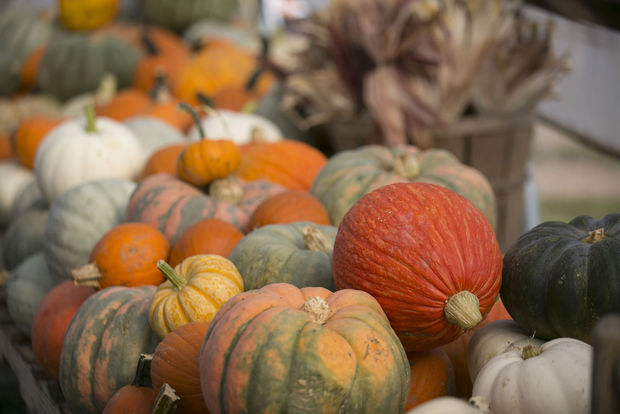
Tomorrow we celebrate Halloween, a holiday with origins dating back to the ancient Celts. Today it’s the second biggest consumer spending holiday in America. In all the frenzy of make-believe horror, there is one constant…

Consider the pumpkin. Long before Charles M. Schultz imagined Linus waiting all night in a field for the arrival of the ‘Great Pumpkin’, American poet, Carl Sandburg wrote his ‘ode’ to a simpler time and celebration.

Theme in Yellow

I spot the hills
With yellow balls in autumn.
I light the prairie cornfields
Orange and tawny gold clusters
And I am called pumpkins.
On the last of October
When dusk is fallen
Children join hands
And circle round me
Singing ghost songs
And love to the harvest moon;
I am a jack-o’-lantern
With terrible teeth
And the children know
I am fooling.

Carl Sandburg ‘Chicago Poems’ 1916

‘A Consumer’s Report’ a poem by Peter Porter

Imagine you work for Consumer Reports, the U.S. product review and ratings service, and you are on deadline to submit an evaluation of a new product. In this week’s Friday Poem, ‘A Consumer’s Report’ from Australian born poet, Peter Porter, life is the product under review.

Porter moved to London in the early 1950s and took a job with an advertising agency publishing his first collection of poetry in 1961. Have you ever noticed how many ‘Mad Men’ moonlight as poets?

Kate Middleton, the 2012 Sydney City Poet, described the poem in her Tumblr post.

“In “A Consumer’s Report” Porter reminds us that even language that seems to have been repurposed by the corporate world can in fact be reclaimed and renewed. Often this reclamation can happen simply through the application of a set of familiar terms to a surprising new context: this is exactly what Porter does in his poem here, taking the language of marketing, and billing life itself as a commodity to be test-driven as you would a new car or skincare product. In so doing Porter wittily leads the reader both to examine the nature of the titular consumer’s report, but also prods his reader to a serious consideration of life itself.”

A Consumer’s Report

The name of the product I tested is Life,
I have completed the form you sent me
and understand that my answers are confidential.

I had it as a gift,
I didn’t feel much while using it,
in fact I think I’d have liked to be more excited.
It seemed gentle on the hands
but left an embarrassing deposit behind.
It was not economical
and I have used much more than I thought
(I suppose I have about half left
but it’s difficult to tell)—
although the instructions are fairly large
there are so many of them
I don’t know which to follow, especially
as they seem to contradict each other.
I’m not sure such a thing
should be put in the way of children—
It’s difficult to think of a purpose
for it. One of my friends says
it’s just to keep its maker in a job.
Also the price is much too high.
Things are piling up so fast,
after all, the world got by
for thousand million years
without this, do we need it now?
(Incidentally, please ask your man
to stop calling me ‘the respondent’,
I don’t like the sound of it.)
There seems to be a lot of different labels,
sizes and colours should be uniform,
the shape is awkward, it’s waterproof
but not heat resistant, it doesn’t keep
yet it’s very difficult to get rid of:
whenever they make it cheaper they tend
to put less in—if you say you don’t
want it, then it’s delivered anyway.
I’d agree it’s a popular product,
it’s got into the language; people
even say they’re on the side of it.
Personally I think it’s overdone,
a small thing people are ready
to behave badly about. I think
we should take it for granted. If its
experts are called philosophers or market
researchers or historians, we shouldn’t
care. We are the consumers and the last
law makers. So finally, I’d buy it.
But the question of a ‘best buy’
I’d like to leave until I get
the competitive product you said you’d send.

Peter Porter from ‘The Poetry of Business Life: An Anthology’ Ralph Windle 1994

‘The Managers’ a poem by W.H. Auden

The ‘Friday Poem’ this week is ‘The Managers’ by British poet W.H. Auden. The poem was written almost 70 years ago, in the post World War II period when a new class of worker was emerging, the professional corporate manager. The new corporate bureaucracies mirrored the military structures that had effectively managed the war effort.

In the military you were assigned a number, and as these new organization structures emerged, employees lost their identities and became numbers as well. Auden used his poetry to remind those in charge that workers have faces..

‘The mere making of a work of art is itself a political act’ because it reminds ‘the Management … that the managed are people with faces, not anonymous numbers.’

‘The hero of modern poetry is ‘the man or woman in any walk of life who … manages to acquire and preserve a face of his own’.”

The poem is a snapshot in time of one artist’s reaction to the “Men, working too hard in rooms that are too big”.

The Managers

In the bad old days it was not so bad:

The top of the ladder

Was an amusing place to sit; success

Meant quite a lot – leisure

And huge meals, more palaces filled with more

Objects, books, girls, horses

Than one would ever get round to, and to be

Carried uphill while seeing

Others walk. To rule was a pleasure when

One wrote a death sentence

On the back of the Ace of Spades and played on

With a new deck. Honours

Are not so physical or jolly now,

For the species of Powers

We are used to are not like that. Could one of them

Be said to resemble

The Tragic Hero, The Platonic Saint,

Or would any painter

Portray one rising triumph from a lake

On a dolphin, naked,

Protected by an umbrella of cherubs? Can

They so much as manage

To behave like genuine Caesars when alone

Or drinking with cronies,

To let their hair down and be frank about

The world? It is doubtful.

The last word on how we may live or die

Rests today with such quiet

Men, working too hard in rooms that are too big,

Reducing to figures

What is the matter, what is to be done.

A neat little luncheon

Of sandwiches is brought to each on a tray,

Nourishment they are able

To take with one hand without looking up

From papers a couple

Of secretaries are needed to file,

From problems no smiling

Can dismiss. The typewriters never stop

But whirr like grasshoppers

In the silent siesta heat as, frivolous

Across their discussions

From woods unaltered by our wars and our vows

There drift the scents of flowers

And the songs of birds who will never vote

Or bother to notice

Those distinguishing marks a lover sees

By instinct and policemen

Can be trained to observe. Far into the night

Their windows burn brightly

And, behind their backs bent over some report,

On every quarter,

For ever like a god or a disease

There on earth the reason

In all its aspects why they are tired, and weak,

The inattentive, seeing

Someone to blame. If, to recuperate

They go a-playing, their greatness

Encounters the bow of the chef or the glance

Of the ballet-dancer

Who cannot be ruined by any master’s fall.

To rule must be a calling,

It seems, like surgery or sculpture; the fun

Neither love nor money

But taking necessary risks, the test

Of one’s skill, the question,

If difficult, their own reward. But then

Perhaps one should mention

Also what must be a comfort as they guess

In times like the present

When guesses can prove so fatally wrong,

The fact of belonging

To the very select indeed, to those

For whom, just supposing

They do, there will be places on the last

Plane out of disaster.

No; no one is really sorry for their

Heavy gait and careworn

Look, nor would they thank you if you said you were.

W.H. Auden 1948, ‘The Oxford Book of Work’ 1999