The Saturday Read ‘Pacific’ by Simon Winchester

While the events of the past 24 hours have turned our thoughts to Paris, another headline scrolled across screens last night, warning of a possible tsunami off the coast of Japan.

News stories of the Pacific Ocean and her terrestrial neighbors continue to occupy a significant amount of news coverage: growing concern of El Nino and the bell weather ‘surprise’ of hurricane Patricia, mapping of marine debris that continues to traverse the ocean four years after the Japanese earthquake, and most recently, the expansion of reefs into Chinese military facilities, establishing claims in contested territorial waters.

In advance of President Obama’s trip to Kuala Lumpur next week to attend the Asia summits, the ‘Saturday Read’ this week is  ‘Pacific: Silicon Chips and Surfboards, Coral Reefs and Atom Bombs, Brutal Dictators, Fading Empires, and the Coming Collision of the World’s Superpowers’ by Simon Winchester.

“For all its apparent placidity, the Pacific seems today to be positioned at the leading edge of any number of potential challenges and crises – whether they relate to politics or economics, to geology, to weather, to the supply of food, or to the most basic questions about the number of people that this planet can support.”

What do we know about this vast expanse of water? Stories from veterans of WWll, the Korean War or the Vietnam war? Shared experiences of vacation trips to Hawaii, the South Pacific, Australia or New Zealand? Or, impressions from the novels of  James Michener; ‘Tales of the South Pacific’ and ‘Hawaii’?

Consider the impact of a port strike in LA; container ships lined along the coast filled with a wide range of holiday gifts that may never reach shore in time for Christmas. The Pacific is a vital artery connecting us to the consumer goods of our daily lives.

Winchester begins his narrative aboard United Airlines flight 156 which leaves Honolulu three times a week on the way to Guam, traversing almost six thousand miles, with five stops along the way.

“The ocean beneath is almost unimaginably vast, and illimitably various. It is the oldest of the world’s seas, the relic of the once all-encompassing Panthalassic Ocean that opened up seven hundred fifty million years ago. It is by far the world’s largest body of water – all of the continents could be contained within its borders, and there would be ample room to spare. It is the most biologically diverse, the most seismically active; it sports the planet’s greatest mountains and deepest trenches; its chemistry influences the world; and the planetary weather systems are born within its boundaries.”

The author has structured his story to fit the timeline of the sixty-five years since 1950. He sifted through the lists he prepared to focus on “truly pivotal moments the story of this vast acreage of ocean’ and poses timely questions to emphasize the Pacific’s significance.

“It is the most turbulent ocean in the world, and an expanse of sea that should be central to all our thoughts. Is the ocean to be the place of coming war? Is it to be our eventual savior, a places so beautiful and fragile that its sheer vastness will one day demand that we pause in our careless and foolish behavior in the rest of the world? Or will it be something in between: a pillar of hope and example and good sense poised between East and West, on which, for good or ill, we construct humanity’s future?”

The reader will tour “the great thermonuclear sea” and stamp their virtual passports in Japan, Hong Kong, the Great Barrier Reef, Korea, the Philippines and California. Each chapter reads as a short story, which allows the reader to time travel in small bites. The strength of the book is the geological and meteorological insights. ‘Pacific’ is required reading and Simon Winchester provides a persuasive argument.

“The future, in short, is what the Pacific Ocean is now coming to symbolize. For if one accepts that the Mediterranean was once the inland sea of the Ancient World: and further, that the Atlantic Ocean was, and to some people still remains, the inland sea of the Modern World: then surely it can be argued that the Pacific Ocean is the inland sea of Tomorrow’s World. What transpires across these sixty-four million square miles of ultramarine ocean matters, and to all of us.”

The Saturday Read – ‘Dear Committee Members’ by Julie Schumacher

Have you ever considered a life as a university professor? For those outside the ivory tower, it seems an idyllic career: contemplating great thoughts, teaching a few classes, and travelling the world on sabbatical.

This week’s ‘Saturday Read’ is required reading for anyone planning to spend an extended period of time on a college campus. University of Minnesota professor Julie Schumacher has written a valuable and humorous addition to the canon of university life with ‘Dear Committee Members’.

If your workplace is academia, you are familiar with letters of reference. In this novel of university life, creative writing and literature professor Jason Fitger narrates a year in his life via a variety of LORs, written to advance his personal agenda and the careers of colleagues and students.

Brock Clarke’s review of the book cited the author’s choice of structure as one of its strengths.

“…Schumacher also brilliantly uses the epistolary form to show Jay’s desperation in the face of his crumbling university, career, life. In all this, her scabrous book reminds me of Sam Lipsyte’s “Home Land,” Richard Russo’s “Straight Man” and Jincy Willett’s “Winner of the National Book Award.” If you didn’t find those books funny, well, that means you’re a corpse. But you’re also, apparently, a corpse who reads, so there’s hope for you yet. You should read “Dear Committee Members”; maybe it will bring you back to life.”

The story tracks with the academic calendar and begins with our fearless professor writing a letter of recommendation for a grad student, followed by another providing an assessment of the current state of affairs to the department chair.

“…more that a third of our faculty now consists of temporary (adjunct) instructors who creep into the building under cover of darkness to teach graveyard shifts of freshman comp; they are not eligible to vote or serve…the remaining two-thirds of the faculty, bearing the scars of disenfranchisement and long-term abuse, are busy tending to personal grudges like scraps of carrion on which they gnaw in the gloom of their offices…after subtracting the names of those who are on leave or close to retirement, and those already serving in the killing fields of administration…”

Only an insider could provide this accurate summation of the state of the university today. This is not breaking news to those inside the ivy walls, but serves as a reality check to those aspiring to an academic career.

The author provides one of the most compelling arguments for the liberal arts in Jason’s letter of recommendation to fictional Bridget Maslow at Addistar Network, Inc. And gives any of you english majors out there the perfect words for your cover letter.

“Belatedly it occurs to me that some members of your HR committee, a few skeptical souls, may be clutching a double strand of worry beads and wondering aloud about the practicality or usefulness of a degree in English rather than, let’s say, computers. Be reassured: the literature students has learned to inquire, to question, to interpret, to critique, to compare, to research, to argue, to sift to analyze, to shape, to express. His intellect can be put to broad use. The computer major, by contrast is a technician – a plumber clutching a single, abeit shining, box of tools.”

‘Dear Committee Members’ is a story of one man’s career/life choices. At the end, you just may want to consider a university as your workplace. Where else can you work where one quarter of the population are newbies and you have the opportunity to start over every autumn?

“There is nothing more promising or hopeful than the start of the academic cycle: another chance for self-improvement, for putting into practice what one learned – or failed to learn – during the previous year.”

The Saturday Read – ‘Humans of New York:Stories’ by Brandon Stanton

We learn from the wisdom of others. In Brandon Stanton’s new book we learn from the wisdom of strangers. The ‘Saturday Read’ this week is ‘Humans of New York: Stories’.

“The simplest way to describe the development of HONY over the past five years is this: it’s evolved from a photography blog to a storytelling blog…after cataloging thousands of people, I stumbled upon the idea of including quotes from my subjects alongside their photographs. The quotes grew longer and longer, until eventually I was spending fifteen to twenty minutes interviewing each person I photographed. These interviews, and the stories that resulted from them, became the new purpose of Humans of New York. The blog became dedicated to telling the stories of strangers on the street.”

The first career story is the author’s own. He graduated from college, took a job in Chicago as a bond trader, lost his job, moved to New York and started taking pictures of folks on the street. His work evolved into a blog with 15.6 million followers. His first book of photography, Humans of New York, landed at the top of The New York Times Bestseller List in the fall of 2013 and the new book will debut at the top of the November 1, 2015 list.

Why the response? Because the Mr. Stanton’s stories, told in words and images are about us. The scope of his project embraces NYC folks encountered on the street, reflecting on their past and future. We don’t know names. We don’t know ages. We can only guess in connecting the photo to the quote. At times the words seem at odds with the picture.

Here is one example from a young man, perhaps in his early teens.

“I’ve sort of had an arrogant demeanor my entire life, and I’m learning that I’m going to have to change that if I want to succeed. I realized that it doesn’t matter how clever you are if nobody wants to work with you.”

Another from a young woman seated on a suitcase, in the middle of a train station.

“I wish I’d partied a little less. People always say: ‘Be true to yourself.’. But that’s misleading because there are two selves. There’s your short-term self, and there’s your long-term self. And if you’re only true to your short-term self, your long-term self slowly decays.”

And a man at mid-life in what appears to be a cold corporate lobby, sitting on a stone bench, framed by a stone wall.

“When you’re twenty-five, you feel like you’re riding a wave. You feel like opportunities are just going to keep coming at you, and you think it’s never going to end. But then it ends.”

“When does it end?”

“When you turn forty, and they start looking for someone younger.”

The reader gets a sense they are looking in the mirror, but they’re not. The photo doesn’t match the selfie, but the sentiment fits.

Heather Long, writing for CNN Money, interviewed Stanton and attended his reading at a NY Barnes and Noble. What has he learned in the process of photographing and interviewing 10,000 people? “Americans should reconsider how much they work.”

“He often asks: What is your biggest struggle? And what do you regret most in life?
“Balancing my life is an answer I hear a lot,” he said. “Balancing work and family.”
People go on to tell him how they wish they had skipped that marketing conference and attended their daughter’s 8th grade dance instead.”

One of my favorite ‘inteviews’ appears early in the book (page 5). The narrative comes from a third grader (?).

“I want to build a bridge”

“How do you build a bridge?”

“If you want to build a bridge, it’s going to take a long time and it might be hard because your employees might not be as interested in building a bridge as you are. You have to think about what type of bridge you want to make…” 

He could be talking about life and career.

HONY: Stories invites us on a road trip through the streets of New York, opting for the detours that welcome conversation. This is a book to read slowly, observing the detail in the photos and the humanity in the words. It’s a compendium of other’s lifelong learning, generously shared.

“I want to be an artist.” “What kind of art do you want to make?” “I want to make different versions of myself.”

The Saturday Read – ‘The Invention of Nature: Alexander von Humboldt’s New World’ by Andrea Wulf

This weekend we celebrate exploration and discovery in recognition of the arrival of Christopher Columbus in the Americas. What motivates those who choose a life of adventure and exploration? The ‘Saturday Read’ is the career story of an intrepid pioneer whose curiosity drove him to become one of the most famous of his age.

The ‘Saturday Read’ this week is ‘The Invention of Nature: Alexander von Humboldt’s New World’ by Andrea Wulf.

I first encountered von Humboldt when reading ‘The Art of Travel’ by Alain de Botton. At the end of a chapter ‘On Curiosity’, de Botton shares a quote attributed to von Humboldt near the end of his life:

“People often say that I’m curious about too many things at once: botany, astronomy, comparative anatomy. But can you really forbid a man from harboring a desire to know and embrace everything that surrounds him?”

Alexander von Humboldt was the master of connecting the dots and lived at a point in time when the multidisciplinary approach fueled exploration and discovery.

“Alexander von Humboldt has been largely forgotten in the English-speaking world. He was one of the last polymaths, and died at a time when scientific disciplines were hardening into tightly fenced and more specialized fields. Consequently his more holistic approach – a scientific method that included art, history, poetry and politics alongside hard data – has fallen out of favour. By the beginning of the twentieth century, there was little room for a man whose knowledge had bridged a vast range of subjects. As scientists crawled into their narrow areas of expertise dividing and further subdividing, they lost Humboldt’s interdisciplinary methods and his concept of nature as a global force. 

One of Humboldt’s greatest achievements had been to make science accessible and popular. Everybody learned from him: farmers and craftsmen, schoolboys and teachers, artists and musicians, scientists and politicians…Unlike Christopher Columbus or Issac Newton, Humboldt did not discover a continent or a new law of physics. Humboldt was not known for a single fact or discovery but for his worldview. His vision of nature has passed into our consciousness as if by osmosis. It is almost as though his ideas have become so manifest that the man behind them has disappeared.”

Today universities scramble to attract students with multidisciplinary offerings, but the silos of academia continue to resist cross-pollinization of knowledge. This is why we need to remove the invisibility cloak from von Humboldt and revisit his curiosity and travel the roads that led to his discoveries.

Author Andrea Wulf wrote an opinion piece for the Los Angeles Times, ‘Alexander von Humboldt: The man who made nature modern’, linking his conclusions to the environmental challenges we face today.

“At a time when scientists were classifying the world into ever smaller taxonomic units, Humboldt regarded Earth as one great living organism in which everything was connected. It was a radically new approach, and it makes him a naturalist hero for the 21st century.”

“With California in the fourth year of serious drought, with forest fires burning, oceans rising and extreme weather spreading havoc, Humboldt deserves to be rediscovered. His interdisciplinary methods and his concept of nature as one of global patterns should underpin our policymaking.

As scientists try to understand and predict the consequences of climate change, Humboldt’s belief in the free exchange of information and in fostering communication across disciplines is vitally important. His insights that social, economic and political issues are closely connected to environmental problems remain resoundingly topical. “Mankind’s mischief …disturbs nature’s order,” he warned, in words as relevant today as they were two centuries ago.”

Alexander von Humboldt’s legacy echoes in the works of John Muir and George Perkins Marsh and in the wild gardens of California where the native ‘Humboldt Lily’ thrives in a dry climate. And now it’s preserved in the words of Andrea Wulf. Enjoy the ‘Saturday Read’ and encourage your children to grow up to be polymaths.

humboldt lily

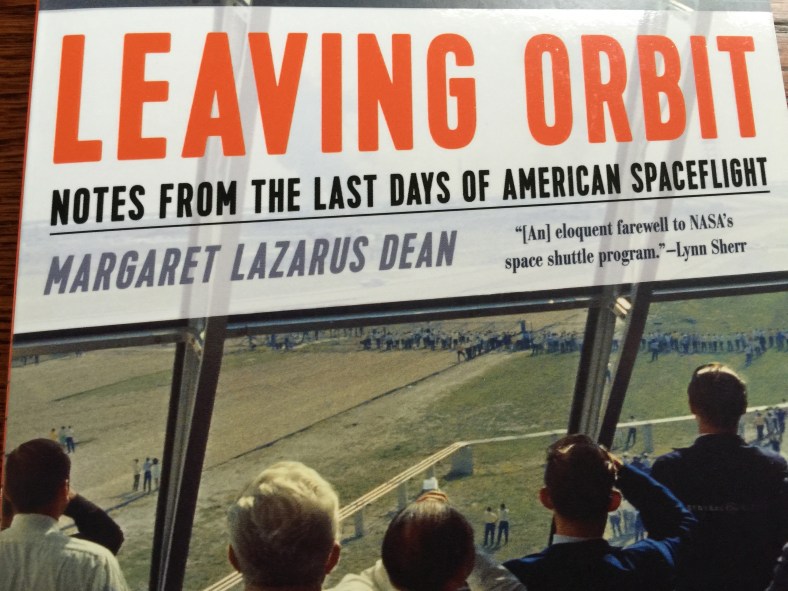
The Saturday Read – ‘Leaving Orbit: Notes from the Last Days of American Spaceflight’ by Margaret Lazarus Dean

“Even before the last launches, NASA had announced the final destinations for each of the orbiters – Endeavor to the California Science Center in Los Angeles…”

On Friday, September 21 at 11:59 AM, the Space Shuttle Endeavor flew over Los Angeles and the campus of the University of Southern California. It was completing it’s 26th mission atop a Boeing 747 with a flyover of locations where workers had designed the spacecraft,  built and assembled parts, and tracked it’s 25 earth orbit missions. On that morning, in LA, Endeavor was the Hollywood star as thousands stood on rooftops to catch a glimpse of the final flight.IMG_0534

Today visitors can view the Endeavor in a temporary pavilion. It’s in a museum, a relic of a dream to build spacecraft in low earth orbit that would transport humans to Mars. The story of how we journeyed from the ‘heroic era’ of space travel to the last shuttle flight is told by Margaret Lazarus Dean in this week’s Saturday Read – ‘Leaving Orbit: Notes from the Last Days of American Spaceflight’. It’s a narrative constructed to introduce us to the workers who enabled the success of NASA, while at the same time recognizing the courage of the astronauts,

On Wednesday the U.S. National Archives tweeted a copy of President John F. Kennedy’s confidential spaceflight schedule.CQAQyZ8UAAA725tOnce we had arrived at the moon, the plan was to begin construction of a vehicle to travel to Mars by 1975. What happened?

“When we think about the Apollo project now, we think of it as being a time when all Americans were united behind a project they could take pride in. The fact is that Americans were slowly falling out of love with Apollo right from the beginning. Even before Neil, Buzz and Mike made it to the moon, only about a third of Americans thought the moon project was worth the cost. At the same time, a clear majority of Americans throughout the sixties said that they approved of Apollo; in other words, uneasiness about the cost of spaceflight has always been paired with widespread positive feelings about spaceflight. This contradiction has made NASA the site of one of the deeper ambiguities of American culture: spaceflight is an achievement we take great pride in, paid for with our own money, over our objections.”

The author’s story is shared through the lens of a family of workers at the Kennedy Space Center in Florida. It’s a connection that began with an email about her first novel, continued on Facebook and provided access to facilities and events at the center. As the shuttle program is coming to an end, these employees retain their optimism, as colleagues are being laid off. With the end of the shuttle program NASA has disconnected from its institutional memory, the bridge to transfer knowledge to the next generation of space architects and engineers.

Ms. Dean is an associate professor at the University of Tennessee in Knoxville. One of the more interesting sections of the book chronicles her interactions with her students about the history of spaceflight and her adventures to view the last three shuttle launches. These conversations reveal another disconnect; a loss of our historical memory of spaceflight.

She was a teenager when the Challenger exploded, and missed the early years of the space program and competition with the USSR to be the first to the moon. But she fills the gap with the words of writers who witnessed the historic events.

“The books that mean the most to me are the firsthand accounts, the people who grapple with what they have seen and experienced, and by doing so take on the emotional meaning of spaceflight…Tom Wolfe undertook to grasp the courage of the astronauts and uncovered a brotherhood that is both unprecedented and ageless. Oriana Fallaci was an Italian journalist who traveled to Houston, Huntsville, and the Cape at the height of the excitement for Apollo but before the success of the moon landing…(and) Norman Mailer’s book about witnessing the launch of Apollo 11…”

In recent weeks there seems to be an uptick in the discussion of space travel. The movie ‘The Martian’ has reignited a conversation about travel to Mars. The filmmakers worked closely with NASA to ensure credibility in the storytelling.

Jeff Bezos is moving his space exploration company, Blue Origin, to Florida where he will operate manufacturing and testing centers as well as launch rockets from Cape Canaveral’s Complex 36. Elon Musk’s SpaceX continues to design, manufacture and launch advanced rockets and spacecraft with a goal to send people to other planets.

“The story of American spaceflight is a story with many endings.”

The workplace of space is evolving. ‘Leaving Orbit’ is required reading to reclaim our history and institutional memory.

‘The Saturday Read’ Pope Francis’ Speech to the Congress of the United States of America

On Thursday morning Pope Francis addressed the a joint session of the 114th US Congress. He challenged his audience to address issues of immigration, climate change, poverty, family and to abolish the death penalty. Throughout his delivery he demonstrated his quiet but firm leadership style and structured his remarks to reflect American values in the stories of four American careers.

‘The Saturday Read’ this week is the text of Pope Francis’ congressional speech.

“My visit takes place at a time when men and women of good will are marking the anniversaries of several great Americans. The complexities of history and the reality of human weakness notwithstanding, these men and women, for all their many differences and limitations, were able by hard work and self-sacrifice — some at the cost of their lives — to build a better future. They shaped fundamental values which will endure forever in the spirit of the American people. A people with this spirit can live through many crises, tensions and conflicts, while always finding the resources to move forward, and to do so with dignity. These men and women offer us a way of seeing and interpreting reality. In honoring their memory, we are inspired, even amid conflicts, and in the here and now of each day, to draw upon our deepest cultural reserves.

I would like to mention four of these Americans: Abraham Lincoln, Martin Luther King, Dorothy Day and Thomas Merton.”

“Three sons and a daughter of this land, four individuals and four dreams: Lincoln, liberty; Martin Luther King, liberty in plurality and non-exclusion; Dorothy Day, social justice and the rights of persons; and Thomas Merton, the capacity for dialogue and openness to God.”

He included remarks that provided insight to his view of leadership.

“It is my duty to build bridges and to help all men and women, in any way possible, to do the same. When countries which have been at odds resume the path of dialogue — a dialogue which may have been interrupted for the most legitimate of reasons — new opportunities open up for all. This has required, and requires, courage and daring, which is not the same as irresponsibility. A good political leader is one who, with the interests of all in mind, seizes the moment in a spirit of openness and pragmatism. A good political leader always opts to initiate processes rather than possessing spaces.”

But, as noted by NPR, the pope omitted a section in the text challenging the influence of money in American politics.

“A potentially controversial sentence in the prepared text of Pope Francis’ address went unspoken when he delivered the speech to Congress.

The line appears to challenge the dominant role of money in American politics.

A paragraph in the prepared text quotes briefly from the Declaration of Independence — the passage on self-evident truths — and then says, “If politics must truly be at the service of the human person, it follows that it cannot be a slave to the economy and finance.”

The paragraph defines politics in terms of the “compelling need to live as one” and building a common good that “sacrifices particular interests in order to share, in justice and peace, its goods, its interests, its social life.”

The text is written to be read. It is a model of how to craft a message: connect with an audience, employ storytelling to illustrate that message, and insure individuality shines through.

The Saturday Read – ‘The Martian’ by Andy Weir

Did you want to be an astronaut when you grew up? Maybe you thought about signing up for the one way ticket to inhabit Mars?

The ‘Saturday Read’ this week, ‘The Martian’ by Andy Weir, is another ‘suggested read before you see the movie‘. The novel was described by Joel Achenbach in the Washington Post as the book that may have saved NASA and the entire space program.

There are two career narratives here. The first is the author’s story and the path to publication. The second is the fictional story of Mark Watney, his fellow astronauts and the folks at Mission Control.

On the first page we are introduced to astronaut Watney, on Mars.

“Six days into what should be the greatest month of my life, and it’s turned into a nightmare.” 

Our narrator is a member of the third crew NASA sent to Mars.

“Ares 3. Well, that was my mission. Okay, not mine per se. Commander Lewis was in charge. I was just one of her crew. I would only be ‘in command’ of the mission if I were the only remaining person.

What do you know? I’m in command.”

Have you ever taken part in one of those team building sessions where you are lost at sea with only ten salvaged items? You have to rank order them and imagine how each will improve your chances for survival. ‘The Martian’ is a natural for a new version of imaginary survival training.

“It was a ridiculous sequence of events that led me to almost dying, and an even more ridiculous sequence that led me to surviving.” 

I should mention that these are excerpts from Watney’s log of his time on Mars. For the major portion of the book we follow him as he connects an amazing array of dots to stay alive. This is a book about problem solving and this astronaut makes MacGyver look like an amateur.

For the first 50 pages we are alone with our inventive astronaut as he creates a habitat on an uninhabitable environment.

“So that’s the situation. I’m stranded on Mars. I have no way to communicate with Hermes or Earth. Everyone thinks I’m dead…”

Not so fast…enter Mindy Park at SatCon, NASA.

“Masters degree in mechanical engineering…and I’m working in an all night photo booth.”

Mindy finds signs of life in satellite images and soon the world knows Mark Watney has survived. Here’s the problem. He has to endure 1,412 more days before any possible rescue.

This is also a book about leadership, taking risks, personal sacrifice and exhausting all possible resources to accomplish a goal. It has all the elements of a Harvard business case study, but with a sense of humor.

The ‘other’ career story, of author Andy Weir, was reported by Kelly Dickerson for Business Insider.

“His earlier attempts at writing pretty much flopped, but “The Martian” took off, partly because it captures Weir’s enthusiasm for science and space exploration.

In 2009, Weir started posting the story chapter by chapter on his personal blog where anyone could read it for free. The early version of his self-published book attracted a lot of science-minded readers, and they offered feedback.

Word of the book spread, and readers started asking for an e-reader copy. So Weir made all the individual chapters available in one file. Some had trouble downloading it though, so Weir put it on Amazon via Kindle Direct Publishing.

That’s when the floodgates opened. More people downloaded the 99-cent Amazon version than had ever downloaded the free version, Weir said, and readers started leaving positive reviews on Amazon. In just a few months it skyrocketed to the top of Amazon’s best-selling science fiction list.

So a book agent got in touch with Weir. Shortly after that, the publishing company Random House called — it wanted to publish a hardcover.

Four days later, Hollywood called for the movie rights…”

Bring-Him-Home-The-Martian

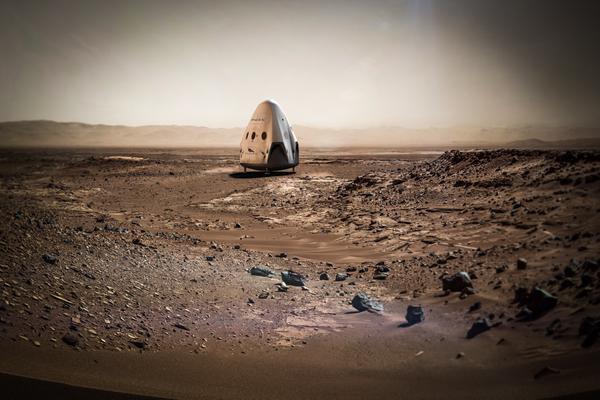
And in case you thought it was just a novel or a movie… Entrepreneur Elon Musk posted a photo on Twitter this week of his Dragon Spacecraft landing on the red planet. Enjoy the ‘Saturday Read’ – ‘The Martian’.

elonmusk dragon

The Saturday Read ‘A Hologram for the King’ by Dave Eggers

Before you see the movie, take a trip with author Dave Eggers to King Abdullah Economic City in Saudia Arabia and meet American salesman, Alan Clay in this week’s Saturday Read, ‘A Hologram for the King’.

Have you ever had a job in sales? If yes, you know the feeling of dependence on the whim of a sometimes enigmatic client. You have developed a second sense for the competitive pitch of your business rivals. And you have learned to rely on the support of your tech team to execute a demo, make you look good, and help you close the deal. You also know what it’s like to lose, maintain your confidence and uncover the next potential opportunity in the loss.

This 2012 novel is the story of one man’s American Dream on the edge as he pursues his last chance at success in the bewildering global marketplace. If you have not worked in sales, the book cracks open a window into the world of waiting for a face to face meeting with a prospect, in this case, the king.

Alan has the attitude, extremes of confidence and self-doubt, the bi-polar disposition required of all successful sales folk.

“…He was more than that. Some days he was more than that. Some days he could encompass the world. Some days he could see for miles. Some days he climbed over the foothills of indifference to see the landscape of his life and future for what it was: mappable, traversable, achievable. Everything he wanted to do had been done before, so why couldn’t he do it? He could. If only he could engage on a continual basis. If only he could draw up a plan and execute it. He could! He had to believe he could. Of course he did.”

In her June, 2012 review of the book, Michiko Kakutani reflected on the larger themes of the narrative.

“In Mr. Eggers’s telling, the 54-year-old Alan is not just another hapless loser undergoing a midlife crisis. Rather, his sad-funny-dreamlike story unfolds to become an allegory about the frustrations of middle-class America, about the woes unemployed workers and sidelined entrepreneurs have experienced in a newly globalized world in which jobs are being outsourced abroad.”

‘…he has achieved something that is more modest and equally satisfying: the writing of a comic but deeply affecting tale about one man’s travails that also provides a bright, digital snapshot of our times.”

In an interview with Cressida Leyshon, author Eggers described how the story evolved to blend the themes of globalization and the American economy.

“Before I heard about K.A.E.C., I had been kicking around ideas about a character who had been in manufacturing. The idea of Alan having been in bicycle manufacturing arrived next, and was personal to me, given I grew up about twenty miles from the Schwinn factory, which was building great bikes until the eighties on the west side of Chicago. I wanted to explore how an essentially good man like Alan participated in the process of manufacturing moving offshore in the eighties and nineties, slowly making the factories, workers, supply chain, and eventually, himself, unnecessary.”

Tom Hanks is cast as Alan in the movie. The promo photo released early this year captures our hero in the desert, clad in the costume of the everyman salesman, coat and tie, regardless of the environment.

Unknown

Near the end of the book, Alan utters the mantra of sales.

“…he had to presume goodwill. He had to hope for amnesia.”

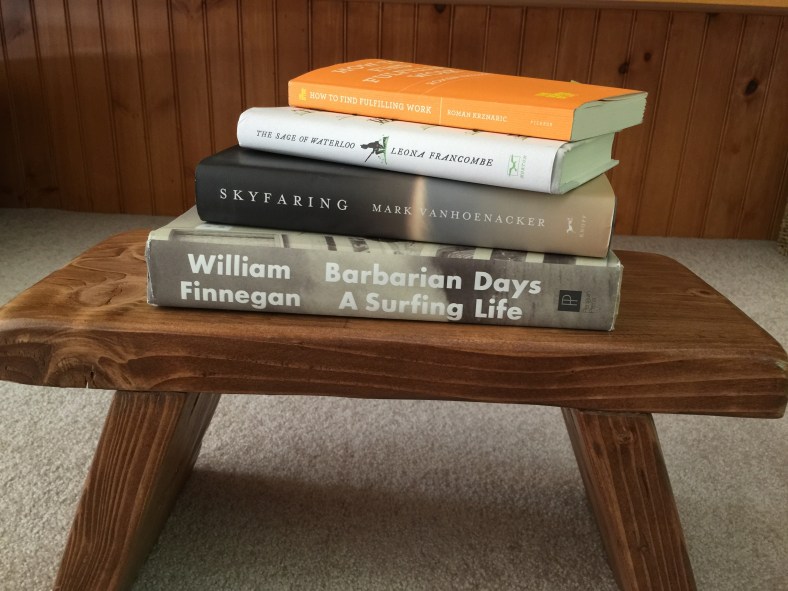
The Saturday Read – Best of the summer for Labor Day reading

It’s the last long weekend of summer and one more opportunity to get lost in a story – in a beach chair, a park bench or your favorite comfy spot at home. I am suggesting four books from the archive of ‘The Saturday Read’. The narrators of these stories include the founder of the world’s first empathy museum, a management consultant turned pilot, a political writer and surfer and an oral historian with floppy ears. Pick the one that fits your mood or motivation.

If you’ve decided it’s time to rethink your career, ‘How to Find Fulfilling Work’ by Roman Krznaric is my pick. He suggests “We have entered a new age of fulfillment, in which the great dream is to trade up from money to meaning.” Think about that. He is proposing that meaning has more value than money.

His goal is to encourage the reader to stop thinking about taking action and actually get out and do something. The book is essentially an answer to two questions:

“What are the core elements of a fulfilling career?” and “How do we go about changing career and making the best possible decisions along the way?”

The best ‘travel’ book of the summer and best book about work is ‘Skyfaring’ by Mark Vanhoenacker.

What do we know of the work lives of pilots? These are the folks we trust to transport us across oceans, continents, cities and deserts. Our only contact through hours of flight is a welcome message, flight status update or a ‘thank you for choosing our airline’.

Turns out, pilots can be very interesting people. And, like many of us, they arrive at their ‘dream job’ after trying out other options. Mark Vanhoenacker’s career began in academia and management consulting. He started his flight training in 2001 after realizing all those plane flights were constant reminders of what he really wanted to do with his life.

“Is flying something I have always wanted to do? Have I ever seen anything “up there” that I cannot explain? And do I remember my first flight? I like these questions. They seem to have arrived, entirely intact, from a time before flying became ordinary and routine. They suggest that even now, when many of us so regularly leave one place on the earth and cross the high blue to another, we are not nearly as accustomed to flying as we think. These questions remind me that while airplanes have overturned many of our older sensibilities, a deeper part of our imagination lingers and still sparks in the former realm, among ancient, even atavistic, ideas of distance and place, migrations and the sky.”

What if your life passion is surfing, but your ‘day job’ is war reporter and international correspondent? If you wrote a memoir, would your work be taken less seriously? Apparently not, as my third pick for the upcoming weekend, ‘Barbarian Days’ by William Finnegan debuted on The New York Times hardcover non-fiction list at number five.

He first wrote about surfing in ‘Playing Doc’s Games’, profiling Mark Renneker for The New Yorker in 1992. Twenty three years later Doc returns along with a global cast of supporting characters inviting the reader to go out with them on the water.

Why should a non-surfer invest in a memoir subtitled ‘A Surfing Life’? Because it’s an everyman’s story of reconciling passions.

“Yes, I had been bewitched by surfing as a kid – trotting dreamily down a path at dawn, lit by visions of trade-blown waves, rapt even about the long paddle to Cliffs. The old spell had been broken, at times, or seemed to be. But it always lay there, under the surface, dormant but undestroyed while I knocked around the far world, living in waveless places – Montana, London, New York.”

“Here I was writing, often contentiously, about poverty, politics, race, U.S. foreign policy, criminal justice, and economic development, hoping to have my arguments taken seriously. I wasn’t sure that coming out of the closet as a surfer would be helpful. Other policy wonks might say, Oh, you’re just a dumb surfer, what do you know?”

The last recommendation is my favorite book of summer  This year marks the bicentennial of the Battle of Waterloo. A number of books have been published to coincide with the anniversary, but it’s the unique storytelling of author Leona Francombe in ‘The Sage of Waterloo’ that gives us a very different view of the conflict.

The story begins when a French drummer boy releases a white rabbit into the Hougoumont gardens during the battle on June 18, 1815. Our narrator, William, is guided on his journey by his grandmother, Old Lavender and a wise researcher, Arthur. He invites us to join him along the route the rabbits call the ‘Hollow Way’:

“There are many soft hillocks and hollows along this part of the Way on which one can rest and look back, and I suggest that you do this, too, because the view behind is as clear as the view ahead, and offers some valuable lessons besides.”

Yes, we are talking bunnies. Or, the bunny is talking to us. And along his path we join the Battle of Waterloo.

“Waterloo is small as battlefields go…the Hougoumont part of it even smaller. How extraordinary, then, that my farm – my tiny corner of Belgium, which even today people have difficulty locating on a map – should have made history in just a few hours.”

This small novel is a unique oral history of the Battle of Waterloo. Blending historical fact with fiction, author Francombe creates an unlikely ‘sage’ to carry the “collective memory…and resonance.” And reminds us to “feel what still hangs in the air” when we visit historic sites.

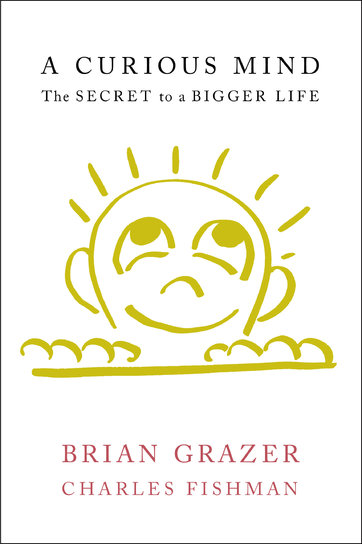
The Saturday Read – Brian Grazer and Charles Fishman ‘A Curious Mind: The Secret to a Bigger Life’

Are you curious about the people who work for you? Academy award winning producer Brian Grazer thinks you should be. He manages his organization with curiosity, by asking questions. His book, ‘A Curious Mind: The Secret to a Bigger Life’ was released earlier this year and is a memoir of his success and it’s source, listening to the answers.

“If you’re the boss, and you manage by asking questions, you’re laying the foundation for the culture of your company or group. 

You’re letting people know that the boss is willing to listen. This isn’t about being “warm” or “friendly”. It’s about understanding how complicated the modern business world is, how indispensable diversity of perspective is, and how hard creative work is.”

The initial reviews of the book focused on the ‘curiosity conversations’ Grazer has utilized throughout his career to network with a variety of folks in his unique quest for lifelong learning. But in the acknowledgements at the end of the book he addresses the reader directly on his purpose in writing ‘A Curious Mind’.

“a book not about my curiosity, but about what curiosity has enabled me to do, about what curiosity can enable anyone to do…”

“I didn’t want to write a book about all the people I’d had conversations with – I wanted to write about the impulse to have those conversations. I wanted to use the conversations to tell a story: the story of my steady discovery of the power of curiosity in my own life.”

For Grazer, it’s not just a hobby, but a commitment to intentionally integrate questioning into both his work and life outside of work.

“For it to be effective, curiosity has to be harnessed to at least two other key traits. First, the ability to pay attention to the answers to your questions – you have to actually absorb whatever it is you’re being curious about…The second trait is the willingness to act.”

In the early chapters he describes the power of curiosity to motivate, spark creativity, and build confidence. He is the ‘bard of curiosity’ sharing his career story intertwined with his capacity for discovery. But it’s in chapter five where the storytelling turns to management advice. “…the human connection that is created by curiosity…Human connection requires sincerity. It requires compassion. It requires trust.”

“Can you really have sincerity, or compassion, or trust, without curiosity?

“I don’t think so. I think when you stop to consider it – when you look at your own experiences at work and at home – what’s so clear is that authentic human connection requires curiosity.”

Here is the ‘gem’ of the book.

“To be a good boss, you have to be curious about the people who work for you.”

How many of you have a BA in business, an MBA or certificate from a prestigious executive management program? Has anyone ever suggested management by curiosity? We have all been taught to listen. And we don’t. But no one ever explained in this way, how critical the right questions are to getting to the fundamentals when decisions are being made.

“I use curiosity every day to help manage people at work…as a tool to build trust and cooperation and engagement.”

“And curiosity is the key to connecting and staying connected.”

Reading ‘A Curious Mind’ reminded me of a quote buried in dialog in the 2012 novel by Mark Helprin, ‘In Sunlight and in Shadow’:

“It’s a defining difference, curiosity. I’ve never known a stupid person who was curious, or a curious person who was stupid.”