‘Transmission’ a poem by Rachel Richardson

On July 2nd, 1937 aviator Amelia Earhart was attempting to be the first woman to circumnavigate the globe. She and her navigator, Fred Noonan had completed 22,000 miles of a 29,000 mile journey when transmission was lost. Ten ships, 3,000 men and 100 aircraft searched for the missing plane. The disappearance remains a mystery and has generated multiple conspiracy theories and continuing efforts by private organizations to discover the wreckage.

Earhart had become an early twentieth century role model for women. Her final note to her husband acknowledged the danger as well as her feminism.

“Please know I am quite aware of the hazards of the trip. Women must try to do things as men have tried. When they fail, their failure must be but a challenge to others.”

The Friday Poem by Rachel Richardson captures an imagined ‘transmission’ from the final moments of that flight.

Transmission

There was a girl who heard it happen:
Amelia Earhart calling
on the radio, she and her navigator
alternately cursing and defining their position
by latitude, as best they could read it
in the bellowing wind, and by what
they could surmise of their rate per hour,
last land they’d seen. Stay with me, someone,
and the girl wrote each word
in her composition book, kept the channel
tuned, hunched to the receiver
when static overtook the line.
Why do I think of her?
The coast guard laughed at her father
holding out the schoolgirl scrawl
and sent him home ashamed. A lost woman
is a lost woman, he told her, and the sea
is dark and wide.

Rachel Richardson  The New York Times Magazine  January 22, 2016


The Friday Poem @ the intersection of Maya Angelou, Hillary Clinton and Muhammad Ali

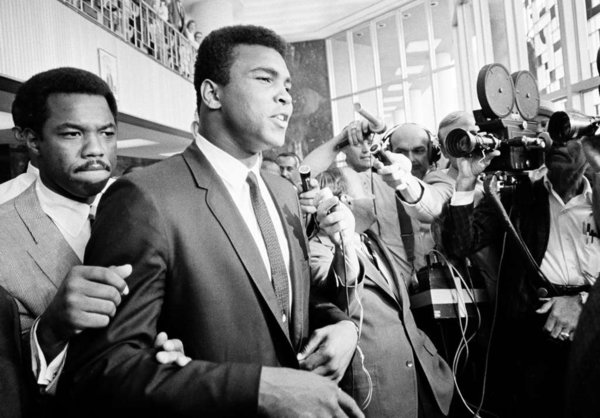
Maya, Muhammad and Hillary. Not three names you would intuitively link together, but that’s what history claimed this week, as a ‘political poet’ passed, and a deceased poet’s 2008 words echoed in the background of a rally at the Brooklyn Navy Yard.

The news of the death of Muhammad Ali literally stopped the presses at the New York Times early Saturday morning. On Wednesday, newspapers across the country led with the history making headline reporting “Hillary Clinton‘s nomination: A win 96 years in the making”.

It will not be an easy road to November for Secretary Clinton as reported by Patrick Healy and Sheryl Gay Stolberg.

“When Hillary Clinton swept onto the stage at her victory rally Tuesday night, the thunderbolt of history struck many Americans, no matter their love or loathing for her: A woman could be the next president of the United States.

But like so much about Mrs. Clinton, her speech, which lit up televisions and smartphones and social media all day Wednesday, produced conflicting emotions.

For some, it was an inspiring moment that brought home in a visceral way that Mrs. Clinton is the first woman to become the presumptive nominee of a major party. For others, there were chills and discomfort that this next step forward in our national story was unfolding with this particular woman.”

IMG_4810.jpg

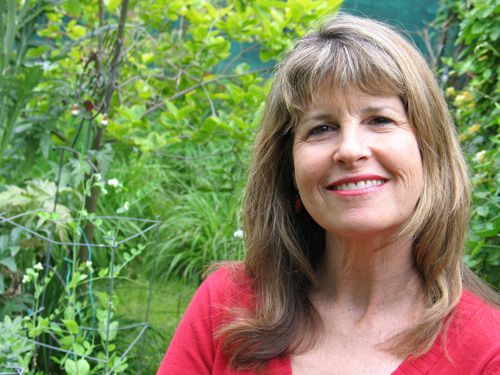
The candidate might take heart from the poem Maya Angelou submitted to The Observer in 2008, with the backstory told by Vanessa Thorpe for The Guardian.

“She is supporting Clinton despite her close friendship with television personality and philanthropist Oprah Winfrey, a prominent backer of rival Democrat Barack Obama, the first black presidential hopeful with a real chance of reaching the White House.

Angelou is steadfast in her loyalty to Clinton. She said recently: ‘I made up my mind 15 years ago that if she ever ran for office I’d be on her wagon. My only difficulty with Senator Obama is that I believe in going out with who I went in with.’

Andrew Motion, the Poet Laureate, said of the poem: ‘This is a great thing for The Observer to have.’ He favourably compared it with the ‘vivid flourishes’ of Angelou’s recent work. ‘With this kind of poem Angelou has decided to interpret public writing as a verbal equivalent of making a poster, and there’s nothing wrong with this. The rhetoric is full of big gestures that make a direct appeal to our feelings, rather than getting to it by the little winding ways more personal poetry might use.'”

The poem:

State Package for Hillary Clinton

You may write me down in history

With your bitter, twisted lies,

You may tread me in the very dirt

But still, like dust, I’ll rise.

This is not the first time you have seen Hillary Clinton seemingly at her wits’ end, but she has always risen, always risen, don’t forget she has always risen, much to the dismay of her adversaries and the delight of her friends.

Hillary Clinton will not give up on you and all she asks of you is that you do not give up on her.

There is a world of difference between being a woman and being an old female. If you’re born a girl, grow up, and live long enough, you can become an old female. But to become a woman is a serious matter. A woman takes responsibility for the time she takes up and the space she occupies. Hillary Clinton is a woman. She has been there and done that and has still risen. She is in this race for the long haul. She intends to make a difference in our country. Hillary Clinton intends to help our country to be what it can become.

She declares she wants to see more smiles in the family, more courtesies between men and women, more honesty in the marketplace. She is the prayer of every woman and man who longs for fair play, healthy families, good schools, and a balanced economy.

She means to rise.

Don’t give up on Hillary. In fact, if you help her to rise, you will rise with her and help her make this country the wonderful, wonderful place where every man and every woman can live freely without sanctimonious piety and without crippling fear.

Rise, Hillary.

Rise.

Maya Angelou, 2008

20131006_dn_0mu24lap.jpg

On Thursday, Henry Louis Gates Jr. recalled ‘Muhammad Ali, the Political Poet’. In the essay he linked Angelou and Ali by their poetry, often labeled ‘doggerel’.

“Perhaps Maya Angelou, whose own poetry is sometimes labeled doggerel, said it best: “It wasn’t only what he said and it wasn’t only how he said it; it was both of those things, and maybe there was a third thing in it, the spirit of Muhammad Ali, saying his poesies — ‘Float like a butterfly, sting like a bee.’ I mean, as a poet, I like that! If he hadn’t put his name on it, I might have chosen to use that!”

“It would be a mistake to say that Ali made black oral poetry more sophisticated or complex, but he did make it more political. After learning his local draft board had declared him eligible for induction into the Army in 1966, Ali recited this poem:

Keep asking me, no matter how long,
On the war in Vietnam,
I sing this song:
I ain’t got no quarrel with no Viet Cong.

On this Friday, we pause to remember the athlete, humanitarian and role model who was Muhammad Ali, we celebrate a milestone for women, and reflect on the words of two American poets who significantly influenced our culture.


‘Mind the gap’ – the advantages of ‘full disclosure’ on your resume

The twenty-first century resume doesn’t follow the format suggested by experts in the past. The CV of the ‘gig economy worker’ offers a mosaic of diverse experiences, but it also includes gaps – periods of time not working. A recent study shows the competitive advantage goes to the candidate who ‘minds the gap’ and candidly discloses these career ‘sabbaticals’.

The golden rule of job search is to present yourself as who you are: not your social media presence, not through the biased lens of family and friends, and definitely not ‘shape shifted’ to match a particular job description.

Finding a job is about finding a ‘fit’, discovering a close match between your talent, values and aspirations. If an employer is dismissive of your qualifications because of breaks, you have met ‘the canary in the coal mine’, so take the hint and move on to a place where the value of those  gaps is understood.

Patricia Cohen examined the issue as it relates to family leave. Do you explain a child care gap in your resume?

“For women hoping to return to the workplace after caring for their children, the advice is often “don’t ask, don’t tell.” Many women who described themselves as stay-at-home mothers can attest to receiving denigrating nods and hasty rebuffs. Researchers have repeatedly found ample evidence of discrimination against mothers in the hiring process and the workplace.

But women may be better off explaining their decision to stay home to a potential employer upfront, said Joni Hersch, a professor of law and economics at Vanderbilt Law School, and co-author of a new study on the subject, “Something to Talk About: Information Exchange Under Employment Law.” Employers, afraid of running afoul of anti-discrimination laws, don’t bring up the subject, she said, and female applicants, picking up on those cues, often don’t offer information, leaving hirers to guess at the reasons behind a hiatus.

But, Professor Hersch said, “women who conceal personal information dramatically lower their hiring prospects.”

What’s the ‘take-away’ here?

Reliance on your resume as a single point of introduction to an employer is not your best job search strategy – it never has been.

The best job search strategy is a lifelong management of relationships. Maintaining professional connections, through career success and career breaks establishes your professional credibility. There is no substitute for a career advocate who ‘gets you’ and sees the complete picture of your career plan, warts and all. Someone who can advise you as you develop your script, tell your story and mind the gaps.


The week@work – wage gaps, low expectations, false assumptions,’Confirmation’, and reflections on a 50 year career

After reviewing the stories selected for this week@work, I realized there was a common theme in all except one: women who are pursuing their dream jobs in male dominated fields. The last story, and exception to the theme, is Alberto Tomasi’s, a cabdriver for the past 50 years in Rome.

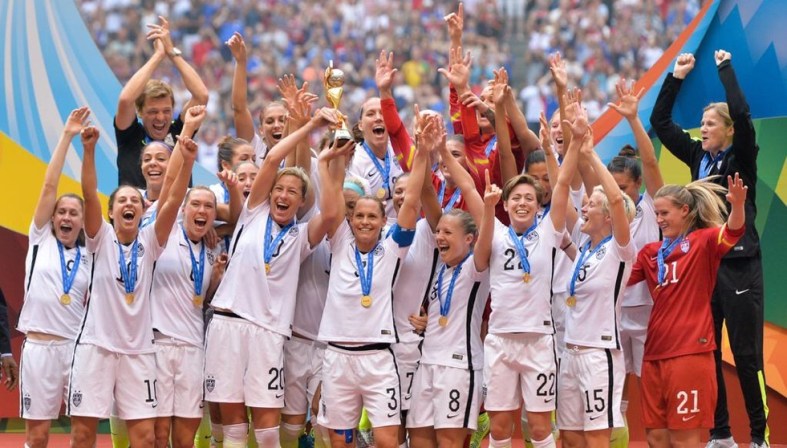
There have been many conversations recently about the wage gap between men and women@work. One of the most egregious discrepancies occurs on the global stage of world cup soccer. Earlier this month, five members of the U.S. Women’s National Team filed a wage discrimination action against the U.S. Soccer Federation. Carli Lloyd, co-captain of the team outlined her position in an essay, ‘Why I’m Fighting for Equal Pay’.

“I’ve worn a U.S. Soccer uniform for 12 years and have done so proudly. I’ve had some of the greatest moments of my life — winning two Olympic gold medals and the 2015 Women’s World Cup — wearing that uniform. So when I joined four teammates in filing a wage-discrimination complaint against U.S. Soccer late last month, it had nothing to do with how much I love to play for my country.
IMG_2458.jpg

When we talk about the wage gap in today’s workplace, experts estimate women earn 79% of a man’s salary for the same job. For U.S. women’s soccer, it’s 17% for the top players and 21% for the rest. There is no overtime pay in a career that requires a player to be on the road for 260 days a year.

In a sport where the women’s team revenue will exceed $5million vs. a $1million deficit for the men’s team, the top five women’s annual salaries are $72K vs the men’s at $406K. Members of the women’s world cup team earn $15K to the men’s $69K. When the women won the world cup last year they earned a $75K bonus. If the men were to win, they would bring home $390K.

The fact that women are being mistreated financially is, sadly, not a breaking news story. It goes on in every field. We can’t right all the world’s wrongs, but we’re totally determined to right the unfairness in our field, not just for ourselves but for the young players coming up behind us and for our soccer sisters around the world.”

In a related story, New York Magazine writer, Dayna Evans reports on the ‘expectation gap’ in salary negotiations uncovered by job marketplace, Hired – ‘Study Finds That Women in Tech Ask for Lower Salaries Than Men Do’.

womenwhocode1

“After analyzing 100,000 interview requests and job offers over the last year, tech job marketplace Hired found that, on average, tech companies offer women 3% less than men for the same roles. Among the most interesting—and troubling—pieces of data is that men receive higher salaries 69% of the time than women for the same job titles at the same companies.

Some of that disparity could be attributable to women not setting their demands high enough. Because Hired’s marketplace lets job seekers specify the salaries they’re seeking, the report provides a glimpse into both expectations and final offers. In roles that are more male dominated, women often set their salary expectations lower than their male counterparts.

Overall, Hired’s data shows that the average woman on our platform sets her expected salary at $14k less per year than the average man on our platform. When we break the expectation gap down by role — comparing women and men in the same job category — we found as the ratio of men to women in the role increases, so does the gap.”

The death of Pritzker Prize winning architect, Zaha Hadid on March 31 prompted The New York Times to send an “informal online questionnaire” asking “female architects among its readers to talk candidly about their experiences in the profession: the progress they’ve made and the obstacles they still face on construction sites and in client meetings.”

“For a woman to go out alone in architecture is still very, very hard,” the architect Zaha Hadid said. “It’s still a man’s world.” Ms. Hadid often stated that she did not want to serve as a symbol of progress for women in her profession. But, inevitably, she did. A study on diversity in the profession released this year by the American Institute of Architects found that “women strongly believe that there is not gender equity in the industry”; that women and minorities say they are less likely to be promoted to more senior positions; and that gender and race are obstacles to equal pay for comparable positions. Since Ms. Hadid won the Pritzker Prize in 2004, the percentage of female architects in the United States has barely grown, increasing to 25.7 percent from 24 percent, according the Bureau of Labor Statistics.”

The article is a series of snapshots of successful architects@work, encountering obstacles in a still white-male dominated field. One example from Yen Ha, Principal of Front Studio Architects in New York.

13archwomen-span-master675

“We absolutely face obstacles. Every single day. It’s still largely a white, male-dominated field, and seeing a woman at the job site or in a big meeting with developers is not that common. Every single day I have to remind someone that I am, in fact, an architect. And sometimes not just an architect, but the architect. I’m not white, wearing black, funky glasses, tall or male. I’m none of the preconceptions of what an architect might be, and that means that every time I introduce myself as an architect, I have to push through the initial assumptions. Every new job site means a contractor who will assume I am the assistant, decorator or intern. It usually isn’t until the third meeting that the project team looks to me for the answers to the architectural problems.”

In 1991 there was a vacancy on the U.S. Supreme Court. Then President George H.W. Bush nominated U.S. Circuit Court of Appeals Justice Clarence Thomas to fill the vacancy. This past weekend, HBO aired ‘Confirmation’, the story of former colleague Anita Hill testifying before the Senate Judiciary Committee that Thomas had sexually harassed her.

Unknown.jpeg

‘The Real Story Behind HBO’s ‘Confirmation’ From The NPR Reporter Who Broke The Story’ provides a Q & A with NPR correspondent, Nina Totenberg.

“I’d been hearing all summer long that there were women who said they were harassed by Clarence Thomas when he was at the EEOC and when he was at the Education Department,” Totenberg said. “But I could never really prove it. And then I heard about this woman, Anita Hill.”

That’s when everything changed.

You don’t recognize this now, but sexual harassment was a dirty little secret that most women had but they didn’t talk about. They were embarrassed by it; it was a hindrance and not a help in any way. Now suddenly, it gets popped into the open. … But all of those silent, female experiences materialized in the … phones exploding on Capitol Hill.”

Thomas was confirmed by a vote of 52-48. The legacy of Hill’s action was a dramatic increase in the number of sexual harassment claims filed with the EEOC.

“NPR received the prestigious George Foster Peabody Award for its gavel-to-gavel coverage — anchored by Totenberg — of both the original hearings and the inquiry into Anita Hill’s allegations, and for Totenberg’s reports and exclusive interview with Hill.”

Totenberg received individual accolades as well, but there was a downside.

“I was pilloried during this. I had one of the great stories of any reporter’s life. I had worked very hard to get it. And the cost was enormous in terms of negative publicity and people trashing me a lot and senators yelling at me. At one point I had a driver at Nightline who went around the corner [and] stopped and he said to me … “Lady, you better get a gun.”

The final story this week is ’50 Years in a Cab: A Long, Winding Trip for One Driver, and His City’, from Elisabetta Povoledo.

Rome_airal_picture.jpg

“From his front-seat perch, Alberto Tomassi, a Roman cabdriver for 50 years, has been both eavesdropper and confessor. He has played impromptu tour guide, thwarted muggings and rushed countless clients to the emergency room.

Expertly navigating Rome’s narrow, potholed streets — many conceived centuries before the internal combustion engine — he has developed the unflappable calm of a Zen monk.

“If you can get through the first 15 years without getting really angry, you can do it forever,” Mr. Tomassi said. “I just take things as they come.”

“You don’t get rich doing this job, but it’s honest work,” he said. “You can raise a family, put your kids through school.”

His only disappointment this year was in not being recognized for his service.

“…no party, no gold watch, no tribute — so he decided to place a round silver sticker emblazoned with “50 years of taxi” on the rear window of his cab.”


‘Habit’ a poem by Hazel Hall

When we talk about work today, we frequently blame technology for upsetting the balance between work and life. But if we look back to the previous century, we find work and life have always been a bit uneven.

The Friday Poem this week is ‘Habit’ by Hazel Hall.

Confined to a wheelchair after complications from scarlet fever, she worked as a seamstress “and gainfully occupied herself embroidering the sumptuous fabrics of bridal gowns, baby dresses, altar cloths, lingerie, and Bishop’s cuffs that figure so lushly in her poems. But early in her twenties, taxed by the strain of needlework, her eyesight began to fail, and she turned to writing poems.”

Hall’s writings—her mirror trained on the world—convey the dark undertones of the lives of working women in the early twentieth century, while bringing into focus her own private, reclusive life—her limited mobility, her isolation and loneliness, her gifts with needlework and words, and her exquisite grief.”

Habit

Last night when my work was done,
And my estranged hands
Were becoming mutually interested
In such forgotten things as pulses,
I looked out of a window
Into a glittering night sky.

And instantly
I began to feather-stitch a ring around the moon.

Hazel Hall

‘Big Dreams’ a poem by April Halprin Wayland

Time to add a bit of whimsy to the end of the week with ‘Big Dreams’.

We discover our first dreams in the magic of children’s literature: the poetry of great writers, and the illustrations of great artists. The Friday Poem this week encourages us to revisit those dreams through the words of April Halprin Wayland.

“For four and a half years I worked in the marketing department of Pacific Bell, which became AT&T. I knew that world was not for me. To keep my sanity, I took a class at UCLA Extension called Writing for Children, taught by Terry Dunnahoo. Terry’s class changed my life. It was as if I had fallen madly, deeply in love. When I walked to lunch with my corporate buddies, the men at construction sites whistled at me. They hadn’t whistled at me before I was in Terry’s class. Something huge had shifted in me; I was electric. I knew I had to take the leap. In one of my last meetings at AT&T, I pretended to take notes, but was actually writing a poem about a child who runs away to live with rabbits and slowly turns into one. I don’t know if I was writing about me, turning into a corporate bunny…or if I was writing about my desperate need to run away from the corporate life.”

Big Dreams

The scruffy house cat
aches to fly—
she dreams all day of
wings and sky!

So tonight
she climbs the ladder,
mounts a platform,
nothing matters

except to catch
a thin trapeze
then hold on tight
with grace and ease.

She swings herself
by both front paws
then somesaults
to wild applause

of kitchen mice,
who, though dizzy,
encourage Cat,
to keep her busy.

April Halprin Wayland

The week@work: terror on the way to work, a factory fire anniversary, values-based leadership@Starbucks, a millennial workplace, & a new job benefit


How do you share work thoughts when so many were killed and injured on their way to work on Tuesday morning? Apparently, we go on. I have to agree with the sentiment expressed by writer Pamela Druckerman in today’s New York Times ‘Je Suis Sick of This’.

“To Europeans, Brussels was supposed to be a dull place that you didn’t have to think much about until you had to change planes there. There’s a parlor game in which you stump people by asking them to name 10 famous Belgians. “Brussels, the anti-fanatic attacked by the fanatics,” French journalist Laurent Joffrin wrote in Wednesday’s Libération. “Brussels, a cousin whom one is content to know is there.”

Right after an attack it’s easy to say that everything feels different. People are horrified. Parents keep their kids home from school. Newspapers run headlines like “Europe at War.” There is the sad, familiar search for a slogan: This time, I prefer the Belgian frites arranged to make a rude gesture resembling a finger, and the banner reading, “Je suis sick of this” followed by an expletive.”

We don’t stop working. Maybe we are a bit more vigilant, the slogan ‘If you see something, say something’, temporarily gets more attention.

Journalist Druckerman continued, “Despite the inevitable false positives, it’s hard not to be on guard. I’m constantly making a series of mundane existential calculations: Is it worth it to risk going to a movie? Should I let my kids ride the metro to soccer practice? Daily life has a chiaroscuro quality: One minute you’re riding a bus and enjoying a view of the river; the next you’re wondering about the fellow with an unusually large backpack.”

There were other stories this week@work.

Friday was the 105th anniversary of the Triangle Shirtwaist Factory fire. It resonates with workers today because it was a story of immigrant workers, and led to changes in U.S. factory regulations and safety.

triangle fire.jpeg

Joseph Berger summarized the events in a 2011 article.

“A block east of Washington Square, not far from the neighborhood’s boutiques and chic restaurants, was the site of one of the nation’s worst industrial disasters. Many New Yorkers might be unaware of this.

Some labor advocates are trying hard to change that. They have organized an effort to build a memorial to the infamous Triangle Shirtwaist Factory fire of 1911, in which 146 workers died. Most of them were young immigrant women from Eastern Europe and Italy, and more than 50 jumped to their deaths from the factory’s ninth floor.

Two years ago, Tom Marshall posed the question, “Can disasters make life better for future generations?”  He went on to draw a parallel between the Triangle Shirtwaist factory fire and the 2013 garment factory collapse in Dhaka, Bangladesh.

“In both cases, inspectors visited and filed critical safety reports, but scores of people still died while making clothes for others. The American disaster is now hailed as a turning point that led to safer workplaces and broad support for a minimum standard of workers’ rights, while the Bangladeshi disaster’s impact is less certain.”

This week@work Starbucks chairman and CEO, Howard Schultz spoke at the annual shareholders meeting, and expanded on a conversation begun two years ago on the role and responsibility of a for-profit corporation. “What is the role and responsibility of all of us, as citizens?”

K9sMR38U-1650-1650

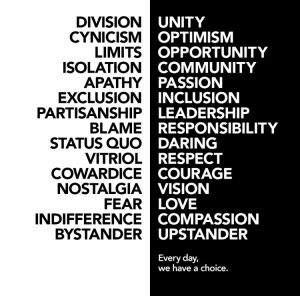
“Viewing the American Dream as a “reservoir” that is replenished with the values, work ethic and integrity of the American people, Schultz said, “Sadly, our reservoir is running dry, depleted by cynicism, despair, division, exclusion, fear and indifference.”

He suggested citizens fill the reservoir of the American Dream back up, “not with cynicism, but with optimism. Not with despair, but with possibility. Not with division, but with unity. Not with exclusion, but with inclusion. Not with fear, but with compassion. Not with indifference, but with love.”

“It’s not about the choice we make every four years,” Schultz said. “This is about the choices we make every day.”

One of the ‘most read’ articles last week, ‘What Happens When Millennials Run the Workplace?’, provided one more illustration that work issues are people issues, and it really doesn’t matter how you generationally identify.

“Joel Pavelski, 27, isn’t the first person who has lied to his boss to scam some time off work.

But inventing a friend’s funeral, when in fact he was building a treehouse — then blogging and tweeting about it to be sure everyone at the office noticed? That feels new.

Such was a recent management challenge at Mic, a five-year-old website in New York that is vying to become a leading news source created by and for millennials.”

The workplace is changing and the 80 million millennials @work will make a significant impact on work/life and the global economy. As a group, the 40 million with college degrees enter the workforce taxed with student loans that are the equivalent of a mortgage. Fidelity Investments announced a new employee benefit last week to address student loan repayment.  Tara Siegel Bernard provided the details.

“Fidelity will apply up to $2,000 annually to the principal of its employees’ student debts.

Fidelity is one of the more prominent employers to announce the student loan repayment benefit in recent months, a policy that seems likely to gain traction. The benefit helps address what some employers describe as a challenge attracting and retaining younger workers, many of whom can’t see beyond the burden of their student debt. Most employers that are offering the new perk also cap their costs at, say, $10,000 total per employee.”

At the end of a difficult week, spring wishes and Happy Easter!

IMG_4148


The week@work: ‘idea debt’, interview questions & women@work: #pledgeforparity & the downside of being a trailblazer

‘Idea debt’, emotional intelligence, International Women’s Day, and lessons from the ‘girl next door who loved sports’, headline our survey of stories this week@work .

Are you a ‘wantrapreneur’? Journalist Oliver Burkeman debunks the belief that thinking about doing something is doing it.

1156.jpg

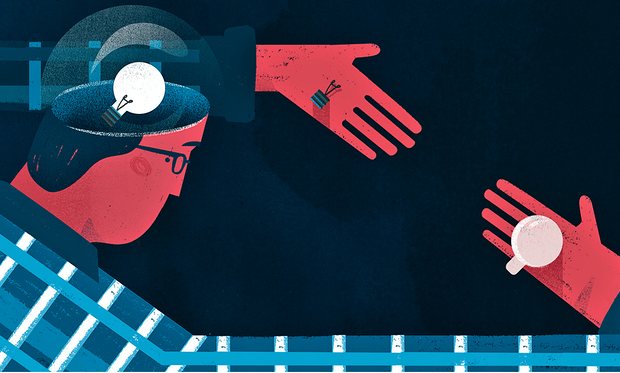
“I hadn’t seen the problem clearly until the other day, when I encountered the illustrator Kazu Kibuishi’s term for it: “idea debt”. You run up an idea debt, Kibuishi’s fellow artist Jessica Abel explained, when you spend “too much time picturing what a project is going to be like, too much time thinking about how awesome it will be… and too little time actually making the thing”.

Just as the accruing interest on a credit card makes it harder and harder to get back on your feet financially, idea debt impedes action. The more glorious and detailed the pictures in your mind, the more daunting it feels to start making them real.

As Gregg Krech writes in his book The Art Of Taking Action, external reality remains exactly the same after your decision to ask someone out, to write a book, or leave your job. What matters is “creating ripples”, as he puts it – actions, however tiny, that alter things in the world outside your head.”

What are the questions employers ask to determine if a job candidate possesses a solid set of ‘people skills’?  With her article, ‘7 Interview Questions That Determine Emotional Intelligence’, Carolyn Sun not only provides tips for interviewers, but explains the rationale behind the questions for potential hires.

images.jpeg

Here’s one example:

“Can you teach me something, as if I’ve never heard of it before? (It can be anything: A skill, a lesson or a puzzle.)
A job candidate’s answer to this question can reveal several qualities:

Whether the person is willing to take the time to think before speaking.

If the candidate has the technical ability to explain something to a person who is less knowledgeable in the subject.

Whether the candidate asks empathetic questions to the person being taught, such as, “Is this making sense?”

On March 8, International Women’s Day, the Economist “created a glass-ceiling index”, to show where women have the best chances of equal treatment at work. It combines data on higher education, labour-force participation, pay, child-care costs, maternity rights, business-school applications and representation in senior jobs. Each country’s score is a weighted average of its performance on nine indicators.

purple-woman.jpgTo no one’s surprise, Nordic countries come out well on educational attainment and labour-force participation. Women are also relatively well represented in their parliaments; Finland and Sweden were among the first countries to allow women to vote and stand for election. Yet even there women are paid less than men for similar work. In Finland and Sweden the gap is close to the OECD average of 15%, though in Norway it has fallen to 8%.

At the bottom of our index are Japan and South Korea. Too few women there have jobs, few senior managers or board members are women and pay gaps are large—in South Korea, at 37%, the largest in the OECD. If, in the UN’s words, “equality for women is progress for all”, both countries have a long way to go.”

If you are interested additional reporting on #pledgeforparity and IWD,  Washington Post journalist Danielle Paquette wrote two stories this week for Wonkblog:

‘It’s 2016, and women still make less for doing the same work as men’

‘Pay doesn’t look the same for men and women at top newspapers’

The next story falls into the category of ‘you should be safe when you pursue your dream job.’

When sports journalist Erin Andrews graduated from the University of Florida in 2000, she began a career that eventually brought her to sidelines of college football at both ESPN and Fox Sports, and the dance floor; first as a finalist and now as the co-host of ‘Dancing With The Stars’.

Sarah Kaplan, reporting for The Washington Post summarized what happened next.

“In 2008, Michael David Barrett, who served 2 1/2 years in federal prison after pleading guilty to interstate stalking — said he chose to target her because she was popular and trending on Yahoo.”

“Erin Andrews wanted to be “the girl next door who loved sports,” she said.

“And now I’m the girl with a hotel scandal,” the Fox sportscaster tearfully told a Tennessee courtroom Monday.”

The trial and jury verdict in her favor last week is just one story of ‘The Dangers of Being a Female Sportscaster’ described by Richard Sandomir and John Branch for The New York Times.

Unknown.jpeg

“Female sportscasters have unparalleled reach in an age of round-the-clock sports broadcasting and the widespread dissemination of their work across social media. There are more of them now than ever, across multiple channels and websites.

The stories Sandomir and Branch recount serve as a guide for all women@work, not just those with a high profile in social media.

“I’ll try to avoid ever being in the hall of a hotel by myself,” said Kim Jones, a reporter for NFL Network. “And I’ll allow whoever is behind me to pass me before I put my card or key in the door. You have to be so aware because unfortunately that one time out of 10,000, something can happen.”

Alyssa Roenigk, a reporter for ESPN the Magazine who also appears on the air, primarily covering action sports like the X Games, said she had rarely given her security much thought. For years, she usually walked from venues to her hotel, even late at night. But as she began to do more television and was recognized more often, she was told by her bosses to start taking the courtesy car provided by the network.

“At first I thought I was getting special treatment, and I don’t want special treatment,” Ms. Roenigk said. “It’s not special treatment. It’s being safe.”

Stay safe this week@work, create some ripples and start reducing that ‘idea debt’.


The Friday Poem ‘The Persistence of Song’ by Howard Moss

The Friday Poem this week is ‘The Persistence of Song’ by Howard Moss, the poetry editor of The New Yorker for almost forty years.

“In that influential capacity, this quiet, unassuming man was one of the key figures in American letters in the late twentieth century, boosting the careers of many young poets by publishing their work in one of the few mass circulation magazines which bought poetry and paid well for it.”

This one is for the mentors who open doors, make connections and by their presence create a model to be imitated.

The poem appeared in The New Yorker in the fall of 1966 and takes us to a time in the city, when life after work was anticipated ..” When the secretaries have changed their frocks, And though it is not yet evening, There is a persistence of song.”

The Persistence of Song

Although it is not yet evening,
The secretaries have changed their frocks
As if it were time for dancing,
And locked up in the scholars’ books
There is a kind of rejoicing,
There is a kind of singing
That even the dark stone canyon makes
As though all fountains were going
At once, and the color flowed from bricks
In one wild, lit upsurging.

What is the weather doing?
And who arrived on a scallop shell
With the smell of the sea this morning?
-Creating a small upheaval
High above the scaffolding
By saying, “All will be well.
There is a kind of rejoicing.”

Is there a kind of rejoicing
In saying, “All will be well?”
High above the scaffolding,
Creating a small upheaval,
The smell of the sea this morning
Arrived on a scallop shell.
What was the weather doing
In one wild, lit upsurging?
At once, the color flowed from bricks
As though all fountains were going,
And even the dark stone canyon makes
Here a kind of singing,
And there a kind of rejoicing,
And locked up in the scholars’ books
There is a time for dancing
When the secretaries have changed their frocks,
And though it is not yet evening,

There is the persistence of song.

Howard Moss  The New Yorker, November 19, 1966


“If you just focus on the work…” A leadership lesson from Taylor Swift

While the annual TED conference is taking place 1,300 miles north, the event at the Staples Center in Los Angeles last night provided a valuable soundbite of career advice from an industry leader. Perhaps the folks at TED might think about an invite for 2017.

You had to wait for it. After two hours and 20 minutes, the woman who opened the 58th Grammy Award telecast returned to the stage to accept the iconic statuette for Album of the Year. Taylor Swift took her moment of recognition to encourage those in dysfunctional workplaces keep going and avoid the distractions of toxic coworkers.

“I want to say to all the young women out there – they’re going to be people along the way who will try to undercut your success, or take credit for your accomplishments or your fame. But if you just focus on the work and you don’t let those people sidetrack you, someday, when you get where you’re going, you’ll look around and you will know that it was you and the people who love you who put you there, and that will be the greatest feeling in the world.”

la-et-ms-taylor-swift-shames-kanye-west-empowering-grammys-acceptance-speech-20160215.jpeg

You may read in the tabloids that the speech was all about an on-going feud with a member of the Kardashian family, but that would trivialize the weight of the words, and devalue the message.

Ms. Swift is a hero to many young women and last night she became the first woman to receive the Album of the Year Award twice. She is an industry leader who has kept her focus on the work and become a major influence on how music is produced and distributed, and artists compensated. Don’t let the fashion distract, it’s a strategic piece of product packaging.

Still skeptical that a 26 year old performer should be taken seriously as a leader?

Last year, writer and magazine contributor Chuck Klosterman profiled Ms. Swift for GQ. Here she describes a key to her success that comes right out of all the research on emotional intelligence.

“I used to watch Behind the Music every day,” she says. (Her favorite episode was the one about the Bangles.) “When other kids were watching normal shows, I’d watch Behind the Music. And I would see these bands that were doing so well, and I’d wonder what went wrong. I thought about this a lot. And what I established in my brain was that a lack of self-awareness was always the downfall. That was always the catalyst for the loss of relevance and the loss of ambition and the loss of great art. So self-awareness has been such a huge part of what I try to achieve on a daily basis. It’s less about reputation management and strategy and vanity than it is about trying to desperately preserve self-awareness, since that seems to be the first thing to go out the door when people find success.”

Last night Taylor Swift spoke from her workplace experience, and shared an essential leadership lesson for us all…”just focus on the work”.