Tomorrow, November 5, 2024 is election day, the culmination of a months long interview process to select the best candidate for one of the most challenging jobs in the world. If you have not already cast you ballot in early voting, make a plan to vote in person. (https://www.usa.gov/how-to-vote)
Why vote? Because it is the one concrete action you can take, as a citizen, to express your view of the future of this country, and its’ place in the world.
I will be voting for Vice President Kamala Harris and Governor Tim Waltz. I am voting for a new generational vision of our country, where all voices are heard and considered.
I am voting Harris/Waltz because I have a granddaughter, who today has fewer rights than I did 50 years ago.
I am voting to elect a leader who has communicated a vision that reflects her values: respect for the rule of law, compassion and empathy toward all, and a commitment to civility irrespective of party affiliation.
In previous blog posts, I’ve written about what it takes to be a leader: common sense, creativity, curiosity and joy.
The President of the United States is a role model to its’ citizens and a representative of American values to the rest of the world.
Kamala Harris is a leader who we can all aspire to be. That is the difference.
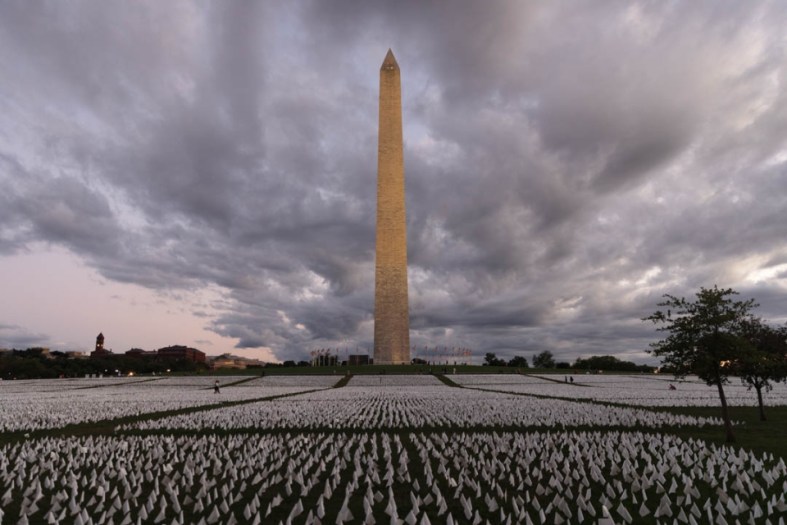
As a society we are exceptional at memorializing celebrity. Yet as a nation, we have yet to have a day of mourning for the casualties of the pandemic: 896,183.
“… it isn’t people but whole worlds that perish.”
These words were written by poet Yevgeney Yevtushenko, and translated by Boris Dralyuk. This version appeared in The Guardian in 2017, a few weeks after the poet’s death.
“I write poetry, prose, and everything I do, I do on the principle of Russian borscht. You can throw everything into it — beets, carrots, cabbage, onions, everything you want. What’s important is the result, the taste of the borscht.”
‘There are no boring people in this world.’
There are no boring people in this world. Each fate is like the history of a planet. And no two planets are alike at all. Each is distinct – you simply can’t compare it.
If someone lived without attracting notice and made a friend of their obscurity – then their uniqueness was precisely this. Their very plainness made them interesting.
Each person has a world that’s all their own. Each of those worlds must have its finest moment and each must have its hour of bitter torment – and yet, to us, both hours remain unknown.
When people die, they do not die alone. They die along with their first kiss, first combat. They take away their first day in the snow … All gone, all gone – there’s just no way to stop it.
There may be much that’s fated to remain, but something – something leaves us all the same. The rules are cruel, the game nightmarish – it isn’t people but whole worlds that perish.
The Guardian 5/6/17
And the final stanza, omitted in The Guardian, translated by Jennifer Croft and Boris Dralyuk.
People die. Their deaths can’t be reversed. Their secret worlds won’t be traversed again. And all that’s ever left for me to do is cry, How can we lose you, too?
That is our question to answer. How can we lose another whole world without notice?
It’s Groundhog Day: the national pandemic holiday, where we all live in Bill Murray’s repetitive rewind world. But, the more things stay the same – the more things are changing – and not in a good way.
The folks who we’ve relied on in our local libraries and neighborhood independent bookshops to provide relief from plague monotony, and escape with recommended reading, are now defending themselves and the creative community of writers they curate from attempts to ban books.
That’s why this date resonates with another observance.
“All hope of publication in the English-speaking countries, at least for a long time to come, was gone. And here in my little bookshop sat James Joyce, sighing deeply.
It occurred to me that something might be done, and I asked: Would you let Shakespeare and Company have the honor of bringing out your ‘Ulysses’?
He accepted my offer immediately and joyfully. I thought it rash of him to entrust his great ‘Ulysses’ to such a funny little publisher. But he seemed delighted, and so was I.”
Today, a century later, in America, the folks who go to work each day in bookstores and libraries find themselves targets as parents and legislators redefine culture.
“So far, efforts to bring criminal charges against librarians and educators have largely faltered, as law enforcement officials in Florida, Wyoming and elsewhere have found no basis for criminal investigations. And courts have generally taken the position that libraries should not remove books from circulation.
Nonetheless, librarians say that just the threat of having to defend against charges is enough to get many educators to censor themselves by not stocking the books to begin with. Even just the public spectacle of an accusation can be enough.
“It will certainly have a chilling effect,” said Deborah Caldwell-Stone, director of the American Library Association’s office for intellectual freedom. “You live in a community where you’ve been for 28 years, and all of a sudden you might be charged with the crime of pandering obscenity. And you’d hoped to stay in that community forever.”
In the past two years, the expertise of so many folks has been questioned: public health professionals, doctors, nurses, educators…. Vital members of our communities who are now ostracized for doing their jobs. And now librarians. A town with a compromised public library loses its community center. Without a diverse range of narratives, we become dull and incurious. That may be the objective.
But then there’s the century old lesson from Sylvia Beach.
“Undeterred by lack of capital, experience and all the other requisites of a publisher, I went right ahead with ‘Ulysses’.”
Keep reading. Reread. Visit your local library. Be curious, fearless and undeterred in your choices.
BTW – The groundhog saw his shadow.
Sylvia Beach quotes from ‘Shakespeare and Company’ by Sylvia Beach 1956
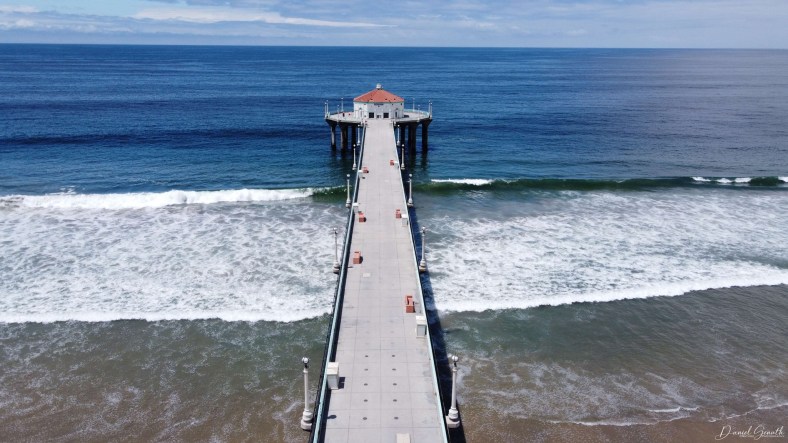
Photo credit: Manhattan Beach pier – Daniel Genuth @RoundhouseMB
Erin Schaff’s photo published in The New York Times online edition on February 11, 2021, captured the reaction of House Speaker Pelosi’s staff as they watched video evidence of the January 6 insurrection.
Nine months later, the image still haunts me.
I don’t know their names or their titles, so I cannot tell their personal stories. But I’ve known their predecessors, who like them, turned down post-grad offers on Wall Street and in prestigious law firms to serve their country with little recognition and minimal compensation.
These folks were at their desks, doing their best to serve the American people on January 6, 2021.
What would a close-up of Speaker Pelosi’s staff record today? I’m guessing intense focus on the work of passing two historic pieces of legislation.
I wonder what they think of the journalists who continue to search for truth. Was Sunday a difficult day as they awoke to the headline reporting of ‘The Attack’ in the Washington Post?
Violence in the workplace is a continuum. You may choose not to let it define you. But it’s always there.
At the end of the day, it’s not the politicians and the pundits who maintain our democracy, but the courage of interns and staffers in Washington D.C. whose problem-solving commitment to constituents keep this country on track.
Today, election day, step away from the analysts and consider the world of the young idealists of Capitol Hill with gratitude.
The Friday Poem selection for this week is Julia Alvarez’s ‘How Will This Pandemic Affect Poetry?’ As we reimagine our priorities ‘after’, framed by our experience in the ‘before times’ and pandemic isolation, where will art reside?
A year ago I traveled to NYC for the last time, keeping a lunch appointment with a colleague. It was a beautiful day, spring was in the air and the forsythia was in bloom – bright yellow against a monochromatic backdrop. I snapped a few photos of the city that day. I selected one as my smart phone screen-saver, where it remained, for months, a relic of the ‘before times’.
On the upper west side, children still bounded out of school buses on the way to museum tours. On the surface, life was normal; but it wasn’t. The school children were wearing masks. I was wearing a mask. The streets were quieter. Central Park was empty. A security guard outside the restaurant offered hand sanitizer and then returned to a repetitious cleaning of surfaces.
I walked 38 blocks instead of riding the subway. Being above ground seemed safer. I used stairwells instead of elevators. I stepped into one shop, but immediately left. There were mysteries in the air and social distancing was about to enter our vocabulary. I had read my share of apocalyptic novels.
I watched a segment on the evening news where a doctor offered tips to stay safe. Following his directions, I had a supply of Kleenex in my pocket to use as my magic barrier when I opened a door. Those were the early days. But they’re not hard to recall. The fear has stamped a permanent record on my brain, totally accessible even after a full year has passed. Information was scarce and contradictory. Life was changing before my eyes, but the leadership narrative ran counter to reality.
A year later, the security guard, waiter, diners, school children, docent, parking attendant, toll collector, news agent, retail store staff weave a vivid human GPS thread of that day. All part of a pre-pandemic collage of ‘New York moments’ on the edge. There was joy and laughter on March 4, 2020, a touchstone.
Today, March 4, 2021, more than 80 million doses of vaccine have been administered, reaching 15.9% of the total U.S. population. By May, there will be a sufficient supply for every American adult. What will work and workplace look like as we emerge?
“Are we there yet?” could be the quote of the pandemic. The answer is no. The problem hasn’t been solved, although we continue to pretend it has. Just take a detour past your local food bank and you’ll experience an instant reality check on expectations. A visit to your local post office might offer a clue to what your workplace might look like if you ever return.
We stayed inside… for a time. And that eased the crisis in many ‘hot spots’ for hospitals and health care professionals. But then we got tired of ‘stay at home’. We saw folks venturing out and government leaders relaxing rules. But the problem hadn’t been solved. We’re still in the middle. Research into a vaccine is progressing, but testing still lags, and nothing has really changed from those early weeks in March. The virus is still out there seeking every opportunity to sink its ‘hooks’ into our various critical organs. What has changed is our belief that “we can handle it” – the reward far outweighs the risk – FOMO on career and life.
We’re not an ‘in limbo’ culture of humans. Uncertainty is not our strong suit. We avoid commitments that might exceed 200 pages or two weeks. We’re more at home at the movies where all is resolved in 90 – 120 minutes.
But, COVID. Our momentum slowed. It took a bit of time to adjust – to the quiet, the change in energy, the middle.
Here we are in a place with time to observe and reflect – an unscheduled leave of absence from our previous life – in the home of innovation and creativity. Yes, the middle is where imagination carves out our path to ‘THE END’.
A simple ‘construct as creative catalyst’ was provided by former Irish president and High Commissioner for Human Rights, Mary Robinson at the Edinburgh Book Festival in 2019. Speaking on the topic of climate change (insert your idea) she suggested three steps:
‘Make climate change (or your idea) personal in your life.
Get angry and get active.
Imagine this world we want to hurry towards.”
Imagine the world we want to hurry towards – that’s what we do when we’re in the middle.
That’s why we’re here at the nexus of past and future – not to consider a ‘new normal’, but to invent the unimaginable. And that takes time – the time we have now, in the middle.
It’s August, an intermission before the commotion of fall. Except this has been an August, a summer, like no other. There is no certainty, other than the world at a distance of six feet.
In this time, ‘The Friday Poem’ returns after a few ‘fits and starts’, with ‘August’ by Mary Oliver.
We have lost spring, snug in our ‘stay at home’ place or serving on the front lines as essential workers. Summer is passing, offering the gift of a journey outside – breathing fresh air, splashing in a brook, climbing a tree, standing in the rain – away from our workplace for a moment.
Poetry and art will sustain us.
August
When the blackberries hang
swollen in the woods, in the brambles
nobody owns, I spend
all day among the high
branches, reaching
my ripped arms, thinking
of nothing, cramming
the black honey of summer
into my mouth; all day my body
accepts what it is. In the dark
creeks that run by there is
the thick paw of my life darting among
the black bells, the leaves; there is
the happy tongue.
So, the virus went viral, and nothing may ever be the same – job offers on hold, online classes the new norm, home the new workplace.
You may hear comparisons to 2008 or the dot com bubble of 2001 – 2002. There’s no comparison. We’re all pioneers in this new reality of social/physical distancing.
What to do?
First, reach out to the resources available to you through your network. There are a lot of unknowns. But you can only plan around the things you can control.
Second, go for a walk. We can still do that – at a six-foot distance.
Third, add something new to your day that connects you to others (with six-foot spacing). For me, that means joining a virtual book discussion of War and Peace: #TolstoyTogether. Writer Yiyun Li in partnership with @APublicSpace is reading 12 pages a day. (Just started – anyone can join). Robert Macfarlane (Fellow of Emmanuel College, Cambridge) is also leading a global Twitter Reading Group, #CoReadingVirus, discussing ‘The Living Mountain’.
Fourth, contingency plan. #1 plan – the ideal job, #2 plan – other ways to gain experience in the same field, from a different angle, #3 plan – ways to have income, while seeking a permanent position.
It’s ok to be a bit scared. But to quote Swedish director Ingmar Bergman, “The demons hate it when you get out of bed. Demons hate fresh air.”
Thinking about work is thinking about choice. What decisions have you made? What remains? What if? There are always possibilities. The only limit is your imagination.
What if a hundred rose-breasted grosbeaks flew in circles around your head? What if the mockingbird came into the house with you and became your advisor? What if the bees filled your walls with honey and all you needed to do was ask them and they would fill the bowl? What if the brook slid downhill just past your bedroom window so you could listen to its slow prayers as you fell asleep? What if the stars began to shout their names, or to run this way and that way above the clouds? What if you painted a picture of a tree, and the leaves began to rustle, and a bird cheerfully sang from its painted branches? What if you suddenly saw that the silver of water was brighter than the silver of money? What if you finally saw that the sunflowers, turning toward the sun all day and every day – who knows how, but they do it – were more precious, more meaningful than gold?