Should I accept an offer with an organization embroiled in controversy?

Imagine a scenario where you are nearing the end of the candidate selection process for your dream job, and news breaks that the organization is under federal investigation. What do you do?

A post on the Fast Company website last week, ‘How To Hire When Your Company Is Embroiled in Controversy’, summarized expert advice to organizations who continue to recruit new employees while managing a crisis.

Veteran recruiter, Dave Carvahal was quoted in the piece, offering recruitment advice – “Be honest about where you actually are, the problems that exist, and the media attention amplification,” he says. Recruiting is about human relationships, Carvajal explains, pointing out that hiring managers shouldn’t be afraid to be vulnerable. “Emotions can be powerful allies in lifting our common humanity,” says Carvajal. “They build trust.”

Reality check – organizations who are being investigated by the Feds, or who are facing bankruptcy inducing lawsuits are probably not the most forthcoming with the truth. You cannot ‘spin’ fraud.

Recruiting is about relationships, ethical relationships. Working for a company in crisis may be a platform for a ‘budding’ leader to achieve visibility, but it’s no place to embark on a new career.

Reading the story was a ‘deja vu’ moment for me, reminiscent of 2002.

In January 2002, Arthur Andersen, then one of the ‘big five’ accounting firms found itself being investigated because of irregularities in its relationship with Enron. As congress grilled company executives, corporate recruiters continued to aggressively woo potential hires to accept offers. Candidates who had been initially attracted to the values of the organization began to question their decision. For most, the recruiting season was over. They had committed to Andersen and declined alternate offers.

Three months later, in April of 2002, Arthur Andersen laid off 7,000 employees. Soon after they began to recind offers to new employees. The folks who had been actively recruiting on college campuses had been simultaneously updating their own resumes.

My advice then, and today, if you find your dream employer had transitioned into public nightmare, withdraw yourself from consideration. This is not negotiable. Whatever perception you had of a cultural ‘fit’ has been disrupted by negative publicity. Your reputation is your brand.

If there’s ever a time to let common sense be your guide, it’s when your career trajectory collides with ‘above the fold’ news. Mobilize your networking resources to assist as you recalibrate your strategy.

Once you have declined the offer, reconnect with the organizations that had previously demonstrated an interest in hiring you, and reestablish the relationship. Be candid about what has triggered your change of heart. If it’s in the news, your alternate employers will be well aware of your motivation.

Job search is about long term relationship management. From your first internship to retirement, maintaining and nurturing your professional contacts is a priority for long term success, and overcoming the challenges posed by the rare, ‘questionable’ employer.


The week@work – guaranteed basic income, college grad stats, internet trends and the world’s longest tunnel opens

This week@work the Swiss electorate rejected a ballot measure to provide a guaranteed basic income for citizens, the college graduate unemployment rate is 2.4%, with history majors matching mid-career salaries of business school grads, Mary Meeker projected her 2016 internet trends and 2,600 workers completed 17 years of work to open the world’s longest tunnel under the Alps.

On Saturday Swiss voters rejected a proposed plan to provide an unconditional monthly income of 2,500 francs by a margin of 77% to 23%.

-1x-1

Philip Oltermann surveyed the growing economic trends toward guaranteed basic income, ‘State handout for all? Europe set to pilot universal basic incomes’.

“Universal basic income has a rare appeal across the political spectrum. For those on the left, it promises to eliminate poverty and liberate people stuck in dead-end workfare jobs. Small-state libertarians believe it could slash bureaucracy and create a leaner, more self-sufficient welfare system.

In an increasingly digital economy, it would also provide a necessary injection of cash so people can afford to buy the apps and gadgets produced by the new robot workforce.

Crucially, it is also an idea that seems to resonate across the wider public. A recent poll by Dalia Research found that 68% of people across all 28 EU member states said they would definitely or probably vote for a universal basic income initiative. Finland and the Netherlands have pilot projects in the pipeline.”

The New Yorker contributor, Mark Gimein summarized recent discussions on the topic, comparing U.S. views to European counterparts.

“…when they look further into the future, Americans talk about a national minimum income in the context of a jobless future, an employment apocalypse in which workers compete for fewer and fewer good jobs. Robert Reich, the former labor secretary, sees a national guaranteed income as the most likely endgame in an economy with “more and more people getting pushed out of the middle class into the personal service sector of the economy getting lower and lower wages.” When the Swiss talk about basic income, they’re talking about a utopian vision. When Americans like Reich talk about it, it’s a last bulwark against national impoverishment.”

‘The Upshot’ analyzed the May unemployment numbers and drew a positive spin on disappointing results. “A better gauge of the underlying rate of jobs growth is to take an average over the past three months. By that measure, the labor market is creating around 116,000 jobs per month. This is a notable slowdown from jobs growth in the 150,000-250,000 range over most of the past five years. But it’s a slowdown and not a sudden stop.”

Here’s the good news for college grads. In a separate post, the folks @UpshotNYT posed this question: “What do you think the unemployment rate is for 25-to-30-year-olds who graduated from a four-year college?”  Most folks guessed high. The actual rate is 2.4%, without a four-year college degree it’s 7%.

images.jpeg

While we’re on the topic of debunking ‘value of college myths’, let’s turn to a story about the much maligned history majors. (Full disclosure, I was one)

Writing in the LA Times, James Grossman, executive director of the American Historical Association lamented the decline enrollment in undergraduate history programs and countered with new research that suggests undergrads might want to reconsider their choice of major.

“Over the long run, …graduates in history and other humanities disciplines do well financially…after 15 years, those philosophy majors have more lucrative careers than college graduates with business degrees. History majors’ mid-career salaries are on par with those holding business bachelor’s degrees. Notably these salary findings exclude those who went on to attain a law or other graduate degree.

The utility of disciplines that prepare critical thinkers escapes personnel offices, pundits and politicians (some of whom perhaps would prefer that colleges graduate more followers and fewer leaders). But it shouldn’t. Labor markets in the United States and other countries are unstable and unpredictable. In this environment — especially given the expectation of career changes — the most useful degrees are those that can open multiple doors, and those that prepare one to learn rather than do some specific thing.”

On Wednesday The New York Times announced ‘the Internet is over’. They are changing their style rule to join the rest of the world to lowercase the word ‘internet’.

The same day, venture capitalist Mary Meeker presented her 2016 internet trends report. Inc. contributor, Jessica Stillman cited five ‘take-aways’ from the deck of 200 slides.

“Internet growth is slowing dramatically. Advertisers aren’t spending enough on mobile. Privacy concerns are “a ticking time bomb.”Search is about to be revolutionized…and so are messaging apps.”

Moving from technology trends to engineering marvels, BBC News reported on the opening of the Gotthard Base Tunnel in Switzerland, culminating 17 years of work by 26,000 workers.

gettyimages-105475814_custom-293c8eedebb27759dbd26d764b46c07b23b87f9f-s1400-c85

“Swiss engineer Carl Eduard Gruner first imagined it in 1947: a massive tunnel, unprecedented in length, buried a mile and a half under Switzerland’s symbolic Gotthard mountain range.

Nearly seven decades later, after redesigns, political disagreements and the long, slow work of drilling beneath the Gotthard massif, as it’s called, Gruner’s dream is complete.

The Gotthard Base Tunnel — a record-setting 35.4 miles long, and farther below ground than any other tunnel — was inaugurated Wednesday. The occasion was marked with a celebration that promoted “Swiss values such as innovation, precision and reliability…”

Now the completed tunnel, delivered on time and within budget, will create a mainline rail connection between Rotterdam in the Netherlands and Genoa in Italy.

When full services begin in December, the journey time for travellers between Zurich and Milan will be reduced by an hour to two hours and 40 minutes.

About 260 freight trains and 65 passenger trains will pass through the tunnel each day in a journey taking as little as 17 minutes.”

The Saturday Read ‘A Whole Life’ by Robert Seethaler

Too often we seek advice and counsel from the plethora of self-help books that line the shelves of bookstores. What we miss are the life lessons divulged under the guise of fiction.

The Saturday Read this week takes us to the Austrian Alps in 1933 to observe ‘A Whole Life’, the best selling German novel by Robert Seethaler, translated by Charlotte Collins.

The story is Andreas Egger’s, an everyman’s narrative of life, work, tragedy and values. It’s short, the perfect read for a plane trip or a couple of days commute. In this case brevity doesn’t diminish the tale. The simple, beautiful language reveals a literary character that will stay with you long after the story ends.

Throughout the book, the author stores small gems of wisdom, life lessons. In one scene, Andreas approaches the general manager of a construction site to negotiate a raise. Upon reaching agreement on a salary increase, Andreas promises to work even harder. The manager replies:

“You can buy a man’s hours off him, you can steal his days from him, or you can rob him of his whole life, but no one can take away from any man so much as a single moment.”

After years in construction, and more years as a prisoner of war, Andreas returns to his village and eventually finds work as a hiking guide.

“Egger didn’t usually speak on his walks. ‘When someone opens their mouth they close their ears,’ Thomas Mattl had always said, and Egger was of the same opinion. Instead of talking, he preferred to listen to these people, whose breathless chatter revealed to him the secrets of other fates and opinions. People were evidently looking for something in the mountains that they believed they lost a long time ago. He never worked out what exactly this was, but over the years he became more and more certain that the tourists were stumbling not so much after him, but after some obscure, insatiable longing. 

In the closing pages, we observe Andreas in retirement, at the end of his ‘whole life’.

“Once a week he went down to the village to get matches and paint, or bread, onions, butter. He had realized long ago that people there speculated about him. When he set off for home…he would see them out of the corner of his eye, putting their heads together and starting to whisper behind his back. Then he would turn around and give them the blackest look of which he was capable. Yet in truth he didn’t much care about the villager’s opinions or their outrage. To them he was just an old man who lived in a dugout, talked to himself, and crouched in a mountain stream to wash every morning. As far as he was concerned, though, he had done all right, and thus had every reason to be content… In his life he too, like all people had harboured ideas and dreams. Some he had fulfilled for himself; some had been granted to him. Many things had remained out of reach, or barely had he reached them than they were torn from his hands again. But he was still here. And in the mornings after the first snowmelt, when he walked across the dew-soaked meadow outside his hut and lay down on one of the flat rocks scattered there, the cool stone on his back and the first warm rays of sun on his face, he felt that many things had not gone so badly after all.”

Reviewers have noted the book’s unique appeal as an understated novel in a publishing world sustained by hype and celebrity. Eileen Battersby concluded her analysis for the Irish Times with “No praise is too high for A Whole Life. Its daunting beauty lingers. This is a profound, wise and humane novel that no reader will forget.”

I agree.

The book, published in 2015 and shortlisted for the 2016 Man Booker International Prize will be published in the U.S. in September.


‘The Work of Happiness’ a poem by May Sarton

The Friday Poem this week is ‘The Work of Happiness’ by May Sarton a writer whose talent was expressed in fiction, autobiography and poetry.

“My first book was a book of poems, Encounter in April, followed by my first novel, The Single Hound. There was quite an interval before the second novel, The Bridge of Years. And then Shadow of a Man. Then it goes on and on for a long time with a book of poems between every novel. That was my wish, that the poems should be equal in number, that the novels should not be more important than the poems because the poems were what I cared about most. Much later, when I was forty-five or so, I began to do nonfiction—first the memoirs and finally the journals, which came as the last of the forms which I have been using. Altogether now I think it amounts to seventeen novels, I don’t know, five or six memoirs and journals, and then twelve books of poems, which are mostly in the collected poems now.”  The Paris Review interview, Fall 1983

Her poetry emerges from reflection and solitude, a choice she explored in a 1974 essay, ‘The Rewards of Living a Solitary Life’.

“The other day an acquaintance of mine, a gregarious and charming man, told me he had found himself unexpectedly alone in New York for an hour or two between appointments. He went to the Whitney and spent the “empty” time looking at things in solitary bliss. For him it proved to be a shock nearly as great as falling in love to discover that he could enjoy himself so much alone…Solitude is the salt of personhood. It brings out the authentic flavor of every experience.”

In the poem, Ms. Sarton provides an alternate view of happiness – “for what is happiness but growth in peace”.

The Work of Happiness

I thought of happiness, how it is woven
Out of the silence in the empty house each day
And how it is not sudden and it is not given
But is creation itself like the growth of a tree.
No one has seen it happen, but inside the bark
Another circle is growing in the expanding ring.
No one has heard the root go deeper in the dark,
But the tree is lifted by this inward work
And its plumes shine, and its leaves are glittering.

So happiness is woven out of the peace of hours
And strikes its roots deep in the house alone:
The old chest in the corner, cool waxed floors,
White curtains softly and continually blown
As the free air moves quietly about the room;
A shelf of books, a table, and the white-washed wall—
These are the dear familiar gods of home,
And here the work of faith can best be done,
The growing tree is green and musical.

For what is happiness but growth in peace,
The timeless sense of time when furniture
Has stood a life’s span in a single place,
And as the air moves, so the old dreams stir
The shining leaves of present happiness?
No one has heard thought or listened to a mind,
But where people have lived in inwardness
The air is charged with blessing and does bless;
Windows look out on mountains and the walls are kind.

May Sarton   ‘Collected Poems 1930 – 1993’

51rZ+x+OVKL._SX322_BO1,204,203,200_


The mysteries of networking #4 ‘missed opportunities’

Many of us consider networking a ‘dark art’ that requires a magical ‘insiders’ key to gain access to the influential. What we miss is the daily opportunity to connect, as we ride the bus, the train or stand in a long TSA line at the airport. Wisdom can present itself in all shapes and sizes if you open yourself to conversation.

This past week, consultant, Whitney Johnson shared a recent experience via a post on LinkedIn,  ‘An airline cancelled my flight and put me in a van. Along the way, I got lots of lessons on how *not* to network.’

After offering a fellow traveller, a member of the Class of 2016, a ride home after a diverted flight, she realized her passenger had no clue how to network.

“As I was giving him a lift home, I learned a lot about him: his name, where he grew up, where he goes to school, his major, what his parents do for a living, his own career aspirations when he graduates in a few months. We even discovered that we have an acquaintance in common. Meanwhile, I made a few mentions of my children, such as my 19 year-old son is living in Brazil, my husband teaches at a local university. Conversation starters.

I’ll confess I felt a little invisible—and exasperated. I find it easy to ask people about themselves. I genuinely enjoy doing it. It’s one of my strengths, and we’re often exasperated with people who aren’t likewise adept at the things that we do well.

But here’s the real take-away from this chance encounter: this young man is looking for a job when he graduates in a month… I could have potentially helped him, if he’d just shown a little of the moxie that would have motivated me to recommend him.”

This is not just about a ‘newbie’ to the job search process, it’s a story that recurs daily. Just walk through an airport departure area and observe the diversity of folks and contrast that with the homogeneity of technical disconnection. Each individual, existing in the ‘comfort cocoon’ of their temporary piece of real estate, happily texting colleagues and friends, totally ignorant of the ‘chance’ professional encounter in the adjoining seat.

There’s no magic in networking. The magic is in the conversation, perhaps leading to a relationship. All of us harbor ideas and dreams. What are they, if not shared?

This afternoon, seize the moment, and start a conversation with a stranger, or maybe the acquaintance you pass in the hall every day. Listen, share, and you may be on your way to mastering the ‘not so mysterious’ art of networking.

The week@work – Millennial myths, millennials@home and relocation stagnation

Apparently, Americans are less geographically mobile today than at any point since 1948. Interesting fact to contemplate as 38 million of us return from our adventures over the holiday weekend. It probably doesn’t help that for the first time, young adults between the ages of 18 and 34 are more likely to live at home, with their parents. Experts, not just parents, are voicing concerns about how this relocation stagnation is destroying what economists refer to as ‘dynamism’ in the job market.

This week@work we take a look back at the week’s stories of millennial myths and our dwindling pioneer spirit.

In April we reached a generational tipping point, when the number of folks between the ages of 18 and 34, aka millennials, overtook Americans between 51 and 69, the baby boomers, by 75.4 million to 74.9 million. And, as every move of the post WWII generation was observed and chronicled, so have we had this new majority under the microscope. It has been quite a lucrative vocation for the thousands of corporate consultants who advise executives on recruitment and retention.

130904259.jpg

But what if they got it wrong? Farad Manjoo thinks the “collectively homogenous cliche” portrayed in the media is a far cry from reality and believes it’s time to break away from the stereotypes. Thank-you.

“If your management or marketing theories involve collapsing all millennials into a catchall anthropological category — as if you’re dealing with space aliens or some newly discovered aboriginal tribe that’s suddenly invaded modernity — you’re doing it wrong.

Kim Parker, director of social trends research at the Pew Research Center, said demographers have noted large differences in millennials: Compared to older cohorts, they tend to be more socially liberal when it comes to issues like gay marriage and marijuana use, they marry later in life, and they are less enamored of traditional religious and political institutions. Looking at these shifts over time “is a useful construct when you’re trying to analyze a whole population,” Ms. Parker said.

But these broad trends leave lots of room for individual differences that matter in the real world, and that are often papered over when we talk about millennials as a monolithic collective.

Considering that millennials are the most diverse generation — spanning many racial, ethnic and income categories — intragenerational differences are bound to play an important role when you’re talking about individual people. Though both are “millennials,” a young immigrant working three sharing-economy gigs is likely to look at the world very differently from a trust-fund baby who’s tending his Tumblr in Brooklyn. Yet only one of these stereotypes tends to make it into media accounts of millennials.”

The busy folks at Pew Research released additional millennial data this week, “For First Time in Modern Era, Living With Parents Edges Out Other Living Arrangements for 18- to 34-Year-Olds”.

gettyimages-556631959_wide-cc80d12838d4eee05e43c4d54f2386d9de9581b7-s1400-c85.jpg

“It’s worth noting that the overall share of young adults living with their parents was not at a record high in 2014. This arrangement peaked around 1940, when about 35% of the nation’s 18- to 34-year-olds lived with mom and/or dad (compared with 32% in 2014). What has changed, instead, is the relative share adopting different ways of living in early adulthood, with the decline of romantic coupling pushing living at home to the top of a much less uniform list of living arrangements.”

Gillian B. White examined ‘The False Stereotypes About Millennials Who Live at Home’ for The Atlantic.

“…the Millennials who are most likely to wind up living with their relatives are those who come from already marginalized groups that are plagued with low employment, low incomes, and low prospects for moving up the economic ladder. Millennials who live at home are also more likely to be minorities, more likely to be unemployed, and less likely to have a college degree. Living at home is particularly understandable for those who started school and took out loans, but didn’t finish their bachelor’s degree. These Millennials shoulder the burden of student-loan debt without the added benefits of increased job prospects, which can make living with a parent the most viable option.

And while there may be comedic fodder in the idea of adult children trying to share space with their parents, staying at home for many Millennials and their family isn’t all that funny. For parents who are struggling to make ends meet, an extra mouth to feed or the inability to downsize to a smaller place can be truly burdensome. For many Millennials, moving out, even if they want to, could lead them to make financial decisions that would put them in an even more precarious place, and that’s precisely the opposite of what they, or the economy, need.”

Why will we travel 2,500 miles from home to attend our ‘first choice’ college, and yet resist relocation to a new urban environment for a job? Why do we spend a semester abroad in an internship or academic program and fail to accept a job offer fifty miles from home?

Has our pioneering spirit disappeared in the noise of descending helicopter parents, or are there more serious institutional prohibitions to career adventure?

american-pioneers.jpg

American Enterprise Institute president, and conservative author, Arthur C. Brooks offered advice on how to get America moving again, painting a grim picture of our current adventure deficit.

“Through census data, we know that Americans are less geographically mobile today than at any point since 1948. Other scholarship suggests that the decline stretches back further. This might help explain why our country is having such a hard time getting out of its national funk.

Mobility is more than just a metaphor for getting ahead. In America, it has been a solution to economic and social barriers. If you descended from immigrants, I’m betting your ancestors didn’t come to this country for the fine cuisine. More likely they came in search of the opportunity to work hard and get ahead.

Even for those already here, migration has long been seen as a key to self-improvement. As Horace Greeley so famously advised in 1865: “Go west, young man, and grow up with the country.”

Patricia Cohen followed up with a more in-depth review, ‘A Dearth of Pioneers’.

“Staying put can mean that workers are not moving to jobs where they would be more productive. At the same time, many are forgoing the raises and ascents on the career ladder that often come with a job switch. Fewer openings can also have a ripple effect, shrinking the bargaining power of workers in general, making it tougher to ask for a bump up in pay.

The declining churn in the labor market may surprise those who assumed that the era of lifelong employment capped by a gold watch had given way to serial job-hopping. But the reality is more complicated, said Abigail Wozniak, an economist at the University of Notre Dame and one of the authors of a new report on the subject. While it is true that fewer people have very long tenures at a single company, she said, that trend has been swamped by a countervailing one: People are not moving as much out of what used to be entry-level and temporary jobs.

One of the more intriguing findings was the role of declining social trust and what is known as social capital — the web of family, friends and professional contacts. For example, the proportion of people who agree with the statement, “Most people can be trusted,” has been shrinking for more than three decades. Researchers found that states with larger declines in social trust also had larger declines in labor market fluidity. The lack of trust may increase the cost of job-hunting and make both employees and employers more risk-averse.

As social trust diminishes, people may feel more comfortable sticking closer to home where the faces are familiar even if job opportunities are scarcer, researchers suggested.”


‘Decoration Day’ a poem by Henry Wadsworth Longfellow

Before we head out for the holiday weekend, let’s take a minute to pause and remember those who went to work @war with ‘Decoration Day’, a poem, written in 1882 by Henry Wadsworth Longfellow.

On May 30, 1868 five thousand people gathered at Arlington National Cemetery to commemorate the first ‘Decoration Day’. An Ohio congressman, who had served as a major general in the Civil War, James A. Garfield addressed the crowd.

“I am oppressed with a sense of the impropriety of uttering words on this occasion. If silence is ever golden, it must be here beside the graves of fifteen thousand men, whose lives were more significant than speech, and whose death was a poem, the music of which can never be sung. With words we make promises, plight faith, praise virtue. Promises may not be kept; plighted faith may be broken; and vaunted virtue be only the cunning mask of vice. We do not know one promise these men made, one pledge they gave, one word they spoke; but we do know they summed up and perfected, by one supreme act, the highest virtues of men and citizens. For love of country they accepted death, and thus resolved all doubts, and made immortal their patriotism and their virtue. For the noblest man that lives, there still remains a conflict. He must still withstand the assaults of time and fortune, must still be assailed with temptations, before which lofty natures have fallen; but with these the conflict ended, the victory was won, when death stamped on them the great seal of heroic character, and closed a record which years can never blot.”

The Memorial Day we celebrate in the U.S. this weekend had its origins in the years after the Civil War. It was customary to ‘decorate’ the graves of those who had died in defense of their country, and on May 5, 1868  General John Logan designated May 30 as ‘Decoration Day’ “because it wasn’t the anniversary of any particular battle”.

David Barber introduced Longfellow’s poem for the Atlantic in 2011.

“Longfellow’s “Decoration Day” may not rank among his canonic Atlantic verse, but it imparts a burnished poignancy all its own. In the solemn, hymn-like strains that were a hallmark of the country’s foremost “Fireside Poet,” the poem pays tribute to what was then a new form of civic observance: a day set aside to commemorate those who had perished in the Civil War by placing flags and flowers on soldiers’ graves, a custom that gradually gave rise to our modern Memorial Day honoring all who give their lives in military service. Its first readers likely felt an elegaic pang all the more acutely: by the time the poem circulated in the June 1882 Atlantic, it would have been national news that Longfellow had died just a few weeks earlier at his home in Cambridge, at the age of 75.”

Decoration Day

Sleep, comrades, sleep and rest
On this Field of the Grounded Arms,
Where foes no more molest,
Nor sentry’s shot alarms!

Ye have slept on the ground before,
And started to your feet
At the cannon’s sudden roar,
Or the drum’s redoubling beat.

But in this camp of Death
No sound your slumber breaks;
Here is no fevered breath,
No wound that bleeds and aches.

All is repose and peace,
Untrampled lies the sod;
The shouts of battle cease,
It is the Truce of God!

Rest, comrades, rest and sleep!
The thoughts of men shall be
As sentinels to keep
Your rest from danger free.

Your silent tents of green
We deck with fragrant flowers
Yours has the suffering been,
The memory shall be ours.

Henry Wadsworth Longfellow

‘Mind the gap’ – the advantages of ‘full disclosure’ on your resume

The twenty-first century resume doesn’t follow the format suggested by experts in the past. The CV of the ‘gig economy worker’ offers a mosaic of diverse experiences, but it also includes gaps – periods of time not working. A recent study shows the competitive advantage goes to the candidate who ‘minds the gap’ and candidly discloses these career ‘sabbaticals’.

The golden rule of job search is to present yourself as who you are: not your social media presence, not through the biased lens of family and friends, and definitely not ‘shape shifted’ to match a particular job description.

Finding a job is about finding a ‘fit’, discovering a close match between your talent, values and aspirations. If an employer is dismissive of your qualifications because of breaks, you have met ‘the canary in the coal mine’, so take the hint and move on to a place where the value of those  gaps is understood.

Patricia Cohen examined the issue as it relates to family leave. Do you explain a child care gap in your resume?

“For women hoping to return to the workplace after caring for their children, the advice is often “don’t ask, don’t tell.” Many women who described themselves as stay-at-home mothers can attest to receiving denigrating nods and hasty rebuffs. Researchers have repeatedly found ample evidence of discrimination against mothers in the hiring process and the workplace.

But women may be better off explaining their decision to stay home to a potential employer upfront, said Joni Hersch, a professor of law and economics at Vanderbilt Law School, and co-author of a new study on the subject, “Something to Talk About: Information Exchange Under Employment Law.” Employers, afraid of running afoul of anti-discrimination laws, don’t bring up the subject, she said, and female applicants, picking up on those cues, often don’t offer information, leaving hirers to guess at the reasons behind a hiatus.

But, Professor Hersch said, “women who conceal personal information dramatically lower their hiring prospects.”

What’s the ‘take-away’ here?

Reliance on your resume as a single point of introduction to an employer is not your best job search strategy – it never has been.

The best job search strategy is a lifelong management of relationships. Maintaining professional connections, through career success and career breaks establishes your professional credibility. There is no substitute for a career advocate who ‘gets you’ and sees the complete picture of your career plan, warts and all. Someone who can advise you as you develop your script, tell your story and mind the gaps.


The week@work – new overtime rules, sharing the wealth of the ‘gig economy’ and college grads’ skills gap

This week@work President Obama announced changes in labor rules that will extend overtime benefits to 4.2 million Americans, Massachusetts Senator Elizabeth Warren advocated for the rights of ‘gig economy’ workers and a new report indicates a continuing deficiency in recent grads’ communications skills.

Christine Mai-Duc reported on the revisions to overtime regulations that will go into effect on December 1.

“The proposed changes would more than double the salary threshold for overtime eligibility to $970 a week in 2016. That means employees earning a yearly salary of $50,440 or less automatically would be eligible for overtime pay.

Currently, the threshold is $455 a week, meaning a salaried worker making more than $23,660 a year does not automatically qualify for overtime pay under federal standards.

Labor Secretary Thomas Perez told reporters that too many managers are falling behind and getting caught in the “middle-class squeeze.”

Proponents of the change say the salary threshold, designed to exempt highly paid white-collar workers, hasn’t seen meaningful change for more than 40 years. In 1975, more than 60% of salaried workers were eligible for overtime. Today, less than 8% of full-time salaried workers are covered by those regulations, according to the White House Domestic Policy Council.

“In effect, we have seen inflation repeal the regulations that went into effect decades ago,” said Harley Shaiken, a labor economist and professor at UC Berkeley.”

The man at the head of the Department of Labor, Secretary Thomas Perez, shared his approach to worker advocacy in an interview with David Gelles for The New York Times.


“It’s a day job intended to help other people with day jobs. He wants companies to take better care of their employees, even if it costs them in the short term. It’s not a message many C.E.O.s want to hear, but Mr. Perez believes it is his duty to spread the word.

Mr. Perez’s courting of chief executives also stems from a recognition that his department alone can’t fix the problems bedeviling American workers. Thorny issues like wage stagnation, stingy vacation time, shoddy manufacturing and environmental degradation are so complex, so entrenched, that no one government agency can tackle them (not to mention the diminished influence of organized labor).

He is talking about “conscious capitalism” and “inclusive capitalism.” He is singling out “high road” employers. He is promoting B Corps, companies that adhere to lofty social and environmental standards. In doing so, he hopes he can persuade less enlightened corporations to change.

The employers who do best are employers who reject these false choices,” Mr. Perez said. “It’s not a zero-sum world where you either take care of your workers or you take care of your shareholders. You can do good and do well, too.

We’re building a movement,” he said. “It’s undeniably a work in progress, but there’s a fundamental desire to see capitalism to do something different.”

On Thursday, Senator Elizabeth Warren addressed the annual conference of Washington D.C. think tank, New America. Her remarks, ‘Strengthening the Basic Bargain for Workers in the Modern Economy’, detailed the reality of the changing workplace and proposed steps to create an income safety net and ensure portability of benefits for all workers.

Warren takes part in the Washington Ideas Forum in Washington

“The problems facing gig workers are much like the problems facing millions of other workers. An outdated employee benefits model makes it all but impossible for temporary workers, contract workers, part-time workers and workers in industries like retail or construction who switch jobs frequently to build any economic security.

Just as this country did a hundred years ago, it’s time to rethink the basic bargain between workers and companies. As greater wealth is generated by new technology, how can we ensure that the workers who support this economy can share in that wealth?

I believe we start with one simple principle: all workers–no matter when they work, where they work, who they work for, whether they pick tomatoes or build rocket ships–all workers should have some basic protections and be able to build some economic security for themselves and their families. No worker should fall through the cracks.”

Lydia Dishman summarized a report released last week by compensations specialists, Payscale, citing a ‘skills gap’ between managers and employers. And, wait for it…there’s a generational twist.

IMGP1317.jpg

Some of the skills hiring managers find lacking or absent are unexpected. Critical thinking, problem solving, attention to detail, and writing proficiency top the list of skills managers find missing from job seekers’ personal tool kits. On the flip side, managers didn’t find graduates wanting for know-how in search engine optimization marketing, foreign languages, and coding.

Overall, hiring managers found soft skills such as communication, leadership, ownership, and teamwork were missing in this new crop of workers.

“Graduates need strong communication and problem-solving skills if they want to interview well and succeed in the workplace, because effective writing, speaking, and critical thinking enables you to accomplish business goals and get ahead,” Dan Schawbel, research director at Future Workplace, said in a statement. “No working day will be complete without writing an email or tackling a new challenge, so the sooner you develop these skills, the more employable you will become,” Schawbel adds.

It’s important to note here that age matters in this report. Fifty-five percent of managers who are millennials themselves believed graduates are prepared to enter the workforce versus 47% of gen Xers and 48% of boomers.”

The Saturday Read – Four blogs/newsletters you should be reading

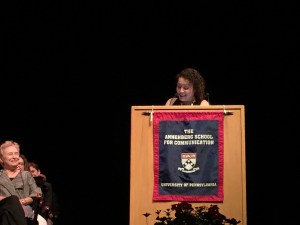
Before I started writing ‘Workthoughts’, I was reading other blogs. Maria Popova, author of my favorite, ‘Brainpickings’, was the 2016 commencement speaker at her alma mater, the University of Pennsylvania’s Annenberg School for Communication. She challenged the graduates to act as cultural change agents by continually broadening their horizons beyond a specific discipline.

“Today, the soul is in dire need of stewardship and protection from cynicism. The best defense against it is vigorous, intelligent, sincere hope — not blind optimism, because that too is a form of resignation, to believe that everything will work out just fine and we need not apply ourselves. I mean hope bolstered by critical thinking that is clear-headed in identifying what is lacking, in ourselves or the world, but then envisions ways to create it and endeavors to do that.

Whatever your specific vocation, your role as a creator of culture will be to help people discern what matters in the world and why by steering them away from the meaningless and toward the meaningful.”

annenberg_commencement-1

How do you maintain the discipline of the undergraduate learning experience and diversify your thinking?

In the past, traditional routes to post-graduate learning involved graduate and professional school. In rare cases, employers took on the role of educators, supplementing work with professional development options. Today, educational entrepreneurs are disrupting traditional education, offering countless ways to access knowledge online.

One of the most engaging options is to join folks who are exploring life’s mysteries and sharing their discoveries through blogs and newsletters.

For this week’s Saturday Read, I recommend four blogs/newsletters from contemporary ‘curators of culture’ that you should be reading to improve you critical thinking and supplement your journey of lifelong learning.

Brainpickings

Bruce Feiler, writing in The New York Times, described this blog as “the exploding online emporium of ideas”.

“She’s a celebrator,” said Anne-Marie Slaughter, a Princeton professor and former State Department official. “You feel the tremendous amount of pleasure she takes in finding these things and sharing them. It’s like walking into the Museum of Modern Art and having somebody give you a customized, guided tour.”

Since 2006, Maria Popova has been sharing her cross disciplinary expeditions with a growing audience of readers.

“Brain Pickings — which remains ad-free and supported by readers — is a cross-disciplinary LEGO treasure chest, full of pieces spanning art, science, psychology, design, philosophy, history, politics, anthropology, and more; pieces that enrich our mental pool of resources and empower combinatorial ideas that are stronger, smarter, richer, deeper and more impactful. Above all, it’s about how these different disciplines illuminate one another to glean some insight, directly or indirectly, into that grand question of how to live, and how to live well.”

The next selection comes from the mind of writer and ‘philosopher of everyday life’, Alain de Botton. If you read Brainpickings or Workthoughts, the name should be familiar. The founder of London’s School of Life, publishes a weekly newsletter, ‘The Book of Life’.


The Book of Life 

“It’s called The Book of Life because it’s about the most substantial things in your life: your relationships, your income, your career, your anxieties. There’s always been a longing to gather the important things in one place. Some of the appeal of a Bible or the collected works of a big name author is the sense that amidst all the chaos and disparate sources of knowledge, someone has taken the trouble to distill, to compress, to say what is essential. In a world overflowing with information, what we most need is curation. The Book of Life aims to be the curation of the best and most helpful ideas in the area of emotional life.”

For those of you technology and engineering gurus who feel a bit insecure when a client conversation turns literary, subscribe to the ‘Lit Hub Daily’.


Lit Hub

“Started last year, Lit Hub’s goal is to provide a “go-to daily source for all the news, ideas, and richness of contemporary literary life,” with curated and original content such as interviews, profiles and essays.”

“Literary Hub is an organizing principle in the service of literary culture, a single, trusted, daily source for all the news, ideas and richness of contemporary literary life. There is more great literary content online than ever before, but it is scattered, easily lost—with the help of its editorial partners, Lit Hub is a site readers can rely on for smart, engaged, entertaining writing about all things books.”

The latest newsletter I have added to my daily/weekly routine comes from writer Austin Kleon. His Friday newsletter is an eclectic collection of music, art, design and life. To give you a sample, this week’s edition included George Carlin’s Playboy interview, an HBO documentary on Studs Terkel and the Everything is a Remix series.

What makes Austin’s blog unique is the doodles; his visual interpretation of information.

kleon-200pxx1.jpg

Austin Kleon 

“I’m a writer who draws. I make art with words and books with pictures. Every week I send out a list of 10 things I think are worth sharing — new art, writing, and interesting links straight to your inbox.”

These four blogs/newsletters provide a customized curriculum of research and shared wisdom, delivered by a faculty of four non-traditional experts. Take a look, you may find one or more will fit with your individualized lifelong learning plan.