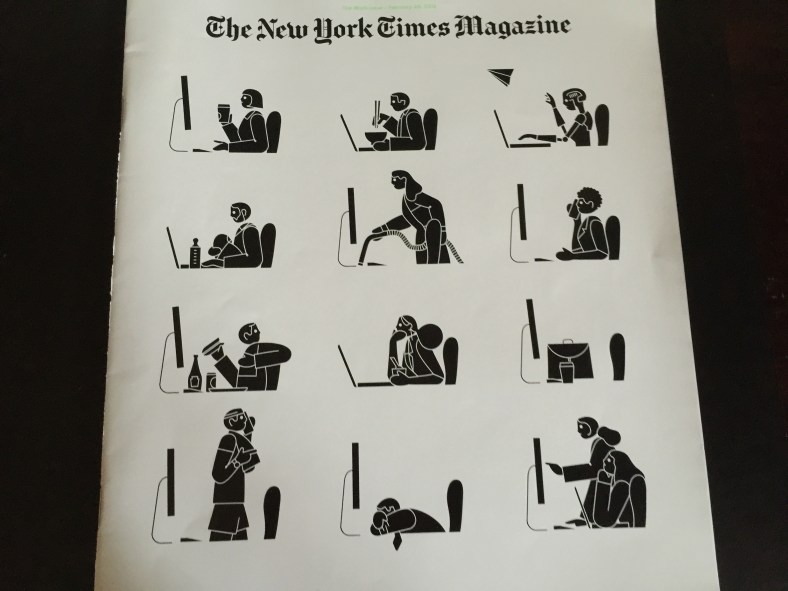
The Saturday Read ‘Worklife: Rethinking the office for an always-on economy’

The Saturday Read this week is a compilation of articles that appeared in the February 28, 2016 ‘work issue’ of The New York Times Magazine.

A group of journalists and writers contributed coverage on a variety of work/life topics, adding new perspectives from groundbreaking research, demonstrating that, regardless of profession, it’s all about the culture. And the culture is in need of change.

Organization culture determines who succeeds, fails, and communicates ‘hints’ through recruiting practices, and the daily process of getting things done; meetings, teamwork and office space.

“We do often work at home. But we also work at work, before going home to work more. The office has persisted, becoming even bigger, weirder, stranger: a symbol of its outsize presence in our lives.”

The ‘work issue’ is an interesting survey of some of the most pressing issues @work today. The sampling of the content below is meant to serve as an introduction, with a recommendation to take the time to read the edition in its entirety.

NYT staff writer, Susan Dominus challenges us to think about balance beyond policies by ‘Rethinking the Work-Life Equation’, reporting on the research of Phyllis Moen of the University of Minnesota and Erin Kelly of M.I.T.

“Workers in the experimental group were told they could work wherever, and whenever, they chose so long as projects were completed on time and goals were met; the new emphasis would be on results rather than on the number of hours spent in the office. Managers were trained to be supportive of their employees’ personal issues and were formally encouraged to open up about their own priorities outside work — an ill parent, or a child wanting her mom to watch her soccer games. Managers were given iPods that buzzed twice a day to remind them to think about the various ways they could support their employees as they managed their jobs and home lives.

The research found that employees in the experimental group met their goals as reliably as those in the control group, and they were, in short, much happier: They were sleeping better, were healthier and experienced less stress. Other studies examining the same workplace found that the effects even cascaded down to employees’ children, who reported less volatility around their own daily stresses; adolescents saw the quality of their sleep improve. A year out, and then three years out, employees in the experimental group reported less interest in leaving the organization than those in the control group.

…sometimes there is little more than tradition holding organizations back from making meaningful changes that bring tremendous peace of mind to their employees.”

Five years ago, Google decided to determine what makes a ‘perfect team’. Pulitzer prize winning New York Times reporter Charles Duhigg reports on the results in an excerpt from his new book, ‘Smarter Faster Better: The Secrets of Being Productive in Life and Business’.

“For Project Aristotle, research on psychological safety pointed to particular norms that are vital to success. There were other behaviors that seemed important as well — like making sure teams had clear goals and creating a culture of dependability. But Google’s data indicated that psychological safety, more than anything else, was critical to making a team work.

However, establishing psychological safety is, by its very nature, somewhat messy and difficult to implement. You can tell people to take turns during a conversation and to listen to one another more. You can instruct employees to be sensitive to how their colleagues feel and to notice when someone seems upset. But the kinds of people who work at Google are often the ones who became software engineers because they wanted to avoid talking about feelings in the first place.

What Project Aristotle has taught people within Google is that no one wants to put on a ‘‘work face’’ when they get to the office. No one wants to leave part of their personality and inner life at home. But to be fully present at work, to feel ‘‘psychologically safe,’’ we must know that we can be free enough, sometimes, to share the things that scare us without fear of recriminations. We must be able to talk about what is messy or sad, to have hard conversations with colleagues who are driving us crazy. We can’t be focused just on efficiency. Rather, when we start the morning by collaborating with a team of engineers and then send emails to our marketing colleagues and then jump on a conference call, we want to know that those people really hear us. We want to know that work is more than just labor.”

Nikil Saval, who wrote about the evolution of the office in ‘Cubed: The Secret History of the Workplace’, writes about new experiments with office space, ‘Labor/atories’

“The sudden efflorescence of the tech industry in the late ’90s took us from the desert of cubicles to the milk-and-honey offices of today. Many of the dot-commers had graduated from (or, very often, dropped out of) cozy university campuses to toil in big corporations. Starting their own companies, they recreated the effortless drift between work and play that characterized their college lives. The cubicle walls came down, and in the wide, open warehouse and loft spaces they occupied, exceptionally long workdays would be punctuated by frenzied Mario Kart races or fierce Ping-Pong battles. Creating a playful office became one of the standard ways of attracting skilled employees in a competitive environment: The hope was that a talented engineer wouldn’t leave a tech behemoth for the dinky start-up next door that didn’t have a gym and a resistance pool. Thus has the ‘‘fun office’’ spread throughout the world.”

Each of the articles provides a ‘take away’ to apply @work. If you’re a leader, you’ll rethink your approach as you begin to understand what your competitors are doing to recruit and retain employees. As a manager, you’ll learn ways to improve the daily routine of meetings, but more important, reinforce behavior that will encourage employees to be productive. For the rest of us, a window has been opened to view alternative approaches to work and workplace. What will you do on Monday to turn policy into practice?
 

The Friday Poem ‘The Persistence of Song’ by Howard Moss

The Friday Poem this week is ‘The Persistence of Song’ by Howard Moss, the poetry editor of The New Yorker for almost forty years.

“In that influential capacity, this quiet, unassuming man was one of the key figures in American letters in the late twentieth century, boosting the careers of many young poets by publishing their work in one of the few mass circulation magazines which bought poetry and paid well for it.”

This one is for the mentors who open doors, make connections and by their presence create a model to be imitated.

The poem appeared in The New Yorker in the fall of 1966 and takes us to a time in the city, when life after work was anticipated ..” When the secretaries have changed their frocks, And though it is not yet evening, There is a persistence of song.”

The Persistence of Song

Although it is not yet evening,
The secretaries have changed their frocks
As if it were time for dancing,
And locked up in the scholars’ books
There is a kind of rejoicing,
There is a kind of singing
That even the dark stone canyon makes
As though all fountains were going
At once, and the color flowed from bricks
In one wild, lit upsurging.

What is the weather doing?
And who arrived on a scallop shell
With the smell of the sea this morning?
-Creating a small upheaval
High above the scaffolding
By saying, “All will be well.
There is a kind of rejoicing.”

Is there a kind of rejoicing
In saying, “All will be well?”
High above the scaffolding,
Creating a small upheaval,
The smell of the sea this morning
Arrived on a scallop shell.
What was the weather doing
In one wild, lit upsurging?
At once, the color flowed from bricks
As though all fountains were going,
And even the dark stone canyon makes
Here a kind of singing,
And there a kind of rejoicing,
And locked up in the scholars’ books
There is a time for dancing
When the secretaries have changed their frocks,
And though it is not yet evening,

There is the persistence of song.

Howard Moss  The New Yorker, November 19, 1966


Imagining the Monday morning conversation at PwC

I have two questions. What happened to the PricewaterhouseCoopers lead partner for the Academy of Motion Picture Arts and Sciences and his colleague, and Oscar balloting co-leader, Sunday night? How did they face their colleagues on Monday morning after the Oscar host turned their most visible annual ‘guest spot’ into the saddest stereotype ‘joke’?

Melena Ryzik described what happened at the point in the award ceremony when the team from the PwC was brought on stage.

“Introducing the accountants from PricewaterhouseCoopers, which tabulates the vote results, Mr. Rock instead brought onstage two boys and a girl of Asian heritage, whom he named Ming Zu, Bao Ling and David Moskowitz. As they clutched briefcases, they visually illustrated the stereotype that Asians are diligent workers who excel at math.

“If anybody’s upset about that joke, just tweet about it on your phone that was also made by these kids,” Mr. Rock added, a punch line interpreted as a reference to child labor in Asia.”

What happened to Matt Damon ‘look alike’ and managing partner for the Academy of Motion Picture Arts and Sciences, Brian Cullinan and his colleague, Martha Ruiz ?

The conversation on social media since the Oscar broadcast has centered on the ‘joke’, and the fine line between satire and slur. But what happened as hundreds of PwC’s employees arrived at work on Monday morning? What was the conversation between corporate recruiters and expectant applicants on college campuses? How did the meeting start between engagement managers and clients? Why did a company that values diversity allow it’s moment in the spotlight to turn into an epic fail?

PwC’s corporate website and recruiting site advertise the diversity of the firm as a core value.

“Role models inspire others by bringing possibilities to life. And I believe we all have the power to shape the course of other people’s careers. Active sponsorship makes all the difference when it comes to advancing diverse professionals.”

Maria Castañón Moats
Chief Diversity Officer

“At PwC, we foster an inclusive culture by acknowledging the unique experiences and perspectives all of our people bring to work. Our goal is to be known as the place to build a career, regardless of one’s background, beliefs, gender or sexual orientation. Diversity, in all its dimensions, is a key element of our people and our client strategy, and we continue to invest in the area diversity and inclusion knowing we will ultimately be measured on the progress we make.”

Bob Moritz
US Chairman and Senior Partner

Who makes the decision to violate corporate values for a moment of ill timed humor? On Sunday, a company with a publicized core value of diversity allowed itself to be manipulated in the midst of a nationwide controversy about the lack of inclusion.

In February, journalist Iris Quo wrote an article for the Washington Post, posing the question,  ‘Why do my co-workers keep confusing me with other people? Because I’m Asian.’

“All my life I’ve been mistaken for other people of my race. It’s a degrading and thoughtless error that boils away my identity and simplifies me as one thing: “that Asian.” One reason is that our society has so few Asians and people of color in positions of prominence that some people have little exposure to them. Diversity is so lacking in film and television that a director thinks it’s okay to cast a white person as Chinese, as Cameron Crowe did with Emma Stone in “Aloha,” and the Hollywood Reporter mistakes “Master of None” actor Kelvin Yu for show co-creator Alan Yang, who tweeted in response, “Same race, different dude.”

On Sunday night, I was thinking about Iris Quo, ‘degrading and thoughtless errors’, PwC employees and all the college students who are considering offers from PwC. An aberration, or a catalyst to revise the resume?


The week@work – It’s in the stars: Hollywood stories, #YearInSpace & 18,300 applications

The stories behind the headlines this week@work originate in Hollywood, Geneva, Washington D.C., and on the International Space Station.

The careers of a U.S. deputy trade ambassador and an executive editor for the Washington Post converge in Hollywood, astronaut Scott Kelly captures the final week of his #YearInSpace in photos, and 18,300 applicants aspire to take his place.

Unknown

Would you get up at 4:30 AM every day to pursue your dream? Alexandra Alter reported on a ‘behind the scenes’ Hollywood story about working beyond your ‘day job’.

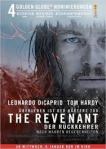
One of the most successful global trade negotiators added a few hours to his work day 17 years ago to write a novel about fur trader Hugh Glass. His book, ‘The Revenant’ was published in 2002 and sold 15,000 copies. Last year publisher Picador reissued the novel, selling over half a million copies.

images

Michael Punke, the deputy United States Trade Representative and the United States ambassador to the World Trade Organization and author, has become a rock star among colleagues in global trade.

“We all think it’s quite cool,” said Keith Rockwell, a spokesman for the W.T.O., who added that colleagues occasionally tease Mr. Punke by asking him how his buddy Leo is doing. “The W.T.O. isn’t normally known for having a Hollywood connection.”

Some of his colleagues marvel that he has such a successful side career, while steering the country’s international trade policy from his post in Geneva.

“The guy is so talented, you read his bio, and it’s like he has two lives,” said Christopher Wenk, the executive director for international policy at the U.S. Chamber of Commerce.”

Joining Ambassador Punke at the Dolby Theater on Oscar night is current Washington Post executive editor and former Boston Globe editor Martin Baron.

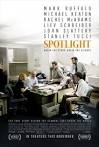
In November, Esquire Magazine ran a career profile asking ‘Is Martin Baron the Best News Editor of All Time?’. In the Oscar nominated film, ‘Spotlight’, actor Liev Schreiber’s performance channels the editor who led the Pulitzer Prize winning team investigating the child abuse scandal in the Catholic Church.

Unknown-1.jpeg

This week, Mr. Baron used his time in the Oscar ‘spotlight’ to reflect on the long term rewards of the film and journalism today, ‘I’m in ‘Spotlight’, but it’s not really about me. It’s about the power of journalism.’

“Aside from the acclaim of critics, “Spotlight” already has delivered one gratifying result. In emails, tweets and Facebook posts, journalists have declared themselves inspired, buoyed and affirmed. That is no small matter in this badly bruised profession. We have felt the traumatizing financial effect of the Internet and been berated by just about everyone, especially politicians in a campaign season that has seen us cynically labeled “scum.”

One journalist wrote me that “the story that inspired the movie serves as a wonderful, wonderful reminder why so many of us got into this business in the first place and why so many stayed despite all the gloom and doom and all the left hooks that landed squarely on our chins along the way.”

The article is required reading for all who earn a living pursuing a journalism career. It should be framed on the walls of journalism schools and be the first google search result on the world ‘journalism’.

Two additional stories about work in Hollywood this week addressed the ongoing conversation on inclusion:

‘From C-Suite to Characters on Screen: How inclusive is the entertainment industry?’ USC Annenberg professor Stacy L. Smith authored the MDSC Initiative’s first report on diversity in the entertainment industry.

Melena Ryzik profiled 27 industry professionals in ‘What It’s Really Like to Work in Hollywood*  (*If you’re not a straight white man.)’

Before leaving the week@work, let’s travel to the International Space Station where astronaut Scott Kelly is completing his 240 day mission in space.

CTeSzSOWIAApQID

“10,944 sunrises and sunsets

“The International Space Station zips around Earth at more than 17,000 miles per hour, or once every 90 minutes. That means over the course of Mr. Kelly’s stay, the space station will have made 5,440 orbits, and the sun will have gone up and down 10,944 times from the perspective of the astronauts aboard. Of course, Mr. Kelly did not see all of them. He is not continuously looking out the window, and he sleeps, too.”

(Scott Kelly tweeted the photo above of sunrise on February 27 and ice earlier today)CcT9mfcW4AAZFvx.jpg

NASA announced this week that it had received 18,300 applications for 14 open spots in the new astronaut class. The recruiting effort which began in the fall demonstrates a rekindled interest in exploration and discovery.

“Now that NASA’s Feb. 18 deadline for applicants has passed, the agency’s 18-month winnowing process has begun.

NASA staff will look at 400 to 600 applicants who survive the initial purge and identify those who pass reference and background checks. Then 120 will be invited to the Johnson Space Center for interviews.

The final 14 will be announced in July 2017 and begin two years of extensive training on spacecraft systems, spacewalking skills, team building and Russian language. Those who complete the program will be assigned to NASA’s Orion deep space exploration ship, the International Space Station or one of two commercial vehicles in development.”

As @StationCDRKelley vacates his spot on the ISS, it’s good to know there are thousands who hope to fill his seat.

This week@work – it’s in the stars, and the dreams of those who aspire to be actors, film makers, journalists, writers, astronauts, and international trade negotiators.


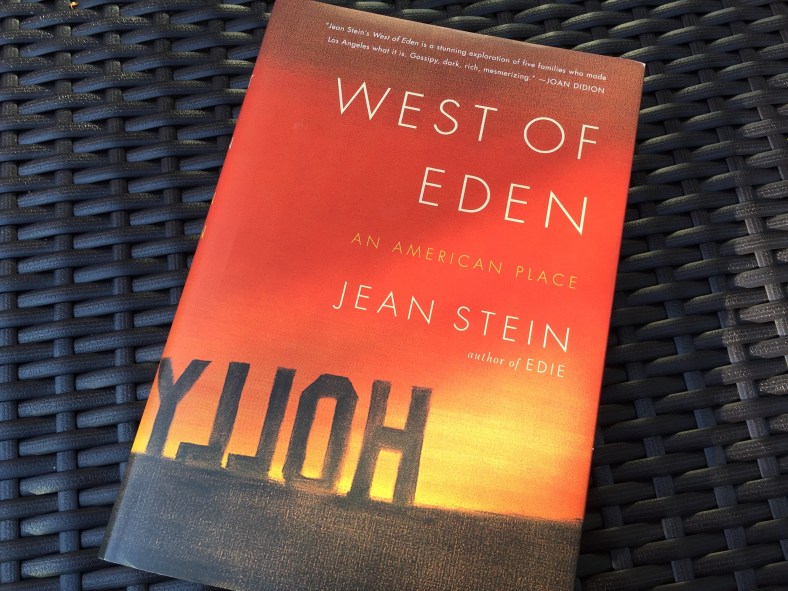
The Saturday Read ‘West of Eden: An American Place’ by Jean Stein

Were the initial seeds of relocation planted when you read a novel or work of non-fiction that transported you to that place on the globe where you could find success? In the Saturday Read this week we arrive in Hollywood, where author Jean Stein interweaves oral history and memory to tell the story, ‘West of Eden: An American Place’.

If you read the book through the lens of work, you come away with the story of the three industries that built LA: oil, real estate and the movies. As you turn the page, you listen to voices describing the culture and its effects on lives and careers.

When Po Bronson wrote his book, ‘What Should I Do With My Life?’, he had already spent time as a producer and writer in television. His observations on culture echo through Ms. Stein’s narrative.

“Every industry has a culture. And every culture is driven by a value system. In Hollywood, where praise is given too easily and thus has been devalued, the only honest metric is box-office receipts. So box-office receipts are all-important.

One of the most common mistakes is not recognizing how these value systems will shape you. People think that they can insulate themselves, that they’re different. They’re not. The relevant question in looking at a job is not What will I do? but Who will I become? What belief system will you adopt, and what will take on heightened importance in your life? Because once you’re rooted in a particular system — whether it’s medicine, New York City, Microsoft, or a startup — it’s often agonizingly difficult to unravel yourself from its values, practices, and rewards. Your money is good anywhere, but respect and status are only a local currency. They get heavily discounted when taken elsewhere. If you’re successful at the wrong thing, the mix of praise and opportunity can lock you in forever.”

‘West of Eden’ is the story of five families: the Dohenys, the Warners, Jane Garland, Jennifer Jones and the author’s own family, the Steins. As I read each section, I was reminded of Bronson’s comment. For the most part, the real life actors in the book were chasing the dream of wealth, status and celebrity; not considering the consequences, finding themselves in a world of praise and opportunity, locked in, in some cases, with tragic results.

Writer and historian, Mike Davis opens the book with his memories as a guide for Grey Line Tours, and it’s the map of celebrity homes that provides an outline for the book. We are introduced to the five stories by street address. Second stop, 1801 Angelo Drive, Beverly Hills, the Warner home. Arthur Miller captures the essence of early Hollywood.

“Jack Warner’s generation invented what turned out to be the major world culture – not just American, but a world culture. The world’s dream to escape the dreadful, ordinary, industrial, technological life. An you can understand how it happened if you think of where they came from, a place where there was absolutely no chance for anybody to do anything. They were living in a mud hole, but here the dreams were absolutely feasible. If you could think it, you could do it. It was magic. And they filled the movies with magic. George Cukor told me once, “Our object was to escape reality. We were quite conscious of all that.” It was a never-never land, a construct. These immigrants, these Jews from Eastern Europe, had developed this dream that had blond hair, blue eyes, and a straight nose. It all had to be beautiful. This was a fairy tale, because they were immigrants who saw this country as a fairy tale. It was incredible: it captured the whole country.”

These were the ‘culture builders’ whose legacy remains in the mansions, oil wells and studios, that fund the dreams of workers today. Their stories are told through neighbors, colleagues, family members and employees. David Geffen, who purchased Jack Warner’s home connects past to present:

“Jack Warner was a great character, like all of them. They were remarkable guys, but they were monsters. The movie business is a hard business, and you had to be a monster to create this industry. 

Jean Stein has called upon a lifetime network to craft and preserve the unique story of a place built on escape from the ordinary. A set of biographical notes at the end gives the reader thumbnail bios of each narrator, and it’s quite a cast of characters!

The book is required reading for the uninitiated and aspiring L.A. resident. There is drama worthy of an academy award, in every category from acting to costume design to hair and makeup and of course, visual effects.

“Another quality that all Californians who have spent any time on the edge of the Pacific are aware of is that the light is different. There’s a pressure on the eyes from the light. I’ve never felt it on the other coast.” (art curator, Walter Hopps)

The Friday Poem ‘Early Cinema’ by Elizabeth Alexander

On Sunday evening, the Academy of Motion Picture Arts and Sciences will present awards for the best in film this past year. In the year of #OscarsSoWhite, let’s imagine an alternative, more inclusive entertainment workplace. And, hold industry leaders accountable to deliver substance; jobs and stories reflecting the lives of the audience.

The Friday Poem this week is ‘Early Cinema’ by Elizabeth Alexander and takes us back to a time when “…young ladies were misrepresenting themselves…” to gain access to the magic of the movies and “…to be whisked away…”

Early Cinema

According to Mister Hedges, the custodian
who called upon their parents
after young Otwiner and young Julia
were spotted at the matinee
of Rudolph Valentino in The Sheik
at the segregated Knickerbocker Theater
in the uncommon Washington December
of 1922, “Your young ladies
were misrepresenting themselves today,”
meaning, of course, that they were passing.
After coffee and no cake were finished
and Mister Hedges had buttoned his coat
against the strange evening chill,
choice words were had with Otwiner and Julia,
shame upon the family, shame upon the race.

How they’d longed to see Rudolph Valentino,
who was swarthy like a Negro, like the finest Negro man.
In The Sheik, they’d heard, he was turbaned,
whisked damsels away in a desert cloud.
They’d heard this from Lucille and Ella
who’d put on their fine frocks and French,
claiming to be “of foreign extraction”
to sneak into the Knickerbocker Theater
past the usher who knew their parents
but did not know them.
They’d heard this from Mignon and Doris
who’d painted carmine bindis on their foreheads
braided their black hair tight down the back,
and huffed, “We’ll have to take this up with the Embassy”
to the squinting ticket taker.
Otwiner and Julia were tired of Oscar Michaux,
tired of church, tired of responsibility,
rectitude, posture, grooming, modulation,
tired of homilies each way they turned,
tired of colored right and wrong.
They wanted to be whisked away.

The morning after Mister Hedges’ visit
the paperboy cried “Extra!” and Papas
shrugged camel’s hair topcoats over pressed pajamas,
and Mamas read aloud at the breakfast table,
“No Colored Killed When Roof Caves In”
at the Knickerbocker Theater
at the evening show
from a surfeit of snow on the roof.
One hundred others dead.

It appeared that God had spoken.
There was no school that day,
no movies for months after.

Elizabeth Alexander    ‘Antebellum Dream Book’ Graywolf Press, 2001

antebellum dream book.png

“Know something about something…”

What is this thing; lifelong learning? David Brooks called it the ‘question-driven life’, and the late diplomat Richard Holbrooke delivered one of the best defining quotes: “Know something about something. Don’t just present your wonderful self to the world. Constantly amass knowledge and offer it around.” 

Lifelong learning = Curiosity

Recently, in a response to a consultant survey, Michael Dell, the chief executive of Dell, Inc. identified curiosity as the one attribute a leader will need to succeed in the future.

Journalist and questionologist, Warren Berger reports ‘Why Curious People Are Headed To the C-Suite’ for the Harvard Business Review.

“Dell was responding to a 2015 PwC survey of more than a thousand CEOs, a number of whom cited “curiosity” and “open-mindedness” as leadership traits that are becoming increasingly critical in challenging times. Another of the respondents, McCormick & Company CEO Alan D. Wilson, noted that business leaders who “are always expanding their perspective and what they know—and have that natural curiosity—are the people that are going to be successful.

“These days, a leader’s primary occupation must be to discover the future,” Panera Bread CEO Ron Shaich told me. It’s “a continual search,” Shaich says, requiring that today’s leader keep exploring new ideas—including ideas from other industries or even from outside the business world.”

OK, you’re not the head of a multi-national corporation, but you have questions, and not just about the technical aspects of work. It’s the human stuff that’s a bit more difficult to unbundle.

There have been continuing education and extension programs catering to adult learning for a hundred years. Most are connected to an academic institution and offer ‘lite’ versions of curricula taught to college students.

In the summer of 2008, ‘philosopher of life’ Alain deBotton founded ‘The School of Life’ in London a few blocks walk from the Russell Square Underground Station. Since then it has evolved into the new model for lifelong learning, employing non-traditional faculty to deliver programing focused on “developing emotional intelligence through the help of culture. We address such issues as how to find fulfilling work, how to master the art of relationships, how to understand one’s past, how to achieve calm and how better to understand, and where necessary change, the world.”

In the Marchmont Street location, and recently opened global sites, professionals come together to learn, share and evolve in a safe space of respectful interaction. This past weekend, SOL offered a ‘pop-up’ sampling of programs in Los Angeles. I attended three of the five sessions led by philosopher and trust consultant, Brennan Jacoby.

On a beautiful California Saturday morning, a diverse group of students arrived at the Design Matters Gallery to begin a day of three, 90 minute sessions. The content informed, inspired and provoked lively discussion.

The School of Life model works because talented faculty deliver contemporary topics, using an instructional technique that allows for the right balance of introspection, sharing and networking. Sessions seemed to end too soon, with attendees lingering to continue conversations.

For the Los Angeles weekend the topics included: How to Find A Job You Love, How to Be Creative, How to Think Like an Entrepreneur, How to be Confident and How to Have Better Conversations.

The School of Life is a catalyst for the question-driven life. If you’ve decided your ‘wonderful self’ is not quite perfect yet, and you’re “ready to amass knowledge and offer it around”, set you lifelong learning GPS on London, or visit the website to begin your quest.


The week@work – innovative organizations, AT&T’s new culture, Shonda Rhimes @TED, the online platform economy and pausing to enjoy the view

The week@work was dominated by the story of Apple’s opposition to the court order to unlock the San Bernardino gunman’s IPhone. Simultaneously, news was being made as Fast Company released its annual list of the ‘Most Innovative Companies’, AT&T’s leadership challenged workers to reinvent themselves,  Shonda Rhimes shared her ‘year of yes’ @TED, and the JP Morgan Chase Institute released a study examining the online platform economy, and its impact on one million of its customers.

And for balance, in this centennial year of the National Park Service, enjoy the view of Horsetail Fall in Yosemite National Park as sunset transforms the waterfall into an apparent stream of hot lava. Sangeeta Day captured the photo above for National Geographic.

On Monday, Fast Company released their list of The Most Innovative Companies of 2016. The top five are BuzzFeed, Facebook, CVS Health, Uber and Netflix.

3055973-poster-c-1-TOC-march-2016.jpg

BuzzFeed CEO, Jonah Peretti’s vision drew on his fascination with Paramount Pictures, CNN and JayZ. “BuzzFeed has built its success, like Paramount a century ago, by owning all the elements of a modern media business: a global news team, its own video pro­duction studio, a sophisticated data operation, and an in-house creative ad agency.” 

“The “bored-at-work network,” as Peretti himself once called it, was merely a single U.S. website. In late 2014, he foresaw that people wouldn’t want to leave their social apps, so Peretti drastically shifted his company’s strategy: Instead of trying to lure eyeballs to its own website, the way most publishers do, BuzzFeed would publish original text, images, and video directly to where its audience already spent its time, some 30 different global platforms, from Facebook to the Russian social networks VK and Telegram. Rather than write one definitive article and publish it on every platform (the de facto standard in the media business), BuzzFeed would tailor content specifically for the network and audience where it’s being viewed.

How’d that turn out? Across all the platforms where it now publishes content, the company generates 5 billion monthly views—half from video, a business that effectively did not exist two years ago. Traffic to the website has remained steady—80 million people in the U.S. every month, putting it ahead of The New York Times—even though as much as 75% of BuzzFeed’s content is now published somewhere else.”

at-and-t-squarelogo.png


One company that has lost its standing in the top 50 innovators is legacy telecom AT&T. As the competitors have changed with the shift from traditional phone and cellular carriers to Internet and cloud computing, the company’s leadership team is making new demands on its workforce, resetting the culture, again.

“AT&T’s competitors are not just Verizon and Sprint, but also tech giants like Amazon and Google. For the company to survive in this environment, Mr. Stephenson needs to retrain its 280,000 employees so they can improve their coding skills, or learn them, and make quick business decisions based on a fire hose of data coming into the company.

In an ambitious corporate education program that started about two years ago, he is offering to pay for classes (at least some of them) to help employees modernize their skills. But there’s a catch: They have to take these classes on their own time and sometimes pay for them with their own money.

To Mr. Stephenson, it should be an easy choice for most workers: Learn new skills or find your career choices are very limited.”

Adapting to change, learning new skills, saying yes, and taking time to play were all part of television producer Shonda Rhimes’ TED Talk in Vancouver.

d80be53df8b115a4e19b5182ccfd653380dee585_254x191.jpg

“You can do it too, say yes every time your child asks you to play. Are you thinking that maybe I’m an idiot in diamond shoes? You’re right, but you can still do this. You have time. You know why? Because you’re not Rihanna and you’re not a Muppet. Your child does not think you’re that interesting.

I said yes to less work and more play, and somehow I still run my world. My brain is still global. My campfires still burn. The more I play, the happier I am, and the happier my kids are. The more I play, the more I feel like a good mother. The more I play, the freer my mind becomes. The more I play, the better I work. The more I play, the more I feel the hum, the nation I’m building, the marathon I’m running, the troops, the canvas, the high note, the hum, the hum, the other hum, the real hum, life’s hum. The more I feel that hum, the more this strange, quivering, uncocooned, awkward, brand new, alive non-titan feels like me. The more I feel that hum, the more I know who I am. I’m a writer, I make stuff up, I imagine. That part of the job, that’s living the dream. That’s the dream of the job. Because a dream job should be a little bit dreamy.”

de3d8aa4bfe6c55dba2d3a5e60101d6f9ffde7cb_800x600.jpg

In other news @TED, the annual $1 million TED Prize was awarded to Sarah H. Parcak, a space archaeologist who uses satellite imagery to discover ancient sites, and map looting.

“I wish for us to discover the millions of unknown archaeological sites across the globe. By building an online citizen science platform and training a 21st century army of global explorers, we’ll find and protect the world’s hidden heritage, which contains clues to humankind’s collective resilience and creativity.”

Unknown.jpegEric Morath reported the findings of a JP Morgan Institute Study of market volatility and the emergence of  “a new marketplace for work by unbundling a job into discrete tasks and directly connecting individual sellers with consumers.” 

Call it ‘gig’ or ‘sharing’, the economy is being supported by folks who are supplementing their income with ‘app jobs’.

“The share of Americans earning income from digital platforms such as Uber and Airbnb is growing rapidly, but those gigs typically supplement incomes rather than replace full-time work.

Nearly 1% of U.S. adults earned income in September 2015 via one of the growing number of firms that are part of the sharing or gig economy, according to a study of bank transactions by the JPMorgan Chase Institute, released Thursday. Participation has exploded since October 2012, when just 0.1% of adults were paid by such platforms.

At 2.5 million, the sharing labor force is roughly equivalent to the number of teachers and others that work for public schools in the U.S., though the study finds that people driving for Lyft or selling crafts on eBay typically have other sources of income.

The average monthly income for someone who provided labor via one of the platforms was $533, representing a third of total income. The share of active participants earning 50% or more of their monthly income has fallen since the summer of 2014, as the total number making some money increased.”

In other stories of interest this week@work:

‘Channing Dungey to Succeed Paul Lee as Chief of ABC Entertainment’ by Brooks Barnes and John Koblin   “Channing Dungey, previously ABC’s drama chief, will take over as the head of ABC entertainment, making her the first black network president.

Ms. Dungey’s elevation is a breakthrough for an industry that has often struggled with diversity, especially among the senior executive ranks.”

‘Fashion Week’s Shift Toward Diversity’ by Ruth La Ferla  “Well before the Oscars stirred a diversity debate, Seventh Avenue had been the target of stinging criticism for the sin of omission, routinely parading mostly white models on its runways.

In this latest round of shows, which ended on Thursday, many designers appeared to have taken a hard look at the highly charged issue of casting, stepping up their efforts to hire racial and ethnic minorities and sounding a chord for inclusiveness.”

And because it’s the beginning of Oscar Week:

b67e67830551ea34f84eb0edf7900236553b83045ca648f52711fe9838b7a681‘Films once were an escape from work. Now, they celebrate it. What gives?’ by Charles McNulty  “There was a time when Americans went to the movies to escape the workplace. These days, in keeping with the way our offices have taken over our lives, filmmakers have turned the big screen into one long career day.
Audiences have been invited to experience first-hand the everyday grind of being a journalist (“Spotlight”), an astronaut (“The Martian”), a screenwriter (“Trumbo”), a fur trapper (“The Revenant”) and even an inventor of kitchen mops (“Joy”).”

Pleasant dreams of gold for all, this week@work.


The Saturday Read ‘War and Peace’ by Leo Tolstoy

Are you one of the many who fumbles their way through a conversation of the classics, with vague memories of the Cliff Notes version, having never read the original? You’re not alone, and the ‘Saturday Read’ this week is the first step to fill in the blanks with ‘War and Peace’ by Leo Tolstoy.

“Do you feel pressured to read certain books?” Journalist Alison Flood posed this question after a poll conducted by market research firm, ‘YouGov’, found that “Britons are weighed down with regret over novels they haven’t found ‘time and patience’ for”, garnering a series of Twitter comments concluding, you should try it, you might like it.

“…maybe it’s a classic because it’s good, not because it’s hard. I did precisely that with War and Peace; giving it a crack because I felt I should, and then being startled to discover that it was actually fun. Not a trial at all.”

Only 4% of Britons surveyed had read War and Peace, but that began to change with the broadcast this month of the Harvey Weinstein produced, BBC Television production of the novel as a four part, eight hour mini series.

“Judging by our recent sales … an awful lot of people have finally crossed this classic off their must-read list. Four different editions of the book have hit our bestseller list, shifting an almost equal number of copies each,” said Waterstones buyer Joseph Knobbs.

At publisher Wordsworth Editions, managing director Helen Trayler said that sales of War and Peace had grown steadily after the first episode of the new TV adaptation, with its edition in the top 20 of the Bookseller’s small publisher charts ever since the show launched.”

In December, 1,300 people joined together for a live, four day, marathon reading of the novel on Russian TV.

“Tolstoy’s great-great-granddaughter Fekla Tolstaya coordinated the participants, who are each reading a two to three-minute passage of the novel’s more than half a million words from schools, museums, libraries and other locations around the world.

Readers include Polish film director and Oscar winner Andrzej Wajda, Bolshoi Ballet director Vladimir Urin and Russian politician Valentina Matvienko. Cosmonaut Sergei Volkov contributed a reading from the International Space Station, and French readers were coordinated to read the book’s French sections”


IMG_3888

Yes, the book is written in French and English in the Pevear and Volokhonsky translation.

Clara Bell, reviewing the novel in 1886 for the New York Times criticized both the novel and Count Tolstoy’s domestic environment.

“In fact, War and Peace may be called an illustrated historical essay rather than a novel, there being no semblance of a plot, and the characters serving to develop the public events rather than being developed by them. This inversion of the usual rule, together with the subtle but unmistakeable savor of fatalism which pervades the whole work, disturbs the reader with the same sense of vague discomfort that must have chilled many of Count Tolstoi’s foreign admirers when they found their hero living in a shabby, comfortless, untidy house a little way out of Moscow, where carpets and clean tablecloths appeared to be equally rare.”

So we avoid reading ‘War and Peace’ because it’s described as daunting, boring, long, confusing and required. What if we took the advice of journalist Flood and read it for enjoyment? I did and it is long, but amazing and you will find the seeds of many subsequent classics, and ‘not so classic’ in the story.

It turns out Count Tolstoy had a lot to say about contemporary issues; the individual, happiness and occupation-work. One example, the thoughts of character Pierre Bezukov after he is released from prison at the end of the war.

“The absence of suffering, the satisfaction of one’s needs, and the resulting freedom to choose one’s occupation, that is, one’s way of life, now seemed to Pierre the highest and most unquestionable human happiness.

“…the satisfaction of his needs…now that he was deprived of them all, seemed perfect happiness to Pierre, and the choice of an occupation, that is, of a life, now, when that choice was so limited, seemed to him such an easy matter that he forgot that a superfluidity of life’s comforts destroys all the happiness of the satisfaction of one’s needs, and that a greater freedom to choose one’s occupation, the freedom which in this life was granted him by education, wealth, social position – precisely that freedom made the choice of an occupation insolubly difficult and destroyed the very need and possibility of an occupation.”

This is why we read ‘War and Peace’. It’s why Russian TV devoted four days to a live reading. And why one of Hollywood’s leaders decided to executive produce a screenplay of his favorite novel.

If you are still a bit of a skeptic, Philip Hensher of The Guardian offers ‘War and Peace: the 10 things you need to know (if you haven’t actually read it)’

” 7. Anyone who tells you that you can skip the “War” parts and only read the “Peace” parts is an idiot. The bits that interest you personally and the bits that you find of only abstract curiosity are going to change when you read the book at 20, and again at 50. The book is the product of a very big mind, who lost interest in almost everything War and Peace was about before he died. It is a living organism that is never quite the same as you remembered when you go back to it.”


‘Internal Exile’ a poem by Richard Cecil

The answer to the question, why work? is unique in each response. Do you work to live, or live to work, or some combination? The Friday Poem this week comes from Richard Cecil, and addresses the workers who have been ‘stuck’ by “Judge Necessity” since “…the bailiff, Fate, led them away to Personnel to fill out payroll forms..”

Internal Exile

Although most people I know were condemned
years ago by Judge Necessity
to life in condos near a freeway exit
convenient to their twice-a-day commutes
through traffic jams to jobs that they dislike,
they didn’t bury their heads in their hands
and cry “Oh, no!” when sentence was pronounced:
Forty years accounting in Duluth!
or Tenure at Southwest Missouri State!
Instead, they mumbled, not bad. It could be worse,
when the bailiff, Fate, led them away
to Personnel to fill out payroll forms
and have their smiling ID photos snapped.
And that’s what they still mumble every morning
just before their snooze alarms go off
when Fluffy nuzzles them out of their dreams
of making out with movie stars on beaches.
They rise at five a.m. and feed their cats
and drive to work and work and drive back home
and feed their cats and eat and fall asleep
while watching Evening News’s fresh disasters—
blown-up bodies littering a desert
fought over for the last three thousand years,
and smashed-to-pieces million-dollar houses
built on islands swept by hurricanes.
It’s soothing to watch news about the places
where people literally will die to live
when you live someplace with no attractions—
mountains, coastline, history—like here,
where none aspire to live, though many do.
“A great place to work, with no distractions”
is how my interviewer first described it
nineteen years ago, when he hired me.
And, though he moved the day that he retired
to his dream house in the uplands with a vista,
he wasn’t lying—working’s better here
and easier than trying to have fun.
Is that the way it is where you’re stuck, too?

Richard Cecil   ‘Twenty First Century Blues’   2004