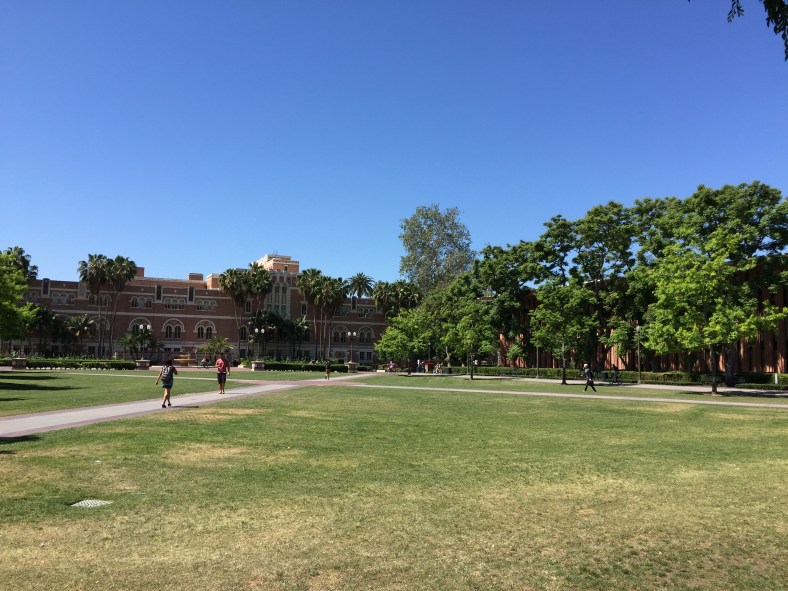
Your first day @work is not that different from your first day @college

Late last month, The New York Times shared advice for incoming college freshman from 25 upperclassmen and recent grads. As I read the article, I noted a parallel in the seven topics offered for new students, and folks in their first months @work – from the first internship through every career transition.

“Freshman year is a chance to redefine yourself, to challenge assumptions, to lay the foundation for the rest of your life.”

The first day of work is also a chance to redefine yourself, challenge assumptions and begin to lay the foundation of your career.

Let’s examine the list of seven, and test their application to the workplace.

“Extend yourself”  You are the ‘newbie’ @work. You’re not expected to have all the answers on day one. Ask questions.  Explore the world beyond your cubicle. Find ‘community spaces’ where folks gather, and mingle.

“Do the work”  In college, this is basically showing up for class, @work it’s consistently engaging in projects. Don’t wait to be asked. Offer to participate in assignments that will stretch your talents.

“Understand the system and work it”  Every workplace has its unique culture, values and traditions. If you did your research before you started your new job, you should have an inkling of what to expect. Once you are on payroll, take some time to observe how folks communicate, how priorities are set, where the budget dollars are allocated, and who is making the decisions. Align yourself with the energized vs. the disgruntled.

“Be yourself”  Hopefully you selected a workplace that is a ‘fit’ with your values and talents. If the recruitment process was straightforward, being the ‘authentic’ you will contribute to your success.

You will change as part of a new work community, just as you evolved throughout your college years in an environment that fostered success, creativity, and diversity.  Check in periodically with friends outside your workplace to ensure you’re growing vs. losing your essential essence.

“Tend to yourself”, “Your grade in one class does not define you”  These tidbits of advice applied to work fall into the categories of work/life balance and recovering from failure. It’s very easy to be consumed by the work in the beginning. You’re learning new concepts, meeting new people, struggling to make deadlines, and communicating in a new workplace language. If you’re not spending time outside of work socializing, contributing to your community or maintaining a fitness routine; your work will eventually suffer.

When you do make a mistake, your career isn’t over. The upper strata of success is populated with folks who have recovered from both minor and major workplace calamity.

“Develop people skills”  Without solid communication skills, every day at work will be a challenge. Our work culture has traditionally rewarded the extrovert, but new research has shown the introvert is an equal partner in the success of any organization.

In college you may have been able to get an ‘A’ as an individual, rarely leaving your room, thinking great thoughts and rarely interacting with the campus community. @work you have to deal with people. You may be the most brilliant innovator, but at some point you have to explain your product to a client.

All of us can improve our communication skills and it’s to an organization’s advantage to support you in this effort. Find out if there are skill development programs available through your employer or professional association. Be proactive on this one.

 “Don’t get stuck” Life doesn’t always go according to plan. Entering college you may have thought you would be the next Bill Gates, when a Freshman Seminar introduced you to the wonderful world of philosophy. Tangents open up @work as well. Entering an organization for the first time, you cannot imagine the variety of opportunities that are available. You may be in a meeting with a client and realize the work his/her organization is doing is a better fit for you skills. Be open when an alternative is presented. There is no perfect career path, just one that is unique to you.

One more – always share what you learn with colleagues. Knowledge is power. Shared information can be transformative.

What I did this summer…

What happened to summer? Is it me, or does time go by more quickly after July 4? Before your experiences of the past few months are lost in the excitement of fall work assignments, take some time to reflect on what you learned.

Did you travel, study, volunteer or all of the above? Did your curiosity lead you to interviews with folks outside your career field? What did you learn about yourself?

Catalog your experience including the skills you acquired or any challenges you overcame. Some of these will fall naturally into a resume, but others will provide the content for future professional conversations.

How did you grow as an individual or as a professional? Can you identify ways to link your summer experience to your current work?

Sanity and survival compel us to try to separate work from the rest of our lives. But when we return to work after vacation, maintaining the separation can be a barrier to creativity.

Refreshing the view allows us to be open to new opportunities.

Develop a narrative that tells your story of the summer – a story that incorporates all the elements of the ‘new and improved’ you. Keep it simple. Focus on experience that adds value to your ‘brand @work’.

A conversation poolside that sparked an idea for a new product. An article/book that offered an alternative approach to problem-solving. A civic engagement project that spurred ideas to motivate your team. A faculty member or classmate who provided a connection to a potential new client.

Or, did the chance to step away and just daydream provide new insight into your next career?


The week@work – Brexit, #Regrexit, Euro2016, Christo’s floating piers, Bill Cunningham’s photos, Goldman Sachs’ video recruiting strategy, and education for a jobless future

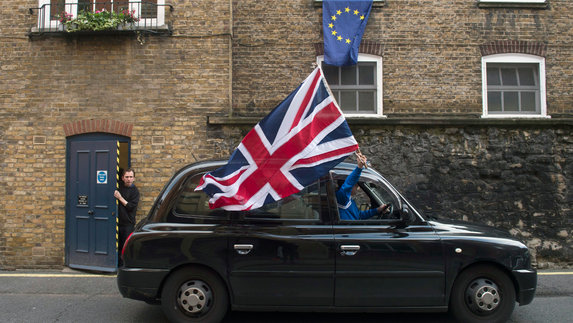
I was a history major, so the past week@work included an inordinate amount of time spent in the company of various traditional and social media portals, monitoring the results of the Brexit vote and its aftermath.

In between, there were intervals of soccer, viewing both Copa America and Euro 2016. There was also art in Christo’s installation in Lake Iseo, Italy and reflected brilliance in the photography of Bill Cunningham, who died this weekend. Goldman Sachs announced a new campus recruiting strategy (good news for history majors), and a journalist asked if education is preparing students adequately for a jobless future.

25Brexit-HP-SS-slide-9PT7-largeWidescreen573-v3.jpg

On Thursday evening I watched part of CNN International’s ‘Brexit’ election coverage, which included an animated discussion between anchor Christiane Amanpour and historian Simon Schama. As it became clear that ‘Leave’ was overtaking ‘Remain’ in the vote count, Schama cited the referendum results as one more example of “a world phenomenon of tribal nationalism”.

The historian has been actively engaged on Twitter and in an interview with NPR’s Robert Siegel described the vote as “a turning point for Great Britain”.

Here’s a sample of the conversation:

SIEGEL:” Culturally, there is a generation of educated young Europeans – and I include Brits in that – who think of themselves at some level as being European. Maybe it’s not their only identity. Do you think that goes away in Britain and does a different identity take shape, or do those people grow up and change in this country?”

SCHAMA: “No, I think they’re in distress. I mean, I’m sure you’ve said, it’s very striking that the 18 to 24s voted something like 75 percent to stay in. And I suppose it depends where you are in London. We have more immigrants than anywhere else, and we’re least bothered by it. And I think when the shock subsides a bit, the young may well fight to be at least as European as they’ve been led to believe they are. That’s my hope, actually.”

SIEGEL: “If you can imagine a historian 50 years hence writing the sentence that will sum up what happened on this day, what do you think it’ll be?”

SCHAMA:” The greatest act of unforced national self-harm yet known in modern history.”

It’s always helpful to have a historian in the house. And it’s stunning to realize the generational split in voting: “Among 18-24-year-olds, the age category that’s going to have to live with the consequences of this vote for all of their working lives, 75 percent voted to stay.”

As to #Regrexit, writer and comedian, John Oliver reminded his countrymen, “there are no f______do-overs”.

In 2004 journalist Franklin Foer wrote ‘How Soccer Explains the World: An Unlikely Theory of Globalization’. Seemed like a good read to revisit after Brexit and an opportunity for a diversion while following Copa America and Euro 2016. The book treats soccer stories as globalization case studies. And I think we could use some ‘best practices’ right about now.

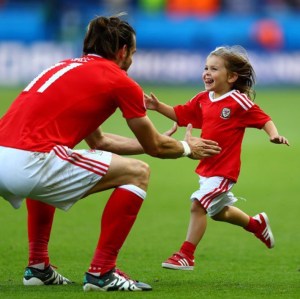
Full disclosure, I am rooting for the Welsh National Football Team as they face Belgium on Friday. My favorite work/life balance photo of the week – Wales’ Gareth Bale and daughter after the team advanced to the Euro 2016 quarter finals.

IMG_4935

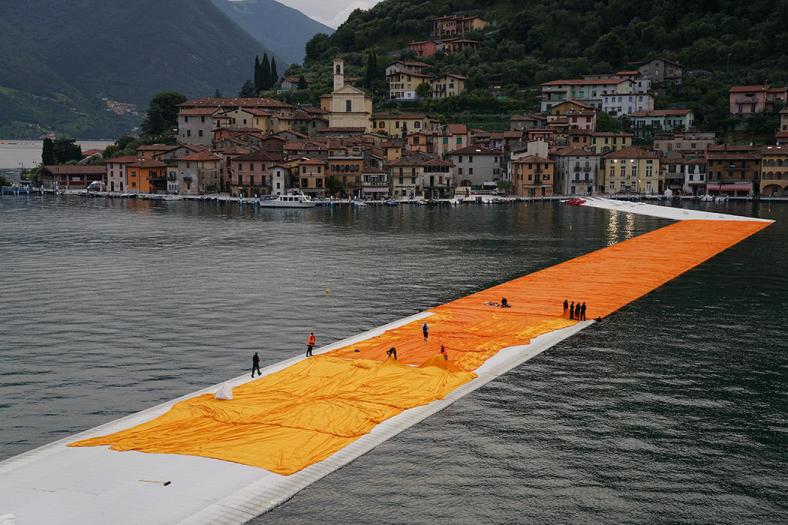
Art is another outlet for expression in chaos and ambiguity. A new Christo work debuted last week. The Guardian reported on the popularity of the ‘Floating Piers’ in Lake Iseo in northern Italy.

58af48a0cb7e83c7f1e3dbf9b4a50e7e.jpg

“A giant floating walkway made out of fabric on an Italian lake has had to be closed at night after tens of thousands of visitors began to wear it out.

The 1.9-mile (3km) walkway of 200,000 floating cubes covered in orange fabric was created by artist Christo and has proved a major attraction since it opened on Saturday on Lake Iseo.

However, 270,000 visitors have flocked to see the free installation – called “the Floating Piers” – in less than five days, far exceeding organisers’ expectations of about 500,000 over 16 days.”

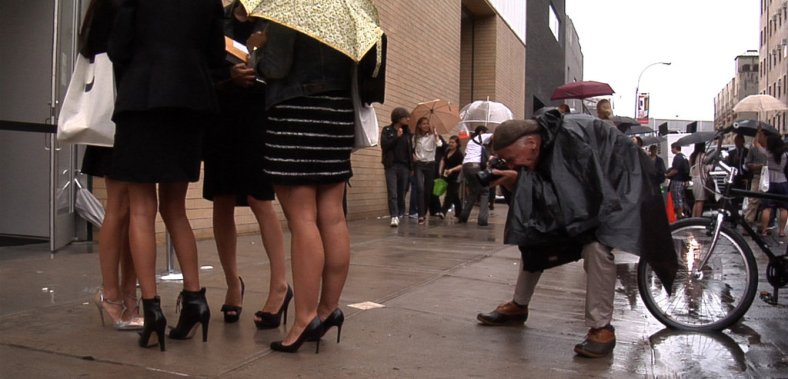
On Saturday, The New York Times chronicled the career of one of their ‘house icons’, photographer Bill Cunningham.

BILL-jumbo.jpg

“Mr. Cunningham was such a singular presence in the city that, in 2009, he was designated a living landmark. And he was an easy one to spot, riding his bicycle through Midtown, where he did most of his field work: his bony-thin frame draped in his utilitarian blue French worker’s jacket, khaki pants and black sneakers (he himself was no one’s idea of a fashion plate), with his 35-millimeter camera slung around his neck, ever at the ready for the next fashion statement to come around the corner.

Nothing escaped his notice: not the fanny packs, not the Birkin bags, not the gingham shirts, not the fluorescent biker shorts.

In his nearly 40 years working for The Times, Mr. Cunningham snapped away at changing dress habits to chart the broader shift away from formality and toward something more diffuse and individualistic.”

Two stories about the transition from school to work round out this week@work.

On Friday, bbc.com reported “Goldman Sachs is scrapping face-to-face interviews on university campuses in a bid to attract a wider range of talent.
The US investment bank will switch to video interviews with first-round undergraduate candidates from next month.

“Edith Cooper, Goldman’s global head of human capital management said: “We want to hire not just the economics or business undergraduate but there is that pure liberal arts or “history major that could be the next Lloyd Blankfein.”

Mr Blankfein, the bank’s chief executive, went to Harvard, one of America’s elite Ivy League universities, where he studied history.”

On Tuesday, Washington Post contributor, Jeffrey J. Selingo asked ‘Are colleges preparing students for the workforce?’

“While students are often encouraged to major in job-ready fields like STEM (science, technology, engineering, and math), graduates of those programs are unlikely to find employment without solid grounding in the liberal arts and experiences outside the classroom to build their soft skills.

In the future work world, it’s critical that new graduates stay one step ahead of technology and focus more on what computers can’t yet do well: show creativity, have judgment, play well with others, and navigate ambiguity.”

It was a good week to be a history major.


The Friday Poem ‘A sonnet’ by Lin-Manuel Miranda

At a moment of career recognition, ‘Hamilton’ creator, Lin Manuel-Miranda shared a sonnet for his wife and the world about family, tragedy and love. At it’s center was his response to the terrorist, hate crime in Orlando.

The New York Times Sunday Styles reporter, Katie Rosman, shared the ‘back story’ of the sonnet from creation to delivery on the Beacon Theater stage Sunday evening.

“…as the first grim reports out of Orlando, Fla., were circulating, Mr. Miranda took out his phone and began to tap out the sonnet he would read aloud that night while accepting the Tony for best score. In 14 lines he paid tribute to his wife, his son and the victims of the massacre.

Back at the Mandarin Oriental before curtain time, he realized he would need a printout of the verse he had written. He called the suite where his father was staying and asked him if he wouldn’t mind taking care of it. Luis, 61, said yes, and traveled down a flight, where his son handed him a thumb drive. Lin-Manuel had one stipulation: “He said, ‘Can you please not read it?’”

He went down the elevator, thumb drive in hand, toward the concierge desk. There, employees of the Mandarin Oriental sprang into action.

Back in the elevator, with the printout, the father did the very thing his son had asked him not to do: He read the sonnet.

“That’s like asking me not to drink water when it’s 90 degrees out,” Luis said. “I thought it was very moving and pretty and important for the moment.”

Back in the suite, Luis listened as Lin-Manuel read it aloud, practicing for the big moment.”

Yesterday Mr. Miranda announced a fundraising effort, for Equality Florida. Revenue will be generated by the sale of a T shirt with words from the sonnet. “Here’s a thing that speaks for itself. I’m very excited about it and it’s a way you can help.” 

x2837DC2CA-99AA-9001-BE24B99096BFFE8E.jpg.pagespeed.ic.v2WAbmnIPw.jpg

The sonnet has been published in a variety of outlets since the awards ceremony. After the horror of this past week, there was no other choice for The Friday Poem.

My wife’s the reason anything gets done
She nudges me towards promise by degrees
She is a perfect symphony of one
Our son is her most beautiful reprise
We chase the melodies that seem to find us until they’re finished songs and start to play
When senseless acts of tragedy remind us that nothing here is promised, not one day
The show is proof that history remembers
We live through times when hate and fear seem stronger
We rise and fall and light from dying embers
Remembrances that hope and love last longer
And love is love is love is love is love is love is love is love
Cannot be killed or swept aside
I sing Vanessa’s symphony
Eliza tells her story
Now fill the world with music, love, and pride

Lin Manuel-Miranda   June 12, 2016


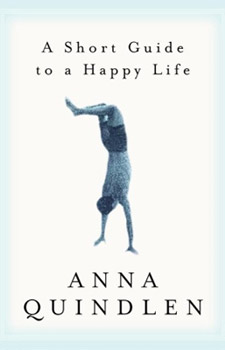
The Saturday Read ‘A Short Guide to a Happy Life’ by Anna Quindlen

Do you remember who spoke at your graduation ceremony? The Saturday Read this week is for all of you who forgot, but would welcome a bit of ‘life advice’ in this season of ‘Pomp and Circumstance’.

In 1999, author Anna Quindlen was invited to deliver the commencement address at Villanova University. And then this happened:

“Pulitzer Prize-winning columnist and author Anna Quindlen has withdrawn as the commencement speaker at Villanova University this Sunday because of what she said were objections by a “vocal minority” to her support of abortion rights.

Quindlen, who was also to have received an honorary doctorate of humane letters, said in an interview yesterday that she did not want to “ruin the day or cast a shadow” on the graduation ceremony.”

A graduate student requested a copy of the prepared text and posted it on the Internet. (This was before Facebook, Twitter et al.) The post went viral, and the resulting essay was published in 2000 as ‘A Short Guide to a Happy Life’.

Seventeen years later her words still resonate. In the opening paragraphs she signals her values, and offers a hint at why she withdrew.

“My work is human nature. Real life is really all I know…Don’t ever confuse the two, your life and your work…The second is only part of the first.”

Real life collided with an opportunity to address Villanova’s Class of 1999, the alma mater of several of her family members. Fortunately her publisher provided an avenue for Ms. Quindlen to share her personal life experience with a broader audience, to encourage ownership and balance.

“When you leave college, there are thousands of people out there with the same degree you have; when you get a job, there will be thousands of people doing what you want to do for a living.”

“But you are the only person alive who has sole custody of your life. Your particular life. Your entire life. Not just the life at your desk, or your life on the bus, or in the car, or at the computer. Not just the life of your mind, but the life of your heart. Not just your bank account, but your soul.”

“People don’t talk about the soul very much anymore. It’s so much easier to write a resume than to craft a spirit.”

Some may disagree that a resume is easy to write, especially a recent grad who has spent the past months engaged in the job search. A resume is limited to a list of accomplishments, full of key words designed to cut through the barrier of digital applicant screening. It’s the values expressed in that experience that define who you are, your spirit.

The recurring theme of ‘Short Guide’ challenges the reader to question commonly held definitions of success.

“You cannot be really first-rate at your work if your work is all you are.”

“So I suppose the best piece of advice I could give anyone is pretty simple: get a life. A real life, not a manic pursuit of the next promotion, the bigger paycheck, the larger house.”

“Get a life in which you are not alone. Find people you love, and who love you. And remember that love is not leisure, it is work.”

‘A Short Guide to a Happy Life’ is a compact book to be kept close for a periodic reread. It’s a reminder to all, at every career stage, that “Life is made up of moments, small pieces of glittering mica in a long stretch of gray cement.”

One of those moments is revealed in the recollection of a conversation with a homeless man on the boardwalk in Coney Island, New York.

“And he stared out at the ocean and said, “Look at the view, young lady. Look at the view.”

Commencement is the beginning of a life of learning, sometimes from the most unexpected of teachers. Enjoy the Saturday Read, and don’t forget to enjoy the view.


The week@work: team spirit, setting boundaries@work, getting fired, & the first day of spring

This week@work we review articles on the effectiveness of teams, the risk of not setting boundaries @work, why getting fired isn’t always a bad thing, and a sign of spring.

Organizations are employing cross functional teams to solve a variety of business problems. The Economist explored new research on the effectiveness of teams.

20160319_wbd000

“Leigh Thompson of Kellogg School of Management in Illinois warns that, “Teams are not always the answer—teams may provide insight, creativity and knowledge in a way that a person working independently cannot; but teamwork may also lead to confusion, delay and poor decision-making.”

Profound changes in the workforce are making teams trickier to manage. Teams work best if their members have a strong common culture.

…the most successful teams have leaders who set an overall direction and clamp down on dithering and waffle. They need to keep teams small and focused: giving in to pressure to be more “inclusive” is a guarantee of dysfunction. Jeff Bezos, Amazon’s boss, says that “If I see more than two pizzas for lunch, the team is too big.”

…organisations need to learn something bigger than how to manage teams better: they need to be in the habit of asking themselves whether teams are the best tools for the job…Even in the age of open-plan offices and social networks some work is best left to the individual.”

Travis Bradberry lists ‘6 Things You Don’t Owe Your Boss’. Research at Northern Illinois University found that ‘telepressure’, the stress resulting from constant connection to work, negatively impacts health and cognitive performance.


“We need to establish boundaries between our personal and professional lives. When we don’t, our work, our health, and our personal lives suffer.

You need to make the critical distinction between what belongs to your employer and what belongs to you and you only. The items that follow are yours (health, family, sanity, identity, contacts & integrity). If you don’t set boundaries around them and learn to say no to your boss, you’re giving away something with immeasurable value.”

What if we replaced ‘getting fired’ with ‘moving on’ to describe separating from work? That’s just one of the strategies surveyed by Vivian Giang in ‘Why We Need To Stop Thinking Of Getting Fired As A Bad Thing’.

Unknown.jpeg

“…if we want to change the way we think about someone leaving a company, we need to change the way we think about work. In the book, The Alliance: Managing Talent in the Networked Age, LinkedIn cofounder Reid Hoffman, along with coauthors Chris Yeh and Ben Casnocha, say relationships between employers and employees should be viewed as an alliance where employers are upfront and honest with new hires about their “tour of duty,” and how long each mission will take. That way, it takes away the unrealistic expectation that either, or both, parties can have about the relationship being lifelong, where nothing ever changes.

…the alliance says there are two independent parties that are coming together around certain mutual goals,” says Yeh. “They are going to be very specific about how they work together, really spelling this out and managing expectations, so they’re able to be more honest with each other and build a greater sense of trust.”

That way, employers and employees have a clear sense of what they’re trying to get out of the other party from the beginning. Employees know their mission, and how it will benefit the company and their own career. Employers are able to admit—and be okay with—the knowledge that their employees won’t be there forever.”

The world of work is changing. We talk about the ‘gig economy’ as something new, when the idea of contract employment has been the norm in many industries. Consider a theater or film project. Each professional brings a specific expertise to create magic. Each individual an entrepreneur, each worker an owner; managing the totality of their career, with a mosaic of assignments.

It’s the first day of spring. If you are traveling to Washington D.C. this week, you will arrive in time for the peak bloom of the cherry blossoms. Cherry-Blossoms-Washington-DC-March-18-2016-07-678x453.jpg

“Each year, the National Cherry Blossom Festival commemorates the 1912 gift of 3,000 cherry trees from Mayor Yukio Ozaki of Tokyo to the city of Washington, DC. The gift and annual celebration honor the lasting friendship between the United States and Japan and the continued close relationship between the two countries.”

‘Today’ a poem by Billy Collins


The signs of spring are around us. On Sunday we move the clocks ahead an hour and begin to fill in our NCAA tournament brackets. In the world beyond our workplace windows, nature quietly launches her ‘trickster season’.

“Spring has never been a reliable season. Some years it includes too much summer, some years too much winter, and some years too much of both.”

The Friday Poem this week comes from two time U.S. Poet Laureate, Billy Collins, who invites us to “throw open all the windows in the house” and enjoy the perfect spring day.

Today

If ever there were a spring day so perfect,
so uplifted by a warm intermittent breeze

that it made you want to throw
open all the windows in the house

and unlatch the door to the canary’s cage,
indeed, rip the little door from its jamb,

a day when the cool brick paths
and the garden bursting with peonies

seemed so etched in sunlight
that you felt like taking

a hammer to the glass paperweight
on the living room end table,

releasing the inhabitants
from their snow-covered cottage

so they could walk out,
holding hands and squinting

into this larger dome of blue and white,
well, today is just that kind of day.

Billy Collins   Poetry Magazine,  April 2000

176-1

“Accessibility is not a word often associated with great poetry. Yet Billy Collins has managed to create a legacy from what he calls being poetically “hospitable.” Preferring lyrical simplicity to abstruse intellectualism, Collins combines humility and depth of perception, undercutting light and digestible topics with dark and at times biting humor.”  (TED 2012)


We all need a ‘spring break’

We all need a ‘spring break’. And it’s not just for the vitamin D sunshine boost. A temporary change in location can stimulate a permanent change in perspective.

Nature reminds us to pause, celebrate, and welcome spring. As temperatures moderate and daylight hours lengthen we find ways to escape to the outdoors, contemplating great decisions on walks around the block or conferring with colleagues at courtyard conference tables.

But these are only ‘teaser’ experiences. If you have been running a marathon @work since the beginning of the new year, it’s time to break away from work and experience something new.

In the U.S. the concept of spring break is often synonymous with beach bacchanals and mindless cavorting. While that may be the choice for a minority, the perception masks the reality of those who take a week to travel outside their comfort zone to assist non-profits and NGOs in their work to improve the lives of others.

Spring break has many definitions, incorporating a variety of experience. Most describe renewal, not exhaustion; fun, not excess.

The ‘muscle memory’ of the academic calendar that guided our days beginning in pre-school, stimulates our recollection of past spring adventures, and the little earthquakes in our perceptions of the world.

What adventure will be your catalyst to discovery?

IMG_4001

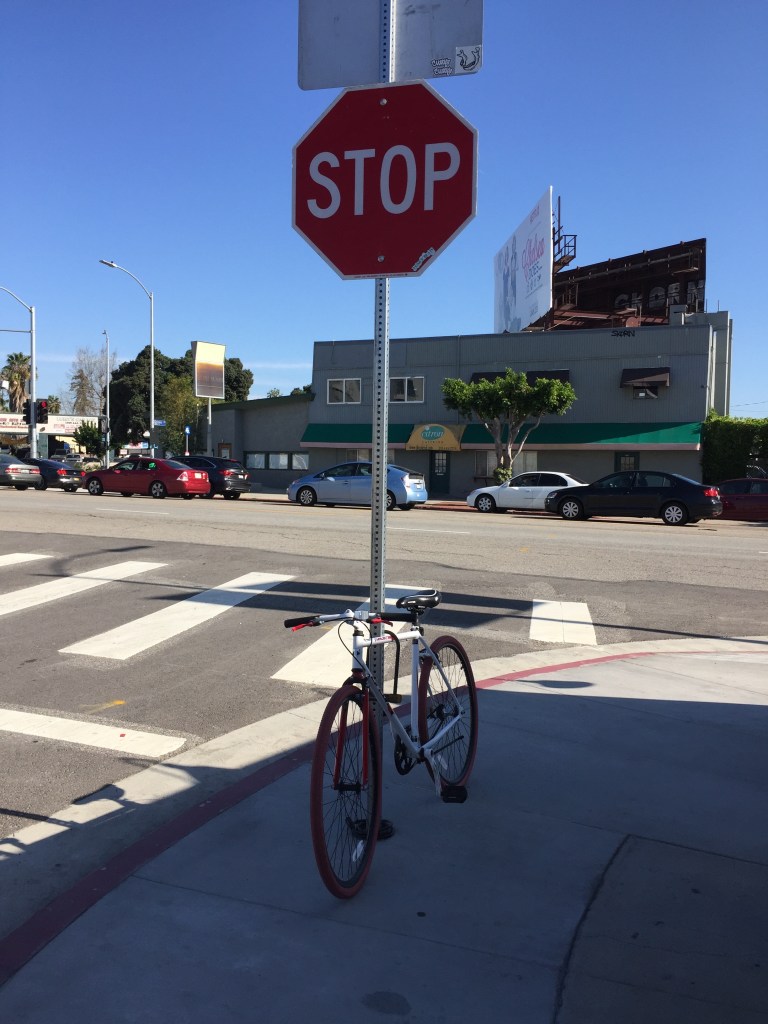
I took this photo on a Saturday morning at the corner of Pico and Exposition in Los Angeles. The traffic stop sign, with the bicycle attached offered passersby an invitation to stop and consider an adventure accessible with a key.

You don’t need book a flight to Mexico or the Caribbean. Just stop. Your bike is outside, waiting for you.


The Saturday Read ‘Worklife: Rethinking the office for an always-on economy’

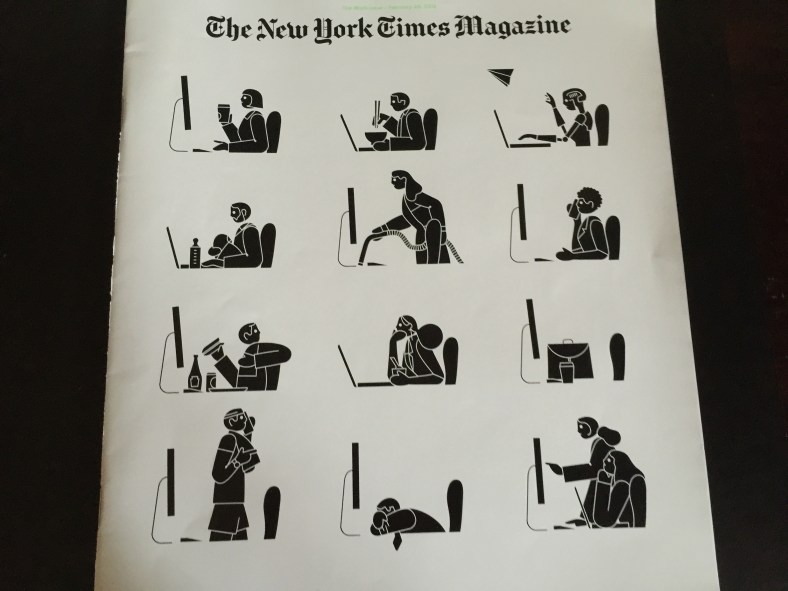
The Saturday Read this week is a compilation of articles that appeared in the February 28, 2016 ‘work issue’ of The New York Times Magazine.

A group of journalists and writers contributed coverage on a variety of work/life topics, adding new perspectives from groundbreaking research, demonstrating that, regardless of profession, it’s all about the culture. And the culture is in need of change.

Organization culture determines who succeeds, fails, and communicates ‘hints’ through recruiting practices, and the daily process of getting things done; meetings, teamwork and office space.

“We do often work at home. But we also work at work, before going home to work more. The office has persisted, becoming even bigger, weirder, stranger: a symbol of its outsize presence in our lives.”

The ‘work issue’ is an interesting survey of some of the most pressing issues @work today. The sampling of the content below is meant to serve as an introduction, with a recommendation to take the time to read the edition in its entirety.

NYT staff writer, Susan Dominus challenges us to think about balance beyond policies by ‘Rethinking the Work-Life Equation’, reporting on the research of Phyllis Moen of the University of Minnesota and Erin Kelly of M.I.T.

“Workers in the experimental group were told they could work wherever, and whenever, they chose so long as projects were completed on time and goals were met; the new emphasis would be on results rather than on the number of hours spent in the office. Managers were trained to be supportive of their employees’ personal issues and were formally encouraged to open up about their own priorities outside work — an ill parent, or a child wanting her mom to watch her soccer games. Managers were given iPods that buzzed twice a day to remind them to think about the various ways they could support their employees as they managed their jobs and home lives.

The research found that employees in the experimental group met their goals as reliably as those in the control group, and they were, in short, much happier: They were sleeping better, were healthier and experienced less stress. Other studies examining the same workplace found that the effects even cascaded down to employees’ children, who reported less volatility around their own daily stresses; adolescents saw the quality of their sleep improve. A year out, and then three years out, employees in the experimental group reported less interest in leaving the organization than those in the control group.

…sometimes there is little more than tradition holding organizations back from making meaningful changes that bring tremendous peace of mind to their employees.”

Five years ago, Google decided to determine what makes a ‘perfect team’. Pulitzer prize winning New York Times reporter Charles Duhigg reports on the results in an excerpt from his new book, ‘Smarter Faster Better: The Secrets of Being Productive in Life and Business’.

“For Project Aristotle, research on psychological safety pointed to particular norms that are vital to success. There were other behaviors that seemed important as well — like making sure teams had clear goals and creating a culture of dependability. But Google’s data indicated that psychological safety, more than anything else, was critical to making a team work.

However, establishing psychological safety is, by its very nature, somewhat messy and difficult to implement. You can tell people to take turns during a conversation and to listen to one another more. You can instruct employees to be sensitive to how their colleagues feel and to notice when someone seems upset. But the kinds of people who work at Google are often the ones who became software engineers because they wanted to avoid talking about feelings in the first place.

What Project Aristotle has taught people within Google is that no one wants to put on a ‘‘work face’’ when they get to the office. No one wants to leave part of their personality and inner life at home. But to be fully present at work, to feel ‘‘psychologically safe,’’ we must know that we can be free enough, sometimes, to share the things that scare us without fear of recriminations. We must be able to talk about what is messy or sad, to have hard conversations with colleagues who are driving us crazy. We can’t be focused just on efficiency. Rather, when we start the morning by collaborating with a team of engineers and then send emails to our marketing colleagues and then jump on a conference call, we want to know that those people really hear us. We want to know that work is more than just labor.”

Nikil Saval, who wrote about the evolution of the office in ‘Cubed: The Secret History of the Workplace’, writes about new experiments with office space, ‘Labor/atories’

“The sudden efflorescence of the tech industry in the late ’90s took us from the desert of cubicles to the milk-and-honey offices of today. Many of the dot-commers had graduated from (or, very often, dropped out of) cozy university campuses to toil in big corporations. Starting their own companies, they recreated the effortless drift between work and play that characterized their college lives. The cubicle walls came down, and in the wide, open warehouse and loft spaces they occupied, exceptionally long workdays would be punctuated by frenzied Mario Kart races or fierce Ping-Pong battles. Creating a playful office became one of the standard ways of attracting skilled employees in a competitive environment: The hope was that a talented engineer wouldn’t leave a tech behemoth for the dinky start-up next door that didn’t have a gym and a resistance pool. Thus has the ‘‘fun office’’ spread throughout the world.”

Each of the articles provides a ‘take away’ to apply @work. If you’re a leader, you’ll rethink your approach as you begin to understand what your competitors are doing to recruit and retain employees. As a manager, you’ll learn ways to improve the daily routine of meetings, but more important, reinforce behavior that will encourage employees to be productive. For the rest of us, a window has been opened to view alternative approaches to work and workplace. What will you do on Monday to turn policy into practice?


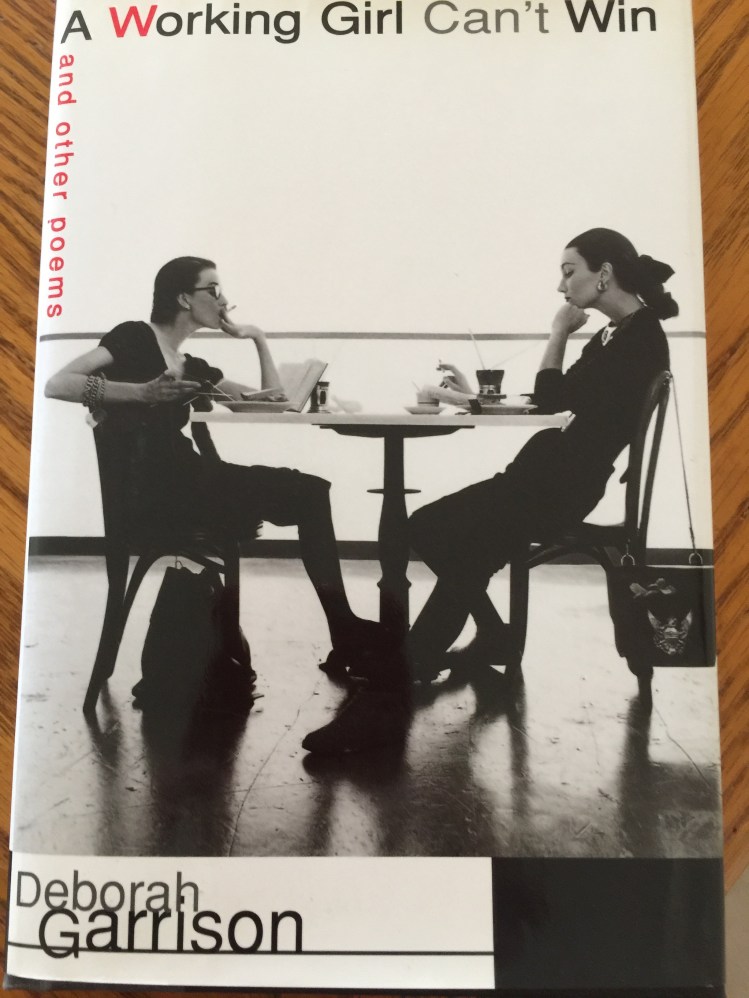
‘Worked Late on a Tuesday Night’ a poem by Deborah Garrison

Have you ever read a poem and realized that the poet has somehow snatched your body and experience, and transcribed both into a lyrical expression of your reality? There was a time, in the late 90s, working in New York, when the poetry of Deborah Garrison gave voice to those who believed you could have it all.

The Friday poem this week is ‘Worked Late on a Tuesday Night’, with Garrison’s words still relevant, even if Uber robs us of the experience of standing in the freezing rain trying to hail a cab.

Worked Late on a Tuesday Night

Again.
Midtown is blasted out and silent,
drained of the crowd and its doggy day.
I trample the scraps of deli lunches
some ate outdoors as they stared dumbly
or hooted at us career girls—the haggard
beauties, the vivid can-dos, open raincoats aflap
in the March wind as we crossed to and fro
in front of the Public Library.

Never thought you’d be one of them,
did you, little Lady?
Little Miss Phi Beta Kappa,
with your closetful of pleated
skirts, twenty-nine till death do us
part! Don’t you see?
The good schoolgirl turns thirty,
forty, singing the song of time management
all day long, lugging the briefcase

home. So at 10:00 PM
you’re standing here
with your hand in the air,
cold but too stubborn to reach
into your pocket for a glove, cursing
the freezing rain as though it were
your difficulty. It’s pathetic,
and nobody’s fault but
your own. Now

the tears,
down into the collar.
Cabs, cabs, but none for hire.
I haven’t had dinner; I’m not half
of what I meant to be.
Among other things, the mother
of three. Too tired, tonight,
to seduce the father.

Deborah Garrison   ‘A Working Girl Can’t Win: and other poems’ 1998