The week@work – The odds of being poor@some point, how walking in nature changes the brain, young women envision pauses in their career and advice to working mothers

One story stood out from the rest this week@work. Washington Post journalists Emily Badger and Christopher Ingraham reported on the findings of sociologist Mark Rand at Washington University. The title alone was attention grabbing: ‘The remarkably high odds you’ll be poor at some point in your life’.

“The poor in America are not a permanent class of people. Who’s poor in any given year is different from who’s poor a few years later.

By the time they’re 60 years old, Rank has found, nearly four in five people experience some kind of economic hardship: They’ve gone through a spell of unemployment, or spent time relying on a government program for the poor like food stamps, or lived at least one year in poverty or very close to it.

By age 60, nearly 80 percent of us will have gone through a rough stretch.

“Rather than an uncommon event,” Rank says, “poverty was much more common than many people had assumed once you looked over a long period of time.”

The age of job stability is over, if anyone was still hanging on to an ideal of job security. Financial planning is a critical component of long term career planning. The reality of the research is that there will be periods of economic challenge alternating with periods of affluence. The ‘poor’ are not some abstract population. They are your neighbors, family and friends.

A story in The New York Times offered an example of how attitudes toward work and career might alter a family’s income. Journalist Claire Cain Miller writing for the Upshot found that the most recent entrants to the workplace envision planned pauses in their careers.

“The youngest generation of women in the work force — the millennials, age 18 to early 30s — is defining career success differently and less linearly than previous generations of women. A variety of survey data shows that educated, working young women are more likely than those before them to expect their career and family priorities to shift over time.

The surveys highlighted that two generations after women entered the business world in large numbers, it can still be hard for women to work. Even those with the highest career ambitions are more likely than their predecessors to plan to scale back at work at certain times or to seek out flexible jobs.

You might call them the planning generation: Their approach is less all or nothing — climb the career ladder or stay home with children — and more give and take.”

Recalling the career of journalist Marlene Sanders who died last week, Katherine Rosman shared the story of a member of the generation who achieved professional distinction while being among the first to ‘work outside the home’.

“In 2000, Cynthia McFadden, the senior legal and investigative correspondent for NBC News, attended a party given by her friend Jeffrey Toobin, a staff writer for The New Yorker and legal analyst for CNN. There, Ms. McFadden was catching up with Mr. Toobin’s mother, Marlene Sanders, the pioneering television reporter. She asked for her advice on managing motherhood and a career.

Ms. Sanders put both hands on Ms. McFadden’s shoulders and peered into her eyes. “Never apologize for working,” the older woman said. “You love what you do, and loving what you do is a great gift to give your child.”

Over the years, Ms. McFadden said, Mr. Toobin told her he loved having a mother who worked outside the home, even in an era when it was not that common. It was a sentiment he reiterated in an interview on Wednesday. “I found her career exciting,” he said. “I loved to watch her on TV. Guilt was never part of the equation. And given her temperament, if she had been home all the time, it would have been a close contest to determine whether she or I went insane first.”

The last story of the week shares research that should encourage you to take a walk in the park. Reporting on a study at Stanford University, Gretchen Reynolds found:

A walk in the park may soothe the mind and, in the process, change the workings of our brains in ways that improve our mental health, according to an interesting new study of the physical effects on the brain of visiting nature.

But just how a visit to a park or other green space might alter mood has been unclear. Does experiencing nature actually change our brains in some way that affects our emotional health?

That possibility intrigued Gregory Bratman, a graduate student at the Emmett Interdisciplinary Program in Environment and Resources at Stanford University, who has been studying the psychological effects of urban living. In an earlier study published last month, he and his colleagues found that volunteers who walked briefly through a lush, green portion of the Stanford campus were more attentive and happier afterward than volunteers who strolled for the same amount of time near heavy traffic.”

In summary this week@work – take a walk in the park and consider your career path. Lose the guilt if you are a working mother, and plan for both the expected as well as the unexpected shifts in work/life balance.

The Saturday Read – Alain de Botton ‘The Art of Travel’

This week’s ‘Saturday Read’ is ‘The Art of Travel’ by Alain de Botton. It’s not your typical travel guide, although scenes are set in a variety of global locations. We join the author as he navigates the world, his neighborhood and his room. We are accompanied on the journey by artists, explorers, poets and novelists: Wordsworth in The Lake District, Vincent van Gogh in Provence and Alexander von Humboldt in South America.

This wonderful book should be read in small bites, a tapas menu to savor, in advance of any journey you may have planned. It’s a philosophical view of travel and requires us to reflect through the lens of our fellow pilgrims before we rush on to the next chapter.

The book is segmented into four sections: departure, motives, art and return. In each the author is puzzling through why expectations of travel don’t quite live up to promise. We begin to examine our relationship to the distant and familiar as we eavesdrop on Mr. de Botton’s thoughts as he considers his relationship to place.

Early on, he realizes:

“A momentous but until then overlooked fact was making itself apparent: I had inadvertently brought myself with me to the island.”

Place has the potential to transform us, but our fundamental self remains our companion and colors our experience.

“What, then, is a traveling mind-set? Receptivity might be said to be its chief characteristic. Receptive, we approach new places with humility. We carry with us no rigid ideas about what is or is not interesting.

Home, by contrast, finds us more settled in our expectations. We feel assured that we have discovered everything interesting about our neighborhood, primarily by virtue of having lived there a long time. It seems inconceivable that there could be anything new to find in a place where we have been living for a decade or more. We have become habituated and therefore blind to it.”

How we respond to place is limited by the resources we utilize in our process of discovery. Travel companions share critiques and travel guides list the top ten things to see. Our expectations are set through the eyes of others who have gone before.

“Our responses to the world are crucially moulded by the company we keep, for we temper our curiosity to fit in with the expectations of others.”

On a visit to Madrid, the author ventures from his hotel:

“It was a sunny day, and crowds of tourists were stopping to take photographs and listen to guides. And I wondered, with mounting anxiety, What am I supposed to do here? What am I supposed to think?”

“Where guidebooks praised a site, they pressured a visitor to match their authoritative enthusiasm, and where they were silent, pleasure or interest seemed unwarranted.”

“..if my compass of curiosity had been allowed to settle according to its own logic, rather than being swayed by the unexpectedly powerful force field of a small green object by the name of The Michelin Street Guide to Madrid…”

We travel for different reasons. ‘The Art of Travel’ encourages us to trust our ‘compass of curiosity’ and discover our own wonders of the world.

‘Questions of Travel’ a poem by Elizabeth Bishop

It’s summer, and despite all the grim forecasts of the end of vacations, a significant segment of the population will take a break from work. In that interval folks will travel locally, internationally or vicariously through the writings of others. They will record adventures on Instagram, tweet locations and post blogs, sharing their experience along the way. Very few will memorialize their travels in poetry.

The Friday Poem this week is Elizabeth Bishop’s ‘Questions of Travel’

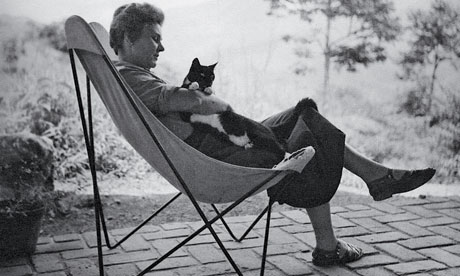
In 2010, author William Boyd travelled to the house in Brazil where poet Elizabeth Bishop lived, and recorded his visit in an article for The Guardian newspaper.

“‘Questions of Travel” is one of the rare Bishop poems that one can easily interpret as autobiographical. Set squarely in the house at Samambaia, it analyses Bishop’s decision to leave America and seek her destiny, whatever that might have been, elsewhere. “Should we have stayed at home and thought of here?”, the poet asks. “Must we dream our dreams / and have them, too?” And then, in the very last lines, it prompts another question: “Should we have stayed at home, / wherever that may be?” The answer we are meant to infer is, I believe, a confident “no”. Bishop – born in Worcester, Massachusetts, a New Englander through and through – was made by her life in Brazil. Brazil became her home – however eccentric, irritating, enthralling, frightening, exotic and perplexing a place it might seem to be, depending on the occasion. When she finally left it in 1971, for the last time, the happiest period of her life was over.”

‘Questions of Travel’

There are too many waterfalls here; the crowded streams
hurry too rapidly down to the sea,
and the pressure of so many clouds on the mountaintops
makes them spill over the sides in soft slow-motion,
turning to waterfalls under our very eyes.
–For if those streaks, those mile-long, shiny, tearstains,
aren’t waterfalls yet,
in a quick age or so, as ages go here,
they probably will be.
But if the streams and clouds keep travelling, travelling,
the mountains look like the hulls of capsized ships,
slime-hung and barnacled.

Think of the long trip home.
Should we have stayed at home and thought of here?
Where should we be today?
Is it right to be watching strangers in a play
in this strangest of theatres?
What childishness is it that while there’s a breath of life
in our bodies, we are determined to rush
to see the sun the other way around?
The tiniest green hummingbird in the world?
To stare at some inexplicable old stonework,
inexplicable and impenetrable,
at any view,
instantly seen and always, always delightful?
Oh, must we dream our dreams
and have them, too?
And have we room
for one more folded sunset, still quite warm?

But surely it would have been a pity
not to have seen the trees along this road,
really exaggerated in their beauty,
not to have seen them gesturing
like noble pantomimists, robed in pink.
–Not to have had to stop for gas and heard
the sad, two-noted, wooden tune
of disparate wooden clogs
carelessly clacking over
a grease-stained filling-station floor.
(In another country the clogs would all be tested.
Each pair there would have identical pitch.)
–A pity not to have heard
the other, less primitive music of the fat brown bird
who sings above the broken gasoline pump
in a bamboo church of Jesuit baroque:
three towers, five silver crosses.
–Yes, a pity not to have pondered,
blurr’dly and inconclusively,
on what connection can exist for centuries
between the crudest wooden footwear
and, careful and finicky,
the whittled fantasies of wooden footwear
and, careful and finicky,
the whittled fantasies of wooden cages.
–Never to have studied history in
the weak calligraphy of songbirds’ cages.
–And never to have had to listen to rain
so much like politicians’ speeches:
two hours of unrelenting oratory
and then a sudden golden silence
in which the traveller takes a notebook, writes:

“Is it lack of imagination that makes us come
to imagined places, not just stay at home?
Or could Pascal have been not entirely right
about just sitting quietly in one’s room?

Continent, city, country, society:
the choice is never wide and never free.
And here, or there . . . No. Should we have stayed at home,
wherever that may be?”

Elizabeth Bishop, 1965

Are you suffering from ‘work martyr complex’? You may need a vacation.

This one’s for all of you who believe you are truly indispensable at work. It’s also for your employees who are really annoyed that you don’t trust them to carry on in your absence. Breaking news – the world will not end if you take a vacation. If it does, I think welcoming the apocalypse on a beach with a Kaluha Colada is preferable to being crushed in a stampede of office workers headed to the one working elevator in the building.

The syndrome, ‘work martyr complex’, has been recently identified among workers in the U.S.. Entrepreneurs are particularly susceptible.  It’s highly communicable and may result in personal burnout. Long term effects include loss of perspective, sense of humor and anyone who has ever worked for you.

It’s one thing to leave paid vacation time on the table, but it’s taking it to the next level when it’s treated as a badge of honor within organizations. Executives encourage employees to take time off, but many leave a portion of their own vacation time unused. These same executives expect folks to be available even when thousands of miles and multiple time zones separate you.

Good news, the effects of ‘work martyr complex’ are reversible. All it requires is that you remove the Joan of Arc costume and be yourself – you know, yourself – the creative, curious colleague who used to interact with co-workers and leave the office for lunch or a walk around the parking lot.

By the way, your competitors are poaching your best people. How? By offering extended vacation time and gaining the benefit of increased productivity from a refreshed workforce.

Journalist Jack Dickey reported for Time Magazine on this new trend in the retail sector:

“On May 14, billboards went up around Houston and Philadelphia, with H&M advertising careers…and extolling one benefit in particular. Five weeks vacation is possible, the signs read.

H&M’s recruiting campaign says a lot about anxieties in the American workforce. The retailer is trying to crack an unexpectedly hard nut: getting American workers to take more time off.”

Beyond the direct competitor benefit consideration, the research is solid. Stepping away invigorates employee contribution.

Entrepreneur Magazine uncovered ‘The Secret to Increased Productivity: Taking Time Off’.

“There is a lot of research that says we have a limited pool of cognitive resources,” says Allison Gabriel, an assistant professor of management at Virginia Commonwealth University who studies job demands and employee motivation. “When you are constantly draining your resources, you are not being as productive as you can be. If you get depleted, we see performance decline. You’re able to persist less and have trouble solving tasks.”

That’s counterintuitive in a culture programmed to believe that it takes near-nonstop work to get the sale, beat the competitor or do whatever is needed to succeed. For most entrepreneurs, rest is considered the province of lesser mortals, put off for a future that never arrives. It’s as if each day is an Ironman triathlon that requires one to crawl across the finish line on all fours.

Vacations have been shown to lead to significantly higher performance upon return to the job. The energizing ingredients are time away from stressors (you need two weeks to get the recuperative benefits from burnout) and mastery and social experiences while on vacation that build competence and social connection.”

If you don’t give your employees time to think and play, you’re not going to have the creativity you need to succeed,” says Vincent Berk, CEO of FlowTraq.”

Time to redefine vacation as an organizational value, not a benefit.

Should I stay or should I go? The impact of a 24×7 work culture

Late spring is a time of major career transition as interns arrive for summer assignments, college students begin their careers and the rest of the workforce assesses their place at work and considers next steps. Do I stay or should I go?

Three articles in the past three days develop an argument that we are long overdue for an accounting of the way work is structured, expectations set, and effort rewarded.

In the first article, psychologist Art Markham was asked the question, ‘Is it hurting my career to skip happy hour with co-workers?’ Here is a question that gets right to the issue of work/life balance. What activities in the workplace are optional?

He responded:

“Your question…brings two aspects of workplace happiness into conflict. On the one hand, research suggest that people who feel like they have good friends at work are happier than those who don’t. On the other hand, research also suggests that your long-term happiness at work requires that you feel like you can express your authentic self at work. If you don’t like to go out for drinks with a crowd, then forcing yourself to go is not an authentic expression of who you are.

The main principle here is that the social time with your colleagues is an important way to feel included in the community. You don’t have to become a party animal to make that happen, but you might have to put in some effort to create these social opportunities. Developing your relationships with your colleagues will help you feel closer to the group and will improve your overall satisfaction with your job.”

Nice idea, but here is the reality. You are on deadline to complete a project and at the same time you are watching the clock and trying to calculate how much time you have, building in a possible SIG alert, to get to the day care center before they turn the lights out and leave your children on the steps.

Which bring me to the second article, ‘The 24/7 Work Culture’s Toll on Families and Gender Equality’. It surveys a group of studies, the most recent being released by Harvard Business School as part of a gender initiative led by Professor Robin Ely.

Professor Ely and her colleagues studied “a global consulting firm, which was not named. The firm, where 90 percent of the partners were men, asked the professors what it could do to decrease the number of women who quit and increase the number who were promoted. In exchange, the academics could collect data for their research. The firm was typical in that employees averaged 60 to 65 hours of work a week.”

After conducting “.. in-depth interviews with 107 employees, men were at least as likely as women to say the long hours interfered with their family lives, and they quit at the same rate. One told the researchers: “Last year was hard with my 105 flights. I was feeling pretty fried. I’ve missed too much of my kids’ lives.”

The researchers said that when they told the consulting firm they had diagnosed a bigger problem than a lack of family-friendly policies for women — that long hours were taking a toll on both men and women — the firm rejected that conclusion. The firm’s representatives said the goal was to focus only on policies for women, and that men were largely immune to these issues.”

Which transitions to the final article, ‘Reflections on Stress and Long Hours on Wall Street’. In a previous life, I often advised students who were considering internships or full time positions with investment banks. The high paying starting salaries were difficult to ignore. For some, financial services was the perfect cultural fit, but for those whose only incentive was money, it was a quick calculation to determine the breakdown of the princely starting offer to the actual hourly wage.

In The New York Times article, Andrew Ross Sorkin reports on the stress on Wall Street and reflects on recent deaths that may be attributed to long hours and an out of balance work load.

“Studies have suggested that financial service employees are at higher risk than those in many other industries. According to the National Occupational Mortality Surveillance, individuals who work in financial services are 1.5 times more likely to commit suicide than the national average. The highest suicide rates in the United States are among doctors, dentists and veterinarians.”

Changes in policies have not worked, with those excused from Saturday work, showing up on Sunday and working late into the night.

“Some banks, like Goldman, are also taking new steps, like introducing more efficient software and technology to help young analysts do their work more quickly. And investment banks say they are hiring more analysts to help balance the workload.

That may help. But as long as young analysts are expected to work 80 to 100 hours a week, invariably some run the risk of finding themselves in a situation they cannot handle. With new classes of such analysts arriving each year, it is incumbent on the industry to make sure it is doing everything possible to make sure that no one is too overwhelmed.”

And this is where your value radar clicks on. Every career decision is a result of a series of tradeoffs. However, no client, no deal is worth sacrificing family, health and well-being. And if you are in a place that truly believes those are fair tradeoffs, it’s a no brainer… you should go.

‘This is What I Do’ Lynsey Addario’s Story

Lynsey Addario is a photojournalist who exemplifies the work ethic needed to succeed in any competitive career. As a photojournalist, she learned at an early stage that photography was a medium to tell a story.

In March 2011, while on assignment for The New York Times in Libya, she and her three fellow journalists were captured by soldiers in Muammar el-Qaddafi and held for six days before being released.

In her new book ‘It’s What I Do: A Photographer’s Life of Love and War’ published earlier that month, Ms. Addario writes in the Prelude: “That day in Libya I asked myself the questions that still haunt me: Why do you do this work? Why do you risk your life for a photograph?… The truth is that few of us are born into this work. It is something we discover accidentally, something that happens gradually. We get a glimpse of this unusual life and this extraordinary profession, and we want to keep doing it, no matter how exhausting, stressful, or dangerous it becomes. It is the way we make a living, but it feels more like a responsibility, or a calling. It makes us happy, because it gives us a sense of purpose…”

Ms. Addario developed an interest in photography when her father gave her a camera at the age of 13, not realizing at the time that this gift would lead toward a career.

Her story is one of hard work, proving her talent in a profession still dominated by men. In an excerpt from book published in The New York Times Magazine, she describes the attitude among the four captured journalists: “Each one of us knew that this work was an intrinsic part of who we were: it was what we believed in; it governed our lives.”

Describing her life: “Leaving at the last minute, jumping on planes, feeling a responsibility to cover wars and famines and human rights crises was my job. To stop doing those things would be like firing myself.”

This is a personal story about adventure, family and tradeoffs. The art and humanity of her photography appears throughout. It’s a book about work and life and balance.

Most of us do not risk our lives each day covering international conflicts, getting in close to capture the truth in a photograph. Reading her story, we learn her answer to the question and we are left to ask ourselves: Why do you do this work?

Snow Day

The Boston Public Schools are closed for the fifth day of the last six and the New England Patriots have postponed their Super Bowl celebration until tomorrow. Here in Southern California we miss the one spontaneous surprise of the workweek back east, the snow day. If you set aside the shoveling of snow and scraping ice off the car, it’s one of the few unexpected breaks in the work week calendar.

Sadly, according to Jesse Singal writing for New York Magazine, snow no longer provides a respite from work. In his article, ‘The Adult Snow Day is Dying, and That’s Sad’ he writes “Whatever the case, for many people, a day that would in 1995 have been spent watching the snow pile up against the windowsills, hanging out with the kids, or vegging out with daytime TV was instead spent hunched over a laptop.”

And that’s just plain sad. Because it’s ok to pause the treadmill toward success. Taking some time to flop into a snow bank to create a snow angel is a major expression of creativity. And, losing control, sledding down a hill can be good for your health. It’s hard work to be constantly in charge.

Mr. Singal continues, “The grown-up world has a tendency to strip things of their magic a bit, but the snow day still served as a wonderful stop sign from the heavens for myopic, overworked adults.” In our ever connected, telecommuting world “…snow days were one of the few remaining excuses not to be a worker for a little while.”

Snow days are incredibly quiet. The blanket of flakes smothers the sound of commerce. And you can actually think. Maybe it’s time to yield to the “stop sign from the heavens”, disconnect from the electronic and listen to the quiet. Even if your snow day is only a few hours, take the time to enjoy the break.