Planning for the Thanksgiving Career Conversation

It’s the annual celebration of Thanksgiving, that time of year when families get together and complain about dissatisfaction with work. What if we approached the holiday season as an opportunity for taking action on shelved career plans?

We tend to think of the holidays as a time to get away from our workplace. And yet, it can be a time to reconsider career choices and solicit input from family and friends.

Let’s reimagine the pre or post-dinner conversation that has previously been a competition to demonstrate who has the worst boss, longest hours, deadest of dead end jobs. Consider a conversation where you identify your spot on your career timeline, articulate your goals and ask for guidance on next steps.

Your friends and family are your most trusted advisors. They’re the folks who know all your faults and are still there. Don’t waste their time with a whining session. Respect their abilities to listen and share feedback.

Start with the past year and what you have accomplished. Even in the worst job situation we can salvage a few learning experiences, from both failure and success. Come up with a way to communicate your skills, leaving out acronyms, to enable folks to envision how your strengths apply across fields.

Next, recall that dream job that has been tantalizing you, but disappears in the fog of the everyday demands of the workplace. Got it? Now you have your baseline and end goal. Don’t be shy about sharing it.

What’s missing? The interim steps to get you from point A to point B.

And this is where those negative conversations turn into positive and productive discussions. Now that you have shared your goals, folks are empowered to help: adding to your list of skills based on a long term view of your career, providing input on strategy and offering connections to keep the conversation going after the holidays.

It’s not just the folks who are contemplating career transition that can benefit from these holiday interactions. If you think all is well in your career, a close confidant can often detect warning signs you may be missing in your optimism.

The real value of your family/friends ‘board of advisors’ is their ability to hold you accountable to your dream. You will see them, same time next year, and they will ask you how far you’ve travelled on the road to your destination.


The week@work #PeaceForParis

On Friday evening Parisians went to work at cafes, a soccer stadium and a concert venue. An American band from Palm Desert, California prepared to take the stage @work at their dream job. And then the trajectory of hundreds of careers changed.

This week @work tells only one story, of graphic designer, Jean Jullien @work and his response to terror in the City of Light.

A year ago, Jean Jullien gave an interview to designboom, answering the typical questions about his career choice, his approach, his influences and skill. As a young artist he was preparing his December 2014 solo show at Kemistry Gallery in London.

“I’ve always loved drawing, but originally wanted to do animation and comics (which I’m ironically just sort of getting into doing now). I applied to many schools but got rejected by all and ended up in a small graphic design course in le paraclet which was actually a blessing in disguise. despite its serious and practical approach, the course was run by passionate teachers who introduced me to the work of masters such as milton glaser, saul bass, raymond savignac, and many others. it made me realize that design and illustration were basically about making the everyday exciting and creative. design for the people, design for the routine, is what really got me into what I do today. the idea that art didn’t stop at the exit of a gallery, but that it could carry on anywhere and that by intertwining with real objects and things, it enhanced them and found a use.”

In response to a question about his strengths and skill, he responded:

“I don’t think of myself as skilled. not in my drawing at least. I’ve become overly critical and empathic at the same time but I’m not sure either of these qualify as a skill, although they are my number one working tool.”

On Friday, the world discovered Jean Jullien’s skill as empathy translated into a representational image that spread across the internet.

eiffel peace

Time.com journalist Nolan Feeney spoke with the illustrator on Saturday and published the transcript of his Skype interview.

Jean Jullien had just begun his vacation when he heard on the radio about the terrorist attacks in his native France that killed more than 120 people on Friday. While others around the world struggled to put their feelings about the violence in Paris into words on social media, Jullien, a professional illustrator, picked up his brush instead.

“I express myself visually, so my first reaction was to draw a symbol of peace for Paris,” Jullien, who says his friends and family are safe and accounted for, told TIME over Skype on Saturday from a location he did not wish to disclose. “From there it seems to have gotten a bit out of my hands.”

The last question in the designboom interview was “do you have a personal motto?”

His answer: “carpe diem or something like that.”

The Saturday Read ‘Pacific’ by Simon Winchester

While the events of the past 24 hours have turned our thoughts to Paris, another headline scrolled across screens last night, warning of a possible tsunami off the coast of Japan.

News stories of the Pacific Ocean and her terrestrial neighbors continue to occupy a significant amount of news coverage: growing concern of El Nino and the bell weather ‘surprise’ of hurricane Patricia, mapping of marine debris that continues to traverse the ocean four years after the Japanese earthquake, and most recently, the expansion of reefs into Chinese military facilities, establishing claims in contested territorial waters.

In advance of President Obama’s trip to Kuala Lumpur next week to attend the Asia summits, the ‘Saturday Read’ this week is  ‘Pacific: Silicon Chips and Surfboards, Coral Reefs and Atom Bombs, Brutal Dictators, Fading Empires, and the Coming Collision of the World’s Superpowers’ by Simon Winchester.

“For all its apparent placidity, the Pacific seems today to be positioned at the leading edge of any number of potential challenges and crises – whether they relate to politics or economics, to geology, to weather, to the supply of food, or to the most basic questions about the number of people that this planet can support.”

What do we know about this vast expanse of water? Stories from veterans of WWll, the Korean War or the Vietnam war? Shared experiences of vacation trips to Hawaii, the South Pacific, Australia or New Zealand? Or, impressions from the novels of  James Michener; ‘Tales of the South Pacific’ and ‘Hawaii’?

Consider the impact of a port strike in LA; container ships lined along the coast filled with a wide range of holiday gifts that may never reach shore in time for Christmas. The Pacific is a vital artery connecting us to the consumer goods of our daily lives.

Winchester begins his narrative aboard United Airlines flight 156 which leaves Honolulu three times a week on the way to Guam, traversing almost six thousand miles, with five stops along the way.

“The ocean beneath is almost unimaginably vast, and illimitably various. It is the oldest of the world’s seas, the relic of the once all-encompassing Panthalassic Ocean that opened up seven hundred fifty million years ago. It is by far the world’s largest body of water – all of the continents could be contained within its borders, and there would be ample room to spare. It is the most biologically diverse, the most seismically active; it sports the planet’s greatest mountains and deepest trenches; its chemistry influences the world; and the planetary weather systems are born within its boundaries.”

The author has structured his story to fit the timeline of the sixty-five years since 1950. He sifted through the lists he prepared to focus on “truly pivotal moments the story of this vast acreage of ocean’ and poses timely questions to emphasize the Pacific’s significance.

“It is the most turbulent ocean in the world, and an expanse of sea that should be central to all our thoughts. Is the ocean to be the place of coming war? Is it to be our eventual savior, a places so beautiful and fragile that its sheer vastness will one day demand that we pause in our careless and foolish behavior in the rest of the world? Or will it be something in between: a pillar of hope and example and good sense poised between East and West, on which, for good or ill, we construct humanity’s future?”

The reader will tour “the great thermonuclear sea” and stamp their virtual passports in Japan, Hong Kong, the Great Barrier Reef, Korea, the Philippines and California. Each chapter reads as a short story, which allows the reader to time travel in small bites. The strength of the book is the geological and meteorological insights. ‘Pacific’ is required reading and Simon Winchester provides a persuasive argument.

“The future, in short, is what the Pacific Ocean is now coming to symbolize. For if one accepts that the Mediterranean was once the inland sea of the Ancient World: and further, that the Atlantic Ocean was, and to some people still remains, the inland sea of the Modern World: then surely it can be argued that the Pacific Ocean is the inland sea of Tomorrow’s World. What transpires across these sixty-four million square miles of ultramarine ocean matters, and to all of us.”

‘Retired Ballerinas, Central Park West’ a poem by Lawrence Ferlinghetti

In August poet, author, activist, playwright and publisher Lawrence Ferlinghetti released ‘Writing Across the Landscape’, a record of five decades of travel drawn from his journals. This week’s Friday Poem is ‘Retired Ballerinas, Central Park West’ from a 1994 collection and considers life after work.

“Ferlinghetti felt strongly that art should be accessible to all people, not just a handful of highly educated intellectuals. His career has been marked by its constant challenge of the status quo; his poetry engages readers, defies popular political movements, and reflects the influence of American idiom and modern jazz.”

In a 1993 interview with William H. Honan, Mr. Ferlinghetti shared his observations on the evolution of the American poet.

“Today’s young poets, he continued, tend to come from working-class families and are not college graduates. That’s a change from the Beat poets, many of whom met at Columbia University in the 1950’s, and from Mr. Ferlinghetti, who earned a Ph.D. in modern poetry at the Sorbonne.

“It doesn’t require a great intellect to write poetry,” he said. “Great sensory perception is more important. Also, bright young people today are just as interested in film and video. I would be, too, if I were starting out. The single, unaccompanied voice can’t compete with those images.” ‘Bohemian,’ Not ‘Beat’.”

Retired Ballerinas, Central Park West

Retired ballerinas on winter afternoons

   walking their dogs

   in Central Park West

   (or their cats on leashes—

   the cats themselves old highwire artists)

The ballerinas

   leap and pirouette

   through Columbus Circle

   while winos on park benches

   (laid back like drunken Goudonovs)

   hear the taxis trumpet together

   horsemen of the apocalypse

   in the dusk of the gods

It is the final witching hour

   when swains are full of swan songs

   And all return through the dark dusk

   to their bright cells

   in glass highrises

   or sit down to oval cigarettes and cakes

   in the Russian Tea Room

   or climb four flight to back rooms

   in Westside brownstones

   where faded playbill photos

   fall peeling from their frames

   like last year’s autumn leaves

Lawrence Ferlinghetti   ‘These Are My Rivers’ 1994

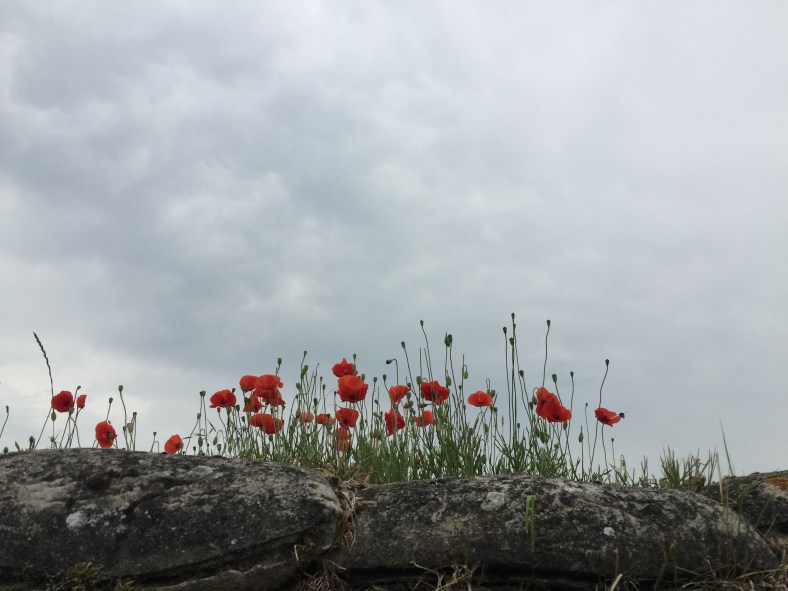
‘To One Who Was With Me in the War’ a poem for Veteran’s Day by Siegfried Sassoon

To One Who Was With Me in the War

It was too long ago – the Company which we served with…

We call it back in visual fragments, you and I,

Who seem, ourselves, like relics casually preserved with

Our mindfulness of old bombardments when the sky

With blundering din blinked cavernous,

Yet a sense of power

Invaded us when, recapturing an ungodly hour

Of ante-zero crisis, in one thought we’ve met

To stand in some redoubt of Time – to share again

All but the actual wetness of the flare-lit rain,

All but the living presences who haunt us yet

With gloom-patrolling eyes.

Remembering; we forget

Much that was monstrous, much that clogged our souls with clay

When hours were guides who led us by the longest way –

And when the worst had been endured could still disclose

Another worst to thwart us…

We forget our fear…

And, while the uncouth Event begins to lour less near.

Discern the mad magnificence whose storm-light throws

Wild shadows on these after-thoughts that sent your brain

Back beyond Peace, exploring sunken ruinous roads.

Your brain, with files of flitting forms hump-backed with loads,

On its own helmet hears the tinkling drops of rain, –

Follows to an end some night-relief, and strangely sees

The quiet no-man’s-land of daybreak, jagg’d with trees

That loom like giant Germans…

I’ll go with you then,

Since you must play this game of ghosts. At listening-posts

We’ll peer across dim craters: joke with jaded men

Whose names we’ve long forgotten. (Stoop low there; it’s the place

The sniper enfilades.) Round the next bay you’ll meet

A drenched platoon-commander; chilled he drums his feet

On squelching duck-boards; winds his wrist watch, turns his head,

And shows you how you looked – your ten- years-vanished face,

Hoping the War will end next week…

What’s that you said?

Siegfried Sassoon (1886-1967) from ‘first world war poems’ ed. Jane McMorland Hunter, 2014

Can the ‘talking cure’ reconnect ‘a band of tweeters’?

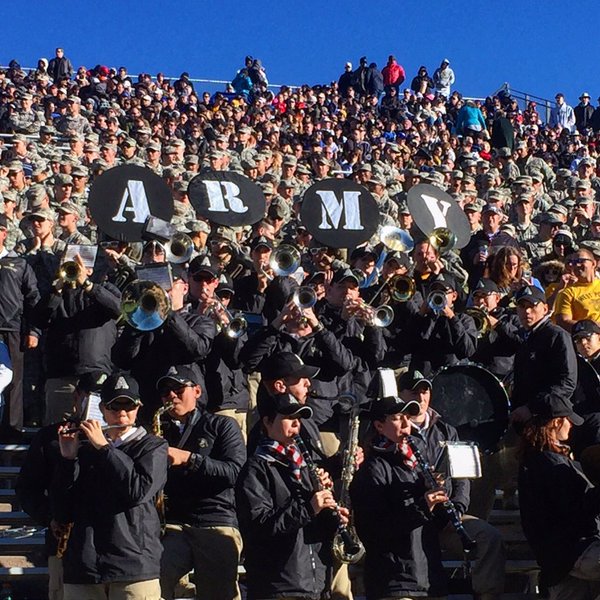
It’s one thing for us to tolerate distraction in the workplace as devices buzz and chime through meetings, but it’s a bit more unnerving to consider the scenario described by a U.S. Army major as soldiers returning from a combat mission opt out of conversation and sit “silently in front of computer screens, posting about their day on Facebook”.

John Spencer is the Army major expressing concern over how “global connectedness has altered almost every facet of a soldier’s daily life”.

“The term “band of brothers” has become almost a cliché to describe how the close personal bonds formed between soldiers translate into combat effectiveness. Yet my combat experience in Iraq suggests that the kind of unit cohesion we saw in past wars may be coming undone because of a new type of technological cohesion: social media, and too much connectivity.”

It’s one more example to support the 30 years of research conducted by MIT professor, Sherry Turkle.

“We’ve gotten used to being connected all the time, but we have found ways around conversation — at least from conversation that is open-ended and spontaneous, in which we play with ideas and allow ourselves to be fully present and vulnerable. But it is in this type of conversation — where we learn to make eye contact, to become aware of another person’s posture and tone, to comfort one another and respectfully challenge one another — that empathy and intimacy flourish. In these conversations, we learn who we are.”

Professor Turkle cites the research of Howard Gardner and Katie Davis on what they call the “app generation,” which grew up with phones in hand and apps at the ready. It tends toward impatience, expecting the world to respond like an app, quickly and efficiently. The app way of thinking starts with the idea that actions in the world will work like algorithms: Certain actions will lead to predictable results.”

Which brings us back to 2008 and Major Spencer’s observations of his ‘band of tweeters’.

“In 2008, I saw the soldiers’ individuality in battle. I saw them arguing about what decisions to make. I often observed much more transactional communications where there would have been friendly banter in the past. Groups seemed unable to learn from their daily challenges or direct any intergroup policing of individual actions. I saw these things especially in the younger soldiers.”

He goes on to emphasize the importance of motivation and social cohesion for any large organization, but identifies the need for conversation as critical in the military workplace.

“What all of the research highlights is the importance of conversation during noncombat time — the hours of nothingness, the shared boredom — where bonds of trust, friendships and group identity are built.”

Most of us go to work in a place where guns and ammo are not part of our daily existence. But the risks to our health and well-being might be in equal jeopardy when we multi-task, “always available elsewhere”.

At the end of his essay, Major Spencer suggests “developing structures to organize the social interactions and conversations that used to occur spontaneously. This would include requiring soldiers to hold post-patrol gatherings on top of their usual mission reviews. This debriefing concept is very effective within other organizations. I would also shift the trend from small two- to four-man living spaces and increase them to four to six, both in stateside bases and especially in combat.”

And leave the devices in another room. Disconnected, we can reestablish conversation.

Professor Turkle cites psychologist Yalda T. Uhls’ research with children at a ‘device free’ camp, demonstrating our capacity for resilience when we untether for a period of time.

“After five days without phones or tablets, these campers were able to read facial emotions and correctly identify the emotions of actors in videotaped scenes significantly better than a control group. What fostered these new empathic responses? They talked to one another. In conversation, things go best if you pay close attention and learn how to put yourself in someone else’s shoes. This is easier to do without your phone in hand. Conversation is the most human and humanizing thing that we do.”

“Conversation is the antidote to the algorithmic way of looking at life because it teaches you about fluidity, contingency and personality.”

Our technology alerts us to ‘recalculate’ when we choose to diverge from the programmed path. It’s another ownership issue of our humanity, to take back control of conversation in a ‘tech free’ space.

“This is our moment to acknowledge the unintended consequences of the technologies to which we are vulnerable, but also to respect the resilience that has always been ours. We have time to make corrections and remember who we are — creatures of history, of deep psychology, of complex relationships, of conversations, artless, risky and face to face.”

And for our ‘band of brothers’ (and sisters) –

“… the benefits of hyper-connectivity for individual soldiers shouldn’t outweigh the collective costs of social cohesion…”

The week@work – work/life balance in Sweden & @Amazon, the truth about being an entrepreneur, & the value of an arts education

While the most powerful folks in the world were ranked in the annual Forbes list, the rest of the working class spent the week@work managing the challenges of work/life balance. Journalists covered a variety of topics influencing our lives @work ranging from the reality of being an entrepreneur to the value of arts education in translating tech to human practice. And there was good news from the U.S. Labor Department.

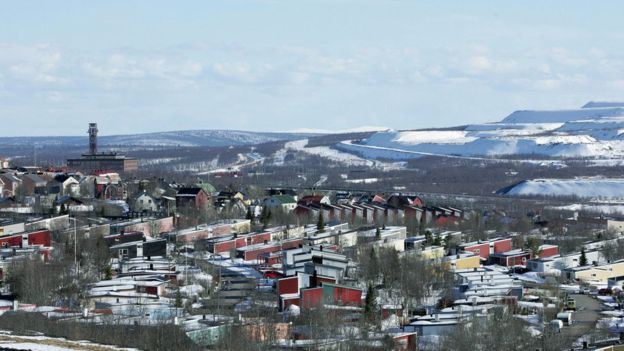
As U.S. organizations continue to experiment with innovative work/life balance policies to attract talent, Swedish companies have been implementing trials over the past 20 years.

Maddy Savage examined a six hour workday model being tested in Falun, Sweden.

“Jimmy Nilsson, who co-owns digital production company Background AB, launched the initiative in September as part of efforts to create a more productive workforce.

“It’s difficult to concentrate at work for eight hours, but with six hours you can be more focused and get things done more quickly,” he says.

His staff are at their desks between 8.30am and 11.30am, take a full hour off for lunch and then put in another three hours before heading back to their homes in the Swedish mountains.

They’re asked to stay away from social media in the office and leave any personal calls or emails until the end of the day. Salaries have not changed since the initiative started in September.

“We’re going to try it for nine months and see if it’s economical first of all, and secondly if it works for our customers and our staff,” Mr Nilsson says.”

In Sweden only 1% of employees work more than 50 hours a week. All are eligible for a minimum of 25 vacation days annually with 480 days of paid parental leave to split between a working couple. Contrast that to the new leave policy announced this week by Amazon.

Bloomberg Business reported “Amazon.com Inc. will give new fathers paid parental leave and extend paid maternity leave for mothers, as the online retailer seeks to enhance its benefits as a way to attract and retain talent.

Women who have a child can now take as much as 20 weeks of paid leave, up from eight weeks. New parents can take six weeks of paid parental leave. The Seattle-based company previously didn’t offer paternity leave. The new benefits apply to all births or adoptions on or after Oct. 1, according to a memo distributed to employees Monday.”

As the conversation on work/life balance continues in the U.S., with ‘band aid’ approaches to a significant cultural issue, our European counterparts are experiencing results in health and profitability. The next challenge: managing the stress of what to do with time away from work.

Entrepreneur and founder of IWearYourShirt.com, Jason Zook revealed ‘The Truth About Entrepreneurship’ for Inc.

“The problem with the majority of entrepreneurship is that it sucks and no one wants to just read about the struggles, the constant ups and downs, the risks that don’t pay off, the tiny lessons learned and the small victories that keep entrepreneurs going. Unfortunately, people don’t realize that’s what happens when you work for yourself or start your own company. They’re only thinking about becoming “the next Instagram” or what their incredibly lucrative exit strategy is going look like.”

He continues to share five ‘truths’, including “The truth about being an entrepreneur is that it’s downright hard and lots of people are going to doubt you along the way.”

It’s not just entrepreneurs. Anything that is worth pursuing is downright hard and people will doubt you along the way.

Wired Magazine published an interview with the new president of the Rhode Island School of Design, Rosanne Somerson. At a time when we are mesmerized by advances in technology, it’s the artists who translate innovation into human applications.

“One way our artists and designers help make sense of the tech world is by putting human beings first. They can design new things while really thinking about the user experience and the cultural impact that technology is instigating. A lot of initial research in tech is done by engineers and programmers who may not be as connected to how we perceive and experience things. Artists have a window into that that is highly developed.

Engineers are very gifted at what they do, but they don’t have this piece. I think in the future there will be these collaborations of the best IT and software engineers, along with people who can translate that into a meaningful human experience that is central to the concept as a whole, instead of an add-on. Those days are behind us. It’s really much more seminal than that.” 

The U.S. Labor Department released the latest jobs report on Friday. Journalist Don Lee analyzed the significance of the numbers for the Los Angeles Times.

“Hiring and wages surged last month as the unemployment rate dropped to 5%, a symbolic threshold with potential significance both for the economy and the 2016 election.

The latest jobless figure is the lowest since April 2008 and exactly half the rate from its peak in 2009 during the Great Recession. Moreover, the labor force expanded last month, unlike some previous months when the unemployment rate dropped because large numbers of people had stopped looking for work.

The combination of solid job growth, lower unemployment and higher wages comes at a crucial time politically as the country moves toward an election year. If historical patterns hold, economic conditions in the next nine months will be among the strongest factors in determining which party wins next November’s election.”

In other news this week@work, Forbes Magazine published its annual list of the ‘Most Powerful People’, Fast Company shared ‘What the Gender Pay Gap Looks Like by Industry’ and The New York Times reported on the latest study from the Pew Research Center in ‘Stressed, Tired, Rushed: Portrait of the Modern Family’.

The Saturday Read – ‘Dear Committee Members’ by Julie Schumacher

Have you ever considered a life as a university professor? For those outside the ivory tower, it seems an idyllic career: contemplating great thoughts, teaching a few classes, and travelling the world on sabbatical.

This week’s ‘Saturday Read’ is required reading for anyone planning to spend an extended period of time on a college campus. University of Minnesota professor Julie Schumacher has written a valuable and humorous addition to the canon of university life with ‘Dear Committee Members’.

If your workplace is academia, you are familiar with letters of reference. In this novel of university life, creative writing and literature professor Jason Fitger narrates a year in his life via a variety of LORs, written to advance his personal agenda and the careers of colleagues and students.

Brock Clarke’s review of the book cited the author’s choice of structure as one of its strengths.

“…Schumacher also brilliantly uses the epistolary form to show Jay’s desperation in the face of his crumbling university, career, life. In all this, her scabrous book reminds me of Sam Lipsyte’s “Home Land,” Richard Russo’s “Straight Man” and Jincy Willett’s “Winner of the National Book Award.” If you didn’t find those books funny, well, that means you’re a corpse. But you’re also, apparently, a corpse who reads, so there’s hope for you yet. You should read “Dear Committee Members”; maybe it will bring you back to life.”

The story tracks with the academic calendar and begins with our fearless professor writing a letter of recommendation for a grad student, followed by another providing an assessment of the current state of affairs to the department chair.

“…more that a third of our faculty now consists of temporary (adjunct) instructors who creep into the building under cover of darkness to teach graveyard shifts of freshman comp; they are not eligible to vote or serve…the remaining two-thirds of the faculty, bearing the scars of disenfranchisement and long-term abuse, are busy tending to personal grudges like scraps of carrion on which they gnaw in the gloom of their offices…after subtracting the names of those who are on leave or close to retirement, and those already serving in the killing fields of administration…”

Only an insider could provide this accurate summation of the state of the university today. This is not breaking news to those inside the ivy walls, but serves as a reality check to those aspiring to an academic career.

The author provides one of the most compelling arguments for the liberal arts in Jason’s letter of recommendation to fictional Bridget Maslow at Addistar Network, Inc. And gives any of you english majors out there the perfect words for your cover letter.

“Belatedly it occurs to me that some members of your HR committee, a few skeptical souls, may be clutching a double strand of worry beads and wondering aloud about the practicality or usefulness of a degree in English rather than, let’s say, computers. Be reassured: the literature students has learned to inquire, to question, to interpret, to critique, to compare, to research, to argue, to sift to analyze, to shape, to express. His intellect can be put to broad use. The computer major, by contrast is a technician – a plumber clutching a single, abeit shining, box of tools.”

‘Dear Committee Members’ is a story of one man’s career/life choices. At the end, you just may want to consider a university as your workplace. Where else can you work where one quarter of the population are newbies and you have the opportunity to start over every autumn?

“There is nothing more promising or hopeful than the start of the academic cycle: another chance for self-improvement, for putting into practice what one learned – or failed to learn – during the previous year.”

‘Taking One for the Team’ a poem by Sara Holbrook

The workplace is full of motivational ‘teamwork’ analogies. Many come from the world of sports and famous coaches: fields, courts and pitches where team behavior is on view for all to observe.

“Individual commitment to a group effort–that is what makes a team work, a company work, a society work, a civilization work.” –Vince Lombardi

“The strength of the team is each individual member. The strength of each member is the team.” –Phil Jackson

“To me, teamwork is the beauty of our sport, where you have five acting as one. You become selfless.” –Mike Krzyzewski

The Friday Poem this week is from performance poet, Sara Holbrook and seems particularly fitting for those of us who are NY Mets fans as the World Series came to an end late Sunday night.

The poem is for all those who have given their best effort only to become spectators to an opponent’s victory celebration.“I’m proud to say I lost with you.” 

Taking One for the Team

We practiced together,
sweat and stained.
We pummeled each other
and laughed off pain.
Teams may disagree,
may tease,
may blame.
Teams may bicker and whine,
but get down for the game.

You had my back.
We fought the fight.
And though our score
was less last night,
we’re walking tall.
Our team came through
and stuck together like Crazy Glue.
I’m proud to say
I lost with you.

Sara Holbrook   ‘Weird? (Me, Too!) Let’s Be Friends’ 2011

Restarting the global conversation about women

Sixty-two million girls across the globe are not attending school today. Sixty-two million dreams will never be realized. Those who advocate for access to schooling do so at a significant risk to themselves and their families. It’s not just about education, but values, attitudes and beliefs.

Last weekend the movie ‘Suffragette’ was released in theaters in the U.S. It’s a fictionalized story of the fight for women’s right to vote in Great Britain in the years between 1911 and 1913.

In a ‘CBS This Morning’ interview, actress Carey Mulligan discussed her role and how little she knew of the historical facts, prior to filming, with co-anchor Nora O’Donnell.

“I knew a sort of really basic school version which is a little paragraph in our history book saying, you know, ‘Women got the vote eventually,”‘ Mulligan said, laughing. “Somehow. It was a couple of lines and, you know, lots of images of women with flowers looking very peaceful.”

“I left school and I voted because my parents voted. But I didn’t really understand the weight of what I had with my vote,” she said.

This past Tuesday was election day and I was tempted to opt out, thinking there were no major initiatives on the ballot. But then I remembered the Carey Mulligan interview and the history of women who sacrificed so much so that I could have the opportunity to vote.

Along with suffrage, women have a right to education. The absence of one or both, excludes women from the global conversation.

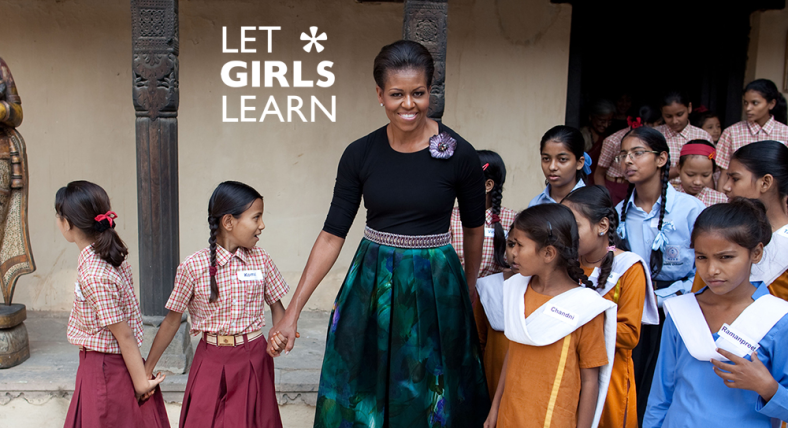
On Wednesday First Lady Michele Obama addressed the World Innovation Summit for Education in Doha, Qatar and introduced her initiative, ‘Let Girls Learn’.

“If we truly want to get girls into our classrooms, then we need to have an honest conversation about how we view and treat women in our societies,” she told an international education conference. “And this conversation needs to happen in every country on this planet, including my own.”

“I don’t think it’s an accident” that girls who want to attend secondary school are threatened. When girls are young, she said, “they are often seen simply as children. But when they hit adolescence and they start to develop into women and are suddenly subject to all of their society’s biases around gender, that is precisely when they start to fall behind in their education.”

“It’s about whether parents think their daughters are as worthy of an education as their sons. It’s about whether our societies cling to outdated laws and traditions that oppress and exclude women, or whether their views of women are as full citizens entitled to equal rights.”

I live in a country that failed to pass an equal rights amendment for women in the seventies. The amendment was written in 1923 by Alice Paul, a suffragist leader, after U.S. women won the right to vote in 1920.

“The ERA was introduced into every Congress between 1923 and 1972, when it was passed and sent to the states for ratification. The original seven-year time limit in the ERA’s proposing clause was extended by Congress to June 30, 1982, but at that deadline, the ERA had been ratified by 35 states, three states short of the 38 required to put it into the Constitution.”

It’s time to restart the global conversation about women. Let’s begin at home and honor the suffragettes of the early 20th century, and the global heroines of the 21st.