The week@work – A school for watchmakers, innovations in teaching, #OptOutside and other leadership stories

The theme of the past week@work was innovation: creating a school for those who work with their hands, teaching history through theater on Broadway, using video games to modernize MBA education and opting out to #OptOutside.

CBS News produced a segment on luxury brand watchmaker, Patek Philippe and the creation of a school for watchmakers in New York to meet a growing customer demand for craftsmanship in a digital age. “…the 175-year-old company decided to open its own watch school at its New York City offices.

Around 300 people applied; six were chosen. for their temperament as much as for their technical aptitude. So what personal characteristics does Patek Philippe look for in order to select students?

“We need people who are committed, so commitment is a big quality,” replied master watchmaker Laurent Junod, who heads the school. Plus, “Patience, of course.”

“We do a training program here that is two years long. But the learning is not finished. You have to learn all your life.”

Unknown-1

The program provides an alternative career for those who seek to work with their hands. “The school is free. Students are paid a small stipend to cover expenses.

Gaman Kwok had been tutoring elementary school kids. “If somebody told me that I will be training to be a watchmaker a year ago, I would, look at them like, ‘What? Really?'”

Juan Alonzo was working at a men’s clothing store. “I want to be as good as Laurent!” he said of his ambition.

At the end of the course — if they pass their exams — Patek Philippe will hire them. They’ll move on to a lifetime of silence, and precision, and learning.”

Do you think they get an employee discount?
IMG_2516

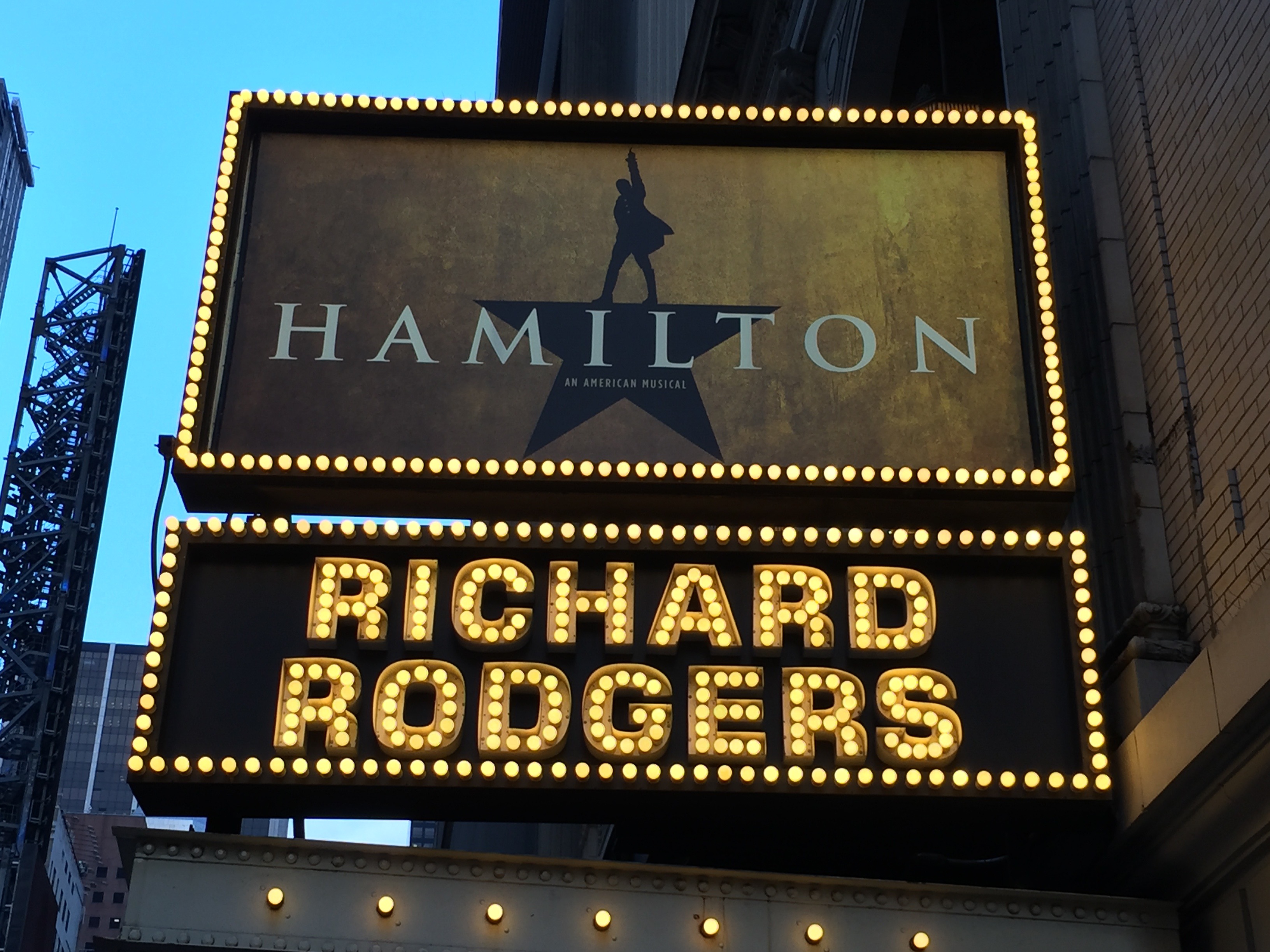
There is a play on Broadway about our founding fathers, one in particular, Alexander Hamilton. ‘Hamilton’ is a hip hop musical retelling of the story of an immigrant who rose to become a force in the building of a new nation. It is based on Ron Chernow’s 818 page biography published in 2004. How many eleventh graders do you think would read an 818 page biography? How many teachers could find the time to read the same?

Sounds like an opportunity to innovate. This week the producers and the Rockefeller Foundation announced a partnership to provide 20,000 New York City eleventh graders with a chance to attend a performance and continue the learning.“The curriculum will be put together by the nonprofit Gilder Lehrman Institute of American History, which plans to create a website with copies of the primary documents that undergird the book and lyrics, and teaching materials about Hamilton and the founding fathers. Students will be invited to create and share their own artistic responses to Hamilton’s life.”

Think about this – 20,000 students who probably have never had access to the lights of Broadway will now be sitting in orchestra seats for one of the most important and creative plays staged in recent memory. And, it’s about history.

“Lin-Manuel Miranda, the creator and star of “Hamilton,” said that he was frequently asked at the stage door how the show, which is both costly to attend and often sold out, could be made more accessible to young people, and he said finding a way to do that has been a priority for him. Mr. Miranda, 35, is a graduate of the Hunter College elementary and high schools for gifted students in New York City.

“If we can excite curiosity in students, there’s no telling what can happen next,” he said. “Not to say we’re going to make 1,300 history majors or 1,300 musical theater writers every time we do the show, but hopefully they will take away how much Hamilton did with his life in the time that he had.”

No telling what can happen next..

Shane Ferro, business journalist for the Huffington Post reported on a new video game, ‘One Day’, being developed for MBA students at the Hult International Business School.

“While it is now fairly common for video games to teach elementary concepts — spelling, basic math, typing — higher education has more or less resisted encroaching technology up to this point. Until recently, higher-level concepts have been harder to program because there may be more than one right answer. “One Day,” which its creators say is the first game of its kind, poses some fairly new questions about learning in the digital age and the role of the professor in a modern classroom.

“I’ve been a business school professor for 30 years,” said John Beck, whose educational consulting company, North Star Leadership Group, developed “One Day.” He lamented that most MBA programs rely on teaching methods honed decades before the personal computing revolution. “For 30 years I’ve been thinking the system is so broken. The case studies model dates from the 1920s, and the lecture model from the 1850s.”

Unknown

The day after Thanksgiving, previously known as ‘Black Friday’, now carries a new hashtag courtesy of the leadership team at retailer REI. #OptOutside is a campaign to encourage folks to leave the shopping behind, enjoy the outdoors and share their experience on social media.

“REI is hoping to convince consumers to start a new Black Friday tradition, one that doesn’t involve buying anything. It has built a dedicated #OptOutside website with resources on local hiking trails. REI’s campaign was built with its employees and customers in mind — the company operates as a co-op, with roughly 5.5 million members who pay a one-time fee for a share of the business. Members contribute to at least 80% of REI’s sales.

The decision to close on Black Friday is bold in an industry that has practically made the day a mandatory part of business, not only because customers demand it, but because the bottom line often does, too. The holiday shopping season is the biggest, and most competitive, time of year for retailers, with Black Friday at the center of the hoopla.”

And while we are on the subject of leadership, here are two articles you might find interesting:

‘Giving More Corporate Chiefs the Steve Jobs Treatment’ Nitin Nohira “I worry that we’re too quick to forget the accomplishments of great business leaders, and that if the people leading companies felt some solace that their long-term legacies might warrant a more careful evaluation, as is now occurring around Steve Jobs, they might make very different decisions.”

‘How Not to Flunk at Failure’ John Danner & Mark Coopersmith “Failure is a strategic resource. Like the people you employ, the money you spend or the facilities and technologies you use, it has unique intrinsic value if you’re open and wise enough to manage it as such. Treat it like unrefined ore that needs to be processed and examined to reveal its riches. Failure is reality’s way of showing you what you don’t yet know, but need to learn. It contains the seeds of precisely the insight you’ve been looking for, if you have the honesty and humility to explore those secrets.”


The ‘costumes’ of our workplace – “Every Day is Class Picture Day”

What will you wear to work? It’s that time of year when we choose an alternate identity to celebrate Halloween. It reminds us that when we choose a career, we also choose a daily ‘costume’, identifying us as a working member of an organization.

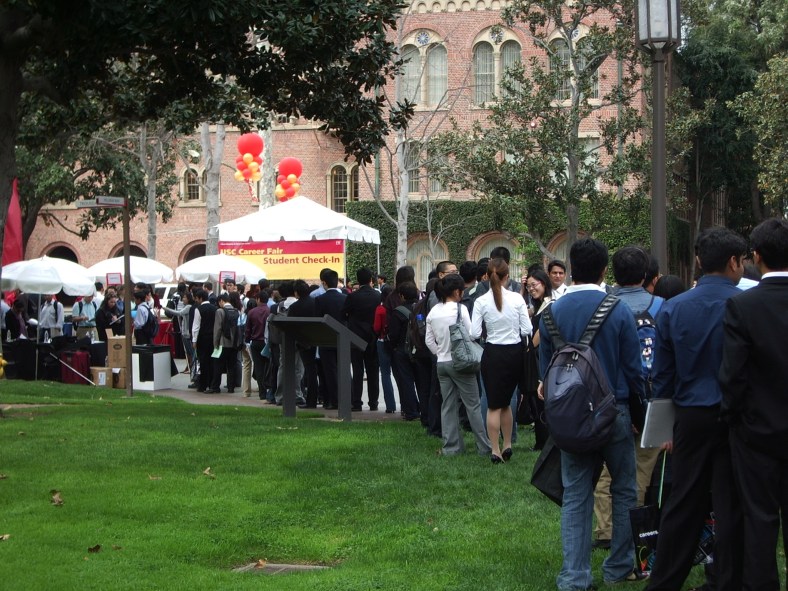
Dress is a visible signal of career transition. Walk through a college campus and you can easily identify the seniors heading to an interview, riding bikes and skateboards clad in black suits with backpacks.

Dress is an outward symbol of an organization’s culture. As you begin the job search process, think about what your everyday wardrobe will look like. Does the ‘dress code’ fit with your personality and image?

Appearance matters and social media is influencing perception of our ‘personal brand’. Author Jennifer Weiner wrote an OpEd for The New York Times in May, ‘The Pressure to Look Good’. She described how social media has transformed the ‘image’ of writers, and women.

“The visual footprint of a writer was until recently limited to a postage-stamp-size author photo. Yes, you’d get dressed up for your book tour, if your publisher was generous enough to fund one, and for television appearances if you were lucky enough to have them. But in terms of your day-to-day work life, your looks didn’t matter. That made the job extra-appealing for those of us who realized early on that the path of the supermodel would not be ours to walk.

Then along came cellphones with built-in cameras. And blogs and Facebook and Twitter. Suddenly, you weren’t just that one tiny picture, you were every picture anyone might happen to want to snap, and to post and pin and share, images that would be tweeted and retweeted, scrutinized and commented upon and invoked to dismiss you as jealous, overweight, bitter, sexually frustrated and, maybe, illogically, also a sexually promiscuous hag. For some critics, a woman’s looks remain the first place they’ll go when they disagree with her opinions.

It used to be that, generally speaking, we all knew the occasions that required us to look good.

Now? Every day is Class Picture Day.”

OK, appearance matters but does what we wear effect how we work? Joe Pinsker writing in The Atlantic found research to support ‘Wearing a Suit Makes People Think Differently’.

“Clothes, it appears, make the man perceive the world differently.”

“A new study looks specifically at how formal attire changes people’s thought processes. “Putting on formal clothes makes us feel powerful, and that changes the basic way we see the world,” says Abraham Rutchick, an author of the study and a professor of psychology at California State University, Northridge. Rutchick and his co-authors found that wearing clothing that’s more formal than usual makes people think more broadly and holistically, rather than narrowly and about fine-grained details. In psychological parlance, wearing a suit encourages people to use abstract processing more readily than concrete processing.”

We have come a long way since John T. Molloy provided career wardrobe advice in his 1977 book, ‘Dress for Success’. A social media footprint has become a public relations tool in developing a professional reputation.

Do the research. Use any opportunity to observe workers in your field. Take your cues from both entry level employees and senior executives. There are some who believe you should dress for your next level. The main thing is to enhance your image, not cause a distraction. You want your managers and colleagues to value your opinions and ideas, not be distracted by your ‘costume’.

If you are uncomfortable in the ‘costume’ of your employer, other things may not be fitting as well. It may be an early signal that it’s time to change more than your threads.

‘Theme in Yellow’ a poem by Carl Sandburg (for Halloween)

Tomorrow we celebrate Halloween, a holiday with origins dating back to the ancient Celts. Today it’s the second biggest consumer spending holiday in America. In all the frenzy of make-believe horror, there is one constant…

Consider the pumpkin. Long before Charles M. Schultz imagined Linus waiting all night in a field for the arrival of the ‘Great Pumpkin’, American poet, Carl Sandburg wrote his ‘ode’ to a simpler time and celebration.

Theme in Yellow

I spot the hills
With yellow balls in autumn.
I light the prairie cornfields
Orange and tawny gold clusters
And I am called pumpkins.
On the last of October
When dusk is fallen
Children join hands
And circle round me
Singing ghost songs
And love to the harvest moon;
I am a jack-o’-lantern
With terrible teeth
And the children know
I am fooling.

Carl Sandburg ‘Chicago Poems’ 1916

The week@work – writer’s rooms and publishing lack diversity, alternatives to academia, what scares us most and the number one mistake job seekers make

As the world turned this week@work, journalists continued to highlight the lack of diversity in the workplace: in the writers rooms of TV, the publishing industry and tech. The National Endowment for the Humanities announced a grant initiative to align graduate education with employment prospects.  A survey from Chapman University identified our top fear as corruption of government officials (unemployment and public speaking being way down on the list). And a CEO offered advice on the one mistake job seekers make.

Things are not looking good on the diversity front. Aisha Harris reporting on Slate.com, investigated the lack of progress on diversity behind the camera, in the rooms where plot and dialogue are created for your favorite TV shows.

“A Writers’ Guild of America report released earlier this year noted that staff employment for people of color actually decreased between the 2011–12 season and 2013–14 season, from a peak of 15.6 percent to 13.7 percent. The number of executive producers of color also decreased in those seasons, from 7.8 percent to 5.5 percent. While the 2014–15 season may have seen those numbers increase thanks to the addition of a few shows with diverse casts, such sharp declines demonstrate how tenuous progress in Hollywood can be.

…the television industry, like most creative industries (including journalism), pays lip service to “diversity” while very little actually changes. Even as the hottest show on TV boasts a majority-nonwhite writing staff, the work of vigorously recruiting non-white writing talent is still confined to a narrow pipeline: Diversity departments and fellowships help to fill one or two designated diversity slots on each staff. And that’s just the start of the problem: As writer after writer revealed, even when writers of color make it into that pipeline, the industry hasn’t gotten much better at making them feel as though their voices matter.”

Jim Milliot, the editorial director for Publishers Weekly, reported on their annual publishing industry salary survey. While the results indicated younger employees may be replacing the old guard, the workforce is still predominantly white.

“If publishers are indeed recruiting a new generation of employees, they do not appear to be hiring minorities. The share of survey respondents who identified themselves as white/Caucasian was 89% in 2014, the same as in the previous year. Asians remained the second-largest ethnic group within publishing, accounting for 5% of respondents in 2014, up from 3% the previous year. With the survey finding no real change in the racial composition of the workforce, it is no surprise that only 21% of respondents felt that strides had been made in diversifying the industry’s workforce in 2014. A much higher percentage, however, said they believe the industry has made progress in publishing titles by nonwhite authors and titles aimed at more diverse readers.”

One other article of interest on the diversity topic was written by Vauhini Vara for Fast Company and details Pinterest’s efforts to “fix its diversity problem”. She chronicles the various efforts to identify recruitment channels over the past two years and the lack of progress in diversifying the workplace. “There is lots of hope but little certainty about what works.”

The common thread in all of these ‘lack of diversity’ conversations is the ‘wishful thinking’ for a quick fix. The majority of the careers covered in these articles are filled by ‘contract’ employees. The hiring is tied to a project. When the next project begins, folks hire their trusted colleagues from previous gigs and there are few openings for a newbie. Diversity requires a long term investment in education, internships and mentoring – creating a new career pipeline.

One solution I personally observed in my corporate life was when a senior exec tied business unit management compensation to diversity targets. If you are rewarded for diversity – hiring and retention – there is a better chance for success. It’s not brain surgery; it’s a matter of priorities.

Academia is another workplace that has continued to struggle with diversity issues, driven in part by an outdated tenure process and lack of career transition in senior faculty ranks. As students continue to enroll in PhD programs, their predecessors compete for the few faculty openings and get by cobbling together a mosaic of ‘contract’ adjunct positions. Until now, it was taboo for a grad student to speak out loud about pursuing a career outside the ivory tower.

Colleen Flaherty reports for Inside Higher Education on the National Endowment for the Humanities recognition of diminishing tenure-track options and a proposal to explore alternatives.

“Critics have long complained about doctoral education in the humanities, saying that it takes too long and no longer reflects the realities of graduates’ employment prospects. In other words, graduate humanities programs are still largely training students to become professors at major research universities, when the vast majority won’t, given the weak tenure-track job market.

“We know that the traditional career track in the humanities, in term of numbers of available positions, is diminished — that scenario has changed quite dramatically over time,” William D. Adams, NEH chairman, said in an interview. “So we’re reacting to that in trying to assist institutions in providing a wider aperture for their students to think about careers beyond [academe].”

Based on the workplace issues we experience and read about, it may come as a surprise that workplace concerns are not at the top of this year’s Chapman University survey ‘America’s Top Fears 2015’.

Cari Romm summarized the survey methodology and results in an article for The Atlantic.

“For the survey, a random sample of around 1,500 adults ranked their fears of 88 different items on a scale of one (not afraid) to four (very afraid). The fears were divided into 10 different categories: crime, personal anxieties (like clowns or public speaking), judgment of others, environment, daily life (like romantic rejection or talking to strangers), technology, natural disasters, personal future, man-made disasters, and government—and when the study authors averaged out the fear scores across all the different categories, technology came in second place, right behind natural disasters.

Top10Fears-740x572

In the last article of the week, Business Insider writer Jacquelyn Smith, interviewed Liz Wessel, CEO and Co-founder of WayUp and discovered the biggest mistake job seekers make.

“People are generally far too modest,” she says. “If there’s ever a time to brag, it’s during your job search and interviews. You need to state your accomplishments and show how your work led to awesome outcomes for your companies. Remember, you need to convince your interviewer that, out of all the applicants the company is considering, you’re their best bet.”

If you don’t take credit for your work and accomplishments, no one is going to give you the benefit of the doubt for being modest, Wessel adds. “And if you don’t show proof of your accomplishments, you won’t stand out.”

The reason this “mistake” is so common, she says, is that a lot of people are good at being “team players,” and therefore try to share the credit. “In a lot of cases, this is a great instinct, and while it’s obviously important to work well in a team setting, it’s also important to convince an employer to hire you, not your entire team.

The message in the week@work themes: those who are confident in their talent and able to articulate their value to an organization have the potential to contend for work in writing, publishing, tech and academia. But the playing field is not level and winning the coveted spots will ‘take a village’: committed employers, dedicated mentors, paid internships, educational outreach and community visibility.

The Saturday Read – ‘Humans of New York:Stories’ by Brandon Stanton

We learn from the wisdom of others. In Brandon Stanton’s new book we learn from the wisdom of strangers. The ‘Saturday Read’ this week is ‘Humans of New York: Stories’.

“The simplest way to describe the development of HONY over the past five years is this: it’s evolved from a photography blog to a storytelling blog…after cataloging thousands of people, I stumbled upon the idea of including quotes from my subjects alongside their photographs. The quotes grew longer and longer, until eventually I was spending fifteen to twenty minutes interviewing each person I photographed. These interviews, and the stories that resulted from them, became the new purpose of Humans of New York. The blog became dedicated to telling the stories of strangers on the street.”

The first career story is the author’s own. He graduated from college, took a job in Chicago as a bond trader, lost his job, moved to New York and started taking pictures of folks on the street. His work evolved into a blog with 15.6 million followers. His first book of photography, Humans of New York, landed at the top of The New York Times Bestseller List in the fall of 2013 and the new book will debut at the top of the November 1, 2015 list.

Why the response? Because the Mr. Stanton’s stories, told in words and images are about us. The scope of his project embraces NYC folks encountered on the street, reflecting on their past and future. We don’t know names. We don’t know ages. We can only guess in connecting the photo to the quote. At times the words seem at odds with the picture.

Here is one example from a young man, perhaps in his early teens.

“I’ve sort of had an arrogant demeanor my entire life, and I’m learning that I’m going to have to change that if I want to succeed. I realized that it doesn’t matter how clever you are if nobody wants to work with you.”

Another from a young woman seated on a suitcase, in the middle of a train station.

“I wish I’d partied a little less. People always say: ‘Be true to yourself.’. But that’s misleading because there are two selves. There’s your short-term self, and there’s your long-term self. And if you’re only true to your short-term self, your long-term self slowly decays.”

And a man at mid-life in what appears to be a cold corporate lobby, sitting on a stone bench, framed by a stone wall.

“When you’re twenty-five, you feel like you’re riding a wave. You feel like opportunities are just going to keep coming at you, and you think it’s never going to end. But then it ends.”

“When does it end?”

“When you turn forty, and they start looking for someone younger.”

The reader gets a sense they are looking in the mirror, but they’re not. The photo doesn’t match the selfie, but the sentiment fits.

Heather Long, writing for CNN Money, interviewed Stanton and attended his reading at a NY Barnes and Noble. What has he learned in the process of photographing and interviewing 10,000 people? “Americans should reconsider how much they work.”

“He often asks: What is your biggest struggle? And what do you regret most in life?
“Balancing my life is an answer I hear a lot,” he said. “Balancing work and family.”
People go on to tell him how they wish they had skipped that marketing conference and attended their daughter’s 8th grade dance instead.”

One of my favorite ‘inteviews’ appears early in the book (page 5). The narrative comes from a third grader (?).

“I want to build a bridge”

“How do you build a bridge?”

“If you want to build a bridge, it’s going to take a long time and it might be hard because your employees might not be as interested in building a bridge as you are. You have to think about what type of bridge you want to make…” 

He could be talking about life and career.

HONY: Stories invites us on a road trip through the streets of New York, opting for the detours that welcome conversation. This is a book to read slowly, observing the detail in the photos and the humanity in the words. It’s a compendium of other’s lifelong learning, generously shared.

“I want to be an artist.” “What kind of art do you want to make?” “I want to make different versions of myself.”

‘A Consumer’s Report’ a poem by Peter Porter

Imagine you work for Consumer Reports, the U.S. product review and ratings service, and you are on deadline to submit an evaluation of a new product. In this week’s Friday Poem, ‘A Consumer’s Report’ from Australian born poet, Peter Porter, life is the product under review.

Porter moved to London in the early 1950s and took a job with an advertising agency publishing his first collection of poetry in 1961. Have you ever noticed how many ‘Mad Men’ moonlight as poets?

Kate Middleton, the 2012 Sydney City Poet, described the poem in her Tumblr post.

“In “A Consumer’s Report” Porter reminds us that even language that seems to have been repurposed by the corporate world can in fact be reclaimed and renewed. Often this reclamation can happen simply through the application of a set of familiar terms to a surprising new context: this is exactly what Porter does in his poem here, taking the language of marketing, and billing life itself as a commodity to be test-driven as you would a new car or skincare product. In so doing Porter wittily leads the reader both to examine the nature of the titular consumer’s report, but also prods his reader to a serious consideration of life itself.”

A Consumer’s Report

The name of the product I tested is Life,
I have completed the form you sent me
and understand that my answers are confidential.

I had it as a gift,
I didn’t feel much while using it,
in fact I think I’d have liked to be more excited.
It seemed gentle on the hands
but left an embarrassing deposit behind.
It was not economical
and I have used much more than I thought
(I suppose I have about half left
but it’s difficult to tell)—
although the instructions are fairly large
there are so many of them
I don’t know which to follow, especially
as they seem to contradict each other.
I’m not sure such a thing
should be put in the way of children—
It’s difficult to think of a purpose
for it. One of my friends says
it’s just to keep its maker in a job.
Also the price is much too high.
Things are piling up so fast,
after all, the world got by
for thousand million years
without this, do we need it now?
(Incidentally, please ask your man
to stop calling me ‘the respondent’,
I don’t like the sound of it.)
There seems to be a lot of different labels,
sizes and colours should be uniform,
the shape is awkward, it’s waterproof
but not heat resistant, it doesn’t keep
yet it’s very difficult to get rid of:
whenever they make it cheaper they tend
to put less in—if you say you don’t
want it, then it’s delivered anyway.
I’d agree it’s a popular product,
it’s got into the language; people
even say they’re on the side of it.
Personally I think it’s overdone,
a small thing people are ready
to behave badly about. I think
we should take it for granted. If its
experts are called philosophers or market
researchers or historians, we shouldn’t
care. We are the consumers and the last
law makers. So finally, I’d buy it.
But the question of a ‘best buy’
I’d like to leave until I get
the competitive product you said you’d send.

Peter Porter from ‘The Poetry of Business Life: An Anthology’ Ralph Windle 1994

Representative Paul Ryan negotiates for work/life balance

I have always considered it a bonus to work for a leader who has children. Why? At any point in the day, someone out of their control can force the most organized professional to recalibrate their priorities to honor their values. For them, work/life balance is not an option and a sense of perspective is a requirement.

This week, Republican Representative Paul Ryan joined the conversation about work/life balance and provided a tutorial in job offer negotiation. He responded to requests to become a candidate for House Speaker with a vision for what he believes success looks like. Prior to accepting the offer, he outlined his non-negotiables.

“I cannot and will not give up my family time. I may not be able to be on the road as much as previous speakers, but I pledged to make up for it with more time communicating our message.”

His message was to create party unity, but his ‘personal’ requirement of family time attracted the most media attention. Many questioned his ability to perform the duties of the office if he stepped away for weekends at home. One tweet wondered how the congressman would respond to an employee making the same request. Others felt a congresswoman with the same demand would be discounted immediately.

If Paul Ryan can reimagine the role of speaker, consider the ripple effect among lawmakers. Perhaps a serious effort to address the everyday worker’s challenges with balance @work?

We are at a turning point in the work/life balance conversation. Although still in the majority, those who value work at the expense of life are retiring in record numbers and their replacements have no interest in maintaining a legacy that forces a choice between work and life. Yes, we are connected 24×7, but technology can also offer both the freedom to meet our work commitments and disconnect for family, friends, lifelong learning and fun.

Before you head into you boss’ office this afternoon and demand time away for family, consider the elements of Paul Ryan’s negotiation and decide if your situation fits.

He didn’t want the job. He was heavily recruited. He is negotiating from a position of strength.

He has no competition. There are no other candidates.

If his conditions are not met, he will walk away. He has a job he loves and can be successful without being Speaker.

If you meet all of the above, you might be at the peak of your demand @work and it may be time to ask. If not, develop a strategy to move you to a place of strength and time your ask.

There will always be a place @work for those whose work is their life. It may just be a bit lonelier for the workaholic of the future.

The week@work – unlimited vacation, secrets of the most productive and baseball #LGM

This week@work continues the discussion of perks to attract talent, shares secrets of the most productive people and celebrates the talents of those who go to work in baseball.

On Monday evening the NBC Nightly News broadcast a story reported by Tom Costello on the new ‘discretionary time off’ policy being introduced to the 8,700 employees at LinkedIn. With no vacation limits, employees arrange time off with their managers. (What could go wrong?) For the company, with no designated vacation days, there is no need to compensate for unused vacation. With the average American worker taking only half of their allocated time away, it’s a low risk, and financially beneficial proposition for employers.

Joe Lazauskas echoed a similar theme in his Fast Company article, ‘Why More Tech Companies are Rethinking Their Perks’. He writes about a number of experiments with equity, time off and a new way to work.

“Over the past few years, some startups have begun to rethink some of the perks with which they’ve customarily attracted top talent. In their place, a new class of web 3.0 startups are beginning to embrace truly first-rate benefits, which might be giving them a leg up in a viciously competitive tech arena.

Equity that’s truly equitable… in 2013, Kik changed its policy so employees could hold onto their stock options even after they leave. In doing so, it started a small trend: Pinterest followed suit the next year to much fanfare, giving employees seven years to exercise their options. “If other companies follow suit,” wrote Business Insider, “this could change the entire landscape for startups, making it easier for them to attract and retain employees.”

One of the most compelling arguments for a new way of working came from Facebook and Asana cofounder Dustin Moskovitz, in the form of a recent Medium post. Ever since the days of Henry Ford, he noted, profit-maximizing research has backed up the notion that you get more out of employees when they’re better rested and happy.

“The research is clear: beyond 40–50 hours per week, the marginal returns from additional work decrease rapidly and quickly become negative,” Moskovitz wrote.”

Which brings us to ‘Secrets from 11 of the Most Productive People from Oprah to Aziz Ansari’. Comedian Ansari busts the productivity myth:

“While we were writing [Master of None], we would work until 6 or 7 p.m., and then we’d be done. There are other writers’ rooms where people spend nights in the office. I can’t imagine you’re doing your best work then. You’ve got to be a person and do other stuff, or you’re not going to be inspired to write.”

The big story this week@work was about the folks who play baseball. With post-season play underway, we are down to four teams competing to play in the world series. It’s an exciting time to be a NY Mets fan. And there is no better writer to convey the story of baseball than The New Yorker’s Roger Angell.

“Well, yes! Well, whew. The Mets’ breathless, division-grabbing, 3–2 win over the Dodgers last night never felt certain, and provided little fun for old at-homies like me until the last two or three outs. But check that: there was that sudden snicker in the top of the fourth inning, a little embarrassment for the moneyed, resident Dodgers, when Mets second baseman Dan Murphy, aboard again after another hit, moved along to second on a walk to Lucas Duda and, finding no Dodgers anywhere near that corner, took third as well. Oop. Then he scored on a sac fly by Travis d’Arnaud, tying the game at 2–2. The gratis extra base felt like a social error, spilled claret on the tablecloth, but in retrospect turned out to to be the pivot, the turning point of this strange, strained game.”

If you have aspirations to be a sportswriter, read everything Mr. Angell has written. And, read William Powell’s amazing profile of a sportswriter in St. Louis Magazine, ‘The Big Comeback of Benjamin Hochman.

It’s a career/life story of an eight year old St. Louis Cardinals fan who followed his dream to be a sportswriter and after stints in New Orleans and Denver, returns to his hometown to write for the Post-Dispatch.

“Benjamin pens his first column for the Post-Dispatch on September 3. We meet the next morning. The first thing I want to know is, why? He was living in Denver, one of America’s fastest-growing cities. There were four major sports teams and mountains and Peyton Manning. He gave it up to come to St. Louis, with three major sports teams, possibly soon to be two. We have a shrinking population and a landfill fire that’s burning toward a pile of radioactive waste and #Ferguson.

His response, about the Cardinals’ being perennial contenders and the stadium drama’s being interesting and so on, doesn’t answer the question. But when I walk into his living room, I instantly understand. We unpack box after box of his Cardinals memorabilia, and that’s just the tip of the iceberg. There are posters of Post-Dispatch front pages from the Cardinals’ run in 2011, with Yadier Molina going crazy in every photo. He has balls signed by Jim Edmonds and Yogi Berra, a whole heap of replica rings. We find a copy of the Celebration! album he listened to as a kid and copy after copy of old issues of the newspaper, which Benjamin collects.

That leads me to my next question: Given his childhood, can he be an objective journalist, or will he be a fan in the press box? He even knows the Kroenkes, having managed the Mizzou basketball team when Josh was a member. This time, Benjamin has an answer ready. “I can’t be a fanboy. I have to be the guy who keeps the team accountable,” he says. “I will use my knowledge and my passion for St. Louis to enhance my writing.”

And for those of you who just don’t get baseball –

“This past summer, he created the Nine Innings project, writing nine love letters to baseball. For one, he found kids playing in the streets, just like in the good old days. For another, he tried to track down a specific stadium seat that had been hit by a famous minor league home run. For the final installment, he wrote about the bond that baseball creates in families. He wrote about his dad listening to the World Series in science class, and about a soldier serving overseas who stayed in touch with his parents by following the Rockies. It’s sure to win awards.”

‘The Managers’ a poem by W.H. Auden

The ‘Friday Poem’ this week is ‘The Managers’ by British poet W.H. Auden. The poem was written almost 70 years ago, in the post World War II period when a new class of worker was emerging, the professional corporate manager. The new corporate bureaucracies mirrored the military structures that had effectively managed the war effort.

In the military you were assigned a number, and as these new organization structures emerged, employees lost their identities and became numbers as well. Auden used his poetry to remind those in charge that workers have faces..

‘The mere making of a work of art is itself a political act’ because it reminds ‘the Management … that the managed are people with faces, not anonymous numbers.’

‘The hero of modern poetry is ‘the man or woman in any walk of life who … manages to acquire and preserve a face of his own’.”

The poem is a snapshot in time of one artist’s reaction to the “Men, working too hard in rooms that are too big”.

The Managers

In the bad old days it was not so bad:

The top of the ladder

Was an amusing place to sit; success

Meant quite a lot – leisure

And huge meals, more palaces filled with more

Objects, books, girls, horses

Than one would ever get round to, and to be

Carried uphill while seeing

Others walk. To rule was a pleasure when

One wrote a death sentence

On the back of the Ace of Spades and played on

With a new deck. Honours

Are not so physical or jolly now,

For the species of Powers

We are used to are not like that. Could one of them

Be said to resemble

The Tragic Hero, The Platonic Saint,

Or would any painter

Portray one rising triumph from a lake

On a dolphin, naked,

Protected by an umbrella of cherubs? Can

They so much as manage

To behave like genuine Caesars when alone

Or drinking with cronies,

To let their hair down and be frank about

The world? It is doubtful.

The last word on how we may live or die

Rests today with such quiet

Men, working too hard in rooms that are too big,

Reducing to figures

What is the matter, what is to be done.

A neat little luncheon

Of sandwiches is brought to each on a tray,

Nourishment they are able

To take with one hand without looking up

From papers a couple

Of secretaries are needed to file,

From problems no smiling

Can dismiss. The typewriters never stop

But whirr like grasshoppers

In the silent siesta heat as, frivolous

Across their discussions

From woods unaltered by our wars and our vows

There drift the scents of flowers

And the songs of birds who will never vote

Or bother to notice

Those distinguishing marks a lover sees

By instinct and policemen

Can be trained to observe. Far into the night

Their windows burn brightly

And, behind their backs bent over some report,

On every quarter,

For ever like a god or a disease

There on earth the reason

In all its aspects why they are tired, and weak,

The inattentive, seeing

Someone to blame. If, to recuperate

They go a-playing, their greatness

Encounters the bow of the chef or the glance

Of the ballet-dancer

Who cannot be ruined by any master’s fall.

To rule must be a calling,

It seems, like surgery or sculpture; the fun

Neither love nor money

But taking necessary risks, the test

Of one’s skill, the question,

If difficult, their own reward. But then

Perhaps one should mention

Also what must be a comfort as they guess

In times like the present

When guesses can prove so fatally wrong,

The fact of belonging

To the very select indeed, to those

For whom, just supposing

They do, there will be places on the last

Plane out of disaster.

No; no one is really sorry for their

Heavy gait and careworn

Look, nor would they thank you if you said you were.

W.H. Auden 1948, ‘The Oxford Book of Work’ 1999

It’s not just millennials – we all want to learn and grow @work

“How Do Employers Retain Job-Hopping Millennial Employees?” That was the question posed on Quora.com earlier this week. After reading the response from millennial entrepreneur, Elijah Medge, posted on Slate.com, I realized that what we want from work is not a generational issue, we all have similar expectations @work: to learn, grow and be challenged in an “awesome work environment”.

The American worker is tired of hearing about the ‘outrageous expectations’ of the millennial generation.

Instead, let’s step back and thank the millennials for their workplace vision that demands a voice in decision making, requires meaning @work, invites a diverse set of views and creates a bit of fun on the way to productivity.

There will always be a clash between employer and employee expectations when the process lacks honesty. Employers are scrambling to create ‘band aids’ to attract new hires. Job candidates, anxious to please a potential employer, play the game to get the offer, only to depart in a few months when promise and reality don’t match.

Media reports are full of stories of companies trying a variety of experiments to entice millennials to sign on the dotted line. There is no considered approach, just a bunch of ideas being thrown at the wall to see if any stick. The most recently publicized, ‘unlimited vacation time’.

Mr. Medge’s suggestions remind us that a fundamental tenet of management is ‘keep it simple’:

“Facilitate team bonding outside of the office.”

“Mix it up and have a little fun.”

“Take the time to coach, train, and develop successful mentalities.”

“Offer awesome incentives.”

“Encourage learning and mistakes.”

“Don’t micromanage.”

“Consistently recognize top performers.”

“Talk to your people about their goals.”

Do you see anything here that’s generation specific?

When corporate contracts with workers began to disintegrate in the late ’70s, members of the greatest generation and baby boomers were forced to rethink their relationship with the workplace. The disruption of downsizing signaled the end of ‘job stability’.

The level of workplace disruption came as a shock. Those generations were new at this and slow to respond. They had families and mortgages and the risks were too high to challenge the status quo, even thought the status quo had been shattered. The economy was changing and maintaining a standard of living required two incomes.

In contrast, today’s new workers, although saddled with debt, have few other ties. They are the ‘free agents’ of the contemporary workplace and they have watched previous generations, their parents and grandparents, and concluded there is a better way to work.

Let’s engage all workers in conversation about work culture that incorporates Mr. Medge’s common sense components.

The question of employee retention crosses all generations @work: the leaders, the mentors and the newbies. Calibrate the expectations of all members of the workplace community, align with the organization’s culture and restore credibility into the recruitment and retention process.