‘The Saturday Read’ The Olympics: 3 articles and 1 ‘Saturday Listen’

The XXXI Olympiad in Rio has begun and to get you in the spirit of the games, this week’s ‘Saturday Read’ suggests three articles and one ‘Saturday Listen’.

Beginning in the 1960’s ABC Sports opened their weekly ‘Wide World of Sports’ program with the phrase ‘spanning the globe to bring you the constant variety of sports…the thrill of victory and the agony of defeat’. The idea was to tell the stories of athletic competition, honoring the victors while recognizing the efforts of all competitors.

Over the next two weeks 306 events in 28 Olympic sports will take place in 32 venues in Rio and soccer stadiums in Belo Horizonte, Brasilia, Manaus, Salvador and Sao Paulo. This ‘constant variety of sport’ will include new additions: rugby and golf.

ABC Sports also brought us ‘up close and personal’ profiles of athletes preparing for their competition, often visiting remote corners of the world, providing both travelogue and local context for each competitor.

The four ‘up close and personal’ stories selected this week begin with a multi-media ‘long read’ about one of the most famous athletes in Brazil, Lais Souza. The two-time olympic gymnast joined her country’s efforts to build a winter sports team, entering a training program in aerial skiing. In 2014 she became the first Brazilian aerialist to qualify for the Olympics. That’s when the real story begins.

The next three features introduce the US women’s beach volleyball team of Kerri Walsh Jennings and April Ross, the refugee olympians, and American swimmer Katie Ledecky.

‘A Life in Motion, Stopped Cold’ Sarah Lyall for The New York Times, May 13, 2015

“At 25, Souza was one of Brazil’s best gymnasts, a tiny two-time Olympian, and she had just heard exciting news: She had qualified for yet another Olympics. But this was the 2014 Winter Games, something completely new, and it gave her accomplishment an added resonance. In less than a week, Souza would be traveling to Sochi, Russia, to compete in aerial skiing, a sport she had never even heard of before taking it up seven months earlier.”

kravhbXX.jpg

“For an athlete from a sultry tropical country who had spent her career following the summer around the world, aerial skiing had presented Souza with an extraordinary new challenge, accordioned into an extraordinarily brief period of time. She had never skied. She had never seen anyone doing aerials. She had barely even seen snow.

Souza’s mood was buoyant as she looked down the slope that day, Jan. 28, 2014. Giddy with excitement from her Olympics news, she was reveling in a morning of freedom before the pressures ahead…It was to be the three skiers’ last run of a long and happy morning before they broke for lunch and called it a day…But something was not right.”

‘Kerri Walsh Jennings Seeks Olympic Success With a New Partner’ John Branch for The New York Times, July 7, 2016

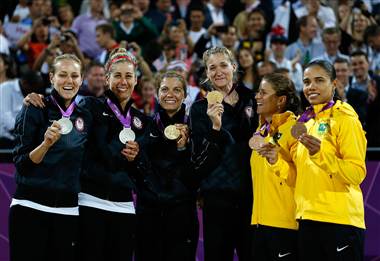
“At the beach volleyball women’s final at the 2012 London Games, Kerri Walsh Jennings and Misty May-Treanor clinched their third straight gold medal. They beat April Ross and Jennifer Kessy, who earned silver.
pb-120808-beach-volleyball-gold-jm-001.380;380;7;70;0.jpg

After the final point, the four American women congratulated one another, and Ross was a little surprised to hear Walsh Jennings’s whispered words.

“At the net, she said, ‘Let’s go win gold in Rio,’” Ross said. “We hadn’t had that conversation. I was caught off-guard, but it was a no-brainer for me. I was like, ‘Yeah, for sure.’”

‘The Refugee Olympians in Rio’ Robin Wright for The New Yorker, August 2, 2016

“The United Nations estimates that there are now more than sixty-five million people forcibly displaced from their homes. More than twenty-one million are refugees, most under the age of eighteen. More than half of these fled from one of three countries—Somalia, Afghanistan, or Syria. Ten million forcibly displaced people are stateless. The number of the displaced goes up by an average of thirty-four thousand every day.”

155665.jpg“When the Games begin in Rio de Janeiro, the opening ceremony, on Friday, will pay tribute to the world’s displaced and stateless persons. During the parade of nations, a team of ten young refugees will enter Maracanã Stadium as their own team—a first in Olympic history.

In announcing the team, Thomas Bach, the president of the I.O.C., said, “These refugees have no home, no team, no flag, no national anthem. We will offer them a home in the Olympic Village, together with all the athletes of the word. The Olympic anthem will be played in their honor, and the Olympic flag will lead them into the Olympic Stadium.” Bach continued, “These refugee athletes will show the world that despite the unimaginable tragedies that they have faced, anyone can contribute to society through their talent, skills, and strength of the human spirit.”

‘Olympic Swimmer Ledecky Is This Century’s Perfect 10’ Frank Deford for NPR, August 3, 2016

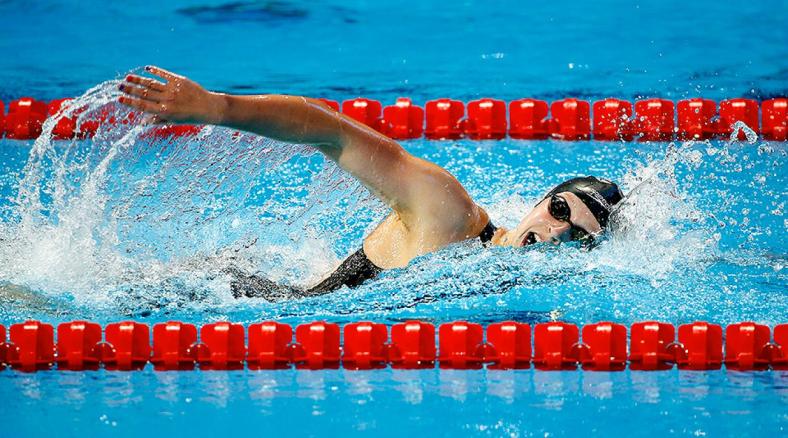
Frank Deford’s narrative give us a thumbnail portrait of the modern olympics when the marquee events of track and field were placed in the second week and swimming took a back seat to women’s gymnastics beginning with Olga Korbut in 1972. But gymnastics has changed their scoring system, and there are no perfect 10s, so we switch our attention back to the pool and swimmer Katie Ledecky.
katie-ledecky-road-to-rio.jpg

“In the television era, the second week of the Olympics is reserved for what is considered the marquee event: track and field.

So, the shared premier showcases of the first week are swimming and women’s gymnastics. While swimming was always a spotlight sport, I was, if you will, sort of present at the creation when gymnastics became the new star lead-off hitter.”

Watching an ‘Olympic Preview’ on TV Thursday evening, I thought I had tuned in to ’60 Minutes’ with coverage of Zika, terrorism, street protests and environmental concerns. Now the story will shift, to be written by the athletes. Let’s celebrate these athletes who represent their home countries and compete “in the true spirit of sportsmanship, for the glory of sport and the honour of our teams.”



The week@work – Unemployment, economic mobility, parental leave, a tribute to #55 and anticipating Rio

The week@work included the first debate of the 2016 election season, the release of economic indicators and two American corporations announcing generous parental leave policies. This week also marks one year until those who work in sports will demonstrate their skills at the Summer Olympics in Brazil. And the NFL, in its wisdom, denied a Hall of Fame inductee’s daughter the opportunity to fulfill a father’s wish.

Once again, the week@work was about values: those we hold as a society and those organizations demonstrate not just in policies, but in action.

The June jobs numbers were released by the Labor Department on Thursday. Ben Casselman reported on the numbers behind the numbers in his article for ‘FiveThirtyEight’, ‘Don’t Forget The Workers The Recovery Is Leaving Behind’.

“U.S. employers added 215,000 jobs in July, the Bureau of Labor Statistics said in its monthly jobs report on Friday. It was the third straight month of job growth above 200,000, and the 10th in the past year. Revisions to prior months’ data added another 14,000 jobs, and the unemployment rate held steady at 5.3 percent, the lowest it’s been since before the recession.

Although the progress has been impressive, it has not been absolute. The headline unemployment rate is nearing a level most economists consider healthy — policymakers at the Federal Reserve consider a rate of between 5 percent and 5.2 percent “normal” over the long term — but the government’s official definition of unemployment leaves out people who have stopped looking for work or are stuck in part-time jobs. A broader underemployment rate, which includes both groups, stood at 10.4 percent in July, still well above its prerecession level.

It’s worth paying particular attention to a handful of groups that were hard-hit by the recession and continue to struggle in the recovery: African-Americans, young people, the less-educated and the long-term unemployed. The good news: All four groups are seeing some improvement, in some cases rapid improvement. But all of them have a long way to go before their employment could be considered healthy.”

In a related opinion piece, Nicholas Kristof posed the question, ‘U.S.A., Land of Limitations?

“Researchers have repeatedly found that in the United States, there is now less economic mobility than in Canada or much of Europe. A child born in the bottom quintile of incomes in the United States has only a 4 percent chance of rising to the top quintile, according to a Pew study.

…more children in America live in poverty now (22 percent at last count) than at the start of the financial crisis in 2008 (18 percent). They grow up not in a “land of opportunity,” but in the kind of socially rigid hierarchies that our ancestors fled, the kind of society in which your outcome is largely determined by your beginning.”

The week@work story with the most press was the decision by Netflix, soon followed by an announcement from Microsoft, to offer extended parental leave.

Vauhini Vara writing in The New Yorker reports on ‘Why Parental Leave Remains a Privilege’.

“There are other reasons for policies like Netflix’s, besides the fight over talented workers. Gerry Ledford, a senior research scientist at the University of Southern California’s Center for Effective Organizations, pointed out that the companies that offer costly benefits, like long paid parental leaves, tend to be financially successful, with money available to spend on H.R. perks. Google and Facebook are highly profitable, and while Netflix is only barely profitable, investors don’t seem to mind; the company’s share price set a new record on the day that Netflix announced its updated parental-leave policy. A third factor—and perhaps the least known—has to do with Silicon Valley’s location in California, where all workers have access to some amount of paid leave for the first six weeks after the birth or adoption of a child; it’s easier for a company to justify generous parental leave when many of their employees were already taking time off anyway.”

This time next year we will all be cheering our respective nations as athletes compete at the Summer Olympics in Brazil. As NBC rolled out their initial commercials in anticipation of hours of broadcast time, two stories offered a preview of the competition.

The first was part of a series of videos produced by GoPro. Beach volleyball competitor and Olympic silver medalist April Ross narrates a four minute video describing her ‘life @work’ on the beach. For young women who aspire to elite competition, April’s perspective is a window on the dedication required to succeed. She shares her pride at winning silver but is motivated to take that “one step up on the podium” in Rio. Her best advice, “Don’t get caught up in other people’s expectations”.

And then there is the young woman who goes to work every day in the water. Katie Ledecky startled all in London in 2012, when she earned gold in the 800 meter freestyle. This week she won five gold medals at the World Championships. The New York Times reported on her achievement, becoming “the first to win the 200, 400, 800 and 1,500-meter freestyles in a major competition.”

“Ledecky capped off a history-making week on Saturday at Kazan Arena with another milestone. In the 800-meter freestyle, the event that launched Ledecky into the international spotlight at the 2012 London Olympics, she set her 10th world record of the past 24 months with a clocking of 8 minutes 7.39 seconds. The time was 3.61 seconds better than her 13-month-old mark.

Ledecky, 18, slapped the water three times — once for each individual world record she set at these world championships.”

Junior Seau was a football player. On Saturday he was inducted along with seven others into the Football Hall of Fame in Canton, Ohio. The New York Times covered the ceremony and the story behind the story.

“In his 20-year N.F.L. career, Junior Seau established himself as one of the game’s greatest linebackers. He committed suicide in 2012 at age 43 and was subsequently found to have had a degenerative brain condition linked to repeated hits to the head. Before his death, Seau told his daughter Sydney that she should speak on his behalf if he made it into the Pro Football Hall of Fame. But the Hall, citing a five-year-old policy of not letting others give full speeches for deceased inductees, did not allow Sydney to deliver her speech.”

Today, The New York Times printed Sydney’s complete remarks as the full page lead story of the sports section. Her words reflect the sincere love and respect of a daughter for a father and a desire to fulfill his wish. One wonders, one more time, about the disconnect at the NFL between stated and demonstrated values.

“The two words that exemplify my dad the most are “passion” and “love.” Everything he achieved, accomplished or set his mind to was done with both qualities. In every situation — whether it be practice, a game, a family barbecue, an impromptu ukulele song or just a run on the Oceanside Strand — he always gave you all of himself because to him, there was never any other option.”

“Being the first Polynesian and Samoan to make it into the Hall of Fame is such an accomplishment. He is proof that even a young boy from Oceanside can make his dreams a reality. All his success is a direct reflection of the Oceanside community and family that raised him and molded him into the man he became. Although he is the first Polynesian to make it into the Hall, I know he will not be the last.”