
The ‘big’ stories in this week@work included the release of the May 2015 US employment report and the 61st version of the Fortune 500. The small stories with potential ‘big’ impact told of the growing concern of the majority of Americans about income inequality and research showing discrimination at work is increasing as hiring managers rely more on ‘cultural fit’ to select employees.
On Friday the U.S. Department of Labor, Bureau of Labor Statistics released the May 2015 employment report.
“Worries about the American economy’s momentum were blunted on Friday by the government’s announcement that employers added a hefty 280,000 jobs in May, well above the monthly average logged over the last year.
The official unemployment rate ticked up slightly to 5.5 percent as more Americans jumped back into the labor pool and began the job hunt. Hourly wages, which have grown fitfully, rose 0.3 percent last month, possibly helping to lure back some discouraged workers who had been staying on the sidelines.” (The New York Times)
Fortune magazine announced it’s annual listing of the largest U.S. companies by revenue.
“This year’s Fortune 500 marks the 61st running of the list. In total, the Fortune 500 companies account for $12.5 trillion in revenues, $945 billion in profits, $17 trillion in market value and employ 26.8 million people worldwide.”
The top ten companies are Walmart, Exxon Mobil, Chevron, Berkshire Hathaway, Apple, GM, Phillips 66, GE, Ford Motor Company and CVS Health. Compare that to the top ten in Forbes Magazines’ list of ‘World’s Most Innovative Companies’ or Fast Company’s ‘Most Innovative Companies 2015’, and there is only one company that appears on two lists, Apple (Fortune and Fast Company). Forbes’ #1 company, Salesforce, the biggest tech company in San Francisco, appeared on the Fortune list for the first time in its’ 16 year history at #483.
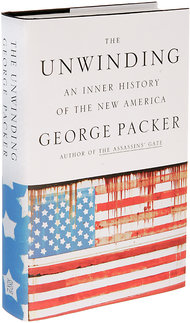
Fortune’s number one, Walmart, is the company George Packer described in his book, ‘The Unwinding’, as the model that continues to influence our economy on a much broader scale:
“Over the years, America had become more like Walmart. It had gotten cheap. Prices were lower, and wages were lower. There were fewer union factory jobs, and more part-time jobs as store greeters…The hollowing out of the heartland was good for the company’s bottom line.”
A CBS/New York Times poll released on Wednesday found that the majority of Americans are concerned about the widening income gap that separates the Walmart shoppers from those on Rodeo Drive.
“The poll found that a strong majority say that wealth should be more evenly divided and that it is a problem that should be addressed urgently. Nearly six in 10 Americans said government should do more to reduce the gap between the rich and the poor, but they split sharply along partisan lines. Only one-third of Republicans supported a more active government role, versus eight in 10 of Democrats.
Far from a strictly partisan issue, inequality looms large in the minds of almost half of Republicans and two-thirds of independents, suggesting that it will outlive the presidential primary contests and become a central theme in next year’s general election campaign.”
The last story of the week concerned the downside of ‘cultural fit’. Lauren A. Rivera, a professor at Northwestern University’s Kellogg School of Management, shared her research on candidate selection in ‘Guess Who Doesn’t Fit In At Work’.
“When done carefully, selecting new workers this way can make organizations more productive and profitable. But cultural fit has morphed into a far more nebulous and potentially dangerous concept. It has shifted from systematic analysis of who will thrive in a given workplace to snap judgments by managers about who they’d rather hang out with. In the process, fit has become a catchall used to justify hiring people who are similar to decision makers and rejecting people who are not.”
At the end of the week@work we know the economy is improving and folks are becoming increasingly aware of income disparity.
But is anyone concerned that the largest revenue generating companies have no relationship to the most innovative companies in the world? If you are starting out your career or considering a move, do you choose a revenue generating behemoth or a venture capitalized innovative organization?
And for all of us @work – we want to ‘fit in’ to the organization culture, but with our talents, not personal similarities.
 workthoughts