
The XXXI Olympiad in Rio has begun and to get you in the spirit of the games, this week’s ‘Saturday Read’ suggests three articles and one ‘Saturday Listen’.
Beginning in the 1960’s ABC Sports opened their weekly ‘Wide World of Sports’ program with the phrase ‘spanning the globe to bring you the constant variety of sports…the thrill of victory and the agony of defeat’. The idea was to tell the stories of athletic competition, honoring the victors while recognizing the efforts of all competitors.
Over the next two weeks 306 events in 28 Olympic sports will take place in 32 venues in Rio and soccer stadiums in Belo Horizonte, Brasilia, Manaus, Salvador and Sao Paulo. This ‘constant variety of sport’ will include new additions: rugby and golf.
ABC Sports also brought us ‘up close and personal’ profiles of athletes preparing for their competition, often visiting remote corners of the world, providing both travelogue and local context for each competitor.
The four ‘up close and personal’ stories selected this week begin with a multi-media ‘long read’ about one of the most famous athletes in Brazil, Lais Souza. The two-time olympic gymnast joined her country’s efforts to build a winter sports team, entering a training program in aerial skiing. In 2014 she became the first Brazilian aerialist to qualify for the Olympics. That’s when the real story begins.
The next three features introduce the US women’s beach volleyball team of Kerri Walsh Jennings and April Ross, the refugee olympians, and American swimmer Katie Ledecky.
‘A Life in Motion, Stopped Cold’ Sarah Lyall for The New York Times, May 13, 2015
“At 25, Souza was one of Brazil’s best gymnasts, a tiny two-time Olympian, and she had just heard exciting news: She had qualified for yet another Olympics. But this was the 2014 Winter Games, something completely new, and it gave her accomplishment an added resonance. In less than a week, Souza would be traveling to Sochi, Russia, to compete in aerial skiing, a sport she had never even heard of before taking it up seven months earlier.”

“For an athlete from a sultry tropical country who had spent her career following the summer around the world, aerial skiing had presented Souza with an extraordinary new challenge, accordioned into an extraordinarily brief period of time. She had never skied. She had never seen anyone doing aerials. She had barely even seen snow.
Souza’s mood was buoyant as she looked down the slope that day, Jan. 28, 2014. Giddy with excitement from her Olympics news, she was reveling in a morning of freedom before the pressures ahead…It was to be the three skiers’ last run of a long and happy morning before they broke for lunch and called it a day…But something was not right.”
‘Kerri Walsh Jennings Seeks Olympic Success With a New Partner’ John Branch for The New York Times, July 7, 2016
“At the beach volleyball women’s final at the 2012 London Games, Kerri Walsh Jennings and Misty May-Treanor clinched their third straight gold medal. They beat April Ross and Jennifer Kessy, who earned silver.
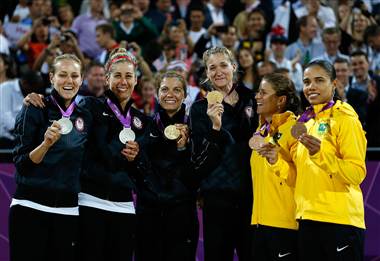
After the final point, the four American women congratulated one another, and Ross was a little surprised to hear Walsh Jennings’s whispered words.
“At the net, she said, ‘Let’s go win gold in Rio,’” Ross said. “We hadn’t had that conversation. I was caught off-guard, but it was a no-brainer for me. I was like, ‘Yeah, for sure.’”
‘The Refugee Olympians in Rio’ Robin Wright for The New Yorker, August 2, 2016
“The United Nations estimates that there are now more than sixty-five million people forcibly displaced from their homes. More than twenty-one million are refugees, most under the age of eighteen. More than half of these fled from one of three countries—Somalia, Afghanistan, or Syria. Ten million forcibly displaced people are stateless. The number of the displaced goes up by an average of thirty-four thousand every day.”
 “When the Games begin in Rio de Janeiro, the opening ceremony, on Friday, will pay tribute to the world’s displaced and stateless persons. During the parade of nations, a team of ten young refugees will enter Maracanã Stadium as their own team—a first in Olympic history.
In announcing the team, Thomas Bach, the president of the I.O.C., said, “These refugees have no home, no team, no flag, no national anthem. We will offer them a home in the Olympic Village, together with all the athletes of the word. The Olympic anthem will be played in their honor, and the Olympic flag will lead them into the Olympic Stadium.” Bach continued, “These refugee athletes will show the world that despite the unimaginable tragedies that they have faced, anyone can contribute to society through their talent, skills, and strength of the human spirit.”
‘Olympic Swimmer Ledecky Is This Century’s Perfect 10’ Frank Deford for NPR, August 3, 2016
Frank Deford’s narrative give us a thumbnail portrait of the modern olympics when the marquee events of track and field were placed in the second week and swimming took a back seat to women’s gymnastics beginning with Olga Korbut in 1972. But gymnastics has changed their scoring system, and there are no perfect 10s, so we switch our attention back to the pool and swimmer Katie Ledecky.
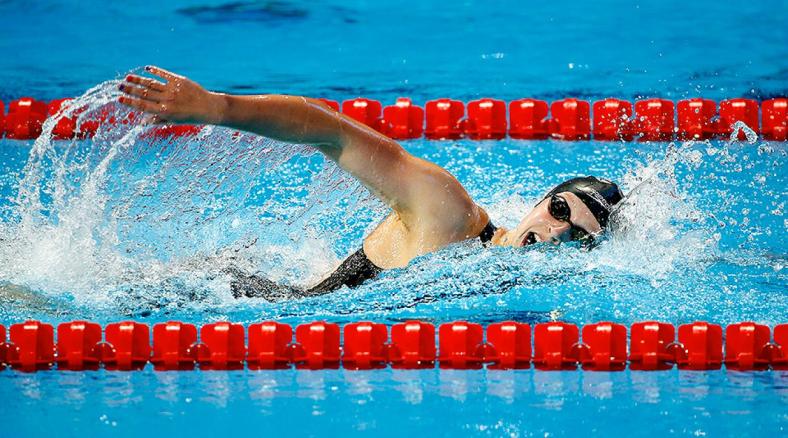
“In the television era, the second week of the Olympics is reserved for what is considered the marquee event: track and field.
So, the shared premier showcases of the first week are swimming and women’s gymnastics. While swimming was always a spotlight sport, I was, if you will, sort of present at the creation when gymnastics became the new star lead-off hitter.”
Watching an ‘Olympic Preview’ on TV Thursday evening, I thought I had tuned in to ’60 Minutes’ with coverage of Zika, terrorism, street protests and environmental concerns. Now the story will shift, to be written by the athletes. Let’s celebrate these athletes who represent their home countries and compete “in the true spirit of sportsmanship, for the glory of sport and the honour of our teams.”



 To no one’s surprise, Nordic countries come out well on educational attainment and labour-force participation. Women are also relatively well represented in their parliaments; Finland and Sweden were among the first countries to allow women to vote and stand for election. Yet even there women are paid less than men for similar work. In Finland and Sweden the gap is close to the OECD average of 15%, though in Norway it has fallen to 8%.
 workthoughts