The week@work: innovative companies, Mark Zuckerberg’s global community, famous writers attend a security conference, and a design idea for a friendlier office

This week@work Fast Company announced the ‘World’s 50 Most Innovative Companies’ and Mark Zuckerberg shared a template for the future of Facebook – ‘Building Global Community’. In a first, the Munich Security Conference included literary panels on their agenda. And, we found a simple ‘office design hack’ to encourage communication.

Amazon was named #1 on the 2017 Fast Company ranking of the world’s most innovative companies “for offering even more, even faster and smarter”. Noah Robischon reported on Jeff Bezos’ ever-accelerating world of ‘continuous evolution’.

15amazondrone-sub-master768.jpg

“Unlike Apple, Google, and Microsoft, Amazon is not fixated on a tightly designed ecosystem of interlocking apps and services. Bezos instead emphasizes platforms that each serves its own customers in the best and fastest possible way. “Our customers are loyal to us right up until the second somebody offers them a better service,” he says. “And I love that. It’s super-motivating for us.” That impulse has spawned an awesome stream of creative firsts…

Bezos’s strategy of continuous evolution has allowed the company to experiment in adjacent areas—and then build them into franchises. The website that once sold only books now lets anyone set up a storefront and sell just about anything. The warehouse and logistics capabilities that Amazon built to sort, pack, and ship those books are available, for a price, to any seller. Amazon Web Services, which grew out of the company’s own e-commerce infrastructure needs, has become a $13 billion business that not only powers the likes of Airbnb and Netflix, but stores your Kindle e-book library and makes it possible for Alexa to tell you whether or not you’ll need an umbrella today.”

On Thursday Facebook CEO and Co-founder Mark Zuckerberg set out his vision for his company in a 5,000 word post on Facebook.

“On our journey to connect the world, we often discuss products we’re building and updates on our business. Today I want to focus on the most important question of all: are we building the world we all want?”

16804067_10103508274631311_8401613758833731878_o.jpg

Josh Constine reported on the ‘evolution’ of Facebook’s strategy.

“Mark Zuckerberg never saw Facebook as just a business, and so never accepted his role as just a businessman. 

Five years ago, in Zuckerberg’s pre-IPO letter to Facebook investors, he wrote, “There is a huge need and a huge opportunity to get everyone in the world connected, to give everyone a voice and to help transform society for the future.”

Now with Facebook reaching 1.86 billion users and building technology to expand internet access everywhere, his constituency exceeds that of any nation. He’s made monumental strides toward steps 1 and 2.

Today, Zuckerberg offers a vision and rallying call for working toward step 3 — to “develop the social infrastructure to give people the power to build a global community that works for all of us.”

Not everyone is sipping the magic elixir. From ‘across the pond’, Carole Cadwalladr shared her opinion for The Guardian.

“But here’s another response: where does that power end? Who holds it to account? What are the limits on it? Because the answer is there are none. Facebook’s power and dominance, its knowledge of every aspect of its users’ intimate lives, its ability to manipulate their – our – world view, its limitless ability to generate cash, is already beyond the reach of any government.

Because what Zuckerberg’s letter to the world shows is that he’s making a considered, personal attempt to answer… the wrong question. He is wrestling with the question of how Facebook can change the world. Whereas the question is: do we actually want Facebook to change the world? Do we want any corporation to have so much unchecked power?”

The annual Munich Security Conference included a literature panel, ‘The Cassandra Syndrome’. Madhvi Ramani considered the significance, asking the question, “Why are famous writers attending the world’s most important security conference?”

MSC cassandra syndrome.jpg

“With the rise of illiberalism, post-truth politics, and transatlantic uncertainty, the very pillars of the West are being shaken. In times of turmoil, people often look to literature for illumination.

Like Cassandra, who warned of disaster during the Trojan War, writers often take a longer view of issues. They are uniquely placed to examine and critique society from a removed perspective—as Don DeLillo once said, “The writer is the person who stands outside society, independent of affiliation and independent of influence.” All three writers involved in the MSC talks are known for their incisive, often critical, engagement with the politics, history, and cultures of their milieus.

Literature can help untangle the complexities of people’s lives and emotions and, as studies have shown, foster empathy: books are a key ingredient in an open, pluralistic, democratic society.”

Cari Romm shared the results of recent research from designer Daniel Krivens ‘The Design Hack That Makes for Friendlier Offices’ – eliminate “elevation segregation” by resetting the seating to ‘bar level’.

“…so many workplaces are designed to be a divided plane between those sitting, standing, and walking. When someone is sitting down, they are roughly 12 inches below the eye height of someone walking by—and this elevation segregation means everything to workplace productivity and conviviality.

What it means, essentially, is the difference between intentionally seeking someone out for a chat and just happening to fall into conversation.”

Finally this week@work, @YosemiteNPS, the annual phenomenon of ‘firefall’ as sunset reflects on the national park’s Horsetail Falls.

firefall.JPG


Photo Credits: Amazon drone photo/Amazon, MSC photo of author David Grossman  MSC/Koch, Yosemite firefall/ NPS Yosemite
The Saturday Read – Four blogs/newsletters you should be reading

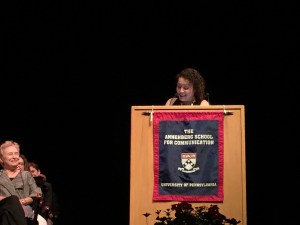
Before I started writing ‘Workthoughts’, I was reading other blogs. Maria Popova, author of my favorite, ‘Brainpickings’, was the 2016 commencement speaker at her alma mater, the University of Pennsylvania’s Annenberg School for Communication. She challenged the graduates to act as cultural change agents by continually broadening their horizons beyond a specific discipline.

“Today, the soul is in dire need of stewardship and protection from cynicism. The best defense against it is vigorous, intelligent, sincere hope — not blind optimism, because that too is a form of resignation, to believe that everything will work out just fine and we need not apply ourselves. I mean hope bolstered by critical thinking that is clear-headed in identifying what is lacking, in ourselves or the world, but then envisions ways to create it and endeavors to do that.

Whatever your specific vocation, your role as a creator of culture will be to help people discern what matters in the world and why by steering them away from the meaningless and toward the meaningful.”

annenberg_commencement-1

How do you maintain the discipline of the undergraduate learning experience and diversify your thinking?

In the past, traditional routes to post-graduate learning involved graduate and professional school. In rare cases, employers took on the role of educators, supplementing work with professional development options. Today, educational entrepreneurs are disrupting traditional education, offering countless ways to access knowledge online.

One of the most engaging options is to join folks who are exploring life’s mysteries and sharing their discoveries through blogs and newsletters.

For this week’s Saturday Read, I recommend four blogs/newsletters from contemporary ‘curators of culture’ that you should be reading to improve you critical thinking and supplement your journey of lifelong learning.

Brainpickings

Bruce Feiler, writing in The New York Times, described this blog as “the exploding online emporium of ideas”.

“She’s a celebrator,” said Anne-Marie Slaughter, a Princeton professor and former State Department official. “You feel the tremendous amount of pleasure she takes in finding these things and sharing them. It’s like walking into the Museum of Modern Art and having somebody give you a customized, guided tour.”

Since 2006, Maria Popova has been sharing her cross disciplinary expeditions with a growing audience of readers.

“Brain Pickings — which remains ad-free and supported by readers — is a cross-disciplinary LEGO treasure chest, full of pieces spanning art, science, psychology, design, philosophy, history, politics, anthropology, and more; pieces that enrich our mental pool of resources and empower combinatorial ideas that are stronger, smarter, richer, deeper and more impactful. Above all, it’s about how these different disciplines illuminate one another to glean some insight, directly or indirectly, into that grand question of how to live, and how to live well.”

The next selection comes from the mind of writer and ‘philosopher of everyday life’, Alain de Botton. If you read Brainpickings or Workthoughts, the name should be familiar. The founder of London’s School of Life, publishes a weekly newsletter, ‘The Book of Life’.


The Book of Life 

“It’s called The Book of Life because it’s about the most substantial things in your life: your relationships, your income, your career, your anxieties. There’s always been a longing to gather the important things in one place. Some of the appeal of a Bible or the collected works of a big name author is the sense that amidst all the chaos and disparate sources of knowledge, someone has taken the trouble to distill, to compress, to say what is essential. In a world overflowing with information, what we most need is curation. The Book of Life aims to be the curation of the best and most helpful ideas in the area of emotional life.”

For those of you technology and engineering gurus who feel a bit insecure when a client conversation turns literary, subscribe to the ‘Lit Hub Daily’.


Lit Hub

“Started last year, Lit Hub’s goal is to provide a “go-to daily source for all the news, ideas, and richness of contemporary literary life,” with curated and original content such as interviews, profiles and essays.”

“Literary Hub is an organizing principle in the service of literary culture, a single, trusted, daily source for all the news, ideas and richness of contemporary literary life. There is more great literary content online than ever before, but it is scattered, easily lost—with the help of its editorial partners, Lit Hub is a site readers can rely on for smart, engaged, entertaining writing about all things books.”

The latest newsletter I have added to my daily/weekly routine comes from writer Austin Kleon. His Friday newsletter is an eclectic collection of music, art, design and life. To give you a sample, this week’s edition included George Carlin’s Playboy interview, an HBO documentary on Studs Terkel and the Everything is a Remix series.

What makes Austin’s blog unique is the doodles; his visual interpretation of information.

kleon-200pxx1.jpg

Austin Kleon 

“I’m a writer who draws. I make art with words and books with pictures. Every week I send out a list of 10 things I think are worth sharing — new art, writing, and interesting links straight to your inbox.”

These four blogs/newsletters provide a customized curriculum of research and shared wisdom, delivered by a faculty of four non-traditional experts. Take a look, you may find one or more will fit with your individualized lifelong learning plan.