Imagining the Monday morning conversation at PwC

I have two questions. What happened to the PricewaterhouseCoopers lead partner for the Academy of Motion Picture Arts and Sciences and his colleague, and Oscar balloting co-leader, Sunday night? How did they face their colleagues on Monday morning after the Oscar host turned their most visible annual ‘guest spot’ into the saddest stereotype ‘joke’?

Melena Ryzik described what happened at the point in the award ceremony when the team from the PwC was brought on stage.

“Introducing the accountants from PricewaterhouseCoopers, which tabulates the vote results, Mr. Rock instead brought onstage two boys and a girl of Asian heritage, whom he named Ming Zu, Bao Ling and David Moskowitz. As they clutched briefcases, they visually illustrated the stereotype that Asians are diligent workers who excel at math.

“If anybody’s upset about that joke, just tweet about it on your phone that was also made by these kids,” Mr. Rock added, a punch line interpreted as a reference to child labor in Asia.”

What happened to Matt Damon ‘look alike’ and managing partner for the Academy of Motion Picture Arts and Sciences, Brian Cullinan and his colleague, Martha Ruiz ?

The conversation on social media since the Oscar broadcast has centered on the ‘joke’, and the fine line between satire and slur. But what happened as hundreds of PwC’s employees arrived at work on Monday morning? What was the conversation between corporate recruiters and expectant applicants on college campuses? How did the meeting start between engagement managers and clients? Why did a company that values diversity allow it’s moment in the spotlight to turn into an epic fail?

PwC’s corporate website and recruiting site advertise the diversity of the firm as a core value.

“Role models inspire others by bringing possibilities to life. And I believe we all have the power to shape the course of other people’s careers. Active sponsorship makes all the difference when it comes to advancing diverse professionals.”

Maria Castañón Moats
Chief Diversity Officer

“At PwC, we foster an inclusive culture by acknowledging the unique experiences and perspectives all of our people bring to work. Our goal is to be known as the place to build a career, regardless of one’s background, beliefs, gender or sexual orientation. Diversity, in all its dimensions, is a key element of our people and our client strategy, and we continue to invest in the area diversity and inclusion knowing we will ultimately be measured on the progress we make.”

Bob Moritz
US Chairman and Senior Partner

Who makes the decision to violate corporate values for a moment of ill timed humor? On Sunday, a company with a publicized core value of diversity allowed itself to be manipulated in the midst of a nationwide controversy about the lack of inclusion.

In February, journalist Iris Quo wrote an article for the Washington Post, posing the question,  ‘Why do my co-workers keep confusing me with other people? Because I’m Asian.’

“All my life I’ve been mistaken for other people of my race. It’s a degrading and thoughtless error that boils away my identity and simplifies me as one thing: “that Asian.” One reason is that our society has so few Asians and people of color in positions of prominence that some people have little exposure to them. Diversity is so lacking in film and television that a director thinks it’s okay to cast a white person as Chinese, as Cameron Crowe did with Emma Stone in “Aloha,” and the Hollywood Reporter mistakes “Master of None” actor Kelvin Yu for show co-creator Alan Yang, who tweeted in response, “Same race, different dude.”

On Sunday night, I was thinking about Iris Quo, ‘degrading and thoughtless errors’, PwC employees and all the college students who are considering offers from PwC. An aberration, or a catalyst to revise the resume?


The week@work – It’s in the stars: Hollywood stories, #YearInSpace & 18,300 applications

The stories behind the headlines this week@work originate in Hollywood, Geneva, Washington D.C., and on the International Space Station.

The careers of a U.S. deputy trade ambassador and an executive editor for the Washington Post converge in Hollywood, astronaut Scott Kelly captures the final week of his #YearInSpace in photos, and 18,300 applicants aspire to take his place.

Unknown

Would you get up at 4:30 AM every day to pursue your dream? Alexandra Alter reported on a ‘behind the scenes’ Hollywood story about working beyond your ‘day job’.

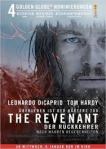
One of the most successful global trade negotiators added a few hours to his work day 17 years ago to write a novel about fur trader Hugh Glass. His book, ‘The Revenant’ was published in 2002 and sold 15,000 copies. Last year publisher Picador reissued the novel, selling over half a million copies.

images

Michael Punke, the deputy United States Trade Representative and the United States ambassador to the World Trade Organization and author, has become a rock star among colleagues in global trade.

“We all think it’s quite cool,” said Keith Rockwell, a spokesman for the W.T.O., who added that colleagues occasionally tease Mr. Punke by asking him how his buddy Leo is doing. “The W.T.O. isn’t normally known for having a Hollywood connection.”

Some of his colleagues marvel that he has such a successful side career, while steering the country’s international trade policy from his post in Geneva.

“The guy is so talented, you read his bio, and it’s like he has two lives,” said Christopher Wenk, the executive director for international policy at the U.S. Chamber of Commerce.”

Joining Ambassador Punke at the Dolby Theater on Oscar night is current Washington Post executive editor and former Boston Globe editor Martin Baron.

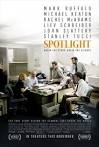
In November, Esquire Magazine ran a career profile asking ‘Is Martin Baron the Best News Editor of All Time?’. In the Oscar nominated film, ‘Spotlight’, actor Liev Schreiber’s performance channels the editor who led the Pulitzer Prize winning team investigating the child abuse scandal in the Catholic Church.

Unknown-1.jpeg

This week, Mr. Baron used his time in the Oscar ‘spotlight’ to reflect on the long term rewards of the film and journalism today, ‘I’m in ‘Spotlight’, but it’s not really about me. It’s about the power of journalism.’

“Aside from the acclaim of critics, “Spotlight” already has delivered one gratifying result. In emails, tweets and Facebook posts, journalists have declared themselves inspired, buoyed and affirmed. That is no small matter in this badly bruised profession. We have felt the traumatizing financial effect of the Internet and been berated by just about everyone, especially politicians in a campaign season that has seen us cynically labeled “scum.”

One journalist wrote me that “the story that inspired the movie serves as a wonderful, wonderful reminder why so many of us got into this business in the first place and why so many stayed despite all the gloom and doom and all the left hooks that landed squarely on our chins along the way.”

The article is required reading for all who earn a living pursuing a journalism career. It should be framed on the walls of journalism schools and be the first google search result on the world ‘journalism’.

Two additional stories about work in Hollywood this week addressed the ongoing conversation on inclusion:

‘From C-Suite to Characters on Screen: How inclusive is the entertainment industry?’ USC Annenberg professor Stacy L. Smith authored the MDSC Initiative’s first report on diversity in the entertainment industry.

Melena Ryzik profiled 27 industry professionals in ‘What It’s Really Like to Work in Hollywood*  (*If you’re not a straight white man.)’

Before leaving the week@work, let’s travel to the International Space Station where astronaut Scott Kelly is completing his 240 day mission in space.

CTeSzSOWIAApQID

“10,944 sunrises and sunsets

“The International Space Station zips around Earth at more than 17,000 miles per hour, or once every 90 minutes. That means over the course of Mr. Kelly’s stay, the space station will have made 5,440 orbits, and the sun will have gone up and down 10,944 times from the perspective of the astronauts aboard. Of course, Mr. Kelly did not see all of them. He is not continuously looking out the window, and he sleeps, too.”

(Scott Kelly tweeted the photo above of sunrise on February 27 and ice earlier today)CcT9mfcW4AAZFvx.jpg

NASA announced this week that it had received 18,300 applications for 14 open spots in the new astronaut class. The recruiting effort which began in the fall demonstrates a rekindled interest in exploration and discovery.

“Now that NASA’s Feb. 18 deadline for applicants has passed, the agency’s 18-month winnowing process has begun.

NASA staff will look at 400 to 600 applicants who survive the initial purge and identify those who pass reference and background checks. Then 120 will be invited to the Johnson Space Center for interviews.

The final 14 will be announced in July 2017 and begin two years of extensive training on spacecraft systems, spacewalking skills, team building and Russian language. Those who complete the program will be assigned to NASA’s Orion deep space exploration ship, the International Space Station or one of two commercial vehicles in development.”

As @StationCDRKelley vacates his spot on the ISS, it’s good to know there are thousands who hope to fill his seat.

This week@work – it’s in the stars, and the dreams of those who aspire to be actors, film makers, journalists, writers, astronauts, and international trade negotiators.