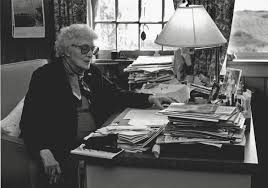
‘The Work of Happiness’ a poem by May Sarton

The Friday Poem this week is ‘The Work of Happiness’ by May Sarton a writer whose talent was expressed in fiction, autobiography and poetry.

“My first book was a book of poems, Encounter in April, followed by my first novel, The Single Hound. There was quite an interval before the second novel, The Bridge of Years. And then Shadow of a Man. Then it goes on and on for a long time with a book of poems between every novel. That was my wish, that the poems should be equal in number, that the novels should not be more important than the poems because the poems were what I cared about most. Much later, when I was forty-five or so, I began to do nonfiction—first the memoirs and finally the journals, which came as the last of the forms which I have been using. Altogether now I think it amounts to seventeen novels, I don’t know, five or six memoirs and journals, and then twelve books of poems, which are mostly in the collected poems now.”  The Paris Review interview, Fall 1983

Her poetry emerges from reflection and solitude, a choice she explored in a 1974 essay, ‘The Rewards of Living a Solitary Life’.

“The other day an acquaintance of mine, a gregarious and charming man, told me he had found himself unexpectedly alone in New York for an hour or two between appointments. He went to the Whitney and spent the “empty” time looking at things in solitary bliss. For him it proved to be a shock nearly as great as falling in love to discover that he could enjoy himself so much alone…Solitude is the salt of personhood. It brings out the authentic flavor of every experience.”

In the poem, Ms. Sarton provides an alternate view of happiness – “for what is happiness but growth in peace”.

The Work of Happiness

I thought of happiness, how it is woven
Out of the silence in the empty house each day
And how it is not sudden and it is not given
But is creation itself like the growth of a tree.
No one has seen it happen, but inside the bark
Another circle is growing in the expanding ring.
No one has heard the root go deeper in the dark,
But the tree is lifted by this inward work
And its plumes shine, and its leaves are glittering.

So happiness is woven out of the peace of hours
And strikes its roots deep in the house alone:
The old chest in the corner, cool waxed floors,
White curtains softly and continually blown
As the free air moves quietly about the room;
A shelf of books, a table, and the white-washed wall—
These are the dear familiar gods of home,
And here the work of faith can best be done,
The growing tree is green and musical.

For what is happiness but growth in peace,
The timeless sense of time when furniture
Has stood a life’s span in a single place,
And as the air moves, so the old dreams stir
The shining leaves of present happiness?
No one has heard thought or listened to a mind,
But where people have lived in inwardness
The air is charged with blessing and does bless;
Windows look out on mountains and the walls are kind.

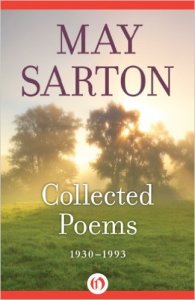
May Sarton   ‘Collected Poems 1930 – 1993’
51rZ+x+OVKL._SX322_BO1,204,203,200_


‘A Way Back To Then’ words and music by Jeff Bowen

The Friday Poem this week comes from the one act musical, [title of show], which ran on Broadway for 102 performances in 2008. ‘A Way Back To Then’ was written by Jeff Bowen.

I discovered the words and music while listening to the ‘On Broadway’ channel as we drove across country this week.

This one is for all the dreamers, as a reminder that “when you least expect, opportunity walks through the door…and there you are, right in the middle of what you love…”

‘Finding My Way Back To Then’

Dancing in the backyard
Kool-aid moustache and butterfly wings
Hearing Andrea McArdle sing
From the hi-fi in the den
I’ve been waiting my whole life
To find a way back to then

I aimed for the sky
A nine-year-old can see so far
I’ll conquer the world and be a star
I’ll do it all by the time I’m ten
I would know that confidence
If I knew a way back to then

So I bailed on my hometown
And became a college theatre dork
I was eastbound and down
Moving to New York
So I crammed my life in a U-Haul
To find my part of it all

But the mundane sets in
We play by the rules
And plough through the days
The years take us miles away
From the time we wondered when
We’d find a way back to then

And when you least expect
Opportunity walks through the door
You suddenly connect
With the thing that you forgot
That you were looking for

And there you are
Right in the middle of what you love
With the craziest of company
You’re having a kick-ass time
And being who you wanted to be in this world

You’re that little girl
With her wings unfurled
Flying again
Back in your backyard dancing
I found a way back to then.

‘I Wandered Lonely as a Cloud’ a poem by William Wordsworth

As world leaders gather in New York to sign the climate accord reached in Paris in December, let’s celebrate Earth Day with a poem by William Wordsworth.

In 1802, the world outside our window looked a bit different. On a walk with his sister Dorothy, Wordsworth observed a “long belt” of daffodils, inspiring him to pen I Wandered Lonely as a Cloud.

wordsworth daffodils.png

The poem captures the essence of Earth Day: preserving the beauty of nature, and the life affirming inspiration of a simple walk outdoors.

I Wandered Lonely as a Cloud

I wandered lonely as a cloud
That floats on high o’er vales and hills,
When all at once I saw a crowd,
A host, of golden daffodils;
Beside the lake, beneath the trees,
Fluttering and dancing in the breeze.

Continuous as the stars that shine
And twinkle on the milky way,
They stretched in never-ending line
Along the margin of a bay:
Ten thousand saw I at a glance,
Tossing their heads in sprightly dance.

The waves beside them danced; but they
Out-did the sparkling waves in glee:
A poet could not but be gay,
In such a jocund company:
I gazed—and gazed—but little thought
What wealth the show to me had brought:

For oft, when on my couch I lie
In vacant or in pensive mood,
They flash upon that inward eye
Which is the bliss of solitude;
And then my heart with pleasure fills,
And dances with the daffodils.

William Wordsworth

‘Habit’ a poem by Hazel Hall

When we talk about work today, we frequently blame technology for upsetting the balance between work and life. But if we look back to the previous century, we find work and life have always been a bit uneven.

The Friday Poem this week is ‘Habit’ by Hazel Hall.

Confined to a wheelchair after complications from scarlet fever, she worked as a seamstress “and gainfully occupied herself embroidering the sumptuous fabrics of bridal gowns, baby dresses, altar cloths, lingerie, and Bishop’s cuffs that figure so lushly in her poems. But early in her twenties, taxed by the strain of needlework, her eyesight began to fail, and she turned to writing poems.”

Hall’s writings—her mirror trained on the world—convey the dark undertones of the lives of working women in the early twentieth century, while bringing into focus her own private, reclusive life—her limited mobility, her isolation and loneliness, her gifts with needlework and words, and her exquisite grief.”

Habit

Last night when my work was done,
And my estranged hands
Were becoming mutually interested
In such forgotten things as pulses,
I looked out of a window
Into a glittering night sky.

And instantly
I began to feather-stitch a ring around the moon.

Hazel Hall

‘Big Dreams’ a poem by April Halprin Wayland

Time to add a bit of whimsy to the end of the week with ‘Big Dreams’.

We discover our first dreams in the magic of children’s literature: the poetry of great writers, and the illustrations of great artists. The Friday Poem this week encourages us to revisit those dreams through the words of April Halprin Wayland.

“For four and a half years I worked in the marketing department of Pacific Bell, which became AT&T. I knew that world was not for me. To keep my sanity, I took a class at UCLA Extension called Writing for Children, taught by Terry Dunnahoo. Terry’s class changed my life. It was as if I had fallen madly, deeply in love. When I walked to lunch with my corporate buddies, the men at construction sites whistled at me. They hadn’t whistled at me before I was in Terry’s class. Something huge had shifted in me; I was electric. I knew I had to take the leap. In one of my last meetings at AT&T, I pretended to take notes, but was actually writing a poem about a child who runs away to live with rabbits and slowly turns into one. I don’t know if I was writing about me, turning into a corporate bunny…or if I was writing about my desperate need to run away from the corporate life.”

Big Dreams

The scruffy house cat
aches to fly—
she dreams all day of
wings and sky!

So tonight
she climbs the ladder,
mounts a platform,
nothing matters

except to catch
a thin trapeze
then hold on tight
with grace and ease.

She swings herself
by both front paws
then somesaults
to wild applause

of kitchen mice,
who, though dizzy,
encourage Cat,
to keep her busy.

April Halprin Wayland

‘Fear of Happiness’ a poem by A.E. Stallings

Facebook Chief Operating Officer, Sheryl Sandberg posed a question to the Barnard Class of 2011. “What would you do if your weren’t afraid?” It seems like a good query to revisit this week as high school seniors consider college choice, college seniors compare job offers, and the rest of us plan our next career move.

“She described a poster on the wall at Facebook: “What would you do if you weren’t afraid?” She said that it echoed something the writer Anna Quindlen once said, which was that “she majored in unafraid” at Barnard. Sandberg went on, “Don’t let your fears overwhelm your desire. Let the barriers you face—and there will be barriers—be external, not internal. Fortune does favor the bold. I promise that you will never know what you’re capable of unless you try. You’re going to walk off this stage today and you’re going to start your adult life. Start out by aiming high. . . . Go home tonight and ask yourselves, What would I do if I weren’t afraid? And then go do it! Congratulations.”

As you consider your answer, enjoy this week’s Friday Poem from A.E. Stallings.

Fear of Happiness

Looking back, it’s something I’ve always had:
As a kid, it was a glass-floored elevator
I crouched at the bottom of, my eyes squinched tight,
Or staircase whose gaps I was afraid I’d slip through,
Though someone always said I’d be all right—
Just don’t look down or See, it’s not so bad
(The nothing rising underfoot). Then later
The high-dive at the pool, the tree-house perch,
Ferris wheels, balconies, cliffs, a penthouse view,
The merest thought of airplanes. You can call
It a fear of heights, a horror of the deep;
But it isn’t the unfathomable fall
That makes me giddy, makes my stomach lurch,
It’s that the ledge itself invents the leap.

A.E. Stallings   Poetry, 2010

195-6.jpg

‘Choose’ a poem by Carl Sandburg

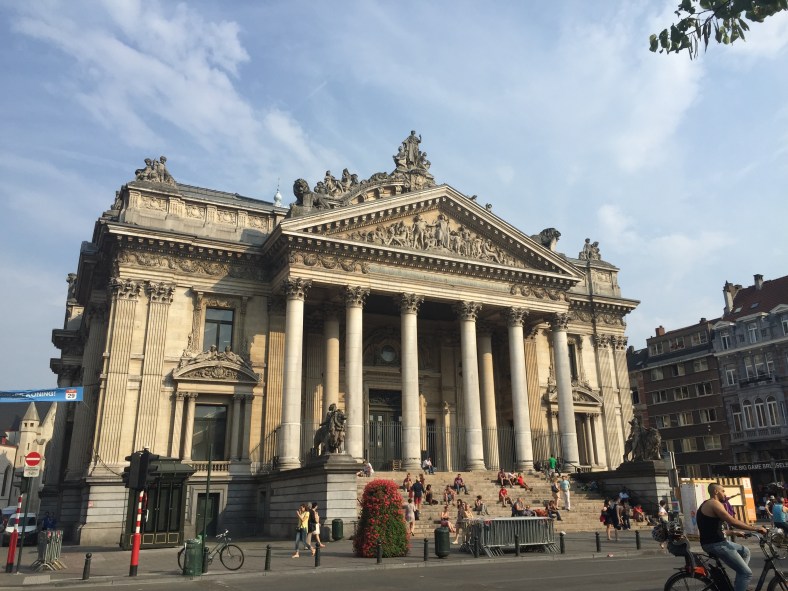
On Tuesday morning folks living in the beautiful, Belgian capital city of Brussels boarded a train that reliably conveyed them to work each day. Others made one of those unconscious daily decisions to grab a cup of coffee at the airport before boarding a flight.

Researchers estimate we make over 200 decisions a day. Now, one of those individual decisions will aggregate to the global; how do we respond to acts of terror?

America’s ‘working man’s poet’, Carl Sandburg, plainly sets out the alternatives in The Friday Poem, ‘Choose’, from his 1916 collection, Chicago Poems.

Choose

The single clenched fist lifted and ready,
Or the open asking hand held out and waiting.
Choose:
For we meet by one or the other.

‘Today’ a poem by Billy Collins


The signs of spring are around us. On Sunday we move the clocks ahead an hour and begin to fill in our NCAA tournament brackets. In the world beyond our workplace windows, nature quietly launches her ‘trickster season’.

“Spring has never been a reliable season. Some years it includes too much summer, some years too much winter, and some years too much of both.”

The Friday Poem this week comes from two time U.S. Poet Laureate, Billy Collins, who invites us to “throw open all the windows in the house” and enjoy the perfect spring day.

Today

If ever there were a spring day so perfect,
so uplifted by a warm intermittent breeze

that it made you want to throw
open all the windows in the house

and unlatch the door to the canary’s cage,
indeed, rip the little door from its jamb,

a day when the cool brick paths
and the garden bursting with peonies

seemed so etched in sunlight
that you felt like taking

a hammer to the glass paperweight
on the living room end table,

releasing the inhabitants
from their snow-covered cottage

so they could walk out,
holding hands and squinting

into this larger dome of blue and white,
well, today is just that kind of day.

Billy Collins   Poetry Magazine,  April 2000

176-1

“Accessibility is not a word often associated with great poetry. Yet Billy Collins has managed to create a legacy from what he calls being poetically “hospitable.” Preferring lyrical simplicity to abstruse intellectualism, Collins combines humility and depth of perception, undercutting light and digestible topics with dark and at times biting humor.”  (TED 2012)


The Friday Poem ‘The Persistence of Song’ by Howard Moss

The Friday Poem this week is ‘The Persistence of Song’ by Howard Moss, the poetry editor of The New Yorker for almost forty years.

“In that influential capacity, this quiet, unassuming man was one of the key figures in American letters in the late twentieth century, boosting the careers of many young poets by publishing their work in one of the few mass circulation magazines which bought poetry and paid well for it.”

This one is for the mentors who open doors, make connections and by their presence create a model to be imitated.

The poem appeared in The New Yorker in the fall of 1966 and takes us to a time in the city, when life after work was anticipated ..” When the secretaries have changed their frocks, And though it is not yet evening, There is a persistence of song.”

The Persistence of Song

Although it is not yet evening,
The secretaries have changed their frocks
As if it were time for dancing,
And locked up in the scholars’ books
There is a kind of rejoicing,
There is a kind of singing
That even the dark stone canyon makes
As though all fountains were going
At once, and the color flowed from bricks
In one wild, lit upsurging.

What is the weather doing?
And who arrived on a scallop shell
With the smell of the sea this morning?
-Creating a small upheaval
High above the scaffolding
By saying, “All will be well.
There is a kind of rejoicing.”

Is there a kind of rejoicing
In saying, “All will be well?”
High above the scaffolding,
Creating a small upheaval,
The smell of the sea this morning
Arrived on a scallop shell.
What was the weather doing
In one wild, lit upsurging?
At once, the color flowed from bricks
As though all fountains were going,
And even the dark stone canyon makes
Here a kind of singing,
And there a kind of rejoicing,
And locked up in the scholars’ books
There is a time for dancing
When the secretaries have changed their frocks,
And though it is not yet evening,

There is the persistence of song.

Howard Moss  The New Yorker, November 19, 1966


‘Internal Exile’ a poem by Richard Cecil

The answer to the question, why work? is unique in each response. Do you work to live, or live to work, or some combination? The Friday Poem this week comes from Richard Cecil, and addresses the workers who have been ‘stuck’ by “Judge Necessity” since “…the bailiff, Fate, led them away to Personnel to fill out payroll forms..”

Internal Exile

Although most people I know were condemned
years ago by Judge Necessity
to life in condos near a freeway exit
convenient to their twice-a-day commutes
through traffic jams to jobs that they dislike,
they didn’t bury their heads in their hands
and cry “Oh, no!” when sentence was pronounced:
Forty years accounting in Duluth!
or Tenure at Southwest Missouri State!
Instead, they mumbled, not bad. It could be worse,
when the bailiff, Fate, led them away
to Personnel to fill out payroll forms
and have their smiling ID photos snapped.
And that’s what they still mumble every morning
just before their snooze alarms go off
when Fluffy nuzzles them out of their dreams
of making out with movie stars on beaches.
They rise at five a.m. and feed their cats
and drive to work and work and drive back home
and feed their cats and eat and fall asleep
while watching Evening News’s fresh disasters—
blown-up bodies littering a desert
fought over for the last three thousand years,
and smashed-to-pieces million-dollar houses
built on islands swept by hurricanes.
It’s soothing to watch news about the places
where people literally will die to live
when you live someplace with no attractions—
mountains, coastline, history—like here,
where none aspire to live, though many do.
“A great place to work, with no distractions”
is how my interviewer first described it
nineteen years ago, when he hired me.
And, though he moved the day that he retired
to his dream house in the uplands with a vista,
he wasn’t lying—working’s better here
and easier than trying to have fun.
Is that the way it is where you’re stuck, too?

Richard Cecil   ‘Twenty First Century Blues’   2004