‘Sending Flowers’ by Hannah Stephenson

On this Friday of Valentines weekend, a poem that celebrates the work of the florist, in a creative presentment of the vendor/customer relationship. The Friday Poem this week is ‘Sending Flowers’ by Hannah Stephenson.

Sending Flowers

The florist reads faces, reaches into the mouths of customers.
Turns curled tongues into rose petals,

teeth clinking against one another into baby’s breath.
She selects a cut bloom, a bit of leaf,

lays stem alongside of stem, as if building a wrist
from the inside. She binds them

when the message is right, and sighs at the pleasure
of her profession. Her trade:

to wrangle intensity, to gather blooms and say, here,
these do not grow together

but in this new arrangement is language. The florist
hands you a bouquet

yanked from your head, the things you could not say
with your ordinary voice.

Hannah Stephenson

‘Into the Lincoln Tunnel’ a poem by Deborah Garrison

The Friday Poem this week is for all the commuters who leave New Jersey every day and enter Manhattan via the Lincoln Tunnel. The poet, Deborah Garrison gives voice to the thoughts we sometimes entertain as passengers on a bus, in uncertain times, inhaling the fumes, the indigenous scent of New York Hudson crossings. “…please smile upon these good people who want to enter the city and work. Because work is good…”

Into the Lincoln Tunnel

The bus rolled into the Lincoln Tunnel,
and I was whispering a prayer
that it not be today, not today, please
no shenanigans, no blasts, no terrors,
just please the rocking, slightly nauseating
gray ride, stop and start, chug-a
in the dim fellowship of smaller cars,
bumper lights flickering hello and warning.
Yes, please smile upon these good
people who want to enter the city and work.
Because work is good, actually, and life is good,
despite everything, and I don’t mean to sound
spoiled, but please don’t think I don’t know
how grateful I should be
for what I do have —

I wonder whom I’m praying to.
Maybe Honest Abe himself,
craggy and splendid in his tall chair,
better than God to a kid;
Lincoln whose birthday I shared,
in whom I took secret pride: born, thus I was,
to be truthful, and love freedom.

Now with a silent collective sigh
steaming out into the broken winter sun,
up the ramp to greet buildings, blue brick
and brown stone and steel, candy-corn pylons
and curving guardrails massively bolted and men
in hard hats leaning on resting machines
with paper cups of coffee —

a cup of coffee, a modest thing to ask
Abe for,
dark, bitter, fresh
as an ordinary morning.

Deborah Garrison   ‘The Second Child’   Random House, 2008

‘How to Be Perfect’ a poem by Ron Padgett

We are two weeks into the new year and once again we find it’s hard work to be perfect, as our resolutions collide with reality. So we turn to philosophers and poets to remind us that success is achieved with a measure of common sense.

In the seventeenth century a Spanish Jesuit scholar, writer, and philosopher, Baltasar Gracian, offered a collection of maxims on how to achieve personal and professional success. My favorite, “Be common in nothing”, might be the ‘perfect’ tenet to start the new year.

The Friday Poem this week reminded me of Gracian’s maxims, adding humor and common sense, from the poet, Ron Padgett, and his poem, ‘How to Be Perfect’.

How to Be Perfect

Get some sleep.

Don’t give advice.

Take care of your teeth and gums.

Don’t be afraid of anything beyond your control. Don’t be afraid, for
instance, that the building will collapse as you sleep, or that someone
you love will suddenly drop dead.

Eat an orange every morning.

Be friendly. It will help make you happy.

Raise your pulse rate to 120 beats per minute for 20 straight minutes
four or five times a week doing anything you enjoy.

Hope for everything. Expect nothing.

Take care of things close to home first. Straighten up your room
before you save the world. Then save the world.

Know that the desire to be perfect is probably the veiled expression
of another desire—to be loved, perhaps, or not to die.

Make eye contact with a tree.

Be skeptical about all opinions, but try to see some value in each of
them.

Dress in a way that pleases both you and those around you.

Do not speak quickly.

Learn something every day. (Dzien dobre!)

Be nice to people before they have a chance to behave badly.

Don’t stay angry about anything for more than a week, but don’t
forget what made you angry. Hold your anger out at arm’s length
and look at it, as if it were a glass ball. Then add it to your glass ball
collection.

Be loyal.

Wear comfortable shoes.

Design your activities so that they show a pleasing balance
and variety.

Be kind to old people, even when they are obnoxious. When you
become old, be kind to young people. Do not throw your cane at
them when they call you Grandpa. They are your grandchildren!

Live with an animal.

Do not spend too much time with large groups of people.

If you need help, ask for it.

Cultivate good posture until it becomes natural.

If someone murders your child, get a shotgun and blow his head off.

Plan your day so you never have to rush.

Show your appreciation to people who do things for you, even if you
have paid them, even if they do favors you don’t want.

Do not waste money you could be giving to those who need it.

Expect society to be defective. Then weep when you find that it is far
more defective than you imagined.

When you borrow something, return it in an even better condition.

As much as possible, use wooden objects instead of plastic or metal
ones.

Look at that bird over there.

After dinner, wash the dishes.

Calm down.

Visit foreign countries, except those whose inhabitants have
expressed a desire to kill you.

Don’t expect your children to love you, so they can, if they want to.

Meditate on the spiritual. Then go a little further, if you feel like it.
What is out (in) there?

Sing, every once in a while.

Be on time, but if you are late do not give a detailed and lengthy
excuse.

Don’t be too self-critical or too self-congratulatory.

Don’t think that progress exists. It doesn’t.

Walk upstairs.

Do not practice cannibalism.

Imagine what you would like to see happen, and then don’t do
anything to make it impossible.

Take your phone off the hook at least twice a week.

Keep your windows clean.

Extirpate all traces of personal ambitiousness.

Don’t use the word extirpate too often.

Forgive your country every once in a while. If that is not possible, go
to another one.

If you feel tired, rest.

Grow something.

Do not wander through train stations muttering, “We’re all going to
die!”

Count among your true friends people of various stations of life.

Appreciate simple pleasures, such as the pleasure of chewing, the
pleasure of warm water running down your back, the pleasure of a
cool breeze, the pleasure of falling asleep.

Do not exclaim, “Isn’t technology wonderful!”

Learn how to stretch your muscles. Stretch them every day.

Don’t be depressed about growing older. It will make you feel even
older. Which is depressing.

Do one thing at a time.

If you burn your finger, put it in cold water immediately. If you bang
your finger with a hammer, hold your hand in the air for twenty
minutes. You will be surprised by the curative powers of coldness and
gravity.

Learn how to whistle at earsplitting volume.

Be calm in a crisis. The more critical the situation, the calmer you
should be.

Enjoy sex, but don’t become obsessed with it. Except for brief periods
in your adolescence, youth, middle age, and old age.

Contemplate everything’s opposite.

If you’re struck with the fear that you’ve swum out too far in the
ocean, turn around and go back to the lifeboat.

Keep your childish self alive.

Answer letters promptly. Use attractive stamps, like the one with a
tornado on it.

Cry every once in a while, but only when alone. Then appreciate
how much better you feel. Don’t be embarrassed about feeling better.

Do not inhale smoke.

Take a deep breath.

Do not smart off to a policeman.

Do not step off the curb until you can walk all the way across the
street. From the curb you can study the pedestrians who are trapped
in the middle of the crazed and roaring traffic.

Be good.

Walk down different streets.

Backwards.

Remember beauty, which exists, and truth, which does not. Notice
that the idea of truth is just as powerful as the idea of beauty.

Stay out of jail.

In later life, become a mystic.

Use Colgate toothpaste in the new Tartar Control formula.

Visit friends and acquaintances in the hospital. When you feel it is
time to leave, do so.

Be honest with yourself, diplomatic with others.

Do not go crazy a lot. It’s a waste of time.

Read and reread great books.

Dig a hole with a shovel.

In winter, before you go to bed, humidify your bedroom.

Know that the only perfect things are a 300 game in bowling and a
27-batter, 27-out game in baseball.

Drink plenty of water. When asked what you would like to drink,
say, “Water, please.”

Ask “Where is the loo?” but not “Where can I urinate?”

Be kind to physical objects.

Beginning at age forty, get a complete “physical” every few years
from a doctor you trust and feel comfortable with.

Don’t read the newspaper more than once a year.

Learn how to say “hello,” “thank you,” and “chopsticks”
in Mandarin.

Belch and fart, but quietly.

Be especially cordial to foreigners.

See shadow puppet plays and imagine that you are one of the
characters. Or all of them.

Take out the trash.

Love life.

Use exact change.

When there’s shooting in the street, don’t go near the window.

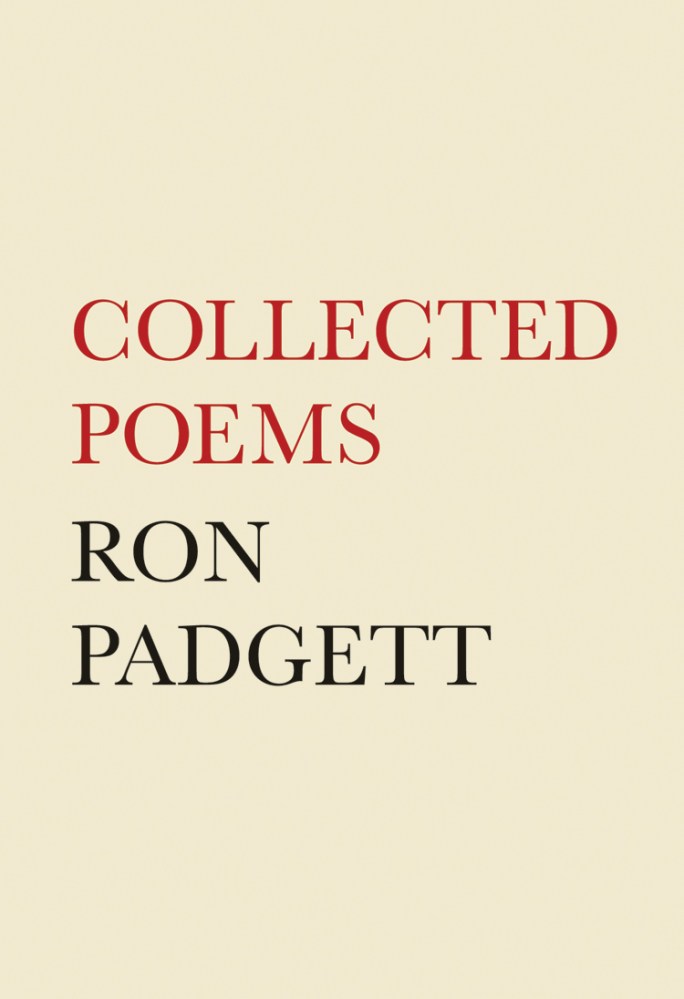
Ron Padgett  ‘Collected Poems’ 2013

‘A Song for New Year’s Eve’ a poem by William Cullen Bryant

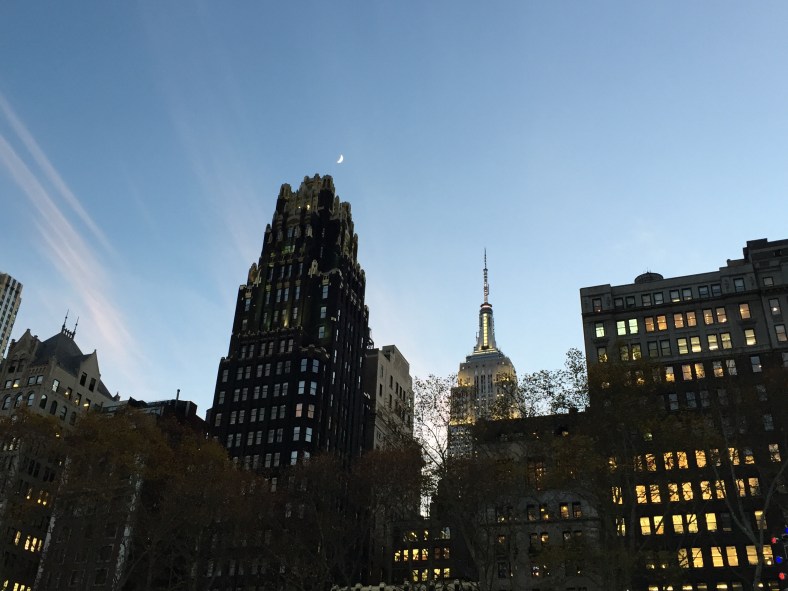
As revelers welcome the New Year in New York’s Times Square, a few blocks away, skaters will circle a temporary ice rink in Bryant Park, named for the editor and poet William Cullen Bryant. The Friday Poem this week is ‘A Song for New Year’s Eve’ written in New York and first published in Harpers Magazine in January 1859.

“In 1884, Reservoir Square was renamed Bryant Park, to honor recently deceased Romantic poet, longtime editor of the New York Evening Post, and civic reformer, William Cullen Bryant (1794-1878). Around this time, the city approved designs for the New York Public Library, submitted by architects John Merven Carrére and Thomas Hastings. The Beaux-Arts building was completed in 1911, with a raised terrace at the rear of the library and two comfort stations at the east end of Bryant Park.”

Bryant began his career studying and practicing law. He wrote poetry from an early age and continued this passion in parallel with his legal career. Later, as editor-in-chief of the New York Evening Post, he exerted considerable influence in local, state, and national politics.

“When Bryant appraised his prospects after leaving Williams College in 1811, his passion for writing poetry appeared to be utterly without promise of a remunerative career. Except for Benjamin Franklin, no American writer had managed to support himself and his family with his pen, however meanly, and verse was patently an occupation for idlers. But in 1836, when the Harper brothers took Bryant into their publishing house, he was a most valuable asset. Numerous reprintings of his books spread his popularity still further, and the firm’s generous royalty made him the richest poet in American history.”

“No line of his poetry survives in the consciousness of his nation, and none of his editorial pronouncements still resonates from his five decades with the New-York Evening Post, yet William Cullen Bryant stood among the most celebrated figures in the frieze of nineteenth-century America. The fame he won as a poet while in his youth remained with him as he entered his eighties; only Longfellow and Emerson were his rivals in popularity over the course of his life.

On this final day of 2015 let’s revisit a once revered national figure and his poem for New Year’s Eve.

A Song for New Year’s Eve

Stay yet, my friends, a moment stay—

Stay till the good old year,

So long companion of our way,

Shakes hands, and leaves us here.

Oh stay, oh stay,

One little hour, and then away.


The year, whose hopes were high and strong,

Has now no hopes to wake;

Yet one hour more of jest and song

For his familiar sake.

Oh stay, oh stay,

One mirthful hour, and then away.


The kindly year, his liberal hands

 Have lavished all his store.

And shall we turn from where he stands,

 Because he gives no more?

Oh stay, oh stay,

One grateful hour, and then away.


Days brightly came and calmly went,

While yet he was our guest;

How cheerfully the week was spent!

How sweet the seventh day’s rest!

Oh stay, oh stay,

One golden hour, and then away.


Dear friends were with us, some who sleep

Beneath the coffin-lid:

What pleasant memories we keep

Of all they said and did!

Oh stay, oh stay,

One tender hour, and then away.


Even while we sing, he smiles his last,

And leaves our sphere behind.

The good old year is with the past;

Oh be the new as kind!

Oh stay, oh stay,

One parting strain, and then away.

William Cullen Bryant   1794-1878


‘The World I Live In’ a poem by Mary Oliver

The Friday Poem this week is from Pulitzer Prize winning poet Mary Oliver‘s new collection, ‘Felicity’ published this fall. Merry Christmas!

The World I Live In

I have refused to live

locked in the orderly house of

reasons and proofs.

The world I live in and believe in

Is wider than that. And anyway,

what’s wrong with Maybe?


You wouldn’t believe what once or

twice I have seen. I’ll just

tell you this:

only if there are angels in your head will you

ever, possibly, see one.

Mary Oliver  ‘Felicity’  Penguin Press, 2015

‘Cruising with the Beach Boys’ a poem by Dana Gioia

Have you ever taken a ‘daydream detour’ on a business trip, driving from the airport to a client along a winding beach side road? Maybe your playlist takes a momentary shuffle to a memory inducing moment. If yes, the ‘Friday Poem’ this week is for you, from Dana Gioia, California’s new Poet Laureate.

Gioia earned both his BA and MBA from Stanford University and an MFA from Harvard University. He was a marketing executive for General Foods for 15 years before his transition to full time writer. In 2003 he was named head of the National Endowment for the Arts, a position he held until 2009.

His poetry reflects his roots in a working class suburb of Los Angeles, and often references the time before, when his place @work was in corporate America. He continues to be a new millennium model for successful career transition.

This week’s Friday Poem is his ‘Cruising with the Beach Boys’; a California poem, by a California guy, from his shared hometown with the Beach Boys, before a freeway ran through it, Hawthorne, California.

Cruising with the Beach Boys

So strange to hear that song again tonight
Travelling on business in a rented car
Miles from anywhere I’ve been before.
And now a tune I haven’t heard for years
Probably not since it last left the charts
Back in L.A. in 1969.
I can’t believe I know the words by heart
And can’t think of a girl to blame them on.

Every lovesick summer has its song,
And this one I pretended to despise,
But if I was alone when it came on,
I turned it up full-blast to sing along –
A primal scream in croaky baritone,
The notes all flat, the lyrics mostly slurred.
No wonder I spent so much time alone
Making the rounds in Dad’s old Thunderbird.

Some nights I drove down to the beach to park
And walk along the railings of the pier.
The water down below was cold and dark,
The waves monotonous against the shore.
The darkness and the mist, the midnight sea,
The flickering lights reflected from the city –
A perfect setting for a boy like me,
The Cecil B. DeMille of my self-pity.

I thought by now I’d left those nights behind,
Lost like the girls that I could never get,
Gone with the years, junked with the old T-Bird.
But one old song, a stretch of empty road,
Can open up a door and let them fall
Tumbling like boxes from a dusty shelf,
Tightening my throat for no reason at all
Bringing on tears shed only for myself.

Dana Gioia   ‘Daily Horoscope’ 1986

‘Let American Be America Again’ a poem by Langston Hughes

We spend a lot of time considering the values of our workplace and how they mesh with our priorities; who we will become as part of a workplace community. But where we go to work is located in the broader context of a national set of values. And those values have been the topic of conversation this political season, with some questioning the basic tenets that have, until now, defined our national conscience.

It sometimes seems like we have lost our collective sense of the core values that bind us as humans, Americans and global citizens.

Take a moment today to restore our ‘moral memory’ and revisit history through the lens of American poet, Langston Hughes. The Friday Poem this week is ‘Let America Be America Again’ written in 1935 and published in Esquire Magazine in 1936.

Let America Be America Again

Let America be America again.
Let it be the dream it used to be.
Let it be the pioneer on the plain
Seeking a home where he himself is free.

(America never was America to me.)

Let America be the dream the dreamers dreamed—
Let it be that great strong land of love
Where never kings connive nor tyrants scheme
That any man be crushed by one above.

(It never was America to me.)

O, let my land be a land where Liberty
Is crowned with no false patriotic wreath,
But opportunity is real, and life is free,
Equality is in the air we breathe.

(There’s never been equality for me,
Nor freedom in this “homeland of the free.”)

Say, who are you that mumbles in the dark?
And who are you that draws your veil across the stars?

I am the poor white, fooled and pushed apart,
I am the Negro bearing slavery’s scars.
I am the red man driven from the land,
I am the immigrant clutching the hope I seek—
And finding only the same old stupid plan
Of dog eat dog, of mighty crush the weak.

I am the young man, full of strength and hope,
Tangled in that ancient endless chain
Of profit, power, gain, of grab the land!
Of grab the gold! Of grab the ways of satisfying need!
Of work the men! Of take the pay!
Of owning everything for one’s own greed!

I am the farmer, bondsman to the soil.
I am the worker sold to the machine.
I am the Negro, servant to you all.
I am the people, humble, hungry, mean—
Hungry yet today despite the dream.
Beaten yet today—O, Pioneers!
I am the man who never got ahead,
The poorest worker bartered through the years.

Yet I’m the one who dreamt our basic dream
In the Old World while still a serf of kings,
Who dreamt a dream so strong, so brave, so true,
That even yet its mighty daring sings
In every brick and stone, in every furrow turned
That’s made America the land it has become.
O, I’m the man who sailed those early seas
In search of what I meant to be my home—
For I’m the one who left dark Ireland’s shore,
And Poland’s plain, and England’s grassy lea,
And torn from Black Africa’s strand I came
To build a “homeland of the free.”

The free?

Who said the free? Not me?
Surely not me? The millions on relief today?
The millions shot down when we strike?
The millions who have nothing for our pay?
For all the dreams we’ve dreamed
And all the songs we’ve sung
And all the hopes we’ve held
And all the flags we’ve hung,
The millions who have nothing for our pay—
Except the dream that’s almost dead today.

O, let America be America again—
The land that never has been yet—
And yet must be—the land where every man is free.
The land that’s mine—the poor man’s, Indian’s, Negro’s, ME—
Who made America,
Whose sweat and blood, whose faith and pain,
Whose hand at the foundry, whose plow in the rain,
Must bring back our mighty dream again.

Sure, call me any ugly name you choose—
The steel of freedom does not stain.
From those who live like leeches on the people’s lives,
We must take back our land again,
America!

O, yes,
I say it plain,
America never was America to me,
And yet I swear this oath—
America will be!

Out of the rack and ruin of our gangster death,
The rape and rot of graft, and stealth, and lies,
We, the people, must redeem
The land, the mines, the plants, the rivers.
The mountains and the endless plain—
All, all the stretch of these great green states—
And make America again!

Langston Hughes  ‘The Collected Poems of Langston Hughes’  1995

‘Chicago and December’ a poem by W.S. Di Piero

The Friday Poem this week is ‘Chicago and December’ by Stanford University Professor of English, Emeritus W.S. Di Piero.

In an interview with ‘McSweeney’s Internet Tendency’, the poet described the early influences in his writing.

“Writers are schooled by whatever they read. I took what was available. (Discovering the Philadelphia Free Library was enormous.) All writing occupied the same bandwidth—Freddy the Pig books, Kidnapped, Poe’s and Conan Doyle’s stories, and in particular, when I was very small, the Sears catalogs I studied on Sunday visits to relatives’ houses. I came to love reading about the old west—no kid in South Philadelphia knew more about Wyatt Earp, Kit Carson, Doc Holliday. In high school I read Whitman—he was, still is, so strange, exasperatingly friendly, formidable. By the time I turned twenty-one, it was “sweet sounds together” that mattered. Sound is still important. Subject matter was (still is) whatever piece of life’s procession pauses in front of me (or behind my back).”

On this first Friday in December, take a break from work and visit Chicago as we accompany poet W. S. Di Piero on a walk from the Art Institute, across the river to Michigan Avenue.

Chicago and December

Trying to find my roost
one lidded, late afternoon,
the consolation of color
worked up like neediness,
like craving chocolate,
I’m at Art Institute favorites:
Velasquez’s “Servant,”
her bashful attention fixed
to place things just right,
Beckmann’s “Self-Portrait,”
whose fishy fingers seem
never to do a day’s work,
the great stone lions outside
monumentally pissed
by jumbo wreaths and ribbons
municipal good cheer
yoked around their heads.
Mealy mist. Furred air.
I walk north across
the river, Christmas lights
crushed on skyscraper glass,
bling stringing Michigan Ave.,
sunlight’s last-gasp sighing
through the artless fog.
Vague fatigued promise hangs
in the low darkened sky
when bunched scrawny starlings
rattle up from trees,
switchback and snag
like tossed rags dressing
the bare wintering branches,
black-on-black shining,
and I’m in a moment
more like a fore-moment:
from the sidewalk, watching them
poised without purpose,
I feel lifted inside the common
hazards and orders of things
when from their stillness,
the formal, aimless, not-waiting birds
erupt again, clap, elated weather-
making wing-clouds changing,
smithereened back and forth,
now already gone to follow
the river’s running course.

W.S. Di Piero  Poetry Magazine, June 2006

188-3.jpg

‘Perhaps the World Ends Here’ a poem by Joy Harjo

The Friday Poem this week is from Native American Poet, Joy Harjo. In September of this year she received the Wallace Stevens award from the Academy of American Poets.

Chancellor Alicia Ostriker summarized Harjo’s contribution to the canon of American poetry.

“Throughout her extraordinary career as poet, storyteller, musician, memoirist, playwright and activist, Joy Harjo has worked to expand our American language, culture, and soul. A Creek Indian and student of First Nation history, Harjo is rooted simultaneously in the natural world, in earth—especially the landscape of the American southwest— and in the spirit world. Aided by these redemptive forces of nature and spirit, incorporating native traditions of prayer and myth into a powerfully contemporary idiom, her visionary justice-seeking art transforms personal and collective bitterness to beauty, fragmentation to wholeness, and trauma to healing.”

Perhaps the World Ends Here

The world begins at a kitchen table. No matter what, we must eat to live.

The gifts of earth are brought and prepared, set on the table. So it has been since creation, and it will go on.

We chase chickens or dogs away from it. Babies teethe at the corners. They scrape their knees under it.

It is here that children are given instructions on what it means to be human. We make men at it, we make women.

At this table we gossip, recall enemies and the ghosts of lovers.

Our dreams drink coffee with us as they put their arms around our children. They laugh with us at our poor falling-down selves and as we put ourselves back together once again at the table.

This table has been a house in the rain, an umbrella in the sun.

Wars have begun and ended at this table. It is a place to hide in the shadow of terror. A place to celebrate the terrible victory.

We have given birth on this table, and have prepared our parents for burial here.

At this table we sing with joy, with sorrow. We pray of suffering and remorse. We give thanks.

Perhaps the world will end at the kitchen table, while we are laughing and crying, eating of the last sweet bite.

Joy Harjo   The Woman Who Fell From the Sky  1994

‘A Consumer’s Report’ a poem by Peter Porter

Imagine you work for Consumer Reports, the U.S. product review and ratings service, and you are on deadline to submit an evaluation of a new product. In this week’s Friday Poem, ‘A Consumer’s Report’ from Australian born poet, Peter Porter, life is the product under review.

Porter moved to London in the early 1950s and took a job with an advertising agency publishing his first collection of poetry in 1961. Have you ever noticed how many ‘Mad Men’ moonlight as poets?

Kate Middleton, the 2012 Sydney City Poet, described the poem in her Tumblr post.

“In “A Consumer’s Report” Porter reminds us that even language that seems to have been repurposed by the corporate world can in fact be reclaimed and renewed. Often this reclamation can happen simply through the application of a set of familiar terms to a surprising new context: this is exactly what Porter does in his poem here, taking the language of marketing, and billing life itself as a commodity to be test-driven as you would a new car or skincare product. In so doing Porter wittily leads the reader both to examine the nature of the titular consumer’s report, but also prods his reader to a serious consideration of life itself.”

A Consumer’s Report

The name of the product I tested is Life,
I have completed the form you sent me
and understand that my answers are confidential.

I had it as a gift,
I didn’t feel much while using it,
in fact I think I’d have liked to be more excited.
It seemed gentle on the hands
but left an embarrassing deposit behind.
It was not economical
and I have used much more than I thought
(I suppose I have about half left
but it’s difficult to tell)—
although the instructions are fairly large
there are so many of them
I don’t know which to follow, especially
as they seem to contradict each other.
I’m not sure such a thing
should be put in the way of children—
It’s difficult to think of a purpose
for it. One of my friends says
it’s just to keep its maker in a job.
Also the price is much too high.
Things are piling up so fast,
after all, the world got by
for thousand million years
without this, do we need it now?
(Incidentally, please ask your man
to stop calling me ‘the respondent’,
I don’t like the sound of it.)
There seems to be a lot of different labels,
sizes and colours should be uniform,
the shape is awkward, it’s waterproof
but not heat resistant, it doesn’t keep
yet it’s very difficult to get rid of:
whenever they make it cheaper they tend
to put less in—if you say you don’t
want it, then it’s delivered anyway.
I’d agree it’s a popular product,
it’s got into the language; people
even say they’re on the side of it.
Personally I think it’s overdone,
a small thing people are ready
to behave badly about. I think
we should take it for granted. If its
experts are called philosophers or market
researchers or historians, we shouldn’t
care. We are the consumers and the last
law makers. So finally, I’d buy it.
But the question of a ‘best buy’
I’d like to leave until I get
the competitive product you said you’d send.

Peter Porter from ‘The Poetry of Business Life: An Anthology’ Ralph Windle 1994