The week@work – “and the winner is…”, transition@the Met, stress@work, and ambition

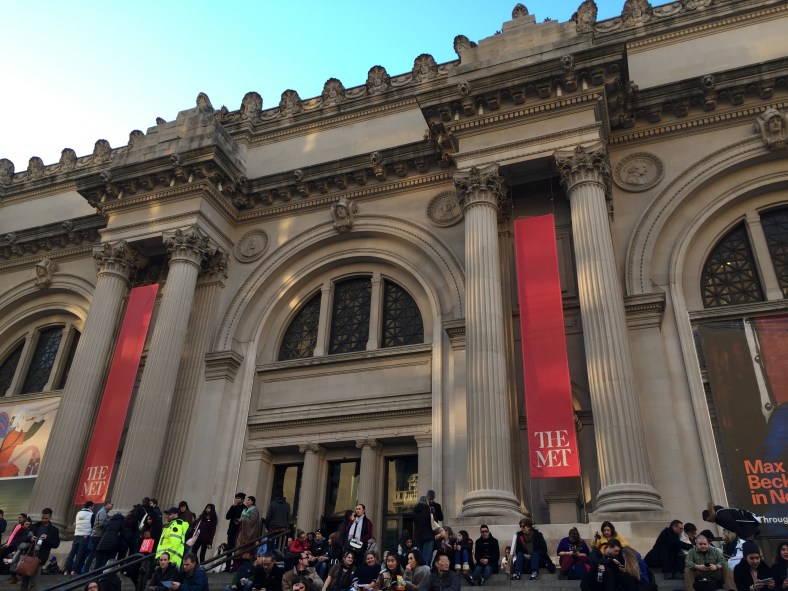
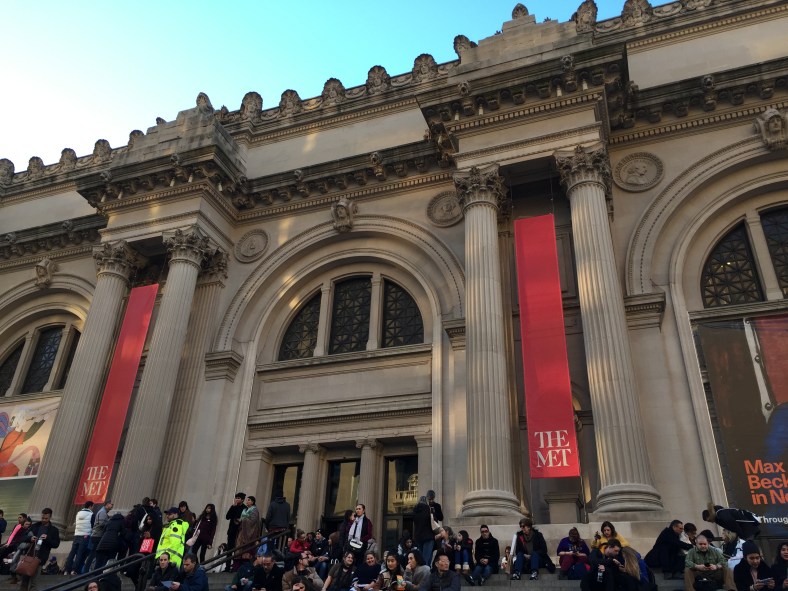
The week@work started with ‘the mistake’ at the end of the Oscars ceremony, and continued with a visible transition at the top of the most prestigious U.S. art museum. On the job ‘burn-out’ continues to take a toll on all @work, and may explain the recent Uber executive’s meltdown. And, a leading fashion designer is launching a campaign to ’embrace ambition’.

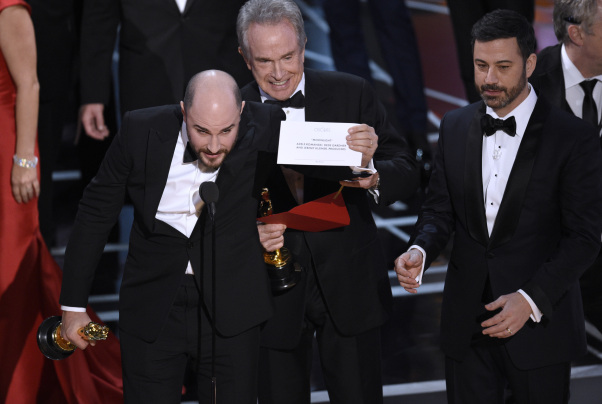
When we make a mistake @work, we typically don’t have an audience 32.9 million folks watching. But that’s what happened Sunday evening when the wrong envelope led to an ‘epic fail’ in the announcement of Best Picture winner. The New York Times film critics shared their reactions.

“…in its own way, last night’s spectacle — so relatively smooth, until all of a sudden it was anything but — represents a Hollywood watershed or, at least, like the original “Bonnie and Clyde,” the arrival of a new generation. The envelope mix-up was painful, but it brought to the stage two directors in their 30s with five features between them and reminded the audience that Damien Chazelle and Barry Jenkins are not enemies.  A.O. Scott

“Honestly, I don’t know. But something happened that seemed to simultaneously tell us who we were, are, believe ourselves to be. This is, what, the fourth time since November that the country has gathered for an evening of live television, only to be part of a rug-yanking ceremony. After Sunday night, the presidential election, the Super Bowl and, to a different but related extent, the Grammys, I’ve officially come down with outcome-oriented post-traumatic stress disorder — Ooptsd, as in upside my head.”  Wesley Morris

And from Hollywood, where the trade publication Variety’s cover seemed to mirror the events, Claudia Eller, co-editor in chief provided context for the ‘morning after’ cover.

damien-chazelle-barry-jenkins-variety-oscar-cover

“The high stakes and cutthroat tactics enlisted during Hollywood’s annual award season have long rivaled those of hard-fought political campaigns. But this year’s race showed the entertainment community at its absolute best. This was not a case of winner-take-all, but rather — as our cover story hopefully and joyfully exemplifies — proof that contenders share similar dreams, struggles, and frailties, and in fact can show respect and a generosity of spirit toward one another, whether they win or lose.”

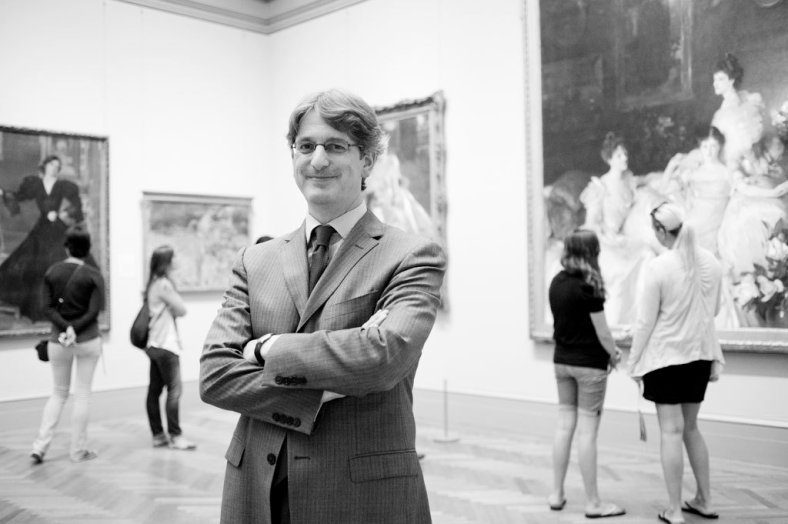
On Wednesday morning I received this email from Thomas P. Cambell, Director and C.E.O. of the Metropolitan Museum of Art.

“I write to share the news that I have decided to step down from my role as Director and CEO of The Metropolitan Museum of Art. It is not an easy choice to step away, especially at such a transitional moment. That said, the Museum’s current vitality is what makes it the right moment to do so. For the next stage of my career I look forward to new challenges beyond The Met, always in service of art, scholarship, and understanding.”
C5yF2RLXEAEkxJ-.jpg

What now? From Margaret Lyons on Twitter, “Please, someone: Set a prestige drama among the employees of a world-class museum.”

Maybe the Met could use a ‘Mozart in the Jungle’ treatment. Are you listening Jeff Bezos?

Holland Carter offered ‘How to Fix the Met: Connect Art to Life’

“What I can talk about is art, and how a museum can make people care about it. If historical art is now a hard sell, and it is, learn to sell it hard. That means, among other things, start telling the truth about it: about who made objects, and how they work in the world, and how they got to the museum, and what they mean, what values they advertise, good and bad. Go for truth (which, like the telling of history, is always changing), and connect art to life. Mix things up: periods, functions, cultures. (You can always unmix them.) Let audiences see that old is always new, if viewed through knowledge.

To present art this way — to pitch it, advocate it, make it snap to life — is to rethink the basic dynamic of a museum, turn it from passive to active, from archival to interactive, while letting it be all of these. This is the work of curators, and the Met has some fantastic ones. But to do their job boldly and radically, they need the attentive, encouraging permission of an alert director, probably meaning one who isn’t also saddled with being the company’s chief accountant.”

Rachel Feintzeig asked ‘Feeling Burned Out at Work? Join the Club.’

“Stress and anxiety are cited in 70% of the calls placed to phone-counseling lines at Workplace Options, a provider of employee-assistance programs; in 2014, 50% of callers complained of those feelings. Total calls to those counseling lines reached 42,500 last month, an 18% increase from 2016’s average.

Gallup’s most recent large-scale survey about burnout in the U.S., conducted in 2012, found that more than 40% of workers were so stressed at work they felt burned out. A more recent survey of German workers, conducted in 2015, found that nearly a quarter felt burned out.

Workers aren’t “assertive about their boundaries because they fear for their jobs,” said Alden Cass, a Manhattan-based clinical psychologist who treats patients with high-stress jobs. Burnout begins when a worker feels overwhelmed for a sustained period of time, then apathetic and ultimately numb, he said.”

Not sure if Travis Kalanick of Uber is suffering from burn-out, but last week’s viral video arguing with one of his employees was the culmination of a series of PR nightmares for the executive. Adrienne LaFrance reported ‘As Uber Melts down, Its CEO Says He ‘Must Fundamentally Change’.

“It took eight years and at least as many back-to-back-to-back-to-back controversies to break Travis Kalanick.

After a stunning month of scandals at Uber, Kalanick, its founder and CEO, sent an emotional and uncharacteristically apologetic memo to his employees Tuesday night. “This is the first time I’ve been willing to admit that I need leadership help,” Kalanick wrote. “And I intend to get it.”

The final story this week@work comes from the fashion pages and reporter Jacob Bernstein who asks ‘When Did ‘Ambition’ Become A Dirty Word? to introduce the story of designer Tory Burch and the most recent effort of her foundation.
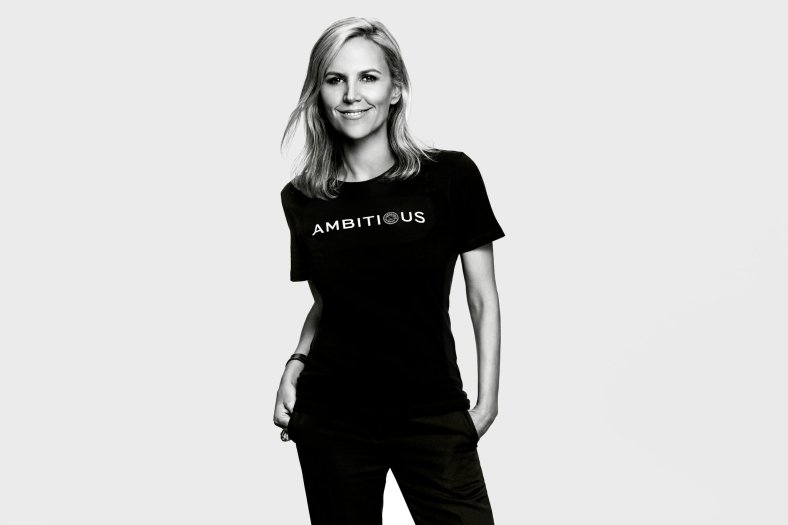
02TORY4-superJumbo-1.jpg

“There is nothing particularly fiery about Tory Burch…the issue of ambition, and the way it is used to defame women, is nevertheless personal to her.

In 2009, Ms. Burch started the Tory Burch Foundation and, through a partnership with Bank of America, saw it grow to an organization that ultimately gave more than $25 million to female entrepreneurs around the world.

Many of the recipients of these grants had experienced the same kind of sexism she faced. They were called too hungry, too intent on power, too ambitious — code words used in place of the more vulgar expressions that men (and sometimes women, too) used when they were out of earshot.

“There was a harmful double standard,” she said.”

The global campaign, ‘Embrace Ambition’ launches with a PSA in conjunction with International Women’s Day.

This week@work I encourage your ambition, and wish you a speedy recovery from “Ooptsd”, NYT film critic Wesley Morris’ appropriately new acronym for our times – “outcome-oriented post-traumatic stress disorder”.


The week@work – ‘Walden, a game’, Uber’s culture, pollution & the stock market, and the ‘folly’ of abolishing the N.E.A.

This week@work the designers of a new video game would like us to take a walk in the woods, a former Uber engineer authored a blog post that opened a window on corporate culture, an economics professor demonstrated the link between air pollution and stock market fluctuations, and the director of the Metropolitan Museum of Art warned against cutting funds to the National Endowment for the Arts.

When we talk about work/life balance we typically think about disconnecting from technology, not using it as a portal for relaxation. Robin Pogrebin‘s article ‘In Walden Video Game, the Object is Stillness’ offers an example of a seemingly contrarian application.

“…the new video game, based on Thoreau’s 19th-century retreat in Massachusetts, will urge players to collect arrowheads, cast their fishing poles into a tranquil pond, buy penny candies and perhaps even jot notes in a journal — all while listening to music, nature sounds and excerpts from the author’s meditations.

While the game is all about simplicity, it has actually been in development for nearly a decade. The lead designer, Tracy J. Fullerton, the director of the Game Innovation Lab at the University of Southern California School of Cinematic Arts, came up with the idea as a way to reinforce our connection to the natural world and to challenge our hurried culture.

“Games are kinds of rehearsals,” Ms. Fullerton said in an interview. “It might give you pause in your real life: Maybe instead of sitting on my cellphone, rapidly switching between screens, I should just go for a walk.”

“Maybe we don’t all have the chance to go to the woods,” Ms. Fullerton added. “But perhaps we can go to this virtual woods and think about the pace of life when we come back to our own world. Maybe it will have an influence — to have considered the pace of Walden.”

Uber has a new logo and a new ranking as #3 on Fast Company’s Most Innovative Companies. “Uber’s most valuable asset is its data, which has been an important part of Uber’s business since it first launched.” Which is why we should not be surprised if the company is having a bit of a dysfunctional workplace moment.

th.jpg

Christina Cauterucci investigated ‘The Sexism Described In Uber Employee’s Report Is Why Women Leave Tech – Or Don’t Enter At All’.

“Uber is staging a major PR defense for the second time in recent weeks after a former employee published a detailed account of persistent sexual harassment and discrimination she allegedly faced while working as an engineer at the company. Susan Fowler, who left the company in December after about a year of employment, claims in her Feb. 19 blog post that her manager sent her sexual chat messages soon after she was hired. When she reported him to human resources, she writes, she was told that it was his “first offense” and that she should switch teams if she didn’t want a negative performance review from him. Fowler later found out that other women had reported witnessing inappropriate behavior from this same man, and each were told that it was his “first offense” and not a big enough deal to require action.

In her blog post, Fowler accuses a manager of changing her performance scores after a stellar review to keep her from getting a transfer to another team, because it reflected well on the manager to prove he could retain female engineers on his team. This is a particularly outrageous deed in an account full of outrageous deeds. Instead of enforcing a zero-tolerance sexual-harassment policy or asking female employees how management could better support them, Uber has allegedly moved to improve its substandard track record on gender by narrowing opportunities for women on staff and sweeping harassment allegations under the floor mat. Fowler writes that she made repeated, documented human resources complaints about the unfair treatment she endured, but she was gaslighted by an HR representative who told her the emails she sent never happened and that men are better suited for certain jobs than women. It took a statement on a public blog to get any action from company leadership.”

The folks who work in climate science have been under fire in recent weeks. The photo below is a reminder of what the New York City skyline looked like 44 years ago, before environmental protections were enacted.

manhattan2_0.gif

For those not yet convinced of global warming, maybe a direct financial consequence would be more persuasive. Scott Berinato found ‘Air Pollution Brings Down the Stock Market’.

“When University of Ottawa economics professor Anthony Heyes and his colleagues compared daily data from the S&P 500 index with daily air-quality data from an EPA sensor close to Wall Street, they found a connection between higher pollution and lower stock performance. Their conclusion: Air pollution brings down the stock market.

The effect was strong. Every time air quality decreased by one standard deviation, we saw a 12% reduction in stock returns. Or to put it in other terms, if you ordered 100 trading days in New York from the cleanest-air day to the dirtiest-air day, the S&P 500 performance would be 15% worse on the 75th cleanest day than it was on the 25th cleanest day. We also replicated this analysis using data from the New York Stock Exchange and Nasdaq, and saw the same effect.”

img_7827

Finally, this story is not only for those who work in the arts, but for all of us whose curiosity and creativity were sparked by a play, music or a visit to a museum. The Metropolitan Museum of Art’s director, Thomas P. Campbell warns against ‘The Folly of Abolishing the N.E.A.’

“All too often, art is seen as a “soft” subject, the first thing to be cut, whether by local school boards or the federal government, when money is tight. But looked at purely in dollars, it is a false saving. The N.E.A.’s budget is comparatively minuscule — $148 million last year, or 0.004 percent of the total federal budget — while the arts sector it supports employs millions of Americans and generates billions each year in revenue and tax dollars.

The United States has no ministry of culture. In this vacuum, the N.E.A., founded in 1965, serves three critical functions: It promotes the arts; it distributes and stimulates funding; and it administers a program that minimizes the costs of insuring arts exhibitions through indemnity agreements backed by the government. This last, perhaps least-known responsibility, is crucial. This fall, the Met will host a major exhibition on Michelangelo that will bring together masterpieces from across the world. The insurance valuation is a whopping $2.4 billion — not even our museum, the largest art museum in the nation, could come close to paying the premium for such coverage without the federal indemnity the N.E.A. makes possible.

I fear that this current call to abolish the N.E.A. is the beginning of a new assault on artistic activity. Arts and cultural programming challenges, provokes and entertains; it enhances our lives. Eliminating the N.E.A. would in essence eliminate investment by the American government in the curiosity and intelligence of its citizens. As the planet becomes at once smaller and more complex, the public needs a vital arts scene, one that will inspire us to understand who we are and how we got here — and one that will help us to see other countries, like China, not as enemies in a mercenary trade war but as partners in a complicated world.”

This week@work take a break and visit your local museum. Then go home and send an email to your member of congress. Remind them of the importance of “investing in the curiosity and intelligence of its citizens”.


Photo credit: Manhattan Skyline, May 1973 – Chester Higgins NARA

The week@work – The ‘Fallows question’, flexibility@work and the long term impact of student debt

On Saturday Night Live actor Cecily Strong delivered a line that summed up what many of us are feeling this week@work, “I want one day without a CNN alert that scares the hell out of me.” 

It got me thinking about the question Facebook COO, Sheryl Sandberg posed to the Barnard Class of 2011, “What would you do if you weren’t afraid?”

This week@work The New York Times Op-Ed Columnist David Brooks posed ‘the Fallows question’“If you could move to the place on earth where history is most importantly being made right now, where would you go?”

“James and Deborah Fallows have always moved to where history is being made…James and Deb have an excellent sense of where world-shaping events are taking place at any moment — and a fervent commitment to be there to see it happen.

If you want to “observe” history, the Fallows say, go to Washington. If you want to “participate,” go elsewhere.”

If you weren’t afraid, and could pick up and move to where the action is, where would you go? Brooks offered a few destinations to start, but just maybe, this week@work you might spend some time considering a temporary relocation “in search of history”.

IMG_7024.jpg

Folks@work are moving forward, finding ways to succeed independent of national politics. Some voice concern about the potential impact of new policies on their workplace, while others seek ways to express a response in their work. For many, the challenges of the gender gap and student debt remain a constant, often extending into retirement.

Claire Cain Miller examined the tension in employer expectations between flexibility and presence@work in ‘How to Close a Gender Gap: Let Employees Control Their Schedules’.

“The main reason for the gender gaps at work — why women are paid less, why they’re less likely to reach the top levels of companies, and why they’re more likely to stop working after having children — is employers’ expectation that people spend long hours at their desks, research has shown.

Flexibility regarding the time and place that work gets done would go a long way toward closing the gaps, economists say.

A new job search company, Werk, is trying to address the problem by negotiating for flexibility with employers before posting jobs, so employees don’t have to.”

And then there are the financial pressures; spanning generations from twenty-somethings being subsidized by parents, as their grandparents face social security payment garnishment to repay outstanding student loan debt.

IMG_8146.jpg

Quoctrung Bui reported on ‘A Secret of Many Urban 20-Somethings: Their Parents Help With the Rent’.

“According to surveys that track young people through their first decade of adulthood, about 40 percent of 22-, 23- and 24-year-olds receive some financial assistance from their parents for living expenses. Among those who get help, the average amount is about $3,000 a year.

It’s a stark reminder that social and economic mobility continues past grade school, high school and even college. Economic advantages continue well into the opening chapters of adulthood, a time when young people are making big personal investments that typically lead to higher incomes but can be hard to pay for.”

On the other side of the generation spectrum, The Editorial Board of The New York Times identified an emerging trend threatening older Americans, ‘Haunted by Student Debt Past Age 50’.

“The experience of being crushed by student debt is no longer limited to the young. New federal data shows millions of Americans who are retired or nearing retirement face this burden, as well as the possibility of having their Social Security benefits garnished to make payments.

Americans age 60 and older are the fastest-growing age group of student loan debtors. Older debtors, many of whom live hand-to-mouth on fixed incomes, are more likely to default. When that occurs with federal loans, as happens with nearly 40 percent of such borrowers who are 65 and over, the government can seize a portion of their Social Security payments — even if it pushes them into poverty. About 20,000 Americans over the age of 50 in 2015 had their Social Security checks cut below the poverty line because of student loans, with poverty-level benefits falling even further for 50,000 others, according to a recent report by the Government Accountability Office.”

IMG_7827.jpg

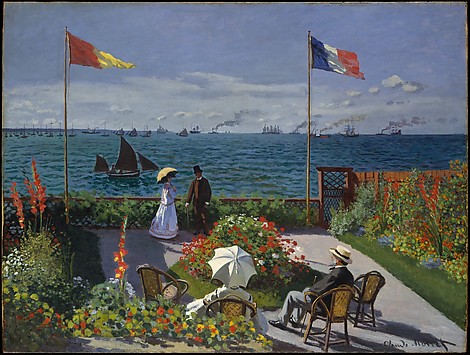
The last story this week@work, highlights the importance of art@work and in our lives. The Metropolitan Museum of Art announced the next step in their digital evolution – open access to over 375,000 archive images. (Monet’s ‘Garden at Sainte-Adresse’, 1867 above)

The week@work – Davos, transition, transferable skills and a ‘profundo’ life


The headline of the week@work did not originate in Washington D.C., but in Davos, Switzerland: ‘Davos Elite Fret About Inequality Over Vintage Wine and Canapés’. “…globalization has reduced the bargaining power of workers, and corporations have taken advantage of it.”

In other news – January is often a month of transition, not just in government, but across all fields. Articles this week@work explored the value of being fired and finding the right ‘fit’ next time. Physicists are the new software engineers in Silicon Valley and PhDs just may be the newest entrepreneurs.

Finally, this week@work we remember Kevin Starr, who went to work every day as a historian chronicling the past of his home state, California. “I’ve always tried to write California history as American history.”

4096.jpgPeter S. Goodman covered the annual meeting of the World Economic Forum for The New York Times.

“What is striking is what generally is not discussed: bolstering the power of workers to bargain for better wages and redistributing wealth from the top to the bottom.

“That agenda is anathema to a lot of Davos men and women,” said Joseph E. Stiglitz, a Nobel laureate economist and author of numerous books on globalization and economic inequality. “More rights to bargain for workers, that’s the part where Davos man is going to get stuck. The stark reality is that globalization has reduced the bargaining power of workers, and corporations have taken advantage of it. ”

That perhaps private equity overseers should not be paid 1,000 times as much as teachers while availing themselves of tax breaks is thinking that gets little airing here.”

1e97282770fb153b749b691b25832c03.jpgFor those of us not networking with the super elite in the Swiss Alps, Julie Ma compiled a sampling of quotes from ’25 Famous Women on How Getting Fired Makes You Stronger’.

“If you don’t get fired at least once, you’re not trying hard enough. This isn’t quite true yet, but it is becoming truer. As the pace of change in business increases, the chances of having a placid career are receding. And if in this period of rapid change, you’re not making some notable mistakes along the way, you’re certainly not taking enough business and career chances.” Sallie Krawcheck, chair Ellevate

“Is it hard to say I was fired? No. I’ve said it about 20 times, and it’s not. I was in fact insistent that that be publicly clear because I was not ashamed of that. And I don’t think young women — it’s hard, I know — they should not feel stigmatized if they are fired. Especially in this economy people are fired right and left for arbitrary reasons, and there are sometimes forces beyond your control.”
Jill Abramson, author and faculty @Harvard

IMG_8148.jpgMost folks leave their life @work because of the ‘human factor’: colleagues, leadership and values. Sharon Daniels offered advice to those starting the job search.

“If you have passion and enthusiasm, you’re on your way. People want to be around people who have passion and enthusiasm, because we all gravitate toward something greater than ourselves. If you do something wholeheartedly versus halfheartedly, it’s going to have a completely different effect.”

Cade Metz reported on how transferable skills are changing the profile of some tech workers, ‘Move Over, Coders—Physicists Will Soon Rule Silicon Valley’.

“If physics and software engineering were subatomic particles, Silicon Valley has turned into the place where the fields collide…It’s not on purpose, exactly. “We didn’t go into the physics kindergarten and steal a basket of children,” says Stripe president and co-founder John Collison. “It just happened.” And it’s happening across Silicon Valley. Because structurally and technologically, the things that just about every internet company needs to do are more and more suited to the skill set of a physicist.”

Ainsley O’Connell described another experiment in skill transference, ‘Can Entrepreneurship Revive The Troubled PhD?’

“PhD students once dreamed of lifelong tenure, generous sabbaticals, and a closet full of jackets with elbow patches. Academic life, with its dusty-booked charm, ruled the day. No longer. Even in STEM fields, roughly 40% of PhDs are graduating without employment commitments. Could the solution be teaching postdocs to create their own jobs, as entrepreneurs?

In the heart of Manhattan, in a set of conference rooms on loan from Google, one radical experiment in postdoc entrepreneurship is now entering its fourth year. Called “Runway” and managed by Cornell Tech’s Jacobs Technion-Cornell Institute, the program bills itself as “part business school, part research institution, part startup incubator.” Since its founding, Runway postdocs have founded 13 companies, from an intelligent baby monitor to an urban planning analytics platform, and collectively raised $15 million in funding.”

img_8194

Finally, this week@work, we remember Kevin Starr, former California State Librarian, professor and author of an eight-volume history of his home state ‘Americans and the California Dream’.

Colleague William Deverell remembered the historian and author as ‘A Golden State Champion’.

“I knew Kevin Starr only as profundo. He was big, his voice was big, his persona was big, his books are big, his ideas are big, his influence is big. Some, and only some, of this has now been silenced by his death Saturday. Kevin’s outsize impact and his sheer significance to both our regional and our national culture, will continue long hence. Death has robbed us of the most important guide we have ever had to our state’s history and culture, our ingenious interpreter of the elusive and many meanings of the California Dream over several centuries.”


The Friday Poem ‘To The Indifferent Women’ by Charlotte Anna Perkins Gilman

On the eve of the ‘Women’s March’, the Friday Poem reprises ‘To The Indifferent Women’ by Charlotte Anna Perkins Gilman. I originally posted the poem in July after the first woman in U.S. history accepted her party’s nomination for president.

Sometimes things don’t work out as planned.

Tomorrow, in Washington D.C. and cities around the country, women will join together in a nation that could not ratify an equal rights amendment, or elect the first woman president, and remind those elected that women’s rights are human rights.

“In the spirit of democracy and honoring the champions of human rights, dignity, and justice who have come before us, we join in diversity to show our presence in numbers too great to ignore. The Women’s March on Washington will send a bold message to our new government on their first day in office, and to the world that women’s rights are human rights. We stand together, recognizing that defending the most marginalized among us is defending all of us.”

There is something going on here, as there was in 1911 when Ms. Perkins was writing for the cause of women’s rights.

One of the more stunning stories, in advance of the D.C. march, appears in today’s NY Times and profiles an unlikely activist contingent – ‘From Wall Street to National Mall: Women Overcome Fears to Attend March’.

“They are professionals in trading, public relations, marketing, deal-making, investing and the law. They keep punishing schedules, fear losing business by offending their clients and often feel that in an industry still overwhelmingly populated by men, the less attention drawn to their sex, the better.

But the inauguration of Mr. Trump has prompted a striking number of Wall Street women to overcome their worries about demonstrating in public.”

For those who will march and be questioned why, and for those still without weekend plans – a beautiful question from 1911.

“Do you believe the sorrow of the world
Does not concern you in your little homes?”

To The Indifferent Women

A Sestina

You who are happy in a thousand homes,
Or overworked therein, to a dumb peace;
Whose souls are wholly centered in the life
Of that small group you personally love;
Who told you that you need not know or care
About the sin and sorrow of the world?

Do you believe the sorrow of the world
Does not concern you in your little homes? —
That you are licensed to avoid the care
And toil for human progress, human peace,
And the enlargement of our power of love
Until it covers every field of life?

The one first duty of all human life
Is to promote the progress of the world
In righteousness, in wisdom, truth and love;
And you ignore it, hidden in your homes,
Content to keep them in uncertain peace,
Content to leave all else without your care.

Yet you are mothers! And a mother’s care
Is the first step toward friendly human life.
Life where all nations in untroubled peace
Unite to raise the standard of the world
And make the happiness we seek in homes
Spread everywhere in strong and fruitful love.

You are content to keep that mighty love
In its first steps forever; the crude care
Of animals for mate and young and homes,
Instead of pouring it abroad in life,
Its mighty current feeding all the world
Till every human child can grow in peace.

You cannot keep your small domestic peace
Your little pool of undeveloped love,
While the neglected, starved, unmothered world
Struggles and fights for lack of mother’s care,
And its tempestuous, bitter, broken life
Beats in upon you in your selfish homes.

We all may have our homes in joy and peace
When woman’s life, in its rich power of love
Is joined with man’s to care for all the world.

Charlotte Anna Perkins Gilman ‘Suffrage Songs and Voices’ 1911

41py0cnjwl-_sx331_bo1204203200_

Photo credit: Screen shot from Women’s March LA website


The week@work – the top stories of ’16, a new year, the eternal optimist’s talking points, French workers get the right to disconnect, and leadership lessons from Michelle Obama

Happy New Year! This week@work we take a final look at the top stories of 2016, and the stories from the first week of 2017. On the work-life balance front – French workers now have the legal right to disconnect from the office. The U.S. unemployment rate is at 4.7%, with hourly salary earnings rising 2.9%. And for women@work, an article considered the future of women in this new year, as First Lady Michelle Obama delivered her final formal remarks on Friday, giving us a parting gift – a model for what a leader looks like.

The Economist’s top ten most read stories of 2016 centered on the U.S. election and Brexit. In the U.S., NPR’s top 20 did not include Brexit, but the question of how Donald Trump will govern, led the list. “The top 20 most popular stories from the past year ranged from fact checks to mosquito bites, from Aleppo to taxes, and how to raise kids who will thrive, whatever the future brings.” 

There were many stories about work and the workplace, but most became a subset of the larger stories. Susan Chira reflected on ‘What Women Lost’.

“This was supposed to be the year of triumph for American women.

A year that would cap an arc of progress: Seneca Falls, 1848. The 19th Amendment, 1920. The first female American president, 2017. An inauguration that would usher in a triumvirate of women running major Western democracies. Little girls getting to see a woman in the White House.

Instead, for those at the forefront of the women’s movement, there is despair, division and defiance. Hillary Clinton’s loss was feminism’s, too.”

2017 will be the year we ask, what are the long term implications for women@work? On January 21, in Washington, and cities around the country, women will have an opportunity to reinsert themselves into the national conversation.

Unknown.png

For additional reading @year end:

‘The Echoes of 1914’ by historian Margaret MacMillan for the BBC. She responsed to a query about which year in history most closely resembled 2016.

“I wish I could stop, but I find myself thinking of 1914. The world then had seemed so stable, so manageable. Crises – political, social, economic, military – came and went but “they”, bankers, statesmen, politicians, always managed them in the end.

Yes, there were grumblings – from the working classes or women, or those who were losing their livelihoods because of free trade or mechanisation.

And there were some strong emotions about: fears of rapid change, passionate nationalisms that meant love of one’s own country and hatred of others. Ominous in retrospect because we know what happened. But at the time there was a complacency – it would surely all work out all right.

That confidence was dangerous because it meant that people didn’t take the warning signs seriously enough.

I wish I could stop making the comparisons.

In ‘1999 Was The Last Time Everything Was Fine’ BuzzFeed Culture Writer Doree Shafrir revisited her first year@work.

“I had no job and almost no money. My parents had given me the security deposit on the apartment as a graduation present, but now I was on my own. I was entranced by the classifieds section of the New York Times, with its pages and pages of appeals for secretaries and programmers and architects and retail store managers. I didn’t really know what I wanted to do. I knew I liked to be around words, but I wasn’t sure what that meant in terms of actually making money. Maybe now was the time to try something new. Maybe I could close my eyes and point to something on the page and that would be my destiny.

That was how 1999 felt, like anything was possible.”

Artist Tucker Nichols created a rainbow rendering of an ‘Eternal Optimist Talking Points for 2017’ as OpArt for The New York Times.  A sample of musings: “Somehow not as freaked out by scary clowns anymore…Midtown traffic has always been pretty jammed up…Smog makes great sunsets…Still a chance it’s a very long dream.”

On January 1, a new law in France went into effect allowing workers to ‘disconnect’ from their workplace.

IMG_5895.jpg

The BBC reported on France’s implementation of a law to protect work-life balance.

“Companies with more than 50 workers will be obliged to draw up a charter of good conduct, setting out the hours when staff are not supposed to send or answer emails. France has a working week of 35 hours, in place since 2000.”

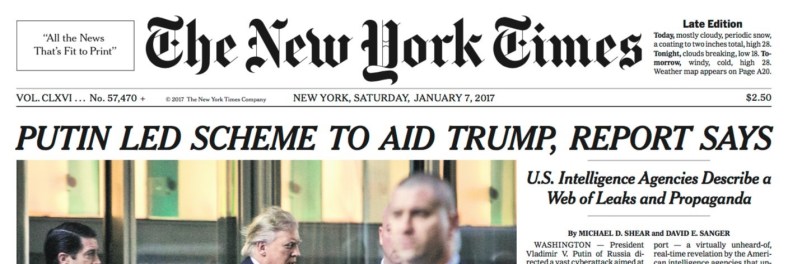
And then there was this from the professionals who go to work every day in U.S. Intelligence Services.IMG_8057.JPG

On Friday afternoon, First Lady Michelle Obama gave a memorable farewell speech at a White House event honoring the 2017 School Counselor of the Year. The text set an aspirational vision for all Americans and provides all of us with a lesson in leadership.

“…for all the young people in this room and those who are watching, know that this country belongs to you — to all of you, from every background and walk of life. If you or your parents are immigrants, know that you are part of a proud American tradition — the infusion of new cultures, talents and ideas, generation after generation, that has made us the greatest country on earth.”

C1hKGRJUcAAgab2.jpg

“If your family doesn’t have much money, I want you to remember that in this country, plenty of folks, including me and my husband — we started out with very little. But with a lot of hard work and a good education, anything is possible — even becoming President. That’s what the American Dream is all about.

But I also want to be very clear: This right isn’t just handed to you. No, this right has to be earned every single day. You cannot take your freedoms for granted. Just like generations who have come before you, you have to do your part to preserve and protect those freedoms. And that starts right now, when you’re young.

Right now, you need to be preparing yourself to add your voice to our national conversation. You need to prepare yourself to be informed and engaged as a citizen, to serve and to lead, to stand up for our proud American values and to honor them in your daily lives. And that means getting the best education possible so you can think critically, so you can express yourself clearly, so you can get a good job and support yourself and your family, so you can be a positive force in your communities.

And when you encounter obstacles — because I guarantee you, you will, and many of you already have — when you are struggling and you start thinking about giving up, I want you to remember something that my husband and I have talked about since we first started this journey nearly a decade ago, something that has carried us through every moment in this White House and every moment of our lives, and that is the power of hope — the belief that something better is always possible if you’re willing to work for it and fight for it.

It is our fundamental belief in the power of hope that has allowed us to rise above the voices of doubt and division, of anger and fear that we have faced in our own lives and in the life of this country. Our hope that if we work hard enough and believe in ourselves, then we can be whatever we dream, regardless of the limitations that others may place on us. The hope that when people see us for who we truly are, maybe, just maybe they, too, will be inspired to rise to their best possible selves.

So that’s my final message to young people as First Lady. It is simple. I want our young people to know that they matter, that they belong. So don’t be afraid — you hear me, young people? Don’t be afraid. Be focused. Be determined. Be hopeful. Be empowered. Empower yourselves with a good education, then get out there and use that education to build a country worthy of your boundless promise. Lead by example with hope, never fear. And know that I will be with you, rooting for you and working to support you for the rest of my life.”

We work in the context of global events, as responsible citizens. Our role in our workplace is to reflect the best in human and organizational values. In this new year@work, stay focused, be determined and lead by example with hope, never fear.


Photo credits: New Year’s Eve London – Ben Cawthra/LNP, Michelle Obama – BBC.com

‘Why do I have an intern?’ Learning from the most junior person in the room

What did you learn from your intern this fall? That is the question. If an answer doesn’t come quickly to mind, you may want to ask ‘Why do I have an intern?’ before you hire a new one for spring.

One of the most disappointing, dispiriting experiences of my time mentoring university students employed as interns came at the end of the semester when we asked employers to submit an evaluation of the intern’s performance. Most had to be tracked down via text,  email, and voice mail before a perfunctory form was returned with a checkmark for ‘exceptional’, ‘good’ or ‘needs improvement’. It was the rare manager (1 in 50) who would actually take the time to share valuable, actionable feedback.

At the beginning of each semester, concurrent with the start of a new internship, you could illuminate a major city with the energy emanating from students about to embark on a new experience. As the weeks went by, the lights dimmed, as one by one, intern’s dreams fell short when tested in practice. In many cases it seemed that the intern was a ‘vanity’ addition to one’s entourage vs. a potential contributor to a strategic mission.

Here’s the thing. Most of these students were committing 10-15 hours of ‘unpaid’ time to their internship. In the majority of cases interns were balancing a full course load of 16-18 credits and a part-time paid position. Social life was the first casualty, but a worthy trade-off for the opportunity to gain valuable, ‘career related’ work experience.

With this level of commitment, why is there such a major disconnect in expectations between employers and interns?

In many cases the ‘unpaid’ label results in a lack of respect. Little thought goes into anticipating and planning the internship assignments.

A successful internship program/relationship is built on clearly communicated expectations and on-going follow-up/ feedback.

Why do you hire an intern? Perhaps to breathe some fresh air into the room. Maybe to keep you aligned with your values. Most important, to help you connect with your emerging customer cohort.

Victor Ho, C.E.O. of FiveStars was interviewed by Adam Bryant for his weekly ‘Corner Office’ column in The New York Times. Reflecting back on his experience, he shared

“…the strongest lesson I learned at McKinsey that I now share with every single new hire is what they call the “obligation to dissent.” It means that the youngest, most junior person in any given meeting is the most capable to disagree with the most senior person in the room.

So if I hire an intern, that intern is the most qualified person in the company to say, “Victor, I heard this was your mission, your values, and these things are off.” That’s just because the more removed you are, the less you drink the Kool-Aid. You have a fresh perspective.”

Before your fall intern departs, skip the cake, and use the the time for a face to face conversation about what you both learned over the past four months. Offer feedback that will guide your intern through to the next step in their career.

When you are interviewing your spring candidates, look for the most qualified person with “the obligation to dissent”.  Ask yourself ‘How can I structure the experience to maximize individual contribution and encourage interaction?’

Why do I hire an intern? To learn, and reconnect to the core aspirational organization values.


The week@work:’post-truth’, Facebook’s ‘news feed’, Gwen Ifill, a new leader @Lincoln Center, & Udacity’s tech job tryouts

This past week@work Oxford Dictionaries declared ‘post-truth’ the 2016 word of the year, and Facebook’s Mark Zuckerberg realized his job description included a responsibility to combat fake news. In contrast, the week marked the death of an authentic journalist, PBS NewsHour co-anchor Gwen Ifill. Lincoln Center chose a new leader from academia and MOOC provider, Udacity announced tech job tryouts.

On Wednesday, the BBC reported “Oxford Dictionaries has declared “post-truth” as its 2016 international word of the year, reflecting what it called a “highly-charged” political 12 months.

It is defined as an adjective relating to circumstances in which objective facts are less influential in shaping public opinion than emotional appeals.

post-truth_B4BED3DEF1DC47D4B21C7D697F06CC91.jpg

Oxford Dictionaries says post-truth is thought to have been first used in 1992. However, it says the frequency of its usage increased by 2,000% in 2016 compared with last year.”

The Economist explored ‘post-truth’ in ‘The Art of the Lie’.

“The term picks out the heart of what is new: that truth is not falsified, or contested, but of secondary importance…

Post-truth politics has many parents. Some are noble. The questioning of institutions and received wisdom is a democratic virtue. A sceptical lack of deference towards leaders is the first step to reform. The collapse of communism was hastened because brave people were prepared to challenge the official propaganda.

Post-truth has also been abetted by the evolution of the media… The fragmentation of news sources has created an atomised world in which lies, rumour and gossip spread with alarming speed. Lies that are widely shared online within a network, whose members trust each other more than they trust any mainstream-media source, can quickly take on the appearance of truth. Presented with evidence that contradicts a belief that is dearly held, people have a tendency to ditch the facts first. Well-intentioned journalistic practices bear blame too. The pursuit of “fairness” in reporting often creates phoney balance at the expense of truth.”

The New Yorker contributor, Nathan Heller examined one example of the phenomena in ‘The Failure of Facebook Democracy’.

fbwm_cw_07.jpg

“The unexpected election of Donald Trump is said to owe debts to both niche extremism and rampant misinformation. Facebook, the most pervasive of the social networks, has received much scrutiny and blame. During the final weeks of the campaigns, it grew apparent that the site’s “news” algorithm—a mechanism that trawls posts from one’s online friends and rank-displays those deemed of interest—was not distinguishing between real news and false information: the sort of tall tales, groundless conspiracy theories, and oppositional propaganda that, in the Cenozoic era, circulated mainly via forwarded e-mails.

Facebook is not the only network to have trafficked phony news, but its numbers have been striking. A much-cited Pew survey, released in May, suggested that forty-four per cent of the general population used Facebook as a news source, a figure unrivalled by other social networks. An analysis this week by Craig Silverman, of BuzzFeed, found that the twenty top-performing fake news stories on the network outperformed the twenty top real-news stories during the final three months before the election—and that seventeen of those fakes favored the Trump campaign.

If a majority of Americans are getting their news from Facebook, then Facebook surely has a civic obligation to insure the information it disseminates is sound.”

Which brings us to the initial response from Facebook founder/CEO Mark Zuckerberg.

“Identifying the ‘truth’ is complicated.”

12208495_10102454385528521_4749095086285673716_n.jpg

On Friday, he posted details of the projects in place to address the issue.

“A lot of you have asked what we’re doing about misinformation, so I wanted to give an update.

The bottom line is: we take misinformation seriously. Our goal is to connect people with the stories they find most meaningful, and we know people want accurate information. We’ve been working on this problem for a long time and we take this responsibility seriously. We’ve made significant progress, but there is more work to be done.”

Buried in paragraph four was this nugget that seemed to transfer ownership from the corporation to the community, ignoring a leader’s civic obligation.

“We do not want to be arbiters of truth ourselves, but instead rely on our community and trusted third parties.”

Contrast this approach to the definition of the role of a journalist, courtesy of the American Press Institute.

“The journalist places the public good above all else and uses certain methods – the foundation of which is a discipline of verification – to gather and assess what he or she finds.”

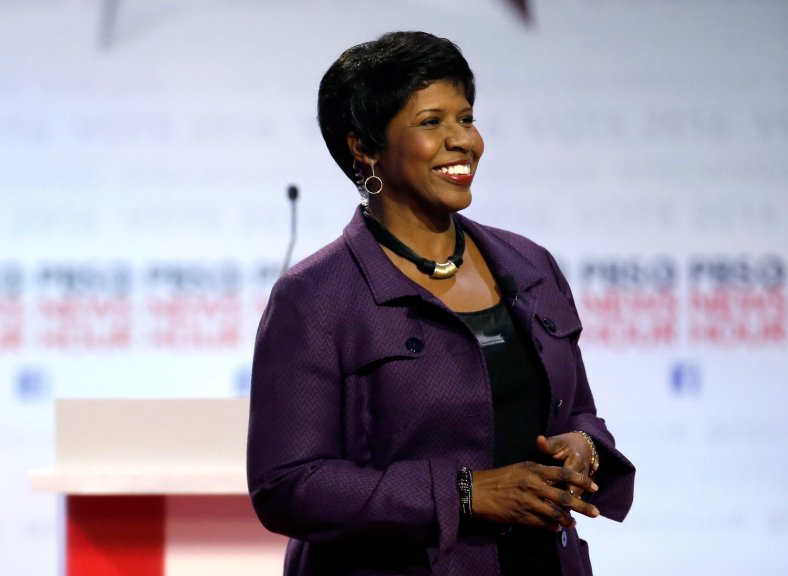
So let’s return to the days of ‘truth’ and remember the contribution of journalist Gwen Ifill through the eyes of two colleagues.

ap_193273822329_custom-095cea2744af0cdfc2393dae5431919449a19d63-s1500-c85

‘What Gwen Ifill Knew About Race in America’  by Jeffrey Goldberg “An insufficient number of people have recognized what is obvious. Gwen’s death is a punishing blow to her family, and to her wide circle of friends, to her colleagues and to her viewers. But it is also a cruel blow to her profession, which hasn’t recently covered itself in glory. And it’s an especially cruel blow to her lovely nation, which is right now in need of her bravery, her farsightedness, and her willingness to tell the truth. Hers is an incalculable loss.”

‘The Life and Example of Gwen Ifill’ by David Brooks “Gwen worked in a tough business, and being an African-American woman in that business brought its own hardships and scars, but Gwen’s smile did not hold back. Her whole personality was the opposite of reticent, and timidity was a stranger to her. When the Ifill incandescence came at you, you were getting human connection full-bore.

I suppose every profession has a few people like this, people who love the whole profession, who pay compliments when its standards are met and who are tough when they are not.

Gwen’s death merits a bit of the reaction that greeted the death of the writer Samuel Johnson centuries ago: She has left a chasm, which nobody else can fill up and which nobody has a tendency to fill.

Now that Gwen is dead, who is the next best thing? There’s nobody. There are many great people who will follow her example. But nobody quite reminds you of Gwen.”

In other news this week@work:

‘Debora L. Spar, Barnard President, to Lead Lincoln Center’Michael Cooper for The New York Times  “In appointing Ms. Spar, who is also an author and a former Harvard Business School professor, Lincoln Center’s board looked beyond arts administration circles and decided to tap someone with experience running a large nonprofit and with a track record of raising money for capital projects — skills that could prove useful as the renovation proceeds.”

Mr. Cooper reported in a related story that you may want to share with the aspiring musicians in your life, ‘It’s Official: Many Orchestras Are Now Charities’.

‘Udacity, an Online Learning Start-Up, Offers Tech Job Trials’Steve Lohr for The New York Times “The program, called Blitz, provides what is essentially a brief contract assignment, much like an internship. Employers tell Udacity the skills they need, and Udacity suggests a single candidate or a few. For the contract assignment, which usually lasts about three months, Udacity takes a fee worth 10 to 20 percent of the worker’s salary. If the person is then hired, Udacity does not collect any other fees, such as a finder’s fee.

The Blitz initiative and Udacity’s evolution point to the role that nontraditional education organizations might play in addressing the needs of workers and employers in the fast-changing labor market for technology skills.”

In closing this week of work, I am still trying to clear the fog in my brain and understand ‘post truth’. I reside in the real word, but apparently it’s changing. What does work look like when words hold no meaning?

I’ll end with classicist Mary Beard‘s reflection on the U.S. election.

“Trump and Trump’s policies are truly ghastly, but you have to face the fact that a very large number of people actually voted for him. What is more, resentment at “the elite” has morphed into a proud contempt for truth, expertise and knowledge – not unlike Michael Gove’s jibe at “experts” before the Brexit vote. And in the broader context of political rhetoric, the idea that he won’t be as bad as he claimed is more, rather than less, worrying. I thought that the conciliatory speech was the worst thing I had heard all evening. The idea that he could be thanking Clinton for her service to the country (“I mean that very sincerely”) and be speaking of “binding the wounds of division” – when only the day before he’d promised to impeach her and poured salt into the very wounds he was now promising to heal – beggars belief. It has nothing to do with being “gracious” (as the television pundits had it), and everything to do with words not meaning anything. It was precisely what ancient rhetorical and political theorists feared almost more than anything else: that speech might not be true, and the corrosive effect of that on popular power.”


Photo credits: Facebook Menlo Park HQ courtesy of Facebook Newsroom Media Gallery, Mark Zuckerberg from his Facebook page, Gwen Iffil/Morry Gash AP


The mysteries of networking #5: Try it in reverse

Folks entering the job market for the first time are often hesitant to reach out to potential networking contacts. What do I have to give in return? is a common question. The answer may be to ‘network in reverse’.

Traditional networking is a commitment of mutual support over time. The majority of established professionals hold no expectation of immediate reciprocity when advising newbies to the job market.

Turns out, their expectations need revision; there’s quite a bit of knowledge to be shared by the most recent additions to the workplace. Just don’t be surprised when you get the call from someone twice your age asking, Will you mentor me?

That’s exactly what happened when The New York Times assignment editor, Phyllis Korkki approached social editor, Talya Minsberg.

Let’s start with a quick inventory of your skill set. What is the skill that has been burning a hole on your ‘to do’ list for the last six months? You know, that one thing you are a bit afraid of, but would catapult your career if you just spent some time learning?

Who do you know who can serve as a bridge to knowledge or provide a bit of training and support?

That’s basically the story of Phyllis and Talya, a ‘reverse mentorship’ initiated around the joys of technology, specifically Snapchat.

Phyllis shared her story, ‘Schooled by a Mentor Half My Age’.

“How on earth did I become an “older worker?”

It was only a few years ago, it seems, that I set out to climb the ladder in my chosen field. That field happens to be journalism, but it shares many attributes with countless other workplaces. For instance, back when I was one of the youngest people in the room, I was helped by experienced elders who taught me the ropes.

Now, shockingly, I’m one of the elders. And I’ve watched my industry undergo significant change. That’s why I recently went searching for a young mentor — yes, a younger colleague to mentor me.”

She found that ‘reverse mentor’ in Talya who was ‘Seeing Age With a New Lens’.

 “A few months ago, Phyllis Korkki, an assignment editor at The New York Times who sits a few cubicles away, approached me with a question that gave me pause. “Will you mentor me?” she asked.

I gave her what I imagine was a blank stare, and responded, “Wait, what?”

Phyllis is a longtime Times employee, an accomplished journalist and an author. So the fact that she was approaching me for mentorship was unexpected.

She wanted to do what she was calling a reverse mentorship. She wanted to challenge herself and learn something new, something outside her comfort zone, she said. She wanted to learn how to use Snapchat.

Snapchat is a popular social mobile app that features, among other things, stories that live for just a day. And she came to me because a large part of my role has been guiding editorial strategy in the brave new world of stories that disappear in 24 hours.

So of course I was happy to meet with Phyllis one on one.

But a mentorship? I was honored, albeit a bit perplexed.”

It was at this nexus of generational knowledge transfer, that the two connected in an informal ‘reverse networking’ relationship that has benefited both, and serves as a model for an ‘older brain’/ ‘younger brain’ mind meld.

Phyllis realized the benefit of utilizing a new application @work, as well as the learning experience itself.

“It was exhilarating to see my progress — and embarrassing to witness my missteps, like putting my finger over the camera at the close of the cat cafe video. (But have you ever tried to record yourself while trying to keep a cat on your shoulder?)”

Talya, the mentor, observed Phyllis’ first venture into Snapchat’s geofilters and emoji.

“Eventually, Phyllis took to the official New York Times Snapchat account to broadcast three stories. And three times I waited with bated breath to watch those stories, feeling like a teacher in the back of a classroom waiting for a student to give a big presentation. Each time, she got better — and I was eager to tell her about it in person.

When I gave Phyllis a glowing review, she kept saying, “Really? You like it?” I think we both recognized the moment as a milestone in the reverse mentorship. We both felt success.”

And  that’s the ultimate benefit of a mentoring relationship: both participants experience success.

Your assignment, this week@work, should you choose to accept it: go find your Phyllis or Talya and engage in the career energizing process of a ‘reverse mentorship.”

A college degree in sports? No.

An essay published in The New York Times print edition yesterday argued for the establishment of a college degree in sports as a means to bring athletics closer to the academic mission of a university. I disagree.

The way to integrate athletics into the academic mission of the university is to ensure student-athletes have every opportunity to earn the college degree of their choice, engaging in all aspects of the academic enterprise: academic advising, interaction with faculty, collaboration with fellow students, and internships.

University of Colorado professor Roger Pielke Jr. asked “Why Not a College Degree in Sports?” Drawing on previous arguments, Professor Pielke suggested an inherent bias on campus against athletics.

“Widespread prejudice and legitimate resentment against athletics remains in academia, and no wonder. The $6.9 million annual salary of Nick Saban, the head football coach at the University of Alabama, is equal to the combined average salary for nearly 100 assistant professors at the school, according to the most recent data available. And beyond such economic disparities, class distinctions of 19th-century England still shape thinking about sport: Classical music is valued by high society, while sport is for the masses.”

Many have voiced concerns about the consequences of the money being thrown at ‘big time’ athletic programs and it’s appropriate to question a football coach’s salary that far exceeds a university president’s compensation.

But what is missed, always, is the student-athlete. And this is where I disagree with Professor Pielke’s proposal.

Students choose a college or university based on a number of factors: ‘fit’, financial assistance, choice of major, access to faculty, availability of internships, and career aspirations. The student-athlete’s choice includes all of the above, plus the chance to compete in their sport at the highest level.

Suggesting student-athletes enroll in a sports degree program, administered by an athletic department, fortifies an existing boundary; discouraging student athletes from developing key relationships with university academic advisors, faculty, administrators, and non-athlete students.

The college experience serves as a bridge to workplace reality. Isolating student-athletes eliminates access to ‘real world’ campus connections critical for career success.

If a student wants to pursue a career in sport, there are a variety of options in the liberal arts, journalism, business and law.

Rather than reinforce the existing ‘athletic department silo’ with a new curriculum, we can initiate these changes today:

A student-athlete should be able to select a major and complete their degree without influence or interference from their coach.

Practices should not conflict with class schedules.

A student-athlete should have access to all career planning activities including internships, networking events, and on-campus recruiting interviews.

A student-athlete should never have to choose between an academic commitment and their sport.

Coaches should venture beyond the venues of comfort and take opportunities to network with faculty.

We don’t need an ‘academic athletic department’. We need the adults on campus to refocus the debate without prejudice to the students.