The Friday Poem: ‘Today’ by Billy Collins

Spring arrived earlier this week. Time to take a break from your week@work and venture out beyond the confines of your work space. Cited by the Guardian as one of the ten best about spring, The Friday Poem is ‘Today’ by former Poet Laureate of the United States, Billy Collins.

“There is a delightful playfulness here – a sense of being, in spring, a mini-God within the kingdom of one’s own front room.”

Today
If ever there were a spring day so perfect,
so uplifted by a warm intermittent breeze

that it made you want to throw
open all the windows in the house

and unlatch the door to the canary’s cage,
indeed, rip the little door from its jamb,

a day when the cool brick paths
and the garden bursting with peonies

seemed so etched in sunlight
that you felt like taking

a hammer to the glass paperweight
on the living room end table,

releasing the inhabitants
from their snow-covered cottage

so they could walk out,
holding hands and squinting

into this larger dome of blue and white,
well, today is just that kind of day.

Billy Collins  Poetry Magazine, April 2000

176-1.jpg

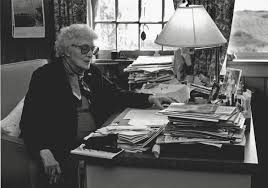
‘The Work of Happiness’ a poem by May Sarton

The Friday Poem this week is ‘The Work of Happiness’ by May Sarton a writer whose talent was expressed in fiction, autobiography and poetry.

“My first book was a book of poems, Encounter in April, followed by my first novel, The Single Hound. There was quite an interval before the second novel, The Bridge of Years. And then Shadow of a Man. Then it goes on and on for a long time with a book of poems between every novel. That was my wish, that the poems should be equal in number, that the novels should not be more important than the poems because the poems were what I cared about most. Much later, when I was forty-five or so, I began to do nonfiction—first the memoirs and finally the journals, which came as the last of the forms which I have been using. Altogether now I think it amounts to seventeen novels, I don’t know, five or six memoirs and journals, and then twelve books of poems, which are mostly in the collected poems now.”  The Paris Review interview, Fall 1983

Her poetry emerges from reflection and solitude, a choice she explored in a 1974 essay, ‘The Rewards of Living a Solitary Life’.

“The other day an acquaintance of mine, a gregarious and charming man, told me he had found himself unexpectedly alone in New York for an hour or two between appointments. He went to the Whitney and spent the “empty” time looking at things in solitary bliss. For him it proved to be a shock nearly as great as falling in love to discover that he could enjoy himself so much alone…Solitude is the salt of personhood. It brings out the authentic flavor of every experience.”

In the poem, Ms. Sarton provides an alternate view of happiness – “for what is happiness but growth in peace”.

The Work of Happiness

I thought of happiness, how it is woven
Out of the silence in the empty house each day
And how it is not sudden and it is not given
But is creation itself like the growth of a tree.
No one has seen it happen, but inside the bark
Another circle is growing in the expanding ring.
No one has heard the root go deeper in the dark,
But the tree is lifted by this inward work
And its plumes shine, and its leaves are glittering.

So happiness is woven out of the peace of hours
And strikes its roots deep in the house alone:
The old chest in the corner, cool waxed floors,
White curtains softly and continually blown
As the free air moves quietly about the room;
A shelf of books, a table, and the white-washed wall—
These are the dear familiar gods of home,
And here the work of faith can best be done,
The growing tree is green and musical.

For what is happiness but growth in peace,
The timeless sense of time when furniture
Has stood a life’s span in a single place,
And as the air moves, so the old dreams stir
The shining leaves of present happiness?
No one has heard thought or listened to a mind,
But where people have lived in inwardness
The air is charged with blessing and does bless;
Windows look out on mountains and the walls are kind.

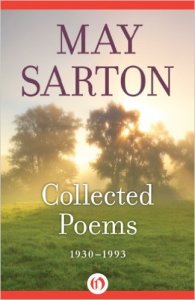
May Sarton   ‘Collected Poems 1930 – 1993’

51rZ+x+OVKL._SX322_BO1,204,203,200_


The LA Times Festival of Books 2003 & David Halberstam

There’s a book festival this weekend in LA and one of my favorite writers will be missing. Eight years ago next week, Pulitzer Prize winning journalist and author David Halberstam died in a car crash in Menlo Park, California on his way to conduct an interview for his next book.

I thought it would be a good day to share my ‘memories at a distance’ of a journalist whose work continues to educate and inspire.

I first heard Mr. Halberstam speak at the University of Southern California commencement. His remarks were measured as he sought to reassure the Class of 2002; the first graduating class after 9/11. Words that are as relevant today as they were on that  May morning in South Central LA.

“We should, after all, all be aware of the blessings of our lives. The truth today, which I suspect you already know, is that you are among the fortunate of your generation. You have been given a priceless education in an age where work is increasingly defined not by muscularity but by intelligence, and therefore you are already advantaged. More, you have not only been given an exceptional education, but perhaps more importantly, you have been part of a rare community where the intellectual process is valued not just for what it can do for you economically but as an end in itself. Learning is not just a tool to bring you a better income; learning is an ongoing, never-ending process designed to bring you a fuller and richer life.

In addition, you are fortunate enough to live in an affluent, blessed society, not merely the strongest, but the freest society in the world. Our courts continue to uphold the inherent rights of ordinary citizens to seek the highest levels of personal freedom imaginable. In this country as in no other that I know of, ordinary people have the right to reinvent themselves to become the person of their dreams and not to live as prisoners of a more stratified, more hierarchical past. In America we have the right to choose who and what we want to be: to choose if we so want, any profession, any venue, any name.”

The next time I heard David Halberstam speak was on the UCLA campus in 2003.

I have this small yellow spiral notebook with blotched ink notes from the LA Times Festival of Books in 2003. I attended as many panels as I could fit, purchased cassette recordings of those I missed (it was the dark ages), and stood in line to garner author signatures in newly release titles. I took copious notes at every panel including one moderated by Marie Arana, (then book editor of The Washington Post), with authors Carolyn See, Terry Brooks and George Pelecanos. At the end of the day, in my notebook, there is only the title and the names of the panelists for ‘The Politics of Sport’. I couldn’t multitask. I could only listen as three literary lions shared their thoughts with a packed auditorium audience.

Author Gay Talese moderated the panel with Mr. Halberstam and George Plimpton. There were 322 other authors at the festival that weekend, but this discussion brought together three authors whose careers included journalism, war, media, sports, politics, civil rights and the founding of a major literary review. If you are looking for a book to read this weekend here are three of my picks, one from each author:

David Halberstam   ‘The Best and the Brightest’

George Plimpton   ‘Paper Lion’

Gay Talese   ‘The Kingdom and the Power’

The 20th annual LA Times Festival of Books takes place this weekend in Los Angeles on the campus of The University of Southern California. It’s the largest event centered on books in the country, showcasing fiction, non-fiction, travel, cooking, politics and biography.

It’s an opportunity to create an intellectual memory, stock your library for the coming months, and continue the never-ending process of learning to bring you a fuller and richer life.