The week@work – It’s in the stars: Hollywood stories, #YearInSpace & 18,300 applications

The stories behind the headlines this week@work originate in Hollywood, Geneva, Washington D.C., and on the International Space Station.

The careers of a U.S. deputy trade ambassador and an executive editor for the Washington Post converge in Hollywood, astronaut Scott Kelly captures the final week of his #YearInSpace in photos, and 18,300 applicants aspire to take his place.

Unknown

Would you get up at 4:30 AM every day to pursue your dream? Alexandra Alter reported on a ‘behind the scenes’ Hollywood story about working beyond your ‘day job’.

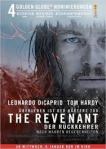
One of the most successful global trade negotiators added a few hours to his work day 17 years ago to write a novel about fur trader Hugh Glass. His book, ‘The Revenant’ was published in 2002 and sold 15,000 copies. Last year publisher Picador reissued the novel, selling over half a million copies.
images

Michael Punke, the deputy United States Trade Representative and the United States ambassador to the World Trade Organization and author, has become a rock star among colleagues in global trade.

“We all think it’s quite cool,” said Keith Rockwell, a spokesman for the W.T.O., who added that colleagues occasionally tease Mr. Punke by asking him how his buddy Leo is doing. “The W.T.O. isn’t normally known for having a Hollywood connection.”

Some of his colleagues marvel that he has such a successful side career, while steering the country’s international trade policy from his post in Geneva.

“The guy is so talented, you read his bio, and it’s like he has two lives,” said Christopher Wenk, the executive director for international policy at the U.S. Chamber of Commerce.”

Joining Ambassador Punke at the Dolby Theater on Oscar night is current Washington Post executive editor and former Boston Globe editor Martin Baron.

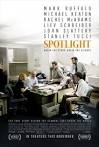
In November, Esquire Magazine ran a career profile asking ‘Is Martin Baron the Best News Editor of All Time?’. In the Oscar nominated film, ‘Spotlight’, actor Liev Schreiber’s performance channels the editor who led the Pulitzer Prize winning team investigating the child abuse scandal in the Catholic Church.
Unknown-1.jpeg

This week, Mr. Baron used his time in the Oscar ‘spotlight’ to reflect on the long term rewards of the film and journalism today, ‘I’m in ‘Spotlight’, but it’s not really about me. It’s about the power of journalism.’

“Aside from the acclaim of critics, “Spotlight” already has delivered one gratifying result. In emails, tweets and Facebook posts, journalists have declared themselves inspired, buoyed and affirmed. That is no small matter in this badly bruised profession. We have felt the traumatizing financial effect of the Internet and been berated by just about everyone, especially politicians in a campaign season that has seen us cynically labeled “scum.”

One journalist wrote me that “the story that inspired the movie serves as a wonderful, wonderful reminder why so many of us got into this business in the first place and why so many stayed despite all the gloom and doom and all the left hooks that landed squarely on our chins along the way.”

The article is required reading for all who earn a living pursuing a journalism career. It should be framed on the walls of journalism schools and be the first google search result on the world ‘journalism’.

Two additional stories about work in Hollywood this week addressed the ongoing conversation on inclusion:

‘From C-Suite to Characters on Screen: How inclusive is the entertainment industry?’ USC Annenberg professor Stacy L. Smith authored the MDSC Initiative’s first report on diversity in the entertainment industry.

Melena Ryzik profiled 27 industry professionals in ‘What It’s Really Like to Work in Hollywood*  (*If you’re not a straight white man.)’

Before leaving the week@work, let’s travel to the International Space Station where astronaut Scott Kelly is completing his 240 day mission in space.

CTeSzSOWIAApQID

“10,944 sunrises and sunsets

“The International Space Station zips around Earth at more than 17,000 miles per hour, or once every 90 minutes. That means over the course of Mr. Kelly’s stay, the space station will have made 5,440 orbits, and the sun will have gone up and down 10,944 times from the perspective of the astronauts aboard. Of course, Mr. Kelly did not see all of them. He is not continuously looking out the window, and he sleeps, too.”

(Scott Kelly tweeted the photo above of sunrise on February 27 and ice earlier today)CcT9mfcW4AAZFvx.jpg

NASA announced this week that it had received 18,300 applications for 14 open spots in the new astronaut class. The recruiting effort which began in the fall demonstrates a rekindled interest in exploration and discovery.

“Now that NASA’s Feb. 18 deadline for applicants has passed, the agency’s 18-month winnowing process has begun.

NASA staff will look at 400 to 600 applicants who survive the initial purge and identify those who pass reference and background checks. Then 120 will be invited to the Johnson Space Center for interviews.

The final 14 will be announced in July 2017 and begin two years of extensive training on spacecraft systems, spacewalking skills, team building and Russian language. Those who complete the program will be assigned to NASA’s Orion deep space exploration ship, the International Space Station or one of two commercial vehicles in development.”

As @StationCDRKelley vacates his spot on the ISS, it’s good to know there are thousands who hope to fill his seat.

This week@work – it’s in the stars, and the dreams of those who aspire to be actors, film makers, journalists, writers, astronauts, and international trade negotiators.


The week@work – A vacancy on the Supreme Court, the power of creative cross training, deciding to ‘jump ship’ and targeting teachers

The headline story of the week@work came with the late Saturday evening announcement of the death of U.S. Supreme Court Justice Antonin Scalia. The theme of transition was echoed in other stories this week, on creative cross-training and deciding when to make your next career move. If you are a teacher, you may be considering both, as educational reform efforts seem to be targeting those leading the classroom vs. students.

A few hours before the Republican candidates were to take the stage in their on-going interview process for the job of U.S. president, news broke that conservative Supreme Court Justice Antonin Scalia had died. Within seconds, it seemed, politicians were redefining the rules on the naming of a successor. In terms of job openings, it’s one of the most coveted appointments in government. The vacancy in the judicial branch will be added to the open position of President and 469 seats in Congress on November 8. It’s enough to overwhelm your average Human Resources manager. Oh, wait, we are the human resources manager here. Time to start paying attention to resumes and experience.

Most of us hope to find meaning in our work, and make some impact on our community with our efforts. For Justice Scalia, his impact was described by Jeffrey Toobin for The New Yorker.

“The loss of Justice Antonin Scalia is immensely significant on two levels. First, Scalia himself ranks among the most influential Justices in American history, alongside such figures as John Marshall, Oliver Wendell Holmes, Jr., and William Brennan. Second, Scalia was the linchpin of the Supreme Court’s five-justice conservative majority. His departure gives President Obama—or a Democratic successor—the opportunity to reshape the ideological balance among the Justices.

When Scalia joined the court, in 1986, the leading school of constitutional interpretation was the “living Constitution”—the claim that the meaning of the document evolves with changes in American society. Scalia brought with him the concept of “originalism”—that the Constitution should be interpreted as its eighteenth-century framers understood it. In practical terms, originalism gives constitutional sanction to conservative politics.

In interpreting laws, he was the leading spokesperson for “textualism,” the idea that, when interpreting laws, courts should look not to legislative history, or congressional “intent,” but rather only to the words of the law itself. While originalism remains controversial within the legal community, textualism won support from nearly all his colleagues (all except Stephen Breyer). This means that the Justices will limit the reach of laws to their precise terms, expanding the court’s power over Congress.”

Srinivas Rao writes about ‘The Power of Creative Cross Training: How Experimentation Creates Possibility’.

Although he is describing the careers of creative professionals, his suggestions to immerse  yourself in tangential activities to broaden your thinking and portfolio, has broad application across career disciplines.

“For most creative professionals, we have a tendency to live within the limitations of our labels: copywriter, web designer, filmmaker, illustrator, and author. Those are the things we do and we get paid for.

The point of creative cross training is to immerse yourself for a short period of time in an art form that is not your primary one. For a writer that could mean designing or drawing something. For a visual artist, that could mean learning to write code.”

An entrepreneur doesn’t have the luxury of labels, and must continually cross train to develop a suite of skills in marketing, finance, customer relations and communication. If you have the mindset of an entrepreneur, creative cross training will become your mandatory daily ritual to stay competitive irrespective of profession.

Creative cross training allows you to take ownership of your career and be prepared for changes @work. Paul Sullivan explored the risks for folks who have ‘jumped ship’, leaving  a stable career to pursue a passion.

“…a Gallup Poll in October found that when American workers make a career change, they almost always do so by leaving their employer instead of taking a new job within the company. Some 93 percent said they took a new role elsewhere. The survey found this was true whether the job change occurred 30 years ago or within the last year.

…consider the tale of DeJuan Stroud, a former Wall Street broker and compliance officer…he gave up his well-paid job and put their modest savings at risk to turn a hobby — floral design, which he had learned from his grandmother growing up in Alabama — into a business.

Now, two decades later, Mr. Stroud is one of the most sought-after floral and event designers in New York City.

His is a success story. But there are big risks in following a similar path — giving up a regular salary and losing your savings for one; throwing away the security of a career is another. For those who go forward, the payoff may be more psychic than monetary, and they need to feel comfortable that the chance of a more modest lifestyle is worth it.”

For some reason, its become ok in our society to devalue the folks who inspire, encourage and transfer knowledge to each generation. Well, it’s not ok and David Denby urges us to ‘Stop Humiliating Teachers’.

“A necessary commonplace: Almost everyone we know has been turned around, or at least seriously shaken, by a teacher—in college, maybe, but often in high school, often by a man or a woman who drove home a point or two about physics, literature, or ethics, and looked at us sternly and said, in effect, You could be more than what you are. At their best, teachers are everyday gods, standing at the entryway to the world. If they are fair and good, they are possibly the most morally impressive adults that their students will ever know. For a while, they are the law, they are knowledge, they are justice.

Our view of American public education in general has been warped by our knowledge of these failing kids in inner-city and rural schools. In particular, the system as a whole has been described by “reformers” as approaching breakdown. But this is nonsense. There are actually many good schools in the United States—in cities, in suburbs, in rural areas. Pathologizing the system as a whole, reformers insist on drastic reorganization, on drastic methods of teacher accountability. In the past dozen or so years, we’ve seen the efforts, often led by billionaires and hedge-fund managers and supported by elected officials, to infuse K-12 education with models and methods derived from the business world—for instance, the drive to privatize education as much as possible with charter schools, which receive public money but are independently run and often financed by entrepreneurs. This drive is accompanied by a stream of venom aimed at unions, as if they were the problem in American education. (Most charter schools hire non-union teachers.) In the real world, however, highly unionized areas of the country, such as the Northeast, produce students with scores higher than the national average in standardized tests; the Deep South, where union teachers are more scarce, produces scores that are lower. So unions alone can hardly be the problem.”

Many recent college graduates, and career changers consider teaching as a career. In reality, our society values the profession at 70% of what peers in other professions earn.  Teachers may not be motivated by money, but that doesn’t allow the rest of us to abdicate our responsibility. It’s time to place a higher premium on those who significantly influence our future.

Two additional articles of interest to consider this week@work:

‘Women in Company Leadership Tied to Stronger Profits, Study Says’ by Daniel Victor “Having women in the highest corporate offices is correlated with increased profitability, according to a new study of nearly 22,000 publicly traded companies in 91 countries.”

‘Why do my co-workers keep confusing me with other people? Because I’m Asian.’ by Iris Kuo   “All my life I’ve been mistaken for other people of my race. It’s a degrading and thoughtless error that boils away my identity and simplifies me as one thing: “that Asian.”