The week@work – VP Biden on leadership, Serena@US Open and #NeverForget

This week@work captured snapshots of genuine human moments: a vp expressing emotion in a late night talk show conversation, a tennis champion’s loss to an unseeded and 43rd world ranked competitor and commemorations of a day 14 years ago that we will #NeverForget.

In the U.S. we are in the midst of a presidential selection process that accentuates the loud and outrageous vs. the rational and purposeful. So it was refreshing to read an article by David Zweig, ‘The Myth of the Larger Than Life Leader’.

“The reality, as many professionals who tend to fall more on the quiet end of the spectrum can attest to, is that many of the best workers—be they at the top of the pyramid or somewhere in the middle—go about their business, achieving great results without fanfare. And while it may feel as though the whole world is beguiled by those who make the most noise in conference rooms and boardrooms, it’s encouraging and, critically, worth noting that that’s not actually the case.”

Which brings me to the extraordinary interview by Steven Colbert with Vice President Biden on Thursday evening. In a conversation that ranged from the personal to the professional, the vice president shared his perspective on the interview process for president.

Unknown-1

He began by posing a question to the audience, that’s relevant to each of us when we are looking for work. “Would you want a job, that in fact, every day you had to get up and you had to modulate what you said and believed?”

He continued with more career advice. “If you can’t state why you want the job, then there’s a lot more lucrative opportunities in other places.”

He then talked in specifics about the requirements to interview for the top job. “I don’t think any man or woman should run for president unless, number one, they know exactly why they would want to be president, and two, they can look at the folks out there and say, “I promise you, you have my whole heart, my whole soul, my energy and my passion to do this.”

On Friday, one of tennis’ greatest players, Serena Williams, lost her semi-final match at the US Open and ended her quest for the calendar Grand Slam. It’s a reminder to all of us that there are no guarantees. In any competitive situation, there is always the chance we will fail. This week it was an unseeded, 33 year old player from Taranto, Italy, Roberta Vinci who prevailed in three sets.

Unknown-2

The stage was set for a women’s final between two former Italian tennis academy roommates, Flavia Pennetta and Roberta Vinci. Cue the author, Elena Ferrante to script this story worthy of her heroines Elena and Lila of the Neopolitan novels.

In front of a sold out crowd, including Italian Prime Minister, Matteo Renzi, Flavia won in straight sets on Saturday, announcing her retirement as she accepted the US Open Championship trophy. Just as we met her, she shared a career lesson and  stepped away to reinvent her life.

13OPENWOMENshow-slide-DQRY-jumbo

So we #NeverForget, a poem written for the 43 members of Hotel Employees and Restaurant Employees Local l00, working at the Windows on the World restaurant, who lost their lives in the attack on the World Trade Center

Martín Espada’s “Alabanza: In Praise of Local 100″

Alabanza. Praise the cook with a shaven head
and a tattoo on his shoulder that said Oye,
a blue-eyed Puerto Rican with people from Fajardo,
the harbor of pirates centuries ago.
Praise the lighthouse in Fajardo, candle
glimmering white to worship the dark saint of the sea.
Alabanza. Praise the cook’s yellow Pirates cap
worn in the name of Roberto Clemente, his plane
that flamed into the ocean loaded with cans for Nicaragua,
for all the mouths chewing the ash of earthquakes.
Alabanza. Praise the kitchen radio, dial clicked
even before the dial on the oven, so that music and Spanish
rose before bread. Praise the bread. Alabanza.

Praise Manhattan from a hundred and seven flights up,
like Atlantis glimpsed through the windows of an ancient aquarium.
Praise the great windows where immigrants from the kitchen
could squint and almost see their world, hear the chant of nations:
Ecuador, México, Republica Dominicana,
Haiti, Yemen, Ghana, Bangladesh.
Alabanza. Praise the kitchen in the morning,
where the gas burned blue on every stove
and exhaust fans fired their diminutive propellers,
hands cracked eggs with quick thumbs
or sliced open cartons to build an altar of cans.
Alabanza. Praise the busboy’s music, the chime-chime
of his dishes and silverware in the tub.

Alabanza. Praise the dish-dog, the dishwasher
who worked that morning because another dishwasher
could not stop coughing, or because he needed overtime
to pile the sacks of rice and beans for a family
floating away on some Caribbean island plagued by frogs.
Alabanza. Praise the waitress who heard the radio in the kitchen
and sang to herself about a man gone. Alabanza.

After the thunder wilder than thunder,
after the shudder deep in the glass of the great windows,
after the radio stopped singing like a tree full of terrified frogs,
after night burst the dam of day and flooded the kitchen,
for a time the stoves glowed in darkness like the lighthouse in Fajardo,
like a cook’s soul. Soul I say, even if the dead cannot tell us
about the bristles of God’s beard because God has no face,
soul I say, to name the smoke-beings flung in constellations
across the night sky of this city and cities to come.
Alabanza I say, even if God has no face.

Alabanza. When the war began, from Manhattan and Kabul
two constellations of smoke rose and drifted to each other,
mingling in icy air, and one said with an Afghan tongue:
Teach me to dance. We have no music here.
And the other said with a Spanish tongue:
I will teach you. Music is all we have.

Unknown

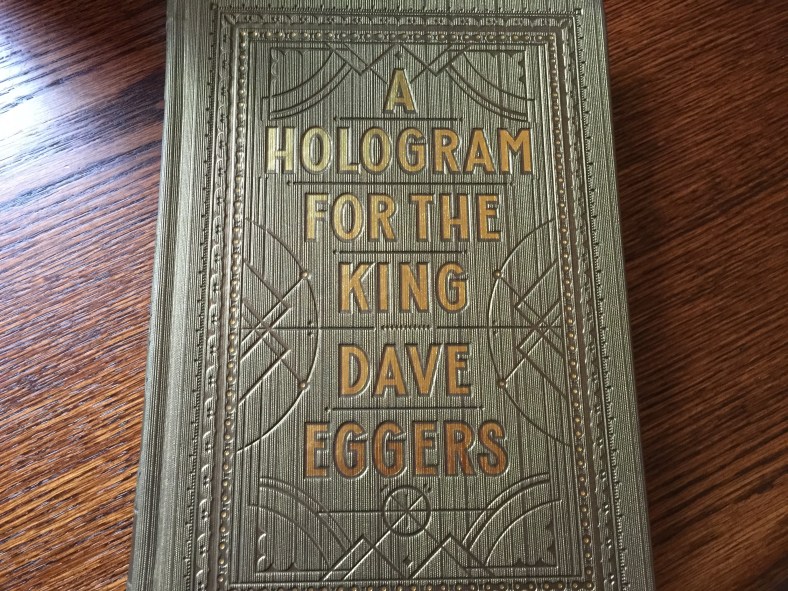
The Saturday Read ‘A Hologram for the King’ by Dave Eggers

Before you see the movie, take a trip with author Dave Eggers to King Abdullah Economic City in Saudia Arabia and meet American salesman, Alan Clay in this week’s Saturday Read, ‘A Hologram for the King’.

Have you ever had a job in sales? If yes, you know the feeling of dependence on the whim of a sometimes enigmatic client. You have developed a second sense for the competitive pitch of your business rivals. And you have learned to rely on the support of your tech team to execute a demo, make you look good, and help you close the deal. You also know what it’s like to lose, maintain your confidence and uncover the next potential opportunity in the loss.

This 2012 novel is the story of one man’s American Dream on the edge as he pursues his last chance at success in the bewildering global marketplace. If you have not worked in sales, the book cracks open a window into the world of waiting for a face to face meeting with a prospect, in this case, the king.

Alan has the attitude, extremes of confidence and self-doubt, the bi-polar disposition required of all successful sales folk.

“…He was more than that. Some days he was more than that. Some days he could encompass the world. Some days he could see for miles. Some days he climbed over the foothills of indifference to see the landscape of his life and future for what it was: mappable, traversable, achievable. Everything he wanted to do had been done before, so why couldn’t he do it? He could. If only he could engage on a continual basis. If only he could draw up a plan and execute it. He could! He had to believe he could. Of course he did.”

In her June, 2012 review of the book, Michiko Kakutani reflected on the larger themes of the narrative.

“In Mr. Eggers’s telling, the 54-year-old Alan is not just another hapless loser undergoing a midlife crisis. Rather, his sad-funny-dreamlike story unfolds to become an allegory about the frustrations of middle-class America, about the woes unemployed workers and sidelined entrepreneurs have experienced in a newly globalized world in which jobs are being outsourced abroad.”

‘…he has achieved something that is more modest and equally satisfying: the writing of a comic but deeply affecting tale about one man’s travails that also provides a bright, digital snapshot of our times.”

In an interview with Cressida Leyshon, author Eggers described how the story evolved to blend the themes of globalization and the American economy.

“Before I heard about K.A.E.C., I had been kicking around ideas about a character who had been in manufacturing. The idea of Alan having been in bicycle manufacturing arrived next, and was personal to me, given I grew up about twenty miles from the Schwinn factory, which was building great bikes until the eighties on the west side of Chicago. I wanted to explore how an essentially good man like Alan participated in the process of manufacturing moving offshore in the eighties and nineties, slowly making the factories, workers, supply chain, and eventually, himself, unnecessary.”

Tom Hanks is cast as Alan in the movie. The promo photo released early this year captures our hero in the desert, clad in the costume of the everyman salesman, coat and tie, regardless of the environment.

Unknown

Near the end of the book, Alan utters the mantra of sales.

“…he had to presume goodwill. He had to hope for amnesia.”

‘The Names’ a poem by Billy Collins

Today we remember those who headed to work on a beautiful September morning in 2001. It has been fourteen years since they did not return home.

Poetry flourished in New York in the aftermath of the attacks. “By February, 2002, over 25,000 poems written in response to 9/11 had been published on poems.com alone. Three years later, the number of poems there had more than doubled.”

Billy Collins was the U.S. Poet Laureate in 2001. The Friday Poem, ‘The Names’, was delivered to a joint session of Congress in 2002.

The Names

Yesterday, I lay awake in the palm of the night.

A soft rain stole in, unhelped by any breeze,

And when I saw the silver glaze on the windows,

I started with A, with Ackerman, as it happened,

Then Baxter and Calabro,

Davis and Eberling, names falling into place

As droplets fell through the dark.

Names printed on the ceiling of the night.

Names slipping around a watery bend.

Twenty-six willows on the banks of a stream.

In the morning, I walked out barefoot

Among thousands of flowers

Heavy with dew like the eyes of tears,

And each had a name —

Fiori inscribed on a yellow petal

Then Gonzalez and Han, Ishikawa and Jenkins.

Names written in the air

And stitched into the cloth of the day.

A name under a photograph taped to a mailbox.

Monogram on a torn shirt,

I see you spelled out on storefront windows

And on the bright unfurled awnings of this city.

I say the syllables as I turn a corner —

Kelly and Lee,

Medina, Nardella, and O’Connor.

When I peer into the woods,

I see a thick tangle where letters are hidden

As in a puzzle concocted for children.

Parker and Quigley in the twigs of an ash,

Rizzo, Schubert, Torres, and Upton,

Secrets in the boughs of an ancient maple.

Names written in the pale sky.

Names rising in the updraft amid buildings.

Names silent in stone

Or cried out behind a door.

Names blown over the earth and out to sea.

In the evening — weakening light, the last swallows.

A boy on a lake lifts his oars.

A woman by a window puts a match to a candle,

And the names are outlined on the rose clouds —

Vanacore and Wallace,

(let X stand, if it can, for the ones unfound)

Then Young and Ziminsky, the final jolt of Z.

Names etched on the head of a pin.

One name spanning a bridge, another undergoing a tunnel.

A blue name needled into the skin.

Names of citizens, workers, mothers and fathers,

The bright-eyed daughter, the quick son.

Alphabet of names in a green field.

Names in the small tracks of birds.

Names lifted from a hat

Or balanced on the tip of the tongue.

Names wheeled into the dim warehouse of memory.

So many names, there is barely room on the walls of the heart.

Billy Collins, 2002

Can ‘YouTube’ be a mentor?

If YouTube videos can teach us how to wire a smoke detector, can they also teach us how to lead? That may seem like a ridiculous question, but in our evolving ‘conversation adverse’ culture, are we turning to videos to provide guidance in the workplace?

Think about your first job, your first day at work. Aside from the anticipation, you might as well have been visiting another planet. Perceptions collided with reality as you navigated your way through the first days; an amateur anthropologist alert to  any clue to success in this new society you had joined. Who could you trust to advise you on your journey?

That is the question we all ask at some point in our first weeks at work. All is new and colleagues seem equal. Then the sorting begins as you filter conversations and observe interactions among colleagues and the leadership team. A picture begins to emerge of the culture, the influencers and the business problems to be solved. For most of us, we wing it. We take our experience, as limited as it may be, and experiment. We offer solutions. Find they are not well constructed. Go back and revise and then venture back with the edited proposal. It’s a process of trial and error as we independently craft an answer.

We find ourselves at a turning point. We need help. Where do we go to find it?

There are thousands of articles that define the role of mentors, how to find one, how to manage the relationship, but it was the first paragraph of an article I read a few weeks ago that introduced a significant hybrid approach to how we learn to work.

In early August, Starbucks CEO Howard Schultz wrote an opinion piece in The New York Times on the topic of servant leadership, putting others first and leading from the heart.

“From the earliest days of Starbucks, I’ve been captivated by the art of leadership. I was mentored over three decades by Warren G. Bennis, the eminent professor and scholar on leadership. I’ve gathered insights from peers, and I’ve drawn inspiration from our 300,000 employees. But nothing I’ve read or heard in the past few years has rivaled the power of the image I viewed on my cellphone a few years ago: Pope Francis, shortly after his election, kneeling and washing the feet of a dozen prisoners in Rome, one of them a young Muslim woman, in a pre-Easter ritual.”

In one short paragraph, the CEO describes a combination of activities that build upon each other to form his leadership style. He relies on a mentor from outside his business, gathers insights from peers and employees and in the end it’s an image from the internet that provides the inspiration for his leadership view.

Can YouTube be a mentor? There is no substitute for human interaction and advice. Learning to work is a lifetime quest and hard work. But the ability to access online courses, TED Talks and podcasts provide an essential element in our professional development.

The week@work – Why everyone should take a geography class, Angela Merkel’s humanity, and the legacy of Oliver Sachs

The week@work was one of stories that urge us to open our minds and hearts to what we may not at first understand.

If you don’t understand geography you won’t comprehend the on-going global political struggles. If you live in Europe, you are overwhelmed imagining the impact of the vast number of immigrants arriving daily. German Chancellor Angela Merkel has taken on the role of champion for the dignity of common humanity and is guiding the discussion of the consequences if Europe fails on the question of refugees. Closer to home, Dr. Oliver Sachs has left us a legacy of writings and research that helps us understand ourselves, our brains, and appreciate the interconnectedness of life.

Joshua Keating writing for Slate, asks ‘Where In The World?’ While enrollment in university geography classes is increasing, many departments have been eliminated and courses are no longer available. Digital literacy without geographical literacy is not a good thing.

“Geographical literacy remains vital—particularly for those of us who live in (for the time being at least) the world’s preeminent military and economic superpower. Geography is necessary for understanding why the overthrow of a government in Libya contributed to an unprecedented surge of migrants into Europe, why Ukraine has been split between East and West amid its conflict with Russia, and why China’s neighbors are alarmed at the new islands under construction in the South China Sea. And as we learned during last year’s Ebola panic, an understanding of African geography could have helped explain why an outbreak in West Africa should not lead to the quarantining of people from Kenya or Tanzania. In the years to come, as the effects of climate change on everything from sea level rise to deforestation to drought quite literally reshape the world we live in, an understanding of geography will be necessary for mitigating and adapting to the consequences.”

If you have been wondering when the U.S. media would begin leading the news with the story of the immigrant crisis in Europe, this was the week and the focus was on the Keleti train station in Budapest, Hungary. As the route of immigrants shift toward the Balkans anti-immigrant sentiment is growing. Germany expects to receive 800,000 refugees and asylum seekers this year.

In an editorial on Tuesday, ‘The Guardian view on Europe’s refugee crisis: a little leadership, at last’, the staff praised the courage of the German Chancellor.

“There can be no tolerance of those who question the dignity of other people,” she said, standing in front of placards accusing her of being the people’s traitor. “There is no tolerance of those who are not ready to help, where, for legal and humanitarian reasons, help is due.”

Confronted by forces that would overwhelm British leaders, the woman the Greek left (and many on the British left who should know better) mistakenly accuse of being the leading advocate of conservative neoliberalism has stood up to be counted. Being the country to which so many want to migrate should be a source of pride, she says. She wants to keep Germany and Europe open, to welcome legitimate asylum seekers in common humanity, while doing her very best to stop abuse and keep the movement to manageable proportions. Which demands a European-wide response. So far, her electorate and her press back her.”

Dr. Oliver Sachs died this week. There have been countless obituaries and remembrances, but my favorite is from The New York Times’ Michiko Kakutani, the Pulitzer Prize winning book critic.

“It’s no coincidence that so many of the qualities that made Oliver Sacks such a brilliant writer are the same qualities that made him an ideal doctor: keen powers of observation and a devotion to detail, deep reservoirs of sympathy, and an intuitive understanding of the fathomless mysteries of the human brain and the intricate connections between the body and the mind.

Dr. Sacks, who died on Sunday at 82, was a polymath and an ardent humanist, and whether he was writing about his patients, or his love of chemistry or the power of music, he leapfrogged among disciplines, shedding light on the strange and wonderful interconnectedness of life — the connections between science and art, physiology and psychology, the beauty and economy of the natural world and the magic of the human imagination.”

Other articles of interest this week@work offered advice on choice of college major, how to eliminate interruptions in the office and quitting your job before you have another.

‘Major Choice Shouldn’t Define a Career’ Jordan Holman – Sage advice from a senior writing in the student newspaper of the University of Southern California. “In this job economy it matters more about how you can apply the skills you acquired from the classes taken and lessons learned than just the titles on your resumé. It’s about taking that difficult class that you’re frightened of, but which could also serve as the perfect anecdote during an interview.”

‘5 Strategies to Eliminate Constant Interruptions’ Lisa Evans – “Did you know that the average manager gets interrupted approximately once every eight minutes? That’s about seven interruptions each hour. What’s worse, after every interruption, it takes an average of 25 minutes to fully regain cognitive focus. No wonder at the end of an eight-hour day, you still feel like you haven’t accomplished anything.”

Should You Quit Your Job Before You Have Another One? –  Stephanie Vozza – Multiple news outlets covered the release of ‘Leap: Leaving a Job With No Plan B to Find the Career and Life You Really Want’ by former Public Radio Marketplace reporter Tess Vigeland“When I left, one of the biggest questions I got was, ‘What the hell are you doing?’ and there are plenty of times I miss it,” she admits. “I miss being in a newsroom. I miss the microphone and the audience. Those are the times when I beat myself about the head, but they’re becoming rarer and rarer. You have to go through the process. I feel it was absolutely the right thing to do. I used to spend a chunk of day miserable. If it’s Sunday and you never look forward to Monday, you need to make a change. Life is too short to live for Friday afternoon.”

And one more time, The New York Times reported on the continuing trend of wage and salary lag as corporate profits continue to surge.

‘Something Left Undone’ a poem by Henry Wadsworth Longfellow

As the Labor Day weekend begins, we are all probably leaving some work undone. Our Monday intentions were the best, to run through a list and finish them all by week’s end. But interruptions, distractions, and previously unscheduled meetings diverted us from the task.

The poet Henry Wadsworth Longfellow captures the feeling of the accumulating burden in this weeks’ Friday poem, Something Left Undone.

Something Left Undone

Labor with what zeal we will,
Something still remains undone,
Something uncompleted still
Waits the rising of the sun.
By the bedside, on the stair,
At the threshold, near the gates,
With its menace or its prayer,
Like a mendicant it waits;
Waits, and will not go away;
Waits, and will not be gainsaid;
By the cares of yesterday
Each to-day is heavier made;
Till at length the burden seems
Greater than our strength can bear,
Heavy as the weight of dreams,
Pressing on us everywhere.
And we stand from day to day,
Like the dwarfs of times gone by,
Who, as Northern legends say,
On their shoulders held the sky.

Henry Wadsworth Longfellow, Birds of Passage 1863

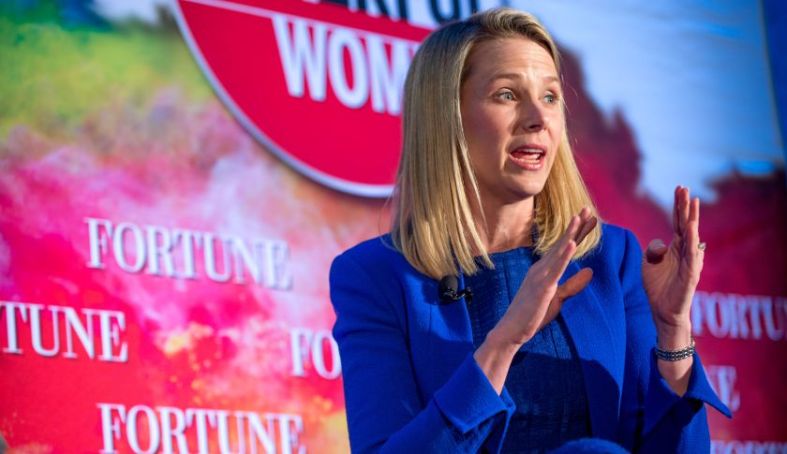
Marissa Mayer – Tag Team Parent?

On Tuesday, Yahoo CEO Marissa Mayer announced via Tumblr that she is expecting twin girls. On the same day New York Magazine writer, Oz Spies described her life, as a mother of three, as a ‘tag-team parent’. These two distinct narratives provide a vivid illustration of how folks cope with balancing work and life in a world of income inequality.

Ms. Mayer became one of the highest profile working mothers three years ago, not long after her appointment as head of the global internet service. A 2013 profile in Vogue described her strategy to balance work and child care.

“She set up a nursery next to her office, and for several months after Macallister was born, he and his nanny came to work with her.”

In her announcement this week, she implied she would utilize a similar approach with the birth of the twins.

“Since my pregnancy has been healthy and uncomplicated and since this is a unique time in Yahoo’s transformation, I plan to approach the pregnancy and delivery as I did with my son three years ago, taking limited time away and working throughout. I’ve shared the news and my plans with Yahoo’s Board of Directors and my executive team, and they are incredibly supportive and happy for me. I want to thank them for all of their encouragement as well as their offers of help and continued support.”

What is the message to the employees at Yahoo who might be planning family leave when the CEO opts out?

Writers Claire Cain Miller and David Streitfeld explored the issue in their NYT article, ‘Big Leaps for Parental Leave, if Workers Actually Take It’.

“Such contradictory signaling from Yahoo, which lengthened its parental leave in 2013, is typical and ambiguous, said Joan Williams, director of the Center for WorkLife Law at the University of California, Hastings. “The underlying work culture sends the message that if you’re really committed, you’re here all the time,” she said.”

On the other side of the spectrum, meet a Colorado couple, parents of three. One is a firefighter and the other a writer and consultant in the non-profit sector.

“We’re tag-team parents. It’s a term coined by the Center for Economic and Policy Research for parents who work alternating schedules, taking turns at both paid employment and child care, and it’s a work-parenting setup that’s on the rise. More than one-fourth of two-income couples include an adult working a nonstandard schedule (other than nine to five with evening or weekend hours).

Shift work is nothing new, but traditionally, many men who worked overnight, including firefighters, had wives who were stay-at-home moms. Now, more of these couples trade off work and kid duties. On my husband’s crew (all married fathers), the wives are all in the workforce, most of us fitting that work in around our husbands’ 48-hour shift blocks and our children’s school schedules. As a nonprofit consultant and writer, my job often gets done from a computer in our basement late at night, and I fit in the rest on the days when my husband is home with the kids. It’s yet another way that families today don’t look like the breadwinner father and stay-at-home mother ones of the past.”

While the media focuses on the birth announcements of business rockstars, it ignores the larger issue facing middle class families today. The average parent cannot bring their child and nanny to work. The cost of child care for two or more children exceeds the additional revenue of most second incomes. In the majority of families there is only one solution, alternating schedules with frequent handoffs of toddlers in parking lots when the best plans fail and shifts overlap.

This is our new American dream.

“Single parents, deployed parents, grandparents who are raising the children of their children — there are all kinds of complexities with which to wrestle. We figure it out as we go and we keep going.”

For the majority, including Oz Spies and her family this is the new normal.

“For us, tag-team parenting is the best way to see the kids we adore, do work we love, and still pay the bills. We’ll never have a standing Friday date night or every weekend together, but all this tag-team parenting has made us appreciate that we’re a team.”

Maybe Marissa Mayer’s strategy for blending family and work is a version of ‘tag team parenting’. It’s just hard to visualize a pre-dawn Silicon Valley McDonalds parking lot where a CEO and venture capitalist husband exchange toddlers, diaper bags and car seats.

Take this class: Quarterbacks and Leadership

What does it take to win a national championship in college football? One key differentiator might be leadership training. Look at the success of any college football team and there are three key players: the coach, the quarterback and the mentor. If any one of the three lacks the fundamental traits of a leader, you are looking at more losses than wins.

If football is your career, your leadership skills are your business card. If you don’t have the confidence of your players and lack the ability to inspire, the feedback will be quick and you will be unemployed.

The head coach, like the leader of any organization, sets the vision. If he cannot paint a picture of what success looks like, there will be 105 folks coming up with ideas of their own.

A position coach is expected to have the technical knowledge to coach players. They also serve as mentors to student-athletes balancing the dual responsibilities of academics and sports.  What sets them apart from the competition is their ability to gain the trust of their players utilizing all the elements of ’emotional intelligence’.

The majority of folks who have chosen coaching as their career learn leadership by osmosis. They build a skill set from experience and observation. Most coaches may never have heard the term ’emotional intelligence’, but the best lead from self-confidence, integrity, empathy, social skills and the drive to achieve.

The success of a team and the job security of the coach rests on the performance of folks between the ages of 17 and 22.

These folks who play football in Division I schools have been living separate lives from us mere mortals since elementary school. They have followed a career trajectory that parallels their peers in some ways, but diverges at key decision points, the most visible being the college admissions process.

Where along the way does the quarterback learn the foundations of leadership?

The ‘student’ part of student-athlete is the perfect portal to leadership development that will serve in the present on the field, and provide the foundation for success after football.

I was listening to sports radio on a nine hour drive through the Mid Atlantic states on Monday. On one program analysts were dissecting the quarterback selection decisions of a number of teams, both college and pro. Each decision considered physical ability, football ‘smarts’, but most importantly confidence and trust. If a player did not have the confidence and trust to their coach and team, they were benched.

How many of those folks sitting on the bench this season would be on the field if a mentor or professor had introduced them to the fundamentals of leadership? I’m not suggesting a complete turnaround, but if a player understood how to communicate more effectively, lose a bit of the arrogance and build support among his teammates, would the playing field be a bit more level?

Recently a court ruled that college athletes cannot be considered as employees. That does not exempt the adults in the athletic building from ensuring their student-athletes have access to the faculty expertise available on every college campus. Time for coaches to recognize the value of the academy, draw upon that wisdom and encourage their players to develop key leadership and life competencies.