The week@work – Super Bowl@50, Facebook@12 and unemployment@4.9%

This week@work the center of the media universe shifted from Iowa to New Hampshire, and Silicon Valley where, separated by about 12 miles on Highway 101, Levi Stadium in Santa Clara will host the 50th Super Bowl game, and Facebook celebrated it’s twelfth birthday at corporate HQ in Menlo Park. And, in the U.S. the unemployment rate dropped to 4.9%, the lowest since 2008.

In the lead up to the big game there were hundreds of stories about those who choose football as a career, from the high school senior announcing a college choice to the veteran player rewarded with membership in the Football Hall of Fame.

The typical NFL player takes their first step in their career at the annual February ritual, ‘National Signing Day’. It’s the day high school football players sign a ‘Letter of Intent’ to accept an offer of admission and commit to play football at the collegiate level. This year, Tom Brady and Derek Jeter were on hand in Ann Arbor, Michigan to participate in ‘The Signing of the Stars’ “a flamboyant national signing day pep rally streamed live on Wednesday by The Players’ Tribune — the website founded by Jeter, a Michigan native — and intended to build the hype around this year’s class of prospective Wolverines football players.”

Time will tell if the top college recruit, Rashan Gary, from Paramus Catholic High School in New Jersey will advance beyond his playing days at Michigan.

On the other end of the football career spectrum is recognition as an inductee into the NFL Hall of Fame. The class of 2016 includes former Oakland Raiders quarterback, Ken Stabler who let his team to their first Super Bowl victory after the 1976 season.

“While generally a cause for celebration, Saturday’s announcement of the class of 2016 for the Pro Football Hall of Fame carried a somber tone as Ken Stabler, a Super Bowl-winning quarterback for the Oakland Raiders, was elected days after it was publicly revealed that he had had Stage 3 chronic traumatic encephalopathy, or C.T.E., a degenerative brain disease, before his death in July.

Stabler, known as the Snake, who won a Most Valuable Player Award for the 1974 season and led the Raiders to the team’s first Super Bowl victory after the 1976 season, was previously a finalist for election three times, but this year, as a senior candidate, he was elected alongside Dick Stanfel, a star offensive lineman in the 1950s. The modern-era electees were Brett Favre, Marvin Harrison, Kevin Greene, Orlando Pace and Tony Dungy, as well as Edward J. DeBartolo Jr., who owned the San Francisco 49ers for all five of their Super Bowl wins and was elected as a contributor.”

On Wednesday, journalist, John Branch’s profile of Stabler, and his life after football with chronic traumatic encephalopathy (C.T.E.) was published in The New York Times.

“After retiring from football, Stabler worked as a broadcast analyst for the N.F.L. and for the University of Alabama, where he had played quarterback under Coach Bear Bryant. His damaged knees became such a problem in the past 10 years that he rarely ventured out.

“His vision of what a leader is, what a strong person is, is someone who did not show signs of weakness,” said Alexa Stabler, 29, the second of Stabler’s three grown daughters. “Because it would affect the people he relied on and the people he cared about, whether that was his family or his teammates.”

When Stabler was 31, a 1977 Sports Illustrated feature story detailed his penchant for honky-tonks and marinas, usually with a drink in one hand and a pretty woman in the other…He pondered what he might do after football.

“My lifestyle is too rough — too much booze and babes and cigarettes — to be a high school coach,” Stabler said. “I’d hardly be a shining example to the young athletes of the future.”

His family hopes that the most powerful lesson he provides is the one delivered after he was gone.

In between signing day and induction into the Football Hall of Fame, if you’re impossibly lucky, is a chance to compete in the national championship of professional football, the Super Bowl.

The annual spectacle, held this year in the vortex of Silicon Valley has exposed the growing economic divide, “gentrification, sky-high housing prices and the technology industry’s influence on local government, even the nation’s biggest party has become a battleground.”

“The cost of hosting the Super Bowl — estimated at about $5 million for the city — has unleashed a storm of anger among residents already resentful of the influx of expensive restaurants, high-end stores and rich, young tech workers who have snapped up apartments in historically low-income neighborhoods. To tidy up for the tourists, the city’s large homeless population has been swept out of view, which some people here see as evidence that this city, long a seat of leftist activism, has sold itself to corporate interests.

“In San Francisco, we’re supposed to be the bastion of crazy liberals,” Ms. Leitner said. “Instead of raising wages for teachers so they can afford to live here, why are we spending money on a party for people who work for the N.F.L.?”

Fast Company writer, Michael Grothaus marked the birthday celebration on Thursday at Facebook.

“It’s a bit crazy when you think about it, but Facebook is 12 years old today. On February 4, 2004, Mark Zuckerberg launched his fledgling social media site at Harvard. And the rest, as they say, is history. Twelve years on, Facebook has become the largest social media company ever. It influences myriad aspects of our lives and recently passed a billion active users each day.

It’s also kind of doing what candy makers and online retailers have tried to do in the past by deeming February 4th as an unofficial holiday that it hopes catches on: Friend’s Day.”

A look back to the 2004 Harvard Crimson article about ‘thefacebook.com’ may be the best  argument for why venture capitalists should be reading their alma mater’s student newspaper.

“Thousands of students across the country use it. Major corporations are falling over themselves to buy it.

But nearly a semester after creating thefacebook.com, a social networking website launched on Feb. 4, Mark E. Zuckerberg ’06 doesn’t seem to have let things go to his head.

Wearing a yellow t-shirt, blue jeans, and open-toe Adidas sandals, Zuckerberg sits on a ragged couch in the middle of a messy Kirkland House common room, surrounded by strewn clothes and half-closed boxes.

Amidst this squalor, he smiles.

“I’m just like a little kid. I get bored easily and computers excite me. Those are the two driving factors here.”

Thefacebook.com allows university students to create personal profiles listing their interests, contact info, relationship status, classes and more.

It started locally at Harvard. It now has almost 160,000 members from across the country.”

Twelve years later, Thomas Friedman considers the question, ‘Social Media: Destroyer or Creator?’

“Over the last few years we’ve been treated to a number of “Facebook revolutions,” from the Arab Spring to Occupy Wall Street to the squares of Istanbul, Kiev and Hong Kong, all fueled by social media. But once the smoke cleared, most of these revolutions failed to build any sustainable new political order, in part because as so many voices got amplified, consensus-building became impossible.

Question: Does it turn out that social media is better at breaking things than at making things?

Recently, an important voice answered this question with a big “ yes.” That voice was Wael Ghonim, the Egyptian Google employee whose anonymous Facebook page helped to launch the Tahrir Square revolution in early 2011 that toppled President Hosni Mubarak — but then failed to give birth to a true democratic alternative.

“Five years ago,” concluded Ghonim, “I said, ‘If you want to liberate society, all you need is the Internet.’ Today I believe if we want to liberate society, we first need to liberate the Internet.”

Beyond the Super Bowl and Facebook, the economy continues to improve. The jobless rate is under 5% and wages are rising.

“It’s not that the new data blew the lid off expectations or pointed to some radical acceleration in job growth in the opening weeks of 2016. Quite the contrary. The nation added 151,000 jobs in January, which was below analysts’ expectations and well below the revised 262,000 jobs added in December. That looks an awful lot like “reversion to the mean,” and it wouldn’t be surprising if final revisions show a slower pace of job growth across the two months.

But while economists and financial markets have traditionally placed the greatest weight on that payroll number as the key indicator of whether economic growth is speeding up or slowing down, we’re entering a phase where some other components of the jobs report are more important.”

Two additional articles of interest this week profile the executive who created the culture at Netflix and a BBC photo essay on the career dreams of the children who have fled Syria.

‘The Woman Who Created Netflix’s Enviable Company Culture’  Vivian Giang for Fast Company – “The woman behind “Netflix Culture: Freedom & Responsibility” was the company’s chief talent officer at the time, Patty McCord…Instead of listing the company’s core values like every other company was doing, McCord decide to write down the things the company valued, what mattered to them, what they expected in their people.”

‘When I grow up I want to be…’ (BBC) “Despite their current predicament, children who have fled the conflict in Syria and are now living in neighbouring countries dream of what the future holds for them, and the International Rescue Committee (IRC) sent photographer Meredith Hutchison to find out.”

To end this week@work, let me introduce you to Rama, age 13, and her dream of becoming a doctor, as a reminder to honor your dreams.

_88034777_a80f7902-6be1-4991-913e-aed456838390.jpg“Walking down the street as a young girl in Syria or Jordan, I encountered many people suffering – sick or injured – and I always wanted to have the power and skills to help them.
“Now, as a great physician in my community, I have that ability. Easing someone’s pain in the most rewarding aspect of my job. To be able to give them relief is the most rewarding aspect of my job. To be able to give them relief and make them smile – this is what I love most.”


 

‘Into the Lincoln Tunnel’ a poem by Deborah Garrison

The Friday Poem this week is for all the commuters who leave New Jersey every day and enter Manhattan via the Lincoln Tunnel. The poet, Deborah Garrison gives voice to the thoughts we sometimes entertain as passengers on a bus, in uncertain times, inhaling the fumes, the indigenous scent of New York Hudson crossings. “…please smile upon these good people who want to enter the city and work. Because work is good…”

Into the Lincoln Tunnel

The bus rolled into the Lincoln Tunnel,
and I was whispering a prayer
that it not be today, not today, please
no shenanigans, no blasts, no terrors,
just please the rocking, slightly nauseating
gray ride, stop and start, chug-a
in the dim fellowship of smaller cars,
bumper lights flickering hello and warning.
Yes, please smile upon these good
people who want to enter the city and work.
Because work is good, actually, and life is good,
despite everything, and I don’t mean to sound
spoiled, but please don’t think I don’t know
how grateful I should be
for what I do have —

I wonder whom I’m praying to.
Maybe Honest Abe himself,
craggy and splendid in his tall chair,
better than God to a kid;
Lincoln whose birthday I shared,
in whom I took secret pride: born, thus I was,
to be truthful, and love freedom.

Now with a silent collective sigh
steaming out into the broken winter sun,
up the ramp to greet buildings, blue brick
and brown stone and steel, candy-corn pylons
and curving guardrails massively bolted and men
in hard hats leaning on resting machines
with paper cups of coffee —

a cup of coffee, a modest thing to ask
Abe for,
dark, bitter, fresh
as an ordinary morning.

Deborah Garrison   ‘The Second Child’   Random House, 2008

workthoughts@one

Happy Groundhog Day! A day immortalized in the 1993 Bill Murray movie, as our national holiday of second chances.

I launched ‘workthoughts’ a year ago, on Groundhog Day, because I believed a blog about work should consider career evolution, lifelong learning and several second chances. It was never meant to be a place to find a job, rather a place to consider choices, share ideas and reconnect with dreams.

‘Workthoughts’ had its origin in a Tuesday afternoon course I taught for college students who were employed as interns for the semester. Most arrived thinking it was a waste of time, an added commitment to an already crowded schedule of classes, commuting and work.

As the semester progressed we dealt with the situations that develop in any workplace: disconnect in expectations, dysfunctional communications, poor leadership, lack of meaningful assignments, and recognition. We also talked about the bigger picture: global trends, leadership, teamwork, generations in the workplace, diversity and gender issues, work/life balance. It was about the humanities and social sciences, and building relationships with mentors, colleagues and clients.

“What would you do if you were stuck in one place and everything was exactly the same and nothing that you did mattered?” (Bill Murray, Groundhog Day)

Success@work begins with a clear understanding of self and a broad knowledge of the world@work. How can you connect the dots if you’re stuck in one place, everything is exactly the same and nothing you do matters?

‘Workthoughts’ provides weekly supplements in the humanities with the ‘Friday Poem’, sampling a variety of lyrical interpretations of work, and ‘The Saturday Read’, a book or long form article recommendation to illuminate the work experience and offer alternate views to problem solving. The ‘week@work’ summarizes selected stories from a variety of journalists and experts. And in-between are the conversations about fun, joy, success, and failure @work.

Work is about relationships. We build them, not on the technical aspects of the work to be accomplished, but on the human connections that grow beyond, in shared interests and experience.

Thank you to all who have connected and shared your ‘workthoughts’ this year. And thank you to all the alumni of MDA 250 – who stay connected, continue to inspire, and know the value of second chances.


The week@work – It’s still 3 minutes to midnight, an engineer’s regret, a world run by millennials and the myth of the ‘best jobs’ lists

This week@work began with the announcement that the ‘Doomsday Clock’ has remained at 3 minutes to midnight, and ended with a remembrance day for NASA astronauts lost. Millennials will soon assume a larger role in global leadership and may move the hands of that clock backward, and ‘astronaut’ does not appear on either list released last week, ranking top jobs for 2016.

“Martyl Langsdorf’s “Doomsday Clock,” which first graced the cover of the Bulletin’s print edition in 1947, has served for 69 years to focus the world’s attention on the most pressing global threats. The time on the Clock reflects whether we are more or less safe than last year, and compares the current situation to years further in the past; the decision on where to set the Clock’s hands is an attempt to reconcile the achievements and breakdowns in security efforts, broadly defined, that occur each and every year.

Last year, the Science and Security Board moved the Doomsday Clock forward to three minutes to midnight, noting: ‘The probability of global catastrophe is very high, and the actions needed to reduce the risks of disaster must be taken very soon.’ That probability has not been reduced. The Clock ticks. Global danger looms. Wise leaders should act—immediately.” Bulletin of the Atomic Scientists, 2016

While many hold personal memories of where we were on January 28, 1986, those closest to the program provide a cautionary tale on leadership, communication and the value of trusting the voice of your employees.

As NASA observed a ‘Day of Remembrance’, NPR correspondent, Howard Berkes, returned to Bringham City, Utah to interview Bob Ebling, ’30 Years After Explosion, Challenger Engineer Still Blames Himself’.

“Thirty years ago, as the nation mourned the loss of seven astronauts on the space shuttle Challenger, Bob Ebeling was steeped in his own deep grief.

The night before the launch, Ebeling and four other engineers at NASA contractor Morton Thiokol had tried to stop the launch. Their managers and NASA overruled them.

That night, he told his wife, Darlene, “It’s going to blow up.”

When Challenger exploded 73 seconds after liftoff, Ebeling and his colleagues sat stunned in a conference room at Thiokol’s headquarters outside Brigham City, Utah. They watched the spacecraft explode on a giant television screen and they knew exactly what had happened.”

The Economist contemplated a new global order when the millennials take charge, ‘When the young get older: their time will come’.

“Where some see a generation in crisis, others think the young are adapting quite well to the challenges of a changing world. They flit from job to job not because they are fickle but because job security is a thing of the past. They demand flexible hours and work-life balance because they know they don’t have to be in the office to be productive. They spend six hours a day online because that is how they work, and also how they relax. Their enthusiasm for new ideas (and lack of spare cash) has kickstarted money-saving technologies from Uber to WhatsApp. They take longer to settle down and have children, but so what? They will also be working far later in life than their parents did.

In every generation, the young are the first to take to the streets to demand reform. Sometimes their fury leads nowhere, but autocrats still fear it. That is why China’s government rolled tanks over the Tiananmen Square protesters, and why it censors social media today. Young Africans, for their part, may not put up indefinitely with gerontocrats such as 91-year-old Robert Mugabe of Zimbabwe and 82-year-old Paul Biya of Cameroon.

In democracies, young people will some day realise that signing online petitions is no substitute for voting (just as their elders started voting when they acquired grey hairs and mortgages and sent their children to government schools). When the young show up at polling stations, democratic governments will heed their views. And when the millennials start calling the shots more widely in society, they will do so for a long time. For thanks to steady advances in medical technology, they will remain healthy and able to work for longer than any previous generation. Indeed, if scientists’ efforts to crack the “ageing code” in human genes bear fruit, many of them will live past 120.”

Where are the jobs? That’s the question the experts try to answer each year, identifying the best jobs and best places to work.

U.S. News and World Report announced their 2016 Best Jobs Rankings and glassdoor.com ranked the 25 Best Jobs in America. Orthodontist, dentist, computer systems analyst, nurse anesthetist and physician assistant led the U.S. News Top 100. The glassdooor.com list’s top five included data scientist, tax manager, solutions architect, engagement manager and mobile developer.

It’s always good to have a snapshot of market driven job titles, but it doesn’t help if your ‘dream job’ doesn’t make the list, or even exist. The myth of these lists lie in the impermanence of work. The top jobs this year may vanish from the list next year. It’s about the work you want to do, and the job title you imagine or may create.

Three additional stories this week were reported by journalists at The New York Times: an analysis of the success of Iowa’s economic development, commentary on the career of a veteran NFL quarterback who found joy in his sport but will now have the long off season to consider lessons from a loss, and advice on how to raise a creative child.

‘In Iowa, Jobs Are Plentiful but Workers Are Not’ Patricia Cohen

“At 3.4 percent, Iowa’s unemployment rate is among the lowest in the country. With major metropolitan areas — crowded with hard-hat construction sites — painting an alluring picture of steady economic progress, business leaders here retain a sunny optimism that is rarely heard from the presidential candidates.

But now that Iowa has achieved a tightening labor market that is the envy of most other states, many companies are confronted with a different set of challenges pushing them to rethink everything from recruiting to economic development.”

‘Carson Palmer’s Memorable Season Ends With a Forgettable Night’  William C. Rhoden

“I’ll look back at this season at some point, but not tonight,” Palmer said. “This is the only game that’s on my mind, not the other 16, 17.”

Despite Sunday’s disaster, this was a season in which Palmer reclaimed some of the joy that the business of football and the grind of the sport had taken away.”

‘How to Raise a Creative Child. Step One: Back Off’  Adam Grant

“Child prodigies rarely become adult geniuses who change the world…What holds them back is that they don’t learn to be original. They strive to earn the approval of their parents and the admiration of their teachers. But as they perform in Carnegie Hall and become chess champions, something unexpected happens: Practice makes perfect, but it doesn’t make new.”


‘Return from Antarctica’ a poem by Ailbhe Ni Ghearbhuigh

On Sunday, January 24, British polar explorer, Henry Worsley died in hospital in Punta Arenas, Chile. He had been attempting to cross Antarctica on foot, unassisted and unsupported. He had travelled 913 miles since November 13, 2015 and was 30 miles short of his destination. The Friday Poem this week is ‘Return from Antarctica’, by Irish poet, Ailbhe Ni Ghearbhuigh.

On Friday, January 22, Henry Worsley called Antarctic Logistics and Explorations to request a rescue.

“When my hero, Ernest Shackleton, stood 97 miles from the South Pole on the morning of Jan. 9, 1909, he said he’d shot his bolt,” the British adventurer Henry Worsley said in the message. “Well, today, I have to inform you with some sadness that I, too, have shot my bolt.”

“My journey is at an end,” Mr. Worsley said. “I have run out of time, physical endurance and a simple sheer inability to slide one ski in front of the other to travel the distance required to reach my goal.”

A news release posted on shackletonsolo.org on Monday reported his death from peritonitis.

“It is with great sadness that we can confirm Henry Worsley died on the 24th January 2016 in hospital in Punta Arenas, Chile.

Henry undertook his solo expedition in the spirit of his idol Sir Ernest Shackleton and was delighted to have exceeded his goal of raising a £100,000 for the Endeavour Fund, a charity founded to help the recovery of injured servicemen and women. He was fulfilling his dream of crossing the Antarctic continent, and after having walked 913 statute miles unsupported and unassisted, battling extreme weather conditions, he made the brave decision, in Shackleton’s words, to “shoot the bolt”, 30 miles short of his ultimate goal.”

The photo above was taken by the explorer on Day 11, ‘Duvet Day’, “tent bound at 9,400 feet”.

The Friday Poem is for the adventurer in all of us, and in memory of the courage of Henry Worsley.

Filleadh ón Antartach (Return from Antarctica)

He can still hear it:
the glaciers rasping,
their ratcheting in the distance,
the snow-quiet.

And still he remembers
gulping unsullied freshness
to clarify his lungs,
the holy coldness blessing his skin.

He gave his heart
to that stinging brightness,
that taciturn redoubt,
that uncluttered country.

But no choice except a return
to dampness and home.
He had to turn
his back on blankness.

On so many nights
his wife asks him tentatively
to abandon the kitchen
and join her upstairs.

He loves the irregular loneliness
of each tap-drip
and it’s music to him
the refrigerator’s drone:

basso profundo
slow in the recital,
grinding sighs that call out
to his being’s every melting element.

Ailbhe Ni Ghearbhuigh

Translated from the Irish by Billy Ramsell, Poetry Magazine, September 2015

“People do not decide to become extraordinary…”


Did you ever dream of becoming an astronaut? On November 4, 2015 NASA offered an opportunity to realize that dream, announcing it would begin recruiting the next astronaut class, a month after the release of the movie, ‘The Martian’.

Using the #JourneyToMars, NASA initiated an online recruiting strategy in advance of the availability of online applications.

“Recently named the best place to work in the federal government for the fourth year in a row, NASA is looking for the best candidates to work in the best job on or off the planet. The astronaut candidate application website now is live and accepting submissions through Feb. 18.”

As the application deadline of approaches, NASA is pausing today to remember and celebrate the lives of the space explorers lost pursuing their dream on Apollo 1, Challenger and Columbia.

On January 28, 1986, NASA was hoping to instill a passion for space exploration in a new generation. The STS-51L mission included the first civilian crew member, and competitively selected, ‘teacher in space’ Christa McAuliffe.

The other members of the diverse crew who went to work on Challenger that cold winter day were spacecraft commander Dick Scobee, pilot Michael J. Smith, mission specialist Judith A. Resnick, mission specialist Ronald E. McNair, mission specialist Ellison S. Onizuka, and payload specialist Gregory B. Jarvis.

Search ‘Challenger’ and it’s permanently linked to ‘disaster’. View the videos of the crew en route to the launch pad and gain an alternative view of individuals excited and energized at the prospect of lift-off.

It’s easy to forget the risks of exploration amid the successes. And for those completing the application to become a member of the next generation of space explorers, the anticipation of adventure far outweighs consideration of danger.

“This next group of American space explorers will inspire the Mars generation to reach for new heights, and help us realize the goal of putting boot prints on the Red Planet,” said NASA Administrator Charles Bolden. “Those selected for this service will fly on U.S. made spacecraft from American soil, advance critical science and research aboard the International Space Station, and help push the boundaries of technology in the proving ground of deep space.

Take a minute today to consider dreams and dreamers with a quote from Everest explorer, Edmund Hillary, who reached as far into the sky as you can with your feet still planted on the ground.

“People do not decide to become extraordinary. They decide to accomplish extraordinary things.” 


The week@work – Davos, Sundance, transparency and the benefits of procrastination

This week@work world leaders and policy gurus headed to Davos, Switzerland for the annual World Economic Forum, actors and directors arrived in Park City, Utah for the Sundance Film Festival and the rest of us enjoyed a snow day without the airfare. Transparency was suggested as a way to close the pay gap and provide a fair balloting process for the Oscars. And finally, for you procrastinators, research finds your approach to problem solving is more creative.

Of all the tweets emanating from the World Economic Forum, the most stunning came from Sharan Burrow, participating on ‘The New Climate and Development Imperative’ panel. Ms. Burrow is General Secretary of the International Trade Union Confederation. In discussing the drivers of action for development and climate targets she stated, “For workers, there are no jobs on a dead planet.” If that doesn’t bring home the reality of climate change to each global citizen, I’m not sure what will.

One of the ten major global challenges identified by the WEF poses the question, What does the world of work look like today and what will it look like in the future?

x_XWsHJRi2iKmV_VfOn05Y-3m7PnuCjow9VbC0kvDgc

“The scale of the employment challenge is vast. The International Labour Organization estimates that more than 61 million jobs have been lost since the start of the global economic crisis in 2008, leaving more than 200 million people unemployed globally.

Nearly 500 million new jobs will need to be created by 2020 to provide opportunities to those currently unemployed and to the young people who are projected to join the workforce over the next few years.

At the same time, many industries are facing difficulty hiring qualified staff. One 2015 survey found that, globally, 38% of all employers are reporting difficulty filling jobs, a two-percentage point rise from 2014.

Put simply, we need jobs for the hundreds of millions of unemployed people around the world, and we need the skilled employees that businesses are struggling to find.”

Two additional perspectives of the Davos conference were provided by Alexandra Stevenson for The New York Times, ‘Glass Ceilings at Davos, Now on the Agenda’, and Anne Marie Slaughter‘s ‘A Tale of Two Feminisms at Davos’.

Several time zones west, the Sundance Film Festival began its ten day run in Park City, Utah. Since 1978, it has been the place for independent film makers to show their dramatic and documentary films. A number of these films eventually became Oscar nominees, which brings us to a conversation on transparency.

For the past two weeks, since the announcement of the Academy Awards, the major recognition for those who work in film, the conversation has centered on the lack of progress in diversifying the industry and its major export, films. How many of us even knew how the voting was done as we mindlessly watch red carpet arrivals and comment on fashion, performances and our bets to win?

Glenn Whipp of the LA Times shared ‘Here’s How Oscar Voting Is Done’.

“Who nominates the actors for the Oscars? And how does the voting process work? Here’s a step-by-step primer:

The Motion Picture Academy of Arts and Sciences has 6,261 voting members. The entire body votes for best picture.

Nominations for most of the remaining categories are determined by the balloting of the academy’s various branches. A committee selects the foreign-language film nominees.”

The full article, though short, will definitely make your hair hurt, and prompt the question, why the delay in reform?

Film mogul, actor and producer, Tyler Perry offered his solution “If the Academy – I think all this would go away if they revealed the votes,” Perry said. “If you look at a movie like ‘Straight Outta Compton’ right and just say it got 1,000 votes and ‘The Revenant’ got 1, 001 votes, is that racism or is it just this is the way the votes went?”

We might all benefit from transparency and a clear set of rules beyond the intersection of Hollywood and Vine. Claire Cain Miller proposes we “publish everyone’s pay” as one answer to ‘What We Can Do to Close the Pay Gap’.

“When the comedian Ricky Gervais joked that he was paid the same to host the Golden Globes as the actresses Tina Fey and Amy Poehler — combined — his barbed humor most likely resonated in many workplaces.

When employers publish people’s salaries, the pay gap shrinks.

Jake Rosenfeld, a sociologist at Washington University, has found that salary transparency raises wages, in part by lending legitimacy to employees’ arguments in wage bargaining. “Even being cognizant of gender pay disparity being an issue can change norms,” he said.

That has been true in the public sector, where disclosing pay information is often required. Alexandre Mas, an economist at Princeton, studied the effects of a 2010 California law that required cities to publish municipal salaries. It prompted pay cuts, but only among men.

Women might have been spurred to negotiate after seeing that their salaries were lower, he theorized, or cities might have made salaries more equitable to avoid lawsuits.”

Bottom line, there are a lot of global and domestic problems to be solved and they require serious thought, teamwork and creativity.

Wharton professor Adam Grant shared the benefits of re-thinking his pre-crastination habit in ‘Why I Taught Myself to Procrastinate’, and found “..while procrastination is a vice for productivity, I’ve learned — against my natural inclinations — that it’s a virtue for creativity. It turns out postponement can encourage divergent thinking.

A few years ago, though, one of my most creative students, Jihae Shin, questioned my expeditious habits. She told me her most original ideas came to her after she procrastinated. I challenged her to prove it. She got access to a couple of companies, surveyed people on how often they procrastinated, and asked their supervisors to rate their creativity. Procrastinators earned significantly higher creativity scores than pre-crastinators like me.”


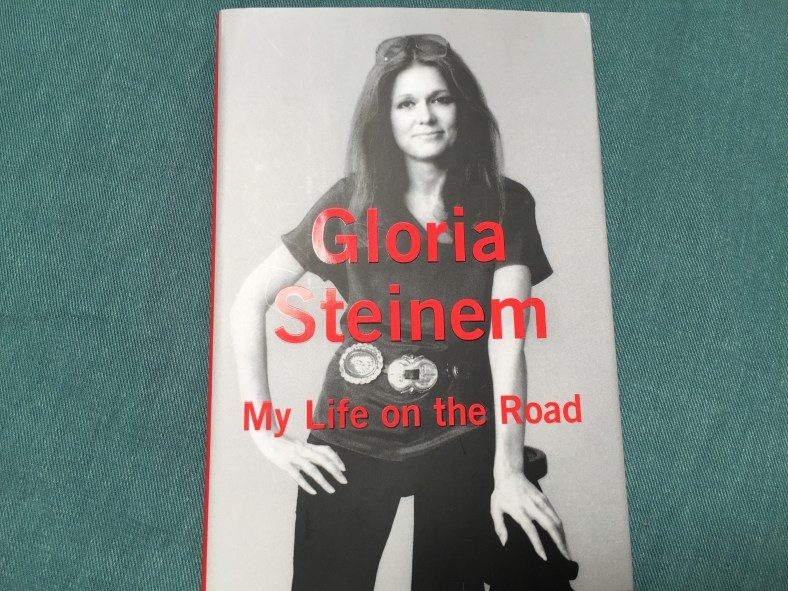
The Saturday Read ‘My Life on the Road’ by Gloria Steinem

The Saturday Read this week comes from an author who describes herself as “an entrepreneur of social change”.  It’s a work identity that encompasses writer. lecturer, political activist and feminist organizer. For this book, ‘My Life on the Road’, Gloria Steinem shares “the most important, longest-running, yet least visible part of my life”.

In the introduction, Ms. Steinem expresses her hope that her example of life on the road will tempt readers to explore the country – to have “an on the road state of mind and be present with all five senses.” 

“After I joined the ranks of traveling organizers – which just means being an entrepreneur of social change – I discovered the magic of people telling their own stories to groups of strangers. It’s as if attentive people create a magnetic force field for stories the tellers themselves didn’t know they had within them. Also, one of the simplest paths to deep change is for the less powerful to speak as much as they listen, and for the more powerful to listen as much as they speak.

One of these stories opens the book and involves a group of women arriving in South Dakota for a Lakota Sioux powwow, and a subsequent encounter at breakfast, with a couple attending one of the largest annual biker rallies in the country.

“I tell you this story because it’s the kind of lesson that can be learned only on the road. And also because I’ve come to believe that, inside, each of us has a purple motorcycle.

We only have to discover it and ride.”

The book is best read as a series of short stories, with each chapter offering a clue to Ms. Steinem’s own ‘purple motorcycle’ adventure.

In the chapter, ‘One Big Campus’ she describes the places where she has spent “the single largest slice of my traveling pie..”, from the early days of draft protests through through efforts to diversify curricula.

“How do I love campuses? Let me count the ways. I love the coffee shops and reading rooms where one can sit and talk or browse forever. I love the buildings with no addresses that only the initiated can find, and the idiosyncratic clothes that would never make it in the outside world. I love the flash parties that start in some odd spot and can’t be moved , and the flash seminars that any discussion can turn into. I love the bulletin boards that are an education in themselves, the friendships between people who would never have otherwise met, and the time for inventiveness that produces say, an exercise bike that powers a computer. Most of all I love graduations. They are individual and communal, an end and a beginning, more permanent than weddings, more inclusive than religions and possibly the most moving ceremonies on earth.”

She closes the chapter with an affirmation that the Internet is not enough and offers an argument for the value of college.

“…we need to keep creating the temporary world of meetings, small and large, on campuses and everywhere else. In them, we discover we are not alone, we learn from one another, and so we keep going toward shared goals.”

This is the narrative of a traveler who has discovered that home and the road are equally important.

“I can go on the road – because I can come home. I come home – because I am free to leave. Each way of being is more valued in the presence of the other. This balance between making camp and following the seasons is both very ancient and very new. We all need both.”  

And I believe she would like us all to venture beyond our address, be it physical or virtual.

“What seems to be one thing from a distance is very different close up.”  In reading ‘My Life on the Road’ what we might have perceived of Ms. Steinem in our rear view mirror, may appear a bit different, close-up.

‘Worked Late on a Tuesday Night’ a poem by Deborah Garrison

Have you ever read a poem and realized that the poet has somehow snatched your body and experience, and transcribed both into a lyrical expression of your reality? There was a time, in the late 90s, working in New York, when the poetry of Deborah Garrison gave voice to those who believed you could have it all.

The Friday poem this week is ‘Worked Late on a Tuesday Night’, with Garrison’s words still relevant, even if Uber robs us of the experience of standing in the freezing rain trying to hail a cab.

Worked Late on a Tuesday Night

Again.
Midtown is blasted out and silent,
drained of the crowd and its doggy day.
I trample the scraps of deli lunches
some ate outdoors as they stared dumbly
or hooted at us career girls—the haggard
beauties, the vivid can-dos, open raincoats aflap
in the March wind as we crossed to and fro
in front of the Public Library.

Never thought you’d be one of them,
did you, little Lady?
Little Miss Phi Beta Kappa,
with your closetful of pleated
skirts, twenty-nine till death do us
part! Don’t you see?
The good schoolgirl turns thirty,
forty, singing the song of time management
all day long, lugging the briefcase

home. So at 10:00 PM
you’re standing here
with your hand in the air,
cold but too stubborn to reach
into your pocket for a glove, cursing
the freezing rain as though it were
your difficulty. It’s pathetic,
and nobody’s fault but
your own. Now

the tears,
down into the collar.
Cabs, cabs, but none for hire.
I haven’t had dinner; I’m not half
of what I meant to be.
Among other things, the mother
of three. Too tired, tonight,
to seduce the father.

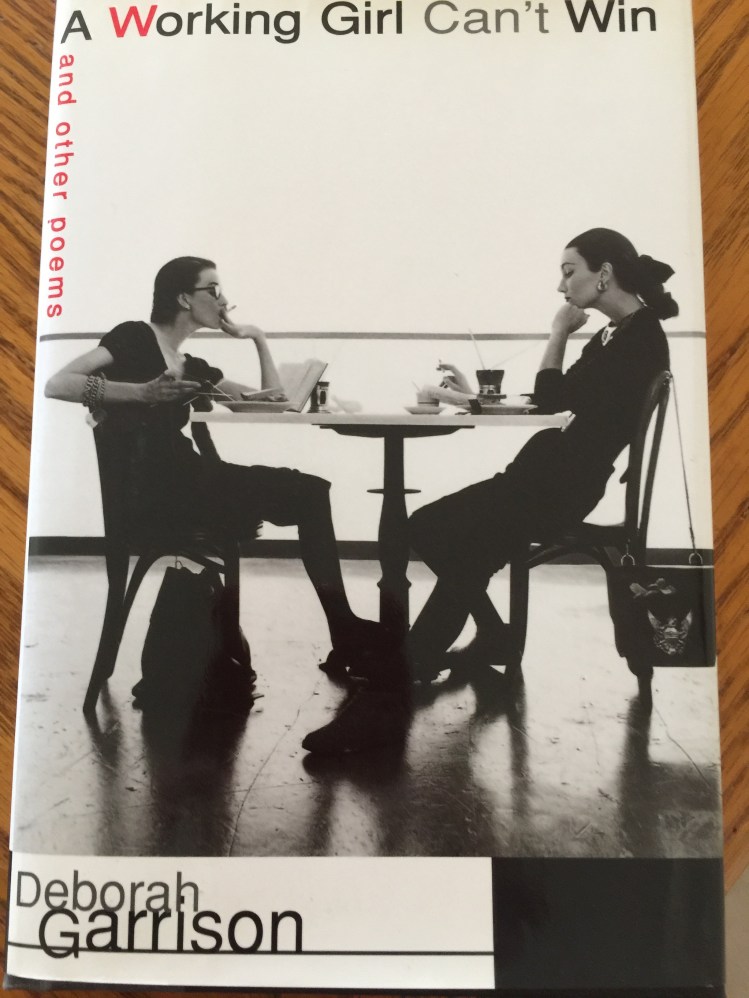
Deborah Garrison   ‘A Working Girl Can’t Win: and other poems’ 1998

After a 50 year absence, the humanities return to medicine

Medicine remains one of the fields that is defined by a hierarchy that would rival the world of Downton Abbey at its pinnacle. Over fifty years ago medical training lost track of the humanities and with it the ability to effectively connect with colleagues and patients as fellow humans.

The intensity of preparation for acceptance to a top medical school only deepens with competition for internships and residencies. Doctors in training represent the best and the brightest, but often not the top of the class when it comes to emotional intelligence.

At a time when college is increasingly defined as vocational prep, with students choosing majors based on perceived guarantees of post-grad employment, medicine is stepping back from its singular focus on the sciences and reintroducing the humanities to remove barriers created by hospital hierarchy, promote teamwork and improve patient communication.

Dr. Tara Narula, a medical contributor for CBS This Morning, reported Thursday on a program in Boston that “teaches physicians in training to use their eyes and ears to connect with patients and enhance the practice of medicine.”

“At the Brigham and Women’s Hospital, doctors, nurses and Harvard medical students are helping reshape medical education. By day, members of the integrated teaching unit, or ITU, focus on treating patients. But at night, they fix their sights on works of art.

At the Museum of Fine Arts in Boston, art becomes a catalyst to strengthen clinical and interpersonal skills, softening the hard science of medicine with creative expression.

Dr. Joel Katz designed the art curriculum at Brigham and Women’s, which has become a model for other hospitals.

Katz chose the art museum because it “allows everybody to focus on an external object in a way that I would say takes the personal aspects out and lets them solve problems together.”

Activities are carefully designed to enhance team-building, and to break down the hospital hierarchy, junior staff members are paired with more senior colleagues. Observing and describing art is used to promote problem solving, communication, thinking outside the box and appreciating other perspectives.”

Increasingly, schools of medicine are recognizing the need to ‘humanize’ medical practitioners, including Columbia University’s program in Narrative Medicine and Stanford University’s Medicine and the Muse program. And a quick review of the best seller lists over the past decade, will reveal an impressive list of physicians who have exercised their talents in the humanities: Adam Verghese, Atul Gawande, Oliver Sachs, Siddhartha Mukherjee, and this month, Paul Kalanithi.

“With this program, Dr. Joel Katz hopes to find some of the human interaction that has been lost in medicine.

In fact, as recently as 50 years ago, humanities were at the core of medical practice. While research into this program’s effects is still ongoing, there is strong anecdotal evidence that both patients and practitioners benefit.”