The week@work – The Fed raises rates, Martin Shkreli is arrested, ‘The Big Short’ premieres and so does a small film about a galaxy far, far away

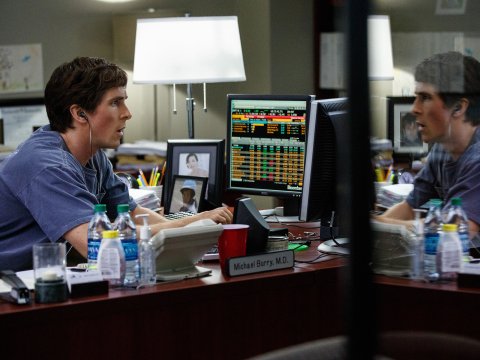
It’s that time of year when the world of finance takes center stage, only to be bested by the creativity of those who work in Hollywood. This week@work the Federal Reserve raised its benchmark rate, pharmaceutical executive, Martin Shkreli was arrested on securities fraud and the 2008 financial crisis originally chronicled by Michael Lewis, made its way onto the big screen in ‘The Big Short’. And that small movie from Disney? ‘Star Wars: The Force Awakens’ set new records with a $238 million weekend opening.

On Wednesday, the Wall Street Journal reported on the decision by the Federal Reserve to raise interest rates for the first time in seven years.

“The Fed’s decision today reflects our confidence in the U.S. economy,” Fed Chairwoman Janet Yellen said Wednesday in a press conference after a two-day policy meeting. “We believe we have seen substantial improvement in labor market conditions and while things may be uneven across regions of the country, and different industrial sectors, we see an economy that is on a path of sustainable improvement.

New projections show officials expect the fed-funds rate to creep up to 1.375% by the end of 2016, according to the median projection of 17 officials, to 2.375% by the end of 2017 and 3.25% in three years. That implies four quarter-percentage-point interest rate increases next year, four the next and three or four the following. It depends on whether the Fed’s forecasts for the economy—which have frequently been wrong in this expansion—hold up.”

The Fed rate increase was one of the ‘Four Charts That Defined the World in 2015’.

2014_Charts_Federal-690

Vauhini Vara writing in The New Yorker listed the other three:

“For the first time, fewer than ten per cent of people in the world were living in extreme poverty.

Facebook took over the world.

Greece’s economy started growing again—and then shrank.”

On Thursday, Bloomberg Business noted the arrest of Martin Shkreli, the infamous pharmaceutical head, and everyone’s leading candidate for this year’s Scrooge. You may remember Shkreli from his multiple media appearances after raising the price of the drug Daraprim from $13.50 a pill to $750. Apparently he not only violated the golden rule, but also an unspoken pact among those in financial services, not to draw attention to themselves or their activities.

“While the 32-year-old has earned a rare level of infamy for his brazenness in business and his personal life, what he was charged with had nothing to do with skyrocketing drug prices. He is accused of repeatedly losing money for investors and lying to them about it, illegally taking assets from one of his companies to pay off debtors in another.

“Shkreli essentially ran his company like a Ponzi scheme where he used each subsequent company to pay off defrauded investors from the prior company,” Brooklyn U.S. Attorney Robert Capers said at a press conference.”

He was released on bail on Friday and did what we would all do after being publicly shamed, began live streaming, chatting with ‘supporters’.

“Which brings me to a new movie the enemies of financial regulation really, really don’t want you to see.” writes nobel prize winner, Paul Krugman in The New York Times.

“But you don’t want me to play film critic; you want to know whether the movie (The Big Short) got the underlying economic, financial and political story right. And the answer is yes, in all the ways that matter.

I could quibble over a few points: The group of people who recognized that we were experiencing the mother of all housing bubbles, and that this posed big dangers to the real economy, was bigger than the film might lead you to believe. It even included a few (cough) mainstream economists. But it is true that many influential, seemingly authoritative players, from Alan Greenspan on down, insisted not only that there was no bubble but that no bubble was even possible.

And the bubble whose existence they denied really was inflated largely via opaque financial schemes that in many cases amounted to outright fraud — and it is an outrage that basically nobody ended up being punished for those sins aside from innocent bystanders, namely the millions of workers who lost their jobs and the millions of families that lost their homes.”

Need a holiday escape from everyday villains and economic reality? The folks at the ‘house the mouse built’ offer a 135 minute visit to an alternate universe.

“Chewie, we’re home” teases the plot in the trailer for the new Star Wars movie. This week the cast of the seventh installment of the intergalactic saga walked the red carpet, four blocks long, at the Hollywood premiere.

Variety covered the opening weekend box office results.

“Director J.J. Abrams’ nostalgic take on the series of space operas George Lucas created four decades ago was a hit with critics and fans, earning strong reviews and an A CinemaScore. Its opening soared past the previous high-water mark of $208.8 million established last summer by “Jurassic World.” It more than doubles “The Hobbit: An Unexpected Journey’s” December record debut of $84.6 million.

Globally, “Star Wars: The Force Awakens” scored the second-biggest opening in history, earning $517 million worldwide, behind only “Jurassic World’s” $525 million bow. Unlike “Jurassic World,” the seventh film in the “Star Wars” franchise did not have the benefit of showing in China on its inaugural weekend. It opens there on Jan. 9.”


The Holiday Read – ‘Alexander Hamilton’ by Ron Chernow

Have you just entered the chaos of holiday travel at your local airport, and realized you forgot to bring something along to read? Quick, before you lose the wi-fi, download this week’s Saturday/Holiday read, ‘Alexander Hamilton’ by Ron Chernow.

This was the year American history left boring behind with the staging of the Broadway musical Hamilton. Based on Chernow’s 2004 best seller, Lin-Manuel Miranda transformed a casual airport bookstore purchase into a hip hop score, reflecting contemporary themes of immigration, revolution and finance. This holiday break is the perfect time to dive into the 700+ page biography.

David Brooksreview summarized why Hamilton had come to be erased from the national memory, to the point we are about to eliminate his last vestige on the ten dollar bill.

“He is the most neglected, first because he was a relentless climber (and nobody has unalloyed views about ambition), second because he was a great champion of commerce (and nobody has uncomplicated views about that either) and third because his most bitter rivals, Thomas Jefferson and John Adams, outlived him by decades and did everything they could to bury his reputation. So there is no Hamilton monument in Washington, but at least we now have Ron Chernow’s moving and masterly ”Alexander Hamilton,” which is by far the best biography ever written about the man.”

With the presidential primary season looming, ‘Alexander Hamilton’ is a reminder that current political tactics don’t fall far from the founders’ tree.

“In the polarized atmosphere of American politics, Burr knew that a northern renegade aligned with southern Republicans could provide a critical swing. This was Alexander Hamilton’s recurring nightmare: an electoral deal struck between Virginia and New York Republicans.

In the New York City elections that spring (1800), Hamilton and Burr descended from the lofty heights to spar in the grit and bustle of lower Manhattan ward politics…

That April, New Yorkers out for a stroll could have stumbled upon either Alexander Hamilton or Aaron Burr addressing crowds on street corners, sometimes alternating on the same platform.”

Hamilton lost, the Republican slate swept New York City, the Federalists were out and the road was paved for a Jefferson presidency.

Which brings us to a reader, like you, going on holiday, picking up a book in an airport bookstore, and the rest is, well, history.

“He told me as he was reading the book, hip-hop lyrics started rising off the page. I was completely astonished by his response.”

Miranda assured him that he was serious.

“He made a complete believer out of me,” Chernow said. “The story of Alexander Hamilton lends itself to hip-hop treatment. Hamilton’s personality is driven and unrelenting, and the music has that same quality. The music and the man mirror each other.”

Miranda purchased theatrical rights to the book and signed on Chernow as historical consultant.

“A lot of people might have started off with the unspoken assumption that history is boring — Lin-Manuel Miranda felt exactly the opposite,” Chernow said. “He felt the most dramatic way to tell the story was to stick to the facts. He felt the story was so sensational you couldn’t improve on it.”

Spend some time this holiday with the ‘sensational’ Alexander Hamilton.


‘Cruising with the Beach Boys’ a poem by Dana Gioia

Have you ever taken a ‘daydream detour’ on a business trip, driving from the airport to a client along a winding beach side road? Maybe your playlist takes a momentary shuffle to a memory inducing moment. If yes, the ‘Friday Poem’ this week is for you, from Dana Gioia, California’s new Poet Laureate.

Gioia earned both his BA and MBA from Stanford University and an MFA from Harvard University. He was a marketing executive for General Foods for 15 years before his transition to full time writer. In 2003 he was named head of the National Endowment for the Arts, a position he held until 2009.

His poetry reflects his roots in a working class suburb of Los Angeles, and often references the time before, when his place @work was in corporate America. He continues to be a new millennium model for successful career transition.

This week’s Friday Poem is his ‘Cruising with the Beach Boys’; a California poem, by a California guy, from his shared hometown with the Beach Boys, before a freeway ran through it, Hawthorne, California.

Cruising with the Beach Boys

So strange to hear that song again tonight
Travelling on business in a rented car
Miles from anywhere I’ve been before.
And now a tune I haven’t heard for years
Probably not since it last left the charts
Back in L.A. in 1969.
I can’t believe I know the words by heart
And can’t think of a girl to blame them on.

Every lovesick summer has its song,
And this one I pretended to despise,
But if I was alone when it came on,
I turned it up full-blast to sing along –
A primal scream in croaky baritone,
The notes all flat, the lyrics mostly slurred.
No wonder I spent so much time alone
Making the rounds in Dad’s old Thunderbird.

Some nights I drove down to the beach to park
And walk along the railings of the pier.
The water down below was cold and dark,
The waves monotonous against the shore.
The darkness and the mist, the midnight sea,
The flickering lights reflected from the city –
A perfect setting for a boy like me,
The Cecil B. DeMille of my self-pity.

I thought by now I’d left those nights behind,
Lost like the girls that I could never get,
Gone with the years, junked with the old T-Bird.
But one old song, a stretch of empty road,
Can open up a door and let them fall
Tumbling like boxes from a dusty shelf,
Tightening my throat for no reason at all
Bringing on tears shed only for myself.

Dana Gioia   ‘Daily Horoscope’ 1986

This one is for the Class of 2009

This past weekend Paramount Pictures released ‘The Big Short’ based on the 2010 Michael Lewis book of the same title about the build up of the housing and credit bubble in the first years of the new millennium.

There were many casualties of the worst financial crisis since the great depression.  I thought it might be worthwhile, as moviegoers line up for tickets, to revisit that time and the impact on those who graduated from college in 2009.

It took a few months for the ripples of economic crisis to reach college campuses. But in the fall of 2008 corporate recruiters began to cancel on-campus interviews and career fairs shrunk to a quarter of their previous year’s participation.

Students who had entered college in the fall of 2005 faced optimistic prospects as the economy was booming and entry level jobs were plentiful. But the global economy began to turn in the spring of junior year, with many heading off to summer internships in anticipation of transitioning to full time work at graduation.

By final exams in 2008, things were looking bleak. Here is an excerpt of a blog I wrote on December 11th.

“When the semester began in August, not even the experts could have predicted the level of change we would experience this fall. While each academic year provides opportunities to embrace challenge and celebrate success, these past four months have created historical moments with the potential to redefine our place in the world.

As you are writing your final papers and studying for exams, let’s take a minute to review what we have learned.

First, we are in an age of globalization. If you have been hiding under the covers for the past ten years, the economic downturn brought the reality of the global banking community to the forefront. In a few short months we have learned more than we may have wanted to know about real estate, mortgages, investment banking, insurance and the auto industry. And we now have a better sense of how our domestic economy depends on the health of these industries. For many of us, the impact of the downturn in the economy has hit close to home with friends and family out of work.

Change can be difficult. If you are a freshman this year, your transition from high school to college is a fresh memory. There was the excitement of a new place mixed with missing friends and family. With every new opportunity to change there is a sentimental longing for the past. For seniors, there is the anticipation of the next step: graduate school, professional school, a new job or and entrepreneurial start up. It is a time of hope mixed with uncertainty.

You are a part of a historic moment in time. Become an active participant. If opportunities in a career field are limited, look toward the new careers emerging as a result of change. All you have learned this semester in your classes, organizations and internships have provided you with a solid foundation to adjust and adapt. This is your strength.”

If the rumors are true, the Federal Reserve will raise interest rates this week, bringing an end to the economic downturn that began in the spring of 2008.

I think it’s important not to forget the lessons learned in 2008 and 2009. Check your social network and schedule a sit down with a 2009 graduate. Get a first person account of how to recalibrate a career path to eventually arrive at success.


The week@work – End of the fossil fuel era, founders, introverts, college athletes and the one business book to read

The generational disruption continues. This week@work world leaders committed to cut greenhouse gases, ensuring the environment for future generations. MTV labeled the next of these generations ‘the founders’. Silicon Valley is quickly becoming the vortex for college consulting, making sure these ‘founders’ gain admission to the best universities. And a group of Clemson alumni have come up with a creative alternative to legally compensate college athletes via crowdfunding.

For introverts, there were hints for employers to maximize success. And if you only read one business book this year, the experts recommend ‘Rise of the Robots’ by Martin Ford.

The global story this week was reported from Paris by The Guardian.

“After 20 years of fraught meetings, including the past two weeks spent in an exhibition hall on the outskirts of Paris, negotiators from nearly 200 countries signed on to a legal agreement on Saturday evening that set ambitious goals to limit temperature rises and to hold governments to account for reaching those targets.

Government and business leaders said the agreement, which set a new goal to reach net zero emissions in the second half of the century, sent a powerful signal to global markets, hastening the transition away from fossil fuels and to a clean energy economy.”

In national news, The Atlantic’s David Sims summarized the MTV survey that resulted in a name for the children of the new millennium.

“The name “The Founders” comes from the kids themselves, according to MTV’s survey of more than 1,000 respondents born after the year 2000. America is still reckoning with Millennials (loosely classified as those born from the mid-1980s to the late-’90s) one thinkpiece at a time, but according to this survey, their fate is already sealed. As the children of indulgent baby boomers, Millennials are classified as “dreamers” who live to disrupt and challenge established norms. The Founders, by contrast, are “pragmatists” who will navigate a tougher world defined by 9/11, the financial crisis, and gender fluidity. Previous generations had to worry about getting into college and finding a job, but the next one is tasked with cleaning up their mess.”

Nathan Heller, writing in The New Yorker imagined how today’s fourteen year olds will impact the economy.

“When the teen-agers call themselves founders, they are not thinking of Roger Sherman or, for that matter, of Henry Ford. They are allying themselves with West Coast startup culture—a milieu that regards inventive business-building as the ultimate creative and constructive act…In embracing “founders,” it affirms the idea that creativity is essential—and performed through business enterprise.

“If the founders hold to their founding, it is not hard to extrapolate the economic model that their interests will support. A founder-friendly society is deregulated, privatized, and philanthropic in its best intent. (See ur-founder Mark Zuckerberg’s recent tax-incentivized pledge.) “Founders,” whose popularity as a Silicon Valley concept followed the 2009 recession, has become a stand-in for more charged, and less heroic-sounding words, such as “small-business owner,” “C.E.O.,” and “boss.” To found is not to manage; it’s to dream and to design. This is the new model for innovative business, scrupulously cleansed of the dank trappings of corporate industry. It’s business all the same, though, and it aims for growth.”

If you are working in the underpaid and undervalued world of college admissions, you have a future in the lucrative business of college consulting. Georgia Perry reported on the growing industry, fueled by parental anxiety, that helps high school students find summer internships, prepare applications and refine essays.

“Private college-admissions consulting is a rapidly growing industry across the U.S. According to the Independent Educational Consultants Association, the number of independent admissions consultants in the U.S. has grown from 2,000 to nearly 5,000 in recent years. In a nationwide study, the marketing firm Lipman Hearne found that of students who scored in the 70th percentile or higher on the SAT, 26 percent had hired a professional consultant to help with their college search. The San Francisco Bay Area has a higher concentration per capita of independent college-admissions consultants than “most cities,” says IECA communications manager Sarah Brachman, though the association doesn’t have specific numbers. The IECA’s most recent report found that nationally, $400 million was spent on college consultants in 2012. Hourly rates in the Bay Area can be as high as $400 an hour, and comprehensive packages with regular meetings throughout high school can add up to several thousand dollars.”

How student-athletes are compensated continues to be a topic in legal proceedings, but this week a group of Clemson folks have come up with an innovative approach that just might work and meet NCAA requirements. Ben Strauss provided the details in his article ‘If Colleges Can’t Pay Athletes, Maybe Fans Can, Group Says’.

“The answer to the riddle of putting money in the hands of amateur student-athletes, who according to the N.C.A.A. cannot be paid, is crowdfunding, said Rob Morgan, a Clemson business school graduate and an anesthesiologist based in Greenville, S.C. His new website, UBooster, started on Friday with the goal of soliciting payments for high school recruits from fans, and delivering the money to the athletes after their college careers end.

“We think this is the direction college sports is headed,” said Morgan, who has been helped in his venture by a former Clemson football player and the interim dean of the university’s business school. “At some point, there is going to be an opportunity for players to make money, and here’s how we can be a part of it.”

“The business model is simple. Fans pledge money to individual recruits, and can leave public notes on the site urging them to attend their favorite college. Morgan said all high school recruits — men and women in every sport from Division I to Division III — would be eligible, though it would seem obvious that most of the interest and money would be directed at top-flight football and basketball prospects. The accounts lock, and no more money can be pledged to players once they formally commit to a college. UBooster will then hold the money in a trust before turning it over to the athletes after their college careers.”

Quiet Revolution founder Susan Cain is an advocate for the introvert in all facets of life. And it’s her website’s section on work that provides insight into fostering career success. This week, Liz Fosslien and Mollie West offered an ‘Illustrated Guide to Introverts in a Start-Up’.

An-Illustrated-Guide-to-Introverts-in-a-Start-Up.jpg

“Famous introvert entrepreneurs include Thomas Edison, Bill Gates, Warren Buffett, Marissa Mayer, and Mark Zuckerberg.

When we imagine our ideal workplace, it looks more like a library full of quiet rooms and isolated carrels than the ball-pit and bullpen situation start-ups are currently obsessed with. As introverts, we may be outnumbered by extroverts at start-ups. According to Laney, “The introvert is pressured daily, almost from the moment of awakening, to respond and conform to the outer world.” This need to conform can be tiring. But we promise, with just a few tweaks in the workplace, you could make us very happy.”

Finally, if there is only one business book you will read this year… and the clock is ticking…the experts recommend ‘Rise of the Robots’ by Martin Ford. Jessica Stillman reported:

“According to the Financial Times and consultancy McKinsey, there’s at least one title even the busiest business owners shouldn’t miss. They recently crowned Rise of the Robots by entrepreneur Martin Ford the very best business book of the year.

Hugely topical, the book discusses the much debated idea that advances in automation will soon radically affect the labor market. “The book reflects growing anxiety in some quarters about the possible negative impact of automation on jobs, from manufacturing to professional services,” explains the FT write-up of the award. This economic reshuffle may require “a fundamental restructuring of our economic rules,” according to Ford, who proposes a guaranteed minimum basic income as one possible remedy.”

Enjoy your week@work… the founders and robots are coming…


The Saturday Read – a selection of the best articles of 2015 from Jon Ronson, Oliver Sacks, Kathryn Schulz and Nikil Saval

This week the recommendations for ‘The Saturday Read’ come from journalists who wrote some of the most popular long form articles of the year. Instead of a book, which might seem daunting in the midst of holiday shopping and celebrating, sample the writings of these four storytellers who tackled a range of topics including internet shaming, death, earthquakes and the origins of the white collar worker.

On Wednesday, ‘The Upshot’ covered ‘The Stories That Held You The Longest in 2015’. “We measured the favorite Times articles of 2015 in a new way — by the total combined time readers have spent looking at them. It’s a mix of ambitious investigative projects, big breaking news, features and service journalism.”

Number two on the list first appeared in the February 12, 2015 New York Times Magazine. Written by Jon Ronson, ‘How One Stupid Tweet Blew Up Justine Sacco’s Life’ tells the story of the world of public ‘internet shaming’ through the experience of its victims.

15sacco1-master1050-v3

“In the early days of Twitter, I was a keen shamer. When newspaper columnists made racist or homophobic statements, I joined the pile-on. Sometimes I led it…

Still, in those early days, the collective fury felt righteous, powerful and effective. It felt as if hierarchies were being dismantled, as if justice were being democratized. As time passed, though, I watched these shame campaigns multiply, to the point that they targeted not just powerful institutions and public figures but really anyone perceived to have done something offensive. I also began to marvel at the disconnect between the severity of the crime and the gleeful savagery of the punishment. It almost felt as if shamings were now happening for their own sake, as if they were following a script.”

Number ten on the list was an Op-Ed piece by neurologist and writer, Oliver Sachs, ‘My Own Life’, on learning he had terminal cancer.

19sacks-copy-blog427-v6

“Over the last few days, I have been able to see my life as from a great altitude, as a sort of landscape, and with a deepening sense of the connection of all its parts. This does not mean I am finished with life.

On the contrary, I feel intensely alive, and I want and hope in the time that remains to deepen my friendships, to say farewell to those I love, to write more, to travel if I have the strength, to achieve new levels of understanding and insight.

This will involve audacity, clarity and plain speaking; trying to straighten my accounts with the world. But there will be time, too, for some fun (and even some silliness, as well).”

A New Yorker article received a lot of attention when it first appeared in July. ‘The Really Big One’ was researched and written by contributor, Kathryn Schulz.

150720_r26752-320

“Most people in the United States know just one fault line by name: the San Andreas, which runs nearly the length of California and is perpetually rumored to be on the verge of unleashing “the big one.” That rumor is misleading, no matter what the San Andreas ever does. Every fault line has an upper limit to its potency, determined by its length and width, and by how far it can slip. For the San Andreas, one of the most extensively studied and best understood fault lines in the world, that upper limit is roughly an 8.2—a powerful earthquake, but, because the Richter scale is logarithmic, only six per cent as strong as the 2011 event in Japan.

Just north of the San Andreas, however, lies another fault line. Known as the Cascadia subduction zone, it runs for seven hundred miles off the coast of the Pacific Northwest, beginning near Cape Mendocino, California, continuing along Oregon and Washington, and terminating around Vancouver Island, Canada. The “Cascadia” part of its name comes from the Cascade Range, a chain of volcanic mountains that follow the same course a hundred or so miles inland. The “subduction zone” part refers to a region of the planet where one tectonic plate is sliding underneath (subducting) another. Tectonic plates are those slabs of mantle and crust that, in their epochs-long drift, rearrange the earth’s continents and oceans. Most of the time, their movement is slow, harmless, and all but undetectable. Occasionally, at the borders where they meet, it is not.”

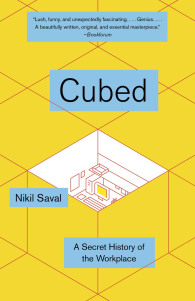
Longreads.com selected their ‘Best of 2015’ which included an excerpt from the book, ‘Cubed: A Secret History of the Workplace’. The fifth most popular article was ‘I Would Prefer Not To: The Origins of the White Collar Worker’, written by Nikil Saval.

9780345802804-1.jpg

“When does the office begin? It’s a question without an easy answer. One can associate the origins with the beginning of paperwork itself—until recently, the most common mental association with office work (think of the derogatory phrase “paper pusher”). In other words, since the invention of writing and the corresponding ability to keep records in a systematic manner, there have always been places that resemble offices: monasteries, libraries, scholars’ studies. Banking furnished an especially large amount of paperwork; the Uffizi, an incomparable gallery of Renaissance art in Florence, was also one of the first office buildings—the bookkeeping offices of the Medici family’s groundbreaking financial operations. Clerks, too, have existed for ages, many of them unclinching themselves from their desks to become quite famous: from Samuel Pepys, the British government diarist who reported on the gossipy world of seventeenth-century England, to Alexander Hamilton, who had cut his teeth as a merchants’ clerk before he became the first secretary of the Treasury of the United States; Benjamin Franklin, paragon of pecuniary restraint and bourgeois self-abnegation, started out as a dry goods clerk in 1727. Perhaps some of the tediousness of Franklin’s own writing was honed in the conditions of his first job: since clerks have had the opportunity to keep diaries, they have bemoaned the sheer boredom of their tasks—the endless copying, the awkward postures, the meaninglessness of their work. When not doing writing for the job, clerks have cultivated the habit of writing about the job—or literally around it…”


‘Let American Be America Again’ a poem by Langston Hughes

We spend a lot of time considering the values of our workplace and how they mesh with our priorities; who we will become as part of a workplace community. But where we go to work is located in the broader context of a national set of values. And those values have been the topic of conversation this political season, with some questioning the basic tenets that have, until now, defined our national conscience.

It sometimes seems like we have lost our collective sense of the core values that bind us as humans, Americans and global citizens.

Take a moment today to restore our ‘moral memory’ and revisit history through the lens of American poet, Langston Hughes. The Friday Poem this week is ‘Let America Be America Again’ written in 1935 and published in Esquire Magazine in 1936.

Let America Be America Again

Let America be America again.
Let it be the dream it used to be.
Let it be the pioneer on the plain
Seeking a home where he himself is free.

(America never was America to me.)

Let America be the dream the dreamers dreamed—
Let it be that great strong land of love
Where never kings connive nor tyrants scheme
That any man be crushed by one above.

(It never was America to me.)

O, let my land be a land where Liberty
Is crowned with no false patriotic wreath,
But opportunity is real, and life is free,
Equality is in the air we breathe.

(There’s never been equality for me,
Nor freedom in this “homeland of the free.”)

Say, who are you that mumbles in the dark?
And who are you that draws your veil across the stars?

I am the poor white, fooled and pushed apart,
I am the Negro bearing slavery’s scars.
I am the red man driven from the land,
I am the immigrant clutching the hope I seek—
And finding only the same old stupid plan
Of dog eat dog, of mighty crush the weak.

I am the young man, full of strength and hope,
Tangled in that ancient endless chain
Of profit, power, gain, of grab the land!
Of grab the gold! Of grab the ways of satisfying need!
Of work the men! Of take the pay!
Of owning everything for one’s own greed!

I am the farmer, bondsman to the soil.
I am the worker sold to the machine.
I am the Negro, servant to you all.
I am the people, humble, hungry, mean—
Hungry yet today despite the dream.
Beaten yet today—O, Pioneers!
I am the man who never got ahead,
The poorest worker bartered through the years.

Yet I’m the one who dreamt our basic dream
In the Old World while still a serf of kings,
Who dreamt a dream so strong, so brave, so true,
That even yet its mighty daring sings
In every brick and stone, in every furrow turned
That’s made America the land it has become.
O, I’m the man who sailed those early seas
In search of what I meant to be my home—
For I’m the one who left dark Ireland’s shore,
And Poland’s plain, and England’s grassy lea,
And torn from Black Africa’s strand I came
To build a “homeland of the free.”

The free?

Who said the free? Not me?
Surely not me? The millions on relief today?
The millions shot down when we strike?
The millions who have nothing for our pay?
For all the dreams we’ve dreamed
And all the songs we’ve sung
And all the hopes we’ve held
And all the flags we’ve hung,
The millions who have nothing for our pay—
Except the dream that’s almost dead today.

O, let America be America again—
The land that never has been yet—
And yet must be—the land where every man is free.
The land that’s mine—the poor man’s, Indian’s, Negro’s, ME—
Who made America,
Whose sweat and blood, whose faith and pain,
Whose hand at the foundry, whose plow in the rain,
Must bring back our mighty dream again.

Sure, call me any ugly name you choose—
The steel of freedom does not stain.
From those who live like leeches on the people’s lives,
We must take back our land again,
America!

O, yes,
I say it plain,
America never was America to me,
And yet I swear this oath—
America will be!

Out of the rack and ruin of our gangster death,
The rape and rot of graft, and stealth, and lies,
We, the people, must redeem
The land, the mines, the plants, the rivers.
The mountains and the endless plain—
All, all the stretch of these great green states—
And make America again!

Langston Hughes  ‘The Collected Poems of Langston Hughes’  1995

The week@work – Mark Zuckerberg writes a letter, equality comes to combat, 20 predictions/20 years, the November jobs report and terrorism@work

This week@work was dominated, until mid-week, by the story of the ‘Chan Zuckerberg initiative’ to set aside 99% of their Facebook wealth, and overshadowed a major shift in policy within the Pentagon, opening all combat jobs to women, without exception. The November jobs report continued the positive trajectory of the economy with the revision upward of September and October numbers. And the editor of Fast Company Magazine offered ‘Twenty Predictions for the Next Twenty Years’.

All of those stories pale in comparison to the return of terrorism to the workplace at a holiday party at 11 AM on Wednesday in San Bernardino, California.

Mark Zuckerberg wrote a letter to his new daughter and lots of attention was paid to the section on sharing his wealth.  Carmine Gallo of Forbes took closer look and noted that the letter read like a great speech.

“As you’ve probably read by now Facebook founder Mark Zuckerberg and his wife Priscilla Chan welcomed a daughter into the world in a very big way – with the creation of a new initiative to donate 99% of their Facebook shares ($45 billion currently) to philanthropy. That’s the headline. I was struck, however, by how the open letter to their daughter read more like a speech than a letter. It was meant for the eye…and the ear. It was meant to inspire a generation to commit itself to giving and to making the world a better place.

“Like all parents, we want you to grow up in a world better than ours today,” the letter begins. Read aloud at an average speaking pace, the 2,200-word letter takes about twelve minutes to recite, the ideal amount of time for a good speech (many of the most notable speeches in recent history clock in at 15 minutes or less).

Zuckerberg’s hope for his daughter’s generation provides the theme of the letter, a headline that fits into one short sentence. In bold letters, Zuckerberg writes:

“Advancing human potential and promoting equality.”

Amanda Platell of The Daily Mail offered an alternate version.

“Let’s start with the ‘friends’ you may have on Facebook. Do not confuse them with the friends you should trust in the real world. Many will barely know you, plenty may be jealous, others will be insincere and spiteful…

If I have learned anything from running Facebook, it’s that there is no such thing as privacy any more. After all, that’s how I made our billions!

Come to think of it, perhaps we won’t give you a computer until you’re 18, just to be safe. Love, Dad.”

On Thursday the Dan Lamothe reported on the groundbreaking change in staffing policy at the Pentagon.

“Defense Secretary Ashton B. Carter said Thursday that he is opening all jobs in combat units to women, a landmark decision that would for the first time allow female service members to join the country’s most elite military forces.

Women will now be eligible to join the Navy SEALs, Army Special Forces and other Special Operations Units. It also opens the Marine Corps infantry, a battle-hardened force that many service officials had openly advocated keeping closed to female service members.

“There will be no exceptions,” Carter said. “This means that, as long as they qualify and meet the standards, women will now be able to contribute to our mission in ways they could not before.”

Robert Safian, the editor-in-chief of Fast Company magazine marked the twentieth anniversary of the publication with ‘Twenty Predictions for the Next Twenty Years’.

“We celebrate birthdays to remember all that has gone before, and also what is to come. This month, with issue No. 201, we recognize Fast Company’s 20th anniversary by looking toward the future. The dynamic change of the past two decades is just a warm-up for what is still to come.

I have used the phrase Generation Flux to describe this era of transition. Because the changes are coming so fast, there is a rising premium on our ability to adjust, to be adaptable in new ways. This can be scary for some, but it is also undeniably exciting, and for those prepared to embrace this emerging reality, the possibilities are tantalizing.

What follows are 20 observations that we believe will hold fast in the years ahead. They are predictions and, as such, are fraught with limitation and supposition. None of them, on their own, is shocking. That is by design. In combination, though, they outline a world of tomorrow where work is still personal, computing is still social, and knowledge is still power. And where the rules for success will be ever-changing.”

Bouree Lam covered the optimistic economic report from the Labor Department on Friday.

“The November jobs report is out, and it’s meeting what were moderately high expectations. The figures from the Labor Department show that the unemployment rate remained at 5 percent and the economy added 211,000 jobs in November. Jobs were added in construction, health care, and “professional and technical services”—the Labor Department’s term for an assortment of white-collar jobs. Among those, the construction sector showing particularly strong growth, adding 46,000 jobs.”

On Wednesday morning a group of colleagues went to work at the Inland Regional Center in San Bernardino, California. As they were taking a break, preparing for a holiday celebration, one of their team and his wife, both heavily armed, entered the room and changed lives forever.

In 2014 there were 404 workplace homicides, 80% were shootings. The ‘mass shooting’ in San Bernardino was the fourth of this year.

Yesterday the editors of The New York Times published an editorial on the front page of the paper, ‘End the Gun Epidemic in America’.

I’m done with the retailers who give away guns to the first 200 customers on Black Friday. And I’m not comfortable with my cubicle mates carrying weapons to work. The workplace is a place to create, engage and perhaps follow a dream. Fear and hostility have never been a productive part of life @work. The last time leading by fear worked was in the mid-20th century Catholic grammar school classroom.

“It is a moral outrage and a national disgrace that civilians can legally purchase weapons designed specifically to kill people with brutal speed and efficiency. These are weapons of war, barely modified and deliberately marketed as tools of macho vigilantism and even insurrection. America’s elected leaders offer prayers for gun victims and then, callously and without fear of consequence, reject the most basic restrictions on weapons of mass killing, as they did on Thursday. They distract us with arguments about the word terrorism. Let’s be clear: These spree killings are all, in their own ways, acts of terrorism.”

On March 4, 1933 newly elected President Franklin Roosevelt delivered his inaugural address. The familiar phrase, “…the only thing we have to fear is fear itself..” has been whispering from the back of my mind since Wednesday and I think it’s particularly relevant to our political conversation today.

“This is preeminently the time to speak the truth, the whole truth, frankly and boldly. Nor need we shrink from honestly facing conditions in our country today. This great Nation will endure as it has endured, will revive and will prosper. So, first of all, let me assert my firm belief that the only thing we have to fear is fear itself—nameless, unreasoning, unjustified terror which paralyzes needed efforts to convert retreat into advance. In every dark hour of our national life a leadership of frankness and vigor has met with that understanding and support of the people themselves which is essential to victory. I am convinced that you will again give that support to leadership in these critical days.”


The Saturday Read ‘Patience and Fortitude’ by Scott Sherman

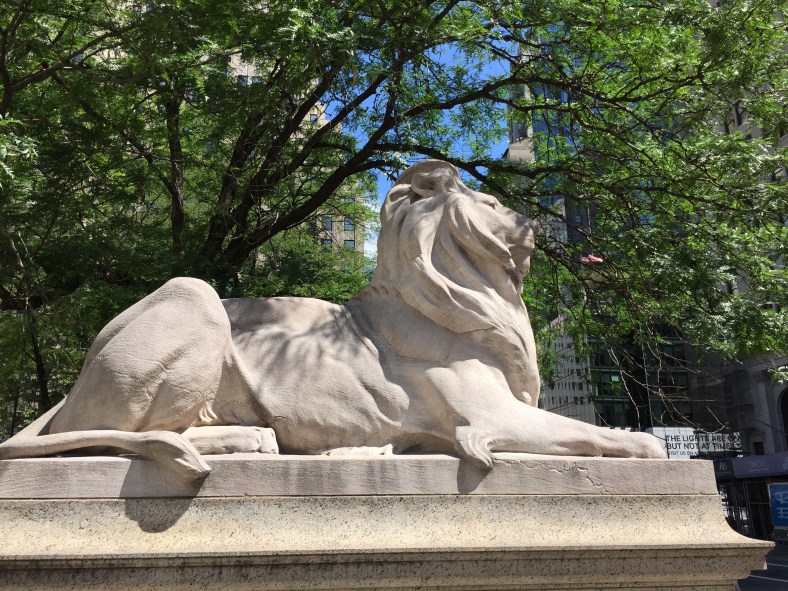
In times of financial crisis, you start looking around the house for things you might sell off until you realize all you have left is the real estate under your roof. For the New York Public Library in the early years of the 21st century, the fine art had been sold at auction, the staff had been ‘right sized’ and all that was left to remain solvent were the private donors and the coveted real estate footprint of branch locations.

This week’s ‘Saturday Read’ is ‘Patience and Fortitude: Power, Real Estate, And The Fight To Save A Public Library’ by Scott Sherman.

“This is a book about a world-class library that lost its way in the digital age.”

patience and fortitude

A public library is a community sanctuary that has historically offered immigrants a way to the middle class. In the Preface, author Sherman retells the story of former New York Senator, Daniel Patrick Moynihan who was working as a boot-black in 1940s Times Square, visiting the main library at 42nd Street.  “It was the first time I was taught that I was welcome in a place of education and learning. I would go into that great marble palace, and I would check my shoeshine box. A gentleman in a brown cotton jacket would take it as if I’d passed over an umbrella and bowler hat.”

This is a New York story, but one that illustrates the fate of the non-profit organization in an economic downturn. In the case of the NYPL, originally founded by bankers and corporate titans, the seismic shifts in the economy forced the influential board, of modern day financiers, to engage big name consultants in an attempt to apply “free-market solutions to complex institutional problems.”

The central narrative of the book was first reported by author Sherman in the December 2011 issue of ‘The Nation’. ‘Upheaval at the New York Public Library’ made public a four year old ‘Central Library Plan’, conceived and ratified by the NYPL’s trustees.

“The core trustees – led by the developer Marshall Rose – did what came naturally to them: they sold the NYPL’s land and took steps to shrink an institution they may have viewed as bureaucratic and inefficient…Personal enrichment was certainly not the trustees’ intention; they were sincere in their desire to assist the Library. It was hubris that drove them forward, and which ultimately led them astray: they believed that corporate logic could be effortlessly applied to a sprawling, decrepit library system.”

Consider this the first shot across the bow, as the Sherman chronicles the response from writers, researchers, NYPL employees, politicians and library patrons.

A 2012 Op-Ed piece written by Theodore Roosevelt biographer, Edmund Morris for The New York Times offers a sample of the opposition.

“I read newspaper reports about the determination of Anthony W. Marx, the president of the library, to spend $300 million to transform the main building, long devoted to reference, into what sounds like a palace of presentism. He wants to close the library system’s biggest circulating branch, the Mid-Manhattan (located just across the street) and the Science, Industry and Business Library (also in Midtown) and somehow wedge their contents into the already overstocked central research library.

For that he will need all the spatial ingenuity of his trendy architect-designate, Norman Foster. But something’s going to have to give, and you can be sure that what is new and hard and digital will prevail over what is old and papery and transportable elsewhere.”

On May 7, 2014 Robin Pogrebin reported that the NYPL has abandoned its renovation plan.

Last month, Tom Mashberg of The New York Times reported on the new plan to create a high-tech space under Bryant Park to house 2.5 million research works from the original stacks.

“This was not, of course, Plan A. That plan entailed a makeover of the flagship Fifth Avenue library that would have sent the research books to Princeton, N.J. But it set off a virtual Fahrenheit 451 of outrage among scholars and others for whom the library’s role as a research mecca seemed endangered. Critics, who hoped the old steel stacks could stay in use, remain apprehensive about the new stocking and retrieval system, which they say is impressive but has not been tested.”

To be continued…

And while you wait, catch up on the history and the cast of characters who bring ‘Patience and Fortitude’ to life.


‘Chicago and December’ a poem by W.S. Di Piero

The Friday Poem this week is ‘Chicago and December’ by Stanford University Professor of English, Emeritus W.S. Di Piero.

In an interview with ‘McSweeney’s Internet Tendency’, the poet described the early influences in his writing.

“Writers are schooled by whatever they read. I took what was available. (Discovering the Philadelphia Free Library was enormous.) All writing occupied the same bandwidth—Freddy the Pig books, Kidnapped, Poe’s and Conan Doyle’s stories, and in particular, when I was very small, the Sears catalogs I studied on Sunday visits to relatives’ houses. I came to love reading about the old west—no kid in South Philadelphia knew more about Wyatt Earp, Kit Carson, Doc Holliday. In high school I read Whitman—he was, still is, so strange, exasperatingly friendly, formidable. By the time I turned twenty-one, it was “sweet sounds together” that mattered. Sound is still important. Subject matter was (still is) whatever piece of life’s procession pauses in front of me (or behind my back).”

On this first Friday in December, take a break from work and visit Chicago as we accompany poet W. S. Di Piero on a walk from the Art Institute, across the river to Michigan Avenue.

Chicago and December

Trying to find my roost
one lidded, late afternoon,
the consolation of color
worked up like neediness,
like craving chocolate,
I’m at Art Institute favorites:
Velasquez’s “Servant,”
her bashful attention fixed
to place things just right,
Beckmann’s “Self-Portrait,”
whose fishy fingers seem
never to do a day’s work,
the great stone lions outside
monumentally pissed
by jumbo wreaths and ribbons
municipal good cheer
yoked around their heads.
Mealy mist. Furred air.
I walk north across
the river, Christmas lights
crushed on skyscraper glass,
bling stringing Michigan Ave.,
sunlight’s last-gasp sighing
through the artless fog.
Vague fatigued promise hangs
in the low darkened sky
when bunched scrawny starlings
rattle up from trees,
switchback and snag
like tossed rags dressing
the bare wintering branches,
black-on-black shining,
and I’m in a moment
more like a fore-moment:
from the sidewalk, watching them
poised without purpose,
I feel lifted inside the common
hazards and orders of things
when from their stillness,
the formal, aimless, not-waiting birds
erupt again, clap, elated weather-
making wing-clouds changing,
smithereened back and forth,
now already gone to follow
the river’s running course.

W.S. Di Piero  Poetry Magazine, June 2006

188-3.jpg