The Holiday Read ‘Bobby Kennedy: The Making of a Liberal Icon’ by Larry Tye

Biographies are the stories of career transition. When we make a selection from a bookstore, library or electronic shelf we may not be seeking the secret to success. We may not even be thinking about work and career. A life story well told is one that surprises the reader with the unexpected; previously unknown challenges faced, and career crises resolved.

The ‘holiday read’ recommendation this season is the new biography of Bobby Kennedy by Larry Tye. It’s a life story well told, of someone we thought we knew.

If the current political landscape seems bleak, this trip back to 1950’s-1960’s America will frame the present within the historical context of our not too distant past. And perhaps offer a bit of hope.

Bobby Kennedy’s story is a career story that begins, as many do, following the expectations of others. At age 38 the carefully constructed career scaffolding collapsed and he faced a decision, what should I do with my life?

“He had spent the first twenty-five years with the world seeing him as Joe Kennedy’s boy, and the next dozen as John Kennedy’s brother. Now he would be his own man, one who was both more tempered and fiercer.”

The narrative reflects these two career/life phases. The first six chapters explore the less familiar territory of Bobby Kennedy, “…nurtured on the rightist orthodoxies of his dynasty-building father and started his public life as counsel to the left-baiting, table-thumping senator Joseph McCarthy. That younger RFK was a bare-knuckled political operative who masterminded his brother’s whatever-it-takes bids for senator and president.”

The remaining chapters relate the story of a man plotting a career path apart from the influence of his father and older brother.

The trauma of assassination “had loosed Bobby’s moorings, quelled his passions, and made him question even his faith…The values and qualities that would define him were present from the beginning, but they fully bloomed only after his father’s disability and his brother’s death…Now this man so shaped by others was reshaping himself, the way the existentialists said he could. He could finally ask what he wanted and needed. His public persona began to reflect the gentleness that family and friends say they had always known.”

In 1964 Bobby Kennedy was at that point we may recognize from personal experience. “The breadth of the choices he was weighing reflected the reality that for the first time, he didn’t know what he should do…He was also self-aware enough to realize the implausibility of his impasse: “It’s a hell of a thing, isn’t it? Thirty-eight years old and no place to go.””

Public service had driven his decisions in the past and on August 25, 1964 he embarked on the next stage of his career, announcing a run for senate from the State of New York.

Trailing in the polls, accused of being a ‘carpetbagger’, on October 5, he addressed “more than two thousand people at Columbia University’s Wollman Auditorium…Standing onstage alone in the glaring TV lights, a microphone in his hand, he looked younger and smaller than the student interrogators who threw him one hardball question after another for eighty-five minutes… His audience was filled with students from the most politically active generation ever in America, who four years later would help ignite the nation in protest over everything from the war in Vietnam to crumbling U.S. ghettos. For now, these fans of Bob Dylan and the Rolling Stones sensed that Bobby was as authentic as a politician got.”

On November 3, Kennedy won the election, making history. “The Kennedys were the first family ever to send three brothers to the U.S. Senate, and the second to have brothers serving simultaneously…”

His senate career represented a historical catalog of the social issues facing the country: civil rights, anti-poverty programs, and eventual opposition to the Vietnam war.

“The senator from New York’s involvement with the Republic of South Africa was different. Unlike Vietnam, it didn’t matter to the White House or to most Americans. And in South Africa, it wasn’t Bobby but millions of oppressed blacks and thousands of their white allies who were desperate to speak our but had gagged themselves for fear of the consequences. Traveling there in 1966, Bobby gave them a voice in a way that nobody else had. The trip also freed him from the politics that clouded everything he did in America and brought him back to first principles.”

Once again, it was a crowd of university students at the University of Cape Town on June 6, 1966 that provided him a platform to deliver one of his most memorable speeches, ‘The Ripple of Hope’.

“It is from numberless diverse acts of courage and belief that human history is shaped each time a man stands up for an ideal or acts to improve the lot of others or strikes out against injustice. He sends forth a tiny ripple of hope, and crossing each other from a million different centers of energy and daring, those ripples build a current that can sweep down the mightiest wall of oppression and resistance.”

Larry Tye’s biography doesn’t dwell on the familiar in Bobby Kennedy’s history. He doesn’t rehash the work of previous biographers. What he delivers to readers is a life story, illuminated by contemporary journalists’ coverage, informed by historical fact, and imbued with Kennedy’s ceaseless career passion as an advocate for those with no representation.

“Bobby was a shaker-upper dedicated to the art of the possible. That he could change so substantially and convincingly over the course of his brief public life helped restore a changing America’s faith in redemption. In the end he could become this nation’s high priest of reconciliation precisely because he had once been the keeper of our darkest seekers.”

Spend your holiday with ‘Bobby Kennedy: The Making of a Liberal Icon’ and restore your belief in “the art of the possible”.


The week@work – U.S. unemployment at nine year low, Rosberg and Schultz exit roles on top, and “mother nature needs her daughters”

If you weren’t paying attention, you would have thought the major story this week@work was about the 800 folks who will retain positions at Carrier, a division of United Technologies. You might have missed the news that U.S. unemployment reached a nine year low @4.6%, adding 178,000 jobs in November.

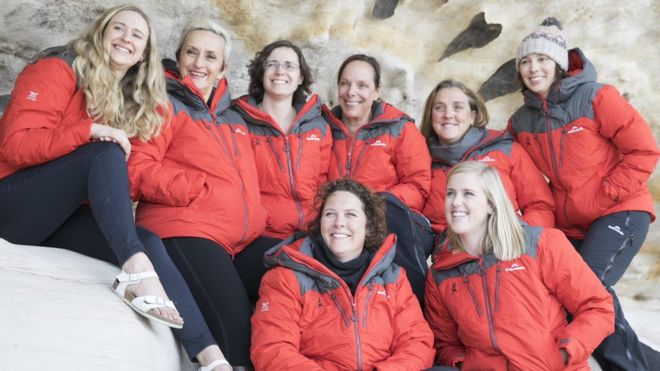
In ‘departures’, newly crowned Formula One champion, Nico Rosberg announced his retirement and Starbuck chief, Howard Schultz, will be stepping down from his position next year.  Seventy-six women scientists have embarked on an expedition to Antarctica to focus on climate change and women who work in the sciences.

Ana Swanson reported on the U.S. unemployment news for The Washington Post, Wonkblog.

“Data released on Friday showed a sharp drop in the unemployment rate from 4.9 percent the previous month, driven partly by the creation of new jobs and partly by people retiring and otherwise leaving the labor force.

A broader measure of unemployment, the U-6 rate, which includes those who have given up looking for work and part-time workers who would like to have full-time jobs, fell to 9.3 percent, the lowest reading since April 2008. The figure still remains elevated from average levels in the 2000s.”

Paul Weaver covered the announcement of F1 champion, Nico Rosberg’s decision to retire from racing five days after capturing the title for The Guardian.

551069_10152244647569874_65635453_n.png

“Nico Rosberg has stunned Formula One by announcing his retirement, just five days after the 31-year-old became the sport’s world champion…

He said he had “climbed my mountain”. Now he is going out at the peak.

Rosberg said he first started thinking about retiring when he won the Japanese Grand Prix in early October and realised the title was within his grasp. “From the moment when the destiny of the title was in my own hands, the big pressure started and I began to think about ending my racing career if I became world champion,” he wrote in a post on his Facebook page announcing his departure.”

At the other end of the career spectrum, the visionary leader of Starbucks, Howard Schultz announced he will be stepping away from his leadership position at the company he joined in 1982. Andrew Ross Sorkin reported on the change at the top for The New York Times.

“I wanted to build the company my father never got to work for,” he said.

Howard_Schultz_and_Kevin_Johnson.JPG

At an all-hands employee meeting at the company’s headquarters on Thursday, Mr. Schultz was greeted with tears and a standing ovation. “For me, perhaps there are other things that are part of my destiny,” he told them.”

Mr. Schultz said he intends for Starbucks to “maintain our moral courage.” And he defended efforts like the company’s “Race Together” campaign to spur a conversation about race relations, saying that it “was not a failure. I’d do it again.” He said such campaigns are deeply embedded in the company’s brand of “challenging the status quo about the role of a public company.” He is excited by the question, “Since we have stores in every community in America, how can we use our scale for good?”

How do folks successfully transition from one phase of their work life to the next?

Adam Bryant‘s ‘Corner Office’ interview with Nyansa chief executive, Abe Ankumah provides a hint.

“Be a lifelong student. That doesn’t mean go enroll in a bunch of classes all the time. It’s a mind-set. It means continuing to push yourself to learn rather than saying, “I’ve got this degree in this, and that’s what I’m going to do.”

The other thing is not to become too comfortable in a role. Chances are that if you’re comfortable, you’re not learning, you’re not pushing the envelope and you’re probably going to get stagnated.”

The last story this week@work is an example of pushing the envelope, for the greater good.

On Thursday I received a tweet from BBC Australia about an expedition of women scientists traveling to Antarctica. The tag line of their sponsor, ‘Homeward Bound’, is “mother nature needs her daughters”.

img_2600-1-1080x675

From the BBC  Australia story – “They call Ushuaia, a cold and windy port city in Argentina, the end of the world.

It’s from here that the largest ever all-female expedition to Antarctica will depart, with more than 70 women with backgrounds in science set to spend 20 days at sea.

The voyage is part of the Homeward Bound initiative, an Australian programme aimed at increasing the representation of women in top science jobs across the globe.

“We’re missing half the voice at the leadership table,” says Dr Jessica Melbourne-Thomas, who along with entrepreneur and management expert Fabian Dattner, came up with the idea.

The pair met during a leadership development course run by Dattner, and their frustration at the challenges faced by women in science quickly became a bold idea.

Two years later, the first of what is hoped to be several voyages is about to depart.”

We talk a lot about ‘dream jobs’ and whether ‘finding your passion’ is attainable. For those of you skeptics out there, I close with the closing paragraphs of Fabian Dattner‘s blog post, co-founder of Homeward Bound, who as I write is on her journey south.

“So, right now as I work with a group of leaders in my day job, my mind wanders effortlessly to what lies ahead – now only a few sleeps away – and I am finally lost for words, carried forward – as with all the people involved – on a deeply felt sense of rightness: right purpose, right time, right people, right outcome.

I know what ‘flow’ means now; I know what purpose, autonomy and freedom mean. I know what it means to lead and be led. And I know in my bones what is possible for humans, when leaders act on behalf of the greater good.

Stay with us on this journey. It’s for all of us.”  @HomewardBound16


Photo credits: Antarctica expedition – Homeward Bound, Kevin Johnson/Howard Schultz -Starbucks Newsroom

The Friday Poem ‘Voice’ by Jeffrey Brown


Walking west on 40th Street, between 7th & 8th, you pass the entrance to the CCNY Graduate School of Journalism. In the space of a city block, those aspiring to pursue a career reporting the news, cross paths with the the best in the field @work in The New York Times building.

There was a time when the most trusted man in America was a television journalist. Today, journalists across the globe find themselves at risk when reporting the truth. ‘Fake news’ sites proliferate where fiction replaces fact.

Lost in the cacophony of the latest news cycle is the value professional journalists provide in our society; collecting and communicating information that empowers the rest of us to make the best decisions.

This week, The Friday Poem is for those who follow their dream to newsrooms around the corner, and around the world. ‘Voice’ was written by NPR journalist and poet, Jeffrey Brown.

Voice

for Robert MacNeil and Jim Lehrer

There are those with a voice so rich,

so bell-strong, time chiseled, and alive

they can read the phone book and

you will hear the deeds and failings

in every name, the laughter and wailing

of ghosts who inhabit each address,

the infinite possibility


in every number. There are those

with a voice that rich, he says –

the lucky ones. But that is not us.

We open our mouths and out comes a

small, high sound, cracking midsentence,

straining to tell the story we know

to be true. There are things you can do:


Learn to breathe. Stand up straight and

let the air flow through you, belly to

chest and into the mask of your face.

Take a bit of chocolate, sip on your

coffee – excite the senses. Imagine

the people in their hoes hungry for

dinner and for news of the world.


Underline phrases, emphasize what

should be emphasized, diminish

the less important. Decide what is

important. Be sure you understand

the meaning of what you are to say.

Do not yell, do not whisper, look ahead,

not down, fill your lungs, open your mouth


and speak. The Zen master says “You

find your voice when you find yourself.”

But that, too, is not for us. (Who knows

What else you’ll find there? he laughs).

Better to listen to that voice

as though from afar, as though it

is not yours. Then speak again.

Jeffrey Brown from ‘The News:Poems’ 2015

51snA65oWyL._AC_US320_QL65_.jpg


‘Why do I have an intern?’ Learning from the most junior person in the room

What did you learn from your intern this fall? That is the question. If an answer doesn’t come quickly to mind, you may want to ask ‘Why do I have an intern?’ before you hire a new one for spring.

One of the most disappointing, dispiriting experiences of my time mentoring university students employed as interns came at the end of the semester when we asked employers to submit an evaluation of the intern’s performance. Most had to be tracked down via text,  email, and voice mail before a perfunctory form was returned with a checkmark for ‘exceptional’, ‘good’ or ‘needs improvement’. It was the rare manager (1 in 50) who would actually take the time to share valuable, actionable feedback.

At the beginning of each semester, concurrent with the start of a new internship, you could illuminate a major city with the energy emanating from students about to embark on a new experience. As the weeks went by, the lights dimmed, as one by one, intern’s dreams fell short when tested in practice. In many cases it seemed that the intern was a ‘vanity’ addition to one’s entourage vs. a potential contributor to a strategic mission.

Here’s the thing. Most of these students were committing 10-15 hours of ‘unpaid’ time to their internship. In the majority of cases interns were balancing a full course load of 16-18 credits and a part-time paid position. Social life was the first casualty, but a worthy trade-off for the opportunity to gain valuable, ‘career related’ work experience.

With this level of commitment, why is there such a major disconnect in expectations between employers and interns?

In many cases the ‘unpaid’ label results in a lack of respect. Little thought goes into anticipating and planning the internship assignments.

A successful internship program/relationship is built on clearly communicated expectations and on-going follow-up/ feedback.

Why do you hire an intern? Perhaps to breathe some fresh air into the room. Maybe to keep you aligned with your values. Most important, to help you connect with your emerging customer cohort.

Victor Ho, C.E.O. of FiveStars was interviewed by Adam Bryant for his weekly ‘Corner Office’ column in The New York Times. Reflecting back on his experience, he shared

“…the strongest lesson I learned at McKinsey that I now share with every single new hire is what they call the “obligation to dissent.” It means that the youngest, most junior person in any given meeting is the most capable to disagree with the most senior person in the room.

So if I hire an intern, that intern is the most qualified person in the company to say, “Victor, I heard this was your mission, your values, and these things are off.” That’s just because the more removed you are, the less you drink the Kool-Aid. You have a fresh perspective.”

Before your fall intern departs, skip the cake, and use the the time for a face to face conversation about what you both learned over the past four months. Offer feedback that will guide your intern through to the next step in their career.

When you are interviewing your spring candidates, look for the most qualified person with “the obligation to dissent”.  Ask yourself ‘How can I structure the experience to maximize individual contribution and encourage interaction?’

Why do I hire an intern? To learn, and reconnect to the core aspirational organization values.


“Once you have traveled, the voyage never ends…”

“Once you have traveled, the voyage never ends, but is played out over and over again in the quietest chambers. The mind can never break off from the journey.” Pat Conroy, ‘Prince of Tides’.

What started out as a two week vacation in October, stretched to include an unexpected medical diversion, into November. It’s time to return to sharing thoughts about work: the lessons we learn from experience, and those we acquire in poetry, novels and non-fiction. It’s in the storytelling that we discover our dreams.

Once you embark on the voyage of your career, the journey never ends, but resonates in the quietest chambers of the imagination. There may be distractions along the way, but the spirit of a ‘calling’ is a constant companion in the adventure of finding your ‘true north.


The week@work – good lives without good jobs?, good vs. great leaders, Yahoo hacked, and are university rankings hurting higher ed?

The workplace is changing, and politicians are beginning to recognize the impact of the shift on long term policy planning. This week@work a ‘think tank’ fellow considered the possibility of good lives without good jobs, a professor found leadership is not a continuum, Yahoo announced 500 million users accounts were hacked, and Irish universities missed the top tier of international schools for the first time, generating a debate on the value of global rankings.

New America Fellow, Michael Lind suggested “Politicians should tell working Americans what they need to hear, not what they want to hear. And what they need to hear is that it is possible for all Americans to have good lives, even if they can’t all have good jobs.”

Writing in The New York Times Sunday Review he asked, ‘Can You Have a Good Life if You Don’t Have a Good Job?’

“…the political problem remains. Even if center-left and center-right policy wonks agree that the goal should be good lives for all workers, even those with bad jobs, many Americans do not agree, to judge from the rhetoric of politicians, who know their audiences well. The replacement of a world in which one or a few lifetime jobs in a paternalistic company that provided benefits during your working life and a pension after your retirement by a future in which individuals struggle to survive by piecing together “gigs” and “tasks” with a bewildering variety of federal, state and local social programs may strike many workers as a dystopian nightmare. The price of increased flexibility may be increased stress.

The unelected policy experts who envision a future of multiple job types and a greater, if hidden, role for government in maintaining minimum incomes and providing health and retirement benefits are essentially right. The elements of a “good job” — adequate income, health insurance and retirement benefits — that were once combined in the package that a Detroit automobile manufacturer provided to a unionized male steelworker in 1950 are likely to be provided, for most American workers now, by some combination of employer and government.

Until most American workers are persuaded that they will not be worse off in a system characterized by flexible work arrangements and partly socialized benefits, they may continue to make unrealistic demands that 21st century politicians restore something like the occupational structure of the 20th century.”

Which of the folks vying for U.S. President will have the courage to deliver this message? It may depend on their leadership style. Professor James R. Bailey of George Washington University’s School of Business examined ‘The Difference Between Good Leaders and Great Ones’ for HBR digital.

W160913_BAILEY_LEADERSHIPISNOT.png

“That anyone can develop as a leader is not in question. What I dispute is the stubborn resolve that great and good are points along the same stream. That just isn’t so. Great leadership and good leadership have distinctly different characteristics and paths. Leadership is not one-dimensional. It can be great and good, or one but not the other, or neither.

The tug between great and good leadership is one of perpetual and dynamic coexistence. There is great — a force that is often inexplicable, occasionally irrational, and, importantly, intermittently ungovernable. Then there is good — a direction that is north-star true, providing the point of values of mutual benefit.

It’s natural to think of leadership as running from one end to the other. To do so, though, is to mistake what great and good leadership are. They’re fundamentally different. Separating them, thus upending the ever-convenient continuum, seems counterintuitive. But it’s absolutely necessary for understanding the very elements that explain leadership’s operation and impact. Great can be vital but destructive; good can be compassionate but impotent. The coexistence of the two is the best hope for leadership — without good we should fear.”

Switching gears, to privacy – it came as no surprise when Yahoo announced a massive data breach. Kara Swisher reported for recode in advance of the public disclosure.

yahoo-535059009-1024x683.jpg

“Earlier this summer, Yahoo said it was investigating a data breach in which hackers claimed to have access to 200 million user accounts and one was selling them online. “It’s as bad as that,” said one source. “Worse, really.” 

…this hack, said sources, which became known in August when an infamous cybercriminal named “Peace” claimed on a website that he was selling credentials of 200 million Yahoo users from 2012 on the dark web for just over $1,800. The data allegedly included user names, easily decrypted passwords and personal information like birth dates and other email addresses.

At the time, Yahoo said it was “aware of the claim,” but the company declined to say if it was legitimate and said that it was investigating the information. But it did not issue a call for a password reset to users. Now, said sources, Yahoo might have to, although it will be a case of too little, too late.”

Over 500 million accounts have been reported hacked…about that earlier article on good/great leadership and “another blemish on the record of CEO Marissa Mayer”.

On campus, this week@work, university presidents and deans awaited the verdict of the annual ‘World University Rankings’.

oxford.jpg

Grainne Loughran reported on the implications of the new rankings for The Irish Times.

“Another week, another set of university rankings as the Times Higher Education releases it league table. It follows others recently published by Quacquarelli Symonds (QS) and the Academic Ranking of World Universities (Shanghai).

The organisations may differ, but the pattern is broadly the same: Ireland’s best higher education institutions are in free-fall.

The decline in rankings has been alarming university presidents for the past six years. But while rankings are of significant reputational importance worldwide, they only take into account a tiny proportion of the picture of how universities stand.

Lack of understanding of what they actually measure has resulted in the rankings gaining an unwarranted notoriety and position to influence policy, with the potential to harm higher education institutions in Ireland and worldwide.

There are about 20 global rankings of higher education. All have varying methodologies and in some cases give vastly different weightings to the factors they have in common.”

This week@work also marked the anniversary of ‘The Death of the Phone Call’. Timothy Noah looked back on a moment in history.

“The phone call died, according to Nielsen, in the autumn of 2007. During the final three months of that year the average monthly number of texts sent on mobile phones (218) exceeded, for the first time in recorded history, the average monthly number of phone calls (213). A frontier had been crossed. The primary purpose of most people’s primary telephones was no longer to engage in audible speech.”

Also this week@work – two stories from Silicon Valley:

‘Zuckerberg, Chan Start $3 Billion Initiative to Cure Disease’ Sarah Frier for bloomberg.com “Mark Zuckerberg and his wife, Priscilla Chan, are pledging to spend more than $3 billion over the next decade to work on curing diseases.

“Can we work together to cure, prevent or manage all disease within our children’s lifetime?” Chan said Wednesday onstage at an event in San Francisco for the Chan Zuckerberg Initiative. “Mark and I believe that this is possible.”

‘How Tech Companies Disrupted Silicon Valley’s Restaurant Scene’ Nicole Perlroth for The New York Times “All told, more than 70,000 square feet of Palo Alto retail and restaurant space were lost to office space from 2008 to 2015, as the tech bubble drove demand for commercial space downtown.

It is a story playing out across Silicon Valley, where restaurateurs say that staying afloat is a daily battle with rising rents, high local fees and acute labor shortages. And tech behemoths like Apple, Facebook and Google are hiring away their best line cooks, dishwashers and servers with wages, benefits and perks that restaurant owners simply cannot match.

Silicon Valley technologists love to explain how they have disrupted the minutiae of daily life, from our commutes to the ways we share family photos. But along the way, they have also managed to disrupt their local restaurant industry.”

Finally, from The New York Times Magazine survey (September 18): “In an eight-hour workday, how much time do you spend actually working? 44% 4-6 hours, 43% 7-8 hours, 7% 1-3 hours, and 6% less than an hour.”


Photo credits: Yahoo, Lisa Werner/Getty for Wired

The mysteries of networking #5: Try it in reverse

Folks entering the job market for the first time are often hesitant to reach out to potential networking contacts. What do I have to give in return? is a common question. The answer may be to ‘network in reverse’.

Traditional networking is a commitment of mutual support over time. The majority of established professionals hold no expectation of immediate reciprocity when advising newbies to the job market.

Turns out, their expectations need revision; there’s quite a bit of knowledge to be shared by the most recent additions to the workplace. Just don’t be surprised when you get the call from someone twice your age asking, Will you mentor me?

That’s exactly what happened when The New York Times assignment editor, Phyllis Korkki approached social editor, Talya Minsberg.

Let’s start with a quick inventory of your skill set. What is the skill that has been burning a hole on your ‘to do’ list for the last six months? You know, that one thing you are a bit afraid of, but would catapult your career if you just spent some time learning?

Who do you know who can serve as a bridge to knowledge or provide a bit of training and support?

That’s basically the story of Phyllis and Talya, a ‘reverse mentorship’ initiated around the joys of technology, specifically Snapchat.

Phyllis shared her story, ‘Schooled by a Mentor Half My Age’.

“How on earth did I become an “older worker?”

It was only a few years ago, it seems, that I set out to climb the ladder in my chosen field. That field happens to be journalism, but it shares many attributes with countless other workplaces. For instance, back when I was one of the youngest people in the room, I was helped by experienced elders who taught me the ropes.

Now, shockingly, I’m one of the elders. And I’ve watched my industry undergo significant change. That’s why I recently went searching for a young mentor — yes, a younger colleague to mentor me.”

She found that ‘reverse mentor’ in Talya who was ‘Seeing Age With a New Lens’.

 “A few months ago, Phyllis Korkki, an assignment editor at The New York Times who sits a few cubicles away, approached me with a question that gave me pause. “Will you mentor me?” she asked.

I gave her what I imagine was a blank stare, and responded, “Wait, what?”

Phyllis is a longtime Times employee, an accomplished journalist and an author. So the fact that she was approaching me for mentorship was unexpected.

She wanted to do what she was calling a reverse mentorship. She wanted to challenge herself and learn something new, something outside her comfort zone, she said. She wanted to learn how to use Snapchat.

Snapchat is a popular social mobile app that features, among other things, stories that live for just a day. And she came to me because a large part of my role has been guiding editorial strategy in the brave new world of stories that disappear in 24 hours.

So of course I was happy to meet with Phyllis one on one.

But a mentorship? I was honored, albeit a bit perplexed.”

It was at this nexus of generational knowledge transfer, that the two connected in an informal ‘reverse networking’ relationship that has benefited both, and serves as a model for an ‘older brain’/ ‘younger brain’ mind meld.

Phyllis realized the benefit of utilizing a new application @work, as well as the learning experience itself.

“It was exhilarating to see my progress — and embarrassing to witness my missteps, like putting my finger over the camera at the close of the cat cafe video. (But have you ever tried to record yourself while trying to keep a cat on your shoulder?)”

Talya, the mentor, observed Phyllis’ first venture into Snapchat’s geofilters and emoji.

“Eventually, Phyllis took to the official New York Times Snapchat account to broadcast three stories. And three times I waited with bated breath to watch those stories, feeling like a teacher in the back of a classroom waiting for a student to give a big presentation. Each time, she got better — and I was eager to tell her about it in person.

When I gave Phyllis a glowing review, she kept saying, “Really? You like it?” I think we both recognized the moment as a milestone in the reverse mentorship. We both felt success.”

And  that’s the ultimate benefit of a mentoring relationship: both participants experience success.

Your assignment, this week@work, should you choose to accept it: go find your Phyllis or Talya and engage in the career energizing process of a ‘reverse mentorship.”

The week@work – the value of cross-functional experience, empowering introverts, economic recovery, and a new leader @librarycongress

It turns out that the path to leadership is paved not just by elite MBA degrees, but also with experience across a range of business functions. Once you arrive in the ‘C Suite’ it’s to your advantage to pay attention to the introverts in the room.

In other stories this week@work, evidence shows an increase in middle class incomes, there’s a new Librarian of Congress, and can you remember Oprah’s first book club pick 20 years ago?

Generalize or specialize? That is the question Neil Irwin answers in ‘A Winding Path to the Top’ for The New York Times.

“How does a person get to be the boss? What does it take for an ambitious young person starting a career to reach upper rungs of the corporate world — the C.E.O.’s office, or other jobs that come with words like “chief” or “vice president” on the office door?

The answer has always included hard work, brains, leadership ability and luck. But in the 21st century, another, less understood attribute seems to be particularly important.

To get a job as a top executive, new evidence shows, it helps greatly to have experience in as many of a business’s functional areas as possible. A person who burrows down for years in, say, the finance department stands less of a chance of reaching a top executive job than a corporate finance specialist who has also spent time in, say, marketing. Or engineering. Or both of those, plus others.”

Many corporations, in the past, had institutionalized ‘rotational assignments’ in a variety of business functions under the aegis of ‘leadership development programs’. When ‘shareowner’ value became the primary measure for CEOs, these internal employee development initiatives were shut down. But the need for cross-functional expertise never went away.

“To be a C.E.O. or other top executive, said Guy Berger, an economist at LinkedIn, “you need to understand how the different parts of a company work and how they interact with each other and understand how other people do their job, even if it’s something you don’t know well enough to do yourself.”

Developing multiple areas of expertise provide a pragmatic workplace foundation for the aspiring entrepreneur, the Fortune 500 CEO, and the variety of public and private leadership opportunities in between.

You learn the language, make life-long career connections, and maintain contact with your customer.

grand central ny.jpg

Location seems to influence opportunities as well. Take note, all you folks who hesitate to relocate.

“Beyond the results on job functions, the data from LinkedIn shows some trends for which the explanations aren’t completely obvious. For example, former consultants who lived in New York or Los Angeles had higher odds of ending up with a top job than people in other large cities like Washington or Houston. A former management consultant with 15 years of work experience in six different functions and an M.B.A. from a top school had a 66 percent chance of becoming a top executive if he lived in New York compared with a 38 percent chance in Washington.”

Bottom line, moving out of you career comfort zone, whether that means function or city, holds long-term implications for career success.

The second story this week@work comes from the print edition of The Economist, ‘Shhhh! Companies would benefit from helping introverts to thrive’.

Most companies worry about discriminating against their employees on the basis of race, gender or sexual preference. But they give little thought to their shabby treatment of introverts.

The recent fashion for hyper-connectedness also reinforces an ancient prejudice against introverts when it comes to promotion. Many companies unconsciously identify leadership skills with extroversion—that is, a willingness to project the ego, press the flesh and prattle on in public.

What can companies do to make life better for introverts? At the very least, managers should provide private office space and quiet areas where they can recharge. Firms need to recognise that introverts bring distinctive skills to their jobs. They may talk less in meetings, but they tend to put more thought into what they say. Leaders should look at their organisations through the introverts’ eyes. Does the company hold large meetings where the loudest voices prevail? That means that it is marginalising introverts. Does it select recruits mainly on the basis of how they acquit themselves in interviews? That could be blinding it to people who dislike performing in public.”

Jim Tankersley reported for The Washington Post Wonkblog, ‘Middle class incomes had their fastest growth on record last year’.

ny-corner

“Middle-class Americans and the poor enjoyed their best year of economic improvement in decades in 2015, the Census Bureau reported Tuesday, a spike that broke a years-long streak of disappointment for American workers but did not fully repair the damage inflicted by the Great Recession.

Real median household income was $56,500 in 2015, the bureau reported, up from $53,700 in 2014. That 5.2 percent increase was the largest, in percentage terms, recorded by the bureau since it began tracking median income statistics in the 1960s.

In addition, the poverty rate fell by 1.2 percentage points, the steepest decline since 1968. There were 43.1 million Americans in poverty on the year, 3.5 million fewer than in 2014. The share of Americans who lack health insurance continued a years-long decline, falling 1.3 percentage points, to 9.1 percent.

“The highest income growth was in the bottom fifth” of workers, “which is very welcome news,” said Lawrence Mishel, president of the liberal Economic Policy Institute think tank. Furman, of the White House, credited wage-boosting policy initiatives for some of that increase: “The fact that millions of workers have gotten a raise, as states have raised minimum wages, has definitely had an effect there,” he said.

All told, the gains brought median incomes nearly back to their levels before the recession, after adjusting for inflation, though they remain below 1999 levels. Bureau officials said the 5.2 percent growth rate was not statistically distinguishable from five other previous increases in the data, most recently the 3.7 percent jump from 1997 to 1998.”

On Wednesday, Carla Hayden was sworn in as the 14th Librarian of Congress“Hayden, the first woman and the first African American to lead the national library, was nominated to the position by President Barack Obama on February 24, 2016, and her nomination was confirmed by the U.S. Senate on July 13.”4532.jpg

Baynard Woods covered the appointment for The Guardian, ‘Carla Hayden: new librarian of Congress makes history, with an eye on the future’.“Even though librarianship is one of the four what they call feminized professions – social work, education nursing, and librarianship – where 85% of the workforce is female, there haven’t been an equal amount of women in the leadership positions,” Hayden said in an interview.

Hayden is also only the third Librarian of Congress to actually have training as a librarian.

“There have been lawyers and politicians, historians, scholars, librarians, and I think at this time it’s not a detriment to have a librarian be librarian of Congress,” she said.

The librarian of Congress oversees the world’s largest library system. As the name indicates, one of the main roles of the library is to assist Congress in the research it needs in order to pass bills. It also oversees the US copyright system, names the poet laureate, and preserves historical documents and books.

Hayden first came to national prominence in 2003 when she spoke out against certain elements of the Patriot Act as the head of the American Library Association. Attorney general John Ashcroft attacked Hayden for sowing “hysteria” about the provision of the act that would allow the government to search library and bookstore records.

Hayden shot back.

“We are deeply concerned that the attorney general should be so openly contemptuous of those who seek to defend our Constitution,” she said. “Rather than ask the nation’s librarians and Americans nationwide to ‘just trust him,’ Ashcroft could allay concerns by releasing aggregate information about the number of libraries visited using the expanded powers created by the USA Patriot Act.”

At the time, there was political risk in such statements, but Hayden said she never considered that.”

In history@work this week, September 17 marked the 20th anniversary of Oprah Winfrey’s Book Club. Do you remember the first pick? Jacquelyn Mitchard‘s ‘Deep End of the Ocean’.201603-ep521-own-watn-9-949x534.jpgOprah’s Book Club quickly became a hugely influential force in the publishing world, with the popular TV host’s endorsement capable of catapulting a previously little-known book onto best-seller lists.

When Oprah’s Book Club first launched, some in the publishing world were skeptical about its chances for success. As The New York Times noted: “Winfrey’s project—recommending books, even challenging literary novels, for viewers to read in advance of discussions on her talk show—initially provoked considerable skepticism in the literary world, where many associated daytime television with lowbrow entertainments like soap operas and game shows.” However, the club proved to be a hit with Winfrey’s legions of fans, and many of her picks sold over 1 million copies. (She earned no money from book sales.) Winfrey’s ability to turn not just books but almost any product or person she recommended into a phenomenon came to be known as the “Oprah Effect.”

Celebrate this week@work with a selection from Oprah’s long list of book recommendations.


Photo credit: Carla Hayden by Pablo Martinez Monsivais/AP

The Saturday Read ‘Wild Man: Patagonia’s conflicted philosopher-king’ by Nick Paumgarten

The Saturday Read this week is journalist Nick Paumgarten‘s profile of the “tiny terror”, Yvon Chouinard, founder of the outdoor clothing and gear company, Patagonia.

If you are not familiar with Patagonia, “Our Reason for Being” provides a concise tutorial.

“Patagonia grew out of a small company that made tools for climbers. Alpinism remains at the heart of a worldwide business that still makes clothes for climbing – as well as for skiing, snowboarding, surfing, fly fishing, paddling and trail running. These are all silent sports. None require a motor; none deliver the cheers of a crowd. In each sport, reward comes in the form of hard-won grace and moments of connection between us and nature.

Our values reflect those of a business started by a band of climbers and surfers, and the minimalist style they promoted. The approach we take towards product design demonstrates a bias for simplicity and utility.

For us at Patagonia, a love of wild and beautiful places demands participation in the fight to save them, and to help reverse the steep decline in the overall environmental health of our planet. We donate our time, services and at least 1% of our sales to hundreds of grassroots environmental groups all over the world who work to help reverse the tide.”

“Wild Man” is the story of how Chouinard’s career evolved over time, rooted in love and respect for nature. It’s an entrepreneur’s journey, with cameo appearances by familiar names: journalist Tom Brokaw, The North Face founder, Doug Tompkins, Royal Robbins and Tom Frost.

Nick Paumgarten’s first connection to Patagonia came in 1992 when he “had a job answering phones at Patagonia’s mail-order office, in Bozeman, Montana…As far as qualifications, I was another city kid, but I’d been out in nature a bit and was, in descending order of aptitude, a skier, whitewater kayaker, backpacker, mountain biker, and fly-rod flailer. I had come of age poring over the Patagonia catalogue, with its action shots and exotic locales, and I already had Yvon Chouinard right up there with Jack Kerouac and Jimi Hendrix on my list of great Americans. Plus, I liked the idea of getting good gear at a discount.”

When Paumgarten decides to leave the job early, he gets his first inkling of Patagonia’s corporate culture.

“I quit the job before I was supposed to, in order to go on a ski trip. Of the two women who’d hired me, one was angry and the other understanding. Their reaction embodied an intrinsic schizophrenia at Patagonia. Chouinard had always encouraged his employees to cut work and go surfing when the swell came in. But it was also a company trying to claw its way out of a hole.”

Patagonia survived the economic challenges of the early nineties with layoffs and loans “from a friend and from some Argentines who wanted to get their money out of the country.”

“It was hard,” Chouinard said. “I realized we were just growing for the sake of growing, which is bullshit.”

“The company, he worried, was straying from its hard-core origins. “I was faced with the prospect of owning a billion-dollar company, with thousands of employees making ‘outdoorlike’ clothing for posers,” he said early in 1991, in a speech to the employees, in which he outlined his misgivings and his new resolutions. These subsequently appeared in the Patagonia catalogue, as a manifesto, under the heading “The Next Hundred Years.”

This ‘long read’ is a primer for the aspiring entrepreneur. It’s a vivid narrative of the progression of one man’s career from childhood dreams of being a fur trapper, to climber, private detective, surfer and blacksmith; proving there are no straight career paths. Its also a lesson in failure, resilience and a realization over time that success can be a double- edged sword.

“Eco-conscious fun-hoggery, as an ethos, a culture, a life style, and an industry, spans the world, and even rules some corners of it. Chouinard is its best-known avatar and entrepreneur, its principal originator and philosopher-king, and is as responsible as anyone for guiding it from the primitive tin-can and hobnail aesthetic of the mid-twentieth century to the slackline and dome-tent attitude of today. He has made it more comfortable, and more glamorous, to be outside, in harsh conditions. His influence is way out of proportion to his revenue footprint. He has mixed feelings about all this—some apprehension about the world he has made. He celebrates the spread of an ecological consciousness but laments the disappearance of danger and novelty, and the way that the wilderness has become a hobby, or even a vocation. He disdains ski areas (“They’re golf courses”), the idea of professional climbing (“I just don’t like the whole paid-climber thing”), and the proliferation of extreme sports as programming and marketing (“Red Bull’s in the snuff-film business”).”

Malinda Chouinard, Yvon’s wife and business partner, was a pioneer in ‘on-site daycare’ and in 2012 her efforts resulted in Patagonia becoming “the first California business to become a B Corp.”

“Malinda is principally responsible for making the company a notably humane place to work. Many there cite the advantage of having day care on site. In 1985, Malinda created (and has since put aside a vast patchwork of space for) what became known as the Great Pacific Child Development Center, to which I didn’t give much consideration, until I got a tour. A staff of twenty-eight oversees some eighty kids, on sprawling grounds of more than twelve thousand square feet, roughly half of it outdoors, among the fruit trees. A recent baby boom had led to another expansion, which displaced the H.R. department to a trailer. “We’ve raised fifteen hundred kids so far,” Chouinard told me. “None of them have been in prison—that I know of, anyway.”

Chouinard’s management style?

“I’m just the owner.” He called his executive style “management by absence.” He used to read business books and study various executive styles and corporate structures, here and abroad, but he prefers to take his lessons from nature—from ant colonies, for example. “There’s no management,” he said. “Every ant just does his job. They communicate and figure it out. It’s like a Navy seal team. The whole team has to agree on what the mission is.” It’s also true, however, that Chouinard’s occasionally whimsical notions send the ants scurrying. Absent or not, he’s still the big ant.”

There are multiple gems of wisdom interspersed throughout the profile. When asked “if the prospect of death bothered him”, he shared his secret to a good life.

“Nah, I’ve always considered death to be a part of life,” he said. “Tell you the secret to a good life: always be the oldest one in the room.”


Photo credit: Patagonia annual report

The Saturday Read ‘New York Fashion Week: An Oral History’

‘The Saturday Read’ this week is an online interactive feature from the September 8, 2016 New York Times ‘Thursday Styles’ section, capturing a multi-media moment in fashion history as the baton is being passed to the next generation of designers. Ruth La Ferla brings us ‘Our Stories’, an oral history from fashion icons Ralph Lauren, Donna Karan, Calvin Klein, Carolina Herrera, Michael Kors, Issac Mizrahi and Alexander Wang.

This one is for all of you who are first to the newsstand for the September issues of Vogue and Harpers Bazaar, hoping to find a few classical wardrobe elements to update your look for fall. Designer outlets may be the closest most of us get to the runway, but many aspire to a career in one of the global capitals of fashion.

“As New York Fashion Week approaches its 75th year (the first official shows, massed under the heading of Press Week, were held in 1943), with 151 shows spread over nine days, many designers are questioning the future of this semiannual gathering. “We are facing the end of an era,” the designer Diane von Furstenberg said in a recent interview. “But there is nothing nostalgic about that. The future will be more exciting.”

The future may well be exciting, but for many in the industry, the past is one to savor and celebrate. Here, a crowd of fashion notables reflect on their experiences: the good, the bad, the awkward and the forever memorable.”

From their “first shows”, through the “unforgettable moments”, “growing pains”, “the glamour girls” and the “dark days” as AIDS devastated the industry, the top designers, models and fashion commentators share their success, and the mistakes along the way to being installed as icons. If you believe we learn from the wisdom of others, this interactive experience is required reading/viewing.

Here’s a sample.

ZAC POSEN

“In February 2002, when I showed my first collection, I did the setup preshow in my parents’ living room. I had done the collection with small seed money that was generally lent by friends, family and with my savings from the lemonade stand that I had started as a kid on Spring Street.”

ALEXANDER WANG

“Our first fashion week show, for fall 2007, was in a Chelsea warehouse. It was hectic backstage. I remember our casting director freaking out because all the models and dressers (who also happened to be my best friends) were eating greasy pizza, and the director was like, “Where’s Alex?” I was right there eating pizza, too. I guess I didn’t know any better.”

DONNA KARAN

“The turning point came in 1985 when I left Anne Klein. At the time I said to my bosses, “I have this vision for a little company.” Women in those years were wearing shirts and little ties to the office. I asked myself: “Where is the sexuality? Where is the comfort? Where are the clothes that go from day into night? How do you travel with your wardrobe in one bag?” And that’s how the Seven Easy Pieces came about.”

ALEK WEK
Model in the 1990s

“When I started modeling, people kept saying, “Oh, she’s so different, she’s bizarre,” like I wasn’t quite normal. Of course there was a racist element to those conversations. People were beating around the bush. But if I focused on that, I don’t think I would have stayed in fashion. Being viewed as different only gave me more incentive. I wanted people to know that your features or your color don’t make you less beautiful. My motivation was deeper than me just putting on makeup and clothes and doing shows.”

SIMON DOONAN

“All those people perished, and now many young people maybe don’t even know that Perry Ellis was an actual person. Many young African-American designers would be inspired to know how many great African-Americans had careers at the time.

These people didn’t all just get on a bus and drive off somewhere. They died excruciating deaths, some in the hallways of hospitals without help or support. In many instances, their families rejected them. I distinctly remember people who didn’t have a funeral or memorial. I had a friend who was buried in an unmarked grave.

It’s always troubled me that these supertalented original thinkers weren’t adequately memorialized.

They were Patrick Kelly, Angel Estrada, Isaia, Clovis Ruffin, Halston, Antonio Lopez and Juan Ramos, Tina Chow, Tim Hawkins, Robert Hayes and Laughlin Barker. And the photographers: David Seidner, Barry McKinley, Herb Ritts, Bill King and so many more. They were window-dresser friends: Bob Currie, Michael Cipriano, Bob Benzio, Stephen Di Petrie. The list goes on.”