The Saturday Read ‘Patience and Fortitude’ by Scott Sherman

In times of financial crisis, you start looking around the house for things you might sell off until you realize all you have left is the real estate under your roof. For the New York Public Library in the early years of the 21st century, the fine art had been sold at auction, the staff had been ‘right sized’ and all that was left to remain solvent were the private donors and the coveted real estate footprint of branch locations.

This week’s ‘Saturday Read’ is ‘Patience and Fortitude: Power, Real Estate, And The Fight To Save A Public Library’ by Scott Sherman.

“This is a book about a world-class library that lost its way in the digital age.”

patience and fortitude

A public library is a community sanctuary that has historically offered immigrants a way to the middle class. In the Preface, author Sherman retells the story of former New York Senator, Daniel Patrick Moynihan who was working as a boot-black in 1940s Times Square, visiting the main library at 42nd Street.  “It was the first time I was taught that I was welcome in a place of education and learning. I would go into that great marble palace, and I would check my shoeshine box. A gentleman in a brown cotton jacket would take it as if I’d passed over an umbrella and bowler hat.”

This is a New York story, but one that illustrates the fate of the non-profit organization in an economic downturn. In the case of the NYPL, originally founded by bankers and corporate titans, the seismic shifts in the economy forced the influential board, of modern day financiers, to engage big name consultants in an attempt to apply “free-market solutions to complex institutional problems.”

The central narrative of the book was first reported by author Sherman in the December 2011 issue of ‘The Nation’. ‘Upheaval at the New York Public Library’ made public a four year old ‘Central Library Plan’, conceived and ratified by the NYPL’s trustees.

“The core trustees – led by the developer Marshall Rose – did what came naturally to them: they sold the NYPL’s land and took steps to shrink an institution they may have viewed as bureaucratic and inefficient…Personal enrichment was certainly not the trustees’ intention; they were sincere in their desire to assist the Library. It was hubris that drove them forward, and which ultimately led them astray: they believed that corporate logic could be effortlessly applied to a sprawling, decrepit library system.”

Consider this the first shot across the bow, as the Sherman chronicles the response from writers, researchers, NYPL employees, politicians and library patrons.

A 2012 Op-Ed piece written by Theodore Roosevelt biographer, Edmund Morris for The New York Times offers a sample of the opposition.

“I read newspaper reports about the determination of Anthony W. Marx, the president of the library, to spend $300 million to transform the main building, long devoted to reference, into what sounds like a palace of presentism. He wants to close the library system’s biggest circulating branch, the Mid-Manhattan (located just across the street) and the Science, Industry and Business Library (also in Midtown) and somehow wedge their contents into the already overstocked central research library.

For that he will need all the spatial ingenuity of his trendy architect-designate, Norman Foster. But something’s going to have to give, and you can be sure that what is new and hard and digital will prevail over what is old and papery and transportable elsewhere.”

On May 7, 2014 Robin Pogrebin reported that the NYPL has abandoned its renovation plan.

Last month, Tom Mashberg of The New York Times reported on the new plan to create a high-tech space under Bryant Park to house 2.5 million research works from the original stacks.

“This was not, of course, Plan A. That plan entailed a makeover of the flagship Fifth Avenue library that would have sent the research books to Princeton, N.J. But it set off a virtual Fahrenheit 451 of outrage among scholars and others for whom the library’s role as a research mecca seemed endangered. Critics, who hoped the old steel stacks could stay in use, remain apprehensive about the new stocking and retrieval system, which they say is impressive but has not been tested.”

To be continued…

And while you wait, catch up on the history and the cast of characters who bring ‘Patience and Fortitude’ to life.



‘The Tables Turned’ a poem by William Wordsworth

Today is the day to #OptOutside, a campaign initiated by the U.S. retailer REI. In contrast to it’s competitors, their stores will remain closed today and they are encouraging all of us to join them and post our outdoor experience on social media.

“REI believes that being outside makes our lives better. That’s why this Black Friday, we’re closing all 143 of our stores and paying our employees to head outside.”

The Friday poem was written by William Wordsworth in 1798, carrying a similar message,”Up! up! my Friend…” and #OptOutside.

THE TABLES TURNED

Up! up! my Friend, and quit your books;
Or surely you’ll grow double:
Up! up! my Friend, and clear your looks;
Why all this toil and trouble?

The sun, above the mountain’s head,
A freshening lustre mellow
Through all the long green fields has spread,
His first sweet evening yellow.

Books! ’tis a dull and endless strife:
Come, hear the woodland linnet,
How sweet his music! on my life,
There’s more of wisdom in it.

And hark! how blithe the throstle sings!
He, too, is no mean preacher:
Come forth into the light of things,
Let Nature be your Teacher.

She has a world of ready wealth,
Our minds and hearts to bless—
Spontaneous wisdom breathed by health,
Truth breathed by cheerfulness.

One impulse from a vernal wood
May teach you more of man,
Of moral evil and of good,
Than all the sages can.

Sweet is the lore which Nature brings;
Our meddling intellect
Mis-shapes the beauteous forms of things:—
We murder to dissect.

Enough of Science and of Art;
Close up those barren leaves;
Come forth, and bring with you a heart
That watches and receives.

William Wordsworth 1798


The week@work #PeaceForParis

On Friday evening Parisians went to work at cafes, a soccer stadium and a concert venue. An American band from Palm Desert, California prepared to take the stage @work at their dream job. And then the trajectory of hundreds of careers changed.

This week @work tells only one story, of graphic designer, Jean Jullien @work and his response to terror in the City of Light.

A year ago, Jean Jullien gave an interview to designboom, answering the typical questions about his career choice, his approach, his influences and skill. As a young artist he was preparing his December 2014 solo show at Kemistry Gallery in London.

“I’ve always loved drawing, but originally wanted to do animation and comics (which I’m ironically just sort of getting into doing now). I applied to many schools but got rejected by all and ended up in a small graphic design course in le paraclet which was actually a blessing in disguise. despite its serious and practical approach, the course was run by passionate teachers who introduced me to the work of masters such as milton glaser, saul bass, raymond savignac, and many others. it made me realize that design and illustration were basically about making the everyday exciting and creative. design for the people, design for the routine, is what really got me into what I do today. the idea that art didn’t stop at the exit of a gallery, but that it could carry on anywhere and that by intertwining with real objects and things, it enhanced them and found a use.”

In response to a question about his strengths and skill, he responded:

“I don’t think of myself as skilled. not in my drawing at least. I’ve become overly critical and empathic at the same time but I’m not sure either of these qualify as a skill, although they are my number one working tool.”

On Friday, the world discovered Jean Jullien’s skill as empathy translated into a representational image that spread across the internet.

eiffel peace

Time.com journalist Nolan Feeney spoke with the illustrator on Saturday and published the transcript of his Skype interview.

Jean Jullien had just begun his vacation when he heard on the radio about the terrorist attacks in his native France that killed more than 120 people on Friday. While others around the world struggled to put their feelings about the violence in Paris into words on social media, Jullien, a professional illustrator, picked up his brush instead.

“I express myself visually, so my first reaction was to draw a symbol of peace for Paris,” Jullien, who says his friends and family are safe and accounted for, told TIME over Skype on Saturday from a location he did not wish to disclose. “From there it seems to have gotten a bit out of my hands.”

The last question in the designboom interview was “do you have a personal motto?”

His answer: “carpe diem or something like that.”

The week@work – A school for watchmakers, innovations in teaching, #OptOutside and other leadership stories

The theme of the past week@work was innovation: creating a school for those who work with their hands, teaching history through theater on Broadway, using video games to modernize MBA education and opting out to #OptOutside.

CBS News produced a segment on luxury brand watchmaker, Patek Philippe and the creation of a school for watchmakers in New York to meet a growing customer demand for craftsmanship in a digital age. “…the 175-year-old company decided to open its own watch school at its New York City offices.

Around 300 people applied; six were chosen. for their temperament as much as for their technical aptitude. So what personal characteristics does Patek Philippe look for in order to select students?

“We need people who are committed, so commitment is a big quality,” replied master watchmaker Laurent Junod, who heads the school. Plus, “Patience, of course.”

“We do a training program here that is two years long. But the learning is not finished. You have to learn all your life.”

Unknown-1

The program provides an alternative career for those who seek to work with their hands. “The school is free. Students are paid a small stipend to cover expenses.

Gaman Kwok had been tutoring elementary school kids. “If somebody told me that I will be training to be a watchmaker a year ago, I would, look at them like, ‘What? Really?'”

Juan Alonzo was working at a men’s clothing store. “I want to be as good as Laurent!” he said of his ambition.

At the end of the course — if they pass their exams — Patek Philippe will hire them. They’ll move on to a lifetime of silence, and precision, and learning.”

Do you think they get an employee discount?

IMG_2516

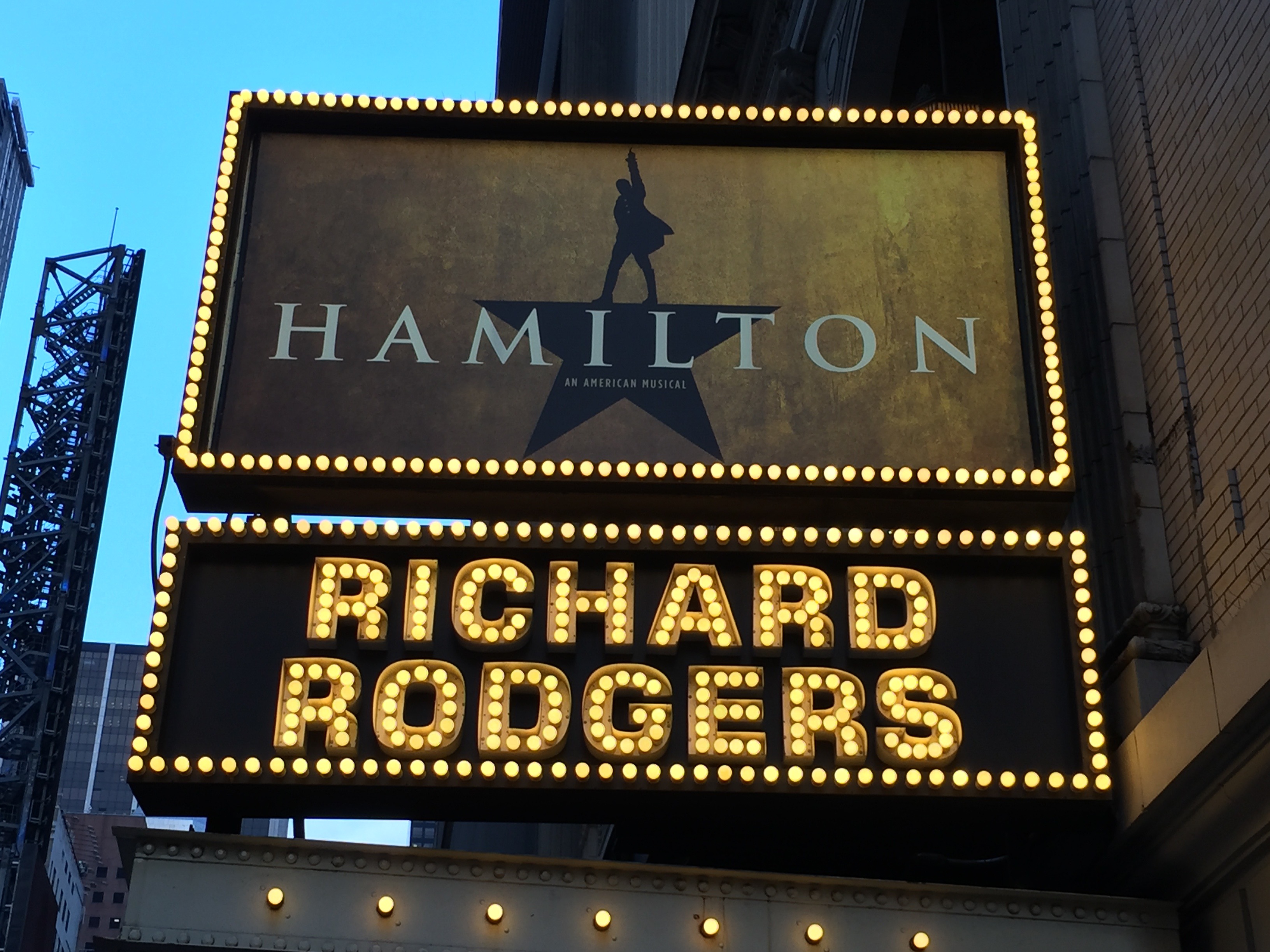
There is a play on Broadway about our founding fathers, one in particular, Alexander Hamilton. ‘Hamilton’ is a hip hop musical retelling of the story of an immigrant who rose to become a force in the building of a new nation. It is based on Ron Chernow’s 818 page biography published in 2004. How many eleventh graders do you think would read an 818 page biography? How many teachers could find the time to read the same?

Sounds like an opportunity to innovate. This week the producers and the Rockefeller Foundation announced a partnership to provide 20,000 New York City eleventh graders with a chance to attend a performance and continue the learning.“The curriculum will be put together by the nonprofit Gilder Lehrman Institute of American History, which plans to create a website with copies of the primary documents that undergird the book and lyrics, and teaching materials about Hamilton and the founding fathers. Students will be invited to create and share their own artistic responses to Hamilton’s life.”

Think about this – 20,000 students who probably have never had access to the lights of Broadway will now be sitting in orchestra seats for one of the most important and creative plays staged in recent memory. And, it’s about history.

“Lin-Manuel Miranda, the creator and star of “Hamilton,” said that he was frequently asked at the stage door how the show, which is both costly to attend and often sold out, could be made more accessible to young people, and he said finding a way to do that has been a priority for him. Mr. Miranda, 35, is a graduate of the Hunter College elementary and high schools for gifted students in New York City.

“If we can excite curiosity in students, there’s no telling what can happen next,” he said. “Not to say we’re going to make 1,300 history majors or 1,300 musical theater writers every time we do the show, but hopefully they will take away how much Hamilton did with his life in the time that he had.”

No telling what can happen next..

Shane Ferro, business journalist for the Huffington Post reported on a new video game, ‘One Day’, being developed for MBA students at the Hult International Business School.

“While it is now fairly common for video games to teach elementary concepts — spelling, basic math, typing — higher education has more or less resisted encroaching technology up to this point. Until recently, higher-level concepts have been harder to program because there may be more than one right answer. “One Day,” which its creators say is the first game of its kind, poses some fairly new questions about learning in the digital age and the role of the professor in a modern classroom.

“I’ve been a business school professor for 30 years,” said John Beck, whose educational consulting company, North Star Leadership Group, developed “One Day.” He lamented that most MBA programs rely on teaching methods honed decades before the personal computing revolution. “For 30 years I’ve been thinking the system is so broken. The case studies model dates from the 1920s, and the lecture model from the 1850s.”

Unknown

The day after Thanksgiving, previously known as ‘Black Friday’, now carries a new hashtag courtesy of the leadership team at retailer REI. #OptOutside is a campaign to encourage folks to leave the shopping behind, enjoy the outdoors and share their experience on social media.

“REI is hoping to convince consumers to start a new Black Friday tradition, one that doesn’t involve buying anything. It has built a dedicated #OptOutside website with resources on local hiking trails. REI’s campaign was built with its employees and customers in mind — the company operates as a co-op, with roughly 5.5 million members who pay a one-time fee for a share of the business. Members contribute to at least 80% of REI’s sales.

The decision to close on Black Friday is bold in an industry that has practically made the day a mandatory part of business, not only because customers demand it, but because the bottom line often does, too. The holiday shopping season is the biggest, and most competitive, time of year for retailers, with Black Friday at the center of the hoopla.”

And while we are on the subject of leadership, here are two articles you might find interesting:

‘Giving More Corporate Chiefs the Steve Jobs Treatment’ Nitin Nohira “I worry that we’re too quick to forget the accomplishments of great business leaders, and that if the people leading companies felt some solace that their long-term legacies might warrant a more careful evaluation, as is now occurring around Steve Jobs, they might make very different decisions.”

‘How Not to Flunk at Failure’ John Danner & Mark Coopersmith “Failure is a strategic resource. Like the people you employ, the money you spend or the facilities and technologies you use, it has unique intrinsic value if you’re open and wise enough to manage it as such. Treat it like unrefined ore that needs to be processed and examined to reveal its riches. Failure is reality’s way of showing you what you don’t yet know, but need to learn. It contains the seeds of precisely the insight you’ve been looking for, if you have the honesty and humility to explore those secrets.”

The Saturday Read – ‘Humans of New York:Stories’ by Brandon Stanton

We learn from the wisdom of others. In Brandon Stanton’s new book we learn from the wisdom of strangers. The ‘Saturday Read’ this week is ‘Humans of New York: Stories’.

“The simplest way to describe the development of HONY over the past five years is this: it’s evolved from a photography blog to a storytelling blog…after cataloging thousands of people, I stumbled upon the idea of including quotes from my subjects alongside their photographs. The quotes grew longer and longer, until eventually I was spending fifteen to twenty minutes interviewing each person I photographed. These interviews, and the stories that resulted from them, became the new purpose of Humans of New York. The blog became dedicated to telling the stories of strangers on the street.”

The first career story is the author’s own. He graduated from college, took a job in Chicago as a bond trader, lost his job, moved to New York and started taking pictures of folks on the street. His work evolved into a blog with 15.6 million followers. His first book of photography, Humans of New York, landed at the top of The New York Times Bestseller List in the fall of 2013 and the new book will debut at the top of the November 1, 2015 list.

Why the response? Because the Mr. Stanton’s stories, told in words and images are about us. The scope of his project embraces NYC folks encountered on the street, reflecting on their past and future. We don’t know names. We don’t know ages. We can only guess in connecting the photo to the quote. At times the words seem at odds with the picture.

Here is one example from a young man, perhaps in his early teens.

“I’ve sort of had an arrogant demeanor my entire life, and I’m learning that I’m going to have to change that if I want to succeed. I realized that it doesn’t matter how clever you are if nobody wants to work with you.”

Another from a young woman seated on a suitcase, in the middle of a train station.

“I wish I’d partied a little less. People always say: ‘Be true to yourself.’. But that’s misleading because there are two selves. There’s your short-term self, and there’s your long-term self. And if you’re only true to your short-term self, your long-term self slowly decays.”

And a man at mid-life in what appears to be a cold corporate lobby, sitting on a stone bench, framed by a stone wall.

“When you’re twenty-five, you feel like you’re riding a wave. You feel like opportunities are just going to keep coming at you, and you think it’s never going to end. But then it ends.”

“When does it end?”

“When you turn forty, and they start looking for someone younger.”

The reader gets a sense they are looking in the mirror, but they’re not. The photo doesn’t match the selfie, but the sentiment fits.

Heather Long, writing for CNN Money, interviewed Stanton and attended his reading at a NY Barnes and Noble. What has he learned in the process of photographing and interviewing 10,000 people? “Americans should reconsider how much they work.”

“He often asks: What is your biggest struggle? And what do you regret most in life?
“Balancing my life is an answer I hear a lot,” he said. “Balancing work and family.”
People go on to tell him how they wish they had skipped that marketing conference and attended their daughter’s 8th grade dance instead.”

One of my favorite ‘inteviews’ appears early in the book (page 5). The narrative comes from a third grader (?).

“I want to build a bridge”

“How do you build a bridge?”

“If you want to build a bridge, it’s going to take a long time and it might be hard because your employees might not be as interested in building a bridge as you are. You have to think about what type of bridge you want to make…” 

He could be talking about life and career.

HONY: Stories invites us on a road trip through the streets of New York, opting for the detours that welcome conversation. This is a book to read slowly, observing the detail in the photos and the humanity in the words. It’s a compendium of other’s lifelong learning, generously shared.

“I want to be an artist.” “What kind of art do you want to make?” “I want to make different versions of myself.”

The Saturday Read – ‘The Invention of Nature: Alexander von Humboldt’s New World’ by Andrea Wulf

This weekend we celebrate exploration and discovery in recognition of the arrival of Christopher Columbus in the Americas. What motivates those who choose a life of adventure and exploration? The ‘Saturday Read’ is the career story of an intrepid pioneer whose curiosity drove him to become one of the most famous of his age.

The ‘Saturday Read’ this week is ‘The Invention of Nature: Alexander von Humboldt’s New World’ by Andrea Wulf.

I first encountered von Humboldt when reading ‘The Art of Travel’ by Alain de Botton. At the end of a chapter ‘On Curiosity’, de Botton shares a quote attributed to von Humboldt near the end of his life:

“People often say that I’m curious about too many things at once: botany, astronomy, comparative anatomy. But can you really forbid a man from harboring a desire to know and embrace everything that surrounds him?”

Alexander von Humboldt was the master of connecting the dots and lived at a point in time when the multidisciplinary approach fueled exploration and discovery.

“Alexander von Humboldt has been largely forgotten in the English-speaking world. He was one of the last polymaths, and died at a time when scientific disciplines were hardening into tightly fenced and more specialized fields. Consequently his more holistic approach – a scientific method that included art, history, poetry and politics alongside hard data – has fallen out of favour. By the beginning of the twentieth century, there was little room for a man whose knowledge had bridged a vast range of subjects. As scientists crawled into their narrow areas of expertise dividing and further subdividing, they lost Humboldt’s interdisciplinary methods and his concept of nature as a global force. 

One of Humboldt’s greatest achievements had been to make science accessible and popular. Everybody learned from him: farmers and craftsmen, schoolboys and teachers, artists and musicians, scientists and politicians…Unlike Christopher Columbus or Issac Newton, Humboldt did not discover a continent or a new law of physics. Humboldt was not known for a single fact or discovery but for his worldview. His vision of nature has passed into our consciousness as if by osmosis. It is almost as though his ideas have become so manifest that the man behind them has disappeared.”

Today universities scramble to attract students with multidisciplinary offerings, but the silos of academia continue to resist cross-pollinization of knowledge. This is why we need to remove the invisibility cloak from von Humboldt and revisit his curiosity and travel the roads that led to his discoveries.

Author Andrea Wulf wrote an opinion piece for the Los Angeles Times, ‘Alexander von Humboldt: The man who made nature modern’, linking his conclusions to the environmental challenges we face today.

“At a time when scientists were classifying the world into ever smaller taxonomic units, Humboldt regarded Earth as one great living organism in which everything was connected. It was a radically new approach, and it makes him a naturalist hero for the 21st century.”

“With California in the fourth year of serious drought, with forest fires burning, oceans rising and extreme weather spreading havoc, Humboldt deserves to be rediscovered. His interdisciplinary methods and his concept of nature as one of global patterns should underpin our policymaking.

As scientists try to understand and predict the consequences of climate change, Humboldt’s belief in the free exchange of information and in fostering communication across disciplines is vitally important. His insights that social, economic and political issues are closely connected to environmental problems remain resoundingly topical. “Mankind’s mischief …disturbs nature’s order,” he warned, in words as relevant today as they were two centuries ago.”

Alexander von Humboldt’s legacy echoes in the works of John Muir and George Perkins Marsh and in the wild gardens of California where the native ‘Humboldt Lily’ thrives in a dry climate. And now it’s preserved in the words of Andrea Wulf. Enjoy the ‘Saturday Read’ and encourage your children to grow up to be polymaths.

humboldt lily

What if we approached job search as an adventure?

Take a minute to search the online dictionaries for a definition of the word ‘adventure’. All will include a version of “an ​unusual, ​exciting, and ​possibly ​dangerous ​activity, ​trip, or ​experience, or the ​excitement ​produced by such ​activities”. What if we approached our job search as an adventure?

There are bookcases full of career exploration guides and a plethora of simulation exercises marketed as navigational tools for the job seeker. The industry of career consulting has depreciated the complexity of vocational discovery and led folks to believe that career mysteries can be decoded with minimal effort.

It’s a cookie cutter approach assuming that we know what jobs are out there and know the skill set required for each. What we also know is that the world @work is volatile and many job titles have been retired along with their occupants and many more have evolved with the emergence of new employers.

If you frame your job search as an adventure, your expectations adjust to prepare for the unexpected. Your time frames align with reality. The anticipation of meeting new folks, cataloging what you still need to learn and testing your ambitions @work will catapult you out of bed each morning.

Where do you start? Select an individual who is known for their sense of adventure. Focus on the excitement vs. the danger. Why are they successful?

“To me, adventure has always been the connections and bonds you create with people when you’re there. And you can have that anywhere.” Bear Grylls

Start making the connections – scheduling conversations.The adventure is in the discovery of what you don’t know about work. It’s asking questions, listening and connecting the dots. As you accumulate knowledge, various scenarios begin to emerge in the experience of others.

It’s a lifetime commitment once you open the door to adventure.

Remember what Bilbo used to say: ‘It’s a dangerous business, Frodo, going out your door. You step onto the road, and if you don’t keep your feet, there’s no knowing where you might be swept off to.”” — J.R.R. Tolkien

‘My Triumph’ a poem by John Greenleaf Whittier

The ‘Friday Poem’ this week marks the autumnal equinox with the words of American poet, John Greenleaf Whittier. The name may be familiar only in the memory of attending a ‘Whittier Elementary School’. Whittier was a courageous abolitionist whose essays and poems provided a way to communicate his views.

“His first book, Legends of New England in Prose and Verse, was published in 1831; from then until the Civil War, he wrote essays and articles as well as poems, almost all of which were concerned with abolition. In 1833 he wrote Justice and Expedience urging immediate abolition. In 1834 he was elected as a Whig for one term to the Massachusetts legislature; mobbed and stoned in Concord, New Hampshire, in 1835. He moved in 1836 to Amesbury, Massachusetts, where he worked for the American Anti-Slavery Society. During his tenure as editor of the Pennsylvania Freeman, in May 1838, the paper’s offices burned to the ground and were sacked during the destruction of Pennsylvania Hall by a mob.”

The Civil War was a turning point in his writing. Until his death in 1892 he wrote of religion, nature and rural life. ‘My Triumph’, written in 1870 reflects on seasonal and life transitions.

My Triumph

The autumn-time has come;
On woods that dream of bloom,
And over purpling vines,
The low sun fainter shines.

The aster-flower is failing,
The hazel’s gold is paling;
Yet overhead more near
The eternal stars appear!

And present gratitude
Insures the future’s good,
And for the things I see
I trust the things to be;

That in the paths untrod,
And the long days of God,
My feet shall still be led,
My heart be comforted.

O living friends who love me!
O dear ones gone above me!
Careless of other fame,
I leave to you my name.

Hide it from idle praises,
Save it from evil phrases:
Why, when dear lips that spake it
Are dumb, should strangers wake it?

Let the thick curtain fall;
I better know than all
How little I have gained,
How vast the unattained.

Not by the page word-painted
Let life be banned or sainted:
Deeper than written scroll
The colors of the soul.

Sweeter than any sung
My songs that found no tongue;
Nobler than any fact
My wish that failed of act.

Others shall sing the song,
Others shall right the wrong,—
Finish what I begin,
And all I fail of win.

What matter, I or they?
Mine or another’s day,
So the right word be said
And life the sweeter made?

Hail to the coming singers!
Hail to the brave light-bringers!
Forward I reach and share
All that they sing and dare.

The airs of heaven blow o’er me;
A glory shines before me
Of what mankind shall be,—
Pure, generous, brave, and free.

A dream of man and woman
Diviner but still human,
Solving the riddle old,
Shaping the Age of Gold!

The love of God and neighbor;
An equal-handed labor;
The richer life, where beauty
Walks hand in hand with duty.

Ring, bells in unreared steeples,
The joy of unborn peoples!
Sound, trumpets far off blown,
Your triumph is my own!

Parcel and part of all,
I keep the festival,
Fore-reach the good to be,
And share the victory.

I feel the earth move sunward,
I join the great march onward,
And take, by faith, while living,
My freehold of thanksgiving.

John Greenleaf Whittier  1870

The ‘gig economy’ and ‘the new romantics’

The ground is shifting the foundations of our world@work. New economic models are emerging of mosaic careers where freelancing is the predominant driver of income. In order to flourish workers will have to reimagine their life@work and add skills previously delivered through full time employers. This is the conversation that should be taking place in corporate boardrooms, university classrooms, state legislatures and presidential debates.

Don’t believe me? How did you get to work? Uber? Where did you stay on vacation? Airbnb?

The initial repercussions of the new world@work are being felt in the halls of justice as folks try to fit old definitions of work and workers into new, entrepreneurial business models.

Sarah Kessler writing for Fast Company summarized the dilemma.

“What’s at stake with these lawsuits and protests? The very definition of “employee” in a tech-enabled, service-driven 21st century American economy. Gig economy companies do not own cars, hotels, or even their workers’ cleaning supplies. What they own is a marketplace with two sides. On one side are people who need a job done—a ride to the airport, a clean house, a lunchtime delivery. On the other are people who are willing to do that job. If Uber and other companies are going to be as big as some claim, a new deal has to be brokered, one that squares the legal rules governing work with new products and services. What benefits can you expect from a quasi-employer? What does it mean to be both independent and tethered to an app-based company? The social contract between gig economy workers and employers is broken. Who will fix it, and how, will determine the fate of thousands of workers and hundreds of millions of dollars.”

James Surowiecki writing in The New Yorker described just how difficult it is to define the difference between an employee and an independent contractor.

“We hear a lot these days about the gig economy, but the issue of whether a worker is an employee or an independent contractor has been the subject of intense legal battles for decades. The distinction can be surprisingly hard to make. The I.R.S. has a list of twenty factors that it takes into account, but other federal agencies have different criteria, as do most states. The fundamental issue is usually whether an employer has “control” over the work being done, but defining control isn’t always easy.”

This is where it begins in the U.S., in the court system. Meanwhile, entrepreneurs will continue to connect clients with products and hire workers who will supplement their income performing a variety of part-time professional services. Eventually the laws will catch up with the workplace reality. But in the interim, universities have to decipher the emerging skill set and prepare the next generation of workers for success.

Joseph Aoun, President of Northeastern University in Boston conducted an informal survey of the university community, tweeting the question, “What skills will graduates need for success in the gig economy?”

“…we can see five skills that will be invaluable for thriving in the gig economy:

Generativity: How to create something unique, be it a product, a service, or an idea. E.g., coming up with the idea for a widget.

Entrepreneurship: How to spot an opportunity and act on it effectively. Discovering a market for widgets.

Originality: How to view an existing subject through an unexpected lens. Realizing that the widget can be made more sustainably from recycled water bottles.

Interdisciplinary thought: How to bridge concepts from different fields to form new ideas. Combining engineering and design so that the widget is not only functional, but beautiful.

Dealing with ambiguity: How to confidently address a problem with no clear solution, often by using a blend of experience, intuition, and grasp of human nature. Faced with plunging stock prices, reinventing the company as a widget-sharing app.”

The ‘new gig workers’ will also need a basic understanding of business law and finance. Arun Sundararajan writing in The Guardian assesses the micro and macro implications of the new model.

“There’s certainly something empowering about being your own boss. With the right mindset, you can achieve a better work-life balance. But there’s also something empowering about a steady pay cheque, fixed work hours and company-provided benefits. It’s harder to plan your life longer term when you don’t know how much money you’re going to be making next year.”

In many countries, key slices of the social safety net are tied to full-time employment with a company or the government. Although the broader socioeconomic effects of the gig economy are as yet unclear, it is clear we must rethink the provision of our safety net, decoupling it from salaried jobs and making it more readily available to independent workers.”

Fundamentally, the new ‘gig worker’ will focus on human interaction vs. transactional activities. We are back to the core curriculum of a liberal arts education. The lawyers, politicians and business folk will figure out the structure and protections. The humanists will find job security in the ‘gig economy’.

David Brooks writing in The New York Times imagines the new world@work.

“What are the activities that we humans, driven by our deepest nature or by the realities of daily life, will simply insist be performed by other humans?”

“Secure workers will combine technical knowledge with social awareness — the sort of thing you get from your genes, from growing up in a certain sort of family and by widening your repertoire of emotions through reflection, literature and a capacity for intimacy.”

“I could imagine a time when young thinkers discard the strictures of the academic professionalism and try to revive the model of the intellectual as secular sage. I could see other young people tiring of résumé-building do-goodism and trying to live more radically for the poor. The romantic tries as much as possible to ground his or her life in purer love that transforms — making him or her more inspired, creative and dedicated, and therefore better able to live as a modern instantiation of some ideal.”

Gig learning is lifelong learning. We will need leaders in both education and business who will welcome the feedback of their constituencies and be nimble in their response to a world@work that is driven by human interaction in the relational and supported by technology in the transactional.

The Saturday Read – ‘The Martian’ by Andy Weir

Did you want to be an astronaut when you grew up? Maybe you thought about signing up for the one way ticket to inhabit Mars?

The ‘Saturday Read’ this week, ‘The Martian’ by Andy Weir, is another ‘suggested read before you see the movie‘. The novel was described by Joel Achenbach in the Washington Post as the book that may have saved NASA and the entire space program.

There are two career narratives here. The first is the author’s story and the path to publication. The second is the fictional story of Mark Watney, his fellow astronauts and the folks at Mission Control.

On the first page we are introduced to astronaut Watney, on Mars.

“Six days into what should be the greatest month of my life, and it’s turned into a nightmare.” 

Our narrator is a member of the third crew NASA sent to Mars.

“Ares 3. Well, that was my mission. Okay, not mine per se. Commander Lewis was in charge. I was just one of her crew. I would only be ‘in command’ of the mission if I were the only remaining person.

What do you know? I’m in command.”

Have you ever taken part in one of those team building sessions where you are lost at sea with only ten salvaged items? You have to rank order them and imagine how each will improve your chances for survival. ‘The Martian’ is a natural for a new version of imaginary survival training.

“It was a ridiculous sequence of events that led me to almost dying, and an even more ridiculous sequence that led me to surviving.” 

I should mention that these are excerpts from Watney’s log of his time on Mars. For the major portion of the book we follow him as he connects an amazing array of dots to stay alive. This is a book about problem solving and this astronaut makes MacGyver look like an amateur.

For the first 50 pages we are alone with our inventive astronaut as he creates a habitat on an uninhabitable environment.

“So that’s the situation. I’m stranded on Mars. I have no way to communicate with Hermes or Earth. Everyone thinks I’m dead…”

Not so fast…enter Mindy Park at SatCon, NASA.

“Masters degree in mechanical engineering…and I’m working in an all night photo booth.”

Mindy finds signs of life in satellite images and soon the world knows Mark Watney has survived. Here’s the problem. He has to endure 1,412 more days before any possible rescue.

This is also a book about leadership, taking risks, personal sacrifice and exhausting all possible resources to accomplish a goal. It has all the elements of a Harvard business case study, but with a sense of humor.

The ‘other’ career story, of author Andy Weir, was reported by Kelly Dickerson for Business Insider.

“His earlier attempts at writing pretty much flopped, but “The Martian” took off, partly because it captures Weir’s enthusiasm for science and space exploration.

In 2009, Weir started posting the story chapter by chapter on his personal blog where anyone could read it for free. The early version of his self-published book attracted a lot of science-minded readers, and they offered feedback.

Word of the book spread, and readers started asking for an e-reader copy. So Weir made all the individual chapters available in one file. Some had trouble downloading it though, so Weir put it on Amazon via Kindle Direct Publishing.

That’s when the floodgates opened. More people downloaded the 99-cent Amazon version than had ever downloaded the free version, Weir said, and readers started leaving positive reviews on Amazon. In just a few months it skyrocketed to the top of Amazon’s best-selling science fiction list.

So a book agent got in touch with Weir. Shortly after that, the publishing company Random House called — it wanted to publish a hardcover.

Four days later, Hollywood called for the movie rights…”

Bring-Him-Home-The-Martian

And in case you thought it was just a novel or a movie… Entrepreneur Elon Musk posted a photo on Twitter this week of his Dragon Spacecraft landing on the red planet. Enjoy the ‘Saturday Read’ – ‘The Martian’.

elonmusk dragon