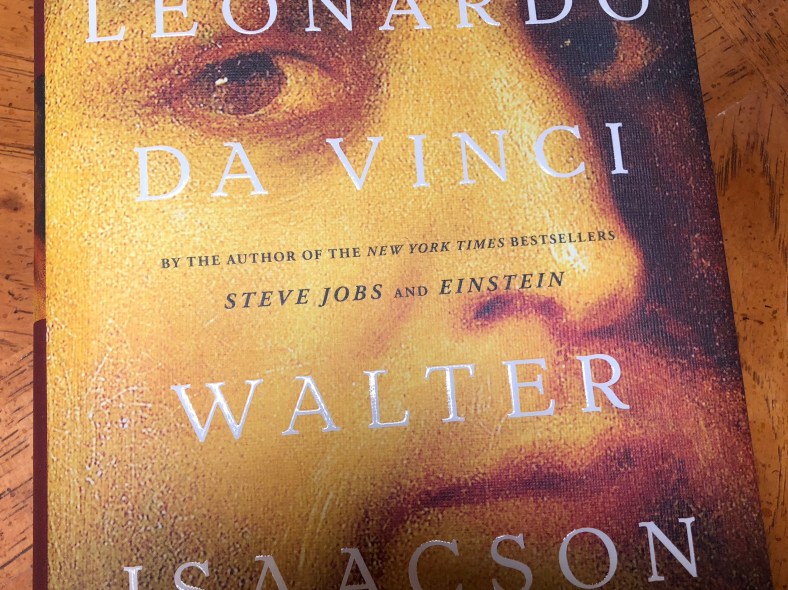
The Saturday Read ‘Leonardo da Vinci’ by Walter Isaacson

The Saturday Read returns! The first selection of 2018 is the biography, ‘Leonardo da Vinci‘ by Walter Isaacson. This is a life story disguised as an art book translating the fifteenth century wisdom of a genius into the language of our present day innovation canon.

What is it about Leonardo that resonates with us over five hundred years later?

“The fifteenth century of Leonardo and Columbus and Gutenberg was a time of invention, exploration, and the spread of knowledge by new technologies. In short, it was a time like our own. That is why we have so much to learn from Leonardo. His ability to combine art, science, technology, the humanities and imagination remains an enduring recipe for creativity.”

The narrative of the polymath has captivated Isaacson in all his previous work. In ‘da Vinci’ he has found the origin story and he’s the perfect narrator to introduce a twenty-first century audience to the man “who never outgrew his wonder years.”

If you are a person who is intimidated by a 500+ page doorstop of a book, don’t be. Leonardo’s fifteenth century artwork, notebook transcripts, sketches and drawings engage with the text to guide the reader through the history, culture and political upheaval of Milan, Florence, Rome and France.

If you are one of the thousands who have traveled to the Louvre… IMG_5851.jpg

to catch a brief glimpse of the Mona Lisa…mona lisa
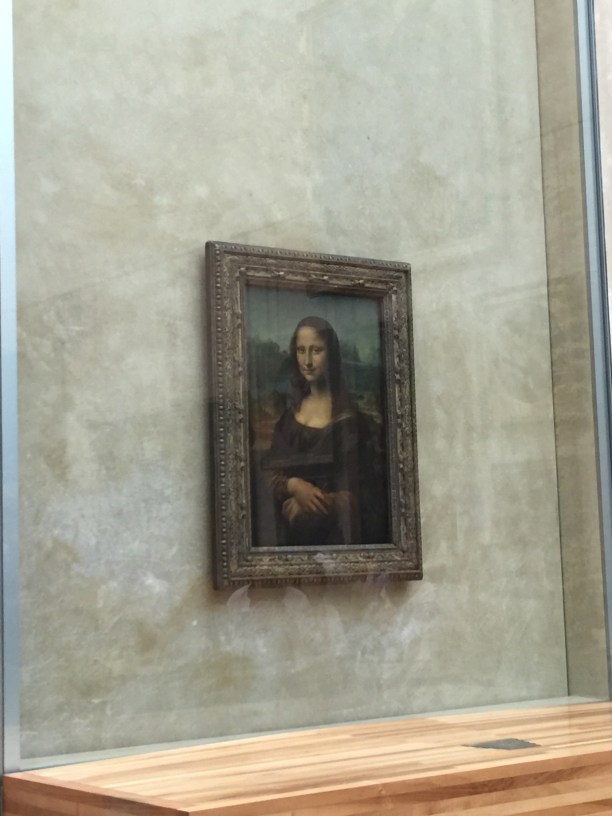
this is the backstory. Isaacson devotes a chapter near the end of the book to the portrait, describing Leonardo’s work process. “He began working on it in 1503, when he returned to Florence after serving Cesare Borgia. But he had not finished it when he moved back to Milan in 1506. In fact, he carried it with him, and continued to work on it, throughout his second period in Milan and then during his three years in Rome. He would even take it to France on the final leg of his life journey, adding tiny strokes and light layers through 1517. It would be in his studio there when he died.”

I read the biography over four weeks, one chapter at a time, alternating with other reading. It gave me time to reflect on the multiple aspects of his genius and connect Leonardo’s behavior with what I have read over the years in hundreds of Harvard Business Review articles on the topic of innovation.

My non-fiction book club had selected ‘da Vinci’ as the January choice. The discussion centered on the aspects of math, science and art; each member commenting from their frame of reference. Finally, I added my view through the lens of @workthoughts. This is a book that advocates for the generalist vs. the specialist. In many aspects it’s a career guide. Imagine an extended conversation with a mentor tracing their work/life trajectory.

Isaacson concludes with ‘Learning from Leonardo’, beginning with some familiar basics of twenty-first century theories of creativity. A sampling: “Be curious, relentlessly curious”. “Seek knowledge for its own sake.” “Observe.”Get distracted.” “Avoid silos.” “Take notes, on paper.” “Be open to mystery.” There’s more. Shadowing each of these ‘lessons’ is the story of Leonardo and his exploration of man and nature; his evolution, still tinkering with the Mona Lisa at the time of his death.

‘Leonardo da Vinci’ is your ‘professional development book’ of the year. It will break you out of your ‘career specialization rut’, opening your eyes to the ‘dots’ you didn’t even know you could connect.

If you make one bookstore purchase, continue your life-long learning with this one. “Let your reach exceed your grasp.”

Leonardo’s most important lesson for our times – “Respect facts.” Never stop asking questions.

“Above all, Leonardo’s relentless curiosity and experimentation should remind us of the importance of instilling, in both ourselves and our children, not just received knowledge but a willingness to question it – to be imaginative and, like talented misfits and rebels in any era, to think different.”


The Friday Poem ‘Consolation’ by Wislawa Szymborska

The Friday Poem this week is ‘Consolation’ from Nobel Prize winning poet Wislawa Symborska.

In November, novelist Annie Proulx was recognized with National Book Foundation’s Medal for Distinguished Contribution to American Letters. Her acceptance speech offered hope, “the happy ending still beckons”, and quoted Symborska’s words as proof.

“…somehow the old discredited values and longings persist. We still have tender feelings for such outmoded notions as truth, respect for others, personal honor, justice, equitable sharing. We still hope for a happy ending. We still believe that we can save ourselves and our damaged earth — an indescribably difficult task as we discover that the web of life is far more mysteriously complex than we thought and subtly entangled with factors we cannot even recognize. But we keep on trying, because there’s nothing else to do.

The happy ending still beckons, and it is in hope of grasping it that we go on. The poet Wisława Szymborska caught the writer’s dilemma of choosing between hard realities and the longing for the happy ending. She called it “Consolation.”

Consolation

Darwin.
They say he read novels to relax,
But only certain kinds:
nothing that ended unhappily.
If anything like that turned up,
enraged, he flung the book into the fire.

True or not,
I’m ready to believe it.

Scanning in his mind so many times and places,
he’d had enough of dying species,
the triumphs of the strong over the weak,
the endless struggles to survive,
all doomed sooner or later.
He’d earned the right to happy endings,
at least in fiction
with its diminutions.

Hence the indispensable
silver lining,
the lovers reunited, the families reconciled,
the doubts dispelled, fidelity rewarded,
fortunes regained, treasures uncovered,
stiff-necked neighbors mending their ways,
good names restored, greed daunted,
old maids married off to worthy parsons,
troublemakers banished to other hemispheres,
forgers of documents tossed down the stairs,
seducers scurrying to the altar,
orphans sheltered, widows comforted,
pride humbled, wounds healed over,
prodigal sons summoned home,
cups of sorrow thrown into the ocean,
hankies drenched with tears of reconciliation,
general merriment and celebration,
and the dog Fido,
gone astray in the first chapter,
turns up barking gladly
in the last.

Wislawa Szymborska

Translated by Clare Cavanagh

A new question

On February 2, 2015 ‘Workthoughts’ joined the blogosphere with a question, Why work?

“As children we are open to any work possibility. We haven’t learned the value society places on work and workers. Our exploration of the world of work begins with the folks who keep us safe. We imagine ourselves as those fictional superheroes, donning capes and masks, scaling buildings to save the city or the planet from threat.

Throughout our years of formal education we gain additional information about work and workplace options. By the time we are in high school, our academic performance and test scores have segmented the class into college bound and not.

As we progress through education we acquire the biases of our community and culture, strongly influencing our choice of work.

We begin our careers as interns; apprentices excited about an opportunity to finally realize a long held dream. Along the way we translate that experience into a full time job and begin our careers acquiring skills and learning the culture of the organizations we join.

We become engaged in our communities, raise families and continue our education.

At some point the momentum of our career trajectory outruns our initial dreams and values, and it’s important to ask, why work?”

Other questions emerged over the past three years, but all seemed subsets of the original. This one, posed by writer Meghan Daum, captured the uncertainty of our current workplace moment: “How do we measure fulfillment in work and where do we find it when the traditional channels have given way to a round-the-clock hustle?”

This may be the defining ‘future of work’ career question.

To respond, we need new definitions of success, more inclusive portraits of achievement; focus on the work itself, not the consequences. There are new constructs, locations, timelines and contracts. Relationships and expectations @work are more fluid. Everything is changing.

“We get surprised in real life because we can’t know everything there is to know. For one thing, we’re stuck in our own heads, in a single point of view.” Jincy Willett

As we begin year four, @workthoughts will continue to share the surprises and examine life@work through the lens of current reporting, research, poetry and ‘The Saturday Read’.


The Friday Poem ‘The Three Goals’ by David Budbill

We need poets to convert obfuscation into clarity: to communicate, not “confuse, bewilder or stupefy”. The Friday Poem this week, ‘The Three Goals’ by David Budbill does just that.

Author, poet, playwright and musician David Budbill “took a workman’s attitude toward art and despised pretension. Asked about the sources of his inspiration, he said: “It comes from out of nowhere, from my imagination, from the voices I hear, from somewhere. In short, I don’t know where it comes from, and I don’t care.”

The Three Goals

The first goal is to see the thing itself
in and for itself, to see it simply and clearly
for what it is.
No symbolism, please.

The second goal is to see each individual thing
as unified, as one, with all the other
ten thousand things.
In this regard, a little wine helps a lot.

The third goal is to grasp the first and the second goals,
to see the universal and the particular,
simultaneously.
Regarding this one, call me when you get it.

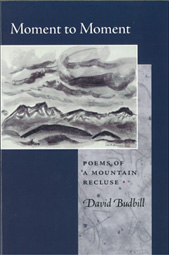
David Budbill   ‘Moment to Moment: Poems of a Mountain Recluse’   2012

1031_md.jpg

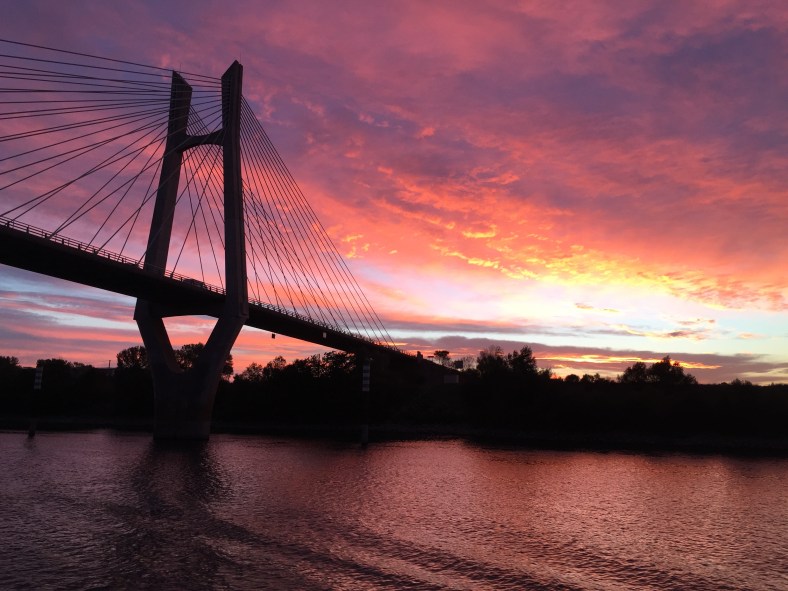
Photo credit: Peter Miller

The Friday Poem ‘Why I Wake Early’ by Mary Oliver

The first Friday Poem of 2018 is for the early risers, the folks who ‘seize the day’ as first light tints the sky in pastels. Poet Mary Oliver shares ‘Why I Wake Up Early’.

“Watch, now, how I start the day
in happiness, in kindness.”

Why I Wake Early

Hello, sun in my face.
Hello, you who make the morning
and spread it over the fields
and into the faces of the tulips
and the nodding morning glories,
and into the windows of, even, the
miserable and crotchety–

best preacher that ever was,
dear star, that just happens
to be where you are in the universe
to keep us from ever-darkness,
to ease us with warm touching,
to hold us in the great hands of light–
good morning, good morning, good morning.

Watch, now, how I start the day
in happiness, in kindness.

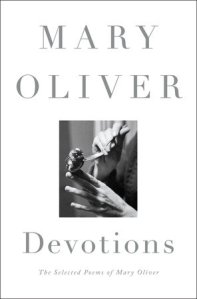
Mary Oliver   ‘Devotions: The Selected Poems of Mary Oliver’ Penguin Press, 2017

9780399563249

‘Open A New Window’ – Music & Lyrics by Jerry Herman

The ‘Friday Poem’ this holiday week comes from the 1966 Broadway musical, ‘Mame’: the lyrics to ‘Open A New Window’ by Jerry Herman.

The musical, based on the 1955 novel ‘Auntie Mame’ by Patrick Denis, “opened on Broadway at the Winter Garden Theatre on May 24, 1966. Three years later, it transferred to the Broadway Theatre, where it remained until closing on January 3, 1970. It ran a total of 1,508 performances and five previews.”

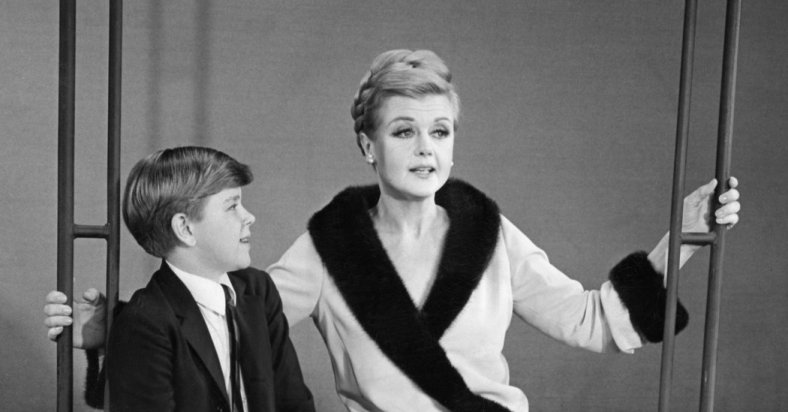
This was the play that produced ‘We Need A Little Christmas’, and the lesser known ‘Open A New Window’. Sung by Angela Lansbury to Frankie Michaels playing her nephew, it conveys some of the best ‘mentoring’ advice for the new year.

Open a New Window

Open a new window,
Open a new door,
Travel a new highway,
That’s never been tried before;
Before you find you’re a dull fellow,
Punching the same clock,
Walking the same tight rope
As everyone on the block.
The fellow you ought to be is three dimensional,
Soaking up life down to your toes,
Whenever they say you’re slightly unconventional,
Just put your thumb up to your nose.
And show ’em how to dance to a new rhythm,
Whistle a new song,
Toast with a new vintage,
The fizz doesn’t fizz too long.
There’s only one way to make the bubbles stay,
Simply travel a new high way,
Dance to a new rhythm,
Open a new window ev’ry day!

Jerry Herman 1966 (Original Cast Recording)


I

The Friday Poem ‘The Question’ by Karla Kuskin

Before poetry was printed on the back of NYC Metro Cards, there was ‘Poetry in Motion’, a joint effort of the MTA and the Poetry Society of America. Between October, 1992 and August, 1997 commuters, families and tourists could sample poems, reading from the placards displayed in subway cars and buses.

Poetry in Motion® places poetry in the transit systems of cities throughout the country, helping to create a national readership for both emerging and established poets.”

The Friday Poem this week was one of those selected for the inaugural NYC program: ‘The Question’ by Karla Kuskin. In this holiday season, revisit career choice through the eyes of your younger self.

The Question

People always say to me
“What do you think you’d like to be
When you grow up?”
And I say, “Why,
I think I’d like to be the sky
Or be a plane or train or mouse
Or maybe a haunted house
Or something furry, rough and wild…
Or maybe I will stay a child.”

Karla Kuskin   ‘Poetry in Motion: 100 Poems From the Subways and Buses’ 1996

The Friday Poem – The Purpose of Poetry

On October 26, 1963, less than a month before his death, U.S. President John F. Kennedy visited Amherst College to deliver a speech at the groundbreaking for the Robert Frost Library.

“In publishing the remarks after Kennedy’s murder, The Atlantic noted that he“identified himself, as no president before him has done so poignantly, with ‘books and men and learning.’ ”

Today, 54 years later, rather than a Friday Poem, the text of the address delivered that day by the 35th President of the United States, in recognition of the contribution of Robert Frost and the place of poetry in our national value set. This is what American leadership looks like.

Our national strength matters, but the spirit which informs and controls our strength matters just as much. This was the special significance of Robert Frost. He brought an unsparing instinct for reality to bear on the platitudes and pieties of society. His sense of the human tragedy fortified him against self-deception and easy consolation. “I have been” he wrote, “one acquainted with the night.” And because he knew the midnight as well as the high noon, because he understood the ordeal as well as the triumph of the human spirit, he gave his age strength with which to overcome despair. At bottom, he held a deep faith in the spirit of man, and it is hardly an accident that Robert Frost coupled poetry and power, for he saw poetry as the means of saving power from itself. When power leads men towards arrogance, poetry reminds him of his limitations. When power narrows the areas of man’s concern, poetry reminds him of the richness and diversity of his existence. When power corrupts, poetry cleanses. For art establishes the basic human truth which must serve as the touchstone of our judgment.

The artist, however faithful to his personal vision of reality, becomes the last champion of the individual mind and sensibility against an intrusive society and an officious state. The great artist is thus a solitary figure. He has, as Frost said, a lover’s quarrel with the world. In pursuing his perceptions of reality, he must often sail against the currents of his time. This is not a popular role. If Robert Frost was much honored in his lifetime, it was because a good many preferred to ignore his darker truths. Yet in retrospect, we see how the artist’s fidelity has strengthened the fibre of our national life.

If sometimes our great artists have been the most critical of our society, it is because their sensitivity and their concern for justice, which must motivate any true artist, makes him aware that our Nation falls short of its highest potential. I see little of more importance to the future of our country and our civilization than full recognition of the place of the artist.

If art is to nourish the roots of our culture, society must set the artist free to follow his vision wherever it takes him. We must never forget that art is not a form of propaganda; it is a form of truth. And as Mr. MacLeish once remarked of poets, there is nothing worse for our trade than to be in style. In free society art is not a weapon and it does not belong to the spheres of polemic and ideology. Artists are not engineers of the soul. It may be different elsewhere. But democratic society–in it, the highest duty of the writer, the composer, the artist is to remain true to himself and to let the chips fall where they may. In serving his vision of the truth, the artist best serves his nation. And the nation which disdains the mission of art invites the fate of Robert Frost’s hired man, the fate of having “nothing to look backward to with pride, and nothing to look forward to with hope.”

I look forward to a great future for America, a future in which our country will match its military strength with our moral restraint, its wealth with our wisdom, its power with our purpose. I look forward to an America which will not be afraid of grace and beauty, which will protect the beauty of our natural environment, which will preserve the great old American houses and squares and parks of our national past, and which will build handsome and balanced cities for our future.

I look forward to an America which will reward achievement in the arts as we reward achievement in business or statecraft. I look forward to an America which will steadily raise the standards of artistic accomplishment and which will steadily enlarge cultural opportunities for all of our citizens. And I look forward to an America which commands respect throughout the world not only for its strength but for its civilization as well. And I look forward to a world which will be safe not only for democracy and diversity but also for personal distinction.

Robert Frost was often skeptical about projects for human improvement, yet I do not think he would disdain this hope. As he wrote during the uncertain days of the Second War:

Take human nature altogether since time began . . .
And it must be a little more in favor of man,
Say a fraction of one percent at the very least . . .
Our hold on this planet wouldn’t have so increased.

Because of Mr. Frost’s life and work, because of the life and work of this college, our hold on this planet has increased.”

Listen to speech

Text and recording courtesy of the John F. Kennedy Library and the U.S. National Archives.


The Friday Poem ‘What Kind of Times Are These’ by Adrienne Rich

It has been a week. Another week. A week that began with NFL players joining Colin Kaepernick‘s protest@work. If you are confused by the fog of publicity over the past week, let Charles Blow clarify the issue for you.

“…patriotism is particularly fraught for black people in this country because the history of the country’s treatment of them is fraught. It’s not that black people aren’t patriotic; it’s just that patriotism can be a paradox.”

“We have to accept that different Americans see pride and principle differently, but that makes none of them less American.”

The Friday Poem this week, ‘What Kind of Times Are These’ was written in 1995 by poet and activist, Adrienne Rich. It was one poem in a collection described by her publisher:

“Her explorations go to the heart of democracy and love, and the historical and present endangerment of both.”

“This parable-like poem raises difficult questions about the nature and dangers of leadership and the complicity of ordinary citizens in their government’s uses (and abuses) of power.”

It just seemed the right choice for this week@work. “our country moving closer to its own truth and dread..”

What Kind of Times Are These

There’s a place between two stands of trees where the grass grows uphill
and the old revolutionary road breaks off into shadows
near a meeting-house abandoned by the persecuted
who disappeared into those shadows.

I’ve walked there picking mushrooms at the edge of dread, but don’t be fooled
this isn’t a Russian poem, this is not somewhere else but here
our country moving closer to its own truth and dread,
its own ways of making people disappear.

I won’t tell you where the place is, the dark mesh of the woods
meeting the unmarked strip of light—
ghost-ridden crossroads, leafmold paradise:
I know already who wants to buy it, sell it, make it disappear.

And I won’t tell you where it is, so why do I tell you
anything? Because you still listen, because in times like these
to have you listen at all, it’s necessary
to talk about trees.


Adrienne Rich
‘Dark Fields of the Republic: Poems 1991-1995’ (W. W. Norton and Company Inc., 1995)

9780393313987_198

Listen to the poet read ‘What Kind of Times Are These’


The Friday Poem ‘Baseball’ by John Updike

The Friday Poem this week is for the ‘Boys of Summer’: those who go to work playing baseball, those who spend their hours after work on a diamond with friends, and the real boys who grab bat and glove after school on the way to Little League practice.

On Wednesday evening, one of those who make a living @baseball, the Dodger’s Rich Hill, threw eight perfect innings of baseball in Pittsburgh, coming up short of both a perfect game and a no-hitter when a third base error in the ninth and a lead off home run in the 10th gave the Pirates the win.

Less than 200 miles northeast, the Little League World Series approached its championship weekend as players ages 11-12 years competed for a chance to represent their country in the international final.

With baseball in the air, John Updike, baseball writer, is our choice for this week’s Friday Poem.

Baseball

It looks easy from a distance,
easy and lazy, even,
until you stand up to the plate
and see the fastball sailing inside,
an inch from your chin,
or circle in the outfield
straining to get a bead
on a small black dot
a city block or more high,
a dark star that could fall
on your head like a leaden meteor.

The grass, the dirt, the deadly hops
between your feet and overeager glove:
football can be learned,
and basketball finessed, but
there is no hiding from baseball
the fact that some are chosen
and some are not—those whose mitts
feel too left-handed,
who are scared at third base
of the pulled line drive,
and at first base are scared
of the shortstop’s wild throw
that stretches you out like a gutted deer.

There is nowhere to hide when the ball’s
spotlight swivels your way,
and the chatter around you falls still,
and the mothers on the sidelines,
your own among them, hold their breaths,
and you whiff on a terrible pitch
or in the infield achieve
something with the ball so
ridiculous you blush for years.
It’s easy to do. Baseball was
invented in America, where beneath
the good cheer and sly jazz the chance
of failure is everybody’s right,
beginning with baseball.

John Updike from ‘Endpoint and Other Poems’ 2009

endpoint


Photo credit: Charles LeClaire USA TODAY sport